2027 Fastest Accredited Online Artificial Intelligence Degree Programs That Accept Transfer Credits

Co-Founder and Chief Data Scientist
The fastest online artificial intelligence degree is usually not the shortest advertised program; it is the accredited program that applies the most of your previous credits to the right requirements. Transfer students have a strong reason to compare carefully: the National Student Clearinghouse Research Center reported in 2024 that transfer enrollment grew 5.3% in fall 2023, signaling renewed demand for credit mobility.
This guide is for transfer students, returning adults, and degree completers who want the fastest legitimate route to graduation. You will learn how transfer limits, accreditation, residency rules, costs, and accelerated formats affect your real completion timeline.
Key Things You Should Know
- The fastest realistic path is usually a 120-credit accredited bachelor's program that accepts 90 to 94 applicable transfer credits, leaving about 26 to 30 credits that may be completed in roughly 8 to 15 months with full-time accelerated study.
- Transfer-friendly online AI options commonly include Franklin University, Southern New Hampshire University, Liberty University, Maryville University, Davenport University, and CSU Global, but the fastest choice depends on how many credits apply to general education, electives, math, programming, and AI major requirements.
- Maximum transfer credit is not the same as usable transfer credit: many schools advertise up to 75% transfer toward a bachelor's degree, yet still require institutional residency credits, upper-division AI coursework, minimum grades, and current technical prerequisites.
What Are the Fastest Accredited Online Artificial Intelligence Degree Programs That Accept Transfer Credits?
The fastest accredited online artificial intelligence degree programs for transfer students are usually bachelor's degrees in artificial intelligence, computer science with an AI concentration, AI and machine learning, or AI and robotics that allow high transfer-credit caps and offer short online terms.
The strongest options combine recognized institutional accreditation, clear transfer policies, multiple start dates, and enough upper-division AI courses online so you do not lose time waiting for campus-only classes.
The table below compares transfer-friendly online AI and AI-focused programs commonly considered by degree completers. Use it as a shortlist, not a final ranking, because your fastest program depends on your transcript evaluation, not the advertised maximum:
| School | Online AI-focused degree option | Institutional accreditation | Published transfer-friendly feature | Best fit |
| Franklin University | B.S. in Artificial Intelligence | Higher Learning Commission | Accepts a high number of transfer credits toward bachelor's programs, with final applicability determined by degree requirements | Students with many prior credits who want a direct AI major |
| Southern New Hampshire University | B.S. in Computer Science with Artificial Intelligence concentration | New England Commission of Higher Education | Allows up to 90 transfer credits toward many bachelor's degrees | Students who want short online terms and a broad computer science base |
| Liberty University | B.S. in Computer Science: Artificial Intelligence | Southern Association of Colleges and Schools Commission on Colleges | Allows up to 75% of a bachelor's degree to be transferred when credits meet policy requirements | Students seeking 8-week online courses and a Christian university setting |
| Maryville University | Online computer science bachelor's pathway with AI-related study options | Higher Learning Commission | Commonly accepts substantial transfer credit toward online bachelor's programs after evaluation | Students who want an applied technology degree with AI coursework |
| Davenport University | B.S. in Artificial Intelligence | Higher Learning Commission | Offers transfer evaluation for prior college coursework and technical credits that meet program standards | Students looking for a named AI bachelor's degree with career-focused coursework |
| Colorado State University Global | Online AI, machine learning, or AI-adjacent computing pathways | Higher Learning Commission | Designed for adult online learners and transfer students, with credit evaluation for prior coursework | Students who want monthly starts or highly flexible online scheduling |
For many transfer students, Franklin, SNHU, and Liberty are among the fastest to evaluate first because their bachelor's transfer ceilings can leave roughly one academic year or less of remaining work when credits apply cleanly.
However, a student with an associate degree in business may finish faster in a business analytics or information systems pathway than in a pure AI major if they lack calculus, discrete math, Python, data structures, or statistics.
AI degree shoppers should also compare the degree's career value with other strong undergraduate routes. If you are still deciding whether AI is the right return-on-investment choice, reviewing best bachelor degrees can help you compare AI-adjacent computing fields with other high-value majors.
A useful rule: the fastest program is the one that accepts your credits into the degree map, not merely into the university. Ask for a written degree audit before you commit, especially if your old credits are technical, vocational, quarter-system, international, or more than 10 years old.
How Fast Can You Complete an Online Artificial Intelligence Degree With Transfer Credits?
A transfer student can often complete an accredited online artificial intelligence bachelor's degree in about 8 to 24 months, depending on how many credits apply and how aggressively they study. The fastest realistic route usually requires at least 90 applicable credits, no missing math or programming prerequisites, year-round enrollment, and courses offered in 5-week, 6-week, 8-week, or competency-based formats.
The table below shows practical timelines for a 120-credit bachelor's degree. These are planning estimates, not guarantees, because schools may require course sequencing, minimum grades, upper-division coursework, or a capstone that is offered only in certain terms:
| Applicable transfer credits | Credits remaining | Typical pace | Realistic completion estimate | Main risk to speed |
| 90 to 94 | 26 to 30 | Full-time, year-round accelerated terms | About 8 to 15 months | Major courses or capstone must be completed at the school |
| 75 to 89 | 31 to 45 | Full-time or heavy part-time | About 12 to 20 months | Missing prerequisites in calculus, statistics, programming, or data structures |
| 60 to 74 | 46 to 60 | Full-time online study | About 18 to 30 months | Associate degree credits may not fully match the AI major |
| 30 to 59 | 61 to 90 | Part-time or full-time | About 2 to 3.5 years | Too many general electives and not enough technical credits |
| 0 to 29 | 91 to 120 | Traditional or accelerated online | About 3 to 4 years | Little transfer advantage beyond placement or prior learning credit |
Completion speed also depends on course load. A student taking two 8-week courses at a time while studying year-round may progress much faster than a student taking one course per term, but the heavier schedule can be difficult if the courses involve programming labs, math proofs, machine learning projects, or cloud-based computing assignments.
Before choosing the fastest calendar, make a realistic workload plan. AI courses often require more time than general education courses because assignments may involve debugging, model training, data cleaning, statistical interpretation, and written technical explanations.
How Many Transfer Credits Can You Apply Toward an Online Artificial Intelligence Degree?
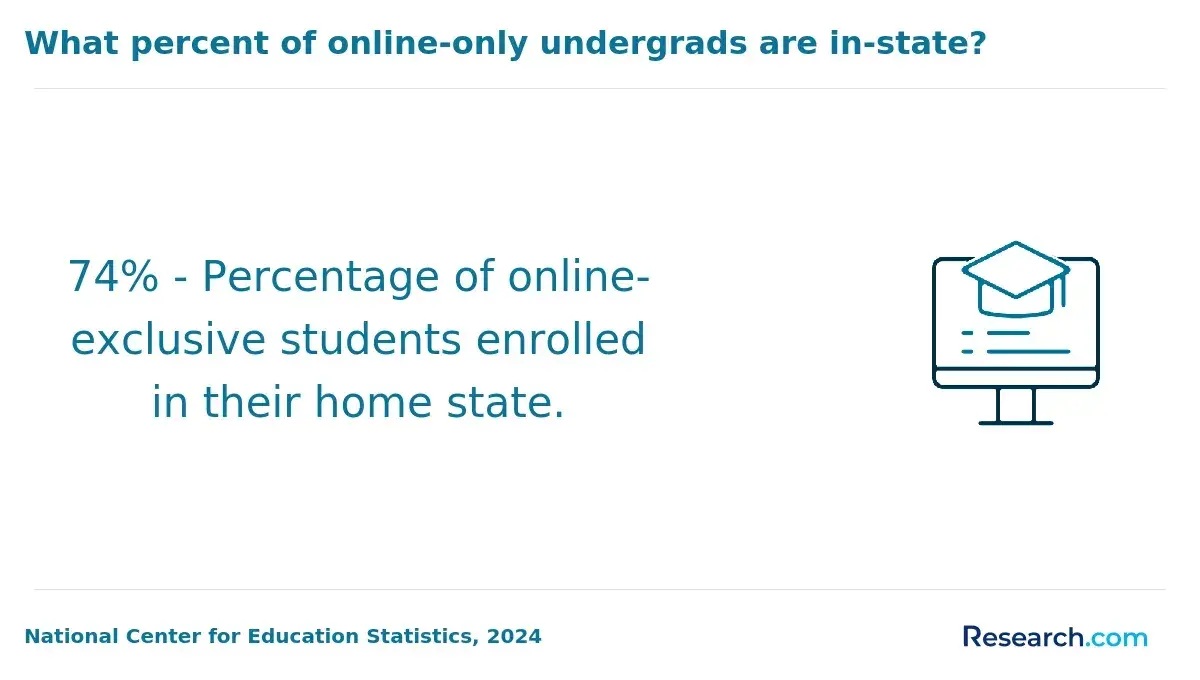
Many accredited online bachelor's programs allow up to 75% of degree credits to transfer, which is commonly 90 credits in a 120-credit program. Some adult-focused universities may advertise slightly higher limits, such as up to 94 credits, but the most important number is the credits that apply to your AI degree requirements after evaluation.
The table below explains the difference between transfer-credit categories. This distinction matters because a school may accept a course as elective credit while still requiring you to take a similar course for the major.
| Credit category | How it can help | Why it may not shorten the AI degree |
| General education credits | Can satisfy writing, humanities, social science, natural science, and communication requirements | May not reduce technical major coursework if you still need math and computing prerequisites |
| Free elective credits | Can fill remaining credit hours toward the 120-credit total | Do not replace required AI, programming, data science, or capstone courses |
| Lower-division technical credits | May cover introductory programming, databases, networking, or statistics | May be rejected for upper-division AI requirements if the course level is too low |
| Upper-division computer science credits | Can be highly valuable if they match algorithms, data structures, software engineering, or machine learning requirements | May need department review, syllabus review, or minimum grade verification |
| Nontraditional credits | Can reduce electives through military training, exams, certifications, or prior learning assessment | Often capped separately and may not replace advanced AI major courses |
To avoid surprises, ask each school for a course-by-course evaluation before enrolling. A preliminary "you can transfer up to 90 credits" statement is not enough; you need to know which credits land in the degree plan and which requirements remain.
The most common mistake is assuming an associate degree automatically satisfies the first two years of an AI bachelor's degree. That may be true for a well-aligned associate in computer science, but it is less likely for associate degrees in general studies, business, criminal justice, or health sciences unless the school has a generous block-transfer agreement.
How Can You Verify Accreditation for Fast Online Artificial Intelligence Degree Programs?
Accreditation is the first filter for any fast online AI degree. A program may look efficient, but if the institution lacks recognized accreditation, you may face problems with federal financial aid, employer recognition, graduate school admission, and future transfer credit.
Use this sequence before applying to any accelerated online AI program. It helps separate legitimate fast degrees from programs that are merely fast because they skip academic safeguards:
- Check institutional accreditation through the U.S. Department of Education's Database of Accredited Postsecondary Institutions and Programs or the Council for Higher Education Accreditation directory.
- Confirm the accreditor is recognized for U.S. higher education and that the school's accreditation status is current, not withdrawn, probationary, or limited to a branch you are not attending.
- Verify that the online AI degree appears in the school catalog under the accredited institution's approved degree offerings.
- Ask whether the degree has programmatic accreditation if the school advertises it, such as ABET for some computing programs, but remember that many legitimate AI and computer science degrees do not have separate programmatic accreditation.
- Save screenshots or PDF pages showing the program name, catalog year, tuition, transfer policy, and accreditation status before you enroll.
For artificial intelligence degrees, institutional accreditation is usually the minimum requirement. ABET accreditation can add value for some computer science or engineering-related programs, especially if you are considering technical graduate study or employers that value ABET, but it is not universally required for AI jobs.
Red flags include schools that promise graduation in a few months without reviewing transcripts, refuse to provide a written degree audit, charge large upfront fees before evaluation, use names similar to legitimate universities, or claim "life experience degrees" with little documentation. A legitimate accelerated program should still require college-level work, faculty evaluation, and transcripted credits.
Which Types of Transfer Credits Can Count Toward an Online Artificial Intelligence Degree?
Online AI programs may accept several kinds of transfer credit, but each type is evaluated differently. Technical fit matters more in AI than in many majors because the curriculum builds from math and programming into machine learning, neural networks, data mining, natural language processing, ethics, and deployment.
When you request a transfer review, ask the school to identify which of the following credit types can satisfy specific requirements. This is especially important if you are comparing AI with other applied digital fields, such as becoming a video game designer, where portfolios and software tools may carry different weight than advanced math prerequisites:
- Regionally accredited college coursework, especially English composition, calculus, discrete mathematics, statistics, programming, data structures, databases, software engineering, and computer organization.
- Community college associate degree credits, which may transfer well when the associate degree is in computer science, information technology, data analytics, or mathematics.
- Prior bachelor's degree credits, which can often satisfy general education and electives but may still leave major-specific AI requirements.
- Military training evaluated through the American Council on Education, especially credits related to information systems, cybersecurity, programming, leadership, or technical operations.
- Standardized exam credits such as CLEP or DSST, usually for general education rather than advanced AI coursework.
- Industry certifications, which may count as electives or technical credits when the school has an approved equivalency for credentials in cloud computing, networking, cybersecurity, data analytics, or programming.
- Portfolio or prior learning assessment, which may document college-level learning from work experience but usually requires evidence, reflection, faculty review, and a fee.
The credits most likely to speed up an AI degree are those that remove bottlenecks: college algebra or calculus, statistics, introductory programming, object-oriented programming, data structures, and database fundamentals. If those requirements are missing, you may still transfer many credits but need extra terms before you can enter upper-level AI coursework.
How Do Residency and Major Requirements Affect Transfer Credits for an Online Artificial Intelligence Degree?
Residency requirements are the reason a student with 100 prior credits may still need 30 credits at the new school. In degree-completion language, "residency" usually means the minimum number of credits you must complete through the institution awarding the degree, not that you must live near campus.
The table below shows how transfer limits and residency rules can change your real remaining workload. This is one of the most important comparisons to make before choosing a fast online AI program.
| Policy factor | Common requirement | How it affects speed | Question to ask |
| Institutional residency | Often about 25% of a bachelor's degree | May require about 30 credits even if more credits are accepted | What is the minimum number of credits I must take through your school? |
| Upper-division requirement | Many bachelor's degrees require advanced 300- or 400-level credits | Lower-division transfer credits may not replace advanced AI courses | How many upper-division credits remain after my evaluation? |
| Major residency | Some schools require core major courses to be taken in-house | Machine learning, AI ethics, deep learning, and capstone courses may not transfer | Which AI major courses cannot be transferred? |
| Grade minimum | Technical courses may need a minimum grade, often C or higher | Older or lower-grade credits may become electives only | What grades are required for math and computing transfer courses? |
| Currency rule | Some technical credits must be recent | Old programming or IT credits may require review or replacement | Do you have a time limit for computer science or AI coursework? |
Major requirements can be stricter than institutional requirements. For example, an AI bachelor's degree may require specific courses in Python, machine learning, algorithms, data structures, probability, linear algebra, cloud computing, and responsible AI. If your previous school used different course titles or older software tools, the department may request syllabi before approving equivalency.
A common red flag is an admissions conversation that focuses only on how many credits the university accepts, not how the credits apply. Ask for a degree audit that lists remaining courses by name, term availability, and prerequisites. Without that document, you cannot accurately compare completion time or total cost.
Can Prior Learning, CLEP, Military Training, or Certifications Help You Finish an Online Artificial Intelligence Degree Faster?
Yes, nontraditional credit can help you finish faster, especially when it reduces general education or elective requirements. However, it usually has less impact on advanced AI major requirements than traditional college credits in math, computer science, and data science.
Use nontraditional credit strategically. The goal is not to collect the largest number of alternative credits; it is to remove requirements that would otherwise delay your graduation plan. Here's how:
- Send all official college transcripts first so the school can identify remaining gaps.
- Ask whether CLEP, DSST, AP, IB, military credit, professional certifications, or prior learning assessment can fill those exact gaps.
- Prioritize exams for general education courses such as composition, social science, humanities, college mathematics, or natural science if your school accepts them.
- Request certification equivalencies in writing before paying for new credentials, especially for cloud, data analytics, cybersecurity, or programming certificates.
- Confirm whether nontraditional credits count toward residency limits, transfer caps, financial aid enrollment status, or graduation honors.
Military learners should request a Joint Services Transcript and ask whether American Council on Education recommendations apply to the AI degree. Veterans and active-duty students should also ask whether military credits apply as technical electives, general electives, or major requirements, because those categories affect speed differently.
Certification credit can be useful, but it is not automatic. A cloud certification might count in an information technology or cybersecurity program but may not replace machine learning, calculus, or algorithms in an AI degree. If you are comparing online degree formats in other fields, the same principle applies: for example, students reviewing master of social work research should still verify field placement and accreditation requirements rather than assuming prior professional experience shortens every requirement.
How Much Does a Fast Online Artificial Intelligence Degree Cost After Transfer Credits and Financial Aid?
The cost of a fast online AI degree depends on the credits you still need, the tuition rate per credit or term, fees, books, software, and financial aid eligibility. Transfer credits can reduce cost substantially because you pay only for remaining coursework, but a higher per-credit school may still cost more than a slower public option if few credits apply.
College Board's 2024 Trends in College Pricing and Student Aid reported average published tuition and fees of $11,610 for in-state public four-year students and $43,350 for private nonprofit four-year students for 2024-25. Online AI students should use those figures as broad context, not exact program prices, because many online schools charge separate tuition schedules for distance learners.
The table below shows how remaining credits shape total tuition before aid. It uses simple credit-based examples so you can compare schools that charge different rates; your actual cost may include technology fees, graduation fees, course materials, proctoring, and subscription software:
| Remaining credits | At $350 per credit | At $500 per credit | At $700 per credit | What it means |
| 30 | $10,500 | $15,000 | $21,000 | Fast degree-completion path if 90 credits apply |
| 45 | $15,750 | $22,500 | $31,500 | Common for students with many credits but missing major requirements |
| 60 | $21,000 | $30,000 | $42,000 | Typical for associate degree holders whose credits do not fully align |
| 90 | $31,500 | $45,000 | $63,000 | Limited transfer advantage; compare slower public options carefully |
Financial aid may include Pell Grants, federal student loans, employer tuition assistance, military benefits, state grants, scholarships, and payment plans. Always complete the FAFSA if you are eligible, but remember that aid is tied to enrollment status, satisfactory academic progress, annual loan limits, and the school's cost of attendance.
To compare affordability, calculate total remaining cost rather than sticker tuition. This is the same practical approach students use when evaluating specialized online affordability lists, such as the cheapest BCBA online program: the lowest price is only meaningful if the program is accredited, recognized, and aligned with your credential goal.
Ask each school for an itemized estimate after transfer evaluation. The estimate should show remaining courses, tuition per course or credit, mandatory fees, expected course sequence, financial aid packaging, and whether taking more courses per term changes cost or aid eligibility.
How Do Accelerated, Competency-Based, and Self-Paced Online Artificial Intelligence Degree Programs Compare?
Accelerated, competency-based, and self-paced programs can all shorten an online AI degree, but they work in different ways. The best format depends on your transfer credits, work schedule, technical background, and ability to complete demanding coursework without frequent live support.
The table below compares the main fast online formats. Use it to match the program structure to your learning style, not just to the shortest advertised completion time:
| Format | How it works | Potential speed advantage | Best for | Watch out for |
| Accelerated terms | Courses run in shorter sessions, often 5 to 8 weeks | Multiple terms per year can compress the calendar | Students who want structure and predictable deadlines | Heavy workload when taking technical courses back-to-back |
| Competency-based education | Students progress by proving mastery, often within subscription terms | Experienced learners may move faster through familiar material | Students with strong work experience and self-discipline | Fewer direct AI degree options; transfer and graduate-school policies should be checked |
| Self-paced online courses | Students complete modules within flexible course windows | Can reduce idle time for motivated students | Students with irregular schedules | Procrastination, limited instructor interaction, and course availability |
| Traditional online semesters | Courses follow 15- or 16-week academic terms | Less speed, but often more pacing and depth | Students balancing work, family, and challenging math or programming courses | May extend completion time if courses are sequenced annually |
Accelerated terms are often the safest fast option for AI students because they preserve a conventional transcript while offering more start dates. Competency-based learning can be faster for experienced technologists, but students should verify whether the degree title, transcript format, grading system, and accreditation meet their employer or graduate-school goals.
Short-format online education is expanding beyond computing; similar flexibility appears in business programs such as an online MBA with no GMAT. The lesson for AI students is the same: convenience is valuable, but you still need to confirm admissions standards, outcomes, accreditation, and whether the format fits how you learn complex material.
Students who should avoid the fastest format include those new to programming, those who struggled in math-heavy courses, and those who can study only a few hours per week. A slower schedule may produce better projects, stronger grades, and better preparation for internships, graduate school, or technical interviews.
Are Fast Accredited Online Artificial Intelligence Degrees Respected by Employers and Graduate Schools?
A fast accredited online AI degree can be respected when it comes from a recognized institution, appears as a legitimate bachelor's degree on the transcript, and is supported by strong technical skills. Employers and graduate schools usually care less about whether courses were online and more about accreditation, degree relevance, projects, grades, internships, and evidence that you can solve real problems.
The labor market context is favorable but competitive. The U.S. Bureau of Labor Statistics' 2024 Occupational Outlook Handbook lists computer and information research scientists with a median pay of $145,080 and projects much faster-than-average growth for 2023 to 2033. That does not mean every AI bachelor's graduate enters that role, since many research scientist jobs require a graduate degree, but it shows why AI, machine learning, and data skills are drawing attention.
Common AI-related roles for bachelor's graduates may include junior machine learning engineer, data analyst, AI application developer, software developer, automation analyst, business intelligence analyst, prompt engineering or AI operations associate, and data engineering assistant. More research-heavy roles in deep learning, robotics, or advanced natural language processing may require a master's degree or PhD.
Graduate schools may accept an online AI degree if the institution is accredited and the student meets prerequisites, GPA requirements, recommendation standards, and required math or computing preparation. If you plan to pursue graduate study, prioritize programs with rigorous coursework in calculus, linear algebra, statistics, algorithms, data structures, machine learning, and research or capstone projects.
To improve employer recognition, build a portfolio while enrolled. Strong projects may include a supervised machine learning model with documented evaluation metrics, an NLP chatbot with responsible AI safeguards, a computer vision classifier, a data pipeline, a recommender system, or an AI ethics audit. This portfolio can matter in applied fields that blend computing and creative production, including paths where AI overlaps with gaming, simulation, or interactive media.
The most respected fast path is not the easiest one; it is the one that lets you graduate sooner without weakening the credential. Choose a school that can document accreditation, explain transfer decisions, provide upper-level AI coursework, support career preparation, and leave you with projects you can discuss in interviews.
Other Things You Should Know About Artificial Intelligence
Not exactly. A named AI degree usually centers the curriculum on AI, machine learning, data, and computing from the start, while an AI concentration is often attached to computer science, information technology, or software development. Either can be valuable, but you should compare the actual courses, not just the title.
Some old credits may transfer, especially general education courses. Technical credits are more likely to face review because programming languages, systems, and tools change. Schools may ask for syllabi or may apply older technical courses as electives instead of major requirements.
It depends on the receiving institution. Some regionally accredited schools review nationally accredited coursework, while others limit transfer to credits from regionally accredited institutions. Ask for a written policy and transcript review before assuming the credits will apply.
Collect official transcripts from every college attended, course descriptions, syllabi for technical courses, exam score reports, military transcripts, certification records, and any prior learning documentation. The more evidence you provide, the easier it is for the school to evaluate whether credits match AI degree requirements.
References
- Integrated Artificial Intelligence https://www.sait.ca/programs-and-courses/certificates/integrated-artificial-intelligence
- College grads with work-based learning more likely to land jobs—but see mixed results on earnings https://workshift.org/college-grads-who-took-work-based-courses-more-likely-to-land-jobs-but-see-mixed-results-on-earnings/
- Community College Program Outcomes | Department of Education https://educate.iowa.gov/higher-ed/community-colleges/program-outcomes
- Best Online Schools for Transferring Credits [2026 Guide] https://www.straighterline.com/blog/transfer-best-online-schools-for-transferring-credits
- Online Bachelor of Science (BSc) in Artificial Intelligence - Swiss School of Business and Management Geneva https://www.ssbm.ch/online-bachelor-of-science-bsc-in-artificial-intelligence/
- Guidance on the Responsible Use of Artificial Intelligence (AI) in Accredited Continuing Education (CE) - ACCME https://accme.org/resource/guidance-on-ai/
- Top Online Schools That Accept Transfer Credits https://www.edvisorly.com/student-guides/online-schools-that-accept-transfer-credits
- Top 25 Online Master’s In AI Programs for 2026 - Programs.com https://programs.com/programs/online-masters-in-ai/