2027 Best Bachelor's Degree Programs With 5-Week Courses

Co-Founder and Chief Data Scientist
Choosing a bachelor's program with 5-week courses is really a decision about speed, workload, cost, and career fit. The payoff can be meaningful. The U.S. Bureau of Labor Statistics data for 2024 shows workers age 25 and older with a bachelor's degree had median weekly earnings of $1,533, compared with $930 for workers with only a high school diploma.
This guide helps working adults, transfer students, military learners, and career changers compare accelerated options, avoid weak programs, and choose a degree that matches their timeline and goals.
Key Things You Should Know
- Most 5-week bachelor's courses carry the same credit value as longer classes, so students should expect concentrated weekly reading, assignments, discussion posts, projects, and exams rather than a lighter academic load.
- Accreditation, transfer-credit limits, and financial aid eligibility matter as much as speed. The maximum Federal Pell Grant is $7,395 for the 2025-2026 award year, but only eligible students at eligible schools can receive it.
- Career value depends heavily on the major. BLS May 2024 median pay was $133,080 for software developers, $124,910 for information security analysts, and $93,600 for registered nurses, but licensure and experience requirements vary by field.
Top 10 Best Bachelor's Degree Programs With 5-Week Courses
Business Degrees
Business is one of the most flexible 5-week bachelor's options because courses often use case studies, accounting exercises, presentations, and team projects that translate well online. Common concentrations include management, accounting, marketing, human resources, and entrepreneurship.
This path fits students seeking broad advancement rather than a narrow technical license. Check whether accounting coursework meets CPA education rules in your state, because a bachelor's degree alone may not satisfy the 150-credit requirement many jurisdictions use.
Healthcare Degrees
Accelerated healthcare bachelor's programs often focus on healthcare administration, health services management, public health, or health information management rather than direct clinical practice. They suit medical assistants, billing specialists, military medics, and allied health workers who want supervisory or administrative roles.
Students should confirm whether internships, practicums, or certifications are required. For leadership-focused paths, BLS May 2024 data lists $117,960 as the median pay for medical and health services managers, though many roles require experience.
Information Technology Degrees
Information technology programs emphasize applied systems: networks, databases, cloud platforms, help desk operations, systems analysis, and IT project management. Five-week courses can work well for students who already use technology at work and can practice labs consistently.
Look for programs that include hands-on assignments, current vendor tools, and preparation for certifications such as CompTIA, Cisco, AWS, or Microsoft credentials. IT is often a strong fit for career changers who want applied technical roles without the theory-heavy structure of computer science.
Computer Science Degrees
Computer science bachelor's programs are more math- and theory-intensive than IT programs. Typical 5-week courses cover programming, algorithms, software engineering, operating systems, databases, discrete mathematics, and sometimes artificial intelligence.
This path fits students aiming for software development, data engineering, or graduate study. The accelerated pace can be demanding because coding projects require debugging time that does not always compress neatly. Students new to programming may benefit from taking only one course at a time.
Cybersecurity Degrees
Cybersecurity programs usually combine networking, risk management, secure systems, incident response, digital forensics, scripting, and governance. Five-week courses can be effective when they include labs and scenario-based projects.
BLS May 2024 data reports $124,910 as the median pay for information security analysts, and BLS projections show strong demand through 2034. Still, employers often expect certifications, a portfolio, security clearance eligibility for some roles, or prior IT experience, so students should not rely on the degree alone.
Psychology Degrees
A 5-week bachelor's in psychology introduces human behavior, research methods, statistics, cognition, abnormal psychology, lifespan development, and social psychology. It can support careers in human services, HR, case management, research support, sales, or graduate school preparation.
Students should understand the limitation: becoming a licensed psychologist, counselor, or therapist usually requires graduate education and supervised clinical hours. Choose this major if you want a versatile social science foundation, not an immediate clinical license.
Nursing Degrees
Nursing programs with 5-week courses are often RN-to-BSN completion programs rather than pre-licensure bachelor's programs. They are designed for licensed registered nurses who already completed clinical training and want a bachelor's credential for advancement.
Coursework may cover evidence-based practice, community health, leadership, informatics, and health assessment. Pre-licensure BSN programs require labs and clinical placements, so students should verify state board approval, local clinical availability, and NCLEX preparation before enrolling.
Education Degrees
Education bachelor's programs may offer 5-week courses in curriculum design, classroom management, assessment, child development, special education, or instructional technology. Students seeking teacher licensure must be especially careful: state approval, supervised student teaching, background checks, and licensure exams usually matter more than course length.
Non-licensure education degrees can fit students pursuing training, childcare administration, education support, or corporate learning roles, but they may not qualify graduates to become public school teachers.
Criminal Justice Degrees
Criminal justice programs cover policing, corrections, courts, criminology, ethics, investigation, juvenile justice, and homeland security. Five-week courses can suit working adults already in public safety, security, military, or corrections roles.
The degree may support advancement, federal job applications, or preparation for law school, but sworn law enforcement roles still require academy training, physical standards, background checks, and agency-specific hiring. Compare programs by internship options, faculty experience, and alignment with local or federal career goals.
Engineering Degrees
Engineering bachelor's programs are less commonly offered in fully accelerated 5-week formats because labs, calculus, physics, design projects, and accreditation expectations are difficult to compress. Options may be more available in engineering technology, industrial technology, or completion pathways for students with prior technical credits.
If you want professional engineer licensure, check ABET accreditation and state requirements before enrolling. Students seeking applied manufacturing, quality, systems, or technical management roles may find engineering technology programs more accessible.
What are accelerated 5-week bachelor's programs and how do they work?
Accelerated 5-week bachelor's programs divide a degree into short academic terms, usually allowing students to complete one intensive course at a time instead of several semester-length courses together. The credit requirements are not reduced. The calendar is compressed.
A typical bachelor's degree still requires about 120 credits, including general education, major courses, electives, and sometimes fieldwork. These programs work best for self-directed students who can log in several days per week, meet tight deadlines, and stay organized without the slower rhythm of a 15-week semester.
How do online 5-week bachelor's courses compare to campus-based options?
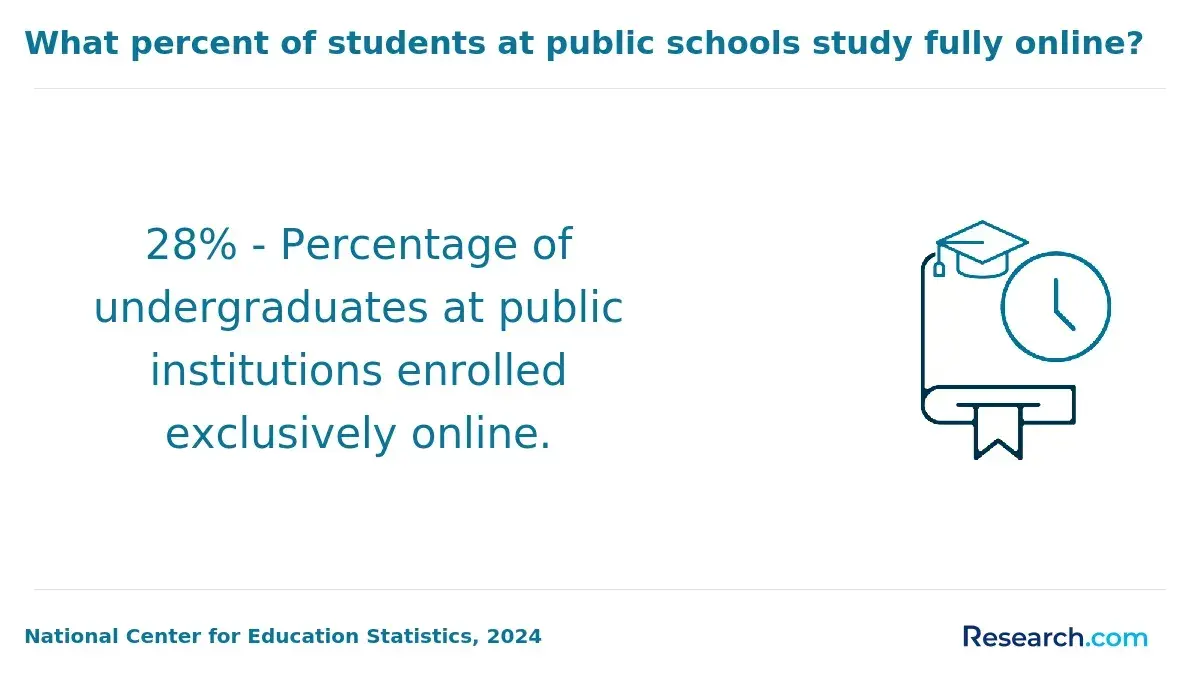
Online 5-week bachelor's courses offer flexibility, but campus-based formats may provide stronger access to labs, peer networks, clinical placements, or local internships. The better choice depends on your major, work schedule, learning style, and whether your target career requires hands-on training.
The comparison below highlights the practical trade-offs students should weigh before choosing a format.
| Format | Best fit | Main advantage | Main caution |
| Fully online | Working adults, parents, military learners, transfer students | Maximum schedule flexibility and access to schools outside your area | Requires strong self-management and careful review of practicum or licensure rules |
| Hybrid | Students who need labs, occasional campus support, or local networking | Balances flexibility with some face-to-face instruction | Campus visits can conflict with work or travel schedules |
| Campus-based accelerated | Students who learn best in person or need structured lab access | Direct interaction with faculty, classmates, and campus services | Less flexible for adults with rotating shifts or family responsibilities |
Students comparing remote options should look beyond marketing language and review graduation support, faculty access, transfer policies, and student outcomes from prestigious online universities.
Are 5-week bachelor's degree programs properly accredited and widely recognized?
Yes, 5-week bachelor's programs can be properly accredited and widely recognized, but the course length itself does not prove quality. Employers, graduate schools, and licensing boards typically care more about the institution's accreditation, the program's curriculum, and whether the degree meets professional requirements.
For U.S. students, institutional accreditation from an agency recognized by the U.S. Department of Education is the baseline to verify. Programmatic accreditation may also matter in fields such as nursing, education, engineering, business, counseling-related pathways, and health information management. Recognition can vary by employer and state, so students should confirm requirements before enrolling.
Accreditation red flags include vague claims such as "internationally accredited" without a recognized agency, pressure to enroll immediately, refusal to disclose graduation or transfer-credit policies, and promises that a degree will automatically lead to licensure or a specific job.
What admission requirements do schools set for 5-week bachelor's programs?
Admission requirements for 5-week bachelor's programs are usually similar to traditional bachelor's programs, but accelerated schools often place extra emphasis on transfer evaluation and readiness for online learning. Requirements vary by institution and major.
Students should prepare the following items early because missing documents can delay the start date in short-term academic calendars:
- Official high school transcript, GED documentation, or prior college transcripts.
- Minimum GPA or conditional admission review, depending on the school.
- Transfer-credit evaluation for prior college, military, professional, or exam-based learning.
- Program-specific prerequisites, such as anatomy for nursing, statistics for psychology, or calculus for engineering-related majors.
- Background checks, immunization records, field-placement approvals, or state forms for education, nursing, and healthcare programs.
Students who are not ready for a full bachelor's program may consider starting with an associate degree online and later transferring credits, but they should confirm transfer agreements before choosing that route.
How long does it take to finish a bachelor's degree with 5-week courses?
The fastest completion time depends on how many credits you bring in, how many courses you take per term, and whether the school offers continuous start dates. A student starting from zero credits typically cannot finish a legitimate 120-credit bachelor's degree in a few months, even with 5-week courses. Transfer students with 60 to 90 accepted credits may finish much faster.
A realistic timeline looks different for each student profile.
| Student profile | Typical credit situation | Likely timeline consideration |
| First-time bachelor's student | Few or no college credits | Often needs several years because general education and major credits still add up to about 120 credits |
| Associate degree holder | Often 60 transferable credits, depending on fit | May complete upper-division requirements faster if credits apply cleanly |
| Adult learner with mixed credits | Prior college, military, certifications, or exams | Timeline depends on transfer limits, residency requirements, and major prerequisites |
| Licensed professional completing a degree | May receive block credit for prior training | RN-to-BSN and similar completion pathways can be shorter than traditional programs |
Do not use marketing claims about 1 year PhD programs online free as a benchmark for undergraduate planning; bachelor's completion is governed by undergraduate credit requirements, transfer policy, and academic workload.
What tuition costs, fees, and financial aid options apply to 5-week programs?
Costs vary widely by school type, residency status, transfer credits, textbooks, technology fees, and whether courses are charged per credit or per term.
College Board's 2024 pricing data shows average published tuition and fees of $11,610 at public four-year in-state institutions and $43,350 at private nonprofit four-year institutions for the 2024-2025 academic year, before grants and scholarships. This gap shows why students should compare net price rather than sticker price.
The table below summarizes common cost categories that affect the total price of an accelerated bachelor's program.
| Cost factor | Why it matters | What to ask |
| Tuition model | Per-credit and flat-term pricing can reward different pacing strategies | Will taking one course at a time cost more than taking multiple courses? |
| Transfer credits | Accepted credits can reduce the number of courses you must pay for | How many credits can transfer into my specific major? |
| Fees | Online, technology, graduation, lab, clinical, or assessment fees can increase total cost | What is the full program cost after all required fees? |
| Books and materials | Some accelerated programs use digital resources or subscription platforms | Are books included, optional, or billed separately? |
| Financial aid eligibility | Federal aid depends on school eligibility, enrollment status, and student eligibility | Is this program eligible for Pell Grants, federal loans, employer tuition assistance, or military benefits? |
Students trying to reduce upfront costs can also compare online colleges with free applications, but application fees are only a small part of the total cost decision.
Before enrolling, students should complete a basic affordability check that separates speed from value:
- Calculate total remaining credits after an official transfer evaluation, not an informal estimate.
- Ask for the full cost of attendance, including fees, books, and required technology.
- Compare net price after grants, scholarships, employer benefits, and military education benefits.
- Estimate whether accelerated pacing will reduce living costs or increase stress, childcare needs, or lost work hours.
- Avoid borrowing the maximum loan amount unless it is necessary for completion.
Employer Confidence in Online vs. In-Person Degree Skills, Global 2024

What majors and typical coursework are offered in 5-week bachelor's programs?
Five-week bachelor's programs are most common in majors that adapt well to modular online coursework, but availability varies by school. Students should compare not only the major name but also the concentration, capstone, practicum, lab, and licensure components.
The table below shows common majors and the type of coursework students are likely to encounter.
| Major area | Typical coursework | Decision point |
| Business | Accounting, management, marketing, business law, finance, operations | Choose a concentration that matches your target role, such as accounting or HR |
| Healthcare administration | Healthcare policy, finance, quality improvement, compliance, leadership | Best for administrative roles, not clinical licensure by itself |
| Information technology | Networking, databases, cloud systems, systems analysis, IT management | Look for labs and certification-aligned content |
| Computer science | Programming, algorithms, software engineering, databases, discrete math | Expect heavier math and coding than in IT programs |
| Cybersecurity | Risk management, secure networks, incident response, digital forensics | Prior IT experience and certifications may strengthen job readiness |
| Psychology | Research methods, statistics, development, cognition, abnormal psychology | Clinical careers usually require graduate study |
| Nursing completion | Evidence-based practice, community health, leadership, informatics | Usually designed for licensed RNs rather than first-time nursing students |
| Education | Instructional design, classroom management, assessment, child development | Teacher licensure depends on state-approved pathways |
| Criminal justice | Courts, policing, corrections, criminology, investigation, ethics | Agency hiring requirements still apply |
| Engineering technology | Applied systems, quality control, manufacturing, project management | Check ABET status if licensure or engineering recognition matters |
Students should be cautious with majors that sound career-specific but lack required approvals. For example, an education degree that is not state-approved may be useful for training roles but may not lead to public teacher certification.
What careers, salaries, and job outcomes can 5-week bachelor's graduates expect?
Career outcomes from 5-week bachelor's programs depend on the same factors that affect other degrees: major, accreditation, experience, internships, location, employer expectations, and professional licensing. The course length is usually less important to employers than whether the degree is legitimate and whether the graduate can demonstrate relevant skills.
The table below uses BLS May 2024 median pay data to show salary context for roles commonly connected to popular bachelor's majors. These figures are not guarantees; they describe national occupational medians.
| Degree area | Example role | Typical responsibility | BLS May 2024 median pay |
| Business | Accountant or auditor | Prepare, examine, and interpret financial records | $81,680 |
| Business or marketing | Market research analyst | Study consumers, competitors, and market conditions | $76,950 |
| Healthcare administration | Medical and health services manager | Plan and coordinate healthcare operations | $117,960 |
| Information technology | Computer systems analyst | Evaluate and improve organizational computer systems | $103,790 |
| Computer science | Software developer | Design, build, test, and improve software applications | $133,080 |
| Cybersecurity | Information security analyst | Protect systems, monitor threats, and respond to incidents | $124,910 |
| Nursing | Registered nurse | Provide patient care, education, and clinical coordination | $93,600 |
| Education | Elementary school teacher | Teach core subjects and support student learning | $62,340 |
| Criminal justice | Police officer or detective | Enforce laws, investigate cases, and protect public safety | $77,270 |
| Engineering | Civil engineer | Design and oversee infrastructure projects | $99,590 |
Current labor trends make program choice especially important. BLS projections for 2024-2034 show particularly strong growth for information security analysts and medical and health services managers, while some public-sector and licensed fields depend more heavily on local budgets, state rules, and vacancies.
AI is also reshaping work: business, IT, cybersecurity, and computer science students should expect employers to value data literacy, automation awareness, and the ability to use AI tools responsibly.
How can students choose a reputable 5-week bachelor's program aligned with their goals?
Choosing a reputable 5-week bachelor's program starts with matching the degree to a specific goal, then verifying that the school can actually support that goal. Speed is valuable only if the credential is recognized, affordable, and realistic for your schedule.
Use the following steps to compare programs before speaking with admissions or submitting an application:
- Define the job, promotion, graduate program, or licensure pathway you want the degree to support.
- Verify institutional accreditation and any required programmatic accreditation for your field.
- Request an official transfer-credit review before estimating cost or completion time.
- Ask whether the program includes labs, practicums, clinicals, student teaching, internships, or capstones.
- Compare total net cost after aid, not only tuition per credit.
- Review course pacing and decide whether you can handle weekly deadlines while working or caring for family.
- Check student support, including tutoring, writing help, career services, library access, and faculty response times.
- Confirm whether graduates qualify for licensure exams, certifications, or graduate admission when applicable.
Common mistakes include choosing the fastest advertised timeline without checking transfer limits, assuming online means easier, ignoring state licensure rules, comparing sticker prices instead of net costs, and enrolling before seeing a written degree plan. A strong program should be transparent about credits, costs, accreditation, outcomes, and student responsibilities.
Other Things You Should Know About the Best Bachelor's Degree Programs
No. They are usually shorter, not easier. The same amount of credit-bearing work is compressed into fewer weeks, so students often need consistent weekly study time and strong organization.
Many students do, especially when taking one course at a time. However, the workload can be intense, so full-time workers should avoid overloading their schedule until they understand the pace.
Usually, transcripts list courses and credits, not the weekly format in a way that changes the degree's basic value. Employers generally focus on the school, accreditation, major, skills, and experience.
The biggest risk is enrolling in a program that is fast but poorly matched to your goal. Always verify accreditation, transfer credits, total cost, licensure eligibility, and career relevance before committing.
References
- Costs of Online and Campus Colleges | University of Phoenix https://www.phoenix.edu/blog/comparing-the-costs-of-online-and-campus-colleges.html
- Average Cost of College [2025]: Yearly Tuition + Expenses https://educationdata.org/average-cost-of-college
- Online Degree Programs, Undergraduate and Graduate https://www.coloradotech.edu/online-degree-programs
- Transfer Admissions Information https://www.eastern.edu/about/offices-centers/office-registrar/transfer-credit-policies-new-students
- Top Degrees in Demand for the Future: 2026 & Beyond https://skillifysolutions.com/blogs/career-growth/top-degrees-in-demand-for-the-future/
- Is a College Degree Worth the Cost in 2024? Financial Aid, Cost Savings, and Outcomes https://walshcollege.edu/admissions-advising/is-a-college-degree-worth-the-cost/
- International Student Credit Transfer: How ECTS, CATs, and Credit Equivalency Work https://openeducat.org/articles/international-student-credit-transfer-guide/