2027 Best Bachelor's Completion Programs With Rolling Admissions

Co-Founder and Chief Data Scientist
If you have college credits but no bachelor's degree, rolling admissions can help you restart without waiting for one annual deadline. The payoff can be meaningful: BLS 2024 data shows workers with a bachelor's degree had median weekly earnings of $1,543, compared with $1,025 for people with some college but no degree.
This guide is for adults, transfer students, military learners, and career changers comparing completion programs. You'll learn which majors fit different goals, what policies to check, and how to choose a program that respects your time, credits, and budget.
Key Things You Should Know
- Strong completion programs usually accept 60 to 90 transfer credits, but the best choice depends on accreditation, major requirements, residency rules, and whether prior learning can reduce your remaining course load.
- Rolling admissions does not mean automatic admission; most schools still review GPA, completed credits, transcripts, prerequisite courses, and, for fields such as nursing or education, state-specific licensure requirements.
- BLS 2024 wage data shows bachelor's-level pathways can vary widely, from education and public service roles to higher-paying IT, cybersecurity, engineering, healthcare management, and business careers.
Top 10 Best Bachelor's Completion Programs With Rolling Admissions
Business Degrees
Business completion programs are among the most flexible because they often accept broad transfer credits and lead to roles in management, accounting, marketing, human resources, operations, and finance.
BLS reported a 2024 median annual wage of $82,610 for business and financial occupations, making this a practical option for adults seeking advancement. Choose a program with concentrations aligned to your goal, such as accounting for CPA preparation or supply chain for operations work.
Healthcare Degrees
Healthcare completion programs often focus on healthcare administration, health sciences, public health, or allied health leadership. They suit students with clinical experience who want supervisory, compliance, care coordination, or administrative roles.
BLS listed the 2024 median annual wage for medical and health services managers at $117,960, but many roles require experience along with the degree. Check whether the curriculum covers healthcare finance, policy, data systems, ethics, and quality improvement.
Information Technology Degrees
Information technology completion programs are best for students who want applied technical roles in systems administration, cloud support, networking, database management, or IT project coordination. They may accept prior technical coursework, military training, or industry certifications.
The best programs include hands-on labs and current platforms rather than theory alone. If you need faster job-focused credentials before or alongside a degree, compare online certificate programs that pay well.
Computer Science Degrees
Computer science completion programs are stronger for students who want software development, data, artificial intelligence, or systems design roles. They usually require more math and programming prerequisites than general IT degrees, so transfer evaluation matters.
BLS reported a 2024 median annual wage of $133,080 for software developers, but hiring is skills-based and portfolio-driven. Look for courses in algorithms, databases, secure coding, cloud development, and capstone projects.
Cybersecurity Degrees
Cybersecurity completion programs fit students interested in threat analysis, incident response, risk management, digital forensics, or security operations. BLS reported a 2024 median annual wage of $124,910 for information security analysts, reflecting strong employer demand for security talent.
Prior IT experience can be a major advantage. Choose programs with labs, security frameworks, networking depth, and preparation for respected certifications, but avoid schools that promise certification or job placement outcomes.
Psychology Degrees
Psychology completion programs suit students interested in human behavior, research, social services, human resources, case management, or graduate study. A bachelor's degree alone does not qualify graduates to become licensed psychologists or therapists, so this path is best when paired with clear career planning.
The strongest programs include statistics, research methods, abnormal psychology, lifespan development, and applied electives. Ask advisors how graduates use the degree in local employment markets.
Nursing Degrees
Nursing completion programs usually mean RN-to-BSN pathways for licensed registered nurses. They are designed for working nurses who already completed an associate degree or diploma program and want broader preparation in leadership, evidence-based practice, public health, and care coordination.
BLS reported a 2024 median annual wage of $93,600 for registered nurses. Confirm state authorization, clinical or practicum expectations, and whether the program holds recognized nursing accreditation.
Education Degrees
Education completion programs can prepare students for teaching, instructional support, early childhood education, or non-licensure education roles. Licensure rules vary by state, so do not assume an online program automatically qualifies you for a teaching certificate where you live.
Strong programs clearly disclose student-teaching requirements, background checks, testing expectations, and placement support. If you want the simplest academic path, compare options carefully because the easiest degree to get online may not meet teacher licensure goals.
Criminal Justice Degrees
Criminal justice completion programs fit students pursuing law enforcement, corrections, probation, court administration, homeland security, or victim advocacy. Some roles require academy training, background checks, or agency-specific standards beyond the degree.
Students with prior records should research eligibility before enrolling; this is especially important when comparing online degrees for felons. The best programs discuss ethics, evidence, policy, community relations, and data-informed justice practices.
Engineering Degrees
Engineering completion programs are less common and more restrictive than business or liberal studies programs because labs, math sequences, and accreditation requirements limit transfer flexibility. They are best for students with substantial prior STEM coursework.
BLS reported a 2024 median annual wage of $97,310 for architecture and engineering occupations, but outcomes vary by discipline. If professional engineering licensure matters, prioritize ABET-accredited programs and confirm whether online or hybrid labs meet your state's expectations.
What is a bachelor's completion program with rolling admissions and who is it best for?
A bachelor's completion program is designed for students who already earned college credits and want to finish the upper-division coursework needed for a bachelor's degree. Rolling admissions means the school reviews applications continuously or across multiple start dates instead of requiring all applicants to meet one fixed deadline.
These programs are usually best for adults who left college, associate degree graduates, military students, working professionals, and transfer students who need flexibility. They are not always ideal for first-time freshmen, students with very few credits, or applicants entering majors with strict course sequences.
The table below summarizes which completion format tends to fit different student situations. Use it to narrow your search before comparing individual schools:
| Student situation | Best-fit completion format | Why it may work |
| Associate degree graduate | Degree-completion major with a transfer pathway | Often maximizes lower-division credits and focuses on upper-level major courses |
| Working adult with mixed credits | Online or hybrid completion program | Provides scheduling flexibility while allowing transcript review from multiple schools |
| Licensed professional | Career-ladder program such as RN-to-BSN or healthcare leadership | Builds on an existing credential and work experience |
| Career changer | Major with built-in prerequisites and advising | Helps identify missing foundation courses before upper-division work begins |
The best program is the one that accepts the most useful credits without weakening your career target. A fast program that does not meet licensure, employer, or graduate-school expectations can cost more in the long run.
How do rolling admissions bachelor's completion programs work differently from fixed-deadline programs?
Rolling admissions programs usually review applications as they arrive and may offer several start dates per year. Fixed-deadline programs require students to apply by a specific date, then wait for a decision and a later term start.
This difference matters because completion students often need transcript evaluations, employer approvals, financial aid processing, and life-planning time. Rolling admissions can shorten the waiting period, but it does not remove academic standards or program capacity limits.
The comparison below shows how the two admissions models affect planning. It is especially useful if you are balancing school with work, caregiving, military service, or relocation:
| Feature | Rolling admissions completion program | Fixed-deadline completion program |
| Application timing | Applications reviewed continuously or by frequent start windows | Applications reviewed after a set deadline |
| Start flexibility | Often monthly, quarterly, or multiple times per year | Usually tied to semester or annual cycles |
| Transcript review | May begin soon after application materials arrive | May be delayed until the review period |
| Best for | Students ready to enroll soon or needing flexible timing | Students targeting selective cohorts or structured sequences |
| Potential drawback | Popular terms or majors can still fill quickly | Missing a deadline can delay enrollment for months |
A common mistake is assuming "rolling" means you can apply at the last minute without consequences. Financial aid, transfer-credit evaluation, immunization records, placement testing, or licensure paperwork can still take time.
What accreditation and credit-transfer policies should you check before enrolling in a completion program?
Accreditation and transfer policy are the two biggest quality checks before enrolling. Accreditation affects financial aid eligibility, credit recognition, graduate-school acceptance, and employer confidence. Transfer policy determines how much of your previous work actually moves you closer to graduation.
Start with institutional accreditation from a recognized accrediting agency, then check programmatic accreditation when your field requires it. Nursing, education, engineering, business, social work, and counseling-related pathways may have extra standards depending on your goal.
Before committing, ask the school to provide written answers to these questions. They help you avoid losing credits or enrolling in a program that does not match your career path:
- How many of my previous credits apply directly to the degree, not just as electives?
- What is the maximum number of transfer credits accepted?
- How many credits must I complete at your institution to graduate?
- Are there time limits on science, technology, nursing, business, or education courses?
- Does the program meet licensure or certification requirements in my state?
- Can industry certifications, military training, exams, or work portfolios count for credit?
The biggest red flag is vague transfer advising. A program may advertise generous transfer credit, but only a degree audit shows whether those credits reduce your remaining requirements.
How do online bachelor's completion programs compare with on-campus options for flexibility and support?
Online bachelor's completion programs usually offer the most flexibility for working adults because lectures, discussions, assignments, and advising can be built around nontraditional schedules. On-campus programs may be better when your major requires labs, studios, clinical placements, student teaching, or close local networking.
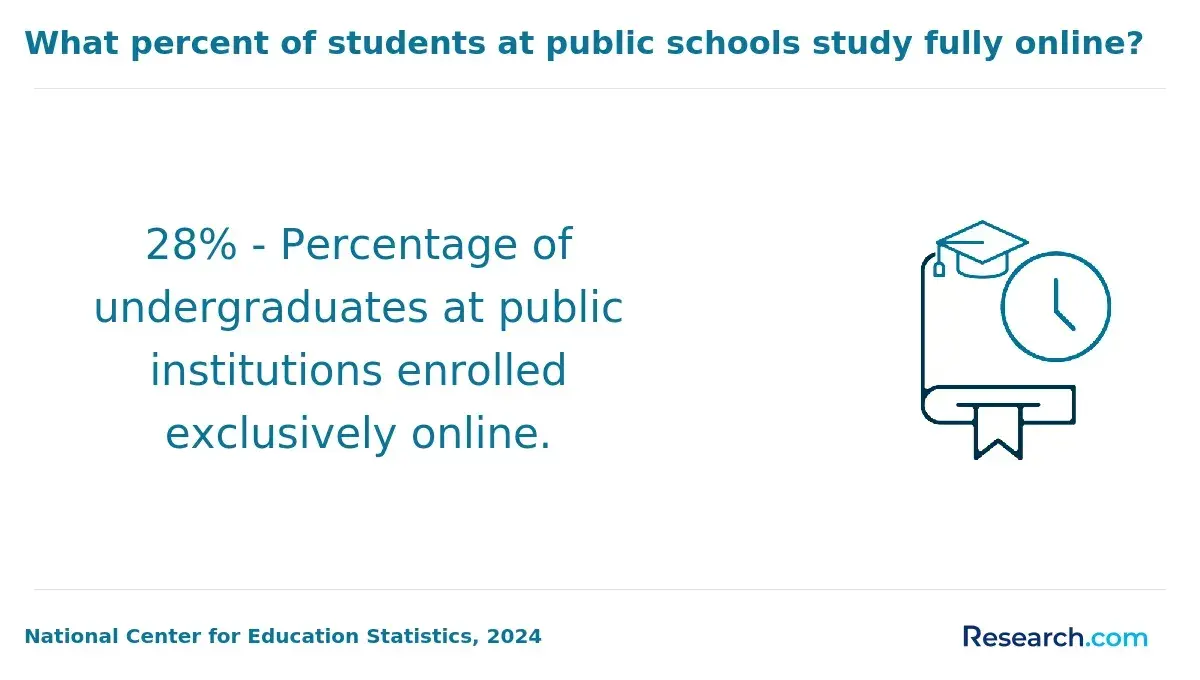
Online learning has become a mainstream option rather than a backup plan. NCES reported that in fall 2022, more than half of U.S. college students took at least one distance education course, a trend that continues to shape how colleges design adult-focused completion programs.
The practical decision is not simply online versus campus. It is whether the delivery format gives you enough structure, access, and support to finish:
| Factor | Online completion program | On-campus completion program |
| Schedule flexibility | Stronger for working adults and caregivers | Stronger for students who prefer fixed class times |
| Hands-on requirements | May require local placements, simulations, or short residencies | Often easier for labs, studios, and supervised practice |
| Support access | Depends heavily on online advising, tutoring, and faculty response times | May offer easier face-to-face access to offices and peers |
| Networking | Can be strong if the program includes cohorts and career events | Often stronger for local employer connections |
| Best fit | Self-directed students who need location flexibility | Students who benefit from in-person accountability |
If you choose online, ask whether courses are asynchronous, synchronous, or mixed. Synchronous evening classes can be flexible, but they still require scheduled attendance.
What are typical admission requirements for bachelor's completion programs, including minimum credits and GPA?
Admission requirements vary by institution and major, but bachelor's completion programs usually expect applicants to bring prior college credit. Many programs are designed for students with an associate degree or roughly 60 transferable credits, while some accept applicants with fewer credits and build in missing general education courses.
GPA requirements also vary. A school may have one minimum GPA for general admission and a higher threshold for nursing, education, engineering, business, or computer science. Competitive programs may review prerequisites, professional licensure, work experience, essays, or background checks.
Most applicants should prepare the following materials before applying. Having them ready can speed up rolling admissions decisions:
- Official transcripts from every college previously attended.
- High school transcript or GED record if required by the institution.
- Resume showing work experience, military training, certifications, or licensure.
- Personal statement if the program asks you to explain goals or academic history.
- Proof of current license for RN-to-BSN or other career-ladder programs.
- FAFSA information and employer tuition-benefit documents if using aid.
Avoid applying to only one program before seeing your transfer evaluation. Two schools with similar tuition can produce very different total costs if one accepts more credits toward the major.
How long does it take to finish a bachelor's completion program and how is prior learning counted?
Completion time depends on how many credits transfer, how many credits apply to your major, and whether you study full time or part time. A student who transfers about 90 applicable credits may finish much faster than a student who transfers 60 credits but still needs prerequisites.
Prior learning can be counted in several ways, but policies vary widely. Some schools accept standardized exams, military training, professional licenses, industry certifications, workplace portfolios, or credit recommendations from recognized evaluators.
Use this process before enrolling so you understand your real timeline. It can prevent the common mistake of comparing programs by advertised length instead of remaining requirements:
- Request an unofficial transfer estimate before applying, if available.
- Apply and submit every transcript, even from schools where you completed only one course.
- Ask for a written degree audit showing completed, remaining, elective, and residency credits.
- Confirm whether prerequisites must be finished before upper-division courses.
- Calculate the pace you can maintain without risking withdrawal or failed courses.
- Ask how often required courses are offered, especially capstones and major sequences.
Acceleration is useful only if it is sustainable. For many adults, a steady part-time pace with year-round enrollment is more realistic than overloading courses for one or two terms.
What tuition costs, financial aid options, and employer tuition benefits are common for completion students?
Completion students should compare total remaining cost, not just tuition per credit. Your actual price depends on accepted transfer credits, institutional fees, books, technology charges, clinical or lab costs, travel, and whether you qualify for grants, scholarships, loans, military benefits, or employer tuition assistance.
College Board's 2024 pricing data shows why this matters: published tuition and fees for public four-year in-state students averaged $11,610 for the academic year, while private nonprofit four-year institutions averaged $43,350. Online completion programs may reduce commuting or housing costs, but they are not automatically cheaper.
Common cost and aid items include the following. Compare them after you receive a transfer evaluation:
- $11,610 average published in-state tuition and fees at public four-year institutions for the academic year.
- $43,350 average published tuition and fees at private nonprofit four-year institutions for the academic year.
- $7,395 maximum Federal Pell Grant for eligible students in the 2025-26 award year.
- Employer tuition assistance, which may require grade minimums, approved majors, or continued employment.
- Federal student loans, which must be repaid and should be evaluated against expected career value.
If your goal eventually requires graduate education, factor that into ROI. Some students finish a bachelor's degree to qualify for masters degrees that make the most money, but taking on undergraduate debt without a graduate-school plan can limit future options.
What careers and industries commonly hire graduates of bachelor's completion programs with rolling admissions?
Graduates of bachelor's completion programs are hired across the same industries that hire other bachelor's graduates, but outcomes depend on major, experience, location, internships, licensure, and employer expectations. Completion students often bring work history, which can help when applying for supervisory, administrative, technical, or career-transition roles.
The strongest career matches usually occur when the degree builds on existing experience. For example, a medical assistant moving into healthcare administration or an IT support specialist completing a cybersecurity degree has a clearer story than a student choosing a major without a target role.
The table below connects common completion majors with realistic career directions. Use it to test whether a program's curriculum matches the jobs you actually want:
| Completion major | Common industries | Typical career directions |
| Business | Corporate services, finance, retail, logistics, government | Operations coordinator, analyst, HR specialist, manager-track roles |
| Healthcare administration | Hospitals, clinics, insurers, public health organizations | Practice manager, quality coordinator, healthcare operations roles |
| Information technology | Technology services, finance, healthcare, education, government | Systems analyst, network administrator, IT project coordinator |
| Computer science | Software, data, cloud services, cybersecurity, product companies | Software developer, data analyst, QA engineer, application support |
| Cybersecurity | Finance, defense, healthcare, consulting, public sector | Security analyst, SOC analyst, risk analyst, incident response roles |
| Nursing | Hospitals, community health, long-term care, case management | BSN-prepared RN roles, nurse leadership pathways, care coordination |
| Education | Schools, childcare, nonprofits, edtech, training departments | Teacher candidate, instructional aide, training coordinator, education specialist |
AI and automation are changing job tasks, especially in business, IT, healthcare administration, and criminal justice analytics. Programs that include data literacy, ethical technology use, communication, and project-based work may prepare students better than programs focused only on textbook knowledge.
What starting salaries and long-term job outlook can bachelor's completion graduates realistically expect?
Salary outcomes vary too much by field to treat a bachelor's completion degree as a guaranteed raise. A safer approach is to compare the labor market for the specific occupation you want, then evaluate whether the degree is required, preferred, or simply helpful.
BLS 2024 data is useful because it shows both broad education value and occupation-specific variation. The median weekly wage for bachelor's degree holders was $1,543, but individual fields can land well above or below that depending on role, employer, experience, and region.
The table below provides salary context for common pathways linked to completion degrees. These figures describe occupational medians, not promises for new graduates:
| Career path | Relevant completion degree | 2024 BLS median annual wage | How to interpret it |
| Software developer | Computer science | $133,080 | Portfolio, coding skill, internships, and technical interviews strongly affect entry |
| Information security analyst | Cybersecurity or IT | $124,910 | Prior IT experience and certifications often influence competitiveness |
| Medical and health services manager | Healthcare administration or health sciences | $117,960 | Management roles usually require healthcare experience, not only a degree |
| Registered nurse | RN-to-BSN | $93,600 | Licensure is required, and BSN value varies by employer and region |
| Accountant or auditor | Business or accounting | $81,680 | CPA eligibility may require additional credits beyond the bachelor's degree |
| Police and detective roles | Criminal justice | $77,270 | Agency standards, academy training, and background checks remain central |
Long-term outlook should be evaluated by occupation, not by degree title alone. Technology-related and healthcare management roles have stronger demand signals than some generalist pathways, while public-sector and education roles may offer stability but lower salary ceilings.
To evaluate ROI, compare your remaining tuition against the jobs the degree can realistically unlock. The smartest choice is usually a program that accepts substantial credit, aligns with a defined career goal, and provides career services before graduation rather than only after.
Other Things You Should Know About
Not necessarily. Rolling admissions means applications are reviewed on an ongoing schedule, but schools may still enforce GPA, credit, prerequisite, licensure, and capacity requirements.
Many programs are designed for students with about 60 transferable credits or an associate degree, but some accept fewer. The key question is how many credits apply to your specific degree plan.
Yes, many programs can be completed online, especially in business, IT, psychology, criminal justice, and healthcare administration. Nursing, education, engineering, and lab-based fields may require clinicals, student teaching, labs, or local placements.
The biggest mistake is enrolling before receiving a written degree audit. Without it, you may overestimate transfer credits, underestimate cost, or discover too late that the program does not meet career or licensure requirements.
References
- College Graduation Rates and How ACE Compares | ACE Blog https://ace.edu/blog/college-graduation-rates-and-how-ace-compares/
- Best Colleges with Rolling Admissions [2026] | HelloCollege https://sayhellocollege.com/blog/best-colleges-with-rolling-admissions/
- Can You Transfer Credits From a Completed Degree? https://www.edvisorly.com/student-guides/can-you-transfer-credits-from-a-completed-degree
- Rolling Admission for Bachelor's studies https://www.haaga-helia.fi/en/apply/rolling-admission-bachelors-studies
- Best Accredited Online Universities in 2025 https://www.study.eu/article/best-accredited-online-universities
- Rolling Admissions Guide: What, When, Why? https://www.ivywise.com/blog/what-does-rolling-admissions-mean/
- New Data on Completion Rates | HESA https://higheredstrategy.com/new-data-on-completion-rates/
- Finish the degree you started (without starting over) https://news.newmanu.edu/finish-the-degree-you-started-without-starting-over/
- Domestic rolling admission for bachelor's studies https://www.lut.fi/en/studies/apply-lut/applying-bachelors-programmes/domestic-rolling-admission-bachelors-studies
- Schools Ranked by Graduation Rate | OEDB https://www.oedb.org/rankings/graduation-rate/