2027 Are Online Cybersecurity Management Doctorate Degrees Respected by Employers? Hiring Trends and Career Outcomes

Co-Founder and Chief Data Scientist
An online cybersecurity management doctorate can be respected by employers, but only when it matches the role, institution, accreditation, and career level the employer values. The decision matters because cyber risk is now a board-level issue: the FBI reported $16.6 billion in cybercrime losses in 2024.
This guide is for security managers, IT leaders, consultants, military professionals, and aspiring faculty evaluating whether a doctoral credential will improve advancement, credibility, and pay. You will learn where the degree has strong ROI, where it may not, and how to judge programs before enrolling.
Key Things You Should Know
- Employers usually care more about institutional accreditation, program reputation, work experience, leadership results, and dissertation or applied research relevance than whether the doctorate was completed online.
- The strongest financial cases are usually senior leadership, consulting, federal contracting, risk governance, and academic roles; BLS data shows computer and information systems managers had a median annual wage of $171,200 in May 2024.
- An online doctorate is rarely the fastest path into cybersecurity; for many professionals, a master's degree, certifications, clearance, or targeted technical training may produce better short-term ROI.
What Is the True ROI of an Online Cybersecurity Management Doctorate?
The true ROI of an online cybersecurity management doctorate is not just the salary increase after graduation. It is the combined value of employer recognition, leadership mobility, credibility in high-trust environments, consulting opportunities, teaching eligibility, and the ability to solve complex security governance problems.
For many employers, "online" is not automatically a disadvantage. Hiring managers are more likely to ask whether the school is properly accredited, whether the doctorate is academically rigorous, whether the candidate already has substantial cybersecurity or IT leadership experience, and whether the research or capstone work is relevant to enterprise risk. A doctorate earned online from an accredited institution can carry strong value when it is paired with proven results.
ROI is weaker when the degree is used as a substitute for experience. Cybersecurity management is a leadership field, so employers often expect evidence of incident response oversight, governance, compliance, cloud security strategy, vendor risk management, budget ownership, or security team leadership. A doctorate can amplify those qualifications, but it usually does not replace them.
Readers comparing doctoral options should also consider the full education pathway. Some professionals begin with a cybersecurity degree online, gain technical and managerial experience, and pursue doctoral study only when their target roles require executive-level credibility, research expertise, or academic qualifications.
The table below summarizes the employer-recognition factors that most directly affect ROI. It helps separate legitimate signals of quality from marketing claims that may not predict career outcomes:
| Factor employers may evaluate | Why it affects ROI | What strong evidence looks like |
| Institutional accreditation | Many employers, universities, and government-related organizations use accreditation as a baseline legitimacy check. | The institution is accredited by an agency recognized by the U.S. Department of Education or CHEA. |
| Doctorate type | A PhD, DSc, DBA, or professional doctorate may be viewed differently depending on whether the role is research, executive leadership, or teaching focused. | The degree structure matches the target role, such as applied leadership for CISO-track roles or research preparation for faculty roles. |
| Professional experience | Cybersecurity management employers often value demonstrated leadership more than academic credentials alone. | The candidate has led teams, budgets, audits, incident programs, compliance initiatives, or security transformation projects. |
| Research or capstone relevance | Doctoral work can strengthen credibility when it addresses real organizational security problems. | The dissertation or project connects to risk governance, AI security, critical infrastructure, cloud risk, privacy, or resilience. |
| Program network | Online students need access to faculty, alumni, employers, and professional communities to convert the degree into opportunity. | The program provides research mentorship, industry speakers, career services, alumni access, and applied projects. |
In practical terms, the best ROI comes when the doctorate helps a professional cross a specific career threshold: moving from director to executive, qualifying for faculty or research roles, entering high-level consulting, or competing for roles where risk governance and strategic authority matter.
How Much Does an Online Cybersecurity Management Doctorate Increase Earning Potential?
An online cybersecurity management doctorate may increase earning potential, but the increase is usually indirect. Employers rarely pay more simply because a candidate has a doctorate; they pay more when the credential helps the candidate qualify for higher-responsibility roles.
The salary context is favorable for experienced cybersecurity leaders. According to BLS data, information security analysts had a median annual wage of $124,910 in May 2024. This figure does not represent doctorate-specific pay, but it shows that cybersecurity is already a relatively high-wage field before doctoral education is considered.
For doctorate holders, the more relevant question is whether the degree improves access to roles above analyst or hands-on technical management. These may include chief information security officer, security governance director, cyber risk executive, security architecture leader, cyber policy strategist, consulting principal, or full-time faculty member.
The table below compares roles where a doctorate may influence earning potential. The salary figures are occupational benchmarks, not promises for degree holders, and actual compensation varies by employer, region, clearance requirements, industry, and scope of responsibility:
| Career direction | How a doctorate may help | Relevant 2024 salary context |
| Information security leadership | Can support advancement into governance, strategy, and enterprise risk roles when paired with strong experience. | Information security analysts had a median annual wage of $124,910. |
| IT or cybersecurity executive management | May strengthen credibility for senior roles overseeing security budgets, teams, compliance, and technology risk. | Computer and information systems managers had a median annual wage of $171,200. |
| Postsecondary teaching | May be required or preferred for tenure-track, full-time faculty, and doctoral teaching roles. | Postsecondary teachers overall had a median annual wage of $83,980. |
| Cybersecurity consulting | Can add credibility for advisory work, expert analysis, risk governance, and executive briefings. | Compensation varies widely and is often tied to client base, specialization, and firm level. |
The main takeaway is that earning potential depends on role movement. A doctorate can be financially meaningful if it helps a professional move into executive leadership, specialized consulting, or academia. It may have limited immediate salary impact for someone who remains in the same individual contributor or mid-level management role.
Which Careers Provide the Best Financial Return With an Online Cybersecurity Management Doctorate?
The best financial return usually comes from careers where employers value strategic judgment, governance expertise, risk communication, and authority with senior stakeholders. These roles reward a combination of experience, credentials, reputation, and demonstrated ability to manage organizational risk.
A doctorate is most likely to produce strong ROI in career paths where the credential signals more than technical knowledge. It can show that the candidate can conduct advanced analysis, build evidence-based security programs, teach or publish, and translate cybersecurity risk into business decisions.
The following career paths tend to offer the strongest alignment between doctoral education and employer value. They are not the only options, but they are the areas where a doctorate is more likely to be interpreted as relevant rather than excessive:
- Chief information security officer or deputy CISO: The doctorate may strengthen credibility with boards, regulators, auditors, and executive teams, especially when the candidate already has significant leadership experience.
- Cyber risk governance director: Employers may value doctoral-level training in policy, compliance, enterprise risk management, and decision-making under uncertainty.
- Security consulting principal: A doctorate can help differentiate a consultant who advises clients on strategy, resilience, audits, incident governance, or regulatory risk.
- Federal contractor or defense cybersecurity leader: The degree can support credibility in high-assurance environments, though clearance, contract requirements, and technical certifications may matter more for some roles.
- Cybersecurity faculty member or academic program leader: Doctoral credentials are often important for full-time teaching, curriculum leadership, dissertation supervision, and research roles.
Fields with weaker financial return may include roles where employers prioritize tool-specific skills, certifications, shift coverage, or direct operational performance over advanced academic preparation.
For example, a security operations center manager may benefit more immediately from leadership training, cloud security credentials, or incident response certifications unless the doctorate supports a planned move into executive governance.
Industry also matters. Financial services, healthcare, defense, critical infrastructure, higher education, consulting, and large technology organizations may view doctoral-level cybersecurity management more favorably than smaller employers with narrower operational needs.
How Does an Online Cybersecurity Management Doctorate Affect Career Advancement?
An online cybersecurity management doctorate can affect career advancement by positioning a professional as a strategic leader rather than only a technical manager. This is especially useful when advancement requires board communication, policy design, research-based decision-making, enterprise risk oversight, or credibility with regulators and executives.
Current hiring trends make this distinction important. AI-enabled attacks, cloud complexity, ransomware risk, third-party exposure, privacy rules, and operational resilience expectations have pushed cybersecurity management beyond technical defense.
Leaders are increasingly expected to understand business risk, legal exposure, automation, and governance. Professionals who want to connect cybersecurity leadership with emerging technologies may also compare related pathways such as an artificial intelligence major to understand how AI skills are changing security leadership roles.
Career advancement is strongest when the doctorate supports a clear progression path. For example, a director of security may use doctoral work on cyber resilience to move into enterprise risk leadership, while a consultant may use research on AI governance to develop a niche advisory practice.
Professionals should expect employers to evaluate the doctorate alongside other evidence. Before assuming the degree will lead to promotion, consider whether you can show the following career signals:
- Leadership scope: You have managed people, budgets, vendors, programs, policies, or cross-functional security initiatives.
- Business communication: You can explain cyber risk in financial, legal, operational, and reputational terms.
- Strategic specialization: Your doctoral research aligns with a marketable area such as AI security, cloud governance, cyber resilience, critical infrastructure, privacy, or risk analytics.
- Professional credibility: You hold relevant certifications, maintain industry involvement, or contribute to standards, publications, training, or conference discussions.
- Employer fit: Your target employers value advanced education for senior leadership, consulting, faculty, policy, or research-oriented roles.
The biggest mistake is assuming the doctorate alone will create advancement. The stronger approach is to use the program to build a visible portfolio: applied research, executive presentations, publishable insights, teaching experience, consulting projects, and measurable workplace outcomes.
How Does the Cost of an Online Cybersecurity Management Doctorate Affect Its Overall Value?
Cost has a direct effect on ROI because doctoral programs can take several years and may involve tuition, fees, books, travel for residencies, technology costs, dissertation fees, and lost personal time. An online format may reduce relocation and commuting costs, but it does not automatically make a doctorate inexpensive.
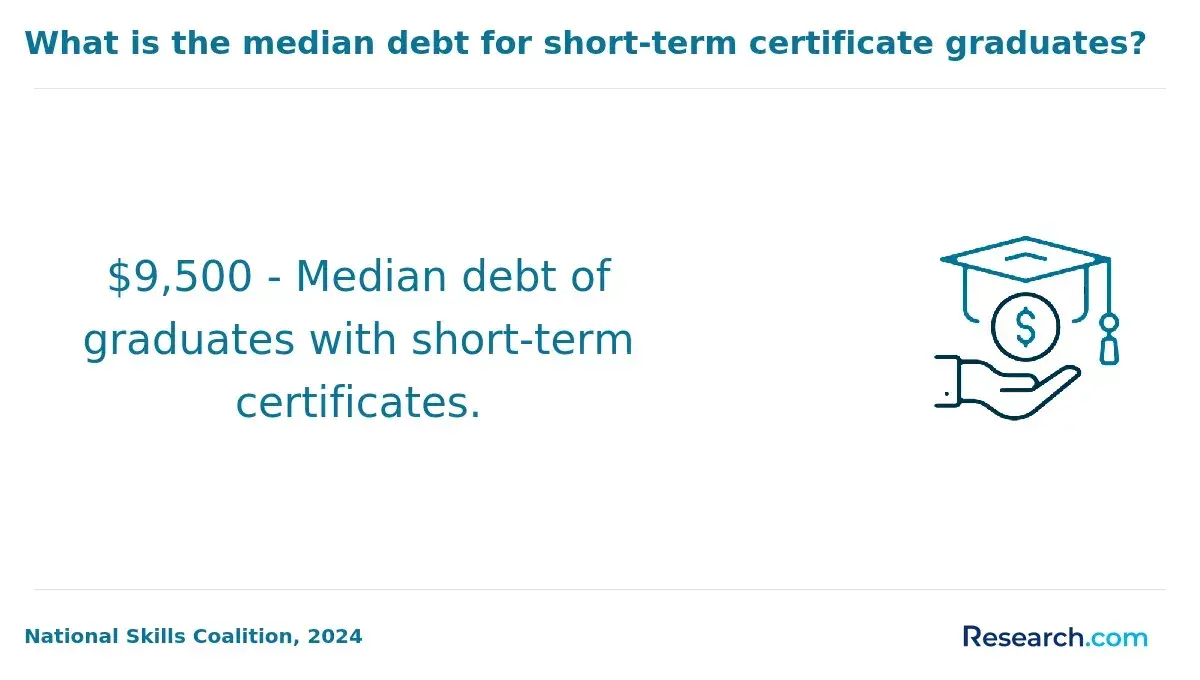
Financing also matters. For U.S. graduate and professional students, the Federal Direct Unsubsidized Loan annual limit is $20,500, while Graduate PLUS Loans may cover remaining cost of attendance for eligible borrowers.
That structure can make doctoral study accessible, but it can also increase long-term repayment pressure if the degree does not support higher earnings or career mobility.
To judge value, compare the total cost of attendance against the specific career outcome you are pursuing. A lower-cost accredited program may produce better ROI than a more expensive program if both are recognized by your target employers and offer similar support for your goals.
The table below shows major cost categories and how each one affects the degree's value. This is useful because the posted tuition rate rarely reflects the full investment:
| Cost factor | Why it matters | Employer-recognition connection |
| Tuition per credit | Doctoral programs may require substantial credits, so small per-credit differences can create large total cost differences. | Higher tuition does not automatically mean stronger employer recognition. |
| Residency or travel requirements | Some online doctorates require campus visits, conferences, or intensives that add travel costs. | Residencies may improve networking, but employers usually evaluate outcomes rather than format alone. |
| Dissertation or capstone fees | Extended dissertation time can increase total cost if continuous enrollment is required. | A rigorous, relevant project can strengthen credibility if it connects to employer needs. |
| Employer tuition assistance | Employer support can lower debt and may signal that the organization values the credential. | Internal sponsorship can improve promotion alignment when the degree supports workforce needs. |
| Opportunity cost | Doctoral work competes with consulting, overtime, certifications, family responsibilities, and leadership opportunities. | If the program limits your ability to gain experience, ROI can decline. |
Common red flags include choosing a program based only on prestige, assuming expensive means respected, ignoring dissertation extension costs, or enrolling before asking whether your employer recognizes the institution. The best financial decision is usually the program with the strongest alignment between accreditation, cost, career services, faculty expertise, and your target role.
How Does the Time Commitment of an Online Cybersecurity Management Doctorate Affect Its ROI?
Time commitment affects ROI because doctoral study competes with professional advancement. Many online cybersecurity management doctorates are designed for working adults, but students should still expect demanding reading, research, writing, statistics or methods coursework, group discussions, and a dissertation or applied doctoral project.
The main ROI question is not simply "How long will this take?" It is "Will the time spent in the program produce career assets I could not build faster another way?" For some professionals, doctoral work creates a valuable body of expertise. For others, the same time might produce stronger returns through certifications, leadership assignments, consulting experience, or a job change.
Before enrolling, prospective students should map the timeline against career goals. The following steps can help clarify whether the time commitment is worthwhile:
- Identify the exact role you want after graduation, such as CISO, risk director, faculty member, consultant, or policy leader.
- Review job postings and leadership profiles to see whether doctorates are required, preferred, or rarely mentioned.
- Ask your employer whether doctoral completion would influence promotion, compensation, teaching eligibility, or leadership assignments.
- Compare the doctoral timeline with faster alternatives, including certifications, an MBA, a cybersecurity master's degree, executive education, or cloud security credentials.
- Choose a dissertation or capstone topic that can double as a professional asset, such as a publishable framework, executive briefing, risk model, or consulting niche.
Time can strengthen ROI when the program allows students to apply coursework directly at work. For example, a student might use doctoral research to improve vendor risk governance, develop AI security policy, or measure cyber resilience. Time weakens ROI when the program becomes disconnected from practical career progress.
Does an Online Cybersecurity Management Doctorate Have the Same Career Value as a Campus-Based Degree?
An online cybersecurity management doctorate can have similar career value to a campus-based degree when the institution is accredited, the curriculum is rigorous, faculty are qualified, and the graduate can demonstrate relevant experience.
Employers increasingly accept online graduate education, especially for experienced professionals, but acceptance is not identical across all industries or roles.
The distinction matters most in fields where reputation, research culture, faculty mentorship, and networking affect outcomes. A campus-based PhD at a highly research-intensive university may carry stronger value for some tenure-track academic roles.
An online professional doctorate may carry stronger practical value for working leaders who need flexibility and applied research relevance.
The table below compares online and campus formats from an employer-value perspective. The right choice depends less on format alone and more on whether the program builds the evidence your target employers want:
| Comparison point | Online doctorate | Campus-based doctorate |
| Employer perception | Often respected when accredited and tied to strong professional experience. | Often respected, especially when the institution has strong research or industry reputation. |
| Networking | Depends heavily on virtual communities, residencies, alumni access, and faculty engagement. | May offer more frequent in-person contact, labs, seminars, and informal networking. |
| Flexibility | Usually better for working cybersecurity leaders who cannot relocate or pause employment. | May require relocation, fixed schedules, or greater campus presence. |
| Research intensity | Varies widely; professional doctorates often emphasize applied projects. | May offer stronger fit for traditional academic research careers. |
| Career fit | Often strong for executive leadership, consulting, and applied governance roles. | Often strong for research faculty, lab-based work, and institution-centered academic pathways. |
Employers that care deeply about academic prestige may still favor certain campus-based programs. However, many cybersecurity leadership employers focus on whether the degree is legitimate and whether the candidate can lead security outcomes. The safest approach is to evaluate how graduates from each program are actually using the degree in your target field.
How Does an Online Cybersecurity Management Doctorate Compare With Other Career Advancement Options?
An online cybersecurity management doctorate is one advancement option among several. It is not automatically superior to a master's degree, MBA, executive certificate, technical certification, clearance, or specialized AI training. The best option depends on the role you want and the credential signals employers expect for that role.
Cybersecurity management increasingly overlaps with AI governance, automation, data protection, and machine learning risk. Professionals whose primary goal is to lead AI security strategy may also explore programs such as an online PhD in artificial intelligence USA if their target roles emphasize AI research, model risk, or intelligent systems more than cybersecurity governance.
The table below compares common advancement paths. It is intended to help readers choose the credential that best fits their target outcome rather than defaulting to the highest degree available:
| Option | Best fit | When it may outperform a doctorate |
| Online cybersecurity management doctorate | Experienced leaders pursuing executive, consulting, academic, policy, or research-informed governance roles. | Less likely to outperform alternatives for short-term technical promotion or entry-level career change. |
| Cybersecurity master's degree | Professionals building advanced technical, managerial, or policy knowledge before senior leadership. | May offer faster ROI for mid-career professionals who do not need doctoral credentials. |
| MBA with technology or risk focus | Security professionals moving toward business leadership, operations, finance, or general executive management. | May be stronger for roles where profit-and-loss responsibility matters more than cybersecurity research. |
| Professional certifications | Practitioners proving specific knowledge in security management, auditing, cloud, privacy, or incident response. | May be better for roles that explicitly require CISSP, CISM, CISA, CCSP, or vendor-specific credentials. |
| Executive education | Senior professionals needing targeted development in board communication, leadership, AI governance, or resilience. | May be more efficient when the goal is a focused skill upgrade, not a terminal credential. |
A common mistake is using a doctorate to solve a certification problem. If job postings repeatedly ask for CISSP, CISM, cloud security credentials, or a security clearance, a doctoral degree may not compensate for missing baseline requirements.
Conversely, if the target role involves faculty status, executive credibility, public-sector policy, or high-level consulting, the doctorate may provide a stronger differentiator.
Which Professionals Benefit Most From an Online Cybersecurity Management Doctorate?
The professionals who benefit most are usually already established in cybersecurity, IT, risk, compliance, military cyber operations, consulting, or technology leadership. They are not using the doctorate to enter the field; they are using it to move into roles that require greater authority, credibility, or specialized expertise.
An online format is particularly practical for working professionals who cannot leave senior roles to attend a full-time campus program. It can also be attractive to military personnel, federal employees, consultants, healthcare security leaders, financial services risk professionals, and experienced IT managers seeking a terminal degree without relocating.
The best-fit candidates usually share several traits. These indicators help determine whether the degree is likely to be respected and useful in the job market:
- They have substantial experience: Employers are more likely to respect the doctorate when it builds on a record of cybersecurity leadership, not when it substitutes for it.
- They have a defined target role: The degree is more valuable when tied to a specific outcome such as CISO, faculty member, cyber risk executive, policy leader, or consultant.
- They can apply research at work: Candidates who turn doctoral projects into measurable workplace improvements often create stronger evidence of value.
- They understand employer expectations: They know whether their target industry values doctorates, certifications, clearances, publications, or executive experience.
- They can manage long-term study: Doctoral work requires sustained writing, research, and independent problem-solving while balancing professional responsibilities.
Professionals who may want to delay or avoid the doctorate include entry-level cybersecurity candidates, career changers without technical foundations, people seeking immediate salary gains, and those whose target jobs require specific certifications rather than doctoral education. For these readers, a master's degree, targeted training, or role-based certifications may be the more practical first step.
How Can Students Decide Whether an Online Cybersecurity Management Doctorate Is Worth It?
Students should decide based on employer recognition, career alignment, accreditation, total cost, time commitment, and the credibility of graduate outcomes. The degree is worth considering when it supports a defined career move that would be difficult to reach through experience or certifications alone.
A practical first step is to test the market before enrolling. Review job postings, speak with hiring managers, talk to alumni, and compare requirements across your target employers.
If many roles mention advanced degrees, doctoral teaching qualifications, research experience, or executive governance, the degree may have stronger value. If postings mainly ask for certifications, cloud skills, clearance, or hands-on tool experience, consider a shorter pathway first, such as a targeted cyber security course or professional certification.
Use the following checklist before committing to a program. These steps are designed to reduce common mistakes and help you evaluate employer respect with evidence rather than assumptions:
- Verify institutional accreditation through a recognized accreditation database, not only the school's marketing materials.
- Confirm whether the doctorate type fits your goal, such as PhD for research-heavy academic roles or a professional doctorate for applied leadership.
- Ask the program for graduation rates, dissertation completion support, alumni job titles, employer partnerships, and career services for doctoral students.
- Review faculty backgrounds to see whether they publish, consult, lead, or research in areas relevant to your career direction.
- Compare total cost, not just tuition, including fees, residencies, dissertation continuation charges, books, and travel.
- Contact professionals in your target roles and ask how they would view the specific school and degree format.
- Plan how you will present the doctorate on your résumé and LinkedIn profile by emphasizing research topic, leadership outcomes, and applied expertise.
- Evaluate alternatives, including certifications, an MBA, a master's degree, executive education, clearance pathways, or specialized AI and cloud security training.
The strongest decision is evidence-based. Do not enroll because a school says employers respect the degree; enroll because you have confirmed that the credential, institution, cost, support, and outcomes match the career market you are trying to enter.
Other Things You Should Know About Cybersecurity Management
Yes, if the doctorate is legitimately awarded by an accredited institution, but use the title appropriately. In business settings, it is often more effective to emphasize your role, leadership results, and research expertise rather than relying on the title alone.
It depends on the target role. A traditional dissertation may be stronger for academic or research careers, while an applied project may be more persuasive for executive, consulting, or organizational leadership roles if it solves a real cybersecurity problem.
Usually, no. Résumés typically list the institution, degree, field, and graduation year. If asked, be transparent, but focus the conversation on accreditation, rigor, research, and professional outcomes.
It can support credibility for leadership, policy, research, or contractor roles, but it does not replace clearance, citizenship requirements, contract-specific qualifications, or required certifications. Always check the exact requirements for the role or agency.
References
- The Cybersecurity Workforce Gap https://www.csis.org/analysis/cybersecurity-workforce-gap
- Cybersecurity Supply And Demand Heat Map https://www.cyberseek.org/heatmap.html
- Top Careers After a Doctorate (PhD) in Cybersecurity 2026 https://zoclearnings.com/blog/top-careers-options-after-doctorate-in-cybersecurity/
- Top 25 Cybersecurity PhD Programs In 2026 - Programs.com https://programs.com/programs/cybersecurity-phd-programs/
- Cybersecurity Job Demand: Current Trends and Future Outlook https://destcert.com/resources/cybersecurity-job-demand/
- Careers in Digital Defense with a Cybersecurity Doctorate https://www.floridacoastaluniversity.com/cybersecurity-doctorate-careers-leading-the-frontline-of-digital-defense/
- Cybersecurity Degree: Do You Need One to Land a Job? https://www.dice.com/career-advice/cybersecurity-degree-do-you-need-one-to-land-a-job
- What Degree Do I Need for a Career in Cybersecurity? | Cyber Degrees https://www.cyberdegrees.org/resources/degree-required-for-cybersecurity-career/
- How Employers View Online Degrees: Interviews with Nine Hiring Executives https://www.onlineeducation.com/features/how-employers-view-online-degrees
- Trends and statistics for the ANZ cybersecurity job market [April 2026] https://www.learningpeople.com/au/resources/industry-insights/cyber-security-job-market-statistics-trends/