
2027 Are Online Child Development Education Doctorate Degrees Respected by Employers? Hiring Trends and Career Outcomes

Co-Founder and Chief Data Scientist
Employers are more open to online doctorates than many applicants assume, but respect depends on the program, accreditation, and career target. This matters because advanced education roles can be financially meaningful: the BLS reported a May 2024 median wage of $104,070 for elementary, middle, and high school principals.
This guide is for educators, early childhood leaders, curriculum specialists, and child-focused professionals weighing an online doctorate. You will learn when the degree helps, when it may not, and how to judge employer recognition before enrolling.
Key Things You Should Know
- Online child development education doctorates are generally respected when they come from institutionally accredited schools and align with the employer's role requirements; delivery format usually matters less than accreditation, applied experience, and evidence of leadership or research ability.
- The strongest financial returns tend to come from senior leadership, higher education, policy, research, and district-level roles, while the ROI can be weaker for classroom teaching or early childhood roles with fixed salary schedules; BLS May 2024 medians include $104,070 for K-12 principals and $74,720 for instructional coordinators.
- Cost and time are decisive: federal graduate unsubsidized loans are capped at $20,500 per academic year, so students should compare total program cost, employer tuition support, timeline, and likely advancement opportunities before borrowing.
What Is the True ROI of an Online Child Development Education Doctorate?
The true ROI of an online child development education doctorate is not simply the difference between tuition and a future salary. It is the combined value of higher earning potential, access to leadership roles, professional credibility, research expertise, policy influence, and the opportunity cost of time spent in school.
An online child development education doctorate is usually an EdD or PhD focused on early childhood education, child development, developmental learning, curriculum, family engagement, educational leadership, or child-centered policy.
An EdD is often designed for practitioners who want to lead schools, programs, agencies, or systems. A PhD is usually more research-intensive and may be better for academic, research, or policy roles.
Employer respect depends on several factors that are easier to verify than general reputation claims. The table below summarizes what hiring committees and senior decision-makers are most likely to evaluate when they see an online doctorate on a résumé:
| Employer recognition factor | Why it matters | What applicants should verify |
| Institutional accreditation | Employers, school districts, universities, and licensing bodies typically expect degrees from schools accredited by agencies recognized by the U.S. Department of Education or CHEA. | Confirm the institution's current accreditation status directly with the accreditor and the school. |
| Degree type | An EdD may signal applied leadership preparation, while a PhD may signal research depth. | Match the degree type to the career: leadership, faculty, research, consulting, or policy. |
| Program focus | A doctorate in education with one child development course may not carry the same relevance as a program centered on early childhood systems, child development, or developmental learning. | Review required courses, dissertation topics, faculty expertise, and practicum or applied project options. |
| Professional experience | Employers rarely treat the doctorate as a substitute for leadership, teaching, research, or administrative experience. | Build a record of measurable outcomes, supervision, program improvement, grants, publications, or curriculum leadership. |
| Field norms | Universities, public agencies, districts, nonprofits, and private education companies may value the same doctorate differently. | Study job postings in the target sector before enrolling. |
The best way to evaluate ROI is to start with the job you want, not the degree you like. If target postings repeatedly list a doctorate as required or preferred, the degree can be a strong career investment.
If postings emphasize licensure, classroom years, school administration certification, grant management, or clinical credentials instead, the doctorate may be useful but not the highest-return next step.
How Much Does an Online Child Development Education Doctorate Increase Earning Potential?
An online doctorate can increase earning potential, but the effect is uneven. The degree is most likely to pay off when it helps a professional move from direct service or classroom work into administration, university teaching, research leadership, consulting, district roles, or policy positions.
BLS May 2024 wage data show why role selection matters: instructional coordinators had a median annual wage of $74,720, while elementary, middle, and high school principals had a median annual wage of $104,070. That gap does not mean a doctorate automatically produces a principal-level salary, but it shows that leadership transitions often matter more than the word "doctorate" itself.
Salary outcomes are also shaped by employer rules. Public school districts may use salary schedules that reward graduate credits or doctoral degrees, but the increment may be modest unless the degree supports promotion into administration.
Universities may value a doctorate for faculty or program director roles, but tenure-track positions usually require strong research output, publications, teaching experience, and disciplinary fit. Nonprofits and early childhood organizations may respect the credential but operate within tighter compensation budgets.
Students should be cautious about estimating ROI from advertised alumni stories. A more reliable approach is to compare current job postings, public salary schedules, and the credentials of people already holding the roles you want.
Which Careers Provide the Best Financial Return With an Online Child Development Education Doctorate?
The best financial return usually comes from careers where doctoral-level expertise changes the type of work you can do. For child development education professionals, that often means leadership over programs, systems, curriculum, research, assessment, or policy rather than a lateral move into another practitioner role.
The table below compares common career paths connected to child development education doctorates. It uses BLS May 2024 wage data where a directly relevant occupation is available and explains how the doctorate is typically viewed in hiring:
| Career path | Doctorate value | Salary context | Best fit |
| K-12 principal or senior school administrator | Often respected, especially when paired with administrative licensure and leadership experience. | BLS reported a $104,070 median wage for elementary, middle, and high school principals in May 2024. | Educators pursuing school or district leadership. |
| Instructional coordinator or curriculum leader | Helpful for advanced curriculum design, assessment, early learning frameworks, and teacher development. | BLS reported a $74,720 median wage for instructional coordinators in May 2024. | Teachers, coaches, and curriculum specialists moving into system-level work. |
| Early childhood program director | Can improve credibility for large, multi-site, grant-funded, or policy-facing programs, but may not be required for smaller centers. | BLS reported a $54,290 median wage for preschool and childcare center directors in May 2024. | Early childhood leaders targeting large organizations, Head Start administration, or nonprofit leadership. |
| Higher education faculty or program director | Often required or strongly preferred, especially for full-time faculty and doctoral-level teaching. | Pay varies widely by institution type, rank, contract length, and research expectations. | Professionals with research, teaching, publication, or program leadership goals. |
| Child development policy, research, or nonprofit executive roles | Valuable when the role requires evidence-based program design, evaluation, grant leadership, or public policy expertise. | Compensation depends heavily on funding source, organization size, and seniority. | Professionals aiming to influence systems rather than serve in a single classroom or center. |
Financial return is strongest when the doctorate is paired with a clear promotion path. For example, a teacher who earns a doctorate but remains on the same salary lane may see limited immediate payoff.
A teacher who uses the doctorate to move into curriculum leadership, district administration, or higher education may see a larger long-term return.
How Does an Online Child Development Education Doctorate Affect Career Advancement?
An online child development education doctorate can improve career advancement by signaling advanced expertise in child learning, developmental theory, leadership, research methods, assessment, equity, and program evaluation. Employers are most likely to value the degree when it is connected to measurable professional achievements.
For many mid-career educators, the doctorate is less about getting a first job and more about becoming competitive for roles that require strategic thinking. These may include director of early learning, district curriculum leader, education consultant, university lecturer, program evaluator, dean, chief academic officer, or nonprofit executive.
Hiring trends also favor applicants who can connect child development knowledge with technology and accountability demands. AI-enabled learning tools, data dashboards, early screening systems, and adaptive curricula are changing how schools and early learning organizations evaluate student growth.
A doctorate can strengthen your profile if your research or capstone shows that you can use data ethically, protect student privacy, and improve outcomes for children rather than simply adopt technology because it is new.
To turn the degree into advancement, students should build evidence that employers can evaluate quickly. The most useful materials are specific and outcomes-focused:
- A dissertation or capstone tied to a real child development, early learning, curriculum, or family engagement problem.
- Documented leadership of teams, grants, accreditation visits, curriculum rollouts, or program evaluations.
- Evidence of impact, such as improved assessment practices, stronger teacher training, expanded family services, or better compliance systems.
- Conference presentations, publications, policy briefs, or professional development workshops connected to child development education.
- A résumé and LinkedIn profile that list the doctorate as an accredited degree and emphasize specialization, not online delivery.
The common mistake is assuming the credential alone will create advancement. Employers respect doctorates most when the applicant can show how doctoral training changed their leadership capacity and produced practical results.
How Does the Cost of an Online Child Development Education Doctorate Affect Its Overall Value?
Cost has a major effect on whether an online doctorate is worth it. Two programs can lead to similar employer recognition if both are properly accredited and career-aligned, but the lower-cost option may produce a much better ROI if it offers comparable faculty access, research support, and professional networking.
Students should look beyond tuition per credit. Online doctorate costs may include dissertation continuation fees, technology fees, residencies, travel, books, background checks, graduation fees, and lost income if coursework reduces work hours.
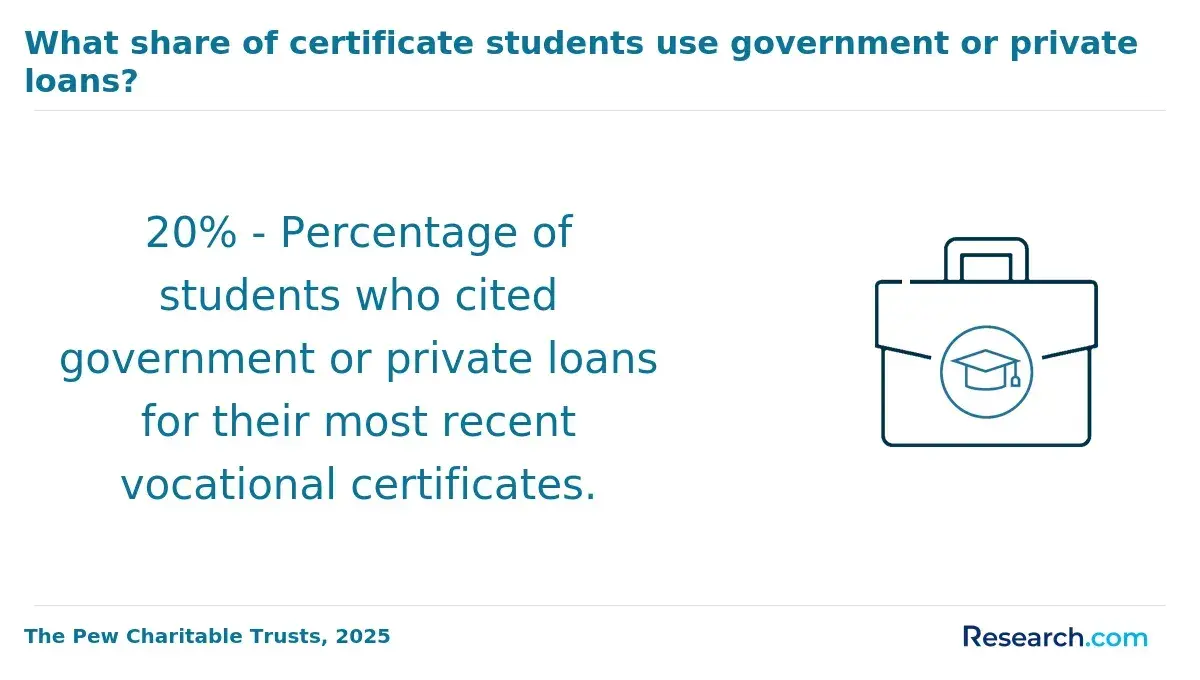
Federal financing also has limits: graduate students may borrow up to $20,500 per academic year in federal Direct Unsubsidized Loans, with Graduate PLUS Loans potentially covering remaining eligible costs after other aid. That structure can make borrowing easy, but it does not make every program financially wise.
The table below shows how cost factors affect value. It is designed to help students compare programs based on total career utility rather than advertised tuition alone:
| Cost factor | Why it affects ROI | Employer-recognition implication |
| Total credits required | More credits generally increase tuition and time to completion. | Employers usually care more about degree quality and relevance than the number of credits, as long as the program is legitimate. |
| Residency requirements | Short residencies can add travel costs but may improve networking and faculty access. | Residencies can strengthen credibility when they support research, presentations, or cohort relationships. |
| Dissertation or capstone support | Weak support can extend enrollment and increase cost. | A rigorous applied project can become strong evidence in leadership hiring. |
| Employer tuition assistance | Reimbursement can significantly reduce out-of-pocket cost. | Employer funding may also signal that the credential is valued internally. |
| Program network | A strong network can help with mentorship, referrals, and job leads. | Employer connections can matter more than broad name recognition in specialized education fields. |
A more expensive program may be worth it if it offers stronger faculty mentorship, relevant research centers, school or agency partnerships, licensure alignment, or a proven record of graduates entering your target roles. It is usually not worth paying substantially more for rankings or prestige alone if the program does not improve your access to the employers you care about.
How Does the Time Commitment of an Online Child Development Education Doctorate Affect Its ROI?
Time affects ROI because doctoral study can delay promotions, reduce work availability, and create stress for working professionals. Many online education doctorates are designed for part-time enrollment, but dissertation or capstone work can still require sustained research, writing, data collection, and faculty review.
Accelerated options may appeal to experienced educators who already have a strong research topic and professional support. Before choosing one of the 1 year EdD programs online, students should ask whether the pace allows enough time for a rigorous capstone, meaningful faculty feedback, and a project that will be credible to employers.
The time commitment is most likely to pay off when the student can apply coursework directly at work. For example, a director of early learning who uses doctoral assignments to evaluate family engagement, improve teacher coaching, or redesign assessment practices may produce career value before graduation.
By contrast, a student whose coursework has little connection to their current or target role may wait years to see any professional return.
Students should evaluate time risk before enrolling. These questions help reveal whether the timeline is realistic:
- Can I maintain full-time work while completing research, writing, and discussion requirements each week?
- Does my employer support flexible scheduling, tuition assistance, data access, or applied research at work?
- Will the dissertation or capstone topic connect directly to the role I want next?
- Does the program publish typical time-to-completion ranges rather than only minimum completion times?
- What happens financially if the dissertation takes an extra term or year?
A shorter program is not automatically better. The strongest ROI usually comes from the shortest credible path that still produces a respected credential, a useful professional network, and a doctoral project employers can understand.
Does an Online Child Development Education Doctorate Have the Same Career Value as a Campus-Based Degree?
An online child development education doctorate can have the same career value as a campus-based degree when the institution is properly accredited, the curriculum is rigorous, faculty are qualified, and the student can demonstrate relevant outcomes.
Employers increasingly focus on whether the degree is legitimate and job-relevant, not simply whether courses were completed online.
However, online and campus-based formats can differ in networking, research access, assistantships, and local reputation. A campus program may be stronger for students seeking traditional faculty roles that depend on research mentorship, lab participation, and academic publishing.
An online program may be stronger for working educators who need to remain employed while applying doctoral work in real schools, centers, or agencies.
The table below compares the career-value factors that matter most. It can help students decide whether format should influence their decision.
| Factor | Online doctorate | Campus-based doctorate |
| Employer respect | Strong when accredited, rigorous, and aligned with the role. | Strong when accredited, rigorous, and aligned with the role. |
| Networking | Depends on cohort design, residencies, faculty availability, and alumni engagement. | May offer more frequent face-to-face networking and local employer visibility. |
| Work continuity | Often easier for full-time professionals to continue working. | May require relocation, schedule changes, or reduced work hours. |
| Research opportunities | Can be strong in applied settings, especially for working practitioners. | May be stronger for lab-based research, assistantships, and traditional academic mentoring. |
| Career signaling | Best when the student highlights specialization, capstone results, and leadership impact. | Best when the student highlights research, faculty mentorship, and institutional partnerships. |
Employers may not even know the degree was completed online unless the transcript, program name, or applicant discloses it. Still, students should never hide relevant information if asked. A confident answer is simple: the program was accredited, rigorous, and chosen because it allowed the student to apply doctoral research directly in a professional child development setting.
How Does an Online Child Development Education Doctorate Compare With Other Career Advancement Options?
An online doctorate is not the only path to advancement. Depending on the target role, a master's degree, administrative license, instructional design credential, school psychology pathway, research certificate, or leadership endorsement may produce a faster or less expensive return.
Professionals moving toward curriculum technology, learning design, or corporate education may find that the best online instructional design master's programs align more directly with employer needs than a child development doctorate. This is especially true for roles focused on digital learning products, adult learning, training systems, or educational technology rather than child-centered leadership or research.
The right comparison depends on what the employer actually requires. A doctorate is more compelling when the role involves original research, system-level leadership, faculty status, executive authority, or policy influence. A shorter credential may be better when the role requires a specific license, software skill, methodology, or administrative authorization.
| Option | Best use case | When it may beat a doctorate |
| Online child development education doctorate | Senior leadership, higher education, policy, program evaluation, applied research, and specialized education consulting. | When the target role prefers or requires doctoral-level expertise. |
| Master's degree | Career entry, salary lane movement, instructional coaching, curriculum work, and preparation for some leadership pathways. | When the employer does not require a doctorate and the salary increase is limited. |
| Administrative license or endorsement | Principal, district administrator, or school leadership roles in states requiring licensure. | When legal eligibility matters more than additional academic credentials. |
| Graduate certificate | Targeted skill building in assessment, early intervention, instructional design, leadership, or program evaluation. | When a specific competency gap is blocking advancement. |
| Professional experience or portfolio | Consulting, nonprofit leadership, product roles, and internal promotions. | When employers prioritize demonstrated outcomes over additional degrees. |
A common mistake is choosing a doctorate because it seems like the highest credential, even when the next job requires something else. Students should compare the degree against the fastest legitimate path to the role they actually want.
Which Professionals Benefit Most From an Online Child Development Education Doctorate?
The professionals who benefit most are usually experienced educators and child-focused leaders who already have a strong foundation in teaching, early childhood systems, curriculum, administration, research, or family services. For them, the doctorate can convert experience into a stronger leadership or research profile.
School-based professionals who want assessment, counseling, or psychological services roles should be especially careful about credential fit.
If the goal is school psychologist licensure or credentialing, compare doctorate options with school psychology programs online accredited by NASP, because an education doctorate in child development may not meet the same professional requirements.
The degree is often a strong fit for several types of professionals. These groups tend to have enough experience to use doctoral study strategically rather than treating it as an entry-level credential.
- Experienced teachers who want to move into curriculum leadership, early learning administration, district roles, or teacher education.
- Early childhood directors managing multi-site programs, quality improvement systems, grants, compliance, or family engagement initiatives.
- Instructional coaches and curriculum specialists who want deeper expertise in developmental learning, assessment, and program evaluation.
- Higher education professionals aiming for faculty, program chair, dean, or academic leadership roles related to child development or early childhood education.
- Policy, nonprofit, and research professionals who need doctoral credibility to lead evaluations, publish findings, advise agencies, or design child-focused initiatives.
The degree may be a poor fit for professionals who need a first teaching license, clinical mental health licensure, school psychology credentialing, or a quick salary increase in a role with limited advancement. It may also be less useful for students who are not ready to conduct independent research or complete a substantial applied project.
How Can Students Decide Whether an Online Child Development Education Doctorate Is Worth It?
The smartest decision starts with employer evidence. Instead of asking whether online doctorates are respected in general, ask whether your target employers respect this specific degree type from this specific institution for this specific role.
Students interested in child mental health, developmental assessment, or counseling-adjacent careers should also compare alternatives such as child psychology master's programs, especially when the target job requires psychology training or supervised clinical preparation rather than education leadership.
Use the following steps before applying or borrowing. They are designed to prevent the most common mistakes students make when judging employer recognition:
- Identify three to five target job titles and collect current postings from districts, universities, agencies, nonprofits, and education companies.
- Mark whether each posting says doctorate required, doctorate preferred, master's required, license required, or experience required.
- Verify institutional accreditation through the accreditor or a recognized accreditation database, not only the school's marketing page.
- Ask the program for completion rates, typical time to degree, dissertation support, alumni job titles, employer partnerships, and examples of recent capstone or dissertation topics.
- Contact people currently in your target role and ask which credentials were most important in hiring and promotion.
- Calculate total cost, including fees, residencies, books, borrowing, and extra dissertation terms.
- Compare the doctorate with a master's degree, license, certificate, or employer-funded leadership pathway.
- Choose the program only if the degree clearly supports the next role, not just long-term personal interest.
Red flags include vague accreditation language, pressure-based admissions, no clear dissertation support, no faculty expertise in child development education, no evidence of graduate outcomes, and claims that the degree will automatically increase salary. Legitimate programs should be transparent about requirements, costs, faculty qualifications, and career alignment.
When presenting the degree to employers, focus on what the doctorate helped you do. Use phrases such as "completed an applied dissertation on early childhood program evaluation," "led a district-wide developmental screening improvement project," or "designed evidence-based family engagement training." This shifts attention from delivery format to professional value.
Other Things You Should Know About Child Development Education
Yes, graduates of accredited doctoral programs may generally use the title "Doctor" in academic and professional settings. They should still be clear about the degree type, such as EdD or PhD, and avoid implying clinical licensure if the degree does not provide it.
Common requirements include a master's degree, transcripts, professional résumé, recommendation letters, statement of purpose, and evidence of education or child-focused experience. Some programs may request writing samples, interviews, minimum GPA thresholds, or proof of licensure for certain tracks.
Not always. Some programs require a traditional dissertation, while others use an applied dissertation, doctoral capstone, improvement project, or action research study. Employers usually care most about whether the final project shows rigorous thinking and relevance to the role.
Sometimes. Schools may accept eligible post-master's credits, specialist-level credits, or prior doctoral coursework, but policies vary widely. Students should request a written transfer evaluation before enrolling because transfer limits can affect cost and completion time.
References
- What Employers Actually Think About Online Degrees https://www.onlineu.com/magazine/what-employers-think-about-online-degrees
- The Rewards of a Doctorate in Early Childhood Education - Graduate Programs for Educators https://www.graduateprogram.org/blog/the-rewards-of-a-doctorate-in-early-childhood-education/
- Accreditation as a Strategic Driver of Alignment Across Higher Education and Industry https://acbspjournal.org/2026/05/22/accreditation-as-a-strategic-driver-of-alignment-across-higher-education-and-industry/
- Top Careers in Child Development https://mybrightwheel.com/blog/careers-in-child-development
- The Role of Accreditation Bodies in Professional Education — CPD international group https://www.cpdinternationalgroup.co.uk/resources/the-role-of-accreditation-bodies-in-professional-education
- The Importance of Accreditation for K-12 Online Schools https://www.qahe.org/article/the-importance-of-accreditation-for-k-12-online-schools/
- The Role of Professional Doctorates in Bridging Academia ... https://jies.cultechpub.com/index.php/jies/article/download/16/11/94
- EdD vs PhD: What’s the Difference in Education Fields | USAHS https://www.usa.edu/blog/phd-vs-edd/
- Childcare Accreditation: Why It Matters #EarlyLearning https://chromaela.com/2025/12/29/understanding-childcare-accreditation-its-importance/
- The Best Ed.D. in Early Childhood Education Programs of 2025 https://www.eddprograms.org/schools/early-childhood-education/


