2027 Admission Requirements for Online Sport Psychology Doctorate Programs: GPA, Prerequisites, Experience, and Eligibility

Co-Founder and Chief Data Scientist
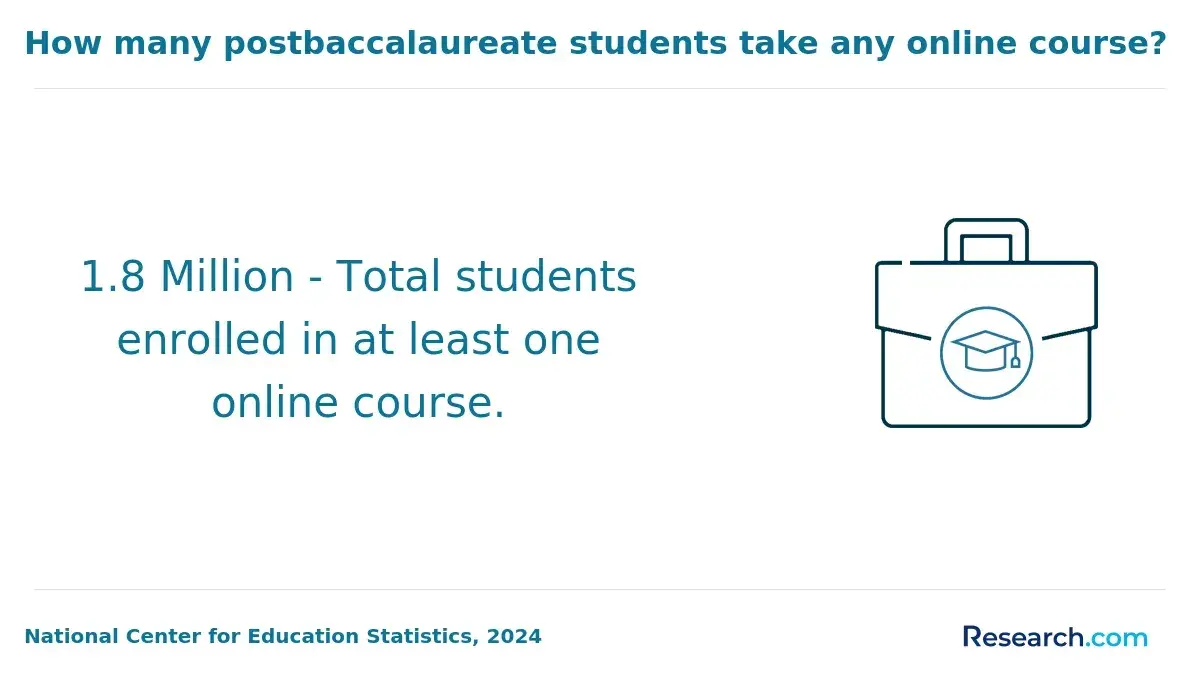
Figuring out whether you qualify for an online sport psychology doctorate usually comes down to four issues: GPA, prerequisite coursework, prior degree level, and evidence that you can handle doctoral research or applied performance work. NCES distance education data published in 2024 shows that about 59% of U.S. graduate students took at least one online course in fall 2022, making online doctoral pathways more common but still selective.
This guide helps prospective applicants compare requirements, spot eligibility gaps, and decide how to build a stronger application before applying.
Key Things You Should Know
- Most online sport psychology doctorate programs expect a minimum GPA around 3.0, while stronger applicants often present a 3.25 to 3.5 graduate GPA, relevant coursework, and a clear doctoral research or performance-consulting goal.
- A master's degree is commonly required for online PhD, PsyD, or EdD pathways in sport, performance, counseling, psychology, or kinesiology, but a small number of programs admit bachelor's-level applicants into longer doctoral tracks.
- Prerequisites usually include statistics or research methods plus prior study in psychology, sport science, counseling, kinesiology, or human performance; professional coaching, athletic, clinical, teaching, or research experience can strengthen eligibility but rarely replaces academic readiness.
What Are the Basic Admission Requirements for an Online Sport Psychology Doctorate Program?
Basic admission requirements for an online sport psychology doctorate vary by institution and doctorate type, but most schools look for proof that you can complete advanced research, understand human performance, and communicate at a doctoral level. Sport psychology may sit inside psychology, counseling, kinesiology, education, or performance science, so requirements are not identical across programs.
The table below summarizes the core requirements applicants are most likely to encounter and why each one matters during admissions review.
| Requirement area | Typical expectation | Why it matters |
| Prior degree | Master's degree for many online doctoral programs; bachelor's degree accepted in some longer tracks | Shows whether the applicant has completed graduate-level preparation before doctoral study |
| GPA | Common minimum around 3.0, with higher GPAs preferred for competitive review | Signals academic consistency and readiness for advanced theory, research, and writing |
| Prerequisite coursework | Psychology, statistics, research methods, sport science, kinesiology, counseling, or related coursework | Helps faculty determine whether the applicant can enter doctoral courses without major remediation |
| Experience | Applied, coaching, athletic, wellness, counseling, teaching, or research experience, depending on the program | Connects the applicant's goals to the field of sport and performance psychology |
| Application materials | Transcripts, resume or CV, statement of purpose, recommendations, and sometimes writing samples or interviews | Allows holistic review beyond GPA alone |
| Licensure or certification fit | Program-specific review for clinical, counseling, or certified mental performance consultant pathways | Prevents applicants from choosing a program that does not match their long-term professional goals |
A common mistake is assuming that "online" means easier admission. Online doctoral programs may be more flexible in format, but committees still evaluate doctoral readiness, writing ability, research fit, and whether your background aligns with the curriculum.
Do You Need a Master's Degree to Apply for an Online Sport Psychology Doctorate?
You often need a master's degree to apply for an online sport psychology doctorate, especially if the program is designed for working professionals or requires advanced standing. However, some doctoral programs admit bachelor's-prepared students and build master's-level coursework into the early part of the curriculum.
Applicants should compare degree-entry models carefully because they affect cost, time to completion, transfer-credit eligibility, and the strength of your application. Students still exploring related graduate fields may also compare sport psychology with options such as forensic psychology master's programs before committing to a doctorate.
The following table explains the most common entry pathways and who they usually fit best.
| Entry pathway | Who may qualify | What to watch for |
| Master's-to-doctorate pathway | Applicants with a master's in psychology, sport psychology, counseling, kinesiology, exercise science, education, or a related field | This is the most common online doctorate route and may allow transfer of some graduate credits |
| Bachelor's-to-doctorate pathway | Applicants with strong undergraduate records and relevant coursework or experience | Usually takes longer and may require more foundational coursework before doctoral research begins |
| Post-professional doctorate | Practitioners with graduate credentials in coaching, counseling, athletic training, education, or human performance | May emphasize applied leadership, consulting, or professional practice rather than licensure preparation |
| Bridge or conditional pathway | Applicants missing a prerequisite, GPA threshold, or specific background course | May require earning minimum grades in initial courses before full admission is granted |
If you already hold a master's degree, ask whether prior graduate credits can transfer. Many doctoral programs limit transfer credits, require recent coursework, or accept only courses that closely match the doctoral curriculum. If you do not yet have a master's degree, ask whether the doctorate is truly open to bachelor's-level applicants or whether a master's is "strongly preferred" even when not formally required.
What GPA Do You Need for an Online Sport Psychology Doctorate Program?
Most online sport psychology doctorate programs use a 3.0 GPA as a baseline for regular admission, particularly for graduate-level GPA. A 3.0 minimum does not mean admission is likely; it usually means your application can be reviewed without an automatic denial or additional academic conditions.
The table below shows how GPA ranges are commonly interpreted in doctoral admissions. Use it as a planning tool, not as a guarantee, because each school can calculate GPA differently and may weigh recent graduate work more heavily than older undergraduate performance.
| GPA range | How committees may view it | Best applicant strategy |
| 3.5 or higher | Academically strong, especially if earned in relevant graduate coursework | Use the statement and CV to show research fit, applied experience, and career direction |
| 3.25 to 3.49 | Competitive for many programs when paired with relevant experience and strong recommendations | Highlight advanced coursework, writing ability, and evidence of doctoral-level discipline |
| 3.0 to 3.24 | Often meets the minimum but may need support from other application components | Strengthen the file with a focused statement, recent A-level coursework, and recommenders who can speak to readiness |
| Below 3.0 | May require conditional admission, a petition, additional coursework, or a different pathway | Contact admissions before applying and prepare an academic explanation with evidence of improvement |
Programs may review undergraduate GPA, graduate GPA, last 60 credits, major GPA, or prerequisite GPA. If your cumulative GPA is lower because of early academic performance, a strong recent graduate GPA can help show that your current readiness is stronger than your transcript average suggests.
Can You Get Into an Online Sport Psychology Doctorate Program With a GPA Below 3.0?
Yes, it may be possible to enter an online sport psychology doctorate with a GPA below 3.0, but it depends heavily on the school's policy. Some programs have firm minimums, while others allow conditional admission, faculty review, or admission by exception when the applicant shows strong recent performance or significant professional achievement.
If your GPA is below the published minimum, your goal is to give the committee evidence that the number does not reflect your current ability. The following steps can help you decide whether applying now is realistic or whether you should strengthen your record first.
- Ask the admissions office whether the GPA minimum is firm, petitionable, or eligible for conditional admission.
- Find out which GPA the program uses, such as cumulative GPA, graduate GPA, last 60 credits, or prerequisite GPA.
- Complete one or two relevant graduate courses in statistics, research methods, psychology, or kinesiology and earn strong grades before applying.
- Use the statement of purpose to explain the academic pattern briefly, then focus on concrete evidence of improvement.
- Choose recommenders who can describe your writing, research, leadership, or professional reliability at a doctoral level.
Do not rely on work experience alone to overcome a weak academic record. Experience can help, especially in coaching, athletics, counseling, military performance, wellness, or research settings, but doctoral programs still need confidence that you can complete advanced reading, statistics, research design, and dissertation work.
What Prerequisite Courses Are Required for an Online Sport Psychology Doctorate Program?
Prerequisite courses for an online sport psychology doctorate depend on whether the program is housed in psychology, counseling, kinesiology, education, or human performance. In general, committees want to see that you understand both behavior and performance, and that you have enough research preparation to begin doctoral-level work.
Applicants from exercise science, kinesiology, or coaching backgrounds often have strong sport-related preparation but may need more psychology or research coursework. If you are still building your academic foundation, an online exercise science degree can be one route into the broader human performance field before graduate specialization.
The most common prerequisite areas are listed below. Check each program's catalog because some schools require specific course titles while others accept equivalent coursework.
- Statistics or quantitative methods, especially if the doctorate includes dissertation research or applied measurement.
- Research methods, including study design, literature review, ethics, and interpretation of evidence.
- General psychology, sport psychology, performance psychology, or behavioral science foundations.
- Kinesiology, exercise science, motor learning, biomechanics, or human movement coursework for performance-focused programs.
- Counseling, helping skills, ethics, or lifespan development for programs connected to counseling or mental health practice.
- Writing-intensive graduate coursework that demonstrates readiness for doctoral papers, proposals, and dissertation work.
A frequent red flag is applying with impressive athletic or coaching experience but no recent statistics or research methods coursework. If your transcript has that gap, ask whether you can complete prerequisites before enrollment, during the first term, or through approved non-degree graduate courses.
Can You Apply for an Online Sport Psychology Doctorate With a Degree in Another Field?
You can often apply with a degree in another field, but your admissibility depends on how far your background is from sport psychology and whether you can show a credible academic bridge. Related degrees such as exercise science, kinesiology, athletic training, counseling, psychology, education, social work, health sciences, or coaching are usually easier to connect than unrelated business, humanities, or technical degrees.
Applicants changing fields should be especially clear about why sport psychology is the right doctoral path rather than a general interest. Those drawn to youth development, family systems, or mental health may also want to compare adjacent options such as child psychology master's programs before choosing a performance-focused doctorate.
Use the following approach if your prior degree is outside psychology or sport science.
- Map your transcript against the program's prerequisite list and identify missing psychology, statistics, research, or sport science courses.
- Contact an admissions advisor with your unofficial transcript before paying an application fee.
- Prepare a statement that connects your prior field to sport, performance, wellness, leadership, coaching, or behavior change.
- Gain relevant experience through coaching, athlete support, research assistance, performance consulting observation, or wellness programming.
- Consider a master's or graduate certificate first if the doctorate expects more background than you currently have.
The biggest mistake is assuming that a doctorate will provide all foundational training from the beginning. Doctoral coursework is usually advanced, so applicants from unrelated fields may be asked to complete leveling courses or prove readiness before full admission.
How Much Professional or Research Experience Do Online Sport Psychology Doctorate Programs Require?
Online sport psychology doctorate programs do not all require the same amount of professional or research experience. Some are designed for practitioners and value coaching, teaching, counseling, consulting, military, fitness, or athletic leadership experience. Others are research-oriented and place more weight on methods coursework, scholarly writing, and a defined dissertation interest.
The table below helps you interpret what different kinds of experience may signal to an admissions committee.
| Experience type | How it can support an application | Limitations |
| Coaching or athletic participation | Shows direct familiarity with performance environments, team culture, motivation, and athlete development | May not prove research readiness or counseling skill by itself |
| Applied performance consulting | Shows early exposure to goal setting, mental skills training, and performance support | Programs may ask whether the experience was supervised and ethically appropriate |
| Counseling, social work, or helping roles | Supports programs that include mental health, ethics, communication, and behavior change | May not satisfy sport science or performance-specific prerequisites |
| Research assistance or thesis work | Strengthens applications to PhD-style programs that require dissertation research | May need to be paired with applied sport or performance context |
| Teaching, training, or leadership | Demonstrates communication, curriculum design, mentoring, and professional responsibility | Usually needs a clear link to sport psychology goals |
For professional doctorates, committees may value evidence that you can apply theory in real settings. For research-heavy doctorates, they may ask whether you can define a research question, evaluate evidence, and complete a long independent project.
If your experience is limited, take practical steps before applying. These options are especially useful for applicants who are academically eligible but not yet distinctive.
- Volunteer or work with athletic departments, youth sport programs, wellness organizations, rehabilitation settings, or performance training centers.
- Ask a faculty member whether you can assist with literature reviews, data coding, survey design, or manuscript preparation.
- Complete a capstone, thesis, or independent research project related to motivation, anxiety, team dynamics, injury recovery, or performance.
- Document outcomes carefully on your CV, including populations served, responsibilities, supervision, and research tools used.
Are the GRE, GMAT, or English-Proficiency Tests Required for an Online Sport Psychology Doctorate?
The GRE is less universally required than it once was, and many online doctoral programs in psychology-adjacent fields now use test-optional, test-waiver, or no-GRE policies. The GMAT is uncommon for sport psychology doctorates because these programs are not business degrees. English-proficiency testing, however, is still commonly required for international applicants whose prior education was not completed in English.
Test policies can change quickly, so verify requirements for the exact term you plan to enter. Pay attention to these distinctions when reading an admissions page.
- GRE required: You must submit scores for the application to be complete, even if the program uses holistic review.
- GRE optional: You may submit scores if they strengthen your file, but you are not penalized automatically for omitting them.
- GRE waiver available: You may avoid the test if you meet conditions such as a prior graduate degree, strong GPA, professional experience, or completed quantitative coursework.
- No GRE accepted: The program does not consider scores, so focus on transcripts, writing, recommendations, and fit.
- English-proficiency required: International applicants may need TOEFL, IELTS, Duolingo, or another approved exam unless they qualify for an institutional waiver.
If your GPA is borderline, a strong GRE score may help only if the program accepts or encourages scores. If the program is test-blind, invest your effort in recent coursework, a sharper statement of purpose, and stronger recommendation letters instead.
What Application Documents Do Online Sport Psychology Doctorate Programs Require?
Application documents help committees answer a practical question: does this applicant understand the field, match the program, and have the discipline to finish a doctorate online? Most schools require similar materials, but details such as writing sample length, recommendation type, and interview format vary.
Prepare documents early because weak or generic materials can make an otherwise eligible applicant look unfocused. The following items are commonly required or strongly recommended.
- Official transcripts from every college or university attended, including transfer, graduate, and non-degree coursework.
- A resume or CV that separates academic work, research, applied experience, coaching, consulting, teaching, certifications, and professional leadership.
- A statement of purpose explaining your doctoral goals, research or applied interests, relevant background, and reasons for choosing that specific program.
- Two or three recommendation letters from faculty, supervisors, research mentors, or professional leaders who can evaluate doctoral readiness.
- A writing sample, such as a thesis excerpt, graduate paper, literature review, publication, or analytical professional report.
- Proof of English proficiency, transcript evaluation, or credential translation when required for international applicants.
- An interview or faculty conversation, especially for programs that evaluate research fit, professional goals, or readiness for online learning.
Do not submit the same statement to every school. A strong statement names the program's curriculum, faculty interests, applied training model, research expectations, and how those features connect to your goals. A weak statement simply says you love sports and want to help athletes perform better.
What Do Admissions Committees Look for in Online Sport Psychology Doctorate Applicants?
Admissions committees look beyond minimum eligibility. They want evidence that you can succeed in a demanding online doctoral environment, contribute to the field, and use the degree appropriately after graduation. This is especially important in sport psychology because career goals can range from academic research to coaching support, mental performance consulting, wellness leadership, or clinical psychology-adjacent work.
Current labor-market data can help you think about fit, but it should not be treated as a promise. The U.S. Bureau of Labor Statistics reported a May 2024 median annual wage of $94,310 for psychologists, though sport and performance roles vary widely by setting, licensure, employer, and business model. If you are comparing psychology specializations, salary context such as how much do forensic psychologists make can help you understand how different psychology paths may lead to different employment markets.
Committees commonly evaluate these factors when deciding whether an applicant is competitive.
- Academic readiness: Strong grades in recent and relevant coursework, especially research methods, statistics, psychology, counseling, kinesiology, or sport science.
- Program fit: A clear reason for choosing that doctorate type, faculty expertise, online format, and curriculum rather than a generic psychology degree.
- Research or applied direction: A realistic interest area such as motivation, performance anxiety, injury recovery, team cohesion, leadership, youth sport, or mental skills training.
- Professional maturity: Evidence of ethical judgment, communication skills, self-direction, and readiness to work with athletes or performers responsibly.
- Online learning readiness: Time management, technology comfort, writing discipline, and ability to participate without the structure of daily campus attendance.
- Licensure awareness: Understanding that not every sport psychology doctorate leads to psychologist licensure, counseling licensure, or certification eligibility.
Before applying, confirm accreditation and professional alignment. If your goal is to become a licensed psychologist, verify whether the program meets state licensure requirements and whether required clinical training can be completed in your state. If your goal is mental performance consulting, ask how the curriculum aligns with supervised experience, ethics, and competency requirements expected by relevant professional organizations.
Other Things You Should Know About Sport Psychology
Yes, applying to several well-matched programs can reduce risk because GPA rules, prerequisite flexibility, faculty fit, and cohort size vary. Choose programs that match your goals rather than applying broadly to any school with an online format.
Sometimes. Programs may accept selected graduate credits from a completed master's degree, but limits are common. Courses usually must be recent, relevant, graduate-level, and approved after transcript review.
Not automatically. Licensure depends on program accreditation, clinical training, internship requirements, state board rules, supervised hours, and exams. Applicants seeking licensure should verify requirements with the state board before enrolling.
Yes. Even online programs may expect your interests to align with faculty expertise, dissertation supervision, or applied training areas. A focused research or practice goal usually makes an application stronger than a broad interest in sports.
References
- Sports Psychology Ph.D. Program Guide | Psychology.org https://www.psychology.org/degrees/sports-psychology/phd/
- Sports Psychology https://www.onlinepsychologydegrees.com/specialty/sports-psychology/
- General Schedule Qualification Policies https://www.opm.gov/policy-data-oversight/classification-qualifications/general-schedule-qualification-policies/
- Online Sports Psychology Degrees & Programs https://www.sportspsychology.org/degree/
- Best Accredited Sport Psychology Degrees and Programs https://www.psychologydegree411.com/degrees/sport-psychology/
- How Hard Is It to Get Into Veterinary School? https://veterinary.rossu.edu/veterinary-school-resources-and-guides/how-hard-is-it-to-get-into-vet-school
- Online Ed.D. in SPP with M.S. in CMHC at UWS https://www.uws.edu/academics/programs/sport-performance-psychology/edd-cmhc-specialization/
- WHAT EXPERIENCE DO I NEED FOR VETERINARY SCHOOL? - Vet School Bound https://vetschoolbound.org/experience-need-veterinary-school/