
2027 Accredited Online Software Development Degree Programs for Working Adults: Flexible, Part-Time, and Self-Paced Options

Co-Founder and Chief Data Scientist
Choosing an accredited online software development degree while working full time is really a scheduling, cost, and career-fit decision. The U.S. Bureau of Labor Statistics projects software developer, quality assurance analyst, and tester employment to grow 17% from 2023 to 2033, so flexible degree options matter for adults who cannot pause work.
This guide explains accreditation, part-time and self-paced formats, admissions, tuition, transfer credits, support services, and career outcomes so you can identify programs that fit your weekly availability and long-term goals.
Key Things You Should Know
- Accreditation is the first filter: choose a school with recognized institutional accreditation; programmatic ABET accreditation can be valuable but is not required for every software development career path.
- Working adults usually need realistic pacing: full-time study often means 12 or more credits per term, while part-time plans commonly require 6 to 9 credits and about 10 to 15 study hours per 3-credit course each week.
- Cost and speed vary widely: College Board reported average published 2024-25 tuition and fees of $11,610 for in-state public four-year institutions, and transfer-friendly online bachelor's programs may accept substantial prior college credit toward a typical 120-credit degree.
What Is an Accredited Online Software Development Degree Program and Why Does Accreditation Matter?
An accredited online software development degree program is a college program delivered fully or mostly online that teaches programming, software engineering, databases, web development, systems design, cybersecurity fundamentals, testing, and project-based development. Most bachelor's programs lead to a Bachelor of Science, Bachelor of Applied Science, or similar credential; some associate programs focus on entry-level programming or transfer preparation.
Accreditation matters because it is the main quality-control signal used by federal financial aid systems, transfer-credit evaluators, graduate schools, and many employers. For working adults, this is especially important: if you invest nights, weekends, tuition payments, and family time into a program, you want the credential to be portable and recognized.
There are two accreditation layers to understand. Institutional accreditation applies to the entire college or university and should be verified through recognized accrediting bodies listed by the U.S. Department of Education or CHEA. Programmatic accreditation, such as ABET accreditation for some computing programs, applies to a specific degree and may strengthen quality assurance, but many software development jobs do not legally require an ABET-accredited degree.
Use accreditation as a starting point, not the only decision factor. A program can be accredited but still have weak career services, limited electives, poor transfer policies, or a schedule that does not work for adults with full-time jobs. The safest approach is to verify accreditation first, then compare curriculum, flexibility, total cost, student support, and outcomes.
| Accreditation item | What it means for working adults | Why it matters |
| Institutional accreditation | The college or university has been reviewed by a recognized accreditor. | Usually required for federal aid eligibility, credit transfer, and broad employer recognition. |
| Programmatic accreditation | A specific computing or engineering-related program has been reviewed separately. | Can be useful for quality assurance, though not always required for software development roles. |
| State authorization | The school is allowed to offer online education to students in your state. | Important if you live outside the school's home state or may relocate before graduating. |
| Employer acceptance | Employers recognize the degree-granting institution and the credential level. | Especially relevant if you plan to use tuition assistance or apply to employers with degree-screening requirements. |
A common mistake is assuming that "online" automatically means low quality or, on the other hand, assuming that every online school is equally credible. Neither is true. The better question is whether the institution is accredited, whether the program teaches current development skills, and whether the format fits the way you can actually study.
Which Flexible Software Development Degree Formats Are Best for Working Adults: Part-Time, Full-Time, or Self-Paced?
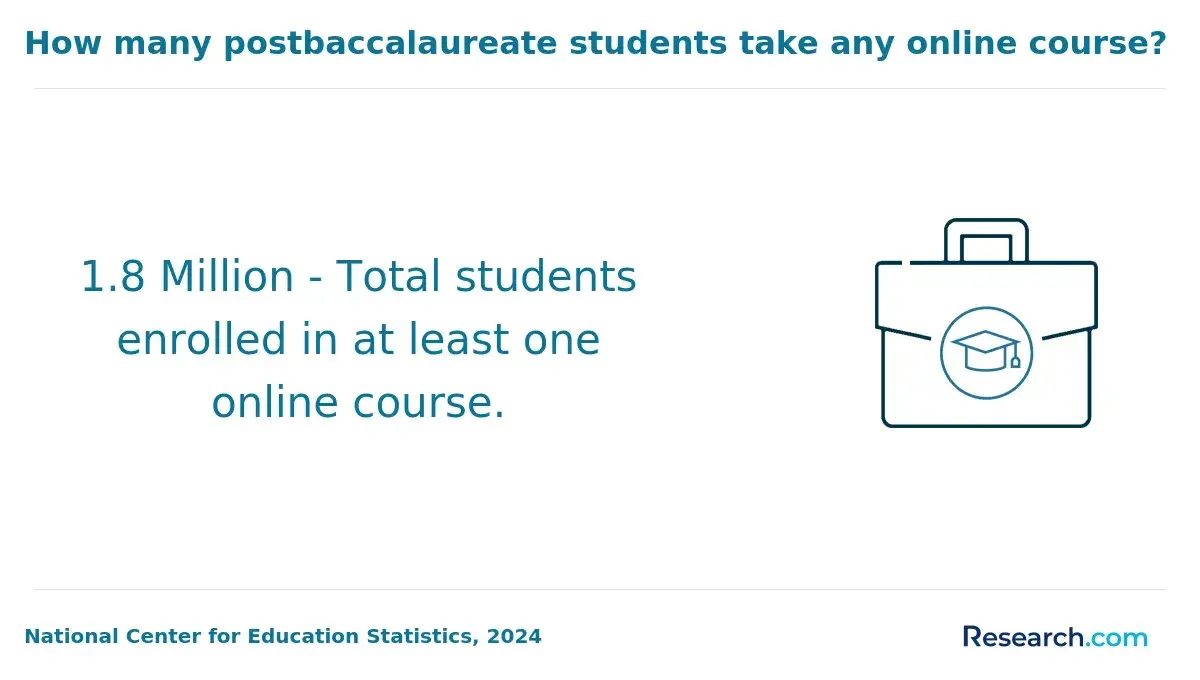
The best format depends on how many predictable study hours you have each week. NCES reported in 2024 that more than half of U.S. postsecondary students took at least one distance education course in fall 2022, which reflects how normal online learning has become for adults who need education to fit around work.
The table below compares common online software development formats. Use it to identify which structure matches your job schedule, family responsibilities, and tolerance for deadlines.
| Format | Best for | Trade-off | Typical scheduling pattern |
| Part-time online | Adults working full time who need a manageable weekly workload. | Graduation may take longer, but burnout risk may be lower. | Often 1 to 3 courses per term with weekly due dates. |
| Full-time online | Students with lighter work hours, strong support at home, or a goal to finish faster. | Requires more weekly study time and less schedule flexibility. | Often 4 or more courses per traditional semester. |
| Self-paced or competency-based | Experienced learners who can move quickly through familiar material. | Requires discipline and may have term subscription rules or completion limits. | Progress may be faster or slower depending on mastery and available time. |
| Asynchronous online | Adults with changing shifts, caregiving duties, or travel-heavy jobs. | Still usually includes assignment deadlines even without live class meetings. | Lectures and materials are available on demand, with scheduled submission windows. |
| Synchronous online | Learners who want live interaction and set class meetings. | Less flexible for night shifts or unpredictable work schedules. | Live virtual sessions at specific times. |
Part-time study is usually the safest default for adults with demanding jobs because software development courses require practice, debugging, and projects, not just reading. Full-time online study can work if you have a stable schedule and can treat school like a second major commitment. Self-paced programs can be efficient for learners who already know programming basics, but they are risky if you need external structure to stay motivated.
Before choosing a format, ask schools very specific questions. These steps help you avoid assuming that "flexible" means "no deadlines."
- Ask whether courses are asynchronous, synchronous, or mixed.
- Confirm whether exams require proctoring at scheduled times.
- Ask how many hours per week students typically spend in programming-heavy courses.
- Find out whether group projects require live meetings with classmates.
- Check whether part-time students receive the same advising, career support, and course access as full-time students.
If speed is your main goal and you are not fully committed to software development, it may also help to compare other easiest online degrees that pay well. Software development can be rewarding, but it is not always the quickest path because coding skill grows through repeated practice.
What Are the Admission Requirements for Accredited Online Software Development Degree Programs?
Admission requirements vary by institution and degree level, but accredited online software development programs usually evaluate academic readiness, transfer history, and basic technology access. Many bachelor's programs are designed for adult learners and accept applicants with prior college credit, military training, professional certifications, or an associate degree.
Most undergraduate software development programs do not require applicants to be expert programmers. However, they may expect college-level math readiness, comfort with computers, and the ability to write clearly about technical problems. If you have been out of school for years, admissions advisors may recommend placement testing, bridge courses, or an introductory programming sequence.
Working adults should pay close attention to the difference between first-year admission and transfer admission. A transfer-friendly program may save time if you already completed general education courses at a community college or previous university.
| Requirement | Common expectation | Why it matters for adults |
| High school diploma or equivalent | Required for most associate and bachelor's programs. | Establishes baseline eligibility for undergraduate admission. |
| College transcripts | Required if you attended any prior college, even years ago. | Used to evaluate transfer credit and academic standing. |
| Minimum GPA | Varies by school; some adult-focused programs use holistic review. | A lower past GPA may not automatically block admission, but it can affect options. |
| Math placement or prerequisites | May include college algebra, precalculus, statistics, or discrete math. | Impacts how quickly you can start upper-level computing courses. |
| Technology requirements | Reliable computer, broadband access, webcam, and required software. | Hidden technology gaps can make online study harder than expected. |
One red flag is a program that promises easy admission, fast graduation, and strong career outcomes without clearly explaining academic expectations. Legitimate online software development programs may be accessible, but they should still require meaningful coursework, programming projects, and academic standards.
How Much Does an Online Software Development Degree Cost, and What Financial Aid Options Are Available?
The cost of an online software development degree depends on tuition rate, transfer credits, residency status, technology fees, course materials, exam fees, and how long you stay enrolled. College Board reported average published 2024-25 tuition and fees of $11,610 for in-state students at public four-year institutions and $43,350 at private nonprofit four-year institutions; online programs may price differently, but these figures give adults a useful benchmark.
The table below summarizes the cost factors that usually matter most. It can help you compare programs beyond the advertised per-credit tuition rate.
| Cost factor | What to compare | Why it changes total cost |
| Per-credit tuition | Resident, nonresident, online-only, and military rates. | A lower rate can matter, but only if fees and completion time are also reasonable. |
| Transfer credit | Maximum accepted credits and how they apply to major requirements. | Accepted credits can reduce both tuition and time in school. |
| Fees | Technology, online course, graduation, lab, and proctoring fees. | Fees can make a low-tuition program more expensive than expected. |
| Course materials | Textbooks, software licenses, cloud tools, and hardware requirements. | Software development courses may require tools beyond standard textbooks. |
| Pacing | Term-based tuition, subscription tuition, or per-credit billing. | Self-paced programs can be cheaper for fast finishers but costly if progress stalls. |
Financial aid may include federal grants, federal student loans, state aid, institutional scholarships, employer tuition assistance, military education benefits, and payment plans. To compare affordability, calculate net price after grants and scholarships rather than focusing only on sticker price.
Working adults should take the following steps before enrolling. This sequence helps prevent surprise costs and unnecessary borrowing.
- Request a written degree plan showing how many credits you still need.
- Ask for a full cost estimate that includes tuition, fees, books, software, and graduation fees.
- Complete the FAFSA if the institution participates in federal student aid.
- Check whether your employer reimburses tuition only after grades are posted.
- Compare monthly payment options against federal loan terms before choosing private financing.
If your priority is minimizing total tuition, compare accredited low-cost options carefully and review resources on finding the cheapest online university. The lowest advertised tuition is not always the best value if the program accepts few transfer credits or lacks strong academic support.
How Long Does It Take to Complete an Online Software Development Degree, and Can Transfer Credits Help You Graduate Faster?
A traditional bachelor's degree in software development usually requires about 120 credits, while associate degrees often require about 60 credits. Full-time bachelor's students commonly plan for about four years, but working adults often take longer because part-time enrollment is more sustainable alongside full-time employment.
Transfer credits can shorten the timeline if they apply to general education, electives, or major prerequisites. The key word is "apply": a school may accept credits toward overall graduation requirements but still require you to complete specific software development courses in residence.
The table below compares common starting points. It shows how your prior education can affect your path, though exact timelines vary by school and course load.
| Starting point | Possible path | Planning consideration |
| No prior college credit | Start with general education, math, and introductory programming. | Part-time study may take several years, so schedule consistency matters. |
| Some college credit | Transfer eligible courses and complete missing requirements. | Ask whether old credits still count toward technology or math requirements. |
| Associate degree | Enter a bachelor's completion program if articulation rules align. | Confirm whether the associate degree satisfies lower-division requirements. |
| Professional certifications | May qualify for prior learning credit at some institutions. | Credit varies widely and is not automatic. |
| Military or workplace training | May be evaluated through recognized credit recommendations. | Documentation quality affects the evaluation. |
To make transfer credit work in your favor, do not rely on verbal estimates. Ask for an official or formal preliminary evaluation before committing to a program, especially if you are comparing several schools.
- Collect transcripts from every college you attended.
- Ask whether the school accepts ACE-reviewed, military, certification, or portfolio-based credit.
- Request a course-by-course transfer evaluation.
- Confirm which credits apply to the major, not just to electives.
- Ask how many credits must be completed through the degree-granting institution.
A common mistake is choosing an accelerated program without confirming whether required courses are offered often enough for part-time students. A degree plan may look fast on paper but become slower if key programming courses are available only once per year.
What Should You Look for When Comparing Accredited Online Software Development Degree Programs?
Comparing accredited online software development programs is not just about ranking schools. It is about matching program structure to your career goal, work schedule, budget, and current skill level. A strong program should combine recognized accreditation, relevant technical coursework, project-based learning, accessible faculty, and adult-friendly scheduling.
The table below highlights the program features that deserve careful comparison. Use it to separate meaningful quality signals from marketing language.
| Feature | What it tells you | Why it matters |
| Curriculum currency | Whether courses include modern languages, frameworks, cloud tools, databases, security, and version control. | Employers often want proof that graduates can build and maintain real software systems. |
| Project portfolio | Whether students complete coding projects that can be shown to employers. | A portfolio can help career changers demonstrate ability beyond the degree title. |
| Faculty access | Whether instructors offer virtual office hours, feedback, and timely help. | Debugging alone can slow progress for online learners. |
| Part-time course rotation | Whether required courses are available in a sequence that works at reduced course loads. | Important for adults who cannot enroll full time every term. |
| Career services | Whether support includes resume review, mock interviews, employer events, and technical interview preparation. | Career changers often need more than academic advising. |
After verifying accreditation, use a practical comparison process. These questions help you test whether a program's flexibility is real and whether the curriculum supports your intended career path.
- Identify your target role, such as software developer, QA analyst, web developer, database-focused developer, or application support specialist.
- Match the curriculum to that role by checking required programming, databases, software engineering, testing, cloud, and security courses.
- Ask how often major courses run and whether prerequisites can delay part-time students.
- Review sample syllabi to see whether assignments include hands-on coding rather than only exams and discussion posts.
- Ask for student outcome information, but treat salary and placement figures cautiously unless the school explains the methodology.
- Confirm whether online students have the same access to tutoring, advising, library resources, and career services as campus students.
Watch for red flags: unclear accreditation language, pressure to enroll immediately, vague tuition estimates, outdated programming courses, no portfolio-building opportunities, and "self-paced" programs that do not explain completion limits. If you discover that software development is not a good fit for your strengths, comparing a different field such as an online degree in psychology can help you make a more honest decision before investing heavily in technical coursework.
What Career Opportunities and Salary Potential Can You Expect With a Software Development Degree?
An online software development degree can support entry-level and advancement paths in programming, application development, quality assurance, web development, database work, cloud support, and systems analysis. The strongest outcomes usually come from combining the degree with a portfolio, internships or projects, interview practice, and continuous learning in current tools.
Salary potential varies by role, location, experience, industry, and technical depth. BLS May 2024 wage data reported a median annual wage of $133,080 for software developers and $102,610 for software quality assurance analysts and testers, which shows why many adults view the degree as a career investment rather than only an academic credential.
The table below summarizes common roles associated with software development education. It includes responsibility patterns so you can connect coursework to career options.
| Role | Typical responsibilities | Salary context |
| Software developer | Designs, builds, tests, and improves applications or systems. | BLS reported a $133,080 median annual wage in May 2024. |
| Software quality assurance analyst or tester | Creates test plans, identifies defects, validates releases, and supports quality processes. | BLS reported a $102,610 median annual wage in May 2024. |
| Web developer | Builds websites and web applications using front-end and back-end technologies. | Compensation varies widely by stack, portfolio, and employer type. |
| Application support specialist | Troubleshoots software issues, supports users, documents bugs, and works with engineering teams. | Often a practical entry path for career changers building experience. |
| Junior database or data application developer | Works with databases, queries, application data flows, and reporting tools. | Technical skill depth and SQL experience strongly affect opportunity. |
AI and automation are changing software work, but they are not eliminating the need for skilled developers. Employers increasingly expect developers to understand code quality, security, testing, collaboration, and how to use AI-assisted tools responsibly. A good degree program should help you learn fundamentals so you can adapt as tools change.
This degree may be a strong fit if you enjoy problem-solving, can tolerate frustration while debugging, and want a career path where a portfolio matters. It may be a poor fit if you dislike independent technical practice or only want the credential without spending time building actual software. If your career goals are closer to media strategy, organizational messaging, or content leadership, an affordable online master's degree in communications may align better than a software-focused program.
How Can Working Adults Balance a Software Development Degree With Full-Time Work and Family Responsibilities?
Balancing an online software development degree with full-time work is possible, but it requires a realistic workload plan. Programming courses can be time-intensive because assignments often involve trial, error, debugging, and revision. A 3-credit course may require about 10 to 15 hours per week, and advanced courses or capstone projects can require more during deadline-heavy weeks.
The most effective adult learners build a weekly system before classes begin. The goal is not to find unlimited time; it is to protect consistent blocks of focused practice.
- Choose a course load based on your busiest work weeks, not your best weeks.
- Block recurring study sessions for coding practice, reading, assignments, and review.
- Tell family members or housemates when you are unavailable for schoolwork.
- Start programming assignments early because debugging often takes longer than expected.
- Use instructor office hours before you fall far behind.
- Plan lighter course loads during major work projects, caregiving changes, or peak business seasons.
Part-time enrollment often makes the most sense for adults with full-time jobs, young children, rotating shifts, or unpredictable overtime. Full-time enrollment may work if your employer provides schedule flexibility, your household responsibilities are manageable, and you can maintain steady study hours every week. Self-paced study is best for disciplined learners who already have some coding experience and can create their own deadlines.
A major mistake is treating online courses as something you can complete only on weekends. Weekend-heavy study plans collapse quickly when family events, illness, overtime, or difficult assignments appear. A better strategy is to study in shorter blocks across the week and reserve weekends for larger projects, review, and catch-up time.
What Student Support Services and Online Learning Resources Should You Expect From a Software Development Degree Program?
Strong student support can make the difference between finishing and stopping out, especially in a technical online program. Software development students need ordinary academic services plus help with coding problems, project feedback, career preparation, and online learning technology.
Before enrolling, ask whether online students receive direct access to the same services as campus students. The support areas below are especially important for working adults who may study outside normal business hours.
- Academic advising: degree planning, course sequencing, transfer-credit guidance, and part-time scheduling support.
- Technical tutoring: help with programming logic, databases, debugging, math, and development tools.
- Faculty availability: virtual office hours, timely email response, and clear feedback on coding assignments.
- Career services: resume reviews, portfolio guidance, mock interviews, job-search support, and employer connections.
- Library and research support: access to databases, citation help, technical books, and software documentation resources.
- Online learning help desk: support for the learning management system, proctoring tools, authentication issues, and required software.
Do not underestimate mental load. Adults returning to school may be relearning how to study while also learning new programming concepts. Programs that offer orientation, peer communities, success coaching, and early alerts can be especially helpful if you have been away from college for several years.
Support expectations also vary by field and degree level. For example, someone comparing software development with a people-centered graduate pathway may research how much does a masters in counseling cost, but counseling programs often involve different support needs, supervised practice expectations, and state-specific requirements. Software development students should focus on technical support, portfolio development, and career readiness for computing roles.
Do Online Software Development Degree Programs Include Internships, Practicums, or Other Hands-On Learning Requirements?
Many online software development degree programs include hands-on learning, but the format varies. Some require internships or practicums, while others use capstone projects, team software projects, labs, simulations, open-source-style assignments, or employer-based projects. For working adults, the key question is whether hands-on requirements can be completed remotely or around your work schedule.
Hands-on learning is important because employers rarely evaluate software candidates by coursework alone. They often want evidence that you can build, test, document, and explain software. A capstone project, Git-based portfolio, or internship can help demonstrate those abilities.
The table below compares common experiential learning options in online software development programs. Use it to understand what each option contributes to career preparation.
| Hands-on option | What students usually do | Working-adult consideration |
| Capstone project | Build a substantial application or system that integrates multiple skills. | Often online-friendly but may require steady progress across the term. |
| Internship | Work with an employer or approved site on development-related tasks. | May be difficult for adults with rigid work schedules unless remote or employer-based options exist. |
| Team project | Collaborate on a software build using version control and project management tools. | Group scheduling can be challenging across time zones. |
| Portfolio assignments | Create smaller projects that demonstrate coding, testing, and documentation skills. | Useful for career changers who need visible work samples. |
| Lab-based courses | Complete structured exercises in programming, databases, cloud tools, or cybersecurity basics. | Usually flexible if labs are asynchronous, but deadlines still apply. |
Before enrolling, ask how internships or capstones are approved and whether your current job can satisfy any practical requirement. Some schools allow employer-based projects if the work is relevant, supervised, and documented, but policies vary.
- Ask whether an internship is required or optional.
- Confirm whether remote internships are accepted.
- Ask whether students can complete capstone projects individually or in teams.
- Review examples of past student projects if available.
- Ask whether portfolio development is built into required courses.
- Confirm whether hands-on requirements add fees, software costs, or scheduled meeting times.
A common mistake is ignoring experiential requirements until the final year. If you work full time, plan early for any internship, capstone, or team-project term so you can adjust your course load, request work flexibility, or choose a project that fits your schedule.
Other Things You Should Know About Software Development
Yes, many undergraduate programs start with introductory programming. However, you should expect a learning curve and plan extra practice time during the first courses.
You usually need a reliable laptop or desktop, stable internet, webcam, and enough memory to run development tools. Check the school's hardware requirements before enrolling.
A bootcamp may be faster for targeted skills, while a degree offers broader academic preparation and may help with employers that require a bachelor's. The better choice depends on your career goal, budget, timeline, and existing experience.
AI tools are changing how developers work, but they also increase the need to understand code, testing, security, and system design. A strong program should teach fundamentals that help you use new tools responsibly.
References
- Becoming a software developer | Education and experience needed https://www.edx.org/become/how-to-become-a-software-developer
- Best Online Colleges for Working Adults [2026] https://www.straighterline.com/blog/degree-completion-best-online-colleges-for-working-adults
- Paying for a Computer Science Degree | Scholarships, Grants, Loans https://www.computerscience.org/resources/how-to-pay-for-a-degree/
- Online Schools with Success Coaches: Finding the Right Support for Adult Learners https://lakewood.edu/online-schools-with-success-coaches-finding-the-right-support-for-adult-learners/
- CourseCareers https://coursecareers.com/blog-posts/how-to-start-an-it-support-career
- Custom Education Software Development Services | Light IT https://light-it.net/industries/education/
- Best Online Degree Programs for Working Adults https://www.scholaro.com/db/News/best-online-degree-programs-256
- Self-Paced Learning | Flexibility & Efficiency for the Modern Workplace https://kashida-learning.com/self-paced-learning-flexibility-for-the-modern-workplace/
- Become a Software Developer Through an Associate Degree Program https://sdgku.edu/news/how-to-become-a-software-developer-through-an-associate-degree-program/
















![2027 Best Advanced Standing Online MSW Programs [CSWE Accredited] thumbnail](/uploads/Online_Advanced_Standing_MSW_301dbd5368.jpg)


