2027 Accredited Online Respiratory Care Therapy Degree Programs for Working Adults: Flexible, Part-Time, and Self-Paced Options

Co-Founder and Chief Data Scientist
Choosing an accredited online respiratory care therapy degree is mainly a question of fit: Can the program meet licensure standards while still fitting your work schedule? The need is timely because the U. S. Bureau of Labor Statistics reports a May 2024 median annual wage of $80,450 for respiratory therapists, with demand tied to aging patients and cardiopulmonary care. This guide is for working adults comparing flexible, part-time, and self-paced options. You will learn how to evaluate accreditation, cost, time commitment, transfer credit, clinical requirements, and career value before enrolling.
Key Things You Should Know
- Accreditation is non-negotiable: entry-level respiratory care programs should be programmatically accredited by CoARC if you plan to pursue NBRC exams and state licensure, while online degree-completion programs should also have recognized institutional accreditation.
- Most working adults should expect 10 to 20 hours of weekly study in part-time online formats; full-time options can be faster but may be difficult with full-time employment, labs, clinical rotations, or fixed exam windows.
- Cost varies widely: College Board's 2024-2025 national averages list public two-year in-district tuition and fees at about $4,050 and public four-year in-state tuition and fees at about $11,610, while transfer credits may shorten completion time by one to two years in degree-completion pathways.
What Is an Accredited Online Respiratory Care Therapy Degree Program and Why Does Accreditation Matter?
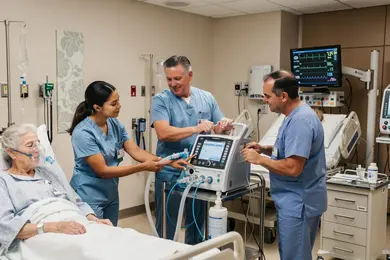
An accredited online respiratory care therapy degree program prepares students to assess, treat, and monitor patients with breathing or cardiopulmonary conditions. In practice, "online" usually means that lectures, discussions, assignments, exams, and care-plan work are delivered through a learning platform, while lab simulations, competency checks, and clinical experiences may still require in-person attendance at approved sites.
Accreditation matters because respiratory care is a licensed healthcare field. For entry-level respiratory therapist preparation, the key programmatic accreditor is the Commission on Accreditation for Respiratory Care, commonly called CoARC. Institutional accreditation also matters because it affects federal financial aid eligibility, credit transfer, employer recognition, and graduate-school options.
The biggest distinction for working adults is whether the program is an entry-level associate or bachelor's program, or a degree-completion program for licensed or credentialed respiratory therapists. Entry-level programs usually have the most hands-on requirements. Degree-completion programs are often more flexible because students already hold a respiratory care credential and clinical foundation.
This table summarizes common online respiratory care degree paths so you can quickly identify which type matches your background and career goal.
| Program type | Typical student | Common online flexibility | Primary outcome |
| Associate degree in respiratory care | New students seeking entry into the field | Hybrid more often than fully online because labs and clinicals are required | Eligibility pathway for credentialing exams and state licensure when properly accredited |
| Bachelor's degree in respiratory care | New students or transfer students seeking broader clinical and leadership preparation | Hybrid for entry-level programs; more online flexibility for upper-division coursework | Entry preparation or career advancement depending on program design |
| RRT-to-BSRT or AS-to-BS completion degree | Credentialed respiratory therapists with prior college credit | Often asynchronous, part-time friendly, and designed for working clinicians | Bachelor's completion for advancement, leadership, education, or graduate study |
| Master's-level respiratory care or related health sciences pathway | Experienced clinicians seeking leadership, education, research, or management roles | Often online or low-residency, but admission requirements vary | Advanced non-physician roles in education, administration, research, or specialty practice |
One common mistake is assuming that any "online respiratory therapy" program can qualify you for licensure. Always confirm the program's CoARC status, degree level, state authorization, and clinical placement rules before applying. If you are comparing broader healthcare pathways, programs such as ultrasound tech programs may have similar hybrid limitations because patient-care training cannot be completed entirely through online coursework.
Which Flexible Respiratory Care Therapy Degree Formats Are Best for Working Adults: Part-Time, Full-Time, or Self-Paced?
The best format depends on your current credentials, work schedule, family responsibilities, and how quickly you need to finish. For working adults, "flexible" can mean several different things: asynchronous lectures, evening deadlines, part-time course loads, multiple start dates, self-paced modules, or local clinical placements.
Self-paced does not always mean unlimited time. Many programs still set term limits, exam deadlines, minimum progress rules, or clinical competency windows. Part-time programs are usually more predictable, while full-time programs may be better for students who can reduce work hours.
The following table compares the most common formats from a working-adult perspective.
| Format | Best fit | Trade-off | Typical scheduling reality |
| Part-time asynchronous | Adults working full time or managing family care | Slower completion | Weekly deadlines, recorded lectures, discussion boards, and predictable assignment cycles |
| Full-time online or hybrid | Students who can work fewer hours or have strong support at home | Higher weekly workload and less flexibility during clinical terms | Multiple courses at once, fixed testing periods, and possible daytime labs or clinical shifts |
| Self-paced or competency-based | Experienced learners who can study independently and move quickly through familiar material | Requires strong time management and may have completion caps | Flexible module pacing, but exams, proctored assessments, and clinical checks may still be scheduled |
| Cohort-based online | Students who want peer support and a clear sequence | Less ability to pause or accelerate | Courses taken in a set order with classmates, often one or two courses per term |
| Hybrid evening or weekend | Local students who need face-to-face lab access outside standard work hours | Commute time and limited site options | Online theory with scheduled campus labs, simulation days, or weekend intensives |
Use a realistic workload estimate before choosing a pace. A part-time course load may feel manageable, but respiratory care courses often require science review, patient-case assignments, equipment concepts, and clinical documentation practice. Before enrolling, ask each school for a sample weekly calendar rather than relying only on the word "flexible."
For most working adults, the decision process should be practical rather than aspirational. Compare formats in this order:
- Start with your non-negotiable schedule limits, including work shifts, childcare, commute time, and clinical availability.
- Identify whether you need an entry-level licensure pathway or a degree-completion pathway for current respiratory therapists.
- Ask whether lectures are asynchronous, live, or mixed, and whether attendance is required at specific times.
- Check whether exams use fixed windows, remote proctoring, campus testing, or clinical competency evaluations.
- Choose the fastest format that you can sustain without risking grades, clinical performance, or financial stability.
A good rule of thumb: choose full-time only if your work schedule can flex around school, choose part-time if income stability matters most, and choose self-paced only if you are disciplined enough to create your own weekly deadlines.
What Are the Admission Requirements for Accredited Online Respiratory Care Therapy Degree Programs?
Admission requirements vary by degree level. Entry-level programs usually focus on academic readiness for healthcare coursework, while degree-completion programs focus on prior respiratory care education, professional credentials, and transfer credits. Because respiratory care involves direct patient care, schools may also require health screenings and background checks.
Most accredited programs ask applicants to document both academic preparation and clinical readiness. Requirements commonly include:
- High school diploma, GED, or prior college transcript, depending on degree level.
- Prerequisite coursework such as anatomy and physiology, microbiology, chemistry, algebra, English composition, or psychology.
- Minimum GPA, often applied to both cumulative coursework and science prerequisites.
- Proof of current CPR certification, immunizations, physical exam, drug screening, and background check before clinical placement.
- For RRT-to-BSRT or degree-completion programs, proof of NBRC credential, state license when applicable, and completion of an accredited associate degree or equivalent coursework.
- Technology requirements such as reliable internet, webcam, learning-platform access, and possibly remote-proctoring compatibility.
Working adults should pay special attention to prerequisite sequencing. A program may advertise online coursework, but if anatomy, physiology, or microbiology labs must be completed before admission, your true start date may be later than expected. Ask whether prerequisites can be completed online at a community college and transferred in.
Admissions selectivity can also affect your timeline. Some entry-level respiratory care programs use competitive ranking based on GPA, completed sciences, healthcare experience, or interview scores. If you need a faster or less clinical route into healthcare administration, a healthcare management certificate may be worth comparing, although it does not prepare you for respiratory therapist licensure.
How Much Does an Online Respiratory Care Therapy Degree Cost, and What Financial Aid Options Are Available?
The cost of an online respiratory care therapy degree depends on school type, residency status, program level, transfer credits, clinical fees, books, uniforms, technology, background checks, and credentialing exam costs. For working adults, the most affordable program is not always the one with the lowest tuition; it is the one that minimizes repeated courses, unpaid time away from work, and unnecessary fees.
College Board's 2024-2025 pricing data shows why school type matters: average published tuition and fees were about $4,050 for public two-year in-district students and about $11,610 for public four-year in-state students. These figures are not respiratory-care-specific, but they are useful benchmarks when comparing community college, public university, and private university options.
The following table shows cost categories you should review before deciding whether a program is affordable.
| Cost factor | Why it matters for working adults | What to ask the school |
| Tuition per credit or per term | Determines the base cost, especially if you attend part time for several terms | Is tuition different for online, out-of-state, or part-time students? |
| Program and clinical fees | Healthcare programs may charge fees beyond tuition | Are lab, simulation, liability insurance, background check, and drug screen fees included? |
| Books, equipment, and software | Respiratory care courses may require specialized texts, calculators, access codes, or simulation tools | What is the estimated total cost for required materials each term? |
| Travel and clinical costs | Even online programs may require travel to labs or clinical sites | Can clinical placements be arranged near my home or workplace? |
| Exam and credentialing expenses | Licensure and NBRC-related costs may occur near graduation | Which exam, application, and state licensing costs should I budget for? |
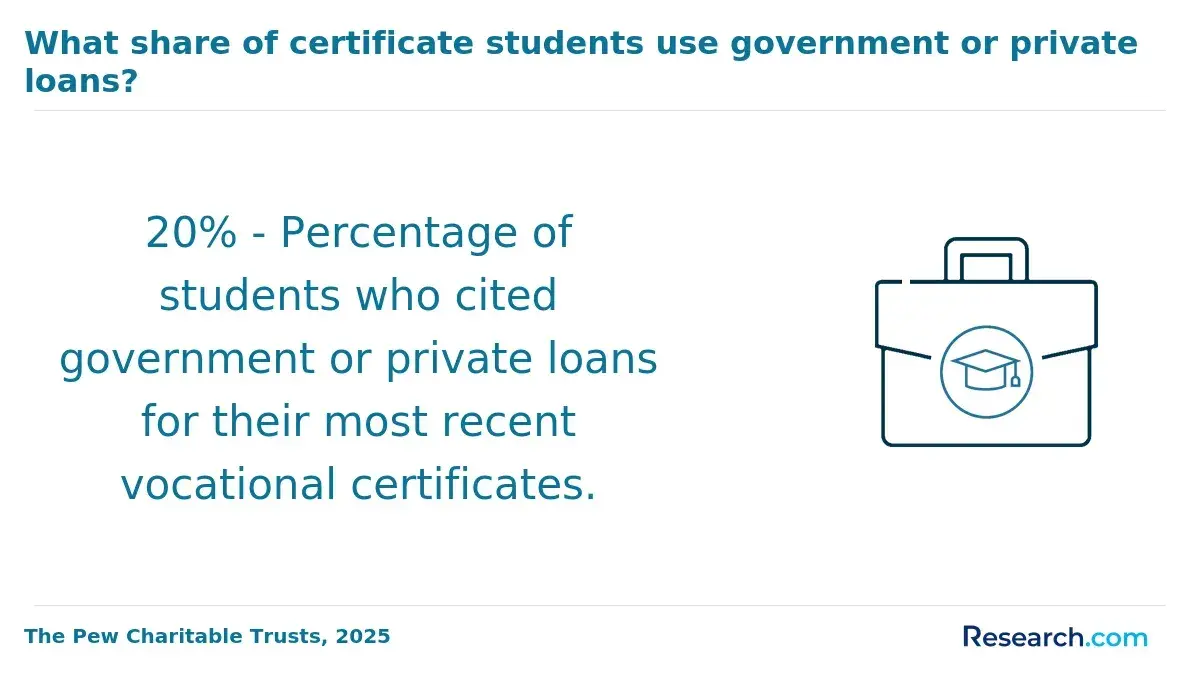
Federal financial aid may be available if the institution is eligible and you meet aid requirements. Adult learners should complete the FAFSA, compare grants before loans, ask about employer tuition assistance, and review scholarships from hospitals, state workforce agencies, respiratory care associations, and school foundations.
Before accepting loans, calculate the degree's likely return in relation to your current income and career plan. The U.S. Department of Education's 2024 federal student aid guidance continues to emphasize borrowing only what is needed after grants and scholarships; that matters because part-time students may be tempted to borrow extra for living expenses while extending enrollment over more terms.
If your main goal is a lower-cost healthcare credential rather than respiratory therapist licensure, compare alternatives carefully. For example, medical billing and coding online schools that accept financial aid may offer a shorter non-clinical route, but they lead to different work settings, salaries, and advancement paths.
How Long Does It Take to Complete an Online Respiratory Care Therapy Degree, and Can Transfer Credits Help You Graduate Faster?
Completion time depends on whether you are entering the field or finishing a bachelor's degree after prior respiratory care training. Entry-level associate programs commonly take about two years of full-time study after prerequisites, while bachelor's programs may take four years for first-time students. Degree-completion programs for credentialed respiratory therapists are often shorter because they accept previous respiratory care coursework and general education credits.
Transfer credit can be one of the biggest time savers for working adults. However, schools differ in how they evaluate associate degrees, NBRC credentials, military medical training, prior learning, and older science courses. Some programs accept block transfer for an accredited respiratory care associate degree, while others evaluate each course individually.
This table gives a practical view of timeline expectations by student type.
| Student profile | Likely pathway | Potential completion range | Main factor that changes the timeline |
| No prior college credit | Entry-level associate or bachelor's pathway | Two to four years, depending on degree level and prerequisites | Science prerequisites, clinical availability, and full-time versus part-time enrollment |
| Some general education credit | Transfer into associate or bachelor's program | Shorter if credits apply directly | Whether science and general education courses meet program requirements |
| Licensed or credentialed respiratory therapist with an associate degree | RRT-to-BSRT or AS-to-BS completion | Often one to two years part time, depending on transfer policy | Block credit, upper-division requirements, and capstone timing |
| Military medic or healthcare worker | Case-by-case transfer or prior learning review | Highly variable | Documentation, ACE recommendations, state rules, and school policy |
To avoid delays, request an official transfer evaluation before enrolling, not after your first term. Ask the school to show which credits apply to the degree, which credits are electives only, which courses must be repeated, and whether there is an expiration limit on anatomy, physiology, microbiology, or chemistry credits.
Working adults should also ask whether the program has rolling starts or cohort starts. Rolling starts can reduce waiting time, but cohort programs may offer a more predictable sequence. Cohort-based healthcare programs can be less flexible if a missed course is offered only once per year.
What Should You Look for When Comparing Accredited Online Respiratory Care Therapy Degree Programs?
When comparing accredited online respiratory care therapy degree programs, start with accreditation and licensure alignment, then compare flexibility, total cost, clinical placement support, student outcomes, and transfer policy. A program that is inexpensive but weak on clinical support may create more risk than a slightly more expensive program with stronger placement coordination.
The most important comparison factors are the ones that affect your ability to graduate, become licensed when needed, and keep working while enrolled. Review each program using these criteria:
- CoARC accreditation status for entry-level respiratory care programs, plus recognized institutional accreditation for the college or university.
- State authorization and whether the program meets educational requirements in the state where you plan to work.
- Clear explanation of online, hybrid, synchronous, asynchronous, and self-paced components.
- Clinical placement process, including whether the school places students or expects students to find sites.
- Part-time sequencing, course availability, and whether stopping out delays graduation by a full year.
- Transfer-credit limits, block-credit policies for RRTs, and maximum credits accepted.
- Published tuition, fees, exam costs, and technology requirements.
- Student support, faculty access, tutoring, advising, and career services for online learners.
- Graduate outcomes such as exam pass rates, job placement context, retention, and completion data when available.
Common red flags are easier to spot when you know what to ask. Be cautious if a school is vague about clinical sites, refuses to provide accreditation details, advertises "no deadlines" without explaining completion limits, or focuses heavily on speed without discussing licensure and hands-on competencies.
Use this short checklist before submitting an application:
- Verify accreditation directly with CoARC for respiratory care program status and with the institution's accreditor for college-level accreditation.
- Contact your state licensing board to confirm whether the program can support licensure where you intend to practice.
- Request a written degree plan that includes transfer credits, remaining courses, clinical terms, and expected graduation date.
- Ask for a total cost estimate that includes tuition, fees, books, equipment, background checks, travel, exams, and licensing.
- Confirm whether online courses are asynchronous, live, self-paced, or term-based, and ask for a sample weekly workload.
If you are comparing respiratory care with broader healthcare leadership options, a management-focused credential can be useful later, but it should not replace a licensure pathway if your goal is bedside respiratory therapy. Some working clinicians eventually compare clinical degrees with administration, public health, or programs such as the best kinesiology programs when planning long-term career mobility.
What Career Opportunities and Salary Potential Can You Expect With a Respiratory Care Therapy Degree?
A respiratory care therapy degree can lead to roles in hospitals, emergency departments, intensive care units, neonatal and pediatric units, pulmonary rehabilitation, sleep labs, home care, long-term care, education, management, and medical device or equipment support. Entry-level practice usually requires graduation from an accredited program, passing required credentialing exams, and obtaining state licensure where required.
The salary context is strong compared with many associate-level healthcare roles. The U.S. Bureau of Labor Statistics reported a May 2024 median annual wage of $80,450 for respiratory therapists. Use that number as a labor-market benchmark, not a personal guarantee, because pay varies by state, employer, shift differential, credentials, experience, and specialty setting.
The following table outlines common respiratory care career directions and how additional education may support them.
| Career direction | Typical responsibilities | How a degree can help |
| Staff respiratory therapist | Administer breathing treatments, manage oxygen therapy, monitor patients, and support ventilator care | Entry-level accredited education supports credentialing and licensure eligibility |
| Critical care or neonatal respiratory therapist | Work with high-acuity patients, ventilators, blood gases, and interdisciplinary care teams | Advanced coursework and experience can strengthen specialty readiness |
| Pulmonary rehabilitation or outpatient care | Educate patients with chronic lung disease and support long-term respiratory management | Bachelor's-level communication, education, and disease-management coursework may be useful |
| Clinical educator or preceptor | Train students, new staff, or patients on respiratory care practices | A bachelor's or graduate degree may support teaching and leadership duties |
| Supervisor, manager, or director | Coordinate staffing, quality improvement, compliance, budgeting, and department operations | Degree completion can support advancement into administrative roles |
| Equipment, sales, or clinical specialist | Support respiratory devices, training, troubleshooting, and provider education | Clinical experience plus communication and leadership coursework can be valuable |
The job outlook is also favorable. BLS projects employment of respiratory therapists to grow 13% from 2024 to 2034, which is faster than the average for all occupations. For working adults, this suggests that an accredited degree may be a practical investment if it aligns with licensure requirements, local employer demand, and your ability to complete clinical training.
Respiratory care is not the right fit for everyone. You may want another pathway if you prefer fully remote work, want to avoid shift work, are uncomfortable with acute-care environments, or cannot complete in-person clinical requirements. If you are comparing respiratory care with nursing or advanced clinical leadership, resources on the easiest DNP programs may be useful for understanding a different healthcare ladder, but DNP programs are nursing pathways and do not substitute for respiratory therapist education.
How Can Working Adults Balance a Respiratory Care Therapy Degree With Full-Time Work and Family Responsibilities?
Balancing a respiratory care degree with full-time work requires more than motivation. It requires a schedule that accounts for lectures, readings, exams, labs, clinical shifts, commuting, sleep, family obligations, and recovery time after long workdays. The most successful adult learners usually build a weekly plan before classes begin.
Use these steps to test whether a program is manageable with your current life responsibilities:
- Map your fixed commitments first, including work shifts, commute time, childcare, elder care, and recurring medical or family responsibilities.
- Block study time in smaller sessions across the week rather than relying only on one long weekend session.
- Ask the program which terms include the heaviest lab, clinical, or exam load, then plan work adjustments around those terms.
- Tell your employer early if you may need shift flexibility, tuition assistance paperwork, or clinical scheduling support.
- Create a backup plan for childcare, transportation, internet outages, and unexpected clinical schedule changes.
- Limit course load during major life events instead of risking withdrawal, failed courses, or missed clinical competencies.
Part-time enrollment can be the best choice if you need to protect income and family stability. The trade-off is a longer path to graduation, which may also mean more time paying fees or waiting for advancement. Full-time enrollment may be worth it if you can temporarily reduce work hours and finish fast enough to offset lost wages.
Self-paced learning can work well for adults who already have healthcare experience, but it can be risky for students who need external structure. If you choose a self-paced option, create your own deadlines, schedule weekly check-ins, and ask whether faculty monitor progress before you fall behind.
Do not underestimate clinical terms. Even if theory courses are fully online, clinical rotations may require early mornings, weekdays, weekend shifts, health documentation, and travel. A program is only flexible if its required hands-on schedule works in your real life.
What Student Support Services and Online Learning Resources Should You Expect From a Respiratory Care Therapy Degree Program?
Online respiratory care students should expect support services that are comparable to on-campus services, especially because healthcare programs are academically demanding and clinically regulated. Strong support can be the difference between completing a degree and stopping out when work or family pressure increases.
Before enrolling, confirm that the program provides support for both online learning and healthcare-specific requirements. Important services include:
- Dedicated academic advising for part-time, transfer, and adult learners.
- Respiratory care faculty office hours through video, phone, chat, or scheduled appointments.
- Online tutoring for anatomy, physiology, pharmacology, math, writing, and exam preparation.
- Library access with healthcare databases, citation tools, and research support.
- Technical support during evenings or weekends, especially if exams use remote proctoring.
- Clinical placement coordination, compliance tracking, and help with required documents.
- Career services that understand respiratory care resumes, interviews, specialty credentials, and employer expectations.
- Disability accommodations and accessibility support for online coursework and testing.
- Mental health, wellness, or student assistance resources for stress management.
Ask how support is delivered, not just whether it exists. A tutoring center that operates only during your work shift may not be useful. Likewise, a faculty office-hour policy may be weak if instructors do not respond quickly to online students.
Technology is also part of student support. A strong program should clearly explain learning-platform requirements, webcam and microphone rules, proctored exam procedures, simulation software, mobile access, and privacy expectations. If you work rotating shifts, ask whether recorded sessions are available and how quickly lectures are posted.
Do Online Respiratory Care Therapy Degree Programs Include Internships, Practicums, or Other Hands-On Learning Requirements?
Yes, accredited online respiratory care therapy degree programs commonly include hands-on learning. Respiratory care is a patient-care discipline, so students must demonstrate clinical judgment, equipment use, safety practices, communication skills, and patient assessment abilities. For entry-level students, that usually means labs, simulations, and supervised clinical rotations in approved healthcare settings.
The online portion may cover theory, case studies, care planning, research, leadership, ethics, pathophysiology, and disease management. The hands-on portion may include campus intensives, local lab days, simulation activities, hospital rotations, competency checkoffs, and capstone projects. Degree-completion programs for already credentialed respiratory therapists may have fewer traditional clinical hours, but they may still require projects tied to professional practice.
The following table explains the hands-on components you may encounter and why they matter.
| Requirement | Where it may happen | Purpose |
| Skills lab | Campus, partner lab, or scheduled intensive | Practice equipment handling, airway procedures, oxygen delivery, and safety skills |
| Simulation | Campus lab, virtual platform, or hybrid setting | Apply clinical decision-making to realistic patient scenarios |
| Clinical rotation | Hospital, clinic, long-term care facility, or approved healthcare site | Build supervised patient-care competence across respiratory care settings |
| Competency checkoff | Lab or clinical site | Verify that students can perform required skills safely and accurately |
| Capstone or professional project | Online course, workplace, or approved practice setting | Connect degree-level learning to quality improvement, education, leadership, or evidence-based practice |
Clinical placement is one of the most important questions for online students. Some schools arrange placements, while others require students to help identify approved sites. If you live far from campus, ask whether the school already has agreements in your region and what happens if a site becomes unavailable.
Before enrolling, get written answers to these clinical questions:
- How many in-person lab, simulation, or clinical hours are required?
- Can clinicals be completed near my home, or must I travel to specific partner sites?
- Are clinical shifts offered during evenings or weekends, or mainly on weekdays?
- Who is responsible for securing clinical placement?
- What health, background check, immunization, CPR, and insurance documents are required?
- What happens if my work schedule conflicts with clinical assignments?
A major mistake is enrolling in an online program before confirming clinical feasibility. If you cannot attend required labs or clinical rotations, the flexibility of online coursework will not be enough to complete the degree.
Other Things You Should Know About Respiratory Care Therapy
Usually not through a fully online entry-level program. Respiratory therapy requires hands-on labs and supervised clinical experience. Some coursework may be online, but entry-level programs typically include in-person training.
In most education and employment contexts, the terms are closely related. Programs may use "respiratory care," "respiratory therapy," or "respiratory care therapy," but you should focus on accreditation, credentialing eligibility, and state licensure requirements rather than the title alone.
Employers generally focus on accreditation, licensure, NBRC credentials, clinical competence, and experience. An online or hybrid degree from a properly accredited institution is more credible than an unaccredited program, regardless of delivery format.
Strong time management, science study habits, communication, comfort with technology, attention to detail, and willingness to ask for help early are especially important. Clinical professionalism also matters because respiratory care students work with patients, instructors, and healthcare teams.
References
- Find The Best Online Respiratory Therapy Programs https://www.accreditedschoolsonline.org/healthcare/respiratory-therapy/
- Respiratory Therapy | Reynolds Community College https://www.reynolds.edu/programs/program-pages/respiratory-therapy-aas.html
- Registration Requirements and How to Meet Them https://www.crto.on.ca/applicants/registration-requirements-and-how-to-meet-them-2/
- How to Become a Respiratory Therapist: Training, Certification, and More | Prolink https://prolinkworks.com/perspectives/how-to-become-respiratory-therapist-training-certification-and-more
- What does a Certified Respiratory Therapist (CRT) do? Career Overview, Roles, Jobs | IAPA https://careers.indianapas.org/career/certified-respiratory-therapist-crt
- Self-Directed Non-Traditional Courses - Respiratory Associates https://respiratoryassociates.com/self-directed-non-traditional-courses/
- Respiratory Therapy Program in Aurora, CO https://www.pickenstech.org/programs/health/respiratory-therapy/
- Most Popular Online Respiratory Therapy Programs 2025 https://www.onlineu.com/degrees/respiratory-therapy
- Online Respiratory Therapy Degree | Programs & Career Options https://www.learnhowtobecome.org/best-online-bachelors-in-respiratory-therapy-degree-programs/
- Online/Hybrid Respiratory Therapy | 18 Month Program | WVJC https://www.wvjc.edu/respiratory-therapy-online/