2027 How to Know If You're Ready to Apply to College

Co-Founder and Chief Data Scientist
Applying to college is a major decision because it affects your time, finances, career options, and daily life. The payoff can be meaningful: BLS data for 2024 shows workers with a bachelor's degree had median weekly earnings of $1,543, compared with $930 for those with only a high school diploma.
This guide is for high school students, adult learners, transfer students, and career changers who want to know whether they are ready to apply, what to prepare, and how to choose a college path that fits their goals.
Key Things You Should Know
- You may be ready to apply if your academic record, placement level, study habits, and support plan match the rigor of the programs you are considering, not just because you meet a minimum GPA requirement.
- College Board's 2024 pricing data lists average published tuition and fees at $4,050 for public two-year colleges, $11,610 for in-state public four-year colleges, and $43,350 for private nonprofit four-year colleges.
- Readiness includes career fit and return on investment; BLS 2024 data shows bachelor's degree holders had lower unemployment and higher median weekly earnings than workers with only a high school diploma, but outcomes still depend on major, school cost, location, experience, and labor market demand.
How can I tell if I'm academically prepared to apply to college?
Academic readiness means you can handle college-level reading, writing, math, deadlines, and independent learning with the support available to you. It does not mean you must have perfect grades; it means your current skills are strong enough for the type of program you want to enter, or you know what bridge steps you need before enrolling.
A useful first step is to compare your current academic evidence with the expectations of the colleges and majors on your list. Competitive engineering, nursing, business, and computer science programs may expect stronger math or science preparation than open-admission community colleges or exploratory liberal arts pathways.
The table below summarizes common academic readiness signals and how to interpret them before you apply. Use it to identify strengths, gaps, and whether you should apply now, strengthen your profile, or consider a phased path such as community college transfer:
| Academic readiness factor | What it suggests | When to pause before applying |
| GPA and course rigor | You have shown consistency in classes similar to the level you plan to take in college. | Your grades dropped sharply in core subjects and you cannot explain or address the cause. |
| Writing ability | You can write organized essays, use evidence, revise drafts, and follow citation expectations. | You struggle to complete multi-page writing assignments without intensive help. |
| Math placement | Your math level fits your intended major, especially for STEM, business, health, and data fields. | Your target major requires calculus or statistics and you have not completed prerequisite algebra or precalculus. |
| Reading workload | You can understand textbook chapters, academic articles, and instructions without relying only on summaries. | You regularly fall behind when reading is assigned outside class. |
| Self-management | You can track deadlines, study before exams, and ask for help before a crisis. | You only complete work when someone else manages every step for you. |
If you are unsure, use this quick academic readiness check before submitting applications. The goal is not to disqualify yourself; it is to decide whether you need tutoring, placement testing, summer coursework, or a less risky starting point:
- Review the admission profile and prerequisite courses for each program on your list.
- Compare your transcript against the strongest requirements, not just the minimum requirements.
- Ask a teacher, counselor, advisor, or tutor where your writing and math skills are strongest and weakest.
- Take any available placement assessments seriously, especially for math, English, and foreign language.
- Create a support plan for your first term, including tutoring, office hours, study groups, and academic advising.
One common mistake is assuming that acceptance equals preparation. Some colleges admit students who still need developmental coursework, tutoring, or a lighter first-term schedule. That can be a good path if you plan for it, but it can be expensive and stressful if you ignore it.
What personal, emotional, and life skills show I'm ready for college-level independence?
College readiness also includes the ability to manage your time, emotions, responsibilities, and relationships without daily supervision. This matters whether you attend a residential campus, commute, or study online because college gives you more freedom and fewer reminders than high school.
You are more likely to succeed if you already have routines that help you handle stress, deadlines, money, sleep, transportation, and communication. These skills are especially important for adult learners balancing school with work, parenting, military service, or caregiving.
Look for these signs of personal readiness before you apply. They are practical indicators that you can handle the independence that comes with college-level learning:
- You can manage a weekly calendar that includes classes, work, study time, appointments, and personal responsibilities.
- You can ask instructors, advisors, or supervisors for help before a problem becomes urgent.
- You can recover from a disappointing grade without quitting or ignoring the course.
- You can follow through on tasks that do not have immediate rewards, such as studying, drafting essays, or completing financial aid forms.
- You know what support you need for mental health, disability accommodations, transportation, childcare, or technology access.
Emotional readiness does not mean you never feel anxious or uncertain. It means you have coping tools, a support network, and a realistic plan for what you will do when college becomes difficult.
Red flags include choosing a college mainly to escape a situation, applying only because friends are applying, or ignoring serious health, housing, or family instability that could affect attendance. In those cases, a gap term, part-time start, community college, or career certificate may be a stronger first move than immediate full-time enrollment.
How do I know if college is the right path for my career goals?
College is the right path when the credential, skills, network, licensure access, or career mobility it provides are clearly connected to your goals. It may not be the best immediate path if your target job values certifications, apprenticeships, portfolios, military training, or direct work experience more than a degree.
Start by naming the job families you are considering, then check whether employers commonly require a degree, prefer a degree, or hire through alternative credentials. If you are comparing majors by earning potential and career flexibility, reviewing the best bachelor degrees can help you see how different fields connect to long-term outcomes.
The table below compares common postsecondary routes. Use it to decide whether applying to a degree program now makes sense or whether another path may get you closer to your goal with less cost or time:
| Path | Best fit | Potential limitation |
| Bachelor's degree | Careers that require broad academic preparation, professional advancement, graduate school eligibility, or licensure pathways. | Usually takes longer and costs more than certificates or associate programs. |
| Associate degree | Students seeking lower-cost entry into careers or a transfer route to a four-year institution. | Some careers require a bachelor's degree for advancement. |
| Certificate or bootcamp | Focused skill development in areas such as IT, trades, healthcare support, project management, or design. | May not substitute for a degree when employers or licensing boards require one. |
| Apprenticeship | Hands-on careers where paid training and industry credentials are central, such as skilled trades. | Career mobility may be tied to a specific occupation or employer network. |
| Work first, college later | Students who need income, career clarity, or employer tuition assistance before enrolling. | Returning to school can be harder without a clear schedule and support plan. |
To test career fit, talk with people in the field, read job postings, and identify the skills employers request repeatedly. If most postings for your target role require a degree, college may be a necessary step. If postings emphasize specific tools, licenses, portfolios, or experience, you may need a more targeted training plan.
What admission requirements and application materials should I have ready before applying?
You are ready to apply when you understand each school's admission requirements and can submit complete, accurate materials before the deadline. Requirements vary by college, program, student type, and selectivity, so you should not assume one application checklist applies everywhere.
Most undergraduate applicants should prepare the following materials early. Having them ready reduces missed deadlines and gives you more time to improve essays, request recommendations, and compare offers:
- Official or unofficial transcripts from high school, previous colleges, dual-enrollment programs, or GED documentation when applicable.
- Application form with accurate personal, academic, residency, and program information.
- Personal statement, supplemental essays, or short-answer responses if required.
- Letters of recommendation from teachers, counselors, supervisors, mentors, or community leaders when requested.
- Test scores only when required or when submitting them strengthens your application under a test-optional policy.
- Application fee or fee waiver documentation.
- Portfolio, audition, prerequisite verification, background check, or health documentation for specialized programs.
A strong application timeline helps you avoid rushed decisions. Use this sequence if you are within a year of applying:
- Build a balanced college list that includes likely, target, and more selective options.
- Confirm deadlines for admission, scholarships, honors programs, housing, and financial aid.
- Request transcripts and recommendation letters well before the earliest deadline.
- Draft essays early enough to revise for clarity, fit, and authenticity.
- Check whether your intended major has separate admission requirements or prerequisite courses.
- Submit applications before the deadline and save confirmation records.
A common mistake is focusing only on general university admission while missing program-level requirements. Nursing, education, engineering, performing arts, and some business programs may have separate deadlines, GPA thresholds, auditions, portfolios, clinical requirements, or progression standards after enrollment.
How do my finances, aid, and scholarships affect my readiness to start college?
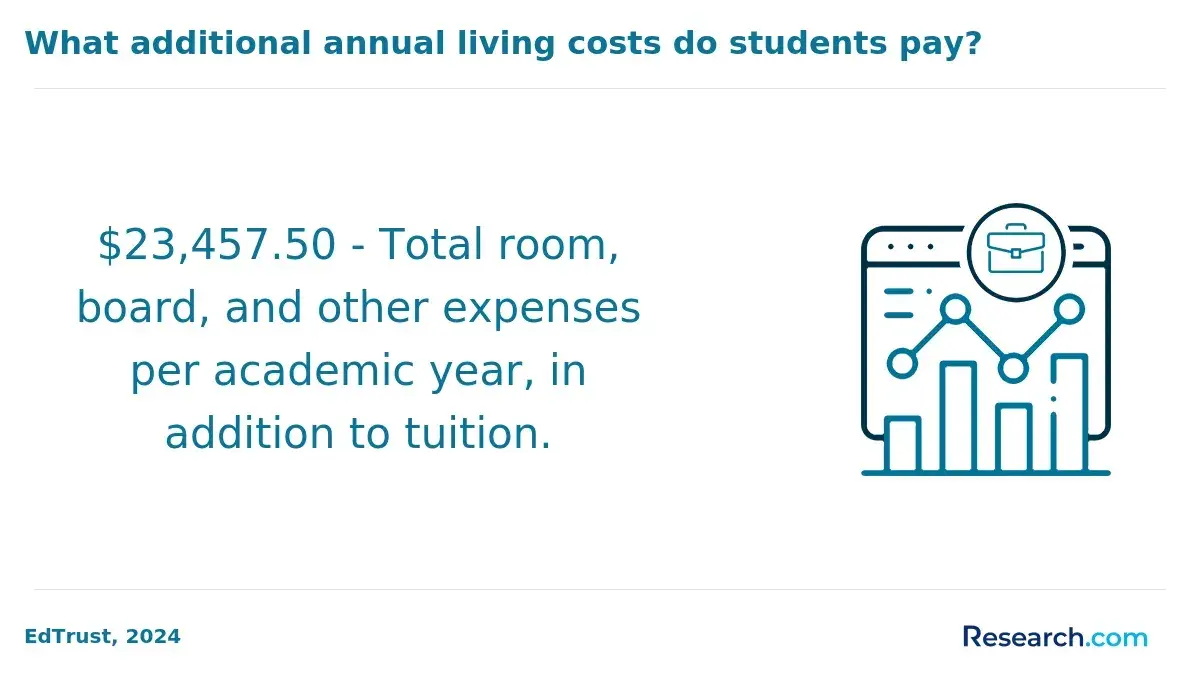
Financial readiness means you understand the full cost of attendance, likely aid, out-of-pocket expenses, borrowing risk, and whether your plan is sustainable for more than one term. Tuition is only one part of the cost; books, housing, food, transportation, technology, fees, childcare, and lost work hours can change the real price significantly.
College Board's 2024-25 pricing data shows why cost comparison matters: average published tuition and fees are $4,050 at public two-year colleges, $11,610 for in-state students at public four-year colleges, and $43,350 at private nonprofit four-year colleges. Those figures are sticker prices, not necessarily your net price after grants and scholarships, but they show why school type and residency status can strongly affect affordability.
The table below highlights major cost categories to review before you decide whether you are financially ready to apply and enroll. Use it to compare net cost, not just advertised tuition:
| Cost factor | Why it matters | Question to ask |
| Tuition and mandatory fees | These are the core academic charges and can vary by residency, program, and course load. | What is the tuition rate for my exact student category and major? |
| Housing and food | Living on campus, commuting, or living independently can change the total cost more than tuition in some cases. | What is the realistic cost of my living arrangement? |
| Books, supplies, and technology | Some majors require specialized software, lab materials, equipment, or clinical supplies. | Are there program-specific costs beyond standard textbooks? |
| Transportation | Commuting costs can include fuel, parking, transit passes, vehicle maintenance, or travel to clinical sites. | Can I reliably reach campus, internships, labs, or field placements? |
| Lost income | Full-time study may reduce work hours, which affects monthly cash flow. | Can I cover basic expenses if my work schedule changes? |
Before you commit, compare the financial aid package against your real budget. Adult learners considering graduate study should also compare formats and net prices carefully; some affordable online master's programs may reduce relocation and commuting costs, but total value still depends on accreditation, employer recognition, and career fit.
Use this financial readiness process before accepting an offer. It helps you avoid taking on debt without understanding the full commitment:
- Complete the FAFSA as early as possible and check whether your state or school requires additional aid forms.
- Compare net price estimates after grants and scholarships, not just sticker prices.
- Separate gift aid from loans so you know what must be repaid.
- Estimate monthly expenses for housing, food, transportation, technology, and personal needs.
- Ask whether scholarships renew automatically or require a minimum GPA, major, or enrollment level.
- Calculate how much you may need to work and whether that workload is realistic with your course schedule.
A major red flag is choosing a school because the first-year aid package looks generous without checking renewal rules. Another is borrowing the maximum amount offered without estimating future repayment or comparing lower-cost pathways such as community college transfer, part-time study, employer tuition assistance, or in-state public options.
How can I decide between online, hybrid, and campus-based college options?
The right format depends on how you learn best, what your program requires, and how school fits into your work, family, transportation, and support needs. Online learning can be flexible, but it usually requires more self-direction; campus learning offers structure and in-person access, but it may require commuting or relocation.
Current student behavior supports considering multiple formats. NCES reported in its recent distance education data that millions of U.S. college students take at least one online course, which means online and hybrid study are now mainstream options rather than unusual alternatives. Still, not every major or licensure pathway works equally well online.
The table below compares common delivery formats. Use it to decide which format matches your schedule, learning style, and program requirements:
| Format | Best fit | Important trade-off |
| Online | Students who need location flexibility, work full time, travel often, or live far from campus. | Requires strong time management and reliable technology access. |
| Hybrid | Students who want some flexibility while keeping in-person labs, discussions, advising, or networking. | Campus visits may still conflict with work or caregiving schedules. |
| Campus-based | Students who benefit from face-to-face structure, campus resources, labs, studios, athletics, or residential life. | May involve higher living, commuting, or relocation costs. |
| Low-residency | Graduate or professional students who can study online but attend short in-person sessions. | Travel costs and intensive residencies must be planned in advance. |
If you are exploring graduate study, an online masters degree may make sense when the program is accredited, the schedule matches your work life, and your target employers accept the delivery format. For undergraduate students, online courses can be a strong fit if you are self-motivated, but they may be harder if you need frequent in-person accountability.
Ask these questions before choosing a format. They will help you avoid selecting a convenient option that does not match the way you actually learn:
- Are classes synchronous, asynchronous, or a mix of both?
- Will I need to attend labs, clinicals, internships, exams, orientations, or residencies in person?
- How quickly do instructors respond to online students?
- What tutoring, library, career, disability, and advising services are available remotely?
- Do I have a quiet study space, reliable internet, and a backup plan if technology fails?
What should I look for in an accredited, reputable college or university?
Accreditation is a quality review process that affects credit transfer, financial aid eligibility, graduate school admission, employer recognition, and licensure pathways. In the U.S., you should confirm institutional accreditation and, when relevant, programmatic accreditation for fields such as nursing, education, counseling, social work, engineering, business, and allied health.
A reputable college is not defined by ranking alone. It should be transparent about accreditation, cost, outcomes, student support, transfer credit, faculty qualifications, complaint processes, and whether programs meet state licensing requirements.
The table below outlines what to check when evaluating a school's credibility. Use it to separate legitimate options from programs that may create transfer, aid, or employment problems later:
| Quality signal | Why it matters | Possible red flag |
| Institutional accreditation | Supports federal financial aid eligibility and broad recognition of the institution. | The school cannot clearly name its accrediting agency. |
| Programmatic accreditation | May be required or preferred for licensure, certification, or specialized employment. | The program says accreditation is unnecessary in a licensed field without explaining why. |
| Transparent net price | Helps you estimate what you will actually pay after aid. | Admissions staff emphasize monthly payments but avoid total cost. |
| Transfer credit policy | Affects how much prior coursework will count and how long the degree will take. | The school will not evaluate transfer credits until after you enroll. |
| Student outcomes | Graduation, retention, licensure pass rates, and employment data can show whether students are progressing. | The school makes broad salary claims without context or evidence. |
Before applying, verify the school's accreditation through official databases and confirm that your program meets requirements in the state where you plan to work. This is especially important for online programs because licensure rules can vary by state.
Common mistakes include assuming all credits transfer, relying only on advertisements, choosing a school because of a ranking without checking fit, or enrolling before confirming that the program is recognized by employers or licensing boards in your field.
How do different degree types and majors shape long-term career pathways?
Your degree type affects how quickly you can enter the workforce, how much academic specialization you receive, and what advancement routes may open later. Your major affects the skills you build, the industries you can enter, and how directly your coursework connects to specific occupations.
Degree choice should be based on career requirements, cost, timeline, transferability, and your tolerance for academic risk. For example, a student aiming for registered nursing, engineering, accounting, or teaching may need a structured major with licensing or certification requirements, while a student exploring communications, public policy, or entrepreneurship may benefit from internships, portfolios, and broad skill development.
The table below compares common degree levels and how they often connect to career pathways. Use it to think beyond admission and consider what each credential can realistically help you do next:
| Credential | Typical role in a career pathway | Best fit |
| Certificate | Builds focused skills for entry-level work, advancement, or career change. | Students who need targeted training quickly or want to test a field before a degree. |
| Associate degree | Can lead to technical careers or transfer into a bachelor's program. | Students seeking lower cost, local access, or a step-by-step path. |
| Bachelor's degree | Provides broad preparation for professional roles, graduate school, and advancement. | Students whose target careers commonly require a four-year degree. |
| Master's degree | Supports specialization, leadership, licensure, or career advancement in some fields. | Professionals with a clear reason to deepen expertise or meet role requirements. |
| Doctoral or professional degree | Prepares for advanced practice, research, academia, or licensed professions. | Students pursuing fields such as medicine, law, psychology, advanced research, or higher education faculty roles. |
Some students benefit from flexible pacing after they already have work experience. A competency-based master's degree may be worth exploring if you can demonstrate existing knowledge, move independently, and need a structure that rewards mastery rather than seat time.
The biggest mistake is choosing a major only because it sounds interesting or because someone else recommended it. Interest matters, but you should also check required courses, internship access, graduate school expectations, licensing rules, and the kinds of entry-level jobs available to graduates in that field.
What program length, workload, and scheduling factors should I evaluate before enrolling?
Program length affects cost, opportunity cost, burnout risk, and how soon you can use the credential. Workload affects whether you can realistically balance college with employment, family, health, commuting, and other responsibilities.
A traditional bachelor's program is often designed around full-time study over about four academic years, while associate degrees, certificates, accelerated pathways, and part-time programs vary widely. Accelerated formats can be efficient, but they are not automatically easier; they usually compress the same learning into a shorter period.
The table below compares common pacing options. Use it to choose a schedule that supports completion rather than simply the fastest possible start:
| Pacing option | Best fit | Main risk |
| Full-time traditional | Students who can prioritize school and want steady progress. | May reduce work hours and increase short-term financial pressure. |
| Part-time | Working adults, caregivers, or students who need a lighter course load. | Longer completion time can increase persistence challenges. |
| Accelerated | Students with strong study habits, transfer credits, or a clear goal. | Compressed workload can be difficult if life responsibilities are unpredictable. |
| Self-paced | Independent learners who can manage deadlines without frequent reminders. | Progress can stall without structure and accountability. |
| Cohort-based | Students who value peer support and a fixed sequence of courses. | Less flexibility if you need to pause or change pace. |
If speed is a priority, compare legitimate 1-year degree programs carefully. A faster path is most useful when it is accredited, accepts appropriate transfer credit, fits your weekly schedule, and connects clearly to your goal.
Before enrolling, estimate your weekly workload honestly. Many college courses require significant study time outside class, especially writing-intensive, lab-based, quantitative, and accelerated courses. Here's how:
- Review the number of credits or courses required each term.
- Ask whether courses are offered every term or only once per year.
- Check whether internships, labs, practicums, student teaching, or clinicals require daytime availability.
- Confirm how transfer credits, prior learning credits, or placement results affect your timeline.
- Build a weekly schedule that includes class time, study time, work, transportation, sleep, and personal responsibilities.
A common mistake is enrolling full time because it sounds normal, even when your work or family schedule only supports part-time study. Finishing more slowly is often better than stopping out because the first term was unrealistic.
How do salary potential and job outlook influence the decision to apply to college now?
Salary potential and job outlook should influence your decision, but they should not be the only factors. College may be a strong investment when the credential is connected to roles with stable demand, reasonable earnings, and advancement opportunities, and when the cost does not create unsustainable debt.
BLS 2024 education earnings data shows a broad labor market advantage for higher education: workers with a bachelor's degree had median weekly earnings of $1,543, while workers with an associate degree had $1,099. This does not mean every degree pays off equally; it means education level is one important variable to consider alongside major, experience, location, occupation, and school cost.
The table below shows how to connect salary and job outlook data to your application decision. Use it to avoid overvaluing a degree based only on a headline salary:
| Decision factor | What to evaluate | Why it matters |
| Entry-level roles | Jobs you can realistically pursue within one year of graduation. | Early outcomes affect your ability to build experience and manage debt. |
| Median wage | Typical pay for an occupation, not the highest advertised salary. | Median data is more useful than exceptional success stories. |
| Job growth | Projected demand in your target occupation and region. | A strong outlook can improve opportunity, but it does not guarantee employment. |
| Licensure or certification | Required exams, supervised hours, background checks, or state approvals. | Graduating may not be enough to work legally in regulated fields. |
| Total education cost | Net price, debt, time out of work, and required future degrees. | ROI depends on what you spend as well as what you may earn. |
Technology trends also matter. AI and automation are changing employer expectations in fields such as business, analytics, marketing, software, healthcare administration, design, and legal support. That does not make college irrelevant; it makes applied skills, internships, projects, data literacy, communication, and adaptability more important when choosing a major.
Before applying, compare your target program with real job postings. Look for repeated requirements such as degree level, software tools, certifications, writing ability, data skills, customer interaction, clinical experience, or leadership responsibilities. If the program does not help you build those skills, keep looking.
Other Things You Should Know About
Yes, if you choose a school with strong advising, flexible general education options, and a reasonable cost while you explore. If you are completely unsure about career direction, consider community college, part-time enrollment, career assessments, job shadowing, or a gap term before committing to an expensive program.
Community college can be a smart lower-cost start if credits transfer cleanly and your target major has a clear pathway. A four-year university may be better if you need direct entry into a selective major, residential experience, research opportunities, athletics, or specialized campus resources.
Yes. Average grades do not automatically mean you are unprepared, especially if your recent performance is improving and you have strong study habits. However, you should match your college list to your academic record and build a support plan for writing, math, time management, or tutoring if needed.
The biggest sign is not having a realistic plan for academics, finances, and daily responsibilities. If you cannot explain why you want to enroll, how you will pay, what support you will use, and how college connects to your goals, it may be better to pause, research, and apply when your plan is stronger.
References
- How to make an effective study plan https://www.vu.edu.au/about-vu/news-events/vu-blog/how-to-make-an-effective-study-plan
- Benefits of a College Degree on Salary & Earning Potential | UMass Global https://www.umassglobal.edu/blog-news/how-college-impacts-salary-and-future-earning-potential
- Alma Career – A better world of work for everyone https://www.almacareer.com/blog/how-does-a-university-degree-influence-pay
- Types of College Degrees https://www.act.org/content/act/en/students-and-parents/high-school-success/what-to-do-after-high-school/college-degrees.html
- How to Choose the Right College for Your Career Goals | American SPCC https://americanspcc.org/how-to-choose-the-right-college-for-your-career-goals/
- Online vs Hybrid vs Campus Learning in Healthcare: Which Is Right for You? https://www.edumed.org/articles/online-vs-hybrid-vs-campus/
- Online, Hybrid, and More: Flexible Learning Options in College - ReUp Education https://reupeducation.com/blog/online-hybrid-and-more-flexible-learning-options-in-college/
- Types of University Degrees According to Your Interests - CIS University https://www.cis-spain.com/en/blog/types-of-university-degrees-according-to-your-interests/
- 100 life skills to master before college https://www.citizensbank.com/student/articles/100-life-skills-to-master-before-college.aspx
- Hybrid class vs. online: Choosing the best for your student https://www.asuprepdigital.org/blog/hybrid-class-vs-online/