
Workbooks Review 2027: Pricing, Features, Pros & Cons, Ratings & More

Co-Founder and Chief Data Scientist

Workbooks: Top CRM Software
4.15 / 5
Featured CRM Software Alternatives for Workbooks

$9 to $150/user/month
Yes, up to 2 users
E-signature software, call transcription, conversation routing
Editor's Take
HubSpot CRM is a powerful customer relationship management platform designed to help businesses manage their sales, marketing, and customer service efforts in one centralized place. Its user-friendly interface allows teams to track leads, monitor customer interactions, and automate sales pipelines. With built-in tools for email marketing, contact management, and analytics, HubSpot CRM provides deep insights into customer behavior and sales performance. The platform also supports seamless collaboration between marketing and sales teams through real-time updates and integrations with tools like Gmail, Outlook, and Slack. Additionally, its automation features help reduce manual tasks, enabling teams to focus on building relationships and closing deals. HubSpot CRM is scalable, making it ideal for businesses of all sizes, from startups to large enterprises.
Expert Score
In evaluating SaaS software, a comprehensive and structured methodology ensures a fair and accurate comparison across key metrics. This approach focuses on the most critical aspects that affect user experience, functionality, and business value. The following metrics—general features, cost, customer service, integrations, and mobile support—are evaluated to provide a holistic view of each software solution’s strengths and weaknesses. These metrics are selected based on their direct impact on software usability, scalability, and long-term effectiveness for businesses.
1. General Features - scoring weight 40%
This metric evaluates the core functionalities and tools the software offers. It involves assessing the comprehensiveness of the features, their relevance to the target users, and the ease of use. This is important because robust and well-designed features determine the software's overall utility and efficiency in solving user problems.
2. Cost - scoring weight 15%
Cost analysis focuses on pricing models, value for money, and scalability. It's crucial to evaluate whether the software’s features justify its price, considering different plans for small and large organizations. This is vital for businesses to ensure they invest in cost-effective solutions that fit their budget.
3. Customer Service - scoring weight 15%
This evaluates the responsiveness, quality, and availability of customer support, including channels like chat, email, or phone. Good customer service is essential for troubleshooting and ensuring smooth software usage, which reduces downtime and frustration for users.
4. Integrations - scoring weight 15%
This examines how well the software integrates with third-party tools (e.g., CRM, payment systems, collaboration apps). Seamless integrations are key for creating a unified workflow and enhancing productivity by connecting multiple systems, which is crucial for operational efficiency.
5. Mobile Support - scoring weight 15%
Mobile support assesses the software’s functionality and performance on mobile devices, including apps and mobile web versions. With increasing remote work and on-the-go usage, strong mobile support is critical to ensure users can access and utilize the software effectively, regardless of location.

$25 per user per month
14 days
marketing automation, sales automation, no code customization
Editor's Take
CRM Creatio is a comprehensive customer relationship management (CRM) solution designed to streamline and enhance business processes across sales, marketing, and customer service functions. Known for its low-code platform, Creatio allows businesses to customize and automate workflows without requiring extensive technical expertise. This adaptability makes it particularly appealing to organizations seeking to align the software with their specific needs.
The platform's marketing module provides tools for multi-channel campaign management, lead generation, and personalized customer engagement. Its sales module offers functionality for pipeline management, opportunity tracking, and analytics to help teams close deals more efficiently. Additionally, the customer service module supports case management, service level agreement (SLA) monitoring, and omnichannel communication, enabling businesses to provide exceptional customer support.
Creatio stands out with its intuitive interface, robust analytics, and AI-powered tools that provide actionable insights. The low-code development tools allow non-technical users to create applications and automate processes, reducing the dependency on IT teams. Integration capabilities with other software platforms and APIs enhance its utility, making it a versatile choice for businesses of all sizes.
Overall, CRM Creatio is a powerful solution that combines user-friendly design with advanced customization and automation features. Its adaptability and low-code foundation position it as a strong contender for organizations looking to optimize customer relationship management processes while maintaining flexibility for growth and innovation.
Expert Score
In evaluating SaaS software, a comprehensive and structured methodology ensures a fair and accurate comparison across key metrics. This approach focuses on the most critical aspects that affect user experience, functionality, and business value. The following metrics—general features, cost, customer service, integrations, and mobile support—are evaluated to provide a holistic view of each software solution’s strengths and weaknesses. These metrics are selected based on their direct impact on software usability, scalability, and long-term effectiveness for businesses.
1. General Features - scoring weight 40%
This metric evaluates the core functionalities and tools the software offers. It involves assessing the comprehensiveness of the features, their relevance to the target users, and the ease of use. This is important because robust and well-designed features determine the software's overall utility and efficiency in solving user problems.
2. Cost - scoring weight 15%
Cost analysis focuses on pricing models, value for money, and scalability. It's crucial to evaluate whether the software’s features justify its price, considering different plans for small and large organizations. This is vital for businesses to ensure they invest in cost-effective solutions that fit their budget.
3. Customer Service - scoring weight 15%
This evaluates the responsiveness, quality, and availability of customer support, including channels like chat, email, or phone. Good customer service is essential for troubleshooting and ensuring smooth software usage, which reduces downtime and frustration for users.
4. Integrations - scoring weight 15%
This examines how well the software integrates with third-party tools (e.g., CRM, payment systems, collaboration apps). Seamless integrations are key for creating a unified workflow and enhancing productivity by connecting multiple systems, which is crucial for operational efficiency.
5. Mobile Support - scoring weight 15%
Mobile support assesses the software’s functionality and performance on mobile devices, including apps and mobile web versions. With increasing remote work and on-the-go usage, strong mobile support is critical to ensure users can access and utilize the software effectively, regardless of location.

$8/per user/per month
Yes
customizable dashboards, automated follow-ups, advanced analytics
Editor's Take
monday.com Sales CRM is a customizable platform designed to streamline sales processes, enhance team collaboration, and improve pipeline visibility. Its intuitive interface enables users to manage leads, track deals, and automate repetitive tasks with ease. The CRM integrates seamlessly with popular tools like Gmail, Slack, and HubSpot, ensuring a centralized workflow. Features like customizable dashboards, automated follow-ups, and advanced analytics help sales teams stay organized and focused on closing deals. With scalability in mind, monday.com caters to businesses of all sizes, offering flexible pricing plans and robust customer support. It’s an excellent choice for teams seeking efficiency and adaptability.
Expert Score
In evaluating SaaS software, a comprehensive and structured methodology ensures a fair and accurate comparison across key metrics. This approach focuses on the most critical aspects that affect user experience, functionality, and business value. The following metrics—general features, cost, customer service, integrations, and mobile support—are evaluated to provide a holistic view of each software solution’s strengths and weaknesses. These metrics are selected based on their direct impact on software usability, scalability, and long-term effectiveness for businesses.
1. General Features - scoring weight 40%
This metric evaluates the core functionalities and tools the software offers. It involves assessing the comprehensiveness of the features, their relevance to the target users, and the ease of use. This is important because robust and well-designed features determine the software’s overall utility and efficiency in solving user problems.
2. Cost - scoring weight 15%
Cost analysis focuses on pricing models, value for money, and scalability. It’s crucial to evaluate whether the software’s features justify its price, considering different plans for small and large organizations. This is vital for businesses to ensure they invest in cost-effective solutions that fit their budget.
3. Customer Service - scoring weight 15%
This evaluates the responsiveness, quality, and availability of customer support, including channels like chat, email, or phone. Good customer service is essential for troubleshooting and ensuring smooth software usage, which reduces downtime and frustration for users.
4. Integrations - scoring weight 15%
This examines how well the software integrates with third-party tools (e.g., CRM, payment systems, collaboration apps). Seamless integrations are key for creating a unified workflow and enhancing productivity by connecting multiple systems, which is crucial for operational efficiency.
5. Mobile Support - scoring weight 15%
Mobile support assesses the software’s functionality and performance on mobile devices, including apps and mobile web versions. With increasing remote work and on-the-go usage, strong mobile support is critical to ensure users can access and utilize the software effectively, regardless of location.
Workbooks Review
What is Workbooks?
Workbooks, one of the best CRM today, carves a niche in the market by catering to specific industries like media, IT, and professional services. Unlike generic CRMs or ERP software solutions that demand adaptation, Workbooks promises a tailored experience, potentially streamlining workflows and addressing industry-specific pain points. However, this focus might limit flexibility compared to more general-purpose options.
In this Workbooks CRM review, we will evaluate the Workbooks CRM pros and cons beyond the basic features. Workbooks boasts integrated features like marketing automation, project management, and invoicing, aiming to create a centralized business ecosystem. This holistic approach could foster collaboration and efficiency, but its complexity might deter users with limited technical expertise.
Sales and marketing teams enjoy automation, data-driven insights, and targeted campaigns, while customer service benefits from ticketing systems, feedback tools, and a knowledge base. Workbooks integrates with popular tools and offers mobile apps, making it potentially suitable for remote teams and mobile workstyles. However, Workbooks CRM pricing for premium features and a steeper learning curve require careful consideration alongside its strengths. Ultimately, in this Workbooks review, you will find out if this software is a compelling choice for businesses seeking a tailored CRM solution with integrated features.
What's new in Workbooks?
In our Workbooks CRM review, we found out that the software is getting a communication and data visualization makeover. Comments, like those in Slack or Teams, are now integrated within records, fostering real-time collaboration without app switching. Here are some of the updates as of Q2 2023.
- RingCentral's caller ID, client access during calls, and recording options are now embedded, boosting sales and customer service efficiency and offering valuable training materials.
- New card layouts for Reports and Dashboards break away from traditional grids, highlighting key data points for improved impact.
- Additional updates include enhanced filtering and searching, global currency switching, an editable calendar with combined tasks and meetings, Asana/Trello-like project management features, and omnichannel marketing capabilities through Spotler integration.
The updates above can only make Workbooks one of the best sales software, too.
Featured CRM Software Products
$9 to $150/user/month
Yes, up to 2 users
E-signature software, call transcription, conversation routing
Editor's Take
HubSpot CRM is a powerful customer relationship management platform designed to help businesses manage their sales, marketing, and customer service efforts in one centralized place. Its user-friendly interface allows teams to track leads, monitor customer interactions, and automate sales pipelines. With built-in tools for email marketing, contact management, and analytics, HubSpot CRM provides deep insights into customer behavior and sales performance. The platform also supports seamless collaboration between marketing and sales teams through real-time updates and integrations with tools like Gmail, Outlook, and Slack. Additionally, its automation features help reduce manual tasks, enabling teams to focus on building relationships and closing deals. HubSpot CRM is scalable, making it ideal for businesses of all sizes, from startups to large enterprises.
Expert Score
In evaluating SaaS software, a comprehensive and structured methodology ensures a fair and accurate comparison across key metrics. This approach focuses on the most critical aspects that affect user experience, functionality, and business value. The following metrics—general features, cost, customer service, integrations, and mobile support—are evaluated to provide a holistic view of each software solution’s strengths and weaknesses. These metrics are selected based on their direct impact on software usability, scalability, and long-term effectiveness for businesses.
1. General Features - scoring weight 40%
This metric evaluates the core functionalities and tools the software offers. It involves assessing the comprehensiveness of the features, their relevance to the target users, and the ease of use. This is important because robust and well-designed features determine the software's overall utility and efficiency in solving user problems.
2. Cost - scoring weight 15%
Cost analysis focuses on pricing models, value for money, and scalability. It's crucial to evaluate whether the software’s features justify its price, considering different plans for small and large organizations. This is vital for businesses to ensure they invest in cost-effective solutions that fit their budget.
3. Customer Service - scoring weight 15%
This evaluates the responsiveness, quality, and availability of customer support, including channels like chat, email, or phone. Good customer service is essential for troubleshooting and ensuring smooth software usage, which reduces downtime and frustration for users.
4. Integrations - scoring weight 15%
This examines how well the software integrates with third-party tools (e.g., CRM, payment systems, collaboration apps). Seamless integrations are key for creating a unified workflow and enhancing productivity by connecting multiple systems, which is crucial for operational efficiency.
5. Mobile Support - scoring weight 15%
Mobile support assesses the software’s functionality and performance on mobile devices, including apps and mobile web versions. With increasing remote work and on-the-go usage, strong mobile support is critical to ensure users can access and utilize the software effectively, regardless of location.
$25 per user per month
14 days
marketing automation, sales automation, no code customization
Editor's Take
CRM Creatio is a comprehensive customer relationship management (CRM) solution designed to streamline and enhance business processes across sales, marketing, and customer service functions. Known for its low-code platform, Creatio allows businesses to customize and automate workflows without requiring extensive technical expertise. This adaptability makes it particularly appealing to organizations seeking to align the software with their specific needs.
The platform's marketing module provides tools for multi-channel campaign management, lead generation, and personalized customer engagement. Its sales module offers functionality for pipeline management, opportunity tracking, and analytics to help teams close deals more efficiently. Additionally, the customer service module supports case management, service level agreement (SLA) monitoring, and omnichannel communication, enabling businesses to provide exceptional customer support.
Creatio stands out with its intuitive interface, robust analytics, and AI-powered tools that provide actionable insights. The low-code development tools allow non-technical users to create applications and automate processes, reducing the dependency on IT teams. Integration capabilities with other software platforms and APIs enhance its utility, making it a versatile choice for businesses of all sizes.
Overall, CRM Creatio is a powerful solution that combines user-friendly design with advanced customization and automation features. Its adaptability and low-code foundation position it as a strong contender for organizations looking to optimize customer relationship management processes while maintaining flexibility for growth and innovation.
Expert Score
In evaluating SaaS software, a comprehensive and structured methodology ensures a fair and accurate comparison across key metrics. This approach focuses on the most critical aspects that affect user experience, functionality, and business value. The following metrics—general features, cost, customer service, integrations, and mobile support—are evaluated to provide a holistic view of each software solution’s strengths and weaknesses. These metrics are selected based on their direct impact on software usability, scalability, and long-term effectiveness for businesses.
1. General Features - scoring weight 40%
This metric evaluates the core functionalities and tools the software offers. It involves assessing the comprehensiveness of the features, their relevance to the target users, and the ease of use. This is important because robust and well-designed features determine the software's overall utility and efficiency in solving user problems.
2. Cost - scoring weight 15%
Cost analysis focuses on pricing models, value for money, and scalability. It's crucial to evaluate whether the software’s features justify its price, considering different plans for small and large organizations. This is vital for businesses to ensure they invest in cost-effective solutions that fit their budget.
3. Customer Service - scoring weight 15%
This evaluates the responsiveness, quality, and availability of customer support, including channels like chat, email, or phone. Good customer service is essential for troubleshooting and ensuring smooth software usage, which reduces downtime and frustration for users.
4. Integrations - scoring weight 15%
This examines how well the software integrates with third-party tools (e.g., CRM, payment systems, collaboration apps). Seamless integrations are key for creating a unified workflow and enhancing productivity by connecting multiple systems, which is crucial for operational efficiency.
5. Mobile Support - scoring weight 15%
Mobile support assesses the software’s functionality and performance on mobile devices, including apps and mobile web versions. With increasing remote work and on-the-go usage, strong mobile support is critical to ensure users can access and utilize the software effectively, regardless of location.
$8/per user/per month
Yes
customizable dashboards, automated follow-ups, advanced analytics
Editor's Take
monday.com Sales CRM is a customizable platform designed to streamline sales processes, enhance team collaboration, and improve pipeline visibility. Its intuitive interface enables users to manage leads, track deals, and automate repetitive tasks with ease. The CRM integrates seamlessly with popular tools like Gmail, Slack, and HubSpot, ensuring a centralized workflow. Features like customizable dashboards, automated follow-ups, and advanced analytics help sales teams stay organized and focused on closing deals. With scalability in mind, monday.com caters to businesses of all sizes, offering flexible pricing plans and robust customer support. It’s an excellent choice for teams seeking efficiency and adaptability.
Expert Score
In evaluating SaaS software, a comprehensive and structured methodology ensures a fair and accurate comparison across key metrics. This approach focuses on the most critical aspects that affect user experience, functionality, and business value. The following metrics—general features, cost, customer service, integrations, and mobile support—are evaluated to provide a holistic view of each software solution’s strengths and weaknesses. These metrics are selected based on their direct impact on software usability, scalability, and long-term effectiveness for businesses.
1. General Features - scoring weight 40%
This metric evaluates the core functionalities and tools the software offers. It involves assessing the comprehensiveness of the features, their relevance to the target users, and the ease of use. This is important because robust and well-designed features determine the software’s overall utility and efficiency in solving user problems.
2. Cost - scoring weight 15%
Cost analysis focuses on pricing models, value for money, and scalability. It’s crucial to evaluate whether the software’s features justify its price, considering different plans for small and large organizations. This is vital for businesses to ensure they invest in cost-effective solutions that fit their budget.
3. Customer Service - scoring weight 15%
This evaluates the responsiveness, quality, and availability of customer support, including channels like chat, email, or phone. Good customer service is essential for troubleshooting and ensuring smooth software usage, which reduces downtime and frustration for users.
4. Integrations - scoring weight 15%
This examines how well the software integrates with third-party tools (e.g., CRM, payment systems, collaboration apps). Seamless integrations are key for creating a unified workflow and enhancing productivity by connecting multiple systems, which is crucial for operational efficiency.
5. Mobile Support - scoring weight 15%
Mobile support assesses the software’s functionality and performance on mobile devices, including apps and mobile web versions. With increasing remote work and on-the-go usage, strong mobile support is critical to ensure users can access and utilize the software effectively, regardless of location.

$7 per user per month billed annually
15 days
lead generation, sales pipeline management, workflow automation
Editor's Take
Zoho CRM is a flexible and comprehensive customer relationship management platform designed to help businesses manage and grow their customer relationships effectively. With tools for lead generation, sales pipeline management, workflow automation, and analytics, Zoho CRM is suitable for businesses of all sizes across a variety of industries.
Zoho CRM enables teams to streamline sales processes by capturing leads from multiple channels, tracking interactions, and managing every stage of the sales cycle. The platform offers customizable dashboards and reports, providing insights into sales performance and customer behaviors to help make data-driven decisions. With powerful automation features, Zoho CRM allows businesses to set up workflows for routine tasks like follow-ups, lead scoring, and email notifications, reducing manual work and enhancing productivity. The platform integrates with popular tools, including the Zoho suite, Microsoft 365, and G Suite, enabling a seamless connection across teams.
For businesses aiming to improve customer engagement, close deals faster, and enhance team collaboration, Zoho CRM delivers a scalable, user-friendly solution to drive sales and customer satisfaction.
Expert Score
In evaluating SaaS software, a comprehensive and structured methodology ensures a fair and accurate comparison across key metrics. This approach focuses on the most critical aspects that affect user experience, functionality, and business value. The following metrics—general features, cost, customer service, integrations, and mobile support—are evaluated to provide a holistic view of each software solution’s strengths and weaknesses. These metrics are selected based on their direct impact on software usability, scalability, and long-term effectiveness for businesses.
1. General Features - scoring weight 40%
This metric evaluates the core functionalities and tools the software offers. It involves assessing the comprehensiveness of the features, their relevance to the target users, and the ease of use. This is important because robust and well-designed features determine the software's overall utility and efficiency in solving user problems.
2. Cost - scoring weight 15%
Cost analysis focuses on pricing models, value for money, and scalability. It's crucial to evaluate whether the software’s features justify its price, considering different plans for small and large organizations. This is vital for businesses to ensure they invest in cost-effective solutions that fit their budget.
3. Customer Service - scoring weight 15%
This evaluates the responsiveness, quality, and availability of customer support, including channels like chat, email, or phone. Good customer service is essential for troubleshooting and ensuring smooth software usage, which reduces downtime and frustration for users.
4. Integrations - scoring weight 15%
This examines how well the software integrates with third-party tools (e.g., CRM, payment systems, collaboration apps). Seamless integrations are key for creating a unified workflow and enhancing productivity by connecting multiple systems, which is crucial for operational efficiency.
5. Mobile Support - scoring weight 15%
Mobile support assesses the software’s functionality and performance on mobile devices, including apps and mobile web versions. With increasing remote work and on-the-go usage, strong mobile support is critical to ensure users can access and utilize the software effectively, regardless of location.

By quote
Yes
Lead Management, Contact Management, Workflow Automation
Editor's Take
Salesforce CRM is a leading customer relationship management platform known for its robust functionality, scalability, and extensive customization options, making it suitable for businesses of all sizes, from startups to large enterprises. Built to streamline sales, marketing, customer service, and analytics, Salesforce CRM empowers teams to manage customer interactions, optimize workflows, and drive growth from a single, cloud-based platform.
Salesforce CRM provides a complete view of customer data, enabling teams to track interactions, manage leads, and automate tasks throughout the sales pipeline. With powerful tools for reporting and analytics, Salesforce offers insights into sales performance, customer trends, and campaign effectiveness, allowing teams to make data-driven decisions. The platform’s automation capabilities reduce manual workloads with customizable workflows, automated follow-ups, and lead scoring, ensuring a smooth customer journey. Integrations with thousands of third-party applications, along with its own suite of services, make Salesforce a highly adaptable solution for businesses looking to connect their CRM with other tools.
For organizations focused on enhancing customer engagement, improving team efficiency, and scaling their operations, Salesforce CRM delivers a powerful and versatile solution tailored to support long-term business growth.
Expert Score
In evaluating SaaS software, a comprehensive and structured methodology ensures a fair and accurate comparison across key metrics. This approach focuses on the most critical aspects that affect user experience, functionality, and business value. The following metrics—general features, cost, customer service, integrations, and mobile support—are evaluated to provide a holistic view of each software solution’s strengths and weaknesses. These metrics are selected based on their direct impact on software usability, scalability, and long-term effectiveness for businesses.
1. General Features - scoring weight 40%
This metric evaluates the core functionalities and tools the software offers. It involves assessing the comprehensiveness of the features, their relevance to the target users, and the ease of use. This is important because robust and well-designed features determine the software's overall utility and efficiency in solving user problems.
2. Cost - scoring weight 15%
Cost analysis focuses on pricing models, value for money, and scalability. It's crucial to evaluate whether the software’s features justify its price, considering different plans for small and large organizations. This is vital for businesses to ensure they invest in cost-effective solutions that fit their budget.
3. Customer Service - scoring weight 15%
This evaluates the responsiveness, quality, and availability of customer support, including channels like chat, email, or phone. Good customer service is essential for troubleshooting and ensuring smooth software usage, which reduces downtime and frustration for users.
4. Integrations - scoring weight 15%
This examines how well the software integrates with third-party tools (e.g., CRM, payment systems, collaboration apps). Seamless integrations are key for creating a unified workflow and enhancing productivity by connecting multiple systems, which is crucial for operational efficiency.
5. Mobile Support - scoring weight 15%
Mobile support assesses the software’s functionality and performance on mobile devices, including apps and mobile web versions. With increasing remote work and on-the-go usage, strong mobile support is critical to ensure users can access and utilize the software effectively, regardless of location.

$7/user/month
15 days
Pipeline Management, Email Integration, Task Tracking
Editor's Take
Bigin is a lightweight CRM by Zoho, tailored for small businesses and startups to manage sales pipelines efficiently. It provides tools for deal tracking, email integration, and task management, ensuring a simple yet effective approach to sales. The platform offers customizable pipelines, real-time notifications, and seamless integrations with other Zoho apps. Its user-friendly design makes it accessible for teams with minimal CRM experience, helping them streamline sales processes without complexity.
Expert Score
In evaluating SaaS software, a comprehensive and structured methodology ensures a fair and accurate comparison across key metrics. This approach focuses on the most critical aspects that affect user experience, functionality, and business value. The following metrics—general features, cost, customer service, integrations, and mobile support—are evaluated to provide a holistic view of each software solution’s strengths and weaknesses. These metrics are selected based on their direct impact on software usability, scalability, and long-term effectiveness for businesses.
1. General Features - scoring weight 40%
This metric evaluates the core functionalities and tools the software offers. It involves assessing the comprehensiveness of the features, their relevance to the target users, and the ease of use. This is important because robust and well-designed features determine the software's overall utility and efficiency in solving user problems.
2. Cost - scoring weight 15%
Cost analysis focuses on pricing models, value for money, and scalability. It's crucial to evaluate whether the software’s features justify its price, considering different plans for small and large organizations. This is vital for businesses to ensure they invest in cost-effective solutions that fit their budget.
3. Customer Service - scoring weight 15%
This evaluates the responsiveness, quality, and availability of customer support, including channels like chat, email, or phone. Good customer service is essential for troubleshooting and ensuring smooth software usage, which reduces downtime and frustration for users.
4. Integrations - scoring weight 15%
This examines how well the software integrates with third-party tools (e.g., CRM, payment systems, collaboration apps). Seamless integrations are key for creating a unified workflow and enhancing productivity by connecting multiple systems, which is crucial for operational efficiency.
5. Mobile Support - scoring weight 15%
Mobile support assesses the software’s functionality and performance on mobile devices, including apps and mobile web versions. With increasing remote work and on-the-go usage, strong mobile support is critical to ensure users can access and utilize the software effectively, regardless of location.
How much does Workbooks cost?
Workbooks: Top CRM Software
4.15 / 5
The software caters to businesses of all sizes with tiered Workbooks CRM pricing plans. Here is our Workbooks CRM review on pricing, with each edition offering a tailored set of features to meet specific needs:
- Standard Edition: Starting at £28 per user per month (billed annually), this edition handles core CRM functions like contact management, sales pipelines, and basic reporting. It also includes mobile app access for on-the-go productivity.
- Business Edition: For £61 per user per month, this edition expands upon Standard features by adding order processing, invoicing, project management, and team collaboration tools. This makes it ideal for businesses seeking deeper functionality and improved efficiency.
- Events Edition: At £125 per user per month, this edition caters to organizations hosting events. It includes all Business features and dedicated tools for event management, registration, ticketing, online payments, and attendee tracking.
What sets Workbooks apart?
In this Workbooks CRM review, the software is found to have the following key differentiators:
- Industry-Specific Focus: Unlike generic CRMs, Workbooks CRM features and functionalities cater to specific industries like media, IT, and professional services. This means it speaks your language, addresses your unique pain points, and streamlines workflows in a way that generic options often struggle to achieve.
- Beyond CRM: Workbooks goes beyond basic contact management and sales pipelines. It integrates marketing automation, project management, and even invoicing, creating a centralized business ecosystem that fosters collaboration and efficiency. This holistic approach contrasts with the siloed nature of many traditional CRMs.
- Tailored User Experience: Workbooks' interface and functionality adapt to the specific needs of your industry. This user-friendly experience minimizes friction and boosts adoption, unlike generic CRMs that require users to conform to their predetermined framework.
- Scalability and Flexibility: Workbooks scales with your business, accommodating both small teams and mid-sized companies. Its open API and other Workbooks CRM integrations with popular tools like Zapier and Mailchimp offer flexibility and customization options that many other CRMs lack.
- Commitment to Innovation: Workbooks is constantly evolving, adding new features and integrations based on user feedback and industry trends. This dedication to staying ahead of the curve sets it apart from stagnant CRMs that fail to adapt to changing needs.
Of course, Workbooks also has some potential drawbacks, such as a steeper learning curve compared to simpler CRMs and its premium pricing compared to some competitors. However, Workbooks stands out as a compelling option for businesses seeking a tailored, industry-specific CRM solution with integrated features and a commitment to innovation.
Pros of Workbooks
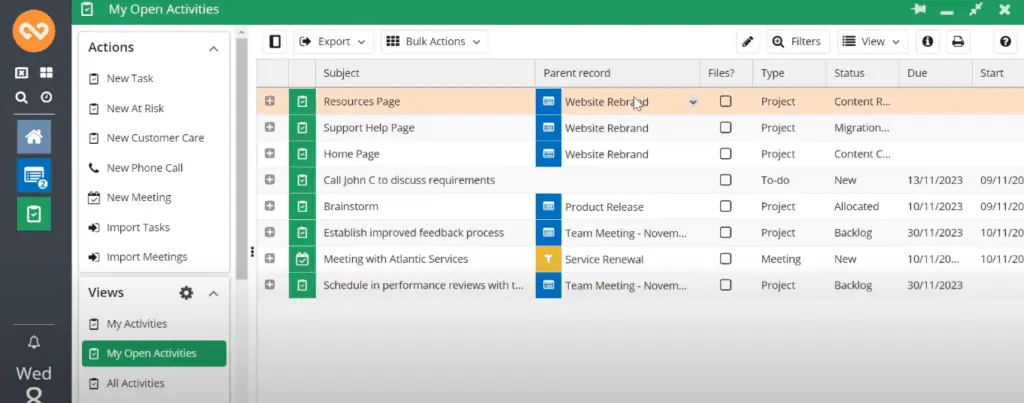
Workbooks stands out for its user-friendly interface and ease of use, enabling quick setup, minimal training, and intuitive navigation that users describe as making their jobs significantly easier, with features like task scheduling and data filtering just a couple of clicks away. Its high customizability allows effortless adaptation of fields, views, reports, layouts, and picklists to specific business needs, providing full control over customer-seller processes from leads to invoicing without feeling pigeonholed. Users praise the reliable performance and flexibility, noting it runs smoothly on modern browsers, automates up to 60% of processes for scalability, and offers robust reporting with extensive insights into pipeline health, customer interactions, and forecasting. Customer support is frequently highlighted as exceptional, with responsive, knowledgeable teams going the extra mile, efficiently resolving issues and aiding setup from purchase to go-live. The value for money is a key strength, being affordable as an alternative to high-end CRMs, free for up to two users, and delivering comprehensive CRM functionality that reduces paperwork, enhances efficiency, and supports business growth. Overall, user satisfaction is high due to its versatility in tracking accounts, contacts, opportunities, and campaigns, seamless data integration with tools like Google, Salesforce, and email apps, and automated dashboards for real-time visibility.
Cons of Workbooks
Workbooks, a comprehensive agency management platform, faces several user-reported limitations that can impact adoption. Common complaints include a steep learning curve and unintuitive UI, with regular staff struggling to use basic features like timesheets due to poor documentation and inadequate training materials. The mobile app is buggy, suffering from issues like losing state, restarting, and lacking biometric support, while the overall interface feels clunky and frustrating. Integration challenges are prevalent, with a cumbersome API that's difficult to script, limited native integrations (especially in the US), and hard syncing with other tools. Users note support gaps, such as slow response times for US customers since support is UK-based. Additional pain points encompass missing features like inventory tracking, an unstable finance module, poor internationalization (e.g., partial Norwegian translations), and frequent update downtimes. While power users appreciate its depth, these issues often hinder everyday efficiency for broader teams.
Workbooks Core Features
Workbooks: Top CRM Software
4.15 / 5
Workbooks boasts core features that streamline your business processes and boost efficiency, tailored to specific industries like media, IT, and professional services. Here's a breakdown of some key highlights in our Workbooks CRM review:
CRM
- Contact Management: Organize and track interactions with leads, customers, and partners.
- Sales Pipeline: Define and manage your sales process from lead generation to deal closure.
- Email Marketing: Craft targeted campaigns and automate email sequences.
- Reporting & Analytics: Gain insights into your sales performance and customer behavior.
- Mobile App: Stay productive and connected on the go.
Beyond CRM
- Marketing Automation: Automate marketing tasks, nurture leads, and personalize customer journeys.
- Project Management: Plan, track, and collaborate on projects seamlessly.
- Invoicing & Billing: Manage invoices, track payments, and send automated reminders.
- Knowledge Base: Empower your team and customers with self-service resources.
Collaboration & Communication
- Team Collaboration Tools: Facilitate communication and task management across teams.
- Comments: Discuss records directly in context, similar to Slack or Teams.
- RingCentral Integration: Enjoy caller ID, client record access, call recording, and more.
Customization & Integrations
- Industry-Specific Features: Tailored functionalities for media, IT, and professional services.
- Open API: Integrate Workbooks with your existing tools and platforms.
- Zapier & Mailchimp Integration: Extend Workbooks' capabilities with popular tools.
Benefits of Using Workbooks
Workbooks offers a range of potential benefits for businesses, particularly those in media, IT, and professional services, thanks to its unique features and focus. This Workbooks CRM review noted some key advantages to consider:
Increased Efficiency & Productivity:
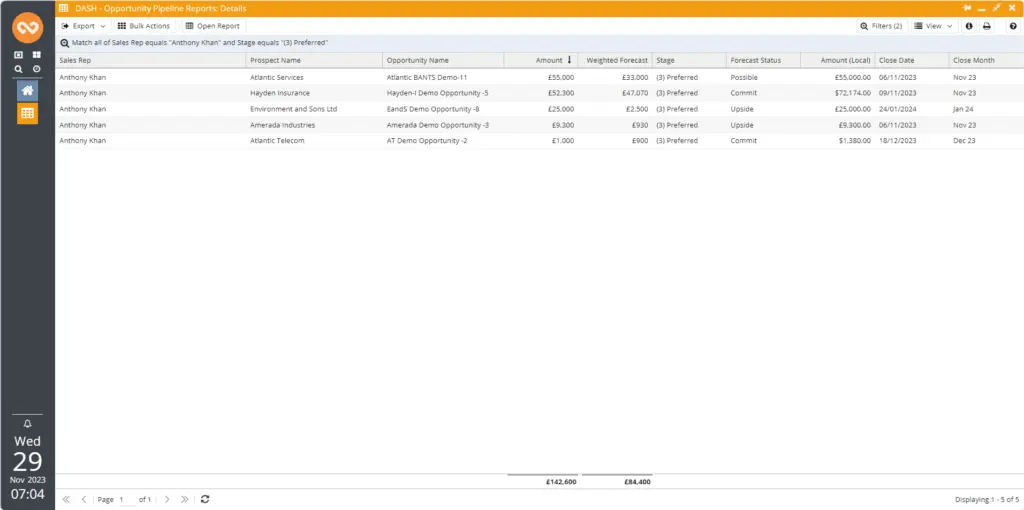
- Streamlined workflows: Workbooks centralizes your business operations, eliminating data silos and simplifying processes across departments. This leads to faster task completion, improved collaboration, and reduced time spent on administrative tasks.
- Automated tasks: Marketing automation, project management tools, and invoicing features free up your team's time for more strategic work.
- Mobile access: Stay productive and connected on the go with the Workbooks mobile app, ensuring your business never sleeps.
Improved Customer Experience & Growth:
- Enhanced customer service: Ticketing systems, knowledge base, and RingCentral integration provide a seamless customer experience and boost satisfaction.
- Targeted marketing: Craft personalized campaigns and automate email sequences to nurture leads and convert more customers.
- Data-driven insights: Gain valuable data and analytics on sales performance and customer behavior, allowing you to make informed decisions and improve your growth strategies.
Industry-Specific Solutions:
- Tailored features: Workbooks speaks your language and addresses your specific industry pain points, leading to better adoption and results.
- Increased visibility: Workbooks' industry-specific reports and dashboards provide insights tailored to your business, giving you a clear picture of your performance.
- Competitive edge: Stay ahead of the curve with Workbooks' focus on innovation and constant feature updates specific to your industry.
Other potential benefits:
- Scalability: Workbooks adapts to your business needs, from startups to mid-sized companies.
- Flexibility: Open API and integrations allow you to customize Workbooks to fit your unique workflow.
- Reduced costs: Streamlined operations and automated tasks can lead to cost savings in the long run.
What business types use Workbooks?
In our Workbooks CRM review, we found out that the vendor's core target market lies in businesses with specific needs in media, IT, and professional services. However, its industry-agnostic features can also be beneficial for other sectors. Here's a breakdown of the types of businesses that typically find Workbooks valuable:
Media
- Advertising agencies: Streamline client management, project tracking, and invoicing.
- Media publishers: Manage subscriptions, track content performance, and nurture relationships with journalists.
- Marketing agencies: Automate marketing campaigns, collaborate with clients, and analyze campaign results.
IT
- Software development firms: Manage projects, track bugs, and collaborate with clients on software development.
- IT service providers: Efficiently manage client support tickets, track service delivery, and invoice clients.
- Managed service providers: Automate routine tasks, monitor network performance, and report on client KPIs.
Professional Services
- Consulting firms: Manage client engagements, track project milestones, and collaborate with team members.
- Law firms: Manage cases, track billable hours, and communicate with clients securely.
- Accounting firms: Automate client onboarding, track financial data, and generate reports.
Beyond these core industries, Workbooks can also be useful for:
- Creative agencies: Manage projects, track creative assets, and collaborate with clients.
- Ecommerce businesses: Manage customer orders, track inventory, and automate email marketing.
- Non-profit organizations: Manage donor relationships, track event registrations, and send targeted communications.
What customer support and training options does Workbooks CRM offer?
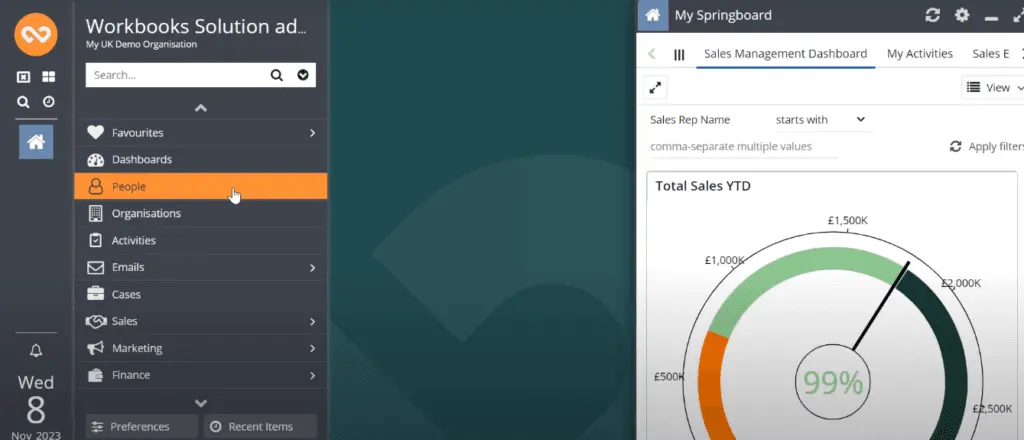
Workbooks CRM emphasizes client success by providing structured support and training to ensure seamless adoption. The platform offers personalized onboarding sessions, a comprehensive repository of training materials, and access to experienced support teams that assist with technical queries and platform customization. Extended support through live chat, scheduled webinars, and community forums enhances the overall user experience and minimizes downtime during implementation. Organizations aiming to integrate robust customer engagement processes may also consider solutions like best restaurant management software to further streamline operational efficiency.
What are the data security measures implemented by Workbooks CRM?
Data security is a crucial consideration for any CRM system, and Workbooks CRM offers several measures to protect user data:
- Encryption Standards: Workbooks uses industry-standard encryption protocols (such as TLS/SSL) to protect data during transmission, ensuring secure interactions between users and the CRM platform.
- Role-Based Access Control: Administrators can configure role-based access permissions, allowing only authorized personnel to view or modify sensitive information, which helps prevent unauthorized access within the organization.
- Data Backup and Recovery: Workbooks offers automated data backups and recovery options to ensure business continuity. Regular backups are stored in secure locations, allowing businesses to recover data in case of an emergency.
- Audit Logs and Tracking: The platform maintains comprehensive audit logs, enabling organizations to monitor user actions and identify any suspicious activities. This feature provides transparency and accountability in data handling.
- Compliance with Regulatory Standards: Workbooks complies with data protection regulations, such as GDPR, ensuring that organizations meet compliance requirements and safeguard customer privacy.
These security measures make Workbooks a reliable CRM choice for businesses that prioritize data protection and regulatory compliance.
Streamlining Business Operations With Workbooks
Another notable capability of Workbooks CRM lies in its ability to streamline critical business processes, including contract management, approvals, and document handling. By integrating third-party tools like electronic signature software, businesses can minimize administrative delays and enhance workflow efficiency. Document signing and approval tasks that once required manual oversight can now be performed almost entirely online, significantly reducing turnaround times and improving collaboration across departments.
In fact, platforms dedicated to facilitating digital signatures can seamlessly complement Workbooks CRM's functionality, allowing businesses to manage contracts with confidence and compliance. To explore top solutions in this domain, consider exploring electronic signature software. This integration serves not only to push operational efficiency but also to ensure data accuracy and security in legally binding interactions.
For companies prioritizing operational excellence, leveraging these advanced functionalities enhances overall productivity and sets a solid foundation for scalable growth.
Key Insights
- Industry-Specific Focus: Workbooks CRM is tailored for specific industries such as media, IT, and professional services, addressing unique pain points and streamlining workflows.
- Integrated Features: Beyond basic CRM functionalities, Workbooks includes marketing automation, project management, and invoicing, creating a centralized business ecosystem.
- New Updates: Recent updates include integrated comments similar to Slack, enhanced RingCentral features, new card layouts for reports and dashboards, and Spotler integration for omnichannel marketing.
- Pricing Tiers: Workbooks offers tiered pricing plans with different sets of features, catering to various business needs from core CRM functions to advanced event management tools.
- Enhanced Collaboration: The platform fosters real-time collaboration with integrated communication tools and RingCentral features, improving team efficiency and customer interactions.
- Data-Driven Insights: Workbooks provides comprehensive reporting and analytics, helping businesses gain insights into sales performance and customer behavior for better decision-making.
- Scalability and Flexibility: Workbooks scales with business growth, offering an open API and integrations with popular tools like Zapier and Mailchimp for customized workflows.
Best 5 alternatives to Workbooks
Zoho CRM
5 / 5
Zoho CRM offers extensive customization options that enable businesses to adapt fields, page layouts, workflows, and automation rules to their specific needs, thereby enhancing lead management and streamlining the sales process from initial contact to deal closure. Its comprehensive suite supports sales, marketing, and customer support through features like detailed reporting, analytics, and an intuitive interface that facilitates easy navigation. The platform integrates AI-powered tools such as the Zia assistant, which provides predictive sales insights and helps personalize customer interactions using real-time behavioral data. Moreover, Zoho CRM’s competitive pricing—including a free tier for smaller teams—and its mobile and third-party app integrations make it a versatile choice for organizations aiming to improve collaboration and decision-making across diverse work environments.

NetSuite CRM
5 / 5
NetSuite CRM delivers a comprehensive platform that consolidates customer information across multiple channels, granting teams instant access to up-to-date data on preferences, transactions, and interactions in one centralized hub. By automating routine sales, marketing, and service activities, it boosts operational efficiency and frees staff to concentrate on cultivating stronger customer relationships. Its cloud-based design facilitates seamless connectivity from any device, enabling collaboration among dispersed teams while providing real-time sales tracking and pipeline visibility to accelerate deal closures. Additionally, advanced forecasting and analytics tools harness historical and predictive data, empowering businesses to enhance decision-making and optimize resource management for sustained growth.
Salesforce CRM
5 / 5
Salesforce CRM stands out as the leading platform globally, offering a unified system to store and analyze customer information, which empowers businesses to make well-informed decisions. Its robust contact management delivers a comprehensive and centralized view of customer data, allowing sales teams to access detailed profiles and better understand their prospects. The integration of AI, especially through Einstein, streamlines everyday tasks like data entry and email follow-ups, enabling employees to concentrate on more strategic activities. Additionally, Salesforce fosters seamless collaboration with tools such as "Chatter" and supports remote accessibility via the cloud and mobile devices, ensuring teams stay connected and productive regardless of location.
monday sales CRM
4.45 / 5
Monday Sales CRM stands out for its exceptional adaptability, allowing users to customize dashboards, columns, and sales workflows to perfectly suit their distinct business requirements. This level of flexibility is ideal for companies with unique processes or niche operations, enabling them to modify the platform effortlessly without needing advanced technical skills. Additionally, the CRM offers automation features that streamline repetitive tasks like follow-up reminders and status updates, thereby minimizing manual workload and lowering the chance of mistakes. Coupled with integrated communication tools and AI-powered capabilities for email composition and data analysis, monday ensures teams remain coordinated and equipped to make data-driven decisions.

Pipedrive
4.3 / 5
Pipedrive stands out as a versatile CRM solution designed to simplify and optimize sales workflows by automating routine tasks like lead distribution, follow-up scheduling, and deal tracking. Its high level of customization allows businesses to shape sales pipelines and data fields to suit their specific needs, accommodating a wide range of industries and company sizes. By consolidating customer information and communications through integrations with common email and calendar tools, Pipedrive enhances team collaboration and reduces the hassle of juggling multiple platforms. Furthermore, the platform’s clear visual pipeline offers sales teams an intuitive way to oversee deal progress and quickly spot any obstacles in the sales process.
Frequently Asked Questions (FAQs)
Workbooks CRM is a specialized customer relationship management tool designed for industries like media, IT, and professional services. It offers integrated features such as marketing automation, project management, and invoicing, providing a comprehensive solution to streamline workflows, enhance collaboration, and drive industry-specific growth.
Workbooks CRM goes beyond basic contact management to include features like project management, automated marketing campaigns, invoicing, ticketing systems for customer service, and detailed reporting and analytics. It serves as a central hub for managing various business processes tailored to specific industry needs.
Workbooks CRM pricing starts at £28 per user per month for the Standard Edition, which includes core CRM functions. The Business Edition costs £61 per user per month, adding features like order processing and team collaboration tools. The Events Edition is priced at £125 per user per month, catering to event management needs. All plans are billed annually.
Workbooks CRM employs stringent security measures to protect client data, including advanced encryption protocols, regular security audits, and compliance with data protection regulations such as GDPR. Additionally, it offers customizable user access controls to ensure data is managed securely and efficiently.
The benefits of using Workbooks CRM include increased efficiency and productivity through streamlined workflows and automated tasks, improved customer experience with targeted marketing and seamless customer service, industry-specific solutions that cater to unique business needs, and enhanced data-driven insights for better decision-making. Additionally, it offers scalability and flexibility to adapt to business growth.


