2027 Social Work with Veterans Experiencing Housing Instability: Agency and Community Roles
Audited and Verified:
Our Editorial and Data Verification Process
Research.com uses government datasets, official education statistics and primary institutional information to support its career and degree guides. Our review process checks factual accuracy, occupational definitions, source dates and the requirements associated with the credentials discussed.
How This Article Was Fact-Checked
Our editorial team verifies salary estimates, employment projections, education requirements and program information against original data providers and official organizations. Salary figures are checked against the relevant occupational definitions and reporting periods. Information about licensure, accreditation and required in-person training is reviewed separately.
Fact-checked and verified on:

Co-Founder and Chief Data Scientist
A veteran at risk of losing housing may need a place to stay, but also help navigating benefits, finding an affordable unit, and maintaining stability after moving in. Social workers help connect those needs across VA services and community organizations. For students, career changers, and human services professionals, the key decision is which role they want to perform - and whether it requires a social work degree or license.
This guide explains the work, the major housing programs, and how to evaluate education and jobs against the responsibilities involved.
Key Things You Should Know
- Housing-focused social work combines outreach, benefits and housing navigation, case management, and follow-up; clinical treatment is a separate function that requires appropriate authority.
- VA and community programs serve different needs: HUD-VASH combines rental assistance with VA case management, while Supportive Services for Veteran Families focuses on preventing homelessness and rapidly rehousing eligible households.
- A BSW, MSW, or social services background may fit different jobs. An MSW alone does not authorize independent clinical practice, and VA hiring requirements must be checked for the specific position.
How do social workers help veterans experiencing housing instability?
Housing instability includes imminent eviction, repeated moves, unsafe or temporary accommodation, and homelessness. A social worker starts by understanding the veteran's stated priorities and the circumstances affecting housing: income, benefits, health needs, family relationships, transportation, accessibility, and the local rental market. Military experience can inform the conversation without becoming an assumption about every veteran's needs.
Depending on the role, the worker may help obtain documents, coordinate an application, connect the veteran with legal aid or health care, work with a landlord or housing navigator, and follow up after move-in. Good case management also means recording referrals and outcomes, explaining choices, and revising a plan when an option is unavailable. It does not mean promising a voucher or making eligibility decisions assigned to another agency.
The work extends beyond one-to-one service. Social workers may identify recurring barriers, such as inaccessible units or gaps between discharge from an institution and housing intake, then collaborate with agencies to improve referrals. Readers comparing direct service with program and policy work can explore MSW career directions beyond a single job title.
How do VA agencies and community organizations work together to support veterans?
VA staff can assess needs, coordinate VA health and homelessness services, and provide case management through eligible programs. Local public housing agencies administer HUD rental assistance, while nonprofit grantees, shelters, legal services, landlords, and community health providers contribute resources the VA cannot supply alone. Which organization takes the lead depends on the program and the veteran's circumstances.
A useful handoff names the receiving organization, confirms how the veteran can reach it, and checks whether contact occurred. Teams should clarify who handles housing applications, clinical care, landlord communication, and follow-up so a referral does not become an unassigned task. Information-sharing requires attention to consent, applicable privacy rules, and each organization's policy; being partners does not give agencies unrestricted access to one another's records.
For a prospective student, these partnerships matter because a placement may offer either meaningful cross-agency learning or mostly administrative observation. Ask schools how they evaluate sites and field instruction when comparing social work placement support policies.
What degrees and licenses are needed to work with veterans experiencing homelessness?
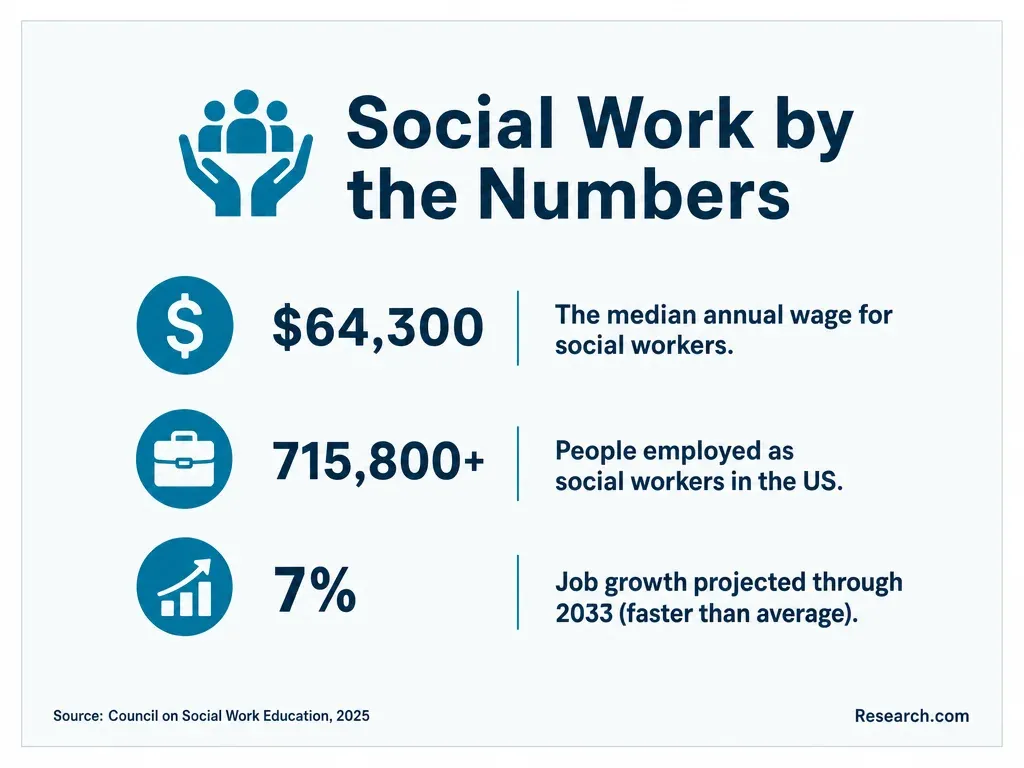
Requirements follow the job duties and employer, not the population served. Community housing agencies may hire case managers or navigators with a BSW, another relevant degree, or qualifying experience. Positions titled social worker - particularly VA social worker positions - typically specify an accredited social work degree and may impose state licensure requirements. Read the actual vacancy announcement rather than assuming that every veteran-services job has the same standard.
A BSW prepares graduates for generalist practice. A traditional MSW can admit applicants with bachelor's degrees in other fields; advanced-standing MSW routes generally require a qualifying social work bachelor's degree and program approval. MSW preparation may fit more specialized assessment, supervision, or clinical-track roles, but graduation does not itself issue a license. State boards determine license categories, examinations where applicable, and any post-degree supervised experience required for independent clinical practice.
Psychotherapy and independent clinical assessment should not be confused with housing navigation. Someone planning a clinical role should check the relevant board's rules for supervisors, settings, and documented experience; social work clinical hour requirements are distinct from degree field placements. A DSW or PhD is generally unnecessary for frontline housing coordination.
Programs have different purposes and eligibility rules. This comparison helps workers and prospective workers understand why the first referral must match the veteran's immediate situation, rather than treating every housing program as interchangeable.
| Program or route | Primary function | Typical social work or service role |
| HUD-VASH | HUD rental assistance through a public housing agency paired with VA case management for eligible veterans | Coordinate assessment, housing search support, services, and housing retention |
| Supportive Services for Veteran Families (SSVF) | Community-grantee services aimed at preventing homelessness or rapidly rehousing eligible veteran households | Assess needs, coordinate eligible assistance, and connect households with local resources |
| VA Grant and Per Diem (GPD) | Transitional housing and services through funded community providers | Support transitions toward permanent housing and coordinate care |
| Local coordinated entry and other community services | Community pathways to assessment, shelter, housing referrals, or related help | Make referrals and coordinate across systems, subject to local rules |
Access begins with an assessment and a referral or application through the appropriate local provider; it does not guarantee immediate placement. Availability, documentation, program eligibility, and affordable units all affect the next step. A veteran seeking help can contact a local VA medical center's homeless program, a community provider, or the National Call Center for Homeless Veterans at 877-424-3838.
If this kind of service coordination is the career goal, an entry-level community role may be a useful first step before committing to graduate study. Prospective BSW students can compare online social work bachelor's education pathways against the qualifications listed by local housing employers.
First, verify the specific BSW or MSW program's Council on Social Work Education accreditation status and whether it applies to your intended entry route and cohort. Institutional accreditation is a separate question; neither accreditation alone guarantees a license or a job. Then work backward from local VA and community job postings to identify the degree, experience, and license actually requested.
For veteran housing work, ask whether students can learn housing policy, benefits coordination, substance use and mental health referral, and cross-agency case management. Ask the field office who finds placements, whether a VA or veteran-serving site is realistically available, what happens if it is not, and who provides qualified field instruction. A strong generalist placement with substantive housing work may be more useful than a veteran-branded elective without relevant practice opportunities.
Choose a traditional or advanced-standing MSW sequence only after the program confirms eligibility and the total field and course schedule. A shorter sequence can reduce time out of the workforce, but MSW programs with shorter study schedules still require careful comparison of workload, placement access, and total cost.
What are the salary and job outlook for social workers serving veterans?
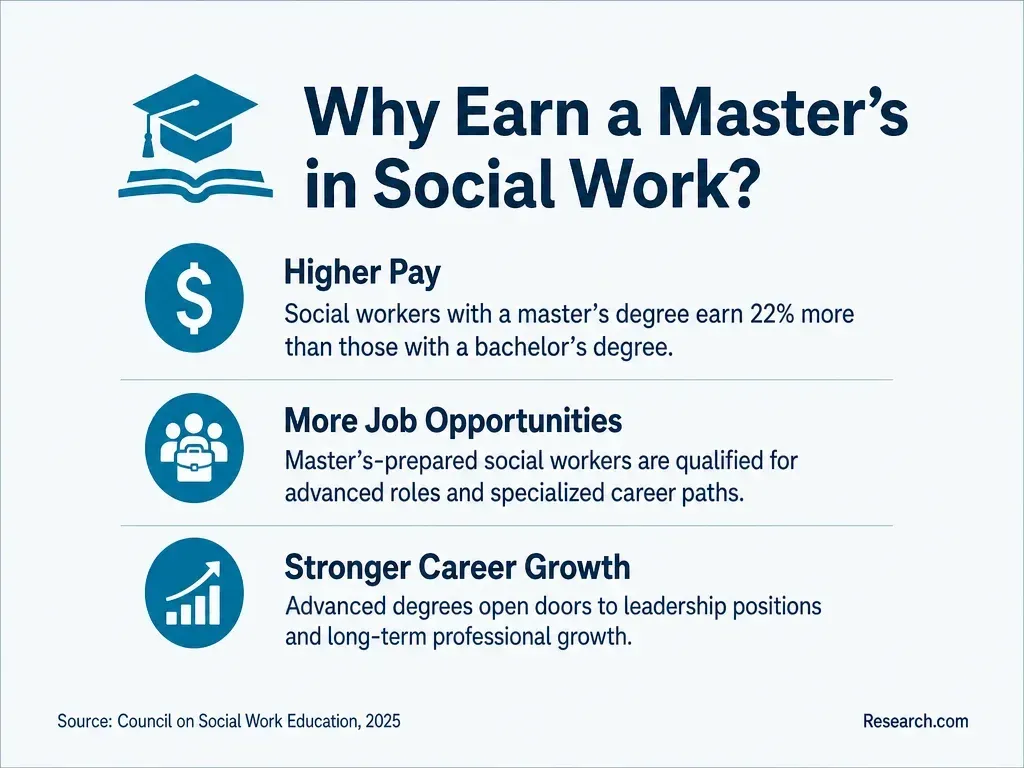
The Bureau of Labor Statistics does not publish a single wage or growth rate for "veteran housing social worker." Its broader occupations offer context, but their pay reflects many settings and employers. The following U.S. medians are for May 2025, and the projections cover 2025-2035.
| BLS occupation | Median annual pay | Projected employment growth |
| Social workers, all specialties | $61,780 | 6% |
| Mental health and substance abuse social workers | $60,280 | 10% |
| Healthcare social workers | $67,880 | 8% |
Use the category closest to a job's actual duties, not the one with the highest median. A housing navigator without a social worker classification may fall outside these figures altogether. Federal grade, locality, state, license requirements, experience, and nonprofit funding can also affect an offer. For a location-specific comparison, review social work master's pay and geographic differences alongside real openings in the area where you intend to work.
Other Things You Should Know About Social Work
No. Someone facing eviction or another imminent housing loss should seek help early. The assistance available depends on the program's eligibility rules and local resources.
Yes. They should ask a VA or community provider to assess available options rather than assume they are ineligible. VA benefits and individual housing programs apply different rules.
Some programs serve eligible veteran households, including family members. The provider can explain household eligibility and whether an available unit or service fits the family's needs.
Do not assume treatment is a universal condition. Program rules differ, and workers should explain any actual requirements while respecting the veteran's choices and applicable safety obligations.
- Housing Instability - Healthy People 2030 | odphp.health.gov https://odphp.health.gov/healthypeople/priority-areas/social-determinants-health/literature-summaries/housing-instability
- HUD-VASH - VA Homeless Programs https://department.va.gov/homeless/hud-vash/
- Veterans and Homelessness | congress.gov https://www.congress.gov/crs-product/RL34024
- Prevent Homelessness | United States Interagency Council on Homelessness https://www.usich.gov/federal-strategic-plan/prevent-homelessness
- What VA Social Workers Do - Veterans Affairs https://www.socialwork.va.gov/socialworkers.asp
- HUD-Veterans Affairs Supportive Housing (HUD-VASH) http://www.hud.gov/helping-americans/housing-choice-vouchers-homeless-veterans
- Veterans' Barriers to Care | RAND https://www.rand.org/health/projects/navigating-mental-health-care-for-veterans/barriers-to-care.html