2027 Social Work Professional Identity in Non-Social-Work Job Titles
Audited and Verified:
Our Editorial and Data Verification Process
Research.com uses government datasets, official education statistics and primary institutional information to support its career and degree guides. Our review process checks factual accuracy, occupational definitions, source dates and the requirements associated with the credentials discussed.
How This Article Was Fact-Checked
Our editorial team verifies salary estimates, employment projections, education requirements and program information against original data providers and official organizations. Salary figures are checked against the relevant occupational definitions and reporting periods. Information about licensure, accreditation and required in-person training is reviewed separately.
Fact-checked and verified on:

Co-Founder and Chief Data Scientist
A social work graduate may be hired as a care coordinator, program manager, or policy analyst rather than a "social worker." The title can affect how colleagues understand their expertise, but it does not erase their training - or determine what they are legally allowed to do.
For students, graduates, and experienced practitioners considering these roles, this guide separates professional identity from job classification and licensed practice. It also shows how to evaluate roles, describe social work skills accurately, and decide whether another degree or credential would advance a specific career goal.
Key Things You Should Know
- A different job title does not erase a social work background, but an MSW or prior license does not authorize duties outside your current license, jurisdiction, or role.
- Compare actual duties and employer requirements before pursuing another credential; case coordination, program leadership, and policy work may have different entry routes.
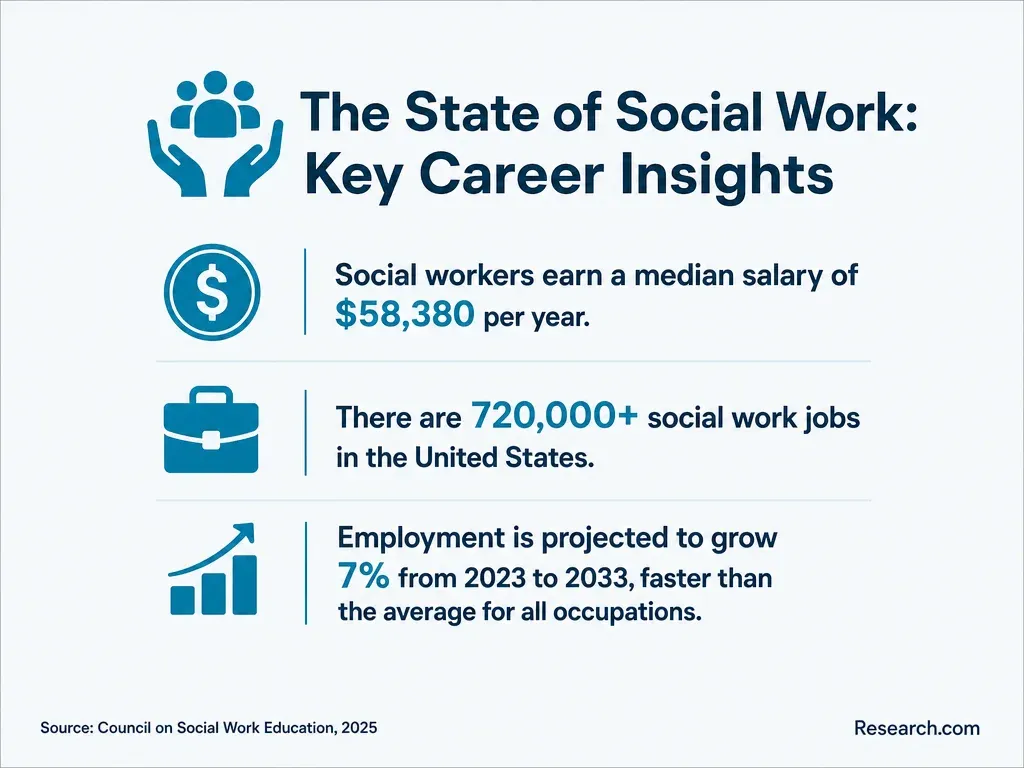
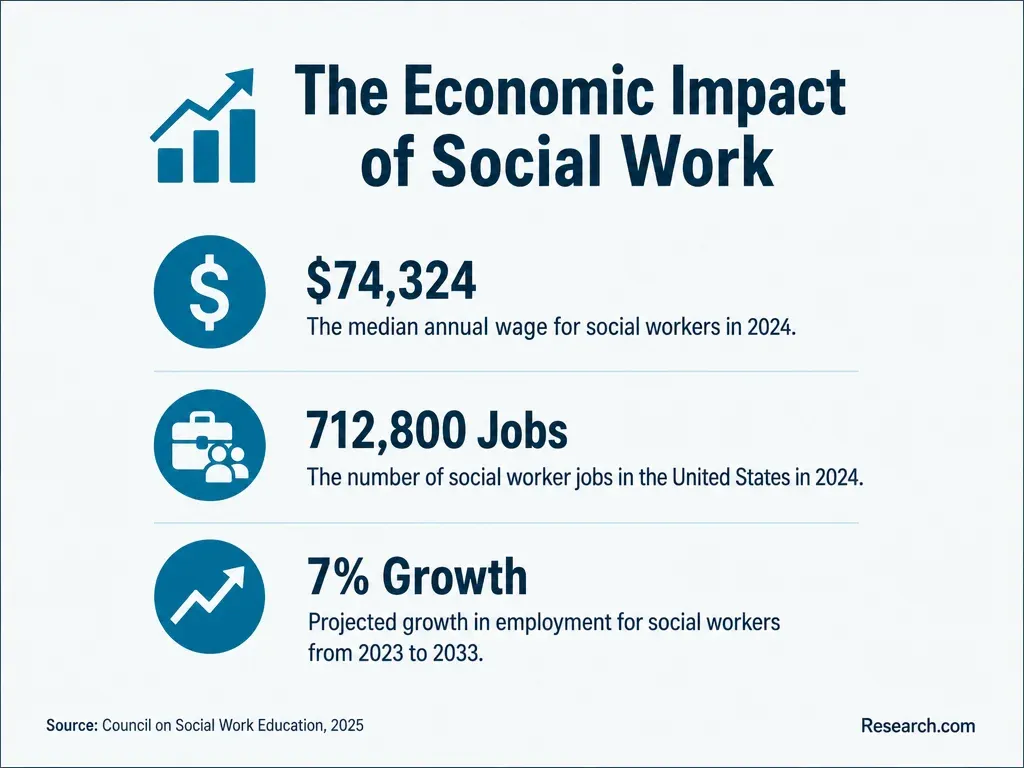
- For salary comparisons, use the occupation that matches the work: the U.S. Bureau of Labor Statistics reports a $61,780 median annual wage for social workers overall in May 2025, not a promised salary for every social work graduate.
What does social work professional identity mean when your job title is different?
Social work professional identity is the way you understand and apply your social work education, values, skills, and responsibilities. A job title is an employer's label for a position. The two can overlap without being identical: a housing program manager might use person-in-environment assessment, community partnerships, and advocacy every day, even if the position is not classified as social work.
Identity is most useful when it clarifies your contribution rather than claiming authority you do not have. You can say that your BSW or MSW informs how you assess service barriers or evaluate a program. You should not imply that the degree alone makes you a licensed clinician. If you are weighing exploring roles for master's-prepared social workers, start with the work you want to perform, then check its qualifications - not the appeal of its title.
What job titles can social workers hold outside traditional social work roles?
Social work graduates can work under titles used across healthcare, government, schools, and nonprofits. The table compares functions, not guaranteed eligibility: a posting's duties, employer rules, and state requirements determine the qualification needed.
| Possible job title | Common function | Qualification to check |
| Care coordinator or case manager | Connects people with services and tracks follow-up | Degree preference, population experience, and whether any assigned clinical tasks require licensure |
| Community outreach specialist | Builds partnerships and improves service access | Language skills, community relationships, and outreach experience |
| Program manager | Oversees staff, budgets, service delivery, and reporting | Management experience and agency-specific credentials |
| Policy analyst or program evaluator | Examines policy effects or measures program performance | Research, data, writing, and subject-matter skills |
| Patient navigator | Helps patients understand and access care resources | Healthcare experience, training, and boundaries around clinical advice |
Many of these positions also admit applicants with public health, human services, education, or other backgrounds. If a target job does not require a social work degree, compare that degree's value with the experience or narrower training the employer actually seeks. Prospective BSW students can use undergraduate social work program quality comparisons if they want generalist social work preparation rather than an adjacent route.
When do social workers need a license or a protected professional title?
Check the activity and the jurisdiction, not just the position name. States differ in which social work titles they protect, which activities require a license, and which license category permits clinical work. A "behavioral health coordinator" may have duties with different regulatory implications from another job with the same title. Conversely, a license may not be required for every policy, outreach, or administrative position held by an MSW graduate.
Before accepting a role, compare its written duties with the current rules of the state licensing board where services will be provided. Ask the employer whether it expects a license, whether duties include diagnosis or psychotherapy, and how restricted tasks are assigned and supervised.
Degree completion, an exam result, and license issuance are separate steps; independent clinical practice may require additional board-approved post-degree experience. Online students should also consider checking online MSW alignment with licensing goals before enrolling. Neither an online format nor a degree name establishes eligibility in every state.
Describe the connection between your preparation and the employer's problem. "MSW-trained program manager who improved referral workflows" communicates more than "social worker at heart," provided the accomplishment is documented.
On a résumé or in an interview, name your degree accurately, identify any active license with its issuing state and category, and give examples of skills you used within your role. Do not use a protected title merely because you completed a degree or once held a license elsewhere.
A practical introduction might be: "My MSW training helps me examine how housing, benefits, and healthcare systems affect access to services. In this role, I coordinate partners and evaluate referral processes; I do not provide psychotherapy." That statement makes both the value and the boundary clear.
Further education should solve a specific gap. For an experienced manager seeking advanced practice leadership, online DSW study with cost in mind may be worth comparing with employer training or targeted coursework. A DSW is not needed simply to describe an existing social work background, and it does not expand licensed scope by itself.
A BSW generally provides generalist preparation across work with individuals, groups, organizations, and communities. An MSW builds on foundational practice and adds specialized learning that may support clinical, policy, administrative, or other goals. Both rely on supervised field education to connect classroom concepts with observed practice; neither degree alone establishes competence for every position or grants a license.
For a career changer, the entry route matters more than the prestige of a particular degree label. A traditional or foundation MSW can admit graduates of other disciplines under program-specific criteria.
Advanced-standing MSW tracks generally require a qualifying social work bachelor's degree and additional program-specific conditions; relevant work or a psychology bachelor's degree does not automatically substitute. Comparing graduate social work entry-track requirements helps identify the coursework and field sequence you would actually complete.
Choose the degree against the target posting. An MSW may be important for a specified social work role or future licensure pathway. For an analyst position emphasizing data and policy, research experience or a different graduate route may be more direct.
What are the salaries and job outlook for alternative social work careers?
There is no single wage category for "social worker in a non-social-work job title." The U.S. Bureau of Labor Statistics (BLS) classifies work by occupation, so a program manager or policy analyst may fall outside its social worker categories. The figures below provide context for jobs classified as social work, not salary estimates for every alternative title or MSW graduate.
| BLS occupation | May 2025 median annual wage | Projected employment growth, 2025-2035 |
| Social workers, all specialties | $61,780 | 6% |
| Child, family, and school social workers | $59,550 | 4% |
| Healthcare social workers | $67,880 | 8% |
| Mental health and substance abuse social workers | $60,280 | 10% |
A median is the midpoint of wages within an occupation, not an entry-level offer. The different growth rates show why the setting and duties matter, but they do not predict openings at a particular agency. For an actual decision, compare posted pay ranges for matching duties, location, experience, and license requirements; MSW salary comparisons by state can add geographic context without replacing a specific employer's pay scale.
Other Things You Should Know About Social Work
No. Association membership can offer community and learning opportunities, but it is not what confers a degree or state license.
Usually, if you have permission to share the work and remove protected client and agency information. Follow employer rules; changing a name alone may not make a case example safe to disclose.
It can demonstrate relevant skills to an employer. It does not automatically count as accredited field education or board-approved supervised experience.
Request an updated job description and confirm whether credential, supervision, and reporting expectations have changed. Keep accurate records of your duties rather than relying on either version of the title.
- Interprofessional collaboration between social workers... - PMC https://pmc.ncbi.nlm.nih.gov/articles/PMC10675993/
- Social Work Competencies: Core Generalist Level of Practice | Crown Family School of Social Work, Policy, and Practice https://crownschool.uchicago.edu/node/1434
- The Meaning and Value of Supervision in Social Work Field Education: Applied Learning in Social Work Education https://alswe.simmons.edu/article/the-meaning-and-value-of-supervision-in-social-work-field-education/
- Post-Master's Career Progression of Social Workers | iu.edu https://journals.indianapolis.iu.edu/index.php/advancesinsocialwork/article/view/27233
- Full article: Social Work Values and the NASW Code of Ethics | tandfonline.com https://www.tandfonline.com/doi/full/10.1080/10428232.2025.2455883
- Say You're a Social Worker - SocialWorker.com https://www.socialworker.com/feature-articles/career-jobs/say-you-are-a-social-worker/
- Social Work Careers: Types, Settings and Degree Paths | Social Work License Map https://socialworklicensemap.com/social-work-careers/
- Types of Social Work | socialworkers.org https://www.socialworkers.org/News/Facts/Types-of-Social-Work