
2027 Questions to Ask Before Accepting a Homeless Services Social Worker Position
Audited and Verified:
Our Editorial and Data Verification Process
Research.com uses government datasets, official education statistics and primary institutional information to support its career and degree guides. Our review process checks factual accuracy, occupational definitions, source dates and the requirements associated with the credentials discussed.
How This Article Was Fact-Checked
Our editorial team verifies salary estimates, employment projections, education requirements and program information against original data providers and official organizations. Salary figures are checked against the relevant occupational definitions and reporting periods. Information about licensure, accreditation and required in-person training is reviewed separately.
Fact-checked and verified on:

Co-Founder and Chief Data Scientist
A homeless services job can offer meaningful direct work while placing you in a system with too few affordable homes, complex eligibility rules, and urgent client needs. Before accepting, determine whether the employer gives staff the resources and authority to do the work safely and ethically.
This guide is for social work students, new graduates, and experienced human services professionals comparing offers. It turns the job description into specific questions about pay, caseloads, outreach, supervision, and housing access - so you can judge the position you would actually hold, not just the mission you support.
Key Things You Should Know
- Ask for a typical active caseload, documentation deadlines, outreach safety procedures, and a written description of on-call duties before accepting.
- Confirm whether the role requires a social work degree or state license; a job title, MSW, or field placement does not itself authorize independent clinical practice.
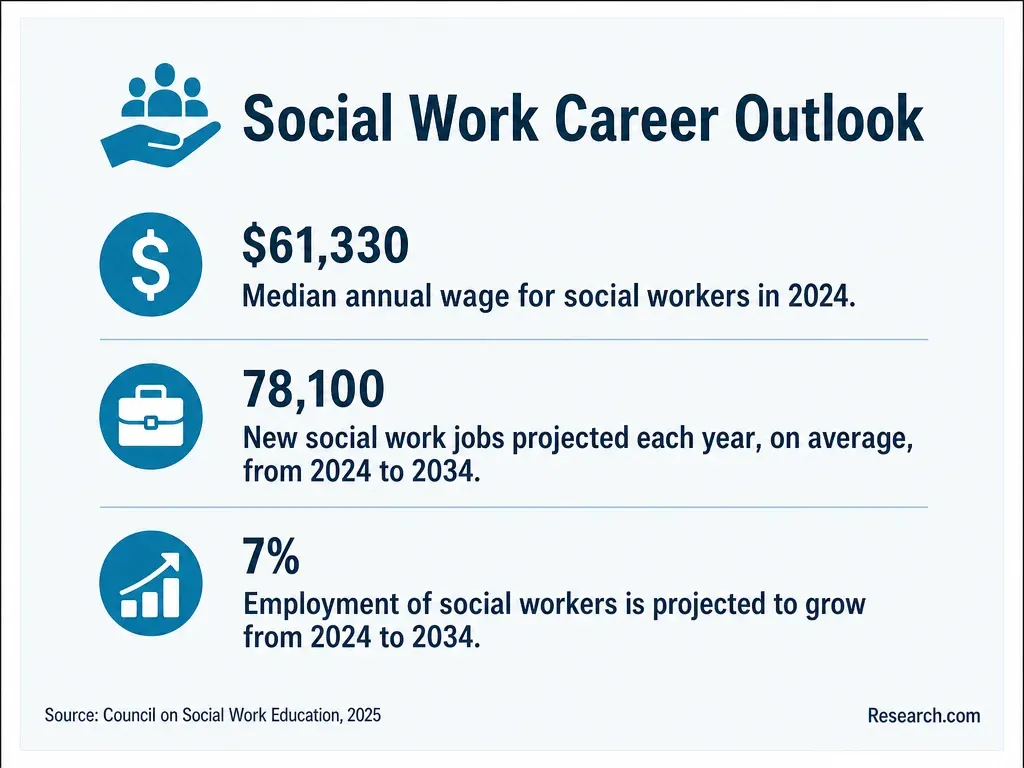
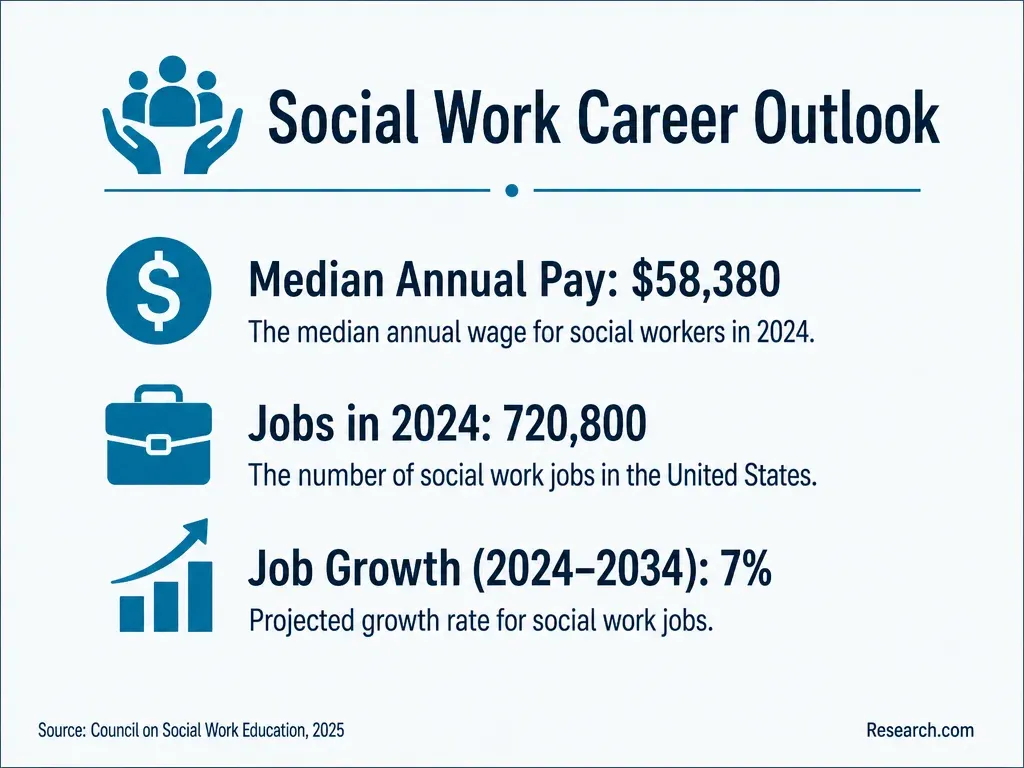
- Use salary data as context, not an offer estimate: the U.S. Bureau of Labor Statistics reports a May 2025 median of $61,780 for social workers across specialties, with 6% employment growth projected for 2025-2035.
What does a homeless services social worker do?
The work varies substantially by program. A street outreach worker may build relationships with people who are unsheltered; a shelter-based worker may coordinate immediate needs and exits to housing; a supportive-housing worker may help tenants sustain housing.
Duties can include assessment, benefits applications, landlord coordination, referrals, crisis response, advocacy, and case documentation.
Ask the hiring manager: "What would I personally be responsible for in a typical week, and what decisions would require a supervisor or another professional?" Clarify whether "social worker" describes a licensed position or an agency title for case management. Also ask how much time is spent with clients versus entering data, arranging transportation, or searching for available housing.
If you are moving from another service setting, compare these duties with a broader social work graduate career pathway overview. Direct service may fit your goals; if you primarily want policy or housing development work, a different position may be more direct than this one.
What salary and benefits should you expect in homeless services social work?
Request the salary range, the exact offer, and the value and eligibility rules for benefits in writing. Ask whether the position is hourly or salaried, how overtime is handled, whether on-call time is paid, when health coverage begins, and whether retirement contributions, leave, mileage, transit costs, and required phone use are covered.
For a grant-funded job, ask what happens if funding ends; do not treat a hoped-for renewal as guaranteed employment.
National occupation data can help you check whether an offer deserves closer scrutiny, but homelessness-service jobs span several occupations. These Bureau of Labor Statistics medians describe workers in each category, not pay promised by a homeless services employer or an MSW:
| U.S. occupation | May 2025 median annual pay | Projected growth, 2025-2035 |
| Social workers, all specialties | $61,780 | 6% |
| Mental health and substance abuse social workers | $60,280 | 10% |
| Healthcare social workers | $67,880 | 8% |
Use the closest match to the position's actual duties, then weigh local living costs and benefits. Social work master's earnings across states provide additional geographic context, but a local offer and its working conditions should control your decision.
What degrees and licenses does the position require?
Ask which qualifications are required on your start date, which are preferred, and which duties depend on an active license. Some housing-navigation and case-management jobs accept relevant human services experience or a bachelor's degree in another field.
Other positions specify a BSW, MSW, or state social work license; clinical assessment or psychotherapy may require additional authorization and supervision.
Get the employer's exact license category, issuing-state requirement, and policy on working while an application is pending. State boards - not employers or degree programs, determine licensure eligibility and permitted practice. An MSW does not independently authorize psychotherapy, and a license from one state does not automatically authorize work in another.
If you are considering further education for the offer, start by checking professional eligibility when choosing an MSW rather than assuming any program meets your state's rules.
A caseload number means little without its composition. Ask for the current range per full-time worker, how many clients need intensive follow-up, whether vacancies increase assignments, and who covers cases during leave.
A manageable count in an office-based referral role may be unmanageable when it also involves street outreach, repeated travel, and frequent crises.
Ask to see a blank, nonconfidential example of the documentation workflow: which systems staff use, how soon contacts must be entered, and whether reports for housing programs, funders, or coordinated entry require duplicate entry.
Find out whether protected time for records is built into the schedule and how supervisors assess quality, not just the number of contacts completed. Never request identifiable client records during an interview.
If you hope the job will also count toward clinical licensure, establish that separately before accepting. Ordinary case-management hours and MSW field hours are not automatically qualifying post-degree clinical experience; board rules govern the duties, supervisor, and records required.
Review clinical experience expectations across social work pathways, then confirm your particular arrangement with the licensing board.
Ask for a sample schedule rather than accepting "some flexibility" at face value. Confirm evening or weekend coverage, holiday rotations, on-call frequency, response-time expectations, and whether a backup worker is available.
Clarify whether travel means agency-vehicle trips, public transit, or use of your own car; ask about mileage reimbursement, insurance requirements, parking, and paid travel time.
These details are especially important if you are studying or caring for family members. An accelerated degree may shorten the academic timeline without making a rotating outreach schedule easier to manage.
If you are considering fast-track social work master's study options, compare live classes and field-placement hours with the employer's actual shifts before committing to both.
Ask the employer to describe its procedures, not simply say that staff should "use good judgment." Who decides whether outreach is conducted in pairs? How do workers check in and out, summon help, leave an unsafe encounter, and report an incident without being penalized for appropriate caution?
Ask what training and equipment are supplied and who responds to threats, medical emergencies, or a client crisis beyond your scope.
Safety also includes reasonable coverage after an incident, confidential debriefing, and access to supervision that addresses secondary trauma. No policy removes all risk, but an employer should be able to explain its response and show how staff can use it.
If you are also evaluating the agency as an MSW field site, ask the school what it reviews before approving outreach tasks; school-supported MSW placements require educational oversight in addition to workplace orientation.
Ask who supervises the position, how often meetings occur, and whether supervision includes case consultation and ethical decision-making rather than productivity review alone. Request details of onboarding for housing systems, benefits, confidentiality, mandated reporting, de-escalation, and the employer's crisis procedures.
For an early-career worker, a gradual caseload increase and a named person available for urgent consultation can be more valuable than a vague promise of mentorship.
If licensure matters to your career plan, ask whether a supervisor holds the credential your state requires, whether supervision is provided on paid time, who pays any fees, and how hours are documented. The board must determine whether the arrangement qualifies.
Ask separately about continuing-education funds and tuition assistance, including eligibility dates and repayment conditions. If further study is your goal, an online social work master's affordability guide can help you compare education costs with the support the employer actually offers.
Housing First generally prioritizes access to permanent housing without making treatment or sobriety a prerequisite. Trauma-informed practice emphasizes safety, choice, collaboration, and avoiding practices that needlessly recreate harm.
Neither phrase tells you how an agency operates. Ask what eligibility conditions the program imposes, how it handles substance use and tenancy concerns, and whether clients can decline services without automatically losing housing assistance. Program rules and available housing may limit what staff can offer.
Listen for concrete examples of client choice, accessibility, cultural responsiveness, and how workers address disagreement without coercion or promises they cannot keep. Ask how those approaches appear in training, supervision, and performance measures.
If you are still choosing a degree program, use those same practical questions when choosing among online social work programs: a course description alone cannot show how field sites teach these skills.
Find out what the agency can actually access: coordinated entry, rental assistance, supportive housing, landlord relationships, benefits specialists, legal aid, behavioral health services, and transportation.
Ask which resources have eligibility restrictions or waitlists, who maintains referral relationships, and what workers do when no suitable housing is available. An employer should not expect staff to guarantee placements that depend on scarce vacancies or decisions made by other organizations.
This question tests whether performance targets match the tools provided. Ask how the agency evaluates good work when a client remains unhoused despite appropriate advocacy, and whether staff can raise recurring barriers with leadership.
If the answer is simply to obtain another degree, distinguish an individual skills gap from a resource gap: even a lower-cost MSW cannot create available units. When education is genuinely needed for your intended role, evaluating the value of lower-cost MSW programs is a separate decision from judging this employer's referral capacity.
How do accredited online and campus social work programs prepare you for this career?
BSW programs provide generalist preparation; MSW programs build on foundational or prior social work study through advanced coursework and supervised field education.
For homeless services, relevant learning includes engagement, person-in-environment assessment, policy and benefits systems, ethics, documentation, and collaboration with housing and healthcare partners. Neither an online nor a campus format substitutes for supervised practice with an approved field site.
If a job requires an MSW you do not have, verify the exact program's CSWE accreditation status, field-placement support, schedule, total cost, and your state board's educational rules before enrolling.
A traditional MSW can admit qualified graduates from other disciplines; advanced standing generally requires a qualifying BSW and program-specific approval. BSW graduates comparing MSW entry options should confirm which sequence they qualify for rather than assuming prior work shortens the degree.
Additional education is not always the next step. If the offer is for a nonclinical housing-navigation role and you already meet its requirements, strong onboarding, supervision, and local housing-system training may help more immediately than another credential.
Accept only after the employer has answered the role-specific questions that affect your safety, workload, and ability to serve clients.
Other Things You Should Know About Social Work
Yes. Ask for a brief conversation with a worker in the same position, without discussing identifiable clients. Compare their description of a typical week with the hiring manager's account.
You can ask. The employer may limit observation to protect client privacy and safety. An office tour or discussion of a typical workflow can still help you assess the role.
Compare written pay and benefits alongside actual caseloads, supervision, safety procedures, schedules, and access to housing resources. A higher salary may not offset an unsustainable workload or inadequate support.
Send a short follow-up requesting specifics and any applicable written policies. If the employer cannot explain core duties, safety arrangements, or compensation before you accept, treat that uncertainty as part of the offer.
- Understanding caseload and workload approaches | education.gov.uk https://support-for-social-workers.education.gov.uk/employer-standards/standard-3/caseload-and-workload
- Providing Support for Worker Mental Health | cdc.gov https://www.cdc.gov/mental-health/caring/providing-support-for-workers-and-professionals.html
- Measuring Documentation Burden in Healthcare - PMC - NIH https://pmc.ncbi.nlm.nih.gov/articles/PMC11534919/
- Street Outreach | georgia.gov https://dca.georgia.gov/document/presentations/2018-street-outreach-implementation-workshop/download
- Fact Sheet #22: Hours Worked Under the Fair Labor Standards Act (FLSA) | U.S. Department of Labor https://www.dol.gov/agencies/whd/fact-sheets/22-flsa-hours-worked
- Employee Assistance Programs | U.S. Office of Personnel Management https://www.opm.gov/policy-data-oversight/worklife/employee-wellness-programs/employee-assistance-programs/
- Trauma-Informed Approaches and Programs | samhsa.gov https://www.samhsa.gov/mental-health/trauma-violence/trauma-informed-approaches-programs
- GAC - Chapter 135-5 REQUIREMENTS FOR LICENSURE https://rules.sos.ga.gov/gac/135-5
- Person-Centered & Trauma-Informed Crisis Management & De-Escalation | Nebraska DHHS Trainings https://dhhs-dbhtraining.unl.edu/trainings/crisis-management-de-escalation/
- Workload and Caseload Management | psu.edu https://militaryfamilies.psu.edu/resources/view/workload-and-caseload-management/


