2027 Coordinated Entry in Homeless Services: Social Work Roles and System Navigation
Audited and Verified:
Our Editorial and Data Verification Process
Research.com uses government datasets, official education statistics and primary institutional information to support its career and degree guides. Our review process checks factual accuracy, occupational definitions, source dates and the requirements associated with the credentials discussed.
How This Article Was Fact-Checked
Our editorial team verifies salary estimates, employment projections, education requirements and program information against original data providers and official organizations. Salary figures are checked against the relevant occupational definitions and reporting periods. Information about licensure, accreditation and required in-person training is reviewed separately.
Fact-checked and verified on:

Co-Founder and Chief Data Scientist
Coordinated entry can determine how someone experiencing homelessness reaches an assessment, a referral, and a limited supply of housing assistance. For social work students and human services professionals, the work combines direct engagement with system navigation, documentation, and difficult decisions about scarce resources.
This guide explains how the process works, where social workers fit, and which qualifications employers may expect. It also helps you decide whether a BSW, MSW, license, targeted training, or relevant experience is the most useful next step.
Key Things You Should Know
- Coordinated entry is a local Continuum of Care process for access, assessment, prioritization, and referral; an assessment does not guarantee housing.
- Many access, navigation, and case-management jobs do not require a clinical social work license. Requirements depend on the duties, employer, and state.
- The Bureau of Labor Statistics reports a May 2025 median annual wage of $61,780 for social workers overall, but that figure is not a coordinated entry salary or a promised return on an MSW.
What is coordinated entry, and how does it connect people to homeless services?
Coordinated entry is the locally organized process a Continuum of Care (CoC) uses to help people experiencing homelessness reach an assessment and be considered for available assistance. A CoC is the regional planning body for a network of homeless-service providers. Its coordinated entry policies specify where people can seek access, how needs are assessed, and how referrals are made under applicable federal requirements and local priorities.
Access may begin through street outreach, a shelter, a phone line, or another designated access point. Workers can connect people with immediate services while the coordinated entry process considers options such as rapid re-housing or permanent supportive housing. Coordinated entry is not a single nationwide waiting list: available programs, eligibility rules, referral procedures, and appeal processes vary by community. A person may need help now even when no suitable housing opening exists.
For readers considering this field, online social work qualifications and career directions are worth comparing against local job postings. The process relies on staff with varied educational backgrounds, not only licensed social workers.
What do social workers do in coordinated entry?
Social workers may serve as access-point staff, outreach workers, housing navigators, case managers, supervisors, or CoC administrators. In direct-service roles, they explain the process, build trust, assess circumstances within their assigned scope, document information, help people understand referrals, and coordinate with housing and other service providers. In system roles, they may review referral bottlenecks, train partners, examine whether access is equitable, or help revise procedures.
The distinction matters when choosing a job. An access worker may spend much of the day interviewing people and maintaining records; a navigator may focus on contacting providers and resolving barriers after referral; a supervisor may handle complex decisions and quality review. Ask prospective employers about caseloads, outreach travel, safety procedures, after-hours expectations, record systems, supervision, and what staff can do when no housing resource is available.
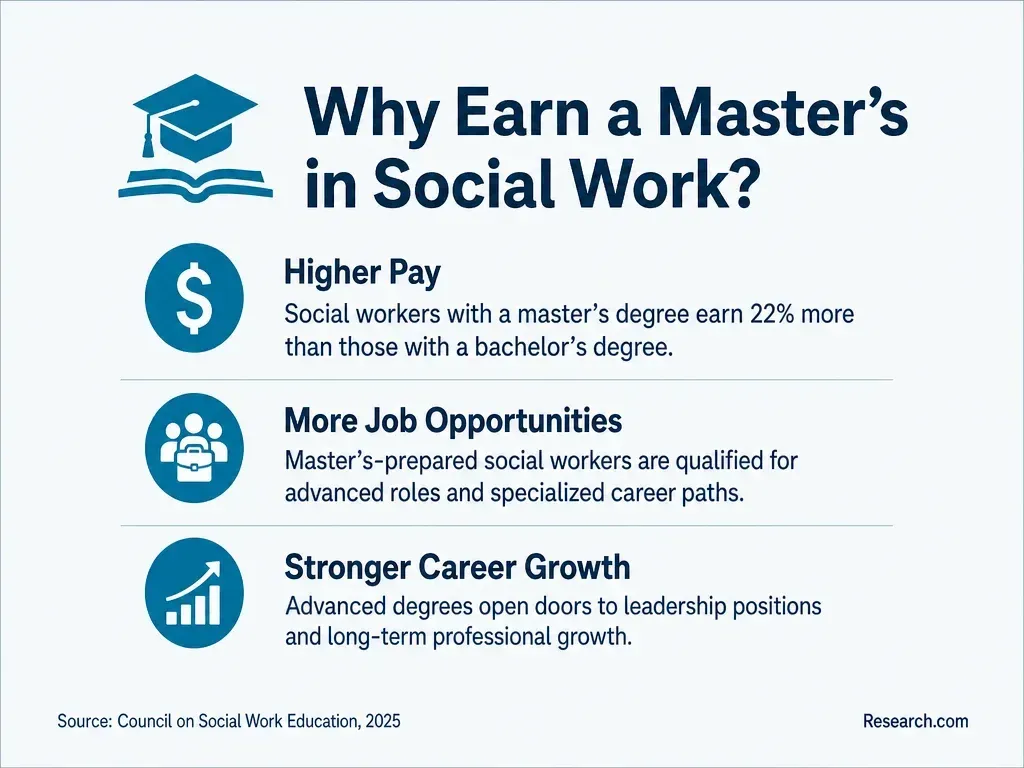
Advanced study may support later agency leadership or practice improvement, but it is rarely the first qualification to pursue for an entry-level coordinated entry job. Even when reviewing affordable advanced social work degree options, compare the cost with the value of local housing-system experience and employer-supported training for the role you actually want.
What education is needed for coordinated entry jobs?
There is no single degree requirement for every coordinated entry position. Some employers hire people with relevant outreach, housing, benefits, or human services experience; others specify a BSW or MSW for social worker or supervisory roles. Review the duties as well as the title: a position centered on referrals may be open to several backgrounds, while one involving clinical functions may have separate degree and license requirements.
A BSW offers generalist social work preparation and supervised field learning. An MSW may be useful for more specialized practice, supervision, or positions that explicitly require graduate social work education. Applicants with a qualifying BSW may be considered for an advanced-standing MSW under a program's rules; applicants with another bachelor's degree generally look to a traditional or foundation MSW. Use advanced standing and traditional MSW completion planning to compare those routes rather than assuming human services experience makes you eligible for advanced standing.
Before enrolling, collect several local job postings and separate required qualifications from preferences. If your target is housing navigation and employers accept your current background, experience with outreach, benefits, landlord coordination, or local referral systems may be a more direct next step than another degree.
Assessment should identify a person's housing situation, needs, preferences, and possible eligibility without treating a questionnaire score as the whole person. The CoC's written policies govern how information is used to prioritize limited resources. Prioritization is distinct from a program's eligibility determination: being high on a priority list does not establish eligibility for every housing program or guarantee an opening.
A worker's practical sequence should follow local policy while keeping the person informed:
- Explain the process, privacy practices, available choices, and any immediate safety or basic-needs options.
- Gather only information needed for the assessment, document it accurately, and check for accessibility or communication barriers.
- Apply the CoC's current prioritization and referral rules; confirm a receiving program's eligibility and availability rather than promising placement.
- Explain the referral or next step, record follow-up responsibilities, and tell the person how to correct information or raise a concern under local procedures.
Social work judgment is especially important when standardized questions miss context, a person declines to disclose sensitive information, or a referral appears unsuitable. Workers should consult supervisors and written policies rather than changing a priority decision on their own. At a system level, leaders can examine patterns in access and unsuccessful referrals; a fast-track Doctor of Social Work study option is a possible later route for practice-improvement leadership, not a prerequisite for conducting assessments or a substitute for local training.
What are the salaries and job outlook for coordinated entry workers?
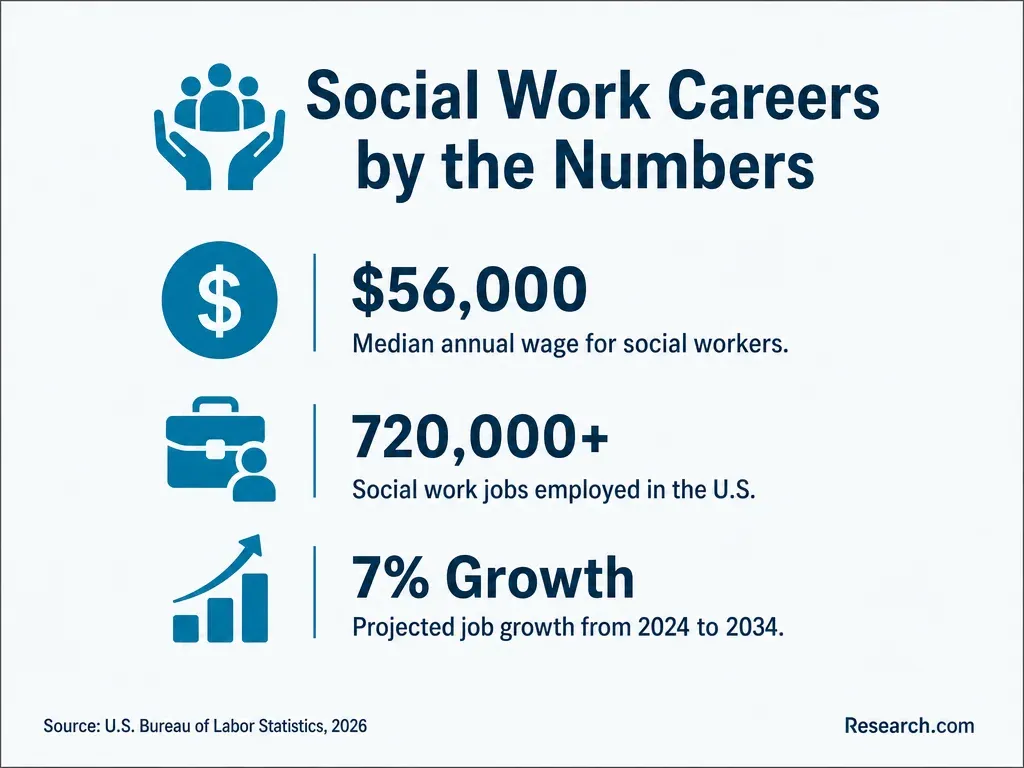
There is no single Bureau of Labor Statistics occupation called "coordinated entry worker." Agencies may classify related jobs as social work, case management, outreach, or other human services work, with different pay scales and entry requirements. For context, BLS reports a May 2025 median annual wage of $61,780 for social workers overall and projects 6% employment growth from 2025 to 2035. Those occupation-wide figures do not describe a particular coordinated entry opening, new graduate, or CoC's hiring budget.
Use actual postings to compare salary ranges with duties, location, benefits, travel, and required credentials. Public agencies may use fixed classifications; nonprofit pay may depend on program funding. For geographic context, social work earnings across different state markets can inform a comparison, but local coordinated entry offers remain the better measure of likely pay.
The strongest career decision is role-specific: if you want direct access or navigation work, seek relevant experience and supervision first; if you want positions that require an MSW or regulated clinical duties, verify those requirements before investing in graduate education.
Other Things You Should Know About Social Work
Emergency access rules vary locally, and a full housing assessment should not be assumed to be the first step in getting immediate help. Contact the community's designated access point or emergency service provider for its current process.
Communities must account for safety and confidential access. Victim service providers do not enter survivor-identifying information into the standard homeless management information system; ask the local provider about its protected referral and records procedures.
Workers should explain why information is requested, how it will be used, and what may happen if it is unavailable. Consent, eligibility, and documentation rules differ; staff should consult local policy rather than pressure someone to disclose more than necessary.
Ask the access point how to request a correction and how the CoC handles complaints or appeals. Keep a record of whom you contacted and the response, while avoiding unnecessary sharing of sensitive information.
- Coordinated Entry Policies & Procedures | orangecountync.gov https://www.orangecountync.gov/DocumentCenter/View/39535
- 24 CFR Part 578 -- Continuum of Care Program | ecfr.gov https://www.ecfr.gov/current/title-24/subtitle-B/chapter-V/subchapter-C/part-578
- nc-504 coordinated entry policies & procedures | guilfordcountync.gov https://www.guilfordcountync.gov/coordinated-entry-policies-and-procedures/open
- Coordinated Entry | sf.gov https://www.sf.gov/resource--2024--coordinated-entry
- Sonoma County Coordinated Entry System https://sonomacounty.gov/health-and-human-services/health-services/divisions/homelessness-services/resources/sonoma-county-coordinated-entry
- NASW Standards for Social Work Case Management | socialworkers.org https://www.socialworkers.org/Practice/NASW-Practice-Standards-Guidelines/NASW-Standards-for-Social-Work-Case-Management
- Coordinated Entry (CE) | TX BoS CoC Housing Access System | Texas Homeless Network https://www.thn.org/texas-balance-state-continuum-care/coordinated-entry/
- Data Q&A: HMIS and Homelessness Response | KCRHA https://kcrha.org/news-data-qa-hmis-and-homelessness-response/
- Coordinated Entry - HMIS Knowledge Base - Help Scout https://icanewengland.helpscoutdocs.com/article/530-coordinated-entry
- Coordinated Entry | HUD Exchange https://www.hudexchange.info/homelessness-assistance/coordinated-entry/