Best Welding Training Programs & Trade Schools - Top Welding Schools in Eureka for 2026

Co-Founder and Chief Data Scientist
Choosing the right welder trade school in Eureka can shape your future career and open doors to rewarding opportunities. This article introduces a welder trade school programs ranking created by the Research.com team of data scientists, designed to guide you through the best options available.
By exploring these programs, you’ll gain valuable insights to make an informed decision that suits your goals. Earning a diploma or certification in welding not only builds practical skills but also boosts your confidence and job prospects in a growing industry.
Key benefits of finishing welder trade school in Eureka
- Welder trade school graduates in Eureka can expect starting salaries around $14.52 to $22.79 per hour, with opportunities to earn up to $32.00 per hour as experience grows.
- A graduate from a popular local trade school often finds diverse career paths in construction, manufacturing, or maintenance, offering steady work and room for skill advancement.
- Completing a welder trade school online allows flexible learning schedules and faster entry into the workforce, as experienced by many successful online graduates in Eureka.
- Best Welding Training Programs & Trade Schools - Top Welding Schools in Eureka for 2026
- What can I expect from welder trade schools in Eureka?
- Where can I work after finishing welder trade schools in Eureka?
What can I expect from welder trade schools in Eureka?
In a welder trade school program in Eureka, expect a blend of hands-on practice and technical learning that prepares you well for entry-level welding jobs. Graduates from places like College of the Redwoods often recall spending hours in workshops, mastering welding techniques such as shielded metal arc welding and gas tungsten arc welding, which builds real confidence. They emphasize how working directly with modern equipment in small classes allowed for personalized guidance, making complex tasks feel achievable rather than intimidating.
Students also learn blueprint reading and safety protocols, which might sound dry but prove essential when moving onto actual job sites. Many find the opportunity to pursue American Welding Society certification through skills testing especially motivating, as it opens doors to better employment options. The flexible program options-from certificates completed in under a year to two-year associate degrees-help learners tailor their goals without feeling overwhelmed.
Financial aid availability was a positive surprise for several graduates, easing concerns about costs. Overall, the balance of theory, practical skills, and industry-recognized credentials in Eureka welding programs creates a supportive environment for developing both competence and enthusiasm for a welding career.
Where can I work after finishing welder trade schools in Eureka?
Graduates of welder trade school programs in Eureka often find themselves quickly employed in diverse local industries. Many report starting in manufacturing roles, such as those at companies like Custom Crab Pots, where they apply arc and wire feed welding techniques daily. These entry-level positions typically don't require certification, making them accessible to those fresh out of trade school and eager to gain hands-on experience.
Beyond manufacturing, welders frequently work in equipment repair, fabrication, and construction sectors throughout Eureka. Graduates share stories of landing jobs as overhead crane technicians or mechanics, roles that build on their welding skills while sometimes requiring additional on-the-job training. The practical knowledge gained at popular local trade schools often serves as a key qualification.
Some find rewarding opportunities in retail and agriculture, such as positions at Tractor Supply Company near Eureka, where welding skills enhance employability and open doors to career advancement. With 8-12 welding-related job openings regularly available in the Humboldt County area, trade school graduates feel confident about their prospects in these varied, skill-driven roles.
After finishing a welder trade school program in Eureka, graduates report hourly wages averaging around $22.79, reflecting the city's current job market. For many, this means starting a career with pay that covers living expenses comfortably while gaining valuable skills. Graduates from well-known local trade schools often share how their first jobs paid between $19.18 and $25.34 per hour, enough to feel proud of their progress and motivated to advance.
Some welders find roles in specialized fields or related positions, like equipment mechanics or crane technicians, where wages can exceed $25 per hour, sometimes reaching $50 for those with extra certifications. These opportunities illustrate the potential to increase earnings beyond entry-level pay.
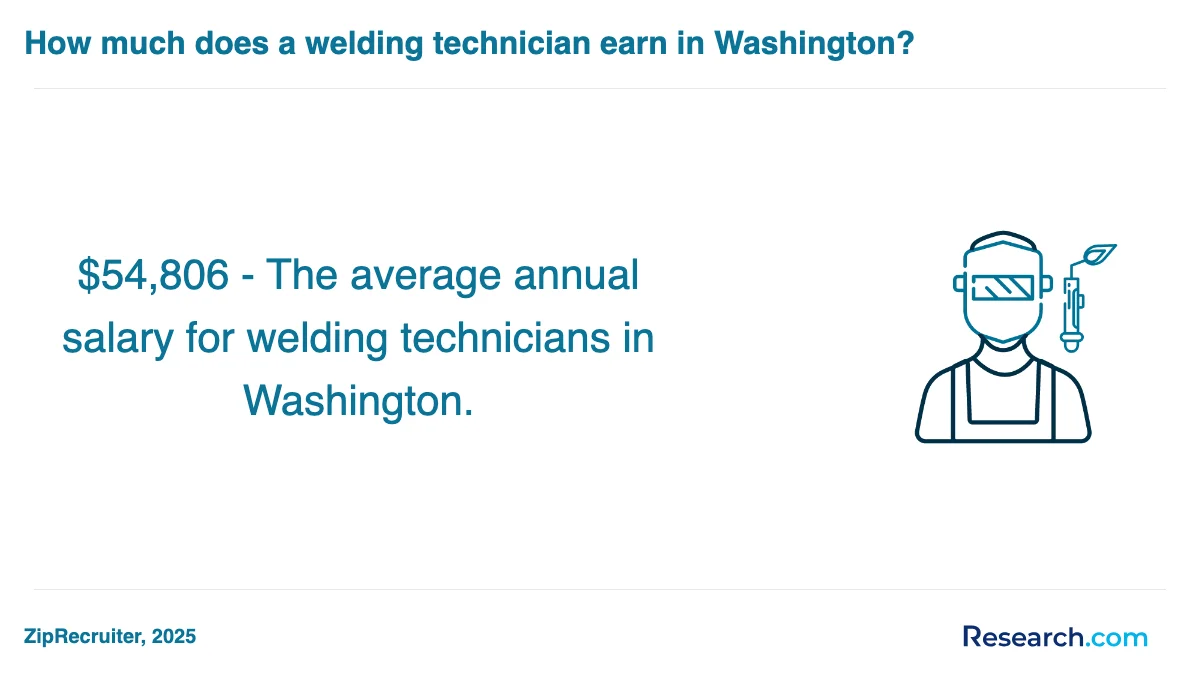
Annual salaries for entry-level welders in California start around $49,610, with mid-level professionals earning closer to $59,902. These figures, experienced by many Eureka graduates, show how the trade school foundation pays off as skills improve and confidence grows.
- The College of the Redwoods in Eureka offers a Basic Certificate in Welding and an Associate of Science Degree in Welding Technology.
- Most welding classes have no prerequisites, making the program accessible to beginners, and cover equipment like SMAW, OAW, MIG, and TIG along with blueprint reading and safety.
- Program costs in California range from $5,000 to $10,755, with financial aid potentially available to reduce expenses.
- Entry-level welders typically earn between $40,000 and $48,000 per year, while experienced welders with certifications can make $60,000 to $70,000 annually.
- Job opportunities exist in manufacturing, construction, aerospace, and other industries, with career paths including supervisors, inspectors, instructors, CNC operators, and self-employed fabricators.
Completing a welder trade school program in Eureka typically takes between six months and one year, depending on the school and the intensity of the curriculum. Graduates from popular local trade schools often share how immersive the hands-on training accelerated their skills, making the time investment feel both manageable and rewarding. For example, students at a well-known Eureka welding school describe spending full days in practical workshops, which helped them quickly build confidence in real-world welding tasks.
Many find that the structured schedules, combining classroom theory with applied welding techniques, create a focused environment that keeps motivation high. One graduate mentioned how the steady pace prevented burnout while ensuring steady progress toward certification. Another highlighted the benefit of small class sizes common in Eureka's trade schools, allowing more personalized instruction and faster mastery of complex welding methods.
Ultimately, the timeframe aligns well with students eager to enter the workforce swiftly yet thoroughly trained, balancing speed with quality education in the heart of Eureka's skilled trades community.
The primary difference between online and on-campus welder trade school programs in Eureka centers on how students engage with their training. Graduates from on-campus programs often highlight the value of being physically present in fully equipped workshops, where they receive immediate feedback from instructors while welding intricate joints. This hands-on environment, typical of popular Eureka trade schools, fosters confidence and skill development in real time, making it easier to master complex techniques.
Conversely, online programs offer flexibility that many working adults or parents in Eureka find indispensable. These students appreciate accessing theoretical lessons-like welding safety and blueprint reading-at their own pace from home. However, they still attend local labs or scheduled sessions to gain essential practical experience. One graduate shared how balancing family life and coursework was manageable thanks to this hybrid approach, though they emphasized the importance of verifying that the online program meets AWS standards.
In essence, on-campus programs immerse students in a traditional, equipment-rich setting, while online options prioritize accessibility without sacrificing hands-on requirements-both paths reflecting the unique needs of welder students in Eureka.
Understanding the average cost of welder trade school in Eureka requires a close look at local options, primarily the College of the Redwoods. While exact tuition fees for welding programs here are not publicly detailed, the general in-state tuition for the 2020-2021 academic year was about $1,147, with significantly higher rates for out-of-state students. Graduates often recall budgeting beyond tuition for essential PPE, specialized tools, and textbooks, which can elevate the overall cost by several hundred dollars. This highlights the real financial commitment involved in pursuing welding trades locally.
Those seeking clarity on tuition fees for welding programs in Eureka might consider comparisons to other California trade schools. For example, institutions like the College of the Sequoias and Cerro Coso Community College have welding certificates that cost between $2,500 and $4,000 for in-state students. These figures provide valuable context, showing that while Eureka may offer more affordable tuition, students must still prepare for equipment and certification exam expenses. Graduates emphasize how managing these costs effectively contributed to their positive learning experience and eventual job readiness.
Furthermore, additional costs such as certification exams-ranging roughly from $275 to $1,100-and living expenses including housing and transportation are important factors. Many students have reported that exploring financial aid opportunities, including federal aid, scholarships, and grants, helped ease their financial burden. For those considering the financial aspects of welding education, reviewing comprehensive resources like affordable online welding courses can be insightful in planning a sustainable investment.

Welder trade school students in Eureka commonly access federal aid by completing the Free Application for Federal Student Aid (FAFSA), which opens doors to programs like the Federal Pell Grant. This grant is especially valuable because it provides money that doesn't need to be repaid, easing the financial burden. Graduates from College of the Redwoods often recount how the Pell Grant helped them focus on learning rather than worrying about tuition.
Federal Direct Loans, both subsidized and unsubsidized, offer further support. Subsidized loans are appealing since they don't accrue interest while students attend at least half-time, making them a practical choice for many. Parent PLUS loans also assist families when additional funding is needed.
Additional aid like the Federal Supplemental Educational Opportunity Grant (SEOG) targets those with exceptional need, while veterans can tap into Veterans Educational Assistance Benefits. State and local programs such as the Workforce Investment Act and Trade Adjustment Assistance provide retraining funds, which some students have leveraged after job loss.
Many welding students find tuition payment plans helpful to manage costs, especially considering in-state tuition at College of the Redwoods is about $1,104 annually with nearly $1,000 more for supplies. These layered resources create a feasible path for aspiring welders in Eureka to pursue their goals without excessive financial stress.
Enrolling in a welder trade school program in Eureka generally requires meeting a few straightforward prerequisites that set the foundation for success. Most local trade schools expect applicants to have completed high school or hold a GED, ensuring basic math and reading skills necessary for welding techniques and safety protocols.
Graduates from popular Eureka trade schools often highlight the importance of physical fitness and manual dexterity, as welding demands steady hands and stamina during long hours of practical work. Many schools also recommend or require applicants to pass a basic skills assessment, focusing on math and mechanical reasoning, which helps identify readiness for the technical curriculum ahead.
It's common for programs to ask for:
- Proof of age (usually 18 or older) due to safety regulations
- Immunization records or a health screening to ensure physical capability
- Basic safety gear or willingness to invest in it early on
Students often recall feeling reassured when these prerequisites aligned with their personal strengths, making the transition into hands-on training smoother. For example, graduates from a well-regarded Eureka trade school describe how passing the initial skills test boosted their confidence before tackling complex welding projects.

Welder trade school programs in Eureka, such as those at the College of the Redwoods, focus on a hands-on curriculum that prepares students for real-world welding careers. Graduates often reflect on the value of starting with foundational courses covering welding safety, equipment setup, and essential welding processes. These include:
- Shielded Metal Arc Welding (SMAW)
- Gas Metal Arc Welding (GMAW/MIG)
- Flux Cored Arc Welding (FCAW)
- Gas Tungsten Arc Welding (GTAW/TIG)
- Oxyacetylene Welding (OAW)
Students appreciate gaining familiarity with both manual and semi-automatic welding tools early on, which builds confidence for job site challenges. Beyond technical skills, Eureka programs emphasize reading blueprints and understanding welding metallurgy, vital for interpreting project requirements and selecting the right techniques.
Many graduates highlight advanced courses in welding inspection and supervision as crucial for career growth, especially when preparing for American Welding Society (AWS) certification. This certification, accessible through practical, code-compliant projects at local schools, is highly respected by employers in manufacturing and construction sectors around Eureka.
Welder trade school specializations Eureka students encounter often include foundational welding techniques and advanced applications tailored to the local industry demands. Popular welding programs Eureka California offer certifications in core processes like Shielded Metal Arc Welding (SMAW), Gas Metal Arc Welding (GMAW), and Gas Tungsten Arc Welding (GTAW). Graduates frequently share how these skills prepared them confidently for entry-level positions.
For those motivated to push their expertise, programs featuring advanced specializations such as pipe welding, advanced Flux-Cored Arc Welding (FCAW), and blueprint reading are invaluable. For instance, students attending Shasta College often highlight the benefits of specialized classes that deepen their technical know-how for competitive roles.
Additionally, many local courses emphasize materials joining and welding safety, which graduates report as vital for real-world welding environments. These programs bridge the gap between basic practice and industry complexities, making the learning process both rewarding and practical.
Exploring the difference between trade school and vocational programs is crucial for students choosing their path, which you can learn more about at difference between trade school and vocational programs.
Choosing the best welding programs in Eureka CA means focusing on credentials that match your career goals. Graduates from College of the Redwoods often praise the flexibility of certificate programs for quickly entering the workforce, while associate's degree holders appreciate the broader skills that open doors to supervisory roles. Consider programs that offer recognized industry certifications like the American Welding Society (AWS), which many students value for boosting employer confidence through practical assessments.
Compare welder trade school costs in Eureka alongside curriculum depth. The best programs blend classroom learning with hands-on training in processes like SMAW, GMAW, and TIG welding. Graduates often describe the satisfaction of mastering blueprint reading and project planning, which prepares them for real-world challenges. Accessibility matters too-some programs welcome beginners without prior experience and offer schedules suited for working students.
Beyond training, community connections and job placement support in Eureka can ease the transition to employment. If you want to explore more about practical, rewarding options, check out the best paying trades that are easy to learn.
For graduates from welder trade school programs in Eureka, welding careers in Eureka CA span a variety of rewarding paths tailored to different skill levels and interests. Entry-level roles like Welder/Laborer are common at local manufacturing companies such as Custom Crab Pots, where hands-on experience with arc and wire feed welding bolsters confidence and practical skills without requiring formal certification.
More experienced graduates often secure Welder/Fabricator positions, earning between $20 and $30 per hour by working on structural components and custom builds. These roles demand precision and safety awareness, which graduates from popular trade schools in Eureka are well-prepared for.
Specialized career options include Overhead Crane Technician roles, combining welding with mechanical expertise and commanding wages from $42 to $50 per hour. Experienced welders also find opportunities in education as Associate Faculty, passing on skills at community colleges or trade schools.
Other possibilities in retail or agricultural supply companies broaden job prospects by leveraging welding knowledge. For those considering further advancement, exploring cheap maintenance technician training online can complement their welding background effectively.
The welder job opportunities in Eureka CA are notably robust, supported by a steady influx of local hiring from industries like manufacturing, maritime, and construction. Graduates from popular trade schools in Eureka often share that their practical training, including blueprint reading and mechanical troubleshooting, gives them an edge when applying for these openings. Local employers value candidates with certifications from groups such as the American Welding Society, which further enhances graduates' prospects.
Students who complete welding programs here commonly find multiple job offers shortly after graduation, reflecting the welding employment outlook Eureka California employers forecast. Wages tend to be competitive, often around $31 per hour, encouraging many to remain within the region. Opportunities include roles ranging from apprentice welders to specialized inspectors, allowing for varied career paths and upward mobility.
- Hands-on training that aligns with employer expectations
- Multiple openings in manufacturing, fabrication, and maintenance
- Strong demand for pipefitters and fabricators at different experience levels
Graduates often describe working environments where their trade school skills are immediately applicable, boosting confidence and job satisfaction. Veterans are especially welcomed, widening the local talent pool. For those curious about the earnings potential and career stability of welding, exploring what is the highest paying trade school job can provide added insights beyond local data.
Best Welding Training Programs & Trade Schools - Top Welding Schools in Eureka for 2026
# 1 position
College of the Redwoods - Welding Technology/Welder.
associateThe Welding Technology/Welder program at College of the Redwoods offers hybrid instruction combining distance education with hands-on training. It prepares students to join or cut metal surfaces using various welding techniques such as arc welding, resistance welding, brazing, and soldering. The curriculum covers welding metallurgy, safety, codes, and structural design. Annual in-state tuition is $1,147. The program is accredited by the Western Association of Schools and Colleges Accrediting Commission for Community and Junior Colleges.
# 2 position
College of the Redwoods - Welding Technology/Welder.
certificate or diplomaThe Welding Technology/Welder program at College of the Redwoods offers hybrid instruction, combining in-person and distance education. It trains students in various welding techniques including arc welding, resistance welding, brazing, and high-energy beam welding. The curriculum covers materials, metallurgy, safety, and relevant codes. The annual in-state tuition is $1,147. The program is accredited by the Western Association of Schools and Colleges Accrediting Commission for Community and Junior Colleges.
Frequently Asked Questions about welder
After completing a welder trade school in Eureka, preparing for the job market involves several important steps. First, obtaining industry-recognized certifications, such as those from the American Welding Society (AWS), can significantly improve employment prospects. Many local employers look for AWS-certified welders for roles in construction, manufacturing, and maritime sectors.
Networking is also vital. Graduates should connect with local unions, apprenticeship programs, and trade organizations in Eureka to access job leads and mentorship.
Additionally, creating a detailed resume that highlights hands-on experience and technical skills gained during training helps in job applications. According to the U.S. Bureau of Labor Statistics, welding jobs in California are projected to grow by 6% through 2030, showing steady demand for skilled welders.
Employers in Eureka seek welder trade school graduates who demonstrate strong technical skills and attention to detail. Proficiency in various welding techniques, including MIG, TIG, and stick welding, is essential. Graduates should also understand reading blueprints and welding symbols, which are critical for project accuracy.
Safety awareness is highly valued, as welding involves handling hazardous materials and equipment. According to the U.S. Bureau of Labor Statistics, welders with OSHA safety training have a higher employment rate. Additionally, employers favor candidates who show problem-solving abilities and adaptability to different welding environments.
Good physical stamina and manual dexterity are important, given the demands of the job. Communication skills also matter since welders often collaborate with engineers and supervisors. Overall, a combination of technical expertise, safety knowledge, and teamwork makes graduates competitive in Eureka's welding job market.
Finding internships in Eureka relevant to welder trade school programs involves several strategic steps. Start by contacting local welding shops, manufacturing companies, and construction firms, as these businesses often seek interns for hands-on welding experience. The Humboldt County Workforce Development Board provides resources and listings that can connect students with apprenticeship and internship opportunities in the region.
Additionally, many trade schools have partnerships with local employers. Inquire with your school's career services or internship coordinator for potential placements. According to the U.S. Bureau of Labor Statistics, welding internships can improve job placement rates by up to 20%.
Networking through industry events and local unions, such as the International Brotherhood of Boilermakers, can also open doors to internships in Eureka's welding sector.
In Eureka, earning a welder trade school diploma significantly enhances career mobility and advancement opportunities. According to the U.S. Bureau of Labor Statistics, welders with formal training typically see higher employment rates and can command better wages compared to those without certification. Local employers in manufacturing, shipbuilding, and construction prefer candidates with accredited diplomas, as these credentials demonstrate verified skills and safety knowledge.
Trade school graduates often qualify for specialized welding certifications, such as those from the American Welding Society, which are valued in Eureka's industrial job market. This can lead to promotions or higher-paying roles, including supervisory positions. Additionally, the demand for skilled welders in the region is projected to grow 6% through 2030, suggesting steady opportunities for diploma holders.
Students attending welder trade schools in Eureka can benefit from part-time jobs that build practical skills and industry experience. Positions such as welding assistants or metal fabrication helpers are common and provide hands-on exposure to welding equipment and techniques. Additionally, construction laborer roles often require basic welding knowledge, offering a practical setting to apply classroom learning.
Local businesses, including shipyards and manufacturing plants, sometimes hire part-time workers with welding skills. According to the U.S. Bureau of Labor Statistics, California's coastal areas, including Eureka, have a steady demand for welders, with an average hourly wage around $22.
These roles help students develop safety awareness and workplace communication, essential for welding careers.
To choose the best welder degree program near Eureka, CA, it's important to consider factors like accreditation, hands-on training opportunities, and faculty expertise. Programs and universities are readily available, providing both certificate and associate degree options to enhance technical skills. Utilizing resources like Research.com can help you explore and compare programs near me, focusing on the quality of education and employment outcomes.
- Finding the Perfect Welding Job After Technical School https://www.high.net/careers/blog/finding-perfect-welding-job-after-technical-school/
- How to find a Welding Job after Graduating Welding School? - YouTube https://www.youtube.com/watch
- What Comes After Welding School? Job Outcomes and More https://ftccollege.edu/trade-blog/what-comes-after-welding-school-job-outcomes-and-more/
- Explore Hands-On Welding Training and Career Growth https://swantonweld.com/discover-hands-on-welding-training-and-advancement-opportunities/
- Welding training - Warsaw, Kraków, Wrocław, Łódź, Poznań https://kurso.eu/en/training-and-courses/welding-courses/welding/
- Welding & Trade School in the U.S. | Tulsa Welding School https://www.tws.edu/
- Welding Trade Schools: Ignite Your Future With Hands-On Training https://www.trade-schools.net/trades/welding
- Combination Welding Technology Program & Trade School | Apex https://apexschool.com/programs/combination-welding-technology/
- Best Welding Schools - Elite Welding Academy https://eliteweldingacademy.com/
- Welder https://www.sait.ca/apprenticeships-and-trades/programs/welder