
Best Translator Training Programs & Trade Schools - Top Translation Schools in Omaha for 2026

Co-Founder and Chief Data Scientist
Choosing the right professional translator trade school in Omaha can shape your future career. This article introduces a carefully crafted ranking of translator programs, developed by the Research.com team of data scientists, to guide you in making a well-informed decision.
Discover schools that offer quality education and valuable certifications, helping you stand out in a competitive job market. Whether you seek new skills or a career change, earning a diploma in professional translation opens doors to exciting opportunities.
Explore these options with confidence and take a step closer to achieving your goals.
Key benefits of finishing professional translator trade school in Omaha
- Graduates from professional translator trade schools in Omaha can expect salaries around $54,719 per year, matching well with local averages and offering strong earning potential early in their careers.
- Career paths include working as in-house translators, freelance interpreters, or specialized roles like subtitling, as demonstrated by successful alumni from popular Omaha trade schools.
- Completing an online translator trade school offers flexibility and faster completion, helping graduates balance work and study while entering the field more quickly compared to traditional degrees.
What can I expect from professional translator trade schools in Omaha?
Enrolling in a professional translator trade school program in Omaha means diving into a structured journey that sharpens more than just language skills. Graduates often recall engaging deeply with modules covering medical and legal terminology, which prepare them for real-life scenarios like interpreting patient histories in hospitals or assisting in courtrooms. Programs such as the Medical Interpreting Certificate at the College of Saint Mary offer fully online courses that blend theory with practical exercises, making it easier for busy students to balance life and learning.
Students can expect to master simultaneous and consecutive interpretation techniques, encountering ethical dilemmas that professionals face daily. Many find hands-on opportunities through partnerships with local nonprofits or government agencies, providing invaluable exposure and mentorship. While some graduates appreciate the challenge of meeting national certification requirements, they also celebrate the confidence gained from understanding professional standards that employers demand.
Financially, part-time learners often navigate additional costs like textbooks, but many feel the investment is worthwhile for the career advancement and community impact their skills enable.
Where can I work after finishing professional translator trade schools in Omaha?
Graduates from professional translator trade schools in Omaha often find rewarding career paths across diverse sectors. Many secure positions in healthcare institutions, where they serve as Spanish or Medical/Legal Interpreters, bridging crucial communication gaps between patients and providers. One graduate shared how working in a hospital setting brought daily fulfillment by helping people during vulnerable moments.
Others transition into educational roles, interpreting for students and families in local public schools like Bellevue Public Schools. This hands-on experience fosters a strong connection to the community, making the work both meaningful and impactful.
Legal and government agencies also value these skills, with opportunities as court interpreters or in federal agencies such as the FBI, especially for those fluent in languages like Somali or Mandarin. Graduates describe feeling proud to contribute to justice and public safety.
Private companies and language service agencies in Omaha offer flexible roles, sometimes combining translation with training duties. This variety allows new translators to tailor their careers while exploring different industries.
Overall, the steady demand and variety of positions provide graduates with confidence and optimism about their futures in Omaha's growing language services market.
How much can I make after finishing professional translator trade schools in Omaha?
After finishing a professional translator trade school program in Omaha, many graduates find themselves stepping into jobs that pay around $26 per hour, which translates to about $54,700 annually. This is a promising starting point, especially for those coming straight out of popular local trade schools known for their focused translator programs. One graduate shared how their credentials helped them secure a role interpreting for hospitals, where clear communication is vital and the pay reflects the skill required.
Others who choose to combine translation with interpretation earn about $25 per hour, opening doors to dynamic roles that involve both written and spoken language skills. Such versatility can boost confidence and job satisfaction, as these graduates often describe feeling valued and motivated by the variety in their workdays.
More experienced translators in Omaha, particularly those moving into specialized or coordinator positions, report salaries ranging from approximately $27,400 up to nearly $118,000. This upward mobility shows how the investment in a trade school education can lead to rewarding careers with growing financial benefits.
Best Translator Training Programs & Trade Schools - Top Translation Schools in Omaha for 2026
# 1 position
Metropolitan Community College Area - Language Interpretation and Translation.
certificate or diplomaThe Language Interpretation and Translation program at Metropolitan Community College Area offers a hybrid learning format with some distance-education options. The program prepares students to become professional interpreters and translators, focusing on English and Canadian French language skills. It includes intensive language instruction and covers various interpretation and translation techniques for business, technical, and literary contexts. Annual in-state tuition is $3,285. The program is accredited by the Higher Learning Commission.
# 2 position
College of Saint Mary - Language Interpretation and Translation.
certificate or diplomaThe Language Interpretation and Translation program at College of Saint Mary offers a hybrid format with some distance-education options. It prepares students to become professional interpreters and translators, focusing on languages including English and Canadian French. The curriculum covers various interpretation methods and translation types, including business and technical fields. Annual in-state tuition is $23,340. The program is accredited by the Higher Learning Commission.
Key Findings
- Trade school programs in Omaha focus on Spanish-English translation, medical interpreting, and general translation skills, often requiring bilingual proficiency and at least two years of formal education in both languages.
- Certificate programs usually have 4-6 courses and can be completed within a year full-time, with tuition costs ranging from $350 to $500 per credit hour for community members.
- The Medical Interpreting Certificate at the College of Saint Mary is open to bilingual students and community members, with full-time students receiving included course fees.
- Nebraska certification for interpreters involves orientation, a written exam, and an oral performance exam, which trade school programs prepare candidates to pass.
- Starting salaries for new graduates range from $38,000 to $48,000 annually, increasing to $55,000-$70,000 with experience and certification.
- Freelance interpreters in Omaha typically earn $55-$65 per hour, with higher rates for specialized or evening work.
How long does it take to complete professional translator trade schools in Omaha?
Completing a professional translator trade school program in Omaha typically takes about 12 to 18 months, depending on the school's curriculum and the student's pace. Many graduates from well-known Omaha trade schools share how this timeframe allowed them to quickly transition into the workforce with confidence. The programs are designed to balance intensive language skills development with practical translation practice, making the learning process both immersive and rewarding.
For example, graduates often describe their experience as a fast yet manageable journey, where they could apply what they learned in real-world settings such as internships or community projects. This hands-on approach in schools across Omaha helps students feel prepared and enthusiastic about their future careers as translators.
Some students choose part-time options, extending the program slightly but providing flexibility for those balancing work or family. Overall, the completion time in Omaha's trade schools supports a focused, encouraging environment that many find energizing and motivating.
What's the difference between online and on-campus professional translator trade school programs?
Online professional translator programs in Omaha offer unmatched flexibility, allowing students to study anytime, anywhere. Graduates from programs like the Medical Interpreting Certificate at the College of Saint Mary often share how balancing work, family, and education became manageable thanks to asynchronous classes and digital materials. This setup fosters a sense of independence and self-motivation, with virtual discussions and video calls keeping students connected despite physical distance.
On the other hand, on-campus programs, though less common locally, provide immersive, hands-on experiences. Graduates from nearby regional programs highlight the value of real-time interaction with instructors and peers, which sparks immediate feedback and deeper networking. The access to interpretation labs and campus resources creates a dynamic learning environment that online formats can find hard to replicate.
For many Omaha-based students, the choice hinges on lifestyle and learning preferences-whether they thrive in a flexible, self-paced online world or prefer the energy and structure of in-person classes. Both paths prepare students well for certification, but the day-to-day experience shapes their professional confidence differently.
What is the average cost of professional translator trade schools in Omaha?
The average cost of translator programs in Omaha tends to vary depending on the institution and program length but generally falls within a predictable range. For example, graduates from Metropolitan Community College (MCC) recall paying around $64.00 per credit hour for resident tuition, resulting in a total tuition fee near $1,920 for a 30-credit translator trade school program. This makes MCC a popular choice for local students seeking affordable tuition fees for translator trade schools in Omaha.
Additional expenses such as books, materials, and student fees add approximately $1,000 to $2,000 more to the overall cost. Graduates often mention that while the tuition fees cover the core academic experience, budgeting for these supplementary costs was an essential part of their planning. Those who opted for comprehensive programs at Creighton University faced a significantly higher tuition fee of about $39,630 per year, which reflects a deeper investment in specialized education but can feel more daunting for students seeking trade school alternatives.
Current and prospective students interested in translator trade programs might also explore options through top vocational trade programs online to supplement their training or reduce time on campus. Many report that this flexibility helped them manage expenses while gaining hands-on skills. For those estimating their potential investment in a professional translator trade school, careful research and contacting institutions directly can offer personalized insights to fit individual goals.
What financial aid is available for professional translator trade schools in Omaha?
Professional translator trade school students in Omaha often find that financial aid options significantly ease the burden of tuition and living expenses. Graduates from popular programs, such as those at Creighton University and local community colleges, frequently mention how completing the Free Application for Federal Student Aid (FAFSA) opened doors to essential Pell Grants, which can provide up to $7,395 annually based on need.
Many students report feeling relief when they discover that Nebraska's state grants and federal work-study opportunities complement these funds. Work-study jobs, often on campus or in community settings, allow students to gain real-world experience while earning money to cover daily costs.
Trade school financial aid offices in Omaha play a crucial role by guiding students through scholarship applications and loan options tailored for language professionals. Some graduates recall the encouragement they received applying for scholarships offered by local language associations, which made pursuing translation careers more accessible and inspiring.
What are the prerequisites for enrolling in professional translator trade schools in Omaha?
Enrolling in a professional translator trade school program in Omaha typically requires a few clear prerequisites that set the foundation for success. Most programs expect applicants to have a high school diploma or equivalent, ensuring basic academic readiness. Graduates often recall how this minimum helped them confidently tackle language theory and practical translation exercises.
Beyond formal education, many students share that having a strong passion for languages and cultural nuances truly makes a difference. Trade schools in Omaha often look for evidence of this enthusiasm, such as prior language study or personal immersion experiences.
Some specific prerequisites you might encounter include:
- Proficiency in at least two languages, demonstrated through tests or interviews
- Basic computer skills to use translation software effectively
- Strong reading comprehension and writing abilities
- Commitment to a rigorous schedule balancing theory and real-world practice
Graduates from popular Omaha trade schools often describe the journey as challenging but rewarding, emphasizing how meeting these prerequisites prepared them for hands-on translation projects and boosted their confidence in professional settings.
What are the typical courses in professional translator trade schools in Omaha?
Professional translator trade school programs in Omaha typically include a blend of core and specialized courses that prepare students for real-world challenges. Graduates often recall how foundational classes focused on mastering translation techniques between English and Spanish helped them gain confidence quickly. These courses emphasize:
- Eliminating linguistic interference
- Maintaining grammatical accuracy
- Ensuring cultural localization
For those drawn to healthcare interpreting, programs like the Medical Interpreting Certificate at the College of Saint Mary offer targeted training. Students describe the value of courses such as Foundations of Interpreting and Medical Terminology, which build essential skills in ethics and situation-specific language, all delivered online for flexibility.
Practical experience is also key. Though not always available locally, some regional programs incorporate labs and simulation exercises that mimic real interpreting scenarios, helping students feel well-prepared and enthusiastic about entering the workforce.
Many graduates appreciate how these structured courses, combined with prior language study, create a solid pathway toward certification and professional success in Omaha's growing translation field.
What are the available specializations in professional translator trade schools in Omaha?
Professional translator trade school programs in Omaha offer a variety of specializations tailored to meet diverse career goals. Graduates frequently highlight the practical value of programs like the Technical Communication Certificate Omaha, which sharpens skills in technical writing, editing, and software tools. This specialization often opens doors to roles in technology and engineering firms needing clear and precise documentation.
Other students find fulfillment in immersive language programs such as Spanish-English Translation and Interpretation Omaha. These prepare learners to confidently navigate real-life scenarios-from medical appointments to legal consultations-ensuring effective communication across cultures.
Sign Language Interpreting is another in-demand specialization available at prominent Omaha trade schools, equipping students to fill vital roles in education and community services. Many graduates express pride in the immediate impact they make by bridging communication gaps for the deaf and hard-of-hearing communities.
Omaha-based programs also emphasize versatile skills by partnering with local organizations like World Speaks, where students gain hands-on experience through community language courses and translation services. For those debating career paths, exploring is it better to go to a trade school or a vocational school offers valuable insight into these educational routes.
How do you choose the best professional translator trade school program in Omaha?
To identify the best Omaha translator trade school criteria, start by examining a program's accreditation and whether it aligns with industry certification standards like those from the Nebraska Judicial Branch or medical interpreting boards. Graduates from local programs often share how this focus boosted their confidence and employability in real-world legal and healthcare settings. Consider the curriculum's scope: some students appreciate the College of Saint Mary's specialized medical interpreting certificate, which offers practical terminology and skills tailored to healthcare environments, while others prefer the University of Nebraska Omaha's broader translation courses covering legal, business, and administrative texts.
When deciding how to compare translator programs in Omaha, flexibility and instructional format matter. Alumni commonly praise asynchronous online options that fit their busy schedules without sacrificing quality. Faculty expertise and hands-on opportunities, like internships with local courts or hospitals, enrich the learning experience and prepare students for immediate workforce entry. Evaluating total costs and available financial aid is also crucial, ensuring the program fits your budget without surprises. For those exploring related fields, consider checking out construction training programs online for additional career pathways.
What career paths are available for professional translator trade school graduates in Omaha?
Graduates of professional translator trade school programs in Omaha find a variety of rewarding career options tailored to their language skills and interests. Many step into translator jobs in Omaha NE, working with documents, legal papers, or technical manuals, often in dynamic business environments or educational settings. Some graduates recall translating important medical documents, feeling fulfilled knowing their work supports patient care.
Interpreter career opportunities in Omaha frequently arise in hospitals, courts, and public agencies. Graduates often highlight their experiences as medical or court interpreters, facilitating crucial communication between clients and professionals in life-changing situations. Working as interpreters in schools brings added satisfaction by helping students and families overcome language barriers.
Emerging roles include language access specialists and bilingual team trainers, especially within Omaha's immigrant and refugee communities, where graduates help provide cultural mediation and staff training. Advanced language skills open doors to specialized positions in government or intelligence sectors.
These diverse paths reflect a promising future for those entering this field, as shown in the list of trades in demand nationwide.
What is the job market for professional translator trade school graduates in Omaha?
Graduates from professional translator trade schools in Omaha consistently find a dynamic job market fueled by demand in healthcare, legal services, education, and business sectors. Many graduates from popular trade schools share how completing specialized programs and certifications enhances their prospects, especially in high-stakes fields like court and medical interpreting.
For those studying professional translator in Omaha, the opportunities include:
- Entry-level positions offering $16.25 to $20.50 per hour in healthcare settings such as Nebraska Medicine
- Certified court interpreter roles paying up to $75 per hour, often with minimum assignment times
- Federal and private sector jobs valuing skills in Spanish, Mandarin, Arabic, and other languages
Many graduates describe their job search as optimistic, noting that the professional translator job market in Omaha benefits from steady listings and a solid growth outlook. The Nebraska Judicial Branch's projections, along with local demand, show an employment growth expected to exceed the national average.
Trade school alumni frequently emphasize the advantage of combining hands-on practice with certification, which often makes them more competitive. With consistent openings and rising language diversity, the interpreter and translator employment outlook Nebraska encourages future students to prepare strategically for promising career paths. For those weighing their options, data on top paying trade jobs can provide valuable insight into potential earnings.
Frequently Asked Questions about professional translator
After completing a professional translator trade school in Omaha, graduates should focus on building a strong portfolio showcasing their translation work. This is essential for demonstrating practical skills to potential employers. Networking with local businesses, language service providers, and community organizations can open doors to freelance or full-time opportunities.
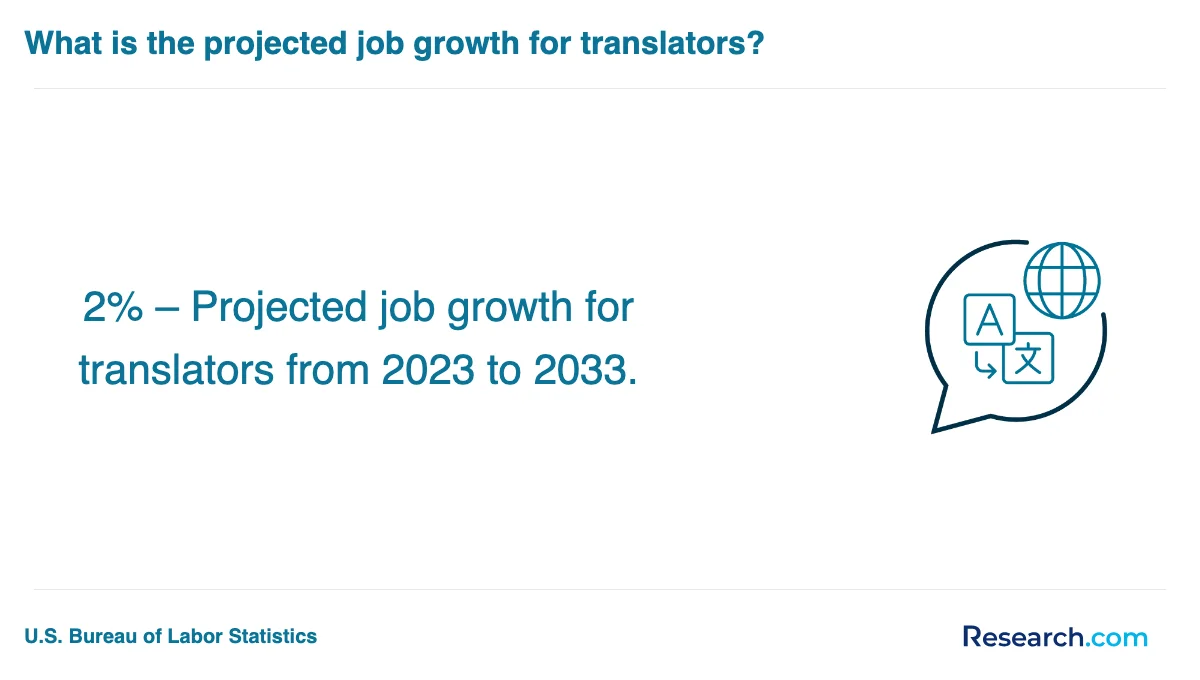
Many translators find success by obtaining certification through the American Translators Association (ATA), which enhances credibility in the US job market. According to the Bureau of Labor Statistics, the demand for translators in Nebraska is expected to grow by 20% over the next decade, reflecting expanding opportunities.
Internships or volunteer work with local nonprofits or government agencies in Omaha can provide valuable experience and professional references. Additionally, staying updated with translation technologies and software widely used in the industry will improve job prospects.
Employers in Omaha seeking graduates from professional translator trade schools prioritize strong language proficiency in both the source and target languages. According to the U.S. Bureau of Labor Statistics, accuracy and cultural fluency are essential skills that improve translation quality and client satisfaction. Communication skills are also critical, as translators often work with diverse clients and industries requiring clear and precise exchanges.
Technical knowledge of translation software and tools is increasingly important. A 2023 survey by the American Translators Association highlights that over 70% of employers expect familiarity with computer-assisted translation (CAT) tools.
Time management and the ability to meet deadlines consistently rank high among sought-after skills in the Omaha job market for translators.
Finding internships in Omaha relevant to professional translator trade school programs involves several practical steps. First, students should connect with local educational institutions offering language and translation courses, as these schools often have partnerships with businesses seeking interns.
Many internships in Omaha are available through organizations such as the Nebraska Language Bank and nonprofit agencies serving immigrant communities. According to the Nebraska Department of Labor, translation and interpretation services are growing, increasing internship opportunities by approximately 8% annually.
Students are encouraged to use online platforms like Handshake and the Omaha Public Library's career resources to search for internships specifically in translation and interpretation fields.
Networking through local events and language associations can also open doors to internships with legal firms, hospitals, and government offices requiring translation services.
Obtaining a professional translator trade school diploma in Omaha can significantly enhance career mobility and advancement. According to the U.S. Bureau of Labor Statistics, demand for translators is expected to grow 20% from 2022 to 2032, faster than average for all occupations. In Omaha, specialized training equips graduates with industry-recognized skills that employers value, increasing job opportunities in healthcare, legal, and business sectors.
Trade school programs often emphasize practical experience and certification preparation, which are crucial for career progression. Graduates typically report higher starting salaries and faster promotions compared to self-taught translators. Local workforce data from the Nebraska Department of Labor shows that certified translators in Omaha earn approximately 15% more than those without formal credentials.
Furthermore, a diploma can open doors to freelance and remote work, broadening professional networks beyond the city. This credential serves as a reliable indicator of competence, helping translators stand out in competitive markets and access leadership roles or specialized assignments more readily.
Students enrolled in professional translator trade schools in Omaha can benefit from a variety of part-time job opportunities that enhance their language skills and industry experience. Common roles include freelance translation, where students can work remotely on documents or subtitles, and interpretation services for local community centers or healthcare facilities. Omaha's diverse population creates demand for language support in sectors like legal aid and social services.
Internships at local businesses or government agencies also provide practical exposure. According to the U.S. Bureau of Labor Statistics, the translation and interpretation field is expected to grow 21% from 2021 to 2031 nationally, reflecting increasing opportunities.
To find the best professional translator degree program near you, including options near Omaha, NE, you can start by researching local universities and colleges that offer language and translation-related degrees. Some institutions may provide specialized programs in translation studies or offer related bachelor's or master's degrees with translation tracks. Research.com can be a helpful resource for comparing programs and universities to identify the best fit for your academic and career goals.
Related Professional Translator Rankings for Nearby Cities
Top Trending Rankings
References
- Online Professional Translator from Hennepin Technical College https://careertraining.hennepintech.edu/training-programs/professional-translator/
- Online Professional Translator Training - Loyola Marymount University https://academics.lmu.edu/extension/programs/in-demand-industries/professional-translator/
- Professional Translator | University of the Pacific https://www.pacific.edu/education/professional-development/certificate-programs/professional-translator
- Translation | School of Continuing Studies - University of Toronto https://learn.utoronto.ca/translation
- Translation | Continuing and Professional Education https://ce.arizona.edu/translation
- Online Professional Translator from Colorado State University Professional Education https://careertraining.online.colostate.edu/training-programs/professional-translator/
- Translation and Interpreting Courses - American Translators Association (ATA) https://www.atanet.org/career-education/student-resources/translation-interpreting-courses/
- Professional Translator in Education (Spanish) Certificate at UGA https://www.georgiacenter.uga.edu/professional-programs/professional-translator-in-education/
- Institute of Translation and Interpreting (ITI) https://www.iti.org.uk/
- Omaha Translation Services - U.S. Language Services https://www.uslanguageservices.com/nebraska/omaha-translation-services/


