
Most Affordable Diagnostic Medical Sonographer Schools & Training in Charlottesville for 2027
Audited and Verified:
Our Editorial and Data Verification Process
Research.com uses government datasets, official education statistics and primary institutional information to support its career and degree guides. Our review process checks factual accuracy, occupational definitions, source dates and the requirements associated with the credentials discussed.
How This Article Was Fact-Checked
Our editorial team verifies salary estimates, employment projections, education requirements and program information against original data providers and official organizations. Salary figures are checked against the relevant occupational definitions and reporting periods. Information about licensure, accreditation and required in-person training is reviewed separately.
Fact-checked and verified on:

Co-Founder and Chief Data Scientist

Reviewed by Karolina Broda
Fact-Checker and Data Verification
The lowest-priced sonography program may not be the cheapest route to a job if its clinical placements are hard to reach or its credential does not support certification eligibility. The Research.com team of data scientists created the Most Affordable Medical Sonographer Trade Schools in Charlottesville for 2027 ranking to help students identify training programs worth considering. With the U.S. Bureau of Labor Statistics projecting 13.9% growth for diagnostic medical sonographers from 2025 to 2035, this guide helps prospective students compare costs, hands-on training, credentials, and career entry before enrolling.
Key findings about medical sonographer degrees in Charlottesville
- Affordability scores reflect cost and debt, not sonography program accreditation or clinical quality; check both separately before applying.
- The national median annual pay for diagnostic medical sonographers was $96,590 in May 2025, but that is not a Charlottesville starting-pay estimate (U.S. Bureau of Labor Statistics).
- U.S. employment is projected to grow 13.9% from 2025 to 2035; local job access still depends on clinical training, employer requirements, and willingness to commute (U.S. Bureau of Labor Statistics).
Table of Contents
- Most Affordable Diagnostic Medical Sonographer Schools & Training in Charlottesville for 2027
- What can I expect from a medical sonographer trade school program in Charlottesville?
- Where can I work with a medical sonographer trade school training in Charlottesville?
What can I expect from a medical sonographer trade school program in Charlottesville?
Diagnostic medical sonographers use ultrasound equipment to produce images for clinical interpretation. Training combines anatomy, image acquisition, patient care, and substantial supervised scanning - not simply instruction in operating a machine. The right route depends partly on whether you already have healthcare training and partly on whether a program can place you in accessible clinical sites (U.S. Bureau of Labor Statistics).
These pathways lead to different credentials and starting points. Compare their clinical and certification provisions before treating similarly named programs as interchangeable.
| Pathway | Credential or outcome | Best fit and key check |
| Community-college sonography program | Often an associate degree | New entrants seeking structured coursework and clinical rotations; confirm the specific program and specialty offered. |
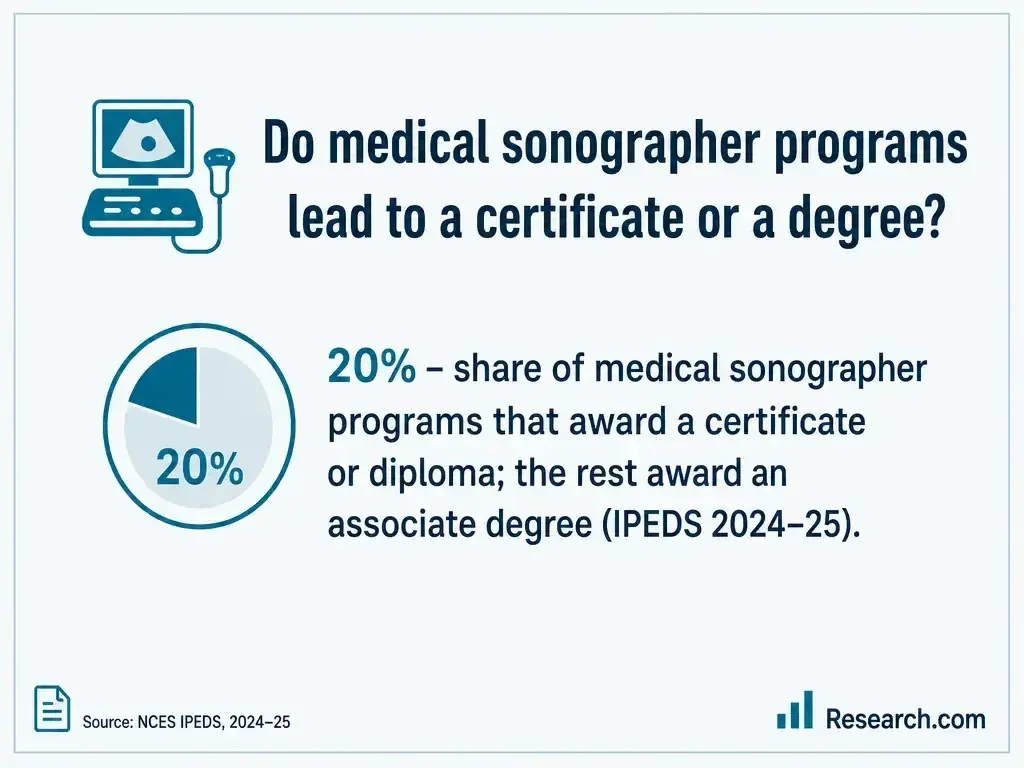
| Career-school sonography program | Certificate, diploma, or associate degree, depending on provider | Students comparing schedules; verify total cost, clinical placement, and certification eligibility. |
| Postsecondary certificate for qualified healthcare workers | Certificate | Applicants with required prior education or clinical experience; check entry prerequisites carefully. |
| Employer-supported cross-training | Employer training; certification eligibility varies | Existing healthcare workers with a confirmed supervised training plan, not an assumed substitute for formal eligibility requirements. |
Ask Piedmont Virginia Community College which sonography pathway, if any, is available for your intended start date and how its clinical placements work. Program offerings can change, so do not infer availability or a credential from a school's general healthcare catalog.
Where can I work with a medical sonographer trade school training in Charlottesville?
Potential settings include hospital imaging departments, outpatient imaging centers, physicians' offices, and specialty practices. Charlottesville's hospital-centered healthcare market makes clinical-site access particularly important: a rotation can build experience with local workflows, but it is not a job offer. UVA Health is one local employer to research for current openings and stated certification expectations; also check opportunities within a realistic commuting radius (U.S. Bureau of Labor Statistics; UVA Health).
Ask programs whether students rotate through hospital, outpatient, and specialty settings, and whether students must arrange their own sites. A lower tuition price may lose its advantage if placements require repeated long drives or limit exposure to the specialty you want.
A verified Charlottesville-specific pay figure is not available here, so the national figure is a benchmark, not a local wage quote. The median annual pay for U.S. diagnostic medical sonographers was $96,590 in May 2025 (U.S. Bureau of Labor Statistics). Half of workers in that occupation earned less; the figure includes experienced workers and should not be used as an expected first salary.
For a useful local comparison, review current openings by specialty, shift, experience requirement, and certification. When weighing sonography against broad lists of most lucrative majors, keep the comparison occupational: sonography's training cost, clinical time, and likely entry-level offers matter more than an unrelated earnings ranking.
An associate-degree sonography pathway commonly takes about two years of full-time study; certificate length depends on prerequisites and the provider's schedule (U.S. Bureau of Labor Statistics). Do not compare advertised months alone. Prerequisite courses, clinical rotation schedules, and limited placement availability can extend the time until you are ready to apply for work.
Request the curriculum's total credits or contact hours, lab schedule, required supervised clinical hours, and expected completion date in writing. There is no single clinical-hour total that safely describes every sonography program or certification route. Searches for accelerated bachelors degrees online address a different educational goal; speed alone cannot replace supervised ultrasound practice.
Some anatomy, terminology, and other classroom work may be delivered online. Scanning labs, patient interaction, and supervised clinical examinations require in-person participation. A program described as "online" is therefore worth considering only after you know where its hands-on components take place and who secures the clinical site (U.S. Bureau of Labor Statistics; CAAHEP).
Hybrid study can reduce classroom travel for someone working around Charlottesville, but distant labs or rotations can erase that benefit. When browsing top accredited trade schools online, check the specific sonography program and its certification pathway - not just the school's institutional accreditation or online format. Fully remote coursework alone should not be assumed to meet clinical or certification requirements.
There is no defensible Charlottesville-wide average to quote without comparable, current prices for the same sonography credential and residency status. Instead, request a written cost-to-completion estimate from each program. Tuition is only one part of the amount needed to become job-ready.
Use the same cost categories for every offer so an apparently cheaper program does not conceal substantial clinical or entry expenses.
- Tuition, mandatory fees, textbooks, software, uniforms, and required equipment.
- Health screenings, immunizations, background checks, and any required coverage for clinical placement.
- Transportation and parking for labs and rotations, plus certification examination fees.
- Lost earnings if classes or unpaid clinical shifts reduce your working hours.
Ask about eligible federal aid, scholarships, and Virginia workforce assistance, then compare the remaining out-of-pocket cost and borrowing. Federal aid eligibility depends on the student and program, not on a listing's affordability rank (Federal Student Aid). A cheap online degree comparison cannot capture the cost of required in-person sonography training.
Depending on the pathway, the school-awarded credential may be a certificate, diploma, or associate degree. That credential is distinct from professional certification. For example, the American Registry for Diagnostic Medical Sonography (ARDMS) awards credentials after applicants meet an applicable prerequisite and pass the required examinations; completing a program alone does not award an ARDMS credential (ARDMS).
Before enrolling, ask the program to identify its exact award, any sonography-specific accreditation, and the ARDMS prerequisite route it expects graduates to use. If you already have healthcare education, ask for a written transfer-credit or advanced-standing evaluation rather than assuming previous coursework will shorten the program.
Requirements vary by program and route. Applicants may need prerequisite science or math coursework, an application to a limited-capacity clinical program, and health or background documentation before rotations. A certificate intended for existing healthcare workers may have entry requirements that a new student cannot meet (program-specific requirements; ARDMS).
Check admission rules separately from graduation and certification rules. Ask whether clinical placement is guaranteed for admitted students, how sites are assigned, whether previous coursework transfers, and what happens if a required placement is delayed. Meeting a school's admission standard does not by itself establish eligibility for a professional examination.
Expect instruction in anatomy, ultrasound physics, instrumentation, patient positioning, image quality, documentation, and safe patient care, followed by supervised scanning in labs and clinical settings. Specialty training may address areas such as abdominal, obstetric and gynecologic, or vascular imaging; check which examinations students actually practice rather than assuming every specialty is covered (U.S. Bureau of Labor Statistics; CAAHEP).
Practical competence matters because sonographers must obtain usable images while responding to patients and recognizing when an examination needs additional views. Ask how scanning performance is assessed, how much supervised patient contact is required, and whether clinical sites provide the specialty experience tied to your intended certification.
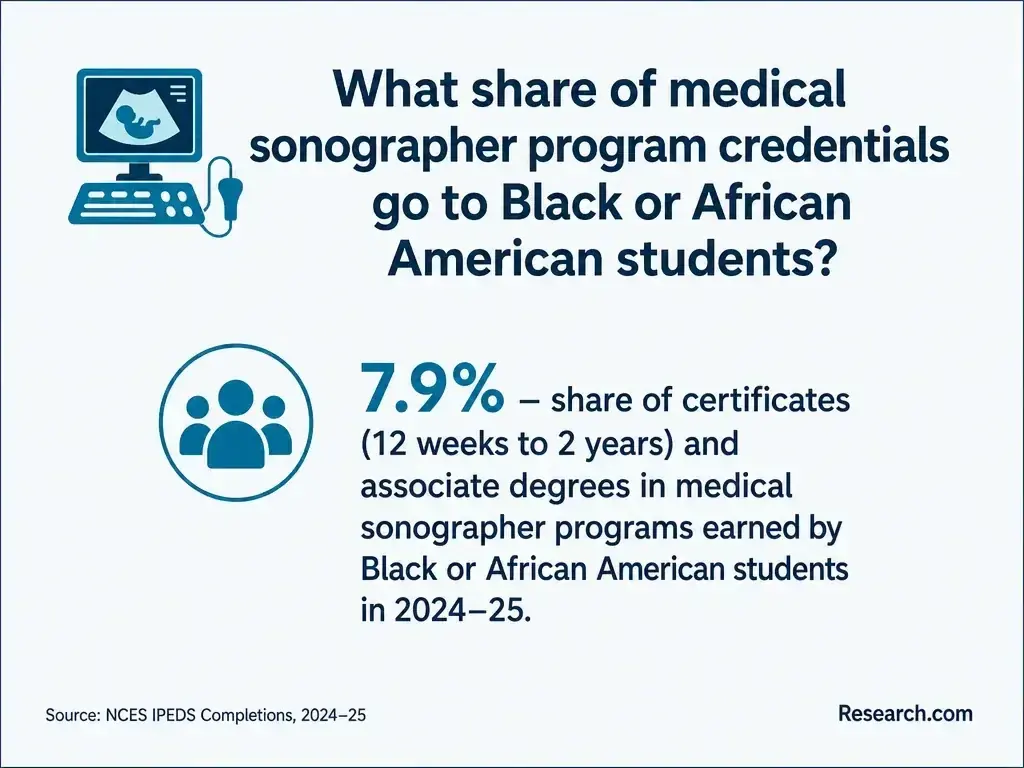
Virginia does not generally license diagnostic medical sonographers as a separate occupation; that is different from saying employers have no requirements (Virginia Department of Health Professions). Employers may prefer or require professional certification. Confirm current expectations in the openings you hope to pursue before selecting a program.
Keep four checks separate: the school's institutional accreditation, any sonography programmatic accreditation, eligibility for a certifying organization's examinations, and any applicable state occupational rule. CAAHEP accreditation applies to an eligible program, not automatically to every program at an accredited school. ARDMS determines eligibility under its published prerequisites and examination requirements; neither a school award nor Virginia's lack of a general sonographer license substitutes for that determination (CAAHEP; ARDMS).
Start with the job and specialty you want, then work backward to the credential, clinical experience, and certification route. An affordability ranking is useful for finding options, but its cost-and-debt score does not measure sonography lab quality or guarantee a placement.
Use these checks before paying a deposit; ask for written answers where a claim affects your eligibility or total cost.
- Verify the exact program award, current sonography-specific accreditation status, and intended certification prerequisite with the program and relevant accreditor or certifier.
- Confirm who arranges clinical placements, where they are located, which specialties they cover, and how delays are handled.
- Compare complete costs, available aid, expected debt, and time away from paid work - not tuition alone.
- Ask for program-specific completion, examination, and job-placement information, including the reporting period and number of students counted.
Be wary of a vague promise that a course is an easy degree: the useful question is whether you can complete its supervised scanning requirements and qualify for your intended role. For return on investment, weigh completion likelihood, your current earnings, likely post-training offers, debt, and the time needed to recover costs; a national median wage is not a guaranteed payoff.
An entry route can lead to general diagnostic sonography work in a hospital or outpatient setting, subject to the employer's specialty and certification requirements. With suitable clinical experience and additional credentials, a sonographer may move toward specialty imaging, training new staff, or a lead role. Those steps are progression options, not automatic outcomes of an initial program (U.S. Bureau of Labor Statistics; ARDMS).
For someone already employed in healthcare, employer-supported training may be worth investigating alongside a school program - but obtain written confirmation of supervision, clinical experience, and certification eligibility first. A prospective student without that foundation generally needs a structured route that provides both classroom learning and access to supervised scanning.
The U.S. Bureau of Labor Statistics projects 13.9% employment growth for diagnostic medical sonographers from 2025 to 2035. That national projection supports considering the occupation, but it does not measure Charlottesville openings or promise a job to a new graduate.
Local opportunity is best tested against current postings: note the requested specialty, certification, shift, and experience, then compare those requirements with each program's rotations. Because the immediate market is smaller than the national market, willingness to commute or pursue a broader range of clinical settings may matter. Choose a program for the jobs it prepares you to seek, not for projected growth alone.
Most Affordable Diagnostic Medical Sonographer Schools & Training in Charlottesville for 2027
Investing in occupational training is a consequential decision. Research.com created its ranking to help readers compare programs against other programs for the same occupation and location, rather than against unrelated schools. The team checks multiple education and recognition sources to support the ranking's quality, credibility, and accuracy.
The most affordable ranking scores costs and debt: tuition, cost of attendance, median student debt, and federal loan default rate. It distributes weights through an entropy-based method, which gives more weight to measures that differ more across programs. Accreditation and other quality indicators are not part of this affordability score. Only programs with completions reported to IPEDS are included; exclusion does not establish that another training provider is unavailable or unsuitable.
The following sources are used in the ranking's data and verification process. Some cover fields beyond sonography; their inclusion does not make a dental or construction credential relevant to sonographer certification.
- IPEDS database - program completions and institutional education data.
- National Center for Education Statistics - federal education data and definitions.
- College Scorecard database - available cost, debt, and outcome information.
- Peterson's database - supplemental institutional information.
- Commission on Accreditation of Allied Health Education Programs (CAAHEP) - relevant programmatic accreditation checks.
- Accrediting Bureau of Health Education Schools (ABHES) - applicable institutional accreditation information.
- Commission on Dental Accreditation (CODA) - field-specific recognition checks elsewhere in the trade-school dataset, not sonography accreditation.
- Dental Assisting National Board (DANB) - field-specific credential information elsewhere in the dataset, not sonography certification.
- National Center for Construction Education and Research (NCCER) - construction-training recognition elsewhere in the dataset, not sonography recognition.
- Apprenticeship.gov Partner Finder - apprenticeship-provider information where relevant to an occupation.
Use the ranking to narrow a cost-conscious shortlist, then verify each sonography program's clinical placements, accreditation, and certification pathway directly. More detail on the ranking approach is available on Research.com's methodology page.
# 2 position
Frequently asked questions about medical sonographer programs in Charlottesville
Is the cheapest sonography program the best value?
Not necessarily. Compare total completion cost with clinical access, certification eligibility, and the likelihood that you can finish. The affordability score does not include program quality indicators.
Can I become a sonographer entirely online?
No fully remote coursework should be assumed to replace supervised scanning. Confirm the location and availability of required labs and clinical rotations before enrolling (U.S. Bureau of Labor Statistics; CAAHEP).
Does finishing a program make me ARDMS-certified?
No. ARDMS certification requires meeting an applicable prerequisite and passing required examinations. Ask the program which prerequisite route its graduates are expected to satisfy (ARDMS).
What should I ask about clinical placements?
Ask who secures them, where they are, which specialties they cover, whether travel is required, and what happens if a placement is delayed. Those answers can change both your cost and completion timeline.
Should I expect to earn the national median right away?
No. The May 2025 national median of $96,590 includes workers at different experience levels and is not a Charlottesville entry-level offer (U.S. Bureau of Labor Statistics). Compare current local postings instead.
- U.S. Bureau of Labor Statistics - Diagnostic Medical Sonographers and Cardiovascular Technologists and Technicians
Used to verify salary, employment outlook, and typical education requirements.
https://www.bls.gov/ooh/healthcare/diagnostic-medical-sonographers.htm - CAAHEP - Find an Accredited Program
Used to verify programmatic accreditation or industry recognition of programs.
https://www.caahep.org/students/find-an-accredited-program - ARDMS - Certification
Professional certification reference for graduates of this occupation.
https://www.ardms.org/ - Piedmont Virginia Community College - official website
Official school website (programs, tuition, admissions).
https://www.pvcc.edu/