
Best Diagnostic Medical Sonographer Training Programs & Trade Schools in San Jose for 2027
Audited and Verified:
Our Editorial and Data Verification Process
Research.com uses government datasets, official education statistics and primary institutional information to support its career and degree guides. Our review process checks factual accuracy, occupational definitions, source dates and the requirements associated with the credentials discussed.
How This Article Was Fact-Checked
Our editorial team verifies salary estimates, employment projections, education requirements and program information against original data providers and official organizations. Salary figures are checked against the relevant occupational definitions and reporting periods. Information about licensure, accreditation and required in-person training is reviewed separately.
Fact-checked and verified on:

Co-Founder and Chief Data Scientist

Reviewed by Karolina Broda
Fact-Checker and Data Verification
Choosing a sonography program means checking more than its price or location: you need enough clinical training and a credible route to certification. The U.S. Bureau of Labor Statistics reports a $96,590 national median annual wage for diagnostic medical sonographers in May 2025, but that is not a starting-pay estimate. For prospective students and career changers, this guide compares San Jose-area training pathways, costs, credentials, and job prospects. It also accompanies the Best Medical Sonographer Trade Schools in San Jose for 2027 ranking, created by the Research.com team of data scientists to help students identify programs worth considering.
Key findings about medical sonographer degrees in San Jose
- Diagnostic medical sonographer employment is projected to grow 13.9% nationally from 2025 to 2035, according to the U.S. Bureau of Labor Statistics. That indicates demand across the occupation, not a guaranteed opening in San Jose.
- Compare a program's clinical placement and eligibility for the certification you want before comparing tuition. A similarly named certificate or associate degree may lead to a different certification pathway.
- Budget for clinical-site travel, required health clearances, and exam fees as well as tuition. A shorter program is not necessarily the cheaper route to becoming job-ready.
Table of Contents
- Best Diagnostic Medical Sonographer Training Programs & Trade Schools in San Jose for 2027
- What can I expect from a medical sonographer trade school program in San Jose?
- Where can I work with a medical sonographer trade school training in San Jose?
What can I expect from a medical sonographer trade school program in San Jose?
Diagnostic medical sonographers use ultrasound equipment to produce images and assess findings for clinicians; they do not make the final diagnosis. Expect anatomy and physics coursework, supervised scanning in a lab, and clinical rotations with patients. The U.S. Bureau of Labor Statistics identifies both technical skill and patient interaction as central to the job.
The credential and entry route matter more than the word "trade" in a school's name. This comparison shows which options warrant a closer look:
| Pathway | Typical fit | Decision point |
| Sonography certificate or diploma | Applicants who meet that program's prerequisites; some options are intended for existing healthcare workers | Confirm the precise clinical training and certification eligibility attached to the credential. |
| Associate degree in diagnostic medical sonography | Students seeking an entry-level academic program with general education and clinical training | Compare the full schedule, placement arrangements, and total cost - not the degree title alone. |
| Employer-supported training or clinical advancement | Existing healthcare workers whose employer offers supervised ultrasound training | Ask whether the experience satisfies a certifying body's documented prerequisites; workplace training alone may not. |
Registered apprenticeships are not the standard entry route to diagnostic medical sonography. If a provider advertises one, verify its registration, supervised scanning structure, pay, and certification outcome rather than assuming it works like an apprenticeship in a construction trade. A short high paying certifications list cannot answer those sonography-specific questions.
Where can I work with a medical sonographer trade school training in San Jose?
Hospitals, outpatient imaging centers, physician practices, and specialty clinics employ diagnostic medical sonographers, according to the U.S. Bureau of Labor Statistics. Around San Jose, the location of a clinical placement matters because it can affect both commuting costs during training and access to prospective employers. Ask whether placements are actually available in Santa Clara County or require travel elsewhere in the Bay Area.
Job duties vary by setting. A hospital role may involve a wider mix of patients and less predictable hours; an outpatient practice may concentrate on a particular examination type. Before choosing a program, check whether its rotations expose you to the specialty and workplace you want.
The U.S. Bureau of Labor Statistics reports a $96,590 national median annual wage for diagnostic medical sonographers in May 2025. The median describes workers across experience levels and locations; it is not a San Jose starting salary or a promise of post-program earnings.
For a local pay decision, compare current diagnostic medical sonographer postings by specialty, shift, required credentials, and experience, then check the latest BLS metropolitan-area wage release using the same occupation. Bay Area living costs also affect what an offer is worth. Broad comparisons of what majors make the most money out of college are less useful than occupation- and location-matched wages when evaluating this training investment.
Length depends on the credential, prerequisites, course sequence, and availability of clinical placements. The U.S. Bureau of Labor Statistics describes an associate degree as a common entry route, while some certificate programs are designed for people already working in healthcare. Neither label establishes a universal number of months or clinical hours.
Request the program's published calendar and its required lab and supervised clinical hours. Also ask whether rotations can be completed on your work schedule: an accelerated classroom sequence offers little time savings if a required placement starts later. The quickest highest paying degree may be an appealing comparison, but for sonography the useful measure is time until you have completed clinical training and can pursue the intended credential.
An online or hybrid format can reduce trips for lectures, but it cannot replace supervised patient scanning. Compare formats by the in-person commitments they require, not by the amount of coursework advertised as online.
| Format | What may be remote | What to verify locally |
| On-campus | Some assignments or recorded lectures | Lab access, clinical-site assignment, and commute from San Jose |
| Hybrid | Selected academic courses | Required campus visits, scanning labs, and clinical rotation locations |
| Advertised as online | Potentially much of the theory coursework | Where hands-on scanning and supervised clinical hours occur - and whether the resulting training meets certification prerequisites |
No format should be treated as certification-eligible solely because it is convenient. Confirm the complete clinical plan and the certifying body's requirements before paying a deposit.
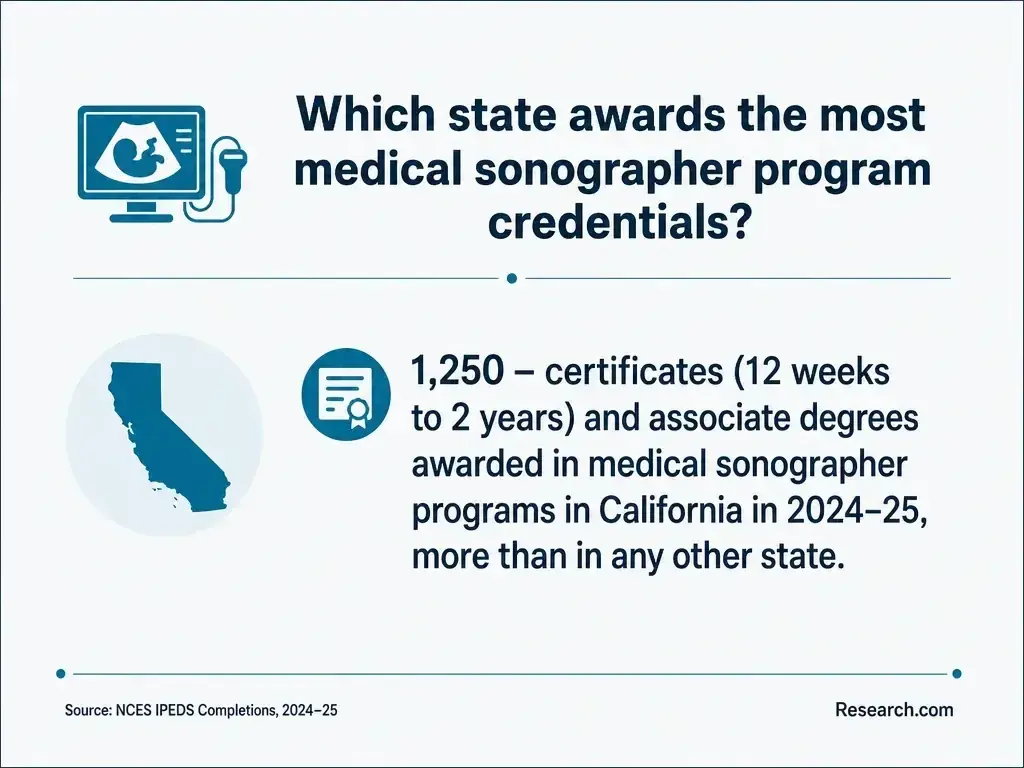
There is no defensible single San Jose average that covers every certificate, diploma, and associate degree pathway. Published tuition can also omit costs that differ sharply by placement and schedule. Request a written, program-specific estimate rather than using an institution-wide price as your budget.
For a like-for-like comparison, ask each provider to itemize these job-readiness costs:
- Tuition, mandatory fees, books, software, uniforms, and any required scanning-lab supplies.
- Health screening, immunizations, background checks, certification exam charges, and travel or parking for clinical rotations.
- Income you may forgo while attending classes and placements, less grants, scholarships, eligible aid, or documented employer support.
Check federal-aid eligibility for the specific institution and program through Federal Student Aid, and ask about California aid and local workforce funding without assuming every private career program qualifies. For return on investment, compare net cost and likely borrowing with your current earnings, completion prospects, plausible post-training earnings, and the time needed to repay the investment. A low sticker price is not good value if required clinical access is uncertain.
A school may award a certificate, diploma, or associate degree. School completion is separate from professional certification. The American Registry for Diagnostic Medical Sonography (ARDMS), for example, sets its own prerequisites and examinations; students should verify the applicable pathway and specialty directly with ARDMS. An academic credential is not automatically an ARDMS credential.
Institutional accreditation concerns the school. Programmatic accreditation concerns a particular training program; CAAHEP provides a directory for checking relevant diagnostic medical sonography programs. California school authorization is a different question again. Ask for the exact program name and campus when checking any status, because recognition of an institution does not establish recognition of every program it offers. An accelerated bachelor degree comparison does not resolve these occupation-specific distinctions.
Admissions rules vary. Programs may require prerequisite science or math courses, an application assessment, an interview, or evidence of prior healthcare education or experience; clinical sites may also require health clearances and a background check. Verify each requirement with the provider before assuming that admission to the school means admission to its sonography cohort.
If you already have healthcare training, ask whether documented coursework or experience earns transfer credit or advanced standing and whether that changes the clinical requirements. If you are starting without that background, check that the program accepts entry-level applicants rather than marketing a certificate designed for practicing clinicians. In either case, request the written admissions criteria and clinical-placement conditions before enrolling.
Core training generally combines anatomy, ultrasound physics and instrumentation, image acquisition, patient care, and supervised clinical scanning. Students learn to position patients, select appropriate imaging techniques, document examinations, and recognize when an image needs improvement. The U.S. Bureau of Labor Statistics notes that sonographers work closely with patients and physicians, so communication and sound clinical judgment matter alongside equipment skills.
Curricula are not interchangeable. Ask which specialties have dedicated instruction and clinical cases, how scanning competence is assessed, and who supervises students at each site. As imaging equipment and workflows change, practice with current systems is valuable - but it does not compensate for too little supervised patient experience.
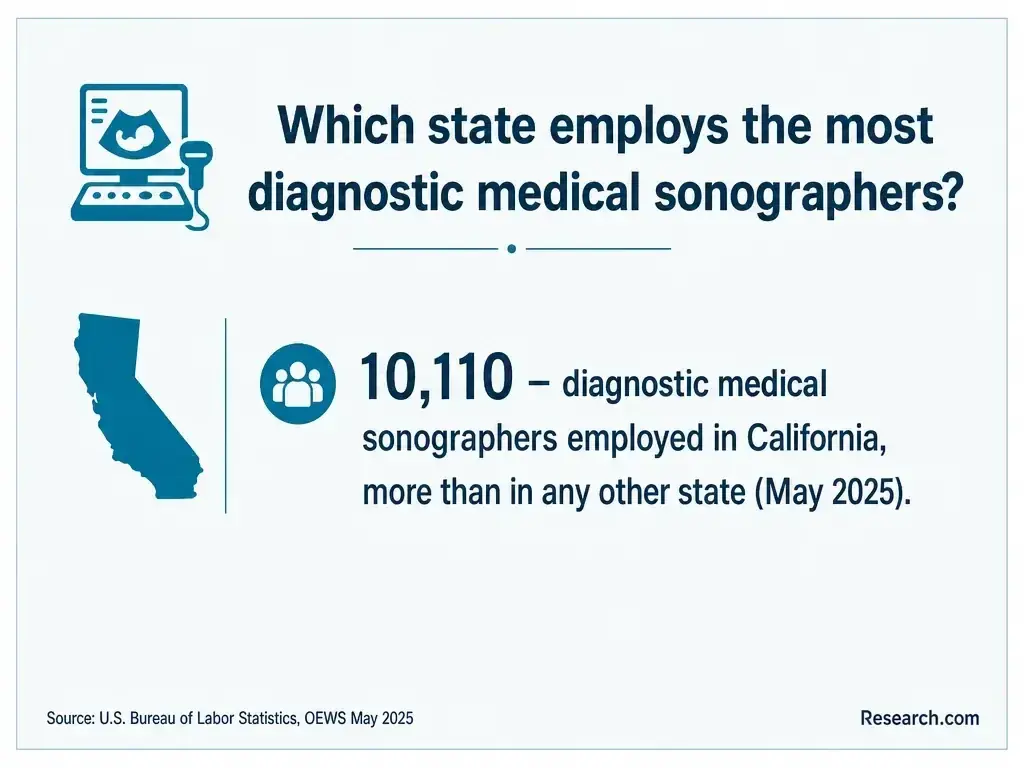
California does not generally require a separate occupational license to work as a diagnostic medical sonographer; this should not be confused with California's rules for other imaging occupations. Professional certification is a separate, often employer-important qualification. Confirm the current requirements for your intended job and specialty with employers and the relevant certifying body rather than treating the absence of a general state license as an absence of entry standards.
ARDMS certification requires applicants to meet an applicable prerequisite pathway and pass the required examinations, according to ARDMS. CAAHEP programmatic accreditation can matter to a certification route, but neither school accreditation nor state authorization alone guarantees exam eligibility. Before enrolling, obtain written answers identifying the program's accreditation status, the certification pathway it supports, and any experience required after completion.
The best choice is the program that offers an attainable route from your current qualifications to supervised competence and the credential your intended employers recognize. A ranking is a starting point, not a substitute for checking conditions that may change between application and clinical placement.
Use the following sequence when speaking with admissions and program staff:
- Identify the sonography specialty and entry-level jobs you want, then ask local employers which credentials they expect.
- Verify the specific program's current CAAHEP status, the school's institutional accreditation and California authorization, and the certification pathway claimed.
- Request a written breakdown of lab hours, supervised clinical requirements, placement locations, scheduling, and responsibility for finding a site.
- Compare full costs, aid eligibility, completion and certification-exam outcomes where available, and the effect of the schedule on your earnings.
Be cautious if a provider promises certification or employment, will not identify clinical sites or eligibility rules, or quotes tuition without mandatory charges. Gurnick Academy of Medical Arts and Institute for Business and Technology are examples of providers a San Jose-area student might investigate; confirm each one's current sonography offering, campus arrangements, and approvals directly rather than assuming the same options are available at every location.
Entry-level work may lead to deeper practice in a specialty, additional professional credentials, clinical instruction, or lead-sonographer responsibilities. Each step depends on experience, employer needs, and the requirements of the relevant certifying organization; an initial school credential does not confer every specialty qualification.
For a career changer, the practical comparison is between a program that supports entry into sonography and one aimed at a different healthcare role. Broader questions such as what's the easiest bachelor's degree do not tell you whether a sonography program provides the scanning experience and certification route needed for your intended job.
The U.S. Bureau of Labor Statistics projects 13.9% national employment growth for diagnostic medical sonographers from 2025 to 2035. That is an occupation-wide projection, not a forecast of San Jose vacancies or an employment rate for any school's graduates. It supports considering the field, but not taking on debt without checking local opportunities.
Review current Bay Area postings for required specialties, credentials, shifts, and experience. Then ask programs where recent students completed clinical rotations and whether they publish verifiable employment outcomes for the specific sonography cohort. Those details are more useful for planning a first job than a national projection alone.
Best Diagnostic Medical Sonographer Training Programs & Trade Schools in San Jose for 2027
Education is a consequential investment, so the Research.com team designed the ranking to compare sonography programs with other programs in the same occupation and location. Only programs with completions reported to IPEDS are included. That makes the ranking useful for comparing eligible schools, but it does not mean an unlisted training provider lacks approval or quality.
Best-program rankings evaluate student outcomes, earnings and return on investment, costs and debt, and quality and recognition. Programmatic accreditation or relevant industry recognition accounts for 20% of the score, institutional accreditation for 10%, and student support services for 10%. The remaining 60% covers completion and retention, earnings, tuition, attendance costs, debt - including debt held by students who withdrew - and federal loan default rates. An entropy-based method gives more weight to indicators that vary more across programs. Most-affordable-program rankings score only tuition, attendance cost, median debt, and default rates using that method; accreditation is not part of the affordability score.
The team used the following sources to check reported education data and relevant recognition. Some cover other trades and are not sonography accreditation standards:
- IPEDS database - program completions and institutional data.
- National Center for Education Statistics - federal education data and definitions.
- College Scorecard database - institutional costs, debt, and outcomes where reported.
- Peterson's database - supplementary institution and program information.
- Commission on Accreditation of Allied Health Education Programs (CAAHEP) - relevant allied-health program accreditation.
- Accrediting Bureau of Health Education Schools (ABHES) - health-education accreditation information.
- Commission on Dental Accreditation (CODA) - recognition information for dental programs, not sonography.
- Dental Assisting National Board (DANB) - dental-assisting credential information, not sonography.
- National Center for Construction Education and Research (NCCER) - construction-training recognition, not sonography.
- Apprenticeship.gov Partner Finder - apprenticeship-provider information where relevant.
Use the ranking to narrow your choices, then confirm each sonography program's current accreditation, clinical placements, certification pathway, and total charges directly. More detail on the approach appears on the Research.com methodology page.


Frequently asked questions about medical sonographer programs in San Jose
Can I become a sonographer entirely online?
No entirely remote course of study can provide the supervised patient scanning needed for clinical competence. A hybrid program may deliver theory online, but verify where its labs and clinical rotations take place.
Is a certificate enough to become a sonographer?
It can be a pathway for an applicant who meets that program's prerequisites, but the certificate alone does not establish certification eligibility. Check its clinical training and the certifying body's applicable rules.
Is CAAHEP accreditation the same as school accreditation?
No. CAAHEP accredits eligible allied-health programs; institutional accreditation applies to a school. Check both at the specific program and campus you plan to attend.
Does California require a sonographer license?
California does not generally have a separate diagnostic medical sonographer occupational license. Employers may still require professional certification, so check job postings and certification prerequisites.
What should I ask about a clinical placement?
Ask who secures it, where it is located, when it starts, what supervision is provided, and whether completing it supports your intended certification pathway.
- U.S. Bureau of Labor Statistics - Diagnostic Medical Sonographers and Cardiovascular Technologists and Technicians
Used to verify salary, employment outlook, and typical education requirements.
https://www.bls.gov/ooh/healthcare/diagnostic-medical-sonographers.htm - CAAHEP - Find an Accredited Program
Used to verify programmatic accreditation or industry recognition of programs.
https://www.caahep.org/students/find-an-accredited-program - ARDMS - Certification
Professional certification reference for graduates of this occupation.
https://www.ardms.org/ - Gurnick Academy of Medical Arts - official website
Official school website (programs, tuition, admissions).
https://www.gurnick.edu/ - Institute for Business and Technology - official website
Official school website (programs, tuition, admissions).
https://ibt.edu/