
Most Affordable Medical Assistant Schools & Training - Budget-Friendly Medical Assistant Trade Programs in Northeast for 2026

Co-Founder and Chief Data Scientist
Choosing the right medical assistant trade school in the Northeast can feel overwhelming. This article simplifies your decision by featuring a carefully crafted medical assistant trade school programs ranking created by the Research.com team of data scientists. Their data-driven approach helps highlight the best options based on quality and affordability.
By reading this guide, you’ll discover programs that fit your goals and budget. Earning a medical assistant diploma or certification opens doors to a rewarding healthcare career, making your future brighter and more secure. Let’s explore the top schools worth considering for 2026.
Key benefits of finishing medical assistant trade school in Northeast
- Graduates from medical assistant trade schools in the Northeast can expect competitive salaries, typically ranging from $43,000 to $58,000 annually, reflecting the region's strong healthcare demand.
- Career paths are diverse, including roles in hospitals, clinics, and surgical centers, as shown by graduates from popular trade schools who quickly find rewarding positions.
- Completing a medical assistant program online offers flexibility and convenience, allowing students to balance work and study, as experienced by many successful online trade school graduates in the Northeast.
- Most Affordable Medical Assistant Schools & Training - Budget-Friendly Medical Assistant Trade Programs in Northeast for 2026
- What can I expect from medical assistant trade schools in Northeast?
- Where can I work after finishing medical assistant trade schools in Northeast?
What can I expect from medical assistant trade schools in Northeast?
When you enroll in a medical assistant trade school program in the Northeast, expect a dynamic mix of hands-on clinical training and classroom learning that truly prepares you for real healthcare roles. Graduates from schools like Cecil College and Northeastern Technical College often share how they quickly gained confidence through clinical labs where they practiced skills such as taking vital signs, drawing blood, and performing EKGs.
These programs typically require a high school diploma or GED, plus background checks and drug screenings before starting clinical externships. During your externship-often between 160 to over 200 hours-you'll work alongside healthcare professionals in busy clinics or physicians' offices, applying your knowledge in real-world settings. Many students find this phase both challenging and rewarding, as it helps them build professional connections and feel ready to enter the workforce.
Courses also cover administrative skills like appointment scheduling and insurance billing, so you'll be well-rounded. Upon completion, you'll be eligible to take nationally recognized certification exams, a key step that graduates say opens doors in a competitive job market. Financial aid options can make this journey accessible, giving you peace of mind as you invest in your future.
Where can I work after finishing medical assistant trade schools in Northeast?
After finishing a medical assistant trade school program in the Northeast, graduates often find themselves welcomed in diverse healthcare settings. Many quickly land roles in physician offices or outpatient clinics, where they handle everything from patient intake to basic medical procedures-tasks that give them hands-on experience and build confidence. Graduates tell me they appreciate working in community health practices, especially in states like Connecticut and New York, where demand stays high and the work feels meaningful every day.
Some graduates transition into hospital environments, joining large systems such as Albany Med Health System or WMCHealth Network. In these settings, they support departments like internal medicine or cardiology, gaining exposure to specialty care areas. These jobs often come with competitive pay and benefits, offering a strong career foundation.
Others find fulfilling opportunities in urgent care centers or specialty clinics like dermatology, enjoying perks like flexible schedules or sign-on bonuses from employers like ProHealth Physicians. Some even choose home health agencies, combining patient care with administrative duties in more personal, residential settings. This variety makes the Northeast a great place to start and grow a medical assistant career.
After finishing a medical assistant trade school program in the Northeast, you can expect to start earning between $36,000 and $39,000 annually. Many graduates from popular trade schools in cities like New York and Boston share how this starting salary helped them confidently cover living expenses while gaining hands-on experience.
As you gain experience or earn certifications such as the Certified Medical Assistant (CMA), your salary can rise significantly. Some graduates working in hospitals or surgical centers report earning between $50,000 and $58,000, reflecting the higher demand and specialized skills they developed during their training.
For example, a graduate from a well-known Northeast trade school mentioned how their hourly wage of around $21 to $22 in New York City allowed them to comfortably afford city life while building their career. Meanwhile, those in smaller towns like North East, Pennsylvania, might see starting wages closer to $14.47 per hour but still appreciate the steady income and job security.
Overall, medical assistant trade programs in the Northeast offer promising financial rewards that grow with your skills and credentials.
- Admission requires a high school diploma or GED, plus a background check and drug screening for clinical externships.
- Programs typically last nine months to one year, with 160 to 245 hours of clinical externship training.
- Tuition ranges from $4,000 to $15,000 depending on the school and additional fees, with financial aid often available.
- Accreditation by CAAHEP or similar bodies is needed to sit for certification exams like CMA or CCMA.
- Entry-level salaries range from $37,000 to $42,000 annually, increasing with experience and specialization to over $48,000.
Most medical assistant trade school programs in the Northeast typically take about 9 to 12 months to complete. This timeframe fits well for those eager to enter the healthcare field quickly without sacrificing quality training. Graduates from well-known trade schools in cities like Boston and Philadelphia often share how the focused pace helped them stay motivated and on track, balancing school with work or family commitments.
One graduate recalled feeling empowered after finishing an intensive 10-month program at a popular trade school in New York, where hands-on clinical experience was integrated early on. This real-world practice boosted confidence and made the learning process feel relevant and exciting.
Another graduate from a respected trade school in New Jersey noted that the structured yet flexible schedule allowed them to complete coursework efficiently while gaining valuable certifications. For many students in the Northeast, this completion time means starting a new career sooner and with a strong foundation.
The main difference between online and on-campus medical assistant trade school programs in the Northeast is how you experience learning and hands-on training. Online programs, popular among busy students juggling work or family, let you access lectures and assignments anytime, offering great flexibility. However, every online student still completes a crucial in-person clinical externship, usually around 160 to 245 hours, at a local healthcare facility. This real-world experience is essential because skills like drawing blood or performing EKGs simply can't be learned online.
On-campus programs at schools like Massasoit Community College or Northeast Technical Institute provide face-to-face instruction with direct support from instructors and access to fully equipped labs. Graduates often recall how practicing alongside classmates in a hands-on environment boosted their confidence and prepared them well for clinical externships. Both formats typically last 7 to 9 months and lead to the same certification eligibility, so whether you choose online or on-campus, you'll be ready to take the Certified Medical Assistant exam and step confidently into your medical career.
The average cost medical assistant trade school program Northeast varies depending on whether you attend a community college or a private institution. For example, graduates from Middlesex Community College in Massachusetts often mention that the annual in-state tuition of about $4,274 makes the program accessible without overwhelming debt. Out-of-state students, however, should be prepared for a higher tuition fee closer to $9,218. These figures align with the tuition fees medical assistant programs Northeast, highlighting the regional pricing trends students encounter.
Many graduates from private schools like Hunter Business School and Saint Paul's School of Nursing in New York share that, while tuition fees are higher (around $13,440 and $13,857 respectively), the programs tend to be accelerated and offer more personalized attention. This trade-off often appeals to those eager to complete training quickly and start their careers. However, tuition typically covers only the basics; additional costs such as textbooks, uniforms, and certification exams can add up. For instance, the certification exam fee alone is $125 for AAMA members and $250 for non-members, a detail often highlighted by graduates budgeting their expenses.
Students who have successfully graduated encourage prospective enrollees to explore scholarships and grants early, as financial aid plays a crucial role in easing these financial demands. By understanding these costs comprehensively and investigating assistance options, you can make a well-informed decision and focus on the rewarding experience ahead as you consider the pros of being a medical assistant.
Medical assistant students in the Northeast commonly benefit from federal financial aid, which can significantly ease the cost of training. Graduates from schools like Northeast Technical Institute often highlight how completing the FAFSA opened doors to Federal Pell Grants-need-based funds that don't require repayment. This grant, combined with Direct Subsidized and Unsubsidized Loans, helped many manage tuition without overwhelming debt.
State grants, such as the Maine State Grant, further reduce expenses for students living in those areas. Several graduates recall applying for scholarships through organizations like the American Association of Medical Assistants, with awards ranging from $500 to $1,000, which made a noticeable difference in their budgets.
Some trade schools also offer flexible payment plans, making monthly tuition installments more manageable. For students receiving SNAP benefits, certain programs even provide free tuition, creating a pathway to start training without financial stress.
Veterans enrolled in these programs often use GI Bill® benefits to cover costs, and career advisors at Northeast schools are praised for helping students navigate these options to maximize aid and focus on their future careers.
When preparing to enroll in a medical assistant trade school program in the Northeast, you'll find that most schools require a few key prerequisites designed to ensure your success. Graduates from popular Northeast trade schools often share how these requirements helped build a solid foundation before starting hands-on training.
Typically, you must have:
- A high school diploma or GED - this is essential as it confirms your basic academic skills.
- Proof of immunizations and a recent physical exam - common in healthcare programs to keep everyone safe while learning.
- Basic CPR certification - some schools ask for this upfront, while others include it early in the curriculum.
- Background check and drug screening - because you'll be working in clinical settings, trustworthiness and safety are priorities.
One graduate recalls how completing these prerequisites gave them confidence walking into a busy clinic setting during their externship. Knowing they met all requirements ahead of time made the transition smoother and less stressful. Many Northeast schools also recommend strong communication skills and a genuine passion for helping others-qualities that shine through in interviews or application essays. These prerequisites aren't just hoops to jump through; they prepare you to thrive in a rewarding healthcare career.

In medical assistant trade schools across the Northeast, you'll dive into a well-rounded set of courses that prepare you for both the front and back office. Graduates often reflect on how mastering medical terminology, insurance billing, electronic health records (EHR), and appointment scheduling gave them confidence to handle real-world administrative tasks smoothly.
On the clinical side, expect hands-on learning in courses like anatomy and physiology, vital signs measurement, phlebotomy, EKG administration, injections, and assisting with minor office procedures. Many students from popular Northeast trade schools share how practicing these skills in simulated labs helped them feel ready and capable before stepping into actual healthcare settings.
- Core administrative coursework includes managing patient records and insurance claims.
- Clinical courses focus heavily on practical skills performed under instructor supervision.
- Programs often feature a 160-225 hour clinical externship to gain real-world experience.
This blend of theory and practice ensures you're not just learning in a classroom but also building the confidence to thrive in busy physician offices or clinics throughout the Northeast.
In medical assistant trade school programs in the Northeast, students can expect to explore several specialized medical assistant program specializations in Northeast designed to prepare them for dynamic roles. One popular focus is the Clinical Medical Assistant track, where graduates describe hands-on lab experiences using EKG machines and injection simulators that build confidence for direct patient care. For example, students at Lincoln Technical Institute benefit from a clinical externship that feels like a real-world launchpad into healthcare.
Another common path is Administrative Medical Assistant training, where learners develop skills in medical billing, coding, scheduling, and patient communication. Graduates from the Porter and Chester Institute highlight how these administrative abilities open doors to office management roles that blend patient interaction with organization.
Hybrid models that combine online courses with in-person training, like those at the American Institute in West Hartford, give flexibility without sacrificing practical skills. Plus, programs like the Community College of Rhode Island add unique value through clinical externships that immerse students in varied care settings. For those weighing career options, comparing a medical assistant vs medical admin assistant salary could clarify the best fit for your goals.
This specialized medical assistant training in Northeast is crafted to equip you with both clinical know-how and administrative prowess, ensuring a well-rounded foundation to thrive in healthcare.
When choosing the best medical assistant trade school program in Northeast, start by verifying proper accreditation from agencies like CAAHEP or ABHES to ensure your training meets industry standards and qualifies you for certification exams. Graduates from schools such as Springfield Technical Community College often share how accreditation gave them confidence entering the workforce.
Flexibility matters-look for programs offering hybrid formats or evening classes to fit your lifestyle. Many graduates from Mount Wachusett Community College appreciate the 9:1 student-to-faculty ratio, which allowed personalized support and hands-on learning. This factor is crucial when you want real-world readiness.
Cost and financial aid options also weigh heavily. Schools like STCC are praised for affordability while providing solid externship placements that boost job prospects. When exploring how to compare medical assistant schools Northeast, consider these elements alongside reputation and graduate success rates.
For a clear perspective on the difference between a medical assistant and a physician assistant, understanding your program's scope can help align your career goals.

Graduates of medical assistant trade school programs in Northeast commonly find rewarding medical assistant job opportunities in Northeast that leverage their versatile training. Many step directly into roles as Clinical Medical Assistants, working hands-on with patients in busy physician offices and outpatient clinics, where mastering skills like taking vital signs and drawing blood brings daily satisfaction. Others thrive as Administrative Medical Assistants, managing appointments, insurance billing, and patient records, critical for keeping healthcare practices running smoothly.
Some graduates enhance their prospects by exploring specialized career options after medical assistant trade school Northeast, such as becoming Phlebotomists, Optometry Technicians, or Medical Office Managers. With regional demand growing faster than average, graduates from well-known trade schools appreciate the chance to start jobs that offer steady income and meaningful patient interaction.
Many share how using their credits to pursue an associate degree intensified their career growth. Also, since licensing requirements vary, it's wise to check are medical assistants licensed by each state to plan your path effectively.
The medical assistant job outlook in Northeast is bright and steadily growing, especially for graduates from well-known trade schools in the region. Many graduates find rewarding positions in bustling urban centers like New York City and Providence, where healthcare facilities eagerly hire trained medical assistants for hospitals, clinics, and specialty practices. For example, graduates from popular Northeast trade schools often share how their hands-on training and certification helped them secure jobs with starting salaries between $19 and $21 per hour.
Demand for medical assistants in Northeast varies by state but remains strong overall. Rhode Island, for instance, offers one of the highest job concentrations in the country, making cities like Providence excellent launchpads for new graduates. Employers here value certified assistants and often include incentives such as sign-on bonuses or premium pay for credentialed staff, which boosts motivation and job satisfaction.
Students considering this career can also explore affordable medical assisting online programs to complement their studies or prepare for certification, enhancing employability in the region's competitive market.
Most Affordable Medical Assistant Schools & Training - Budget-Friendly Medical Assistant Trade Programs in Northeast for 2026
# 1 position
Bunker Hill Community College - Clinical/Medical Laboratory Assistant.
certificate or diplomaBunker Hill Community College offers a Clinical/Medical Laboratory Assistant program with a hybrid format that includes some distance education. The curriculum prepares students to perform waived testing procedures, phlebotomy, and laboratory support tasks under professional supervision. Instruction covers clinical procedures, laboratory tests, equipment operation, safety, and communication skills. The program is accredited by the New England Commission on Higher Education. Annual in-state tuition is $5,520, and median earnings one year after completion reach $44,141.
# 2 position
Bunker Hill Community College - Allied Health and Medical Assisting Services, Other.
certificate or diplomaBunker Hill Community College offers a hybrid Allied Health and Medical Assisting Services program with some distance-education options. The annual in-state tuition is $5,520. Graduates have median earnings of $44,141 one year after completing the program. This instructional program covers allied health and medical assisting services not listed elsewhere. It is accredited by the New England Commission on Higher Education.
# 3 position
Mount Wachusett Community College - Allied Health and Medical Assisting Services, Other.
associateMount Wachusett Community College offers a hybrid program in Allied Health and Medical Assisting Services, Other, providing some distance-education options. The annual in-state tuition is $6,000. Graduates have a median earning of $45,300 one year after program completion. The program is accredited by the New England Commission on Higher Education. It covers instructional content not listed in other allied health and medical assisting programs.
# 4 position
Mount Wachusett Community College - Allied Health and Medical Assisting Services, Other.
certificate or diplomaMount Wachusett Community College offers a hybrid program in Allied Health and Medical Assisting Services, Other, with an annual in-state tuition of $6,000. The program is accredited by the New England Commission on Higher Education. Graduates have median earnings of $45,300 one year after completion. This instructional program covers allied health and medical assisting services not specified elsewhere, providing flexible learning options for students.
# 5 position
Delaware Technical Community College-Terry - Clinical/Medical Laboratory Assistant.
associateDelaware Technical Community College-Terry offers a Clinical/Medical Laboratory Assistant program with a hybrid format, including some distance education. The program prepares students to perform waived testing procedures, phlebotomy, and support laboratory teams under supervision. Instruction covers clinical procedures, laboratory tests, laboratory mathematics, computer technology, equipment operation, sterilization, safety, and communication skills. Annual in-state tuition is $4,965, and median earnings one year after completion are $38,769. The program is accredited by the Middle States Commission on Higher Education.
# 6 position
Laurel Technical Institute - Clinical/Medical Laboratory Assistant.
associateThe Clinical/Medical Laboratory Assistant program at Laurel Technical Institute is a hybrid course preparing students to perform waived testing procedures, phlebotomy, and support laboratory teams under supervision. It covers clinical procedures, laboratory tests, lab mathematics, computer technology, equipment operation, sterilization, safety, and communication skills. The annual in-state tuition is $11,470, and median earnings one year after completion are $18,862.35. The program is accredited by the Accrediting Commission of Career Schools and Colleges.
# 7 position
Pennsylvania Institute of Technology - Allied Health and Medical Assisting Services, Other.
associateThe Allied Health and Medical Assisting Services, Other program at Pennsylvania Institute of Technology offers a hybrid learning format with some distance-education options. The annual in-state tuition is $14,445. Graduates have median earnings of $41,788 one year after completing the program. This instructional program covers allied health and medical assisting services not listed elsewhere. It is accredited by the Middle States Commission on Higher Education.
# 8 position
Pennsylvania Institute of Technology - Allied Health and Medical Assisting Services, Other.
certificate or diplomaThe Allied Health and Medical Assisting Services, Other program at Pennsylvania Institute of Technology offers a hybrid format with some distance-education options. The annual in-state tuition is $14,445. Graduates earn a median salary of $41,788 one year after completion. This program is accredited by the Middle States Commission on Higher Education. It covers instructional content not listed in other allied health and medical assisting programs.
# 9 position
University of Maine at Presque Isle - Clinical/Medical Laboratory Assistant.
associateThe University of Maine at Presque Isle offers a Clinical/Medical Laboratory Assistant program with a hybrid format, combining distance education and on-campus instruction. The program trains students to perform waived testing procedures, phlebotomy, and other laboratory support tasks under supervision. Tuition for in-state students is $8,990 annually. Graduates earn a median salary of $35,813 one year after completion. The program is accredited by the New England Commission on Higher Education.
# 10 position
Plaza College - Allied Health and Medical Assisting Services, Other.
associatePlaza College offers a hybrid program in Allied Health and Medical Assisting Services, Other, accredited by the Middle States Commission on Higher Education. The annual in-state tuition is $15,450. Graduates earn a median salary of $32,837 one year after completing the program. This instructional program covers allied health and medical assisting areas not listed elsewhere, providing flexible learning options through partial distance education.
Frequently Asked Questions about medical assistant
After completing a medical assistant trade school program in the Northeast, graduates should focus on gaining certification to improve employability. The Certified Medical Assistant (CMA) credential, offered by the AAMA, is widely recognized and often preferred by employers in the region. According to the U.S. Bureau of Labor Statistics, medical assistant jobs in the Northeast are expected to grow by 15% through 2031, which is faster than the average for all occupations.
Networking through local healthcare facilities and job fairs can help graduates connect with potential employers. Additionally, maintaining updated resumes and practicing interview skills are essential steps. Many trade schools also offer career services that assist with job placement and resume building, which can be valuable for new graduates entering the competitive healthcare job market.
Employers in the Northeast highly value medical assistant graduates who demonstrate strong clinical skills alongside excellent interpersonal abilities. According to the U.S. Bureau of Labor Statistics, proficiency in patient care tasks such as taking vital signs, administering injections, and performing EKGs is essential. Equally important are communication skills, as medical assistants often serve as the link between patients and healthcare providers.
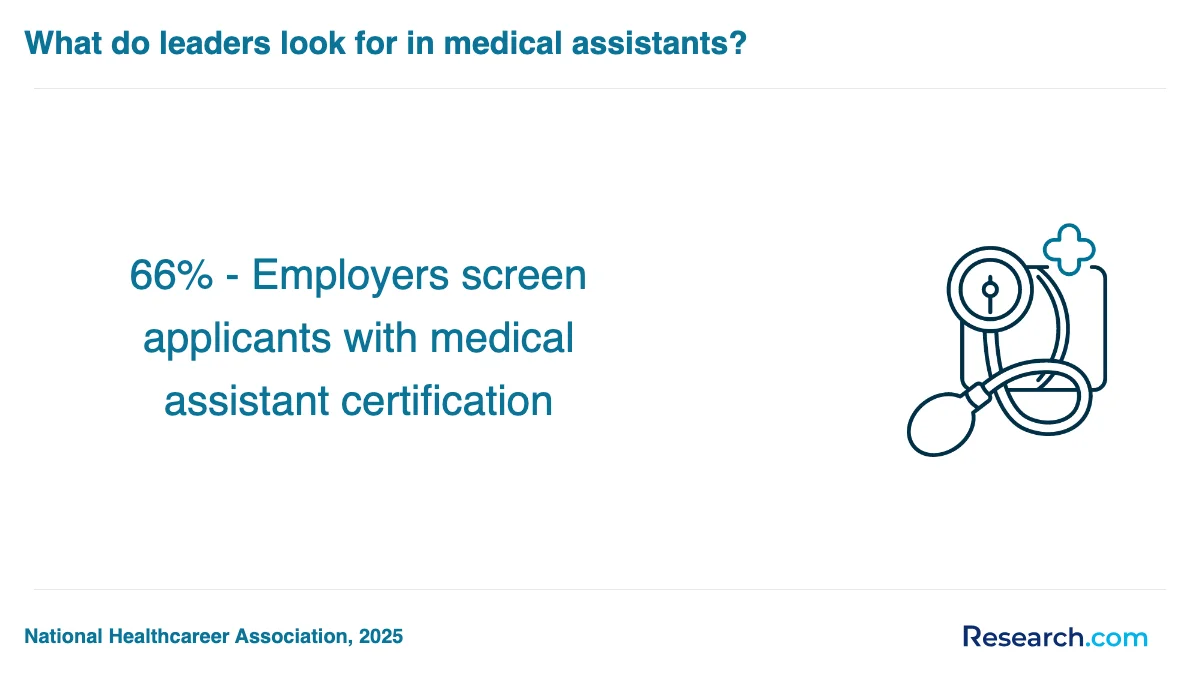
Attention to detail and familiarity with electronic health records (EHR) software are also critical, reflecting the increasing digitization of healthcare. Industry reports from the American Association of Medical Assistants highlight that about 70% of employers prioritize candidates with certification and practical experience gained through accredited trade programs.
Finding internships relevant to medical assistant trade school programs in the Northeast involves several practical steps. Start by contacting your school's career services or internship coordinator, as many trade schools maintain partnerships with local healthcare providers. These partnerships can often lead to exclusive internship opportunities.
Additionally, explore hospitals, clinics, and urgent care centers in your area. The Northeast hosts numerous medical facilities, such as Massachusetts General Hospital and NewYork-Presbyterian, which frequently offer internships for medical assistant students. According to the U.S. Bureau of Labor Statistics, healthcare support roles in this region are expected to grow by 12% through 2030, increasing internship availability.
Utilize online job portals specific to healthcare internships and professional networks like LinkedIn. Local workforce development boards also provide resources tailored to students seeking hands-on experience in medical settings.
Obtaining a medical assistant trade school diploma in the Northeast significantly enhances career mobility and advancement opportunities. According to the U.S. Bureau of Labor Statistics, the healthcare sector in this region is growing faster than the national average, creating strong demand for credentialed medical assistants. A diploma demonstrates practical skills and knowledge that employers value, often leading to quicker job placements and higher starting salaries compared to non-certified candidates.
Graduates of accredited programs are also better positioned to pursue certifications like the CMA (Certified Medical Assistant), which can further increase earning potential and eligibility for supervisory roles. Data from the National Healthcareer Association shows that certified medical assistants in the Northeast earn approximately 10-15% more than those without certification.
Moreover, many trade schools in the Northeast offer career services and clinical externships, helping students build professional networks essential for advancement. Overall, a diploma serves as a foundational credential that facilitates upward mobility within healthcare facilities, clinics, and hospitals across the region.
Students pursuing medical assistant trade school education in the Northeast can benefit from part-time jobs that build relevant skills. Positions such as medical receptionist, phlebotomy technician assistant, or patient care aide are common options. According to the U.S. Bureau of Labor Statistics (BLS), the Northeast region has a higher concentration of healthcare facilities, increasing opportunities in outpatient care centers and clinics.
These roles provide hands-on experience with patient interaction, medical records, and basic clinical tasks, complementing classroom learning. Additionally, many employers offer flexible schedules ideal for students balancing coursework. Gaining part-time employment in healthcare settings can also enhance resumes and improve job prospects after graduation.
Yes, there are affordable Medical Assistant degree programs available near Northeast that can be looked into for those interested in entering the field. Several community colleges and vocational schools offer these programs, with some providing flexible scheduling and financial aid options to suit different needs. To find a program near me, consider using resources like Research.com to explore various options based on location, tuition rates, and program length.
- Online Medical Assistant Certificate Program | Self-Paced Course https://www.uscareerinstitute.edu/online-medical-assistant-school
- Medical Assistant Technical Diploma | Northcentral Technical College https://www.ntc.edu/academics-training/programs/all/technical-diploma/medical-assistant
- Accelerated Clinical Medical Assistant Program | CALRegional https://calregional.com/program-category/medical-assistant-program/
- Medical Assistant Certificate Program https://pmi.edu/on-campus-programs/certificate/medical-assistant/
- Medical Assistant Schools | Flexible and Comprehensive Training https://www.trade-schools.net/health-care/medical-assistant
- Medical Assisting Certificate Program | Kaiser Permanente School of Allied Health Sciences https://kpsahs.edu/medical-assisting-certificate-program
- Medical Assistant Training Program | CE https://www.ce.msstate.edu/medical-assistant-training-program
- Medical Assistant | Gateway Technical College https://www.gtc.edu/programs/technical-diplomas/medical-assistant
- What is the Next Step After Becoming a Medical Assistant? https://www.herzing.edu/pathway/whats-next-after-medical-assisting
- What is the Next Level After Medical Assistant? | Goodwin University https://www.goodwin.edu/enews/next-step-after-medical-assistant/


