# 1 position


Audited and Verified:
Our Editorial and Data Verification Process
Research.com uses government datasets, official education statistics and primary institutional information to support its career and degree guides. Our review process checks factual accuracy, occupational definitions, source dates and the requirements associated with the credentials discussed.
How This Article Was Fact-Checked
Our editorial team verifies salary estimates, employment projections, education requirements and program information against original data providers and official organizations. Salary figures are checked against the relevant occupational definitions and reporting periods. Information about licensure, accreditation and required in-person training is reviewed separately.
Fact-checked and verified on:

Co-Founder and Chief Data Scientist

Reviewed by Karolina Broda
Fact-Checker and Data Verification
Choosing interior design training in New York means deciding how much time and money to invest before you know which work your credential will qualify you to do. The U.S. Bureau of Labor Statistics reports a $67,190 national median annual wage for interior designers in May 2025, but that is not a starting-pay estimate. This guide compares training routes, costs, practical experience, and New York's certification rules. It also features a Best Interior Design Trade Schools in New York for 2027 ranking created by the Research.com team of data scientists to help students identify programs worth considering.
Expect a mix of design studio work and technical communication: measuring spaces, developing layouts, selecting materials, and presenting a design that a client or project team can understand. A substantial program should make you produce and revise work, not just watch demonstrations. For prospective students, the central distinction is between learning to decorate a space and learning to document interiors while accounting for accessibility, building systems, and applicable codes.
New York options include short vocational certificates, continuing-education training, and associate-degree programs at eligible colleges. Fashion Institute of Technology, The New School, and New York School of Interior Design are examples of institutions to investigate, but offerings and credential names must be checked for the intended entry term. A certificate focused on software can suit someone who already has design experience; a newcomer seeking a broader design-assistant role may need more studio work, technical drawing, and portfolio feedback.
Interior design does not have a standard trade apprenticeship that every entrant must complete. Paid work with a design studio, showroom, furniture business, or contractor can nevertheless provide valuable project exposure. Ask whether any advertised internship is arranged by the school, required for completion, paid, and available to students at your campus or in your study format.
Potential settings include residential design studios, commercial interiors firms, architecture practices, furniture and kitchen-and-bath showrooms, hospitality businesses, and suppliers of finishes or furnishings. Tasks vary: a showroom role may emphasize products and customers, while a design-office assistant may spend more time on drawings, specifications, and project coordination (U.S. Bureau of Labor Statistics, Occupational Outlook Handbook).
Location changes the opportunity and the cost of reaching it. A student targeting New York City should ask about access to internships and employer projects, then budget for travel to studios, showrooms, and job sites. Someone outside the city should check whether the program has regional employer relationships rather than assuming a city-based placement network will serve them. In either market, request examples of recent entry-level job titles and the portfolio work employers reviewed; a placement claim without those details is difficult to evaluate.
Pay depends on the role, experience, employer, and location. The U.S. Bureau of Labor Statistics reports a $67,190 national median annual wage for interior designers for May 2025. That figure includes experienced workers across the United States; it should not be used as a forecast for a new certificate holder or as a New York wage figure.
Before borrowing against an expected salary, look up the latest New York State Department of Labor or BLS Occupational Employment and Wage Statistics estimate for interior designers in the region where you plan to work. Compare it with actual entry-level advertisements for your target job title. Design assistant, drafter, sales, and showroom positions may have different duties and pay, so an occupational median for interior designers is not an appropriate substitute for their offers. Ask a school whether its earnings figures describe program completers, all attendees, or an institution-wide group.
A narrowly focused software or decorating course may take weeks or months; a more comprehensive certificate commonly spans multiple terms, while a full-time associate-degree program is typically planned around two academic years. Part-time study takes longer. These are planning ranges, not required New York training-hour minimums: there is no universal clock-hour requirement for entry into interior design work. Confirm each program's published credits or contact hours, course sequence, and how often required studios run.
Speed is useful only if it does not leave out the work you need to show an employer. If you are comparing searches for accelerated bachelor degree programs with short occupational training, keep the decisions separate: for an entry-level design role, inspect the actual portfolio projects and technical skills delivered within the shorter timetable. Ask whether previous coursework or documented experience can earn transfer or prior-learning credit, and get any award of credit confirmed in writing before enrolling.
Online instruction can work well for design history, software demonstrations, drafting exercises, and critiques submitted digitally. Campus study can make material libraries, physical samples, measurement exercises, studio equipment, and face-to-face feedback easier to access. A hybrid program may combine those strengths, but "online" does not tell you whether site visits, studio sessions, or an internship are required in person.
The comparison below focuses on the experience a student must arrange, not on an assumption that one format is inherently better.
| Feature | Online or hybrid | On campus |
| Project feedback | Check for scheduled live critiques and marked-up drawings. | Check studio access and frequency of instructor critiques. |
| Materials and site work | May require mailed samples, independent sourcing, or local visits. | May provide shared material libraries and organized site exercises. |
| Additional costs | Suitable computer, software, printing, and any required travel. | Commuting, supplies, and access outside scheduled class time. |
People searching for online degree programs cheap should compare the full cost of an interior design credential separately. A low advertised online price may exclude software, printing, or travel. Neither delivery format by itself establishes eligibility for New York's optional professional certification; verify the specific education and experience rules with the New York State Education Department.
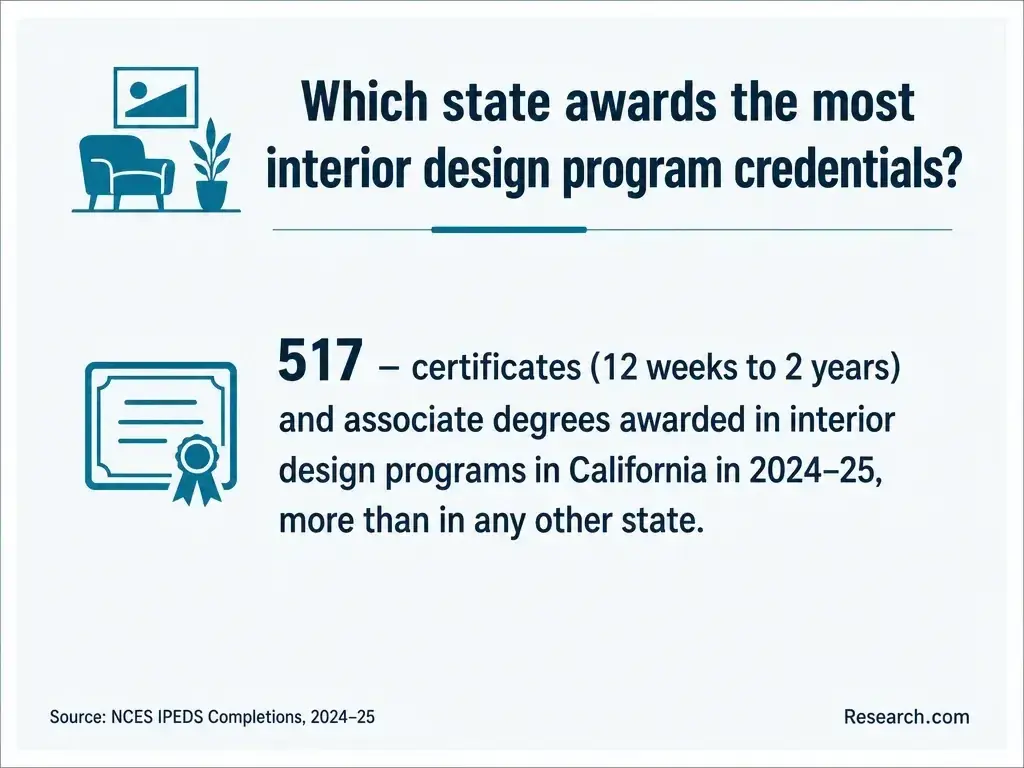
There is no defensible single average for all New York interior design trade training: a short course and an associate-degree program purchase different amounts of instruction, and published prices may include different items. Request a written, program-level estimate for your entry term rather than treating institution-wide tuition as your bill. Public-college resident rates, nonresident rates, and private-school charges may differ; residency and aid eligibility must be confirmed with the provider.
A useful total-cost comparison includes tuition, mandatory fees, books, samples and portfolio materials, a computer capable of running the required software, software subscriptions, printing, transport to classes or sites, and earnings you give up while studying. Add any optional certification-related examination and application costs only if that credential is part of your plan. Offset the total with grants, scholarships, eligible federal or New York State aid, employer assistance, or paid work - but verify eligibility before subtracting an award. Federal Student Aid and the New York State Higher Education Services Corporation publish aid rules; availability depends on the student and program.
Even if you have also explored most affordable online masters, compare this decision on its own costs and expected entry-level work. A lower-priced interior design program may be the better investment if it supplies strong portfolio supervision; an accelerated option may cost more in missed earnings or produce too little work to demonstrate your skills. A realistic return-on-investment estimate considers completion likelihood, aid, debt, earnings before and after training, time horizon, and the value of money over time - not tuition alone.
The award could be a course-completion certificate, a vocational certificate or diploma, or an associate degree. These are not interchangeable with professional certification. Check the exact credential on the school's current catalog and transcript, whether its courses carry transferable academic credit, and whether employers you hope to approach recognize the work demonstrated in its portfolio.
The following comparison identifies what each route is most likely to help you demonstrate. Individual curricula, not credential labels alone, determine readiness.
| Pathway | Likely credential | Best fit | Key limitation to check |
| Focused short course | Completion certificate | Adding a specific software or presentation skill | May offer little technical depth or supervised portfolio work |
| Multi-course vocational program | Certificate or diploma | Building entry-level design and drafting skills | Credits and certification-related education recognition vary |
| College-based program | Associate degree | Seeking broader studio, technical, and general coursework | Requires more time; confirm curriculum and total cost |
| Employer-based learning | Work experience; possible employer training record | Learning while earning in an accessible entry-level role | Instruction and portfolio development may be uneven |
If you arrived through a question such as what's the easiest master's degree to earn, the relevant question here is different: which interior design training credential supplies the projects, technical preparation, and experience your intended job calls for? None of the awards in the table should be presented as New York's "Certified Interior Designer" credential.
Requirements depend on the provider and credential. A short open-enrollment course may have few formal prerequisites; a college-based associate-degree program may request an application, proof of prior schooling, and placement information. Design programs may also request a portfolio or use one to place students, but do not assume every applicant needs an existing design portfolio. Ask whether software proficiency, a suitable computer, or prior drafting coursework is expected on day one.
Also distinguish admission from authorization and accreditation. A New York private career school may fall under New York State Education Department Bureau of Proprietary School Supervision oversight; college programs follow different institutional oversight arrangements. Institutional accreditation concerns the institution, while programmatic accreditation evaluates a particular program. The Council for Interior Design Accreditation is a programmatic accreditor for qualifying interior design programs, not a blanket endorsement of every course at an institution. Verify the particular program and current status with the appropriate school, state regulator, and accreditor. Admission or accreditation alone does not grant professional certification (New York State Education Department; Council for Interior Design Accreditation).
A job-oriented curriculum should develop space planning, measured drawing, color and materials selection, lighting concepts, presentation, and communication with clients and project teams. More technical programs also address construction documents, accessibility, specifications, and how interior work interacts with building systems and codes. Digital drafting and visualization matter, but employers need evidence that you can turn a brief and real-world constraints into a coherent proposal (U.S. Bureau of Labor Statistics, Occupational Outlook Handbook).
Inspect the work students actually complete. A strong portfolio sequence might move from a measured existing space to concept alternatives, a refined layout, material selections, drawings, and a final client presentation, with instructor critique between stages. Ask how many projects receive detailed feedback, whether students work with physical materials or visit sites, and whether the resulting work can be shown to prospective employers. A course covering software commands without applied projects serves a different purpose from a full design training program.
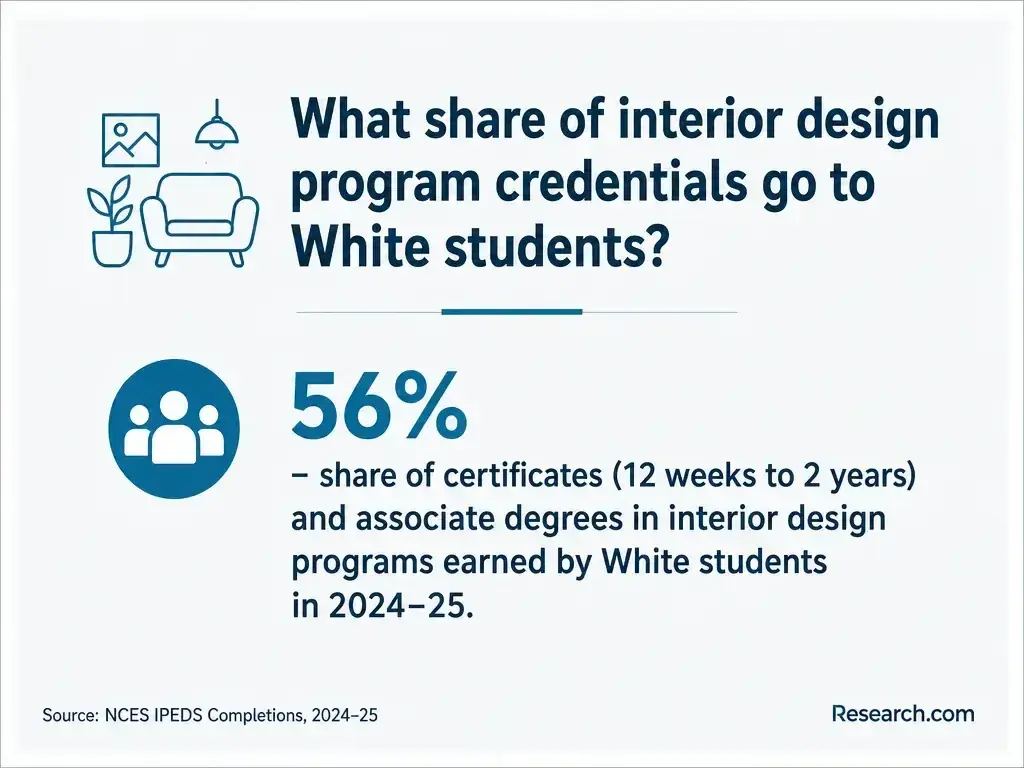
No New York occupational license is required simply to work in interior design. New York does, however, regulate use of the title "Certified Interior Designer." State certification has separate education, experience, and examination requirements; finishing a trade-school program does not automatically satisfy them or authorize use of the title (New York State Education Department, Office of the Professions).
If certification is a longer-term goal, check the New York State Education Department's current rules before paying a deposit. Ask the program which of its courses or credits may count toward the state's education requirement, what documentation it supplies, and how you would obtain qualifying supervised experience. Confirm the applicable examination and experience pathway with the state, not just a recruiter. Professional examinations and voluntary industry credentials are distinct from institutional accreditation, state school authorization, and permission to use New York's protected title.
Start with the job you want to apply for, then work backward to the portfolio, software, technical knowledge, and experience it requires. A ranking can identify candidates, but the best investment is the program whose actual work and credential match that target at a manageable total cost. Before committing, use these questions to test claims that are difficult to judge from a brochure:
A red flag is a promise of a particular salary or certification based solely on enrollment. Another is a "fully online" claim that does not explain how students complete material work, site exercises, or portfolio critiques. Someone with substantial prior experience may get better value from a focused course or paid design-adjacent job; a beginner who needs sustained feedback should be cautious about choosing the shortest program simply because it finishes first.
Training can support entry-level applications for design assistant, drafting or visualization support, showroom consultant, materials coordinator, or related project-support work. Progression into broader design responsibility usually depends on the strength of completed projects and workplace experience, not the initial credential alone. Some professionals later specialize in residential kitchens and baths, workplace interiors, hospitality, or materials; others pursue New York's optional title certification when they meet its separate requirements (U.S. Bureau of Labor Statistics, Occupational Outlook Handbook; New York State Education Department).
Match the working environment to your preferences as carefully as the subject matter. Studio documentation may involve extended independent drafting, while client-facing and showroom roles involve more sales and conversation. Readers exploring best jobs for intoverts should compare those day-to-day duties rather than assuming all design roles require the same amount of client contact. A paid assistant role can be an alternative to additional school-based training if it offers relevant projects and mentoring, though it may not replace education needed for a later certification application.
The U.S. Bureau of Labor Statistics projects 2.7% national employment growth for interior designers from 2025 to 2035. That is a modest national outlook, not a forecast of New York openings or a promise that training will lead directly to a designer position. Replacement hiring, employer requirements, and the mix of residential and commercial work matter to an individual job search.
For a local decision, use the New York State Department of Labor's latest regional projections alongside current vacancies in the area where you can commute or relocate. Read the duties, not just the title: one posting may prioritize technical drawings and specifications, another sales and product knowledge. Compare those requirements with the program's completed projects. This is more useful for assessing employability than treating a statewide or national growth figure as evidence that every graduate will find the same opportunities.
Investing in training is a consequential decision. Research.com created its ranking to help readers compare interior design programs against other programs in the same occupation and location, rather than against unrelated schools. The team evaluates reported outcomes, costs, recognition, and student support; only programs with completions reported to the Integrated Postsecondary Education Data System (IPEDS) are eligible. Consequently, an unranked short course, employer training program, or other provider is not necessarily a poor option - it may simply fall outside that dataset.
For the best-programs ranking, programmatic accreditation or relevant industry recognition accounts for 20% of the score, institutional accreditation for 10%, and student support for 10%. The remaining 60% covers completion and full-time and part-time retention, earnings one year after completion, earnings relative to annual attendance cost, tuition, attendance cost, student debt - including debt held by students who withdrew - and federal loan default rates. An entropy-based method assigns more weight to indicators that vary more across programs. Most-affordable-programs rankings instead score only tuition, attendance cost, median debt, and default rates using entropy-based weights; accreditation and other quality indicators do not enter that affordability score.
The ranking methodology draws on the following sources. Some are cross-occupation reference sources, not interior design accreditors or evidence that a particular interior design program has professional approval:
The ranking can narrow a shortlist, but its score cannot establish whether a specific curriculum meets a student's career or certification goal. Readers can review Research.com's methodology and then verify each finalist's current curriculum, price, authorization, and outcomes directly with the provider.
# 1 position
# 2 position

# 3 position

# 4 position
It can be if it teaches a skill you need for a specific role and produces work you can show employers. It is less persuasive as a stand-alone route to technical design work if it offers little drawing, project feedback, or portfolio development.
Not necessarily. Entry requirements vary by employer and role. Check job postings for your target position; New York's optional "Certified Interior Designer" title has separate state requirements (New York State Education Department).
Some coursework can be completed remotely. Confirm how the program handles measurement, materials, critiques, site work, and any internship before enrolling. Online delivery alone does not establish eligibility for New York professional certification.
No. That is a protected New York title with separate education, experience, and examination requirements. Verify how your proposed training fits those requirements with the New York State Education Department.
Choose based on the work you need to demonstrate. A focused certificate may suit an experienced career changer adding a skill; a beginner seeking broader studio and technical preparation may benefit more from an associate-degree program. Compare projects, total cost, and time to completion.