# 1 position


Audited and Verified:
Our Editorial and Data Verification Process
Research.com uses government datasets, official education statistics and primary institutional information to support its career and degree guides. Our review process checks factual accuracy, occupational definitions, source dates and the requirements associated with the credentials discussed.
How This Article Was Fact-Checked
Our editorial team verifies salary estimates, employment projections, education requirements and program information against original data providers and official organizations. Salary figures are checked against the relevant occupational definitions and reporting periods. Information about licensure, accreditation and required in-person training is reviewed separately.
Fact-checked and verified on:

Co-Founder and Chief Data Scientist

Reviewed by Karolina Broda
Fact-Checker and Data Verification
Choosing HVAC training in San Jose means weighing more than tuition: you need practical skills, a credible credential, and a path to paid work. The U.S. Bureau of Labor Statistics projects 10.9% national growth for HVAC mechanics and installers from 2025 to 2035, making program choice timely. The Research.com team of data scientists created the Best HVAC Technician Trade Schools in San Jose for 2027 ranking to help students identify programs worth considering. This guide explains costs, credentials, certification, apprenticeships, and local career trade-offs so you can make an informed choice.
Expect instruction in electrical circuits, refrigeration, airflow, controls, installation, troubleshooting, and safe tool use. The distinction that matters is how much you practice: a useful entry-level program lets you diagnose faults on operating equipment, take measurements, and explain repairs, not just watch demonstrations. Ask Institute for Business and Technology and CET-San Jose for their current HVAC curriculum and supervised lab schedule rather than assuming similarly titled programs provide equivalent shop time.
San Jose students should also compare school-based training with a registered apprenticeship or employer-sponsored entry role. A school program can offer a more structured start before applying for work; an apprenticeship combines paid employment with related instruction but depends on sponsor openings and selection. Neither route removes the need to demonstrate safe, job-ready skills to an employer. The U.S. Bureau of Labor Statistics identifies postsecondary training and apprenticeships as entry pathways for this occupation.
Training can lead toward residential service, commercial building maintenance, refrigeration, or installation work, depending on the equipment practiced and an employer's entry requirements. In the San Jose area, compare jobs serving homes with roles maintaining offices, retail refrigeration, and other commercial facilities: the schedules, travel, and troubleshooting demands can differ substantially. The U.S. Bureau of Labor Statistics identifies HVAC contractors and other building-service employers as major settings for technicians nationally.
If commercial service is your goal, ask whether training includes three-phase electrical systems, controls, and larger equipment; a residential-only lab may not prepare you equally well. A facilities-maintenance job may offer a route into HVAC experience, but check how much of the work actually involves HVAC systems rather than general repairs.
The latest national median annual wage supplied by the U.S. Bureau of Labor Statistics is $61,010 for May 2025 for heating, air conditioning, and refrigeration mechanics and installers. This is the midpoint for employed workers nationwide - not a local wage, a graduate outcome, or an entry-level offer. Before borrowing for training, compare current San Jose-area job postings by experience level, ask employers about paid travel and overtime, and request any program-specific earnings evidence with its reporting period and sample size.
Pay depends on service versus installation work, equipment specialization, experience, and employer. San Jose's living and commuting costs also mean a higher offer elsewhere in the Bay Area may not produce a better financial result after travel expenses.
There is no single required school duration for an employee HVAC technician in California. A short certificate may focus on entry-level fundamentals; a longer diploma or associate-degree program can include more technical practice and general coursework. Registered apprenticeships take longer because they combine continuing classroom instruction with extensive paid work experience. The U.S. Bureau of Labor Statistics describes these as distinct preparation routes, not interchangeable credentials.
Request each provider's total scheduled clock or contact hours, supervised lab hours, calendar length, and attendance rules. A fast program is attractive if it preserves enough equipment time; a part-time schedule may be better if it lets you keep earning while training. Ask whether prior trade experience can earn advanced standing and whether completed coursework receives credit toward any apprenticeship you are considering - never assume it will.
Electrical theory, diagrams, and some exam preparation can be taught remotely. Charging a system, testing airflow, finding electrical faults, and working safely around live equipment require supervised practice on physical systems. For a first job, prioritize a program with accessible labs or documented employer-based training over one marketed primarily on convenience.
Compare formats by the practical experience they actually provide:
| Format | Potential advantage | Key limitation to check |
| On-campus | Scheduled access to tools, equipment, and instructors | Commute, lab availability, and scheduling |
| Hybrid | Remote theory alongside in-person practice | Location and frequency of required lab visits |
| Online-only theory | Flexible preparation for concepts or exams | No inherent substitute for supervised equipment practice |
A hybrid option can work well for an employed trainee if lab times are realistic. Online study alone should not be taken as proof of job readiness or certification eligibility; EPA Section 608 certification requires passing an approved examination under U.S. Environmental Protection Agency rules. Lists of certifications you can get online that pay well may help you explore credentials, but they do not replace HVAC shop experience.
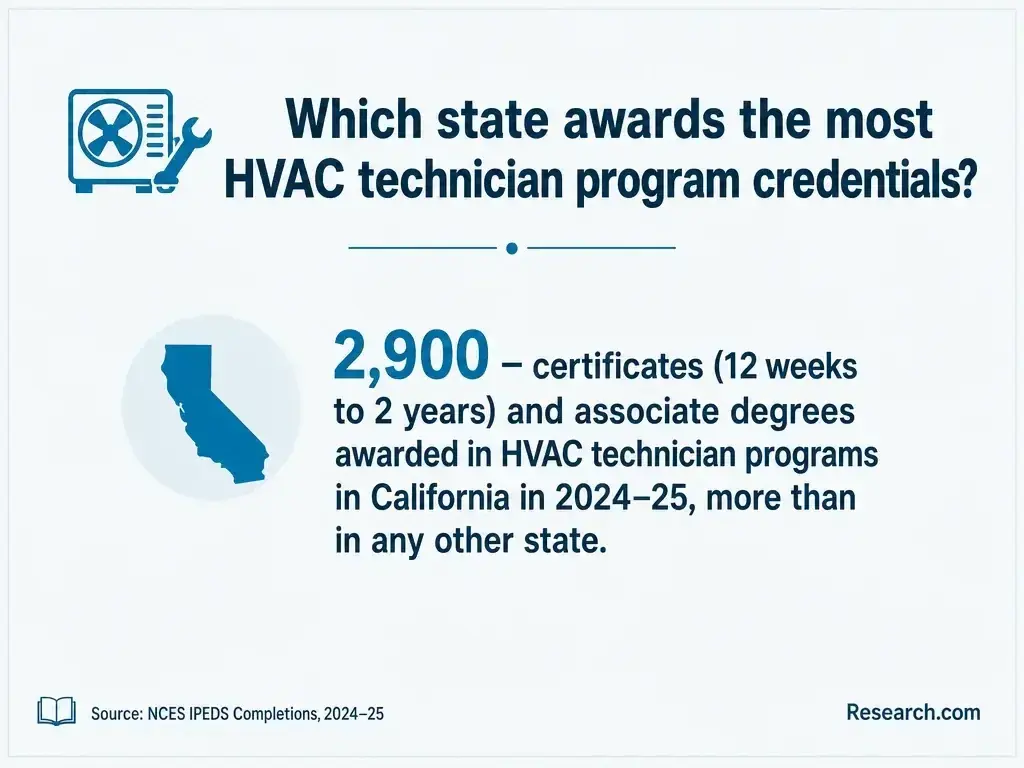
A reliable San Jose-wide average cannot be stated without comparable, current prices across school programs and paid training routes. Instead, request each school's written total cost to become job-ready: tuition, mandatory fees, books, consumables, tools, safety gear, examination charges, and travel to labs or worksites. Add the earnings you would forgo if you reduce work hours. An advertised tuition figure alone is not a useful comparison.
Compare that total with the net cost of a paid apprenticeship or employer-sponsored route. Ask about scholarships, workforce-development assistance, and whether the specific program qualifies for federal or California aid; eligibility varies by provider and student. A directory of best cheap online universities that accept fafsa is not evidence that an HVAC program qualifies for aid or provides hands-on training.
For a realistic return-on-investment check, consider completion probability, aid and debt, your current earnings, likely post-training earnings, time out of work, and how long you expect to use the credential. A lower-priced course is not automatically cheaper if it leaves you needing substantial additional training.
The award depends on the route: a school may issue a certificate or diploma, an eligible college program may award an associate degree, and a registered apprenticeship leads to its own completion credential. These describe completed training; none is automatically an occupational license. Confirm the exact award and what an employer can verify about your equipment practice and work experience.
EPA Section 608 is a separate technician certification tied to refrigerant work. Ask whether exam preparation, an approved exam opportunity, and exam fees are included. Treat other industry certificates as evidence of particular skills, not as substitutes for required EPA certification or California contractor licensing.
Requirements vary by provider and pathway. Ask schools about minimum age, prior schooling, language and math expectations, application steps, and any physical or safety requirements for labs. Apprenticeship sponsors and employers can have separate selection, work-authorization, driving, and jobsite requirements; acceptance into a school does not secure an apprenticeship position.
If you are changing careers, compare schedules as carefully as admissions rules. Best accelerated degree college options for working adults address a different kind of education; an HVAC trainee should confirm whether an accelerated timetable still allows enough supervised equipment practice. Likewise, open enrollment college courses online may be easy to enter, but open admission says nothing about HVAC lab access or employer recognition.
A strong entry curriculum links refrigeration and heat-transfer principles to electrical testing, airflow measurement, mechanical installation, controls, and systematic fault diagnosis. Safety should be practiced throughout, including electrical isolation, lifting, and refrigerant handling. The U.S. Bureau of Labor Statistics identifies installation, inspection, maintenance, and repair as core occupational duties.
Ask to see the equipment list and whether students individually use meters, gauges, and diagnostic procedures rather than only observing an instructor. Equipment that reflects current refrigerants and controls matters because employers need technicians who can follow manufacturer instructions and changing safety practices. Customer explanations, service records, and clear communication also matter in field work.
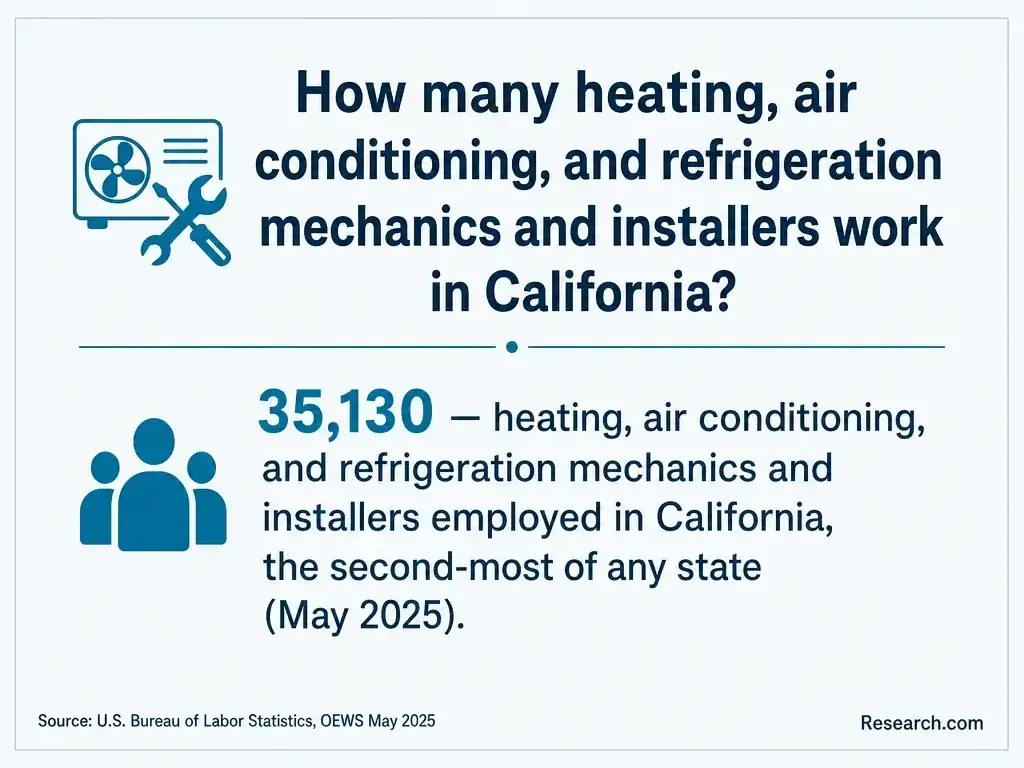
For employee technician work, California does not impose a general statewide HVAC journeyman license. If your work involves regulated refrigerants, however, federal EPA Section 608 rules generally require technician certification; the U.S. Environmental Protection Agency provides specific rules for supervised apprentices. Confirm which exam types match the equipment you intend to service.
Running a contracting business is a different step. California's Contractors State License Board regulates the C-20 warm-air HVAC contractor classification and generally requires four years of qualifying journey-level experience within the preceding ten years, along with applicable examinations and other licensing conditions. School completion alone does not satisfy that experience requirement. Separately, institutional accreditation concerns the school, California private-school authorization concerns permission to operate where applicable, apprenticeship registration concerns the sponsor, and EPA certification concerns refrigerant work. None substitutes for another.
Start with the job you want - residential service, commercial equipment, refrigeration, or an apprenticeship - and compare programs against that target. A ranking helps identify options, but it cannot tell you whether a particular lab schedule, equipment mix, or commute works for you. For example, ask Institute for Business and Technology and CET-San Jose for current written program details before comparing their offerings.
Use these questions to uncover costly gaps before enrolling:
Be wary of guaranteed-job or guaranteed-pay claims, vague placement figures, and claims that accreditation itself grants an HVAC license. Unrelated affordable masters degrees cannot establish the value of hands-on HVAC training; compare programs using the occupation-specific evidence above.
An entry-level installer or service helper can progress toward independent service work as diagnostic skill and field experience grow. Later options include commercial refrigeration, building controls, lead technician duties, supervision, or contracting after meeting California licensing requirements. The best initial program depends on that destination: broad troubleshooting practice supports service work, while exposure to larger systems matters more for commercial roles.
Do not mistake an optional advancement credential for an entry requirement. EPA Section 608 applies to covered refrigerant work, while a California C-20 contractor license matters if you intend to operate as a contractor - not simply because you want to advance as an employee. The U.S. Environmental Protection Agency and California Contractors State License Board set those distinct requirements.
The U.S. Bureau of Labor Statistics projects 10.9% U.S. employment growth from 2025 to 2035 for heating, air conditioning, and refrigeration mechanics and installers. This indicates national demand across the occupation, not a forecast of San Jose openings or a promise of placement. Compare current local vacancies for helper, apprentice, installation, and service roles before choosing how much training to buy upfront.
Building maintenance, repairs, and equipment replacement can create different entry opportunities. If postings consistently ask for field experience, a paid apprenticeship or employer-sponsored helper role may bridge that gap more directly than additional classroom study. If they ask for specific diagnostic skills, use those requirements to judge whether a school's lab work matches the market.
Education is a significant investment, so Research.com designed its ranking to compare programs against others in the same occupation and location - not against unrelated schools nationwide. The team evaluates reported outcomes, costs, recognition, and student support, while recognizing an important limit: only programs with completions reported to IPEDS can appear. An apprenticeship or employer training route can be worthwhile even if it is absent from the ranking.
For best-program rankings, student outcomes include completion and full-time and part-time retention. Earnings and return-on-investment measures include median earnings one year after completion and earnings relative to annual attendance cost. Cost and debt measures include resident and nonresident tuition, attendance cost, median debt - including for students who withdrew - and federal loan default rate. Quality measures include institutional accreditation, relevant programmatic accreditation or industry recognition, and student support. Programmatic recognition receives 20% of the score, institutional accreditation 10%, and support services 10%; the remaining 60% is distributed among outcomes, earnings, and cost indicators using an entropy-based method that gives more weight to indicators that vary more across programs. Most-affordable rankings instead score only tuition, attendance cost, median debt, and default rate, with entropy-based weights; accreditation is not part of that affordability score.
The following sources inform the ranking. Their coverage differs, so a missing data point should not be mistaken for proof that a provider lacks quality or approval.
Use the ranking to narrow your search, then confirm each program's current curriculum, costs, lab access, and outcomes directly. See Research.com's methodology for more about how the rankings are created.
# 1 position
# 2 position
It may be if the program provides substantial equipment practice, a manageable net cost, and skills relevant to jobs you can reach. Compare it with paid apprenticeships and employer training before committing.
Yes. A registered apprenticeship or employer-sponsored entry role can provide work-based training. You still need the applicable skills and EPA certification for covered refrigerant work (U.S. Environmental Protection Agency).
Online theory can help, but it does not demonstrate hands-on troubleshooting. Ask how and where you will practice on real equipment and whether employers recognize the training.
Not merely to work as an employee technician. Operating as an HVAC contractor is different and falls under California Contractors State License Board requirements.
Get the full cost, refund policy, lab hours, exact credential, EPA exam arrangements, and documented outcomes in writing. Confirm current authorization and accreditation claims independently.