
Most Affordable Electrical Technician Schools & Training - Budget-Friendly Electrical Trade Programs in California for 2026

Co-Founder and Chief Data Scientist
Electrician training is a practical investment, but the best choice in California depends on more than tuition. You need a program that fits your schedule, prepares you for state-approved training requirements, supports hands-on skill development, and gives you a realistic path toward paid supervised experience and eventual licensure.
This guide reviews affordable electrician trade school options in California and explains how to compare them by cost, format, training quality, career outcomes, and student support. The ranking was developed by the Research.com team of data scientists to help prospective students identify programs that offer useful career preparation without unnecessary expense.
Use this guide if you are entering the trades for the first time, changing careers, comparing online and campus-based options, or trying to understand how classroom training connects to apprenticeship hours, wages, and long-term electrician career paths in California.
Key benefits of finishing electrician trade school in California
- Stronger earning potential: Electrician trade school graduates in California can move toward careers with competitive wages, with averages around $69,678 per year and hourly wages often exceeding $35.
- Multiple career directions: Training can lead to residential, commercial, or industrial electrician roles. With experience, graduates may move into supervisory work, project coordination, contracting, or specialized areas such as renewable energy installation.
- Faster career entry than many degree paths: Electrician programs focus on job-ready technical skills. Online or hybrid coursework can make the classroom portion more flexible, although hands-on labs and supervised field experience remain essential for the trade.
- Clearer licensure preparation: A good program helps students understand electrical theory, safety practices, code requirements, and the supervised work hours needed to qualify for the next stage of their career.
- Most Affordable Electrical Technician Schools & Training - Budget-Friendly Electrical Trade Programs in California for 2026
- What can I expect from electrician trade schools in California?
- Where can I work after finishing electrician trade schools in California?
What can I expect from electrician trade schools in California?
Electrician trade schools in California usually combine classroom instruction, lab-based practice, and preparation for supervised field training. The classroom portion introduces electrical theory, safety procedures, wiring methods, blueprint reading, and National Electrical Code standards. The lab portion helps students practice tasks such as conduit bending, circuit installation, tool use, and troubleshooting in a controlled environment.
Students should expect training to be structured and safety-focused. California electrician preparation is not just about learning how to wire a panel; it also requires understanding why electrical systems must be installed, tested, and maintained according to code. Programs that are state-approved provide added reassurance that the coursework aligns with California training expectations.
Many programs offer flexible formats, including online theory courses, evening classes, or hybrid schedules. However, students should be cautious about any program that appears to be fully online without a plan for hands-on skill development. Electrical work is a physical trade, and employers and licensing pathways depend heavily on verified practical experience.
A major part of the pathway comes after or alongside school: students commonly continue through paid, supervised on-the-job training. The mandatory 150 hours of technical instruction per year builds the academic foundation, while the 8,000 hours of paid, supervised on-the-job training allows apprentices to develop real jobsite competence under experienced electricians.
Strong schools also provide practical support, including career counseling, apprenticeship guidance, resume help, employer connections, and job placement assistance. These services can matter as much as the classroom curriculum because students need a clear bridge from training to employment.
Where can I work after finishing electrician trade schools in California?
After completing electrician trade school in California, many graduates begin as electrical trainees or apprentices while they accumulate the field experience required for advancement. These early roles are supervised, but they provide exposure to real electrical systems, jobsite safety, customer expectations, and the pace of professional work.
Common employment settings include residential service companies, commercial construction firms, industrial facilities, schools, hospitals, public agencies, and maintenance departments. A graduate might help wire new homes, install lighting and power systems in office buildings, troubleshoot equipment in factories, or support electrical upgrades in healthcare facilities.
California also offers opportunities in specialized areas. Some graduates pursue solar installation, low-voltage systems, fire/life safety systems, security systems, data and communications cabling, or energy-efficiency upgrades. These paths can be especially appealing for students who want to connect electrical training with technology, infrastructure, or renewable energy work.
With experience, electricians may move into lead technician, foreperson, supervisor, estimator, project management, or business ownership roles. The strongest path depends on the student’s interests, local labor market, willingness to complete required hours, and ability to keep building technical and code knowledge after graduation.
Electrician trade school can lead to solid earnings in California, but pay varies by experience, location, specialization, overtime, union or nonunion setting, and the type of employer. Many graduates from California trade schools report starting salaries around $61,000 to $66,000 annually.
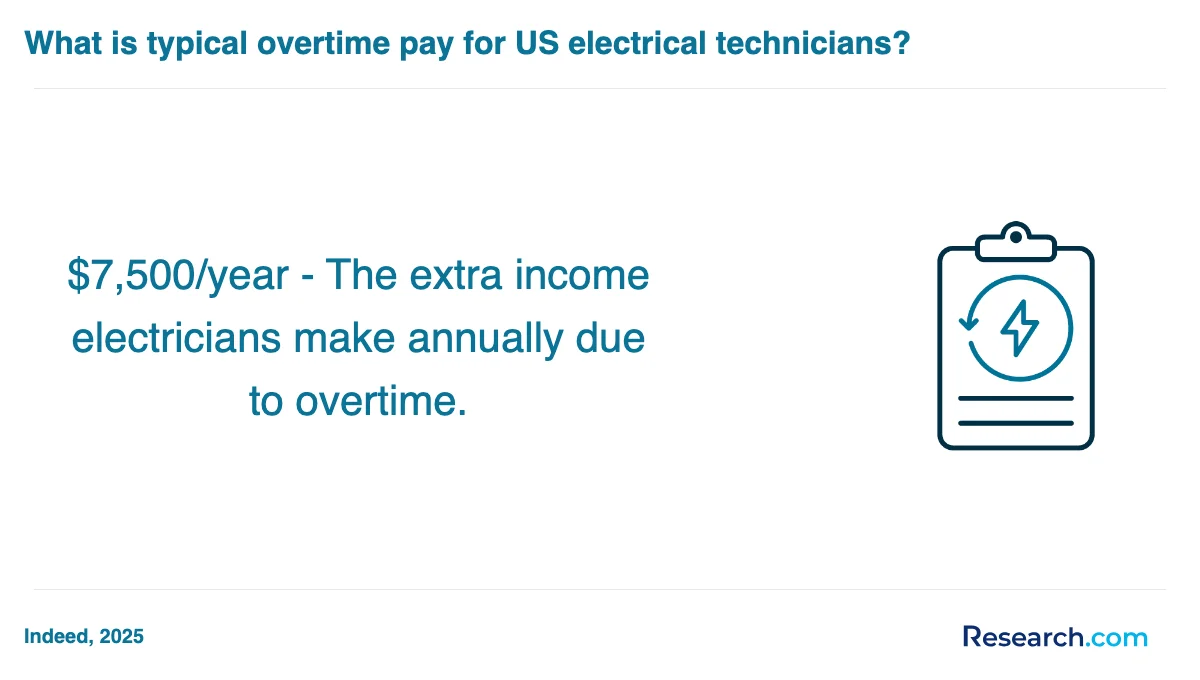
Hourly earnings can also be attractive. A first job may pay about $35 per hour, and overtime opportunities can increase annual income by over $10,000 a year. Students should remember, however, that overtime is not guaranteed and may depend on employer demand, project schedules, and local construction activity.
Earnings typically rise with experience. Electricians with 2 to 4 years of experience can earn around $71,700, while those with 4 to 7 years in the field can earn nearly $76,600. Higher-cost and high-demand markets, including cities such as San Francisco, may offer higher wages, but students should weigh those wages against housing, transportation, and other living costs.
| Career stage | Pay information stated for California electrician pathways |
| Early career | Starting salaries around $61,000 to $66,000 annually |
| Hourly work | About $35 per hour, with overtime potentially adding over $10,000 a year |
| 2 to 4 years of experience | Around $71,700 |
| 4 to 7 years of experience | Nearly $76,600 |
- A high school diploma or GED is required to enter an electrician trade school program in California, and some programs require proof of completion of at least two semesters of algebra.
- Programs typically combine classroom instruction in electrical systems and safety with hands-on lab exercises in state-approved courses.
- Graduates must complete 8,000 hours of supervised on-the-job training for general electrician licensing, or 4,800 hours for residential work.
- Tuition costs for accredited programs range from $5,000 to $15,000, with some schools offering financial aid or scholarships.
- The average annual salary for electricians in California is about $75,870, with experienced workers earning over $100,000 in some areas.
Electrician trade school programs in California typically take between 9 months to 2 years to complete. The exact timeline depends on whether the student chooses a short certificate, a longer diploma, an associate-level pathway, or a program connected to apprenticeship preparation.
Shorter programs can be useful for students who want focused technical instruction and a quicker transition into supervised work. These programs often emphasize electrical fundamentals, safety, code awareness, tools, and basic wiring skills. They may be a good fit for career changers who want to enter the workforce as soon as possible.
Longer programs can provide more time for labs, broader technical coursework, and career preparation. Students considering associate-level or extended community college options may benefit from additional instruction in math, blueprint reading, advanced systems, and employability skills.
Students should separate school completion time from the full licensure pathway. Finishing trade school is an important milestone, but the electrician career path also requires substantial supervised field experience. When comparing programs, ask how the school helps students move from classroom training into apprenticeships, trainee roles, or employer-sponsored work opportunities.
| Program type | Typical fit | Key trade-off |
| Short certificate program | Students seeking focused training and faster workforce entry | Less time for broader technical coverage |
| Longer diploma or associate pathway | Students who want more comprehensive preparation | More time in school before full-time work |
| Apprenticeship-connected pathway | Students who want classroom learning tied closely to paid field training | Admission and placement can be competitive |
The main difference is how students complete the theory and hands-on portions of training. Online electrician coursework can work well for topics such as electrical theory, safety concepts, code study, formulas, and exam preparation. It is especially useful for students who work, care for family, or need to study outside standard classroom hours.
On-campus programs provide direct access to labs, tools, equipment, instructors, and supervised practice. This matters because electrician training is not purely academic. Students need to learn how materials behave, how to work safely, how to troubleshoot circuits, and how to perform tasks accurately under joblike conditions.
Hybrid programs often offer the best balance. Students may complete lectures or assignments online while attending scheduled in-person labs. For many California students, this format reduces commuting without sacrificing hands-on training.
| Format | Best for | Limitations to check |
| Online | Students needing flexible theory coursework | Must still include or connect to hands-on training |
| On-campus | Students who learn best through live demonstrations and lab practice | Requires commuting and fixed schedules |
| Hybrid | Students balancing work, family, and practical training needs | Lab availability and location still matter |
Before enrolling in any online or hybrid electrician program, ask how the school documents lab work, whether it is state-approved, and how it supports students in obtaining the supervised field experience required in California.
The cost of electrician trade school in California varies widely by institution, program length, credential type, equipment access, and included services. Some students encounter tuition averages around $20,905, plus roughly $1,031 for books and supplies. Other programs cost much less, especially through adult education centers or public options.
For example, Baldwin Park Adult & Community Education has been cited by graduates as charging just $1,665 for 9-month programs. At the higher end, institutions such as InterCoast Colleges may charge upwards of $22,500 despite shorter contact hours. These differences make it important to compare total cost, not just advertised tuition.
Students should also budget for fees and materials. Registration and lab fees can add around $500, while tools or materials might cost between $1,000 and $2,000. These costs are not optional extras for most students; tools and lab access are part of becoming competent and employable.
| Cost item | Amount stated | Why it matters |
| Tuition average | Around $20,905 | Useful for estimating the broader market cost |
| Books and supplies | Roughly $1,031 | Often separate from tuition |
| Lower-cost example | $1,665 for 9-month programs | Shows why public or adult education options are worth checking |
| Higher-cost example | Upwards of $22,500 | Requires careful ROI comparison |
| Registration and lab fees | Around $500 | Can affect the true out-of-pocket price |
| Tools or materials | Between $1,000 and $2,000 | Necessary for hands-on training and early work readiness |
| Pell Grant | Up to $7,395 for the academic year | Can reduce the amount students need to pay out of pocket |
When comparing schools, ask for a written cost breakdown that includes tuition, books, supplies, lab fees, tools, registration charges, exam preparation, and any placement or certification fees. A cheaper program is not always the best choice, but a high price should be justified by strong instruction, lab quality, employer connections, and student outcomes.
Students exploring trade career costs may also find it helpful to compare focused training options in related technical fields, such as the cheapest accelerated online wind turbine technician certificate programs.
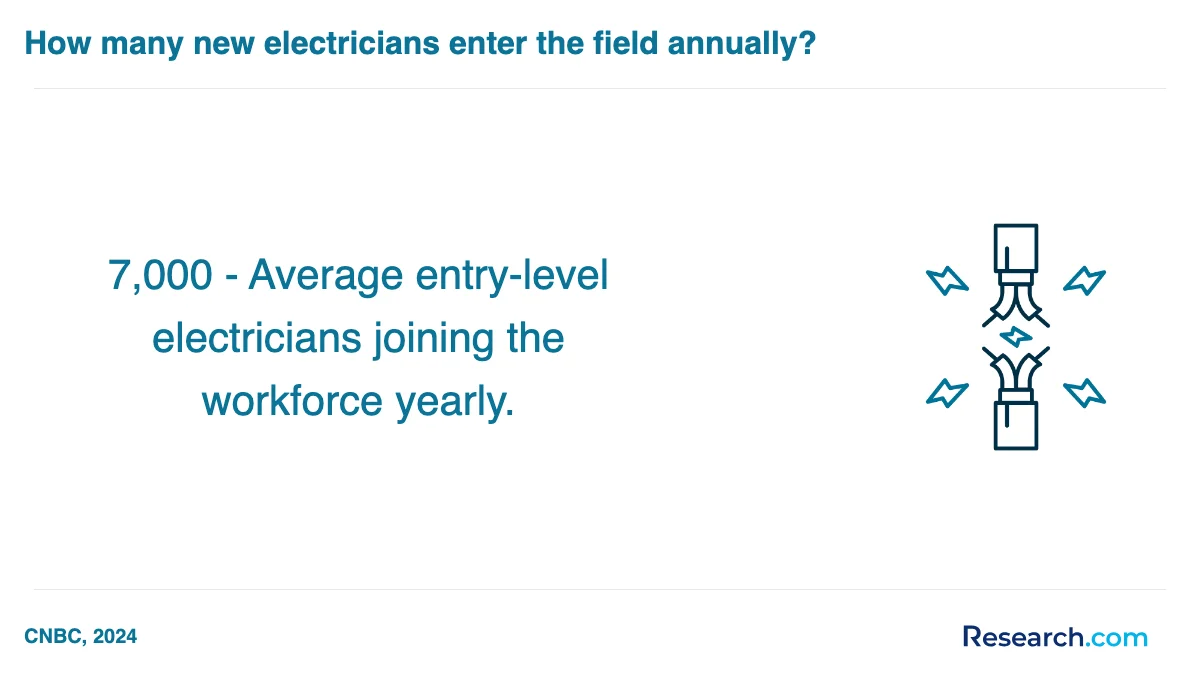
Financial aid for electrician trade school in California may come from federal, state, institutional, private, and employer-based sources. Availability depends on the school, program eligibility, enrollment status, and the student’s financial situation, so applicants should confirm aid options directly with each institution before enrolling.
Federal aid may include Pell Grants and Federal Work Study for eligible students at participating schools. These forms of aid can reduce upfront costs and help students avoid relying entirely on loans.
California students may also look into the Cal Grant C Award, which supports career and technical education. This grant can be especially useful for trade students because training-related costs may include tools, books, equipment, and supplies. The Cal Grant C requires no GPA minimum, which can make it accessible to motivated students whose strengths are more hands-on than academic.
Private scholarships may also help. Awards from organizations such as the mikeroweWORKS Foundation or DEWALT are designed to support students entering skilled trades. Some employers, unions, contractors, or apprenticeship sponsors may also provide tuition support, reimbursement, tools, or paid training opportunities.
Before choosing a program, students should ask three financial aid questions: Is the program eligible for federal or state aid? What costs are not covered by aid? Does the school have employer partnerships, scholarships, or payment plans that reduce out-of-pocket expense?
Most electrician trade schools in California require applicants to have a high school diploma or GED. This requirement matters because electrician training relies on reading comprehension, applied math, safety procedures, and the ability to interpret technical instructions and electrical codes.
Some programs also require proof of completion of at least two semesters of algebra. Algebra is useful in the trade because electricians calculate load, voltage, resistance, conduit measurements, and other jobsite requirements.
Applicants are commonly expected to be at least 18 years old, especially for programs connected to worksite training or apprenticeship opportunities. Electrical work involves tools, ladders, confined spaces, live-system awareness, and safety-sensitive tasks, so maturity and dependability are important.
Additional requirements may include:
- Passing a basic math and reading assessment to show readiness for technical coursework
- Demonstrating physical ability to lift materials, stand for long periods, use tools, and work in varied environments
- Having a valid driver's license or reliable transportation, since classes, labs, job sites, and apprenticeships may be in different locations
- Completing an application, interview, orientation, or placement process, depending on the school
Students should verify prerequisites early. Missing a transcript, algebra requirement, assessment, or transportation plan can delay enrollment or limit access to apprenticeship-connected opportunities.
Electrician trade school courses in California are designed to build a foundation in electrical concepts, safe work practices, code compliance, and hands-on installation skills. The best programs connect theory directly to tasks students will perform in the field.
- Electrical Theory and Fundamentals: Students learn concepts such as Ohm's Law, circuits, current, voltage, resistance, and power. This knowledge supports troubleshooting and safe system design.
- National Electrical Code (NEC): Code instruction helps students understand legal and safety standards for electrical installations. It also prepares students for the code-based thinking required in professional work.
- Workplace Safety and OSHA Standards: Safety courses cover hazard recognition, personal protective equipment, lockout/tagout concepts, tool safety, and jobsite procedures.
- Trade Mathematics: Students apply algebra and geometry to conduit bending, measurements, load calculations, and wiring layouts.
- Blueprint Reading: Students learn to interpret symbols, plans, diagrams, and specifications used in residential, commercial, and industrial projects.
- Wiring Methods and Materials: Lab work may cover conductors, raceways, panels, switches, receptacles, lighting systems, and installation techniques.
- Motors, Controls, and Troubleshooting: Some programs introduce motor circuits, control systems, testing equipment, and diagnostic methods.
- Introduction to Electronics and PLCs: Programs with a more advanced or industrial focus may introduce electronics and programmable logic controllers for students interested in automation.
Hands-on labs are essential because students need more than vocabulary and formulas. They need to practice installing, measuring, testing, correcting, and explaining electrical work in a way that meets safety and code expectations.
Electrician trade school programs in California may offer general training or specialized tracks that align with different work environments. Choosing a specialization can help students target the type of jobs they want, but beginners should also consider programs that provide broad fundamentals before narrowing their path.
| Specialization | Typical focus | Best fit for students interested in |
| General Electrician | Residential, commercial, and industrial electrical systems; AC/DC theory; blueprints; safety codes | A flexible pathway with multiple job options |
| Residential Electrician | Home wiring, lighting, service panels, remodeling work, and residential building codes | Working with homeowners, builders, and residential service firms |
| Commercial Electrician | Electrical systems for offices, retail spaces, and larger buildings | Construction, tenant improvements, and building systems |
| Industrial Electrician | Equipment, automation, controls, and plant electrical systems | Factories, manufacturing, and technical maintenance roles |
| Low Voltage Electrician | Security, communications, network, and control-related systems | Technology infrastructure and specialized systems |
| Fire/Life Safety Technician | Emergency systems and safety-related electrical regulations | Alarm, detection, and building safety systems |
Students comparing residential vs commercial electrician programs in California should think about the work setting they prefer. Residential work often involves service calls, remodeling, and direct customer interaction. Commercial work may involve larger teams, more complex plans, and longer project timelines.
Because California requires 8,000 hours of practical experience, students should choose a specialization that can connect to real work opportunities in their region. Students interested in utility-focused work may also compare electrician training with electrical lineman careers, which involve a different but related technical pathway.
The best electrician trade school in California is the one that fits your career goal, budget, schedule, and pathway to supervised work. A strong program should teach electrical fundamentals, provide meaningful hands-on labs, explain California requirements clearly, and help students move into employment or apprenticeship opportunities.
Use these factors when comparing schools:
- Approval and credibility: Confirm whether the program is state-approved and whether its training aligns with California electrician requirements.
- Hands-on training quality: Ask how many lab hours are included, what equipment students use, and whether instructors have relevant field experience.
- Cost transparency: Compare tuition, books, tools, lab fees, supplies, and payment options before committing.
- Schedule and format: Decide whether full-time, part-time, evening, online, hybrid, or on-campus learning works best for your life.
- Apprenticeship and employer connections: Look for schools that help students find trainee positions, apprenticeships, internships, or entry-level jobs.
- Location: Commute time can affect attendance, especially for students near Los Angeles, San Francisco, or other high-traffic regions.
- Student support: Career counseling, job placement, resume support, tutoring, and financial aid advising can improve completion and employment outcomes.
A common mistake is choosing only by price. Affordability matters, but the cheapest program may not be the best value if it lacks lab access, employer relationships, or clear guidance on next steps. Another mistake is assuming an online program alone is enough. Electrical training requires practical skill development and supervised work experience.
Students who later want to broaden into engineering, design, or technical management may also consider how trade training could connect with an electrical engineering bachelor's degree. For most aspiring electricians, however, the immediate priority should be a program that prepares them for safe, competent field work.
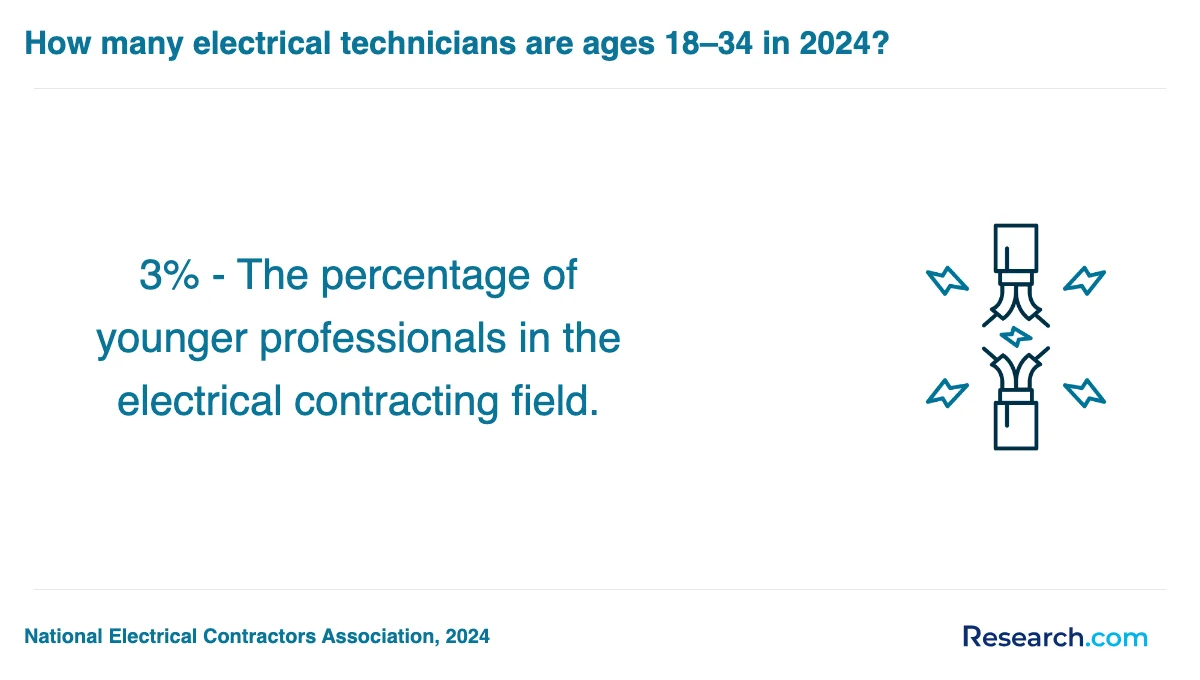
Electrician trade school graduates in California can pursue several career paths, beginning with supervised entry-level work and progressing toward more independent or specialized roles. Most graduates start by working as trainees or apprentices under licensed professionals while building the experience required for advancement.
- Electrical trainee or apprentice: Entry-level roles provide supervised jobsite experience and help graduates apply classroom skills in real conditions.
- Residential electrician: These electricians work on homes, apartments, lighting, panels, remodels, and service calls.
- Commercial electrician: Commercial electricians install and maintain systems in offices, retail spaces, schools, and other larger buildings.
- Industrial electrician: Industrial roles focus on electrical systems in factories, plants, and equipment-heavy environments.
- Fire/life safety technician: This path involves emergency and safety systems used in buildings.
- Voice data video technician: Graduates interested in low-voltage systems may work with communications, cabling, and connected infrastructure.
- Lighting specialist: This path can involve installation, retrofits, efficiency upgrades, and lighting system design support.
- Renewable energy or automation technician: Some graduates move into solar, energy systems, controls, or automated equipment.
- Supervisor, estimator, project manager, or contractor: Experienced electricians may lead crews, price jobs, manage projects, or start their own firms.
Career counseling and placement services can help students identify which path matches their strengths. Students interested in expanding beyond trade roles into broader technical education may compare affordable degree options, including the cheapest electrical engineering degree online.
The job market for electrician trade school graduates in California is strong because the state has ongoing demand for electrical installation, maintenance, repair, construction, modernization, and energy-related work. Graduates who combine classroom training with reliable hands-on experience are better positioned for entry-level electrician jobs in California.
Several factors support electrician employment growth California students should understand:
- California's large population requires extensive electrical infrastructure.
- Construction, renovation, and development projects create demand for trained workers.
- New technology implementation increases the need for electricians who can work with updated systems.
- A retiring workforce creates openings for new talent entering the trade.
Experienced graduates report wages in the $23.70 to $32.50 hourly range, with pay often improving as workers gain experience, specialize, and qualify for more responsibility. Local wages can vary by region, employer, project type, and cost of living.
Students looking for flexible entry routes can compare campus-based, hybrid, and online theory options, including cheap online trade schools programs for electricians. The key is to choose a program that does more than offer coursework: it should help students build practical skills, document training, and connect with real work opportunities.
Most Affordable Electrical Technician Schools & Training - Budget-Friendly Electrical Trade Programs in California for 2026
# 1 position
Los Angeles Trade Technical College - Electrician.
associateLos Angeles Trade Technical College offers a hybrid Electrician program that prepares students to install, operate, maintain, and repair electrical systems in residential, commercial, and industrial settings. The curriculum includes electronics, wiring, power transmission, safety, and electrical codes. The program is accredited by the Western Association of Schools and Colleges Accrediting Commission for Community and Junior Colleges. Annual in-state tuition is $1,238, and median earnings one year after completion are $50,745.
# 2 position
Los Angeles Trade Technical College - Electrician.
certificate or diplomaLos Angeles Trade Technical College offers a hybrid Electrician program that prepares students to install, operate, maintain, and repair electrical systems in residential, commercial, and industrial settings. The curriculum covers electronics, wiring, power transmission, safety, electrical testing, and relevant codes. Annual in-state tuition is $1,238. Graduates have median earnings of $50,745 one year after completion. The program is accredited by the Western Association of Schools and Colleges Accrediting Commission for Community and Junior Colleges.
# 3 position
College of the Sequoias - Electrician.
associateThe Electrician program at College of the Sequoias offers a hybrid format with some distance-education options. It prepares students to install, operate, maintain, and repair electrical systems in residential, commercial, and industrial settings. Instruction covers electronics, wiring, power transmission, safety, job estimation, testing, inspection, and relevant codes. The program’s annual in-state tuition is $1,394 and is accredited by the Western Association of Schools and Colleges Accrediting Commission for Community and Junior Colleges.
# 4 position
College of the Sequoias - Electrician.
certificate or diplomaThe Electrician program at College of the Sequoias is a hybrid course preparing students to install, operate, maintain, and repair electrical systems in residential, commercial, and industrial settings. It covers electronics, wiring, power transmission, safety, inspection, and applicable codes. The program is accredited by the Western Association of Schools and Colleges Accrediting Commission for Community and Junior Colleges. Annual in-state tuition is $1,394.
# 5 position
Merced College - Electrician.
associateMerced College offers a hybrid Electrician program designed to prepare students to install, operate, maintain, and repair electrical systems including residential, commercial, and industrial wiring. The curriculum covers electronics, electrical systems, wiring, power transmission, safety, testing, inspection, and relevant codes. The program is accredited by the Western Association of Schools and Colleges Accrediting Commission for Community and Junior Colleges. Annual in-state tuition is $1,194.
# 6 position
Merced College - Electrician.
certificate or diplomaThe Electrician program at Merced College offers hybrid learning to prepare students for installing, operating, maintaining, and repairing electrical systems in residential, commercial, and industrial settings. Instruction covers electronics principles, wiring, power transmission, safety, testing, inspection, and applicable codes. The annual in-state tuition is $1,194. The program is accredited by the Western Association of Schools and Colleges Accrediting Commission for Community and Junior Colleges.
# 7 position
Palomar College - Electrician.
associatePalomar College offers a hybrid Electrician program that prepares students to install, operate, maintain, and repair electric apparatus and systems in residential, commercial, and industrial settings. The program includes instruction on electronics, wiring, power transmission, safety, electrical testing, and applicable codes. Annual in-state tuition is $1,354. The program is accredited by the Western Association of Schools and Colleges Accrediting Commission for Community and Junior Colleges.
# 8 position
Palomar College - Electrician.
certificate or diplomaPalomar College offers a hybrid Electrician program that prepares students to install, operate, maintain, and repair electrical systems including residential, commercial, and industrial wiring. The curriculum covers electronics, electrical systems, wiring, power transmission, safety, testing, inspection, and applicable codes. The annual in-state tuition is $1,354. The program is accredited by the Western Association of Schools and Colleges Accrediting Commission for Community and Junior Colleges.
# 9 position
Modesto Junior College - Electrician.
certificate or diplomaModesto Junior College offers a Hybrid Electrician program that trains students to install, operate, maintain, and repair electrical systems including residential, commercial, and industrial wiring. The curriculum covers electronics, wiring, power transmission, safety, job estimation, and electrical codes. The program’s annual in-state tuition is $1,270. It is accredited by the Western Association of Schools and Colleges Accrediting Commission for Community and Junior Colleges.
# 10 position
San Diego City College - Electrical and Power Transmission Installation/Installer, General.
associateSan Diego City College offers a hybrid program in Electrical and Power Transmission Installation/Installer, General, preparing students to install residential, commercial, and industrial electrical systems and power transmission lines. The curriculum covers electricity, safety, wiring, insulation, grounding, blueprint interpretation, equipment operation, maintenance, and relevant codes. Annual in-state tuition is $1,150. The program is accredited by the Western Association of Schools and Colleges Accrediting Commission for Community and Junior Colleges.
Frequently Asked Questions about electrician
After completing an electrical trade school program in California, you can pursue certifications such as the California Electrical Certification, OSHA Safety Certification, and the National Institute for Certification in Engineering Technologies (NICET). These credentials can enhance your career prospects and help demonstrate your expertise to potential employers.
Finding the most budget-friendly electrician programs in California involves researching community colleges and vocational schools with low tuition rates. Popular choices include Los Angeles Trade-Technical College and San Diego Continuing Education, which offer comprehensive education at affordable costs.
Finding internships relevant to electrician trade school programs in California involves several key steps. First, students should contact their school's career services or internship office, as many California trade schools maintain partnerships with local electrical contractors and companies.
The California Department of Industrial Relations provides resources and listings for apprenticeship and internship opportunities in the electrical field. According to the California Apprenticeship Council, over 20,000 apprentices are registered statewide, reflecting a strong industry demand for hands-on training.
Networking through industry events and trade unions, such as the International Brotherhood of Electrical Workers (IBEW), can also reveal valuable internship openings. Online job portals specializing in skilled trades, like the California Workforce Development Board's website, offer additional listings specific to electrician roles.
While studying at an electrician trade school in California, students can gain practical experience through internships, apprenticeships, and hands-on lab sessions. Many trade schools partner with local electrical companies to offer on-the-job training, allowing students to apply classroom knowledge in real-world settings.
Part-time job opportunities in California that complement electrician trade school education often include roles such as electrical apprenticeships, maintenance assistant positions, and construction labor support. These jobs provide hands-on experience with electrical systems, wiring, and safety protocols, which are essential for skill development.
According to the California Employment Development Department, electricians in the state earn a median wage of around $33 per hour, with apprenticeships offering valuable on-the-job training while students complete their coursework.
Working as an electrical helper or in related construction roles also helps students build familiarity with tools and regulations under the supervision of licensed electricians.
Such part-time roles not only boost practical knowledge but also enhance employability after graduation.
- Most Affordable Electrical Technician Schools & Training - Budget-Friendly Electrical Trade Programs in Nevada for 2026
- Most Affordable Electrical Technician Schools & Training - Budget-Friendly Electrical Trade Programs in Arizona for 2026
- Most Affordable Electrical Technician Schools & Training - Budget-Friendly Electrical Trade Programs in Utah for 2026
- Most Affordable Electrical Technician Schools & Training - Budget-Friendly Electrical Trade Programs in Washington for 2026
- Most Affordable Electrical Technician Schools & Training - Budget-Friendly Electrical Trade Programs in Wyoming for 2026
- Most Affordable Electrical Technician Schools & Training - Budget-Friendly Electrical Trade Programs in South Dakota for 2026
- Most Affordable Electrical Technician Schools & Training - Budget-Friendly Electrical Trade Programs in North Dakota for 2026
- Most Affordable Electrical Technician Schools & Training - Budget-Friendly Electrical Trade Programs in Minnesota for 2026
- Most Affordable Electrical Technician Schools & Training - Budget-Friendly Electrical Trade Programs in Missouri for 2026
- Most Affordable Electrical Technician Schools & Training - Budget-Friendly Electrical Trade Programs in Arkansas for 2026
- A Guide to Skilled Trades Apprenticeships and Internships | BestColleges https://www.bestcolleges.com/trades/guide-to-skilled-trades-apprenticeships-internships/
- Electrical Apprenticeships Near You | IECI https://ieci.org/apprenticeship/
- Opportunities For Students - O’Connell Electric https://www.oconnellelectric.com/careers/students/
- Should You Choose a Trade School or an Apprenticeship? Exploring the Electrical Training Path - InterCoast Colleges https://intercoast.edu/articles/trade-school-apprenticeship/
- Apprenticeship Finder | Apprenticeship.gov https://www.apprenticeship.gov/apprenticeship-job-finder
- Technical Trades Work and Learning Program for Students | MassCEC https://www.masscec.com/technical-trades-students
- Students and young professionals | Schneider Electric Global https://www.se.com/ww/en/about-us/careers/students-young-professionals.jsp
- Electrical Trade School: Powering Careers in a Thriving Field https://abcsocal.org/electrical-trade-school/
- Electrical Technician Trade School Programs & College Courses Roseville CA - National Career Education https://nce.edu/electrician-training/roseville-ca/
- How to Become an Electrician in California: 8 Steps to Success | Huckleberry Insurance https://huckleberry.com/blog/how-to-become-an-electrician-in-california/


