
Best EKG Technician Training Programs & Trade Schools - Top EKG Tech Schools in Midwest for 2026

Co-Founder and Chief Data Scientist
Choosing the right EKG technician trade school in the Midwest can shape your future career in healthcare. This article presents a carefully crafted ranking of EKG technician trade school programs, developed by the Research.com team of data scientists to guide you in making an informed decision.
By exploring this ranking, you’ll discover programs that offer quality training and valuable certification opportunities. Earning a diploma or certification as an EKG technician opens doors to rewarding job prospects and personal growth. Let this guide help you take confident steps toward a fulfilling career.
Key benefits of finishing EKG technician trade school in Midwest
- Graduates can expect an hourly wage around $22.42 in Missouri, which means an annual salary close to $46,600, offering a solid start in a stable healthcare career.
- Many graduates find diverse career paths, including roles in hospitals, outpatient clinics, and cardiology practices, making it possible to choose a setting that fits their lifestyle and goals.
- Completing an online EKG technician program offers flexibility and convenience, allowing students to balance studies with work or family, just like successful online graduates from well-known Midwest trade schools.
What can I expect from EKG technician trade schools in Midwest?
Students enrolling in an EKG technician trade school program in the Midwest can expect a hands-on, practical learning experience tailored to quickly build job-ready skills. Graduates from programs like the Chicago School of Phlebotomy often highlight how completing the course in just six weeks with twice-weekly classes allowed them to balance study with work or family commitments effectively.
Many programs, such as the Non-Invasive Electrocardiography certificate at the College of DuPage, offer more comprehensive training over several semesters, giving students deeper exposure to cardiovascular anatomy, EKG operation, and patient care. Coursework blends lectures with skills labs and practical assessments, ensuring students get comfortable with real EKG machines and procedures before entering clinical settings.
Hands-on practice is a key focus, with students performing EKG recordings, holter monitoring, and stress tests under supervision. Graduates often mention the confidence gained from continuous assessments, including quizzes and final exams, that prepare them well for certification exams like the CET or CCT.
Many Midwest schools also provide career support and facilitate clinical placements, helping students transition smoothly into roles in hospitals and clinics amid strong regional job growth.
Where can I work after finishing EKG technician trade schools in Midwest?
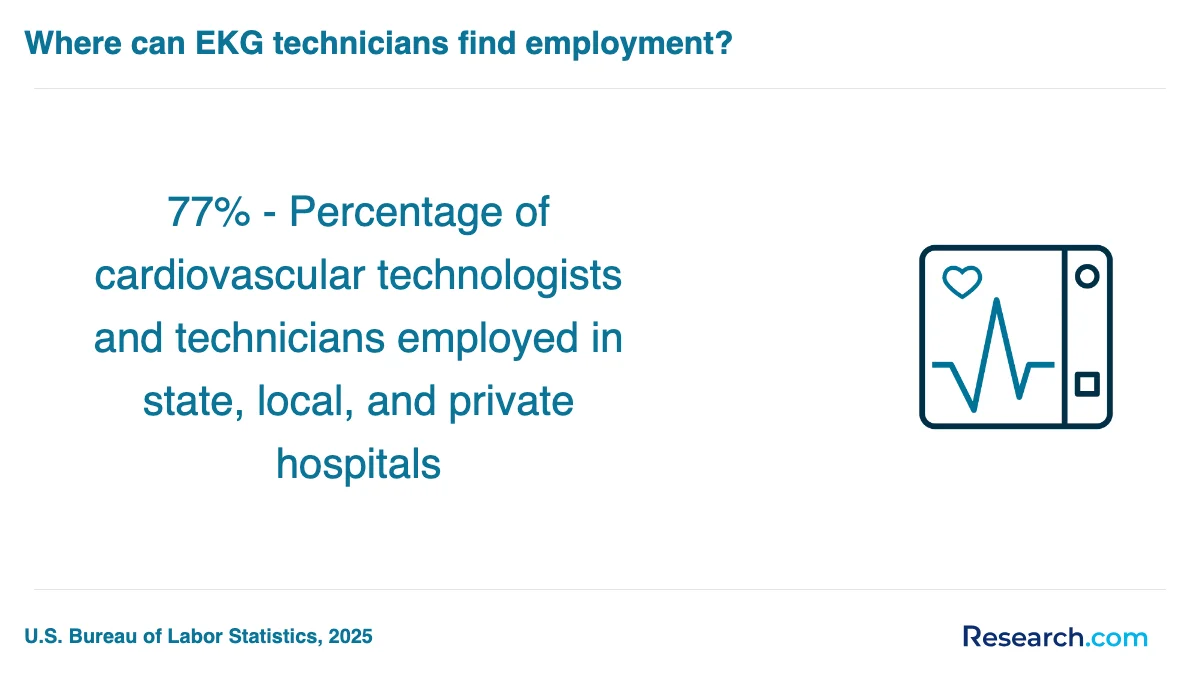
Graduates of EKG technician trade schools in the Midwest often find themselves working in hospitals, where they perform electrocardiograms and assist with cardiology diagnostics under supervision. Many alumni from popular programs in Illinois and Missouri share how they quickly secured roles at major hospitals like Memorial Health or Silver Cross Hospital, gaining hands-on experience in dynamic, patient-focused environments.
Others pursue careers in outpatient clinics or specialized cardiology offices, especially in metro areas such as Chicago and St. Louis. These settings allow graduates to develop skills in routine and emergency cardiac monitoring and support stress testing, often leading to fulfilling, patient-centered workdays.
Long-term care facilities and rehabilitation centers also employ EKG technician graduates, offering stable positions with multidisciplinary teams caring for chronic heart patients. Some graduates appreciate the flexibility of travel assignments coordinated by staffing agencies, which expose them to diverse healthcare settings while earning competitive hourly wages.
Overall, completing an EKG technician program in the Midwest opens doors to varied, rewarding career paths tailored to individual preferences and lifestyles.
How much can I make after finishing EKG technician trade schools in Midwest?
After finishing an EKG technician trade school program in the Midwest, graduates typically see starting wages that offer a solid entry point into healthcare. For instance, many Missouri graduates report earning around $22.42 per hour, which translates to about $35,600 to $51,600 annually when working full time. While Missouri ranks lower nationally, this wage still provides a dependable income for those beginning their careers with just a certificate and certification.
Graduates from popular Midwest trade schools often find opportunities in urban centers like Minneapolis, where hourly pay averages $24.96 and can reach as high as $42.91 with experience or specialized skills. This higher pay reflects the demand in larger hospital systems and outpatient clinics, making the investment in an EKG technician program rewarding. Many graduates express satisfaction with their ability to quickly enter the workforce and start earning a competitive wage in a respected medical field.
Additional certifications and willingness to work shifts like nights can further boost earnings, making the EKG technician career path both practical and promising for Midwest students.
Best EKG Technician Training Programs & Trade Schools - Top EKG Tech Schools in Midwest for 2026
# 1 position
Ivy Tech Community College - Electrocardiograph Technology/Technician.
certificate or diplomaThe Electrocardiograph Technology/Technician program at Ivy Tech Community College offers a hybrid learning format, combining distance education with in-person instruction. The program trains students to administer EKG and ECG diagnostic tests under medical supervision and report results. Coursework includes anatomy, physiology, cardiovascular systems, medical terminology, patient care, and professional ethics. The annual in-state tuition is $4,912. Median earnings one year after completion are $73,452. The program is accredited by the Higher Learning Commission.
# 2 position
Carnegie Institute - Electrocardiograph Technology/Technician.
certificate or diplomaThe Electrocardiograph Technology/Technician program at Carnegie Institute is a hybrid course designed to train individuals to administer EKG and ECG diagnostic tests under medical supervision. It covers anatomy, physiology, cardiovascular system, medical terminology, patient care, equipment operation, cardiac rhythm interpretation, and professional ethics. The program’s annual in-state tuition is $15,342. It is accredited by the Accrediting Commission of Career Schools and Colleges.
# 3 position
Jackson College - Electrocardiograph Technology/Technician.
associateJackson College offers a hybrid Electrocardiograph Technology/Technician program preparing students to perform EKG and ECG diagnostic tests under medical supervision. The curriculum covers anatomy, physiology, cardiovascular system, medical terminology, and patient care. Students also learn equipment operation, cardiac rhythm interpretation, record management, and professional ethics. The program’s annual in-state tuition is $7,040. Graduates have median earnings of $48,583 one year after completion. The program is accredited by the Higher Learning Commission.
# 4 position
Baker College - Electrocardiograph Technology/Technician.
associateBaker College offers a Hybrid Electrocardiograph Technology/Technician program that trains students to perform EKG and ECG diagnostic exams under medical supervision. The curriculum covers anatomy, cardiovascular systems, medical terminology, cardiac rhythm interpretation, and patient care. The program is accredited by the Higher Learning Commission. Annual in-state tuition is $12,810, and graduates earn a median salary of $46,984 one year after completion.
# 5 position
College of DuPage - Electrocardiograph Technology/Technician.
certificate or diplomaThe Electrocardiograph Technology/Technician program at College of DuPage offers a hybrid learning format with some distance-education options. It trains students to perform EKG and ECG diagnostic exams under medical supervision, covering anatomy, cardiovascular systems, medical terminology, equipment operation, and cardiac rhythm interpretation. The annual in-state tuition is $4,320. Graduates have a median earning of $53,537 one year after program completion. The program is accredited by the Higher Learning Commission.
# 6 position
South Suburban College - Electrocardiograph Technology/Technician.
certificate or diplomaSouth Suburban College offers a hybrid Electrocardiograph Technology/Technician program designed to prepare students to perform EKG and ECG diagnostic exams under medical supervision. The curriculum covers anatomy, physiology, cardiovascular systems, medical terminology, medications, patient care, equipment operation, cardiac rhythm interpretation, record management, and professional ethics. The program's in-state tuition is $5,093. It is accredited by the Higher Learning Commission.
# 7 position
Washington State Community College - Electrocardiograph Technology/Technician.
certificate or diplomaWashington State Community College offers a hybrid Electrocardiograph Technology/Technician program preparing students to administer EKG and ECG diagnostic tests under medical supervision. The curriculum covers anatomy, physiology, cardiovascular systems, medical terminology, patient care, equipment operation, cardiac rhythm interpretation, and professional ethics. The program is accredited by the Higher Learning Commission. Annual in-state tuition is $4,128.
# 8 position
Milwaukee Area Technical College - Electrocardiograph Technology/Technician.
certificate or diplomaMilwaukee Area Technical College offers a hybrid Electrocardiograph Technology/Technician program that prepares students to administer EKG and ECG diagnostic exams under physician and nurse supervision. The curriculum covers anatomy, physiology, cardiovascular system, medical terminology, medications, equipment operation, cardiac rhythm interpretation, and professional ethics. The annual in-state tuition is $5,017. The program is accredited by the Higher Learning Commission.
Key Findings
- Most programs require a high school diploma or GED, and some may ask for an entrance test or healthcare experience.
- Program length is usually 6 to 8 weeks with about 50 classroom hours covering heart anatomy, EKG operation, and patient care.
- Costs range from $1,000 to $1,400, with an example total of $1,357 including tuition, books, and testing fees.
- Graduates can take certification exams like the Certified EKG Technician (CET) to improve job prospects.
- Starting salaries in the Midwest range from $35,000 to $45,000, with experienced technicians earning up to $60,000 annually.
- Volunteer externships or clinical placements are often available to provide hands-on experience during the program.
How long does it take to complete EKG technician trade schools in Midwest?
Completing an EKG technician trade school program in the Midwest typically takes between 4 to 12 weeks, depending on the school and the student's schedule. Many programs offer flexible part-time or full-time options, allowing students to balance work or family commitments while training. For example, graduates from popular Midwest trade schools often share how the accelerated 6-week courses helped them quickly gain practical skills and enter the workforce with confidence.
Students appreciate hands-on training combined with classroom instruction, which these schools emphasize to prepare them for certification exams and real clinical environments. One graduate described feeling encouraged by the supportive instructors who made learning straightforward and enjoyable, making the short timeframe feel manageable and rewarding.
Because Midwest trade schools focus on practical, career-ready education, students find themselves well-prepared to start entry-level positions shortly after graduation. This swift completion time appeals to those eager to launch a healthcare career without years of schooling.
What's the difference between online and on-campus EKG technician trade school programs?
The main difference between online and on-campus EKG technician trade school programs in the Midwest lies in how and where you learn. Online programs, like those at Minnesota State College Southeast, offer busy adults the flexibility to study anytime, fitting lessons around work or family. Graduates often share how this self-paced style helped them stay motivated without sacrificing their daily commitments. These programs include video lessons and 24/7 support, making it easy to review tricky concepts repeatedly.
On the other hand, on-campus programs provide a structured schedule with face-to-face instruction and hands-on practice in labs. Students appreciate the immediate feedback from instructors and the chance to practice equipment skills firsthand. Being on-site also fosters collaboration, which many find boosts confidence and readiness for patient care.
Both formats in the Midwest include externships at local healthcare facilities, ensuring real-world experience. Graduates from either path feel prepared for certification exams and entry-level roles, with online learners valuing flexibility and on-campus students valuing direct interaction.
What is the average cost of EKG technician trade schools in Midwest?
The average cost EKG technician program Midwest typically ranges between $500 and $2,000 depending on the school and course length. Graduates from popular trade schools in Illinois often share how affordable tuition makes the programs accessible and practical for those balancing work and study. For example, the Chicago School of Phlebotomy offers a comprehensive 6-week EKG Technician program for $750, covering tuition and fees, which many students find budget-friendly and straightforward.
Other options, like Parkland College in Champaign, set their EKG technician training tuition fees Midwest at around $949, offering hands-on experiences that graduates appreciate for preparing them well for the workforce. Online alternatives, including programs from the U.S. Career Institute charging $979, provide the convenience of remote learning without sacrificing quality. Many students mention how this flexibility helps them maintain jobs or family commitments while earning their certification.
Keep in mind that these tuition prices usually do not include additional expenses such as textbooks, supplies, or certification exam fees. For instance, the Certified EKG Technician (CET) exam by the National Healthcareer Association costs $266. When planning your budget, consider these to get a clear estimate of overall costs.
Prospective students in the Midwest looking for affordable options can also explore resources focused on cheap online phlebotomy technician certification to find more cost-effective pathways that complement their EKG training goals.

What financial aid is available for EKG technician trade schools in Midwest?
Students pursuing EKG technician programs in the Midwest often find federal financial aid accessible, especially when enrolled in accredited community colleges or public technical schools. For instance, graduates from Metropolitan Community College in Nebraska frequently share how the Federal Pell Grant and federal student loans helped them manage tuition costs after completing the FAFSA application. These funds make it easier to focus on learning without overwhelming financial stress.
State and institutional aid also play a significant role. Many Midwest states offer grants or scholarships for residents attending local programs, and schools like Triton College in Illinois provide scholarships specifically for healthcare students, including veterans, easing the path to certification.
For those in non-credit or workforce development courses, options like Workforce Innovation and Opportunity Act (WIOA) funding or employer tuition reimbursement can be lifesavers. Veterans often benefit from education benefits, creating more opportunities to succeed.
Even online certificate seekers find support through state vocational rehabilitation funding or flexible private payment plans, proving that financial aid avenues in the Midwest are diverse and student-centered.
What are the prerequisites for enrolling in EKG technician trade schools in Midwest?
To enroll in an EKG technician trade school program in the Midwest, most schools require a high school diploma or GED as a basic prerequisite. This ensures students have foundational skills in reading, writing, and math, which are essential for the technical training ahead.
Applicants typically must also demonstrate a genuine interest in healthcare, often through a brief interview or a personal statement. Graduates from popular Midwest trade schools share how this step helped them clarify their career goals and boosted their confidence before starting the hands-on training.
Other common prerequisites include:
- Completion of basic CPR certification, which some schools offer during orientation
- Passing a background check and sometimes a drug screening, ensuring patient safety
- Proof of immunizations, especially for programs affiliated with hospitals or clinics
For many students, these requirements felt manageable and motivating. One graduate explained that fulfilling these steps early made the program feel more professional and prepared them for real-world healthcare settings common in the Midwest.

What are the typical courses in EKG technician trade schools in Midwest?
EKG technician trade school programs in the Midwest focus on a clear set of courses designed to prepare students for real-world healthcare roles quickly and confidently. Graduates from schools like Milwaukee Area Technical College often highlight how core courses in cardiac anatomy and physiology gave them a strong foundation to understand heart function and interpret EKGs accurately.
Hands-on technical training is central, with practical lessons on lead placement, operating EKG machines, and correctly mounting EKG strips. For example, students at the Chicago School of Phlebotomy recall how lab sessions built their confidence in patient preparation and vital signs collection alongside EKG skills.
Typical courses include:
- Cardiac anatomy and physiology
- EKG recording and machine operation
- Holter monitoring and stress testing basics
- Medical terminology related to cardiac care
- Electrical conduction system of the heart
Many programs also emphasize exam preparation for certification, combining weekly quizzes and practical tests. Clinical experience opportunities, though variable, help students bring their classroom knowledge into real healthcare settings, easing the transition to employment and boosting job readiness.
What are the available specializations in EKG technician trade schools in Midwest?
EKG technician program specializations in Midwest commonly include training in Holter monitoring, stress testing, and telemetry. Graduates from schools like the Kansas City School of Phlebotomy often highlight hands-on experience with 12-lead EKG administration and interpretation of tracings, which builds confidence for real clinical settings. Many Midwest EKG technician training specializations emphasize patient care techniques alongside technical skills, preparing students to handle both equipment and patient interactions effectively.
Programs such as the one at Milwaukee Area Technical College integrate cardiovascular anatomy, physiology, and pathology with practice in EKG technology, enabling students to pass certification exams. Illinois-based programs also provide solid preparation for entry-level roles by covering that full range of skills needed to succeed.
By focusing on Midwest EKG technician training specializations, students gain well-rounded expertise that employers seek, often leading to rewarding job opportunities that balance technical and compassionate care. For those curious about career prospects, researching the salary of surgical tech can provide helpful insight into related healthcare roles.
How do you choose the best EKG technician trade school program in Midwest?
When selecting the best EKG technician programs in Midwest, start by verifying accreditation from reputable organizations like the National Healthcareer Association (NHA) or Cardiac Credentialing International (CCI). Graduates from Milwaukee Area Technical College praise the thorough curriculum covering cardiac anatomy and hands-on EKG readings, which helped them feel confident on their certification exams. Flexibility is key-programs like those at Ivy Tech Community College offer evening classes, making it easier for working students to balance study and life. Comparing Midwest EKG technician schools also means considering student support; graduates from Midwest Institute highlight helpful instructors and strong job placement services that made a difference in their career start.
Cost is another critical factor. Community colleges often provide affordable tuition and financial aid options. For a clear overview of career steps and program benefits, explore resources on how to become ekg technician.
What career paths are available for EKG technician trade school graduates in Midwest?
Graduates of EKG technician trade school programs in the Midwest often find rewarding job opportunities in hospitals, clinics, and diagnostic labs, where performing electrocardiograms and monitoring heart rhythms form core responsibilities. Many graduates from popular Midwest trade schools share stories of starting as entry-level EKG technicians, quickly building confidence through hands-on work that directly impacts patient care. For those seeking advancement, cardiac monitor technician careers Midwest offer roles in larger hospitals and specialized cardiac care units, focusing on continuous heart rhythm observation and critical alerts for patient changes.
Expanding skills through certifications can open doors to specialized fields like pediatric cardiology or supervisory roles as lead EKG technicians. Some graduates leverage their background to transition into related positions such as patient care technicians or medical assistants with a cardiac focus, boosting both their job satisfaction and earning potential.
For anyone exploring career options after graduating, understanding the scope of EKG technician job opportunities in Midwest can clarify paths that align with personal passion and growth. Midwest programs also prepare students for the evolving healthcare landscape, including telemedicine roles.
Many who complete these programs praise the supportive training environments at local trade schools, emphasizing how practical experience cultivates readiness for varied healthcare settings. To explore further, check out best healthcare careers for insights into thriving in the medical sector.
What is the job market for EKG technician trade school graduates in Midwest?
The job market for EKG technician trade school graduates in Midwest remains strong and steady, reflecting growing EKG technician demand in Midwest hospitals and clinics. Graduates from popular trade schools often find roles in hospitals, outpatient care centers, and specialized cardiac clinics across cities like Chicago and Naperville, where patient volumes support consistent hiring.
Many graduates share positive experiences securing jobs thanks to expanding cardiovascular care needs and hospital networks eager to onboard skilled technicians. Some report attractive sign-on bonuses or tuition reimbursement, which highlight employer enthusiasm for qualified candidates.
EKG technician job outlook Midwest is promising, with a projected 10% growth nationwide from 2018 to 2028, equating to roughly 14,700 new jobs. Urban regions tend to offer higher wages-between $18 and $28 per hour-making entry-level roles more appealing as a career start.
For those balancing work and studies, trade schools often offer flexible programs, including 2 year degrees in medical field, that prepare graduates to meet this steady demand efficiently.
Frequently Asked Questions about EKG technician
After completing an EKG technician trade school in the Midwest, preparing for the job market involves several key steps. First, obtaining certification from organizations like the National Healthcareer Association (NHA) can significantly improve employment prospects. According to the U.S. Bureau of Labor Statistics, certified EKG technicians tend to earn higher wages and find jobs faster. Networking with local healthcare facilities and attending job fairs in cities such as Chicago or Minneapolis can provide direct access to potential employers. Additionally, gaining hands-on experience through internships or externships offered by many trade schools helps build practical skills valued by Midwest hospitals and clinics.
Staying updated with continuing education is important since healthcare technology evolves rapidly. The Illinois Department of Employment Security reports that demand for cardiovascular technologists, including EKG technicians, is projected to grow by 7% through 2030 in the Midwest region. Tailoring resumes to highlight both technical skills and patient communication can enhance job applications. Finally, using online job platforms specific to healthcare in the Midwest, such as those run by regional hospital systems, can increase chances of finding suitable positions quickly.
Employers in the Midwest value EKG technician graduates who demonstrate strong technical proficiency in performing electrocardiograms accurately and efficiently. According to the Bureau of Labor Statistics, attention to detail is critical, as errors in reading EKG results can impact patient care.
Communication skills are also highly sought after; technicians must clearly explain procedures to patients and collaborate with healthcare teams. Many regional healthcare providers emphasize reliability and professionalism, reflecting a 2023 survey by the Midwest Healthcare Employers Association.
Familiarity with medical software and electronic health records is increasingly important due to digitization trends in hospitals across states like Illinois and Ohio.
Finding internships relevant to an EKG technician trade school program in the Midwest involves targeted research and proactive outreach. Many trade schools partner with local hospitals, cardiology clinics, and healthcare centers to offer clinical placements. Students should inquire directly with their school's career services or internship coordinators, as these offices maintain updated lists of approved sites.
Additionally, organizations like the American Society of EKG Technicians provide resources for locating internships and certification guidance. According to the U.S. Bureau of Labor Statistics, healthcare facilities in states such as Illinois, Ohio, and Michigan have shown steady growth, increasing internship opportunities.
Networking through local healthcare job fairs and professional associations in the Midwest can also help secure internships. Finally, online job boards specific to healthcare internships, including state workforce agencies, often list openings tailored to EKG technician students.
Obtaining a diploma from an EKG technician trade school in the Midwest significantly enhances career mobility and advancement opportunities. According to the U.S. Bureau of Labor Statistics, employment for cardiovascular technologists, including EKG technicians, is projected to grow 17% from 2022 to 2032, faster than the average for all occupations. This growth is particularly notable in Midwest states like Illinois, Ohio, and Michigan, where healthcare facilities increasingly seek certified technicians.
Graduates with a trade school diploma often qualify for entry-level positions that can lead to specialized roles or supervisory positions. Many employers in the Midwest prefer candidates with formal training, which also supports higher earning potential. Certification, often requiring a diploma, is a key factor for career advancement.
Students enrolled in EKG technician trade schools in the Midwest have several part-time job options to complement their education. Common roles include medical assistant, phlebotomy technician, and patient care technician positions. These jobs provide relevant clinical experience and enhance practical skills.
According to the U.S. Bureau of Labor Statistics (BLS), healthcare support occupations in the Midwest are expected to grow by approximately 12% from 2022 to 2032, signaling steady job availability. Employers such as hospitals, outpatient clinics, and diagnostic labs frequently hire part-time workers, offering flexible schedules suitable for students.
Additionally, roles in medical offices or nursing homes allow students to develop patient interaction skills, a crucial aspect of EKG technician duties. These opportunities not only provide income but also valuable hands-on experience that can improve job prospects after graduation.
There are numerous EKG Technician degree programs and certifications available "near Midwest," offering students hands-on training and coursework to become skilled in this vital healthcare field. If you're looking for programs "near me," consider exploring community colleges and vocational schools in your vicinity, as they often offer short-term training options that can align with industry standards. Research.com can be a helpful resource to identify top-rated institutions that offer comprehensive EKG Technician training programs in your region.
Top Trending Rankings
References
- Cleveland | EKG | Training Classes - Med-Cert Training Center https://mymedcert.com/ekg/
- Is EKG Technician a Good Job? | ATA College https://atacollege.edu/is-ekg-technician-a-good-job/
- Open Positions - Career Opportunities @ Phoenix Children's https://careers.phoenixchildrens.com/Positions/
- Patient Care Technician - Med Surg Telemetry, Part-time, Evenings - Mineola - NYU Langone Health https://jobs.silkroad.com/NYULangone/NYULHCareers/jobs/110429/
- EKG Certification | Earn your CET to become an EKG tech https://www.nhanow.com/certification/nha-certifications/certified-ekg-technician-(cet)
- How to Become an EKG Technician: Step-by-Step Guide https://www.carerev.com/blog/how-to-become-an-ekg-technician
- How to Become an EKG Technician – Salary & Requirements for 2025 | Research.com https://research.com/careers/how-to-become-an-ekg-technician
- EKG Technician Training – BMCC https://www.bmcc.cuny.edu/ce/online-courses/ekg-technician-training/
- 5 Essential Skills You'll Need To Become An EKG Technician https://manhattanschool.edu/healthcare/5-essential-skills-youll-need-to-become-an-ekg-technician-after-healthcare-training/
- EKG Technician - CT State https://ctstate.edu/programs/ekg-tech


