
Best EKG Technician Training Programs & Trade Schools - Top EKG Tech Schools in Massachusetts for 2026

Co-Founder and Chief Data Scientist
Are you considering a rewarding career as an EKG technician in Massachusetts? Choosing the right trade school is a crucial step toward achieving your goals. This article introduces a carefully designed EKG technician trade school programs ranking created by the Research.com team of data scientists to help you make an informed decision.
By exploring these top programs, you’ll discover schools that offer quality education and valuable hands-on experience. Earning a diploma or certification can open doors to exciting job opportunities in healthcare, providing stability and personal fulfillment.
Take the first step toward a bright future with confidence and clarity.
Key benefits of finishing EKG technician trade school in Massachusetts
- Graduates of EKG technician trade schools in Massachusetts can expect competitive starting wages, with entry-level salaries averaging around $26.11 per hour and strong potential to reach higher pay as they gain experience.
- Career paths include working in hospitals, clinics, or specialized cardiology centers, where graduates from well-known trade schools often advance to supervisory or specialized technician roles.
- Completing an online EKG technician trade school offers flexibility and convenience, allowing students to balance work and study, as experienced by many successful online graduates from popular Massachusetts programs.
What can I expect from EKG technician trade schools in Massachusetts?
Students enrolling in an EKG technician trade school program in Massachusetts can expect a hands-on, practical education designed to prepare them for certification and entry-level jobs. Most programs require a high school diploma or GED and combine classroom lessons with clinical experience. For example, graduates from Massasoit Community College describe a 60-hour program that balances theory with real-world practice using EKG machines.
Coursework covers cardiac anatomy, medical terminology, and correct lead placement, with many students appreciating the lab sessions where they practice 12-lead EKGs. North Shore Community College students often mention the value of optional externships, which provide real healthcare facility exposure and boost confidence before entering the workforce.
Tuition varies, with programs like North Shore costing around $999 and others charging per credit hour, but students find the investment worthwhile for the career readiness they gain. Graduates leave with a Certificate of Completion, ready to sit for national certification exams, often feeling supported by exam prep and guidance offered during the program.
Additional requirements such as immunizations and background checks are common, especially for clinical placements, but students say these steps enhance their professionalism and readiness for healthcare environments.
Where can I work after finishing EKG technician trade schools in Massachusetts?
After completing an EKG technician trade school program in Massachusetts, graduates find diverse employment opportunities across the state. Many secure positions in hospitals like Beth Israel Deaconess in Plymouth or Lahey Hospital in Burlington, where demand for skilled technicians is strong. Others work in clinics, medical laboratories, or outpatient care centers, gaining hands-on experience performing EKGs, stress tests, and Holter monitoring.
Graduates from popular trade schools often share how their training prepared them to confidently assist cardiologists and handle patient assessments, which makes transitioning into roles at specialized cardiology practices or diagnostic imaging centers smoother. Some even combine EKG duties with phlebotomy in smaller clinics, enhancing their versatility and job prospects.
With over 130 active EKG technician roles statewide, including around 40 in Boston's metro area, the job market is encouraging. Many graduates appreciate the flexibility of full-time, part-time, or per diem schedules offered by employers, allowing them to balance work with ongoing education or personal commitments.
How much can I make after finishing EKG technician trade schools in Massachusetts?
After completing an EKG technician trade school program in Massachusetts, graduates can expect strong earning potential compared to many other states. For example, many graduates from well-known Massachusetts trade schools report starting hourly wages in the $26 to $35 range, reflecting real-world job offers in local healthcare facilities.
One graduate shared how quickly after completing their program they secured a position in a Boston hospital earning close to $35 per hour, which made the investment in their education feel worthwhile. Others who gained additional certifications or experience found themselves earning up to $44.89 per hour, especially when working in larger metropolitan areas or specialized medical centers.
Massachusetts averages an annual salary of around $103,570 for EKG technicians, with an hourly wage near $49.79 reported by some sources. While entry-level technicians might start lower, many graduates find their pay rises steadily within the first few years, especially in high-demand urban settings.
Hands-on training at popular trade schools prepares students well for these opportunities, helping graduates step confidently into rewarding roles with competitive pay and room for advancement.
Best EKG Technician Training Programs & Trade Schools - Top EKG Tech Schools in Massachusetts for 2026
# 1 position
Laboure College of Healthcare - Electrocardiograph Technology/Technician.
certificate or diplomaLaboure College of Healthcare offers an Electrocardiograph Technology/Technician program preparing students to administer EKG and ECG diagnostic exams under medical supervision. The curriculum covers cardiovascular anatomy, medical terminology, patient care, equipment operation, and cardiac rhythm interpretation. Graduates earn median annual earnings of $60,068 one year after completion. The program's annual in-state tuition is $33,663 and is accredited by the New England Commission on Higher Education.
# 2 position
Bristol Community College - Electrocardiograph Technology/Technician.
certificate or diplomaBristol Community College offers a Hybrid Electrocardiograph Technology/Technician program designed to prepare students to administer EKG and ECG diagnostic tests under physician and nurse supervision. The curriculum covers anatomy, physiology, cardiovascular systems, medical terminology, medications, patient care, equipment operation, cardiac rhythm interpretation, record management, and professional ethics. The program's annual in-state tuition is $5,412 and it is accredited by the New England Commission on Higher Education.
Key Findings
- Applicants must have a high school diploma or GED, be over 18, pass a background check, and provide immunization and drug screening records for clinical externships.
- Programs typically include 50 to 80 classroom hours plus 20 to 40 clinical hours and can be completed in 8 to 16 weeks, with some offering hybrid or online formats.
- Tuition costs vary: $899 for a 60-hour course at Massasoit Community College, $1,559 for a 50-hour program at Bunker Hill Community College, and about $2,043 for 9 credits at Quinsigamond Community College.
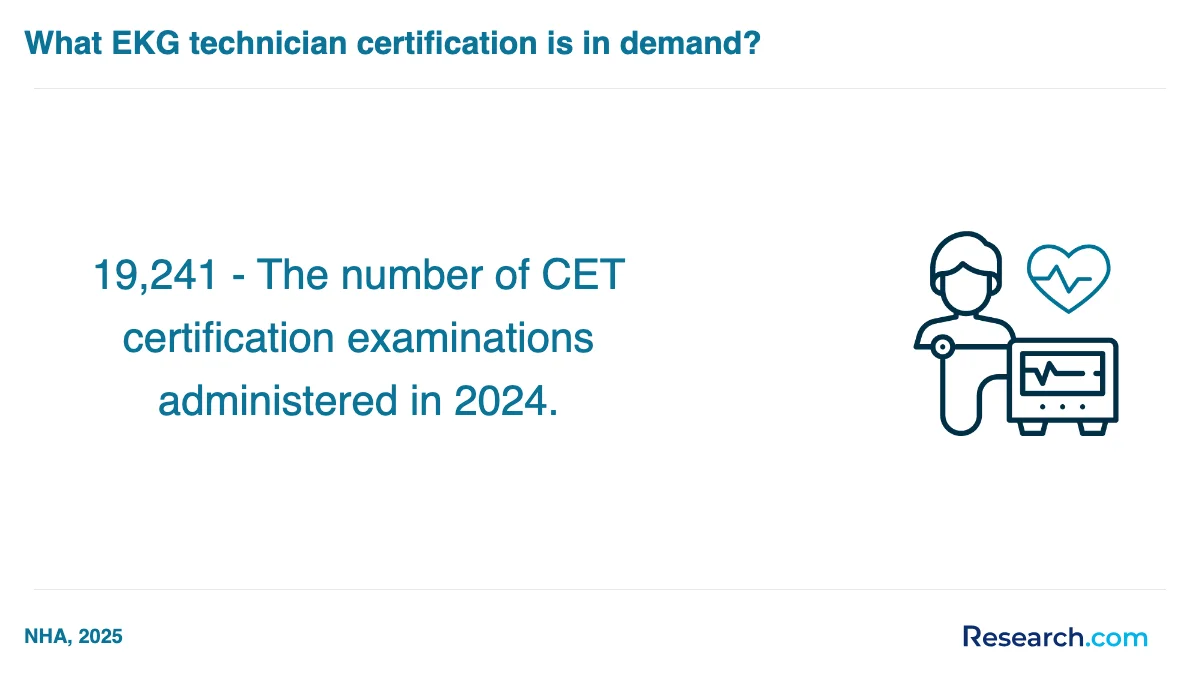
- Graduates can take national certification exams like the NHA CET or ASPT, which are required for most entry-level jobs.
- Entry-level EKG technicians in Massachusetts earn between $38,000 and $55,000 annually, with experienced technicians earning up to $65,000 or more.
How long does it take to complete EKG technician trade schools in Massachusetts?
Completing an EKG technician trade school program in Massachusetts typically takes between 3 to 6 months. Many graduates from well-known trade schools in the state share how this short, focused timeframe allowed them to quickly gain practical skills and enter the workforce without long delays. For example, students often enroll in programs that combine hands-on training with classroom instruction, helping them feel confident operating EKG machines by the time they finish.
One graduate recalled how the fast-paced curriculum fit well with their busy schedule, making it easier to balance studies with other responsibilities. Another appreciated the real-world practice labs that made learning feel tangible and relevant, turning complex concepts into everyday tasks they could master.
Massachusetts trade schools often offer flexible class schedules, including evening and weekend options, which adds to the appeal for adults seeking career changes. This practical approach means that by dedicating a few months, students can achieve certification and start working as EKG technicians, making the program a smart, efficient choice.
What's the difference between online and on-campus EKG technician trade school programs?
The key difference between online and on-campus EKG technician trade school programs in Massachusetts lies in how students engage with coursework and hands-on training. Graduates from North Shore Community College's online program appreciate the flexibility of studying theory through video lessons and digital textbooks at their own pace, which fits well around busy schedules. However, they also emphasize the importance of coordinating volunteer externships to gain needed clinical experience, which can feel challenging but rewarding.
On the other hand, students at Massasoit Community College enjoy structured, in-person classes where they directly handle EKG machines during lab sessions and receive immediate feedback from instructors. This hands-on approach often boosts their confidence and technical skills quickly.
Some students choose hybrid options like Bunker Hill Community College's program, benefiting from online theory combined with scheduled in-person labs, balancing flexibility with essential practical training.
What is the average cost of EKG technician trade schools in Massachusetts?
The average cost of EKG technician programs in Massachusetts varies significantly depending on the trade school and the length of the program. For example, graduates from North Shore Community College often reflect positively on their investment of $999 for a 50-hour certification course, which includes required materials and preparation for certification exams such as NWCA and NHA. This affordable tuition helps many students start their careers without undue financial strain.
Meanwhile, graduates from Springfield Technical Community College may recall paying $1,298 for an 80-hour program that incorporates the National Health Career Association exam fee, simplifying the process by bundling key costs. Similarly, students from Massasoit Community College appreciate the $899 price tag for their 60-hour non-credit certificate course, though they note that textbooks and workbooks are extra. This variety in tuition fees for EKG technician schools in Massachusetts allows students to find programs suited to their budget and schedule.
More intensive or extended options, such as the certificate offered by Labouré College of Healthcare, charge $333 per credit hour plus additional fees, reflecting a multi-semester commitment. Online learners at Regis College invest around $2,000 for a program designed to be completed in 2-4 months with a focused weekly schedule, appealing to those balancing work and study aspirations. Students pursuing the highest paid job in medical field often weigh these costs against the strong earning potential post-certification.
What financial aid is available for EKG technician trade schools in Massachusetts?
Students pursuing EKG technician programs in Massachusetts often find federal financial aid options limited, as many certificate courses, like the non-credit program at Berkshire Community College, do not qualify for Pell Grants or FAFSA. However, graduates from programs such as Bunker Hill Community College have benefited from state-level support like the Rapid Recovery & Reemployment (R3) Grant, which helps residents quickly retrain for new careers. This grant, targeted toward income and employment status, provides real relief for those eager to enter healthcare swiftly.
Many students also access workforce training vouchers through MassHire Career Centers, particularly when enrolled in MassHire-approved programs. These vouchers have helped unemployed or underemployed individuals gain valuable EKG skills without overwhelming debt.
Some graduates share how private scholarships or tuition reimbursement from healthcare employers eased their financial burden. Costs vary widely-typically $900 to $1,500-so checking with each school's financial aid office is crucial. For example, Massasoit Community College clearly states its program is not financial aid eligible, emphasizing the need to verify aid availability before enrolling.
What are the prerequisites for enrolling in EKG technician trade schools in Massachusetts?
To enroll in an EKG technician trade school program in Massachusetts, candidates typically must meet several practical prerequisites designed to set them up for success. Most schools expect applicants to have a high school diploma or GED, which ensures foundational knowledge in math and science. For example, graduates from well-known Massachusetts trade schools often share how their solid high school background gave them confidence in handling the technical aspects of EKG training.
Other common prerequisites include:
- Being at least 18 years old, as maturity helps when working with patients and medical equipment.
- Basic proficiency in English to understand medical terminology and communicate effectively in clinical settings.
- Some programs may require a background check and immunization records due to clinical placements.
- Completion of a CPR certification, since safety and emergency response are critical parts of the training.
Many students find that meeting these requirements beforehand helps smooth their transition into the program. Graduates often describe the reassuring feeling of entering the classroom ready, knowing they already possess the necessary basics, which allows them to focus fully on mastering EKG skills in hands-on labs and clinical experiences offered by Massachusetts trade schools.

What are the typical courses in EKG technician trade schools in Massachusetts?
EKG technician trade school programs in Massachusetts focus on practical, hands-on courses that prepare students to confidently enter the healthcare field. Graduates often highlight how courses in cardiac anatomy and physiology helped them understand the heart's functions, making EKG readings less intimidating during clinical rotations at popular trade schools around Boston.
Core courses typically include:
- Medical terminology for clear communication with healthcare teams and accurate documentation.
- Lead placement and EKG machine operation, where students practice placing 12-lead electrodes and handling real EKG equipment in labs.
- EKG interpretation, teaching how to identify normal and abnormal rhythms, a skill praised by graduates who felt more confident managing cardiac cases.
- Common cardiac diseases and medications, providing essential context for understanding patient conditions.
- Measuring vital signs and rapid response procedures, preparing students for quick decision-making in clinical environments.
These courses combine 40-80 classroom hours with 20-40 clinical hours, ensuring students get real-world experience that trade school alumni say was crucial for passing national certification exams and thriving in Massachusetts healthcare settings.
What are the available specializations in EKG technician trade schools in Massachusetts?
EKG technician specialization programs Massachusetts commonly cover key areas such as heart anatomy and physiology, electrocardiography, stress testing, and patient care. Graduates from popular trade schools like North Shore Community College quickly appreciate how comprehensive instruction on medical terminology, ethics, and legal issues prepares them for real-world challenges. Many programs include hands-on labs, enabling students to confidently perform 12-lead placements and operate EKG machines, which builds vital practical skills.
Massachusetts EKG technician certification courses often emphasize readiness for various healthcare settings, from hospitals to diagnostic labs. Graduates recall the confidence gained by mastering both theory and practice, which makes job entry smoother. Since certification isn't mandatory in Massachusetts, students are encouraged to pursue recognized credentials like the NHA Certified EKG Technician exam to boost their career prospects.
For those exploring options, combining coursework with practical labs and certification can significantly enhance employability. Students can also explore the best online healthcare certificate programs to supplement their training efficiently.
How do you choose the best EKG technician trade school program in Massachusetts?
To choose the best EKG technician trade school program in Massachusetts, prioritize accreditation and certification preparation. Graduates from Bunker Hill Community College often praise how the program's alignment with the National Healthcareer Association (NHA) exam boosted their confidence and job prospects. Carefully review the curriculum and hands-on training offered; Massasoit Community College's 60-hour course combines classroom lessons with practical labs, which many students find essential for mastering EKG skills.
Consider tuition costs and available financial aid to avoid surprises-Massasoit's $899 tuition plus materials is manageable, and exploring options like scholarships can ease the burden. Checking the location and schedule flexibility is vital for balancing work, as programs like AlliedRx Institute of Healthcare offer fully online courses so students can learn at their own pace.
Look into a school's reputation and post-graduation support. Quinsigamond Community College's modern facilities and positive reviews reassure students aiming for smooth transitions into the workforce. For affordable alternatives, explore the cheapest patient care technician training online to complement your search.
What career paths are available for EKG technician trade school graduates in Massachusetts?
Graduates of EKG technician trade school programs in Massachusetts find diverse EKG technician job opportunities in Massachusetts across healthcare settings like general hospitals, outpatient centers, and physicians' offices. Many report quickly securing roles where they administer EKG tests, monitor heart activity, and assist cardiology teams, gaining hands-on experience in fast-paced environments typical of top Massachusetts medical facilities.
Career advancement for EKG technicians in Massachusetts is equally promising. Graduates often expand into specialized roles such as Cardiac Monitor Technician or Stress Test Technician, or transition to supervisory and administrative positions. Some pursue further certifications and training to become vascular sonographers or noninvasive cardiovascular technicians. For instance, students from well-known Massachusetts trade schools have shared how their programs opened doors to these pathways by providing practical skills aligned with state healthcare demands.
Additionally, some graduates find rewarding work outside traditional clinical settings, such as data management roles with insurance companies. Students interested in expanding their qualifications might explore dialysis technician certification requirements, which complement cardiovascular expertise and broaden career options.
What is the job market for EKG technician trade school graduates in Massachusetts?
The job market for EKG technician trade school graduates in Massachusetts is strong and welcoming. Graduates report quickly finding positions in hospitals, outpatient clinics, and specialist cardiac centers, thanks to over 128 job openings statewide as of April 2025. Popular trade schools in Massachusetts provide hands-on training that prepares students exceptionally well for these roles, boosting their confidence and earning potential immediately after graduation.
Many graduates enjoy positive early career experiences, such as:
- Starting salaries near $35,000 with clear paths to earn above $100,000 annually
- Flexible schedules and opportunities in both urban Boston and smaller cities
- Access to travel EKG technician roles offering weekly pay rates up to $1,800 plus benefits
Considering the promising EKG technician job outlook in Massachusetts, graduates who earn certification and stay adaptable often find satisfying work quickly. For those exploring options, understanding what is the easiest medical course to take can streamline entry into this thriving profession - check details about this at what is the easiest medical course. This focus empowers students to embrace a rewarding healthcare career with strong prospects in the Bay State.
Frequently Asked Questions about EKG technician
After completing an EKG technician trade school in Massachusetts, preparing for the job market involves several key steps. First, obtaining certification from a recognized body such as the National Healthcareer Association (NHA) can significantly enhance employability. Employers in Massachusetts often prefer certified candidates.
Next, gaining practical experience through internships or externships offered by trade schools is crucial. These opportunities help students build skills and professional networks. According to the Massachusetts Department of Labor, cardiovascular technician roles are expected to grow by 10% through 2030, indicating strong job prospects.
Additionally, developing a professional resume that highlights clinical experience and certifications is important. Graduates should also consider joining local healthcare associations to access job listings and networking events.
Continuous education and staying updated on EKG technology trends in Massachusetts can further improve career advancement opportunities.
Employers in Massachusetts seek EKG technician graduates who demonstrate strong technical skills and clinical knowledge. Proficiency in operating electrocardiogram equipment and accurately recording heart activity is essential. According to the Massachusetts Department of Labor, attention to detail and the ability to recognize abnormal cardiac rhythms are critical competencies.
Communication skills also rank highly, as technicians must explain procedures clearly to patients and collaborate with healthcare teams. Additionally, employers value certification from recognized bodies like the Cardiovascular Credentialing International (CCI), which many trade schools prepare students for.
Time management and adherence to safety protocols are important to maintain efficient workflows in fast-paced clinical settings.
Finding internships in Massachusetts relevant to an EKG technician trade school program involves several practical steps. Start by contacting the career services offices of local trade schools or community colleges offering EKG training, as they often have established partnerships with healthcare facilities. Massachusetts hospitals, outpatient clinics, and diagnostic centers frequently offer clinical internships to support hands-on learning.
The Massachusetts Department of Higher Education also provides resources and listings for healthcare internships statewide. According to recent state data, nearly 60% of EKG technician students secure internships through school-affiliated programs. Networking with local professional organizations like the Massachusetts Society for Cardiovascular Technology can further increase internship opportunities.
Obtaining a diploma from an EKG technician trade school in Massachusetts significantly enhances career mobility and advancement opportunities. Graduates are often preferred by healthcare employers for entry-level positions due to their specialized training in cardiac monitoring and patient care. According to the Massachusetts Department of Labor, demand for cardiovascular technologists and technicians is projected to grow by 9% through 2030, reflecting strong job prospects.
Completion of a diploma program also enables eligibility for national certification exams, such as those offered by the Cardiovascular Credentialing International (CCI), which can lead to higher wages and promotions. Additionally, some employers in Massachusetts require formal certification for advanced technician roles.
Trade school diplomas provide foundational skills that facilitate further education or lateral moves within allied health fields, improving long-term career flexibility. This credential can also reduce barriers for candidates entering the workforce, supporting upward social mobility in the state's competitive healthcare sector.
In Massachusetts, part-time job opportunities that complement EKG technician trade school education include roles such as medical assistant, patient care technician, and phlebotomy technician. These positions provide hands-on experience with patient monitoring and basic clinical procedures, enhancing skills relevant to EKG work. According to the Massachusetts Executive Office of Labor and Workforce Development, healthcare support occupations are projected to grow by 12% through 2030, creating ample entry-level opportunities.
Working in outpatient clinics, hospitals, or cardiology offices allows students to apply theoretical knowledge in real-world settings. Additionally, some employers offer flexible shifts, making it easier to balance work and study. Gaining experience in these roles can improve employability upon completing the EKG program.
Choosing the best EKG Technician program near me in Massachusetts involves considering factors such as accreditation, curriculum, hands-on training opportunities, and graduate outcomes. Many universities and programs near Massachusetts offer specialized training that encompasses both theoretical knowledge and practical skills necessary for an EKG Technician role. As a helpful resource, Research.com can guide you in comparing different programs by offering detailed insights into their strengths and opportunities for growth.
Related EKG Technician Rankings for Nearby States
- Best EKG Technician Training Programs & Trade Schools - Top EKG Tech Schools in New York for 2026
- Best EKG Technician Training Programs & Trade Schools - Top EKG Tech Schools in Michigan for 2026
- Best EKG Technician Training Programs & Trade Schools - Top EKG Tech Schools in Georgia for 2026
- Best EKG Technician Training Programs & Trade Schools - Top EKG Tech Schools in Illinois for 2026
- Best EKG Technician Training Programs & Trade Schools - Top EKG Tech Schools in Florida for 2026
- Best EKG Technician Training Programs & Trade Schools - Top EKG Tech Schools in Louisiana for 2026
- Best EKG Technician Training Programs & Trade Schools - Top EKG Tech Schools in Texas for 2026
- Best EKG Technician Training Programs & Trade Schools - Top EKG Tech Schools in California for 2026
Top Trending Rankings
References
- How to Become an EKG Technician in Massachusetts | Dreambound https://dreambound.com/blog/how-to-become-an-ekg-technician-in-massachusetts
- Becoming a Certified EKG Technician in Massachusetts https://medassisting.org/ekg-technician/ma/
- Online Certified EKG Technician (Voucher Included) from Berkshire Community College https://careertraining.berkshirecc.edu/training-programs/certified-ekg-technician-voucher/
- EKG Technician | Online Certificate | Regis College https://www.regiscollege.edu/ekg-technician
- Electrocardiogram Certification West Lynn Massachusetts — NPS https://npscerts.com/ekg-certification-west-lynn-massachusetts/
- Medical Technology Certificates - Bunker Hill Community College https://www.bhcc.edu/medtech/
- Phlebotomy/EKG Technician - Direct Entry Certificate | Quinsigamond https://www.qcc.edu/healthcare/phlebotomyekg-technician-direct-entry-certificate
- EKG Certification | Earn your CET to become an EKG tech https://www.nhanow.com/certification/nha-certifications/certified-ekg-technician-(cet)
- How to Become an EKG technician | Salary & Requirements https://nurse.org/healthcare/EKG-technician/
- EKG Technician vs. Medical Assistant https://www.fhcaorlando.com/blog/ekg-technician-vs-medical-assistant


