2027 Operations Planning Roles You Can Target With a Supply Chain Management Degree

Co-Founder and Chief Data Scientist
Facing recurring bottlenecks in production schedules or distribution inefficiencies, supply chain management graduates must tackle complex operational decisions that directly affect profitability and customer satisfaction. A 2024 National Center for Education Statistics report notes a 12% increase in enrollment among adult learners pursuing supply chain-related degrees online, reflecting growing demand for flexible programs that fit work schedules and accelerate workforce integration.
This shift signals prospective students must weigh accessibility and skill relevance carefully to avoid credential mismatches or delayed career entry. As such, this article explores key operations planning roles suited to supply chain management graduates, clarifying viable career paths and strategic positioning to overcome real-world operational challenges.
Key Things You Should Know
- Roles emphasizing digital integration in operations planning demand advanced analytics skills, but programs with a heavy data science focus often increase time and cost by 20-30%, impacting return on investment for mid-career pivots, per National Center for Education Statistics 2024.
- Employers report a 65% preference for candidates with applied forecasting and demand planning experience over purely theoretical credentials, creating workforce pressure for experiential learning in supply chain management degrees, according to Gartner's 2024 Talent Report.
- Tradeoffs exist between operations strategy roles requiring broad cross-functional knowledge and highly specialized positions in inventory optimization; graduates face narrower employment windows if program scope is too narrow, per Bureau of Labor Statistics 2024 projections.
What operations planning roles can you pursue with a supply chain management degree?
Operations roles accessible to supply chain management degree graduates extend beyond entry-level coordination into strategic production planning and inventory optimization. Production planners, integrating demand forecasting with resource scheduling, often operate in industries such as automotive or consumer goods where just-in-time manufacturing demands precise timing to avoid costly delays. Demand planners apply data analytics to reduce revenue-impacting stockouts or excess inventory, a skill particularly valued in retail and wholesale distribution environments where consumer trends shift rapidly.
Inventory control analysts work closely with procurement and warehousing teams to manage stock levels amid strict regulatory frameworks typical of pharmaceuticals or food processing. Such roles require balancing compliance risks and turnover efficiency to safeguard supply continuity.
The progression to industrial production manager—the senior tier for operations planning careers for supply chain management graduates—involves leadership over multi-functional teams and workflow optimization. These managers earned a median wage of $120,090 in 2025, with top earners surpassing $190,000, reflecting the complexity and value attributed to this role. Employers prioritize candidates proficient in ERP systems, advanced Excel, and nuanced analysis of supply chain variables, especially when addressing capacity bottlenecks and production alignment issues under time pressures.
Career advancement often hinges on mastering sector-specific compliance, particularly in healthcare or aerospace, due to heightened risk mitigation demands.
For those evaluating supply chain management degree jobs in operations planning, the practical realities include navigating fluctuating market demands and regulatory constraints while sustaining cost controls and quality standards. Prospective students seeking structured learning pathways might consider a business administration degree online as a complementary credential.
How does a supply chain management degree prepare you for operations planning careers?
A supply chain management degree directly equips candidates for operations planning roles in the United States by emphasizing critical skills such as demand forecasting, inventory control, and resource allocation. These competencies address practical workforce needs, particularly given the sector's growing reliance on analytics tools projected to expand at over 11% annually through 2027.
Professionals must translate complex data into actionable strategies that balance production with variable market demand, a challenge that varies by industry. For example, automotive operations planners contend with long supplier lead times and parts compatibility, whereas retail planners must rapidly adjust to seasonal shifts and high turnover.
Essential skills gained from a supply chain management degree for a career in operations planning include scenario modeling for disruptions, interpreting multifaceted data inputs, and devising flexible contingency plans—abilities critical for navigating supply chain volatility exacerbated by global logistics challenges. Employers increasingly value graduates who integrate predictive analytics with ERP software to reduce stockouts and excess inventory, improving operational agility and cost control.
Practical hurdles remain, notably mastering the balance between digitized forecasting and human judgment to ensure outputs align with broader economic forces and corporate strategy. Coursework blending case studies with live data analytics enhances candidate readiness for these real-world scenarios.
Those evaluating this path should also consider complementary business qualifications, such as an affordable online MBA, to expand strategic insight and leadership capacity beyond technical supply chain functions.
What are the main differences between operations planning and broader supply chain roles?
Operations planning prioritizes immediate control over resource flow, production timing, and inventory within specific supply chain segments, differing sharply from broader supply chain roles that integrate procurement, logistics, and fulfillment across global networks. This distinction—central to the differences between operations planning and supply chain roles—means operations planners focus on short- to mid-term execution such as capacity utilization and demand forecasting accuracy, directly influencing operational efficiency and cost containment.
For instance, an operations planner in automotive manufacturing manages parts sequencing to meet just-in-time production targets. By contrast, supply chain managers tackle strategic decisions like supplier selection and network resilience to secure material availability despite geopolitical risks. Employers expect operations planners to resolve scheduling conflicts and shortages quickly with strong analytical acuity, while supply chain managers require collaborative and strategic prowess across functions.
The critical industry context includes a global warehouse market projected to reach $1.73 trillion by 2030, intensifying demand for specialists skilled in inventory optimization and resource allocation.
Prospective students weighing key responsibilities in operations planning versus supply chain management must recognize these tradeoffs and operational realities when choosing an educational path. Curricula focusing on quantitative planning tools differ substantially from those emphasizing strategic sourcing and network design.
Those evaluating options for advancing their careers should consider programs that balance tactical skills with broader strategic insight, such as the cheapest AACSB accredited online MBA, which can prepare students for the nuanced demands spanning both domains.
Which entry-level and mid-level operations planning jobs are open to new graduates?
Entry-level operations planning jobs for supply chain management graduates typically involve roles such as production planner, demand planner, inventory analyst, and logistics coordinator. These positions require proficiency in data analysis, forecasting, and cross-functional communication, with practical knowledge of ERP systems like SAP or Oracle.
Graduates often find relevant opportunities in manufacturing, retail, and transportation sectors, where coordinating production schedules and inventory levels is essential for operational efficiency.
Mid-level operations planner positions available for new supply chain management degree holders expand responsibilities to include strategic planning, resource allocation, and supplier negotiation. For example, a production planner in the automotive industry must optimize just-in-time inventory approaches to reduce costs and avoid downtime, whereas a demand planner in consumer goods focuses on aligning stock with rapidly changing seasonal patterns. This contrast demonstrates how industry context shapes the application of operations planning skills.
Supply chain graduates also face challenges such as mediating priorities between procurement and manufacturing or adapting plans amid supply disruptions, requiring agility and data-driven decision-making. Hiring managers increasingly expect candidates to transform raw data into actionable insights and automate routine tasks, emphasizing the importance of technical skill development alongside traditional planning knowledge.
According to the U.S. Bureau of Labor Statistics, logisticians, including those in planning roles, are projected to grow 17% from 2024 to 2034, with about 26,400 openings annually—a rate more than double the average for all jobs. These trends highlight a growing market for planners adept at managing complexity and resilience in supply chains.
Students considering this field should carefully evaluate educational programs for practical training and industry relevance, including options like construction management degrees that sometimes overlap in operational methodologies.
What skills and coursework are most important for operations planning positions?
Operational planning in supply chain management hinges on mastering quantitative analysis and forecasting models that endure real-time complexity. Candidates well-versed in statistics, operations research, and demand forecasting tools can craft production schedules and inventory strategies that reflect industry volatility—such as the precision necessary for just-in-time manufacturing or the seasonal swings inherent to retail.
Hiring trends emphasize proficiency not merely in advanced Excel but also in enterprise platforms like SAP IBP or Oracle Demantra, where speed in extracting actionable insights from extensive datasets separates competitive candidates. Soft skills—particularly negotiation and cross-functional communication—are equally significant since planners must synchronize efforts between procurement, logistics, and sales to balance supply commitments against fluctuating demand.
Workforce data reveals median U.S. supply chain base salaries around $98,500 and total comp near $103,500, with 77-78% of professionals receiving raises, indicating growing demand for integrated planning expertise.
Effective practitioners navigate competing priorities—cutting carrying costs without risking stockouts or launch delays—by developing contingency plans grounded in scenario analysis, which is best learned through hands-on projects rather than theory.
Programs prioritizing experiential learning and internships better prepare graduates to make nuanced supply chain decisions under uncertainty, directly impacting employability and career trajectory in sectors prone to disruption such as pharmaceuticals or consumer electronics.
How do online and on-campus supply chain programs compare for operations planning careers?
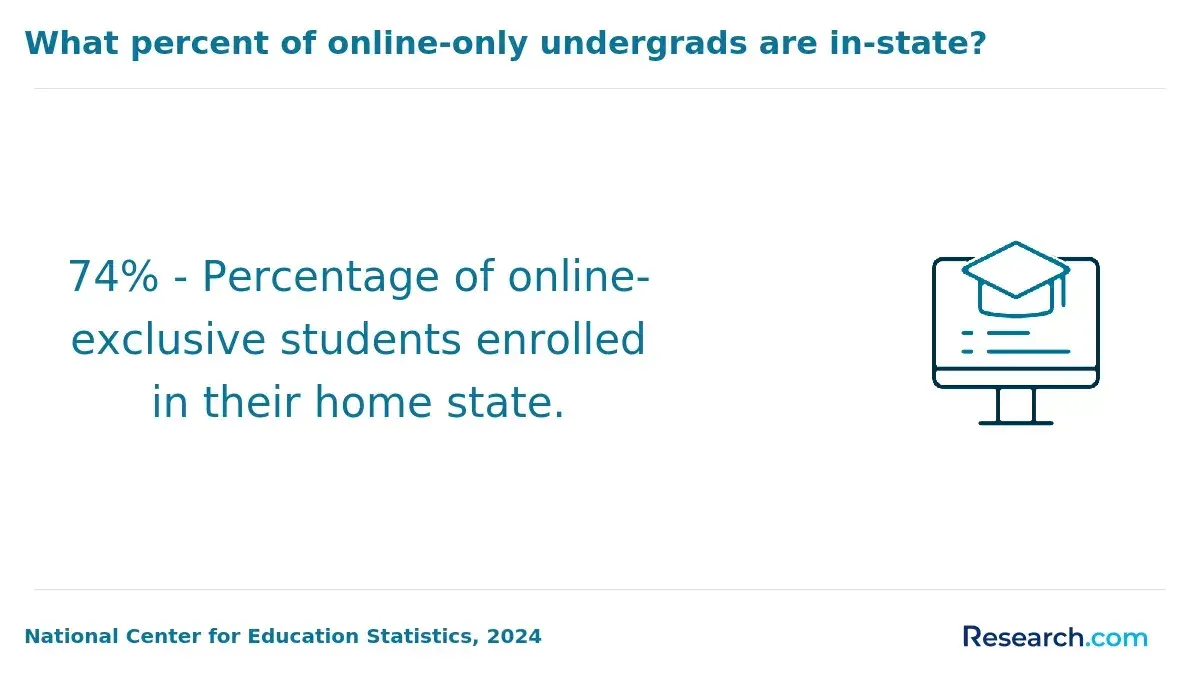
Employers prioritize practical experience alongside academic credentials when evaluating supply chain candidates, a distinction that sharply differentiates on-campus and online program graduates. On-campus supply chain programs offer direct access to hands-on learning through internships, lab simulations, and local industry networking, which employers in operations roles—such as inventory analysts—value highly for demonstrating real-time problem-solving with operational software.
Conversely, online students often must seek out remote internships or certifications independently, posing a challenge to timely skill acquisition in applied environments.
For instance, a manufacturing firm assessing inventory management candidates favors those with supervised projects or site visits typical in on-campus tracks, reflecting readiness to apply theoretical knowledge practically. Salary projections support this reality, with supply chain specialist roles averaging $71,414 in 2025 after consistent growth driven by demand for candidates with verifiable applied competencies.
Prospective students should assess their ability to independently obtain applied experience alongside coursework, as this integration strongly influences employability and compensation in a field increasingly measured by practical performance.
What accreditation and industry standards should supply chain operations planning programs meet?
Accreditation from recognized bodies like the Association to Advance Collegiate Schools of Business (AACSB) or the Accreditation Council for Business Schools and Programs (ACBSP) directly impacts the relevance and employability of supply chain operations planning graduates.
Employers distinctly favor candidates from programs tied to practical certifications such as the Demand Driven Institute's Certified Demand Driven Planner (CDDP) or APICS because these validate applied skills in forecasting, inventory optimization, and logistics coordination rather than purely theoretical knowledge.
Industry-specific demands illustrate the tangible difference: automotive manufacturing planners benefit most from programs emphasizing lean inventory models and specialized software integration, often found in AACSB-accredited curricula. In contrast, pharmaceutical supply chain professionals require compliance training aligned with FDA regulations, typically embedded in ACBSP-accredited programs combined with targeted industry certifications.
Failing to verify program accreditation can restrict access to higher-paying roles in transportation, storage, and distribution management, where median wages range from $61,200 for entry-level positions to $180,590 for senior roles according to the U.S. Bureau of Labor Statistics, as referenced by the University of Arizona Global Campus.
Accreditation also influences a program's incorporation of emerging trends such as AI-driven planning tools and sustainability metrics, which employers now consider indispensable for operational advantage.
What are typical salary ranges for operations planning roles with a supply chain degree?
Operations planning roles tied to a supply chain management degree present significant salary variation based on job function, experience, and industry, ranging roughly from $55,000 to $110,000 annually. Entry-level procurement analysts perform foundational purchasing and vendor analysis with salaries between $55,000 and $70,000, while mid-level production or supply planners managing inventory and demand forecasting typically earn $70,000 to $90,000.
Senior positions demand advanced skills in data analytics, ERP systems, and strategic sourcing, commanding upwards of $90,000 to $110,000 or more, especially in manufacturing and logistics sectors.
Geographic location and industry complexity play pivotal roles in compensation. For example, automotive and consumer goods firms often offer higher pay, reflecting operational scale and complexity, whereas smaller retailers may compensate toward the lower spectrum. Candidates must weigh these factors against mobility and willingness to operate in regional hubs with greater demand.
Hiring data from Procurement Tactics cited by the University of Arizona Global Campus shows over half of companies in 2025 actively recruit supply chain management professionals to close skill gaps, pressuring firms to seek candidates with specialized technical capabilities.
Practical career progression hinges on proficiency with advanced planning software and continuous improvement methods. Without these competencies, salary growth frequently stagnates early. Realistically, professionals must demonstrate measurable impact on cost reduction and efficiency to justify upper-tier salaries.
What is the job outlook and industry demand for operations planning professionals?
Operations planning roles demand a hybrid of analytical rigor and practical experience, especially in e-commerce-driven sectors where distribution optimization directly impacts profitability. For instance, a consumer goods company scaling its online channel must align inventory management with fluctuating demand and warehouse capacity constraints.
Candidates with supply chain management degrees who combine data analytics fluency with operational know-how hold a decisive advantage over those anchored in theory alone.
The labor market for planners is uneven: manufacturing, retail, healthcare, and logistics aggressively seek professionals adept at integrating digital supply chain technologies and collaborating cross-functionally.
Meanwhile, industries with slower technological adoption may offer fewer openings and limited upward mobility. Maintaining relevance requires continuous technical skill enhancement to navigate this split landscape effectively.
Career trajectories involve distinct tradeoffs—early-career roles often focus on execution within established systems, whereas senior positions demand leadership in AI-driven transformation and risk mitigation strategies. The unexpected 16% turnover rate reported by the 2025 ASCM Supply Chain Salary and Career Report signals both urgent employer demand and a competitive environment where networking and demonstrated impact shape advancement opportunities.
Graduates and mid-career changers should target employers actively investing in technology-enabled supply chains, aligning job scopes with their hands-on experience in demand forecasting, inventory control, and capacity planning to maximize employability and sustained growth.
How can internships, certifications, and early experience boost operations planning prospects?
Practical experience through internships and certifications decisively affects early career outcomes in operations planning for 2026. For instance, a logistics intern who directly contributed to a 15% reduction in cycle times gains quantifiable evidence of skill application, setting them apart from peers limited to classroom learning. Employers increasingly require this level of demonstrated capability as they navigate complex supply chains demanding swift adaptation and measurable impact.
Certifications like APICS CPIM validate proficiency in advanced analytics, ERP systems, and lean operations-skills prioritized in Sigmar Recruitment's Supply Chain Job Market Outlook 2026 due to rising competition and salary pressures for data-savvy planners.
However, credentials alone are insufficient without complementary project leadership or cross-functional collaboration experience, which signal readiness to integrate analytical insights with broader strategic roles.
The balance between technical depth and operational adaptability influences hiring decisions, as candidates who understand both data-driven tools and organizational dynamics often shorten onboarding times.
Without internships or certifications, professionals may face stagnation or lower entry-level offers despite retention incentives; pursuing a structured pathway anchored in analytics-focused internships and recognized certifications offers a practical roadmap aligned with forecasted skills shortages.
Other Things You Should Know About Supply Chain Management
Many supply chain management programs emphasize analytical tools such as forecasting models, inventory optimization, and data analysis. If your goal is to avoid intense quantitative work, carefully review program curricula for balance between analytical and managerial content. Employers expect planners to use data-driven tools regularly, so bypassing quantitative skills can limit your effectiveness and career growth in operations planning roles.
Shorter, accelerated supply chain management programs may cover essential theory but often lack the comprehensive project-based learning that fosters critical decision-making skills needed for operations planning. Longer programs typically offer deeper exposure to supply chain complexities, simulations, and case studies, which better prepare graduates for the nuances of demand forecasting, capacity planning, and risk mitigation. Choosing a program with substantial experiential learning leads to more immediate confidence and competence in planning roles.
Specialized supply chain planning degrees focus intensively on operations, logistics, and analytics, aligning closely with employer needs for planning accuracy and efficiency. Broader business degrees provide versatility but risk leaving you underprepared for technical demands and industry-specific software used in planning. If your goal is a targeted operations planning career, a specialized degree equips you with focused skills, while broader degrees may require supplementary training to meet employer expectations for planning precision.
References
- Supply Chain Jobs Salary: What to Expect https://www.ism.ws/careers/supply-chain-jobs-salary/
- How to Become a Successful Operations Planner | jobup.ch https://www.jobup.ch/en/occupations/operations-planner/
- Career where planning is important: Top jobs 2026 https://skillpanel.com/blog/career-where-planning-is-important/
- Top 10: Supply Chain Accreditations | Supply Chain Magazine https://supplychaindigital.com/supplier-relationship-management-srm/top-10-supply-chain-accreditations
- Operations Director Career Guide: Skills and Qualifications | CCM https://www.uniccm.com/blog/operations-director-career-guide-skills-and-qualifications
- How to Start a Successful Demand Planning Career https://demand-planning.com/2025/07/14/how-to-start-a-successful-demand-planning-career/
- What is Supply Chain Planning? Process, Steps & Benefits https://aims.education/supply-chain-planning-process-and-systems/
- What Can You do with a Supply Chain Management Degree? https://www.global-business-school.org/content-type/blog/what-can-do-supply-chain-management-degree/