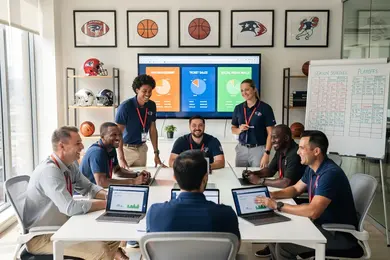
2027 Best Online Bachelor's in Sport Management for Fan Experience Roles

Co-Founder and Chief Data Scientist
Professionals aiming for fan experience roles face the challenge of acquiring specialized skills while balancing demanding schedules and geographic limitations. With 62% of adult learners now prioritizing flexible online formats according to the National Center for Education Statistics in 2024, accessibility has transformed but remains uneven across programs.
This growth mirrors workforce expectations for candidates who combine academic credentials with practical experience and adaptability to digital tools shaping fan engagement. Choosing an online bachelor's program that aligns with evolving industry demands and time constraints requires more than surface-level comparison-it demands a strategic evaluation of curricula, accreditation, and career support. This article examines the best online bachelor's in sport management focused on fan experience roles, guiding decision-makers through critical factors that influence employability and real-world readiness in this competitive field.
Key Things You Should Know
- 43% of sport management roles with a fan experience focus demand digital marketing and data analytics skills per 2024 Sports Tech Analytics Report, forcing candidates to weigh traditional curriculum depth against emerging tech proficiency.
- Employers prioritize graduates with 1+ year of industry internships as 72% of fan engagement jobs cite practical experience over GPA, indicating experiential learning trumps purely academic credentials for frontline hiring.
- Average online bachelor's total cost variation exceeds 35% nationally, impacting time-to-hire due to delayed degree completion for working professionals balancing full-time jobs, based on National Center for Education Statistics 2024 data.
What is an online bachelor's in sport management?
Choosing an online bachelor's degree in sport management programs requires balancing practical industry demands with individual learning circumstances. These programs specifically prepare students for operational, marketing, and leadership roles focused on fan engagement within sports and entertainment sectors.
Graduates often manage fan experience initiatives such as designing fan zones, optimizing ticketing systems, and coordinating digital outreach for professional teams or recreational organizations. Prospective students should consider that many roles demand familiarity with data-driven marketing and customer relationship management tools essential for enhancing fan satisfaction and retention.
Employers expect graduates to combine sport-specific operational knowledge with business principles, reflecting the evolving complexity of managing fan engagement strategies effectively. For example, a graduate might deploy mobile applications that improve game-day experiences in large venues.
Employment growth projections support career viability: entertainment and recreation manager jobs are expected to expand 7.7% between 2024 and 2034, with a median wage near $77,000. However, remote learning requires disciplined time management and reliable technology access, which can be challenging for working professionals.
Accreditation, curriculum relevance to current industry software, and internship opportunities should also be factored into enrollment decisions. Those targeting mid- to upper-level roles must understand these tradeoffs while leveraging an online sports management bachelor's degree as a strategic credential that aligns academic preparation with workforce expectations. More detailed program options and comparisons can be explored at online sports management bachelor's degree.
Which accreditations matter for online sport management programs?
Regional accreditation remains the baseline credential ensuring that online sport management degrees meet broad academic standards required for credit transfer and federal financial aid. Yet, the specialized accreditation from bodies like the Commission on Sport Management Accreditation (COSMA) directly shapes employability in sport-centric roles, particularly those involving fan experience.
Employers in professional sports increasingly assess whether applicants have completed COSMA-accredited programs emphasizing practical skills such as experiential marketing, fan analytics, and event operations. For example, a franchise hiring manager may bypass candidates lacking these specialized credentials, as non-accredited degrees often skew theoretical and detached from real-world operational demands.
Decisions about program quality should integrate outcomes beyond accreditation alone. Graduates from the University of Iowa's online sport and recreation management program-which holds both regional and specialized accreditations-report a median salary of $65,473 four years post-graduation.
This data suggests that verified accreditations plus industry-aligned curricula correlate with higher economic returns in a competitive job market centered on fan engagement roles. Prospective students must verify accreditations for online sport management programs in the US to avoid limiting access to internships and professional networks essential for career progression.
Missing COSMA endorsements can constrain practical experience opportunities and reduce market relevance. Students evaluating this pathway should weigh these accreditation tradeoffs alongside core academic requirements. Beyond sport management, individuals exploring accelerated pathways might also consider an accelerated construction management degree online, another field where accreditation and curriculum rigor substantially impact employability and career trajectory.
How do online and campus sport management degrees compare?
Choosing between an online sport management degree vs campus program hinges on evaluating practical employability outcomes alongside tuition differences. Online degrees average $555 per credit hour, surpassing typical bachelor's costs, yet this premium must be weighed against access to direct experiential learning.
Campus programs often embed structured internships and networking with local sports entities, vital for fan experience roles where real-world event management drives hiring decisions.
Differences between online and traditional sport management courses center on hands-on exposure and geographic flexibility. Online students benefit from balancing full-time work or out-of-state living but must proactively secure local internships to build operational skills valued by employers.
Campus students gain easier access to live events and mentorship, which can translate into immediate resume impact but may face regional constraints after graduation. Prospective students should ask if the online curriculum includes partnerships enabling practical engagement in sports franchises or event organizations.
Without such integration, higher online costs risk diminishing return on investment since theoretical knowledge alone rarely suffices for client-facing fan experience positions. For those comparing costs across programs, examining alternatives like construction management courses may reveal different price-performance dynamics in related fields.
What courses are in a sport management curriculum?
Choosing a sport management degree curriculum courses requires weighing operational readiness against theoretical knowledge. Core courses in sport management programs typically cover sport marketing, event management, facility operations, and consumer behavior analysis-essential for roles focused on fan engagement.
Understanding sport finance and economics is not optional; it dictates how graduates tailor experiences within varying contexts, such as professional leagues versus collegiate systems. Legal and ethical course components translate directly into compliance with ticketing policies and fan interaction protocols.
Advanced offerings emphasize analytics and data interpretation to analyze fan demographics and social media trends, a skillset employers now expect for developing personalized loyalty programs. Real-world application through internships or projects connected to teams or venues is a decisive factor in employability, training students to address challenges like adapting stadium operations amid public health crises or integrating mobile technologies for fan engagement.
Given the field's growth-reflected by Educations.com's notation of 87 bachelor's degrees in sports management available online for 2025-prospective students must discern programs' emphasis on hands-on skill-building versus abstract frameworks. Graduates without experience in venue technology or CRM platforms often encounter transition difficulties in fan experience roles.
Practical curriculum balance includes foundational business coursework alongside specialized management studies. For those considering a pivot into this sector, researching pathways such as online accelerated nursing programs for non nurses highlights the importance of program format and applied outcomes when evaluating options outside traditional tracks.
What admission requirements do online sport management programs have?
Admission standards in sport management programs directly influence graduate readiness and market competitiveness. Entry requirements typically include a high school diploma or equivalent, with GPA cutoffs generally between 2.5 and 3.0, though some institutions waive standardized test scores to emphasize academic records and pertinent experience.
Letters of recommendation and personal statements remain common to evaluate applicant alignment with sector-specific career goals. Tradeoffs arise between accessibility and program rigor: less stringent admissions often correlate with limited industry exposure and fewer networking channels, which can impair job placement in fan experience or operational roles within major sports organizations.
Conversely, comprehensive application criteria often signal stronger faculty involvement and connections, enhancing internship and employment prospects. Cost disparities also present significant considerations.
Total tuition can range from about $15,502 for in-state attendees at a public university to $66,314 for out-of-state students elsewhere, demanding that applicants weigh affordability against educational value and potential return on investment. Working professionals aiming for expedited pathways may benefit from programs accepting prior credits or relevant work experience, easing degree completion amid employment.
Applicants should also assess logistical factors such as credit transfer policies, part-time enrollment opportunities, and asynchronous course formats to balance ongoing job commitments. Strategically tailored application materials aligned with targeted fan experience roles increase admission success and ultimately support improved employment outcomes.
How long does an online sport management bachelor's take and cost?
An online bachelor's degree in sport management demands careful consideration of time investment versus financial cost and career timing. Accelerated programs accelerate the typical four-year timeline to three years by leveraging credits or year-round study, but this intensity may restrict working professionals' ability to maintain employment.
Conversely, part-time enrollment extends completion to 5-6 years, deferring mid-level role eligibility but easing financial strain. Tuition varies widely: public in-state rates generally range from $6,000 to $12,000 annually, while private institutions can exceed $30,000 per year, resulting in total program costs from roughly $24,000 to over $120,000.
Financial aid, employer tuition assistance, and military benefits can materially reduce net expenses, but students must scrutinize transfer credit policies to avoid paying for duplicated coursework. Technology fees and materials add to budget considerations beyond sticker tuition.
Employers in fan experience operations prioritize demonstrated, practical skills in guest relations, promotions management, special events coordination, and sales management. Programs offering internships or experiential learning with sports venues notably improve employability compared to purely academic coursework.
Accreditation quality and program reputation weigh significantly in hiring decisions, often more than minor cost differences. Pragmatically, students should evaluate program curricula for measurable career outcomes tied to fan engagement roles requiring both business skills and digital interaction capabilities. These workforce expectations shape long-term return on investment and career trajectory.
What jobs can you get with a sport management degree?
Jobs tied to sport management degrees require mastering operational complexities behind fan engagement and event execution, not just theoretical business concepts. For example, event coordinators must efficiently manage live sporting events to optimize attendance and satisfaction while adhering to tight schedules and budgets.
Fan engagement roles demand proficiency in data analytics and digital marketing tools to design targeted campaigns that directly influence ticket sales and brand loyalty. Entry points often include facility operations or community outreach positions, with advancement contingent on demonstrated ability to manage multi-million-dollar budgets and cross-functional teams.
Competition intensifies dramatically at the professional sports level, where breaking in typically requires focused internships and strategic networking. In contrast, collegiate or municipal venues present fewer barriers but usually offer lower median wages and limited upward mobility.
Louisiana State University's online bachelor's in sport administration graduated 159 students in one year with a median salary around $57,216, aligning with the Bureau of Labor Statistics range of $45,000 to $70,000. This illustrates the potential of online pathways without sacrificing market relevance, though geographic flexibility remains critical, as major cities concentrate fan experience roles linked to large franchises.
To overcome operational and technological challenges, candidates benefit from supplementary certifications in digital marketing or CRM systems, especially given demands for contract negotiation and coordination across departments. Practical experience navigating evolving fan engagement platforms significantly impacts career trajectory in this competitive field.
Do fan experience roles require certifications or licenses?
Formal certifications are rarely decisive for roles in fan experience; employers prioritize demonstrated, hands-on abilities developed through internships or real-world exposure. For example, programs like Monroe University's online sport management bachelor's require 63 credits of major coursework combined with a mandatory internship, embedding essential practical skills and industry networking.
This approach aligns with industry expectations, where familiarity with event operations and fan engagement technology outweighs possession of certificates. Candidates who complete internships gain distinct advantages: they become versed in real event logistics, adept at navigating in-arena technologies, and connected within the professional network-assets that often accelerate hiring and increase job responsibilities.
Consider a fan experience coordinator at a professional sports venue who must handle crowd control, sponsor relations, and technical issues simultaneously; these dynamic pressures demand adaptable problem-solving best learned on the job rather than through certifications. While hospitality or event management certificates might offer some supplementary value, they rarely substitute for applied experience.
The U.S. Bureau of Labor Statistics confirms that experiential learning and network capital dominate factors shaping career progression in fan engagement. Choosing education pathways centered on accredited internships or project-based learning better prepares students to navigate market realities, while costly licensing with limited industry demand presents questionable returns.
What salary can sport management graduates expect in fan experience?
Starting salaries for sport management graduates targeting fan experience roles typically range from $45,000 to $60,000 annually, with variations influenced by location, employer scale, and job scope. Entry-level roles in fan engagement or digital audience management generally offer compensation near $45,000, but those who apply advanced marketing and data analytics skills can see growth to the mid-$60,000s within three to five years.
Employers in major sports markets or with robust digital platforms tend to pay above-average salaries, reflecting the competitive demand for professionals who can enhance fan loyalty and revenue generation. Specializations in marketing and fan engagement have become essential components of modern sport management education.
Graduates who demonstrate the ability to drive measurable engagement, such as increasing fan interaction through social media campaigns or immersive technologies, hold a distinct advantage. For instance, a graduate hired by a mid-sized professional team might start around $48,000 and advance quickly by delivering tangible fan growth.
Salary progression is often tied to the capacity to transform fan data into actionable strategies. Entry-level candidates are expected to be proficient in data analysis and customer relationship management tools to surpass median pay benchmarks. Those pursuing roles in collegiate athletics or smaller markets often face lower starting salaries, requiring broader skill sets-such as event planning and sponsorship coordination-to remain competitive and increase earning potential.
How do you choose the best online sport management program?
Choosing an online sport management program designed for fan experience roles requires prioritizing curricula that develop leadership capacities aligned with athletic director and facilities manager career paths. Data from College Raptor confirms sustained demand for sports and recreation leadership from 2024 to 2034, making it essential to focus on programs offering skills beyond foundational sports knowledge.
Emphasis on event management, venue operations, and fan engagement analytics directly translates into enhancing stadium and arena environments. Accreditation and industry engagement are critical indicators of program quality.
Programs that incorporate advisory boards featuring sports franchise executives or marketing professionals facilitate stronger internship pipelines and mentorship opportunities. Expect coursework that engages with real-world systems-such as fan loyalty initiatives and digital customer engagement tools-since these competencies are prerequisites for fan experience positions.
Flexibility is a practical consideration, especially for working professionals. Asynchronous coursework combined with career counseling targeted to sport management allows balancing professional commitments without foregoing meaningful skill application. For instance, someone transitioning mid-career into fan experience operations benefits from courses structured around evening or weekend schedules.
Finally, measurable graduate outcomes-employment within 6-12 months in relevant leadership roles or documented career advancement-provide tangible evidence of a program's workforce impact, contrasting with schools that rely on promotional claims. These data points, together with College Raptor's labor market forecasts, ground your decision-making process in verifiable career progression.
Other Things You Should Know About Sport Management
In 2027, top online bachelor's programs in Sport Management emphasize digital engagement, event management, and fan analytics, which are integral to fan experience roles. These programs offer flexibility for working students, allowing them to balance professional and academic commitments while gaining crucial skills for fan-focused careers.
Internships are critical in sport management because fan experience roles demand practical skills that coursework alone rarely provides. Employers prioritize candidates with hands-on exposure to event operations, customer engagement technology, and team collaboration under real-world conditions. Graduates should choose programs with integrated or mandated internships, as this experience is often the deciding factor in hiring decisions and can significantly shorten time to employment.
Employers usually prioritize candidates with sport management degrees that include a concentration aligned with fan experience, such as event management or digital fan engagement. General degrees may demonstrate foundational knowledge but can leave graduates at a disadvantage when competing with those who have targeted skills and practical applications. Prospective students aiming for fan experience should choose programs offering specialization and relevant applied projects to increase their marketability.
Strong alumni networks provide critical access to mentorship, job referrals, and industry insights necessary to enter competitive fan experience roles. Programs lacking these connections may produce graduates with solid academic credentials but limited entry points into the field. Prioritizing schools known for active and engaged alumni in sport management increases career mobility and positions graduates for faster promotions or lateral moves into specialized roles.
References
- Online Bachelor of Science (BSc) in Sports Management - Swiss School of Business and Management Geneva https://www.ssbm.ch/online-bachelor-sports-management/
- Sport Management Courses: What to Expect https://www.dean.edu/news-events/dean-college-blog/story/sport-management-courses-what-expect/
- What are the career options after a master's degree in sports management? - INSEEC https://www.inseec.com/en/guides/career-path-guide/what-are-the-career-options-after-a-masters-degree-in-sports-management/
- Online Master’s Degrees in Sports Management: Find the Right School https://www.onlinemastersdegrees.org/best-programs/business/sports-management/
- Sports Management Degree Requirements | University of Bridgeport https://www.bridgeport.edu/news/sports-management-degree-requirements/
- What can you do with a sports management degree? - AISTS https://aists.org/what-can-you-do-with-a-sports-management-degree/
- Bachelor's in Sports Management Online | UWA https://online.uwa.edu/online-degrees/bachelors-sports-management/
- Sports Management degree becomes first in the world to gain DMI accreditation https://www.ucb.ac.uk/about-us/news-and-insights/sports-management-degree-becomes-first-in-the-world-to-gain-dmi-accreditation/
- Careers That Require a Certification or License https://www.columbiasouthern.edu/blog/blog-articles/2025/february/jobs-careers-require-license-certification/
- Sports Job Training & Certification Courses | Sports Management Worldwide https://www.sportsmanagementworldwide.com/courses