2027 Public Health Careers Most Resilient to Automation

Co-Founder and Chief Data Scientist
A midcareer public health professional confronted with surging automation faces a high-stakes dilemma: how to upskill without jeopardizing current employment or incurring prohibitive costs. This is particularly urgent as the Bureau of Labor Statistics projects a 14% growth in health education and community health worker roles over the next decade, signaling demand for skills resistant to routine automation. Yet, many traditional programs lack the flexibility needed by working adults, with just 18% of master's in public health programs fully online as of 2024, according to recent NCES data. Understanding which roles blend resilience with accessible pathways is critical to informed career decisions.
This article identifies public health careers least vulnerable to automation and evaluates educational options tailored to balance accessibility, workforce demand, and sustainable career mobility.
Key Things You Should Know
- AI automates routine data tasks, yet epidemiologists' qualitative synthesis skills remain irreplaceable, making advanced domain expertise a decisive factor for resilience, as shown by a 2024 CDC workforce analysis.
- Employers prioritize candidates with experiential training in community engagement, linking 37% higher job retention rates to those holding combined MPH and field practicums according to recent labor market data.
- Completing accredited MPH programs within two years considerably enhances early career earnings, but rising tuition costs-up 12% since 2022 per NCES-force many to weigh debt against long-term role security.
Which public health careers are most resilient to automation and why?
Jobs in epidemiology, biostatistics, and community health remain some of the most resilient public health careers to automation because they hinge on complex judgment and interpersonal nuance. For instance, epidemiologists analyze dynamic, emerging health data during unexpected outbreaks-a task beyond current algorithmic replication-and benefit from a forecast 27% employment growth from 2022 to 2032 in the U.S. This demand reflects the ongoing need for pandemic preparedness and chronic disease management.
Roles requiring personalized community engagement, cultural sensitivity, and ethical responsiveness resist automation trends. Community health workers, for example, must continuously adapt strategies to local barriers and build trust, activities that require emotional intelligence beyond AI's reach.
Biostatisticians also provide critical oversight by integrating diverse data and validating models, safeguarding against errors automated systems are prone to miss. These distinctions explain why public health jobs resist automation despite advances in data tools.
Employers seek professionals who combine technical proficiency with real-world investigation experience, stakeholder communication, and policy navigation-skills that cannot be outsourced to machines. This blend positions candidates to manage regulatory complexities and intersectoral collaboration effectively.
Technological tools increasingly support but do not replace this hybrid workflow, favoring professionals who grasp sociocultural context and data analytics alike. Students evaluating this pathway should consider programs that emphasize applied skills and field experience, such as those offering online CAHIIM accredited health information management degree options, to meet evolving workforce demands.
What does "automation resilience" mean in public health career planning?
Automation resilience in public health careers requires selecting roles that integrate human judgment with technical expertise, guarding against rapid displacement by AI. For instance, demand for biostatisticians and health data scientists grew 32% from 2019 to 2024 in the U.S., with salaries above $115,000-evidence that roles blending advanced analytics and domain knowledge offer strong protection from automation.
Prioritizing such resilient public health job roles against automation means developing skills in statistical modeling, epidemiology, and ethical reasoning alongside communication and leadership.
Students assessing educational pathways must critically examine curriculums for this hybrid skillset. Narrowly technical programs without a public health context risk obsolescence in automated workflows.
Continuous upskilling in emerging technologies and data privacy compliance also sustains market relevance over time. Employers favor candidates who translate automated data into practical, community-focused interventions rather than merely producing reports.
Neglecting automation resilience risks career stagnation amid AI's increasing footprint in health analytics and disease surveillance. Targeting interdisciplinary positions that require critical judgment and evolving tech skills is essential for durable employment.
For professionals considering a strategic pivot or advancement, evaluating options such as a hospital administration course online can offer a pragmatic bridge to resilient roles.
Which public health roles offer the strongest long-term job outlook and stability?
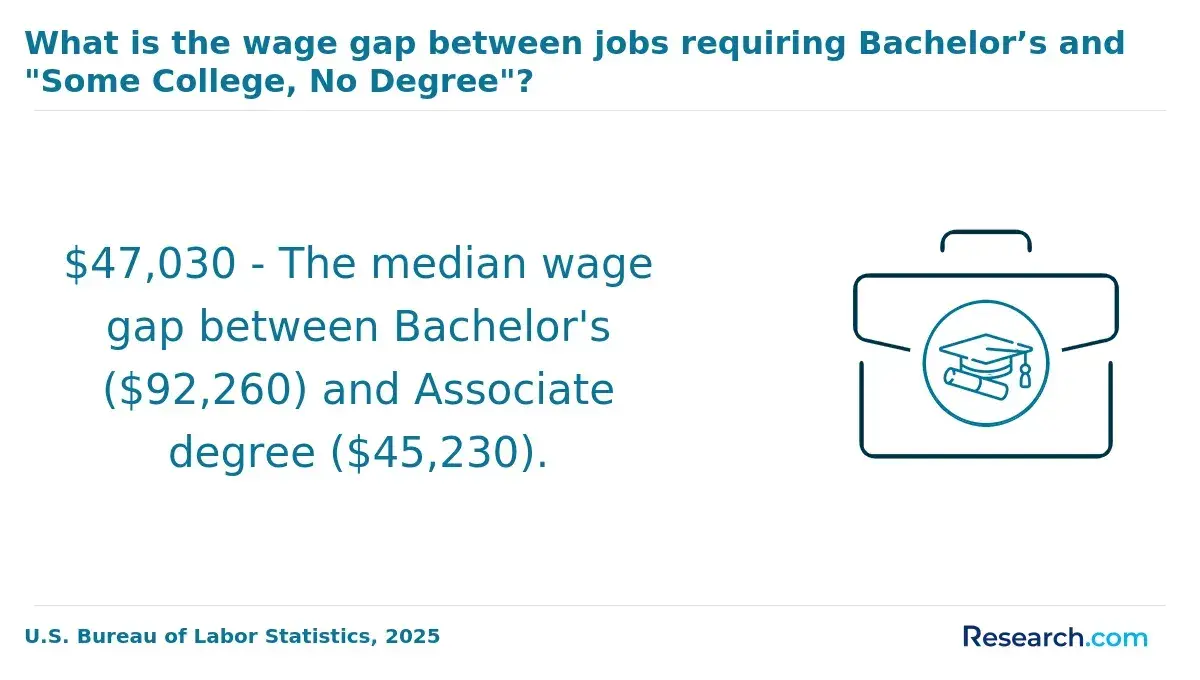
The strongest long-term job outlook for public health roles exists among community health workers, with the U.S. Bureau of Labor Statistics projecting a 14% employment increase from 2022 to 2032. This significantly outpaces average occupational growth, emphasizing the sector's emphasis on roles resistant to automation.
Unlike positions focused primarily on data analysis or epidemiological modeling-where algorithms increasingly replace routine tasks-community health workers maintain essential trust-based relationships, especially in rural areas where technology struggles with local nuances or digital accessibility.
Employers in public health careers with strong job stability clearly favor candidates equipped with practical skills in communication, cultural competence, and advocacy rather than purely technical or academic credentials. Educational paths that blend hands-on field experience with certificate or associate degree programs typically result in higher employability than purely theoretical routes.
Key competencies include navigating complex social determinants of health, collaborating with multidisciplinary teams, and adapting to rapidly shifting public health emergencies. Medical and health services managers also demonstrate resilience given their leadership roles requiring nuanced judgment that automation has yet to replicate.
Individuals targeting a strategic pivot should critically assess how much interpersonal engagement and local knowledge their role demands to safeguard employment in an increasingly technology-driven landscape.
Prospective candidates may consider specialized training options such as a masters in health administration to enhance management capabilities while recognizing the practical workforce implications of such credentials.
What degrees or training are required for public health careers least affected by automation?
Automation-resistant roles in public health consistently require specialized degrees paired with hands-on clinical experience that machines cannot replicate. Registered nurses in public health exemplify this dynamic, typically needing at least an associate or bachelor's degree in nursing, state licensure, and sustained clinical practice. These requirements correspond with median earnings near $89,000 in 2024, about 80% above the overall U.S. job median, indicating employer preference for complex human judgment over automatable tasks.
Degrees and certifications for public health professionals resilient to automation include options such as a Bachelor of Science in Nursing (BSN), Master of Public Health (MPH) programs with clinical components, and epidemiology or community health certifications.
Such credentials emphasize practical competencies like patient communication, culturally sensitive education, and emergency response, which data-oriented roles often lack. For instance, nurses leading community vaccination efforts must navigate unpredictable human behavior, a challenge current technology cannot fully address.
Employers prioritize candidates holding accredited degrees combined with field internships or residencies aligned with state licensure mandates, underscoring the importance of real-world exposure.
Those who pursue purely theoretical or administrative routes without direct clinical training risk underemployment or lower wages in automation-vulnerable positions-an operational risk unlikely to be mitigated by credential inflation alone.
For professionals lacking traditional clinical backgrounds, online direct entry MSN programs for non nurses offer an alternative pathway to acquire essential credentials and hands-on skills required for durable public health roles.
How do online public health programs prepare students for automation-resistant roles?
Online public health programs prioritize skills that mitigate AI-driven displacement risks for professionals, focusing on complex judgment and adaptive problem-solving rather than routine tasks susceptible to automation. With a 62% automation risk reported by Displacement.ai for public health roles, these programs emphasize interpreting data, designing policy, and community engagement-competencies that machines cannot replicate without contextual human insight.
Students engage with real-world health datasets, gaining analytical agility essential for managing AI tools rather than replacing them. For example, overseeing AI-generated epidemiological models requires validating outputs against social determinants and local contexts, a task demanding nuanced understanding beyond algorithmic capabilities.
This skill set is especially relevant in government and nonprofit sectors, where unpredictable crises and diverse stakeholder needs call for flexible human leadership.
Communication skills tailored to varied populations and interdisciplinary collaboration distinguish candidates in hiring decisions, as employers seek professionals who translate complex data into clear, actionable guidance. Virtual simulations of outbreak management and health promotion further build adaptive leadership under pressure.
Online formats often accommodate working professionals balancing career changes or employment, but learners must choose programs with up-to-date curricula aligned with evolving AI integration. Without this, there is a risk of investing in outdated skills that limit resilience against automation-driven shifts in the public health labor market.
What should students look for in an accredited public health program focused on future-proof skills?
Prioritizing public health programs that integrate environmental health data analytics, regulatory compliance, and epidemiological modeling is essential for meeting labor market demands driven by climate change. Employment in environmental science, including health-focused roles, is projected to grow 6-7% between 2022 and 2032, indicating the need for graduates adept at navigating evolving regulatory frameworks and risk assessment methodologies.
Programs lacking these practical components may leave students underprepared for current workforce realities.
Effective curricula must balance quantitative training-such as GIS spatial analysis and data interpretation-with applied environmental health sciences. For example, proficiency in environmental risk assessment software enables immediate contribution to projects monitoring air and water quality under changing regulations.
Conversely, programs overly theoretical or detached from regulatory bodies provide less direct employability value, especially for those targeting automation-resistant roles in government, consulting, or non-profits.
- Demand for specialists proficient in regulatory compliance and environmental health analytics is rising due to climate-driven public health threats.
- Programs featuring hands-on training with spatial and quantitative tools better prepare graduates for technical roles.
- Strong employer engagement and outcomes data are critical indicators of a program's workforce relevance.
Students should evaluate programs on measurable outcomes like employer partnerships and internship placements that embed real-world exposure to health regulations and community initiatives. Program flexibility, access to updated labs, and faculty with current field experience provide important practical advantages.
Strategically, connecting with institutions tied to state and federal environmental agencies aligned with authoritative labor forecasts optimizes long-term career resilience.
How do salaries compare across public health careers that are less likely to be automated?
Public health roles resistant to automation exhibit significant salary variation tied to complexity and sector engagement. Health education specialists earn about $60,000 annually, anchored in communication and community interaction skills that AI cannot replicate. Their projected 7% job growth through 2032, with nearly 5,800 new positions, reflects steady demand born from culturally competent, adaptive messaging-tasks requiring situational nuance beyond algorithmic design.
Epidemiologists and biostatisticians typically command median wages above $80,000, leveraging advanced analytics combined with policy advisory functions and outbreak management. These responsibilities encompass critical judgment alongside quantitative modeling, limiting automation's reach.
Public health program managers, balancing operational leadership and stakeholder negotiation, earn between $70,000 and $90,000, illustrating a wage premium on human coordination and strategic oversight.
Practical hiring emphasizes candidates who blend formal credentials with interpersonal and contextual intelligence. For example, health education specialists working in urban hospitals covering diverse populations often experience stable employment despite lower relative pay, highlighting job security linked to essential human interaction.
Conversely, roles like public health data scientists may offer higher starting salaries but face greater automation risk as machine learning tools advance.
Professionals aiming to mitigate automation risks should prioritize communication, cultural competency, and program management skills that translate into resilience and justify elevated compensation in equity-focused organizations.
What core competencies and skills help public health professionals stay ahead of automation?
Advanced data literacy combined with epidemiological analysis remains indispensable in public health careers despite growing automation. While machine learning efficiently processes large datasets, it cannot replicate the nuanced interpretation of cultural, social, and behavioral health determinants essential to effective interventions. For instance, community health professionals who integrate quantitative data with qualitative context better address vaccine hesitancy than relying solely on algorithms.
Employers now emphasize skills such as applied biostatistics, health informatics balanced with ethical judgment, and cross-sector collaboration. These capabilities are critical because automated tools typically cannot navigate complex real-world dynamics or ethical considerations involved in public health decision-making.
The World Health Organization projects a global shortfall of at least 10 million health workers by 2030, potentially rising to 78 million under severe scenarios. This demand underscores the value of human expertise, especially in policy advocacy, ethical decisions, and logistical planning-areas less susceptible to automation. Communication skills tailored to diverse populations also remain vital since empathy and trust-building cannot be digitized.
Continuous upskilling in applied technologies-such as geographic information systems (GIS) and real-time surveillance-combined with community engagement enhances employability. Students and professionals must balance the time and focus of training toward practice-based learning and strategic analysis, which ultimately translates better in labor market outcomes than purely technical credentials.
Are certifications or licenses needed for public health jobs with high automation resilience?
Specialized certifications and licenses remain a decisive factor for accessing advanced public health roles resilient to automation, especially those requiring regulatory compliance or technical expertise. Positions in public health informatics and surveillance increasingly demand credentials like Certified Public Health (CPH) or accredited health informatics certifications.
These credentials serve as proof of proficiency in managing disease surveillance software, electronic health records, and data systems-skills underpinning a 28% rise in related U.S. job postings between 2020 and 2024, per the 2024 CCI Training labor projections.
Tradeoffs include:
- Investment of time and money upfront for certification versus increased employability and job security.
- Data entry or administrative roles often lack formal licensing requirements but face greater risk of automation-driven redundancy.
- Practitioners aiming for sustainable careers in surveillance or informatics should prioritize credentials aligned with longitudinal technological trends and labor growth projections.
Without these, opportunities to influence public health policy or remain competitive in evolving workforce environments diminish significantly.
Employers in government agencies and large healthcare systems prioritize certified applicants due to federal mandates and audit standards, effectively setting certification as a gatekeeper. For example, epidemiologists synthesizing syndromic surveillance data must hold an epidemiology license or equivalent public health accreditation to ensure both data accuracy and policy compliance.
How can prospective students choose between campus and online formats for resilient public health careers?
Hands-on learning remains indispensable for resilient public health careers focused on behavioral and mental health, especially in roles like healthcare social workers and EMTs. These positions demand continuous public interaction and emotional acuity, tasks that resist automation and require direct experiential training to develop effectively. For instance, EMT certification demands in-person simulation and fieldwork that online programs struggle to replicate, affecting readiness and employer trust.
Choosing between campus-based and online formats involves balancing immediate workforce reentry with skill mastery. Fully remote programs offer flexibility, but often defer critical clinical training to hybrid setups or local placements, complicating logistics and extending timelines. Meanwhile, employers prioritize graduates with demonstrated in-person experience, especially given rising licensure requirements mandating supervised clinical hours in 2026.
Key factors influencing this decision include:
- Availability of accredited practicum or internship opportunities aligned with resilient public health roles
- Market demand for graduates with verified hands-on training
- The mix of synchronous and asynchronous coursework affecting engagement and mentorship
- Access to campus-based resources such as emergency response teams supporting applied learning
Ultimately, those targeting low-automation-risk frontline public health careers must prioritize programs that integrate substantial in-person components to develop emotional and contextual intelligence indispensable for sustained employability and effectiveness in high-stakes settings.
Other Things You Should Know About Public Health
Specialized skills in data analysis or informatics offer protection against automation but can narrow employment options if they become obsolete with technological change. Conversely, broad knowledge of systems, policy, and community engagement increases adaptability but may reduce immediate technical expertise sought by employers. To maximize automation resilience, students should combine technical proficiency with strong communication and strategic planning competencies.
Government and nonprofit sectors often demand nuanced policy implementation and community-focused programs that resist automation better than private sector roles focused on routine data tasks. However, bureaucratic constraints in these sectors may limit innovation and speed of career advancement. For those seeking long-term stability with less risk of automation, prioritizing government or nonprofit roles is advisable despite potentially slower career growth.
Employers resistant to automation prioritize candidates with demonstrated adaptability, leadership skills, and familiarity with multidisciplinary approaches. Training programs that emphasize project management, cultural competence, and policy analysis align more closely with these expectations than purely technical curricula. Students should select programs offering applied experiences and cross-sector collaboration opportunities to meet evolving employer demands effectively.
References
- 6 AI-Proof Jobs in Medicine (2026 Guide for Healthcare Careers) | ABES College https://abes.ca/blog/6-of-the-most-ai-proof-jobs-in-medicine-the-skills-it-will-never-replace/
- 5 High-Paying Careers in Public Health | MIT-WPU Blog https://mitwpu.edu.in/blog/careers-in-public-health
- Will automation accelerate what coronavirus started? - Oxford Insights https://oxfordinsights.com/insights/will-automation-accelerate-what-coronavirus-started/
- Facing Uncertainty and Lost Opportunities, College Students Respond with Resilience https://www.jff.org/facing-uncertainty-college-students-respond-resilience/
- 10 Jobs AI Can't Replace in 2025 | Future-Proof Career Guide https://prometai.app/blog/10-jobs-ai-wont-replace-future-proof-careers-for-the-ai-era
- Which health care jobs are the most likely to be affected by automation? - The Health Foundation https://www.health.org.uk/reports-and-analysis/analysis/which-health-care-jobs-are-the-most-likely-to-be-affected-by
- The 65 Jobs With the Lowest Risk of Automation by Artificial Intelligence and Robots - USCI https://www.uscareerinstitute.edu/blog/65-jobs-with-the-lowest-risk-of-automation-by-ai-and-robots
- Skills for Public Health Graduates - JPHMP Direct https://jphmpdirect.com/skills-for-public-health-graduates/
- The Emerging Role of Microcredentials in Higher Education: Advancing Public Health Learning and Beyond https://www.jbph.org/article/details/the-emerging-role-of-microcredentials-in-higher-education-advancing-public-health-learning-and-beyond
- Core Competencies for Public Health Professionals | PHF https://phf.org/programs/core-competencies-for-public-health-professionals/