2026 Online Project Management Degrees With Strong Budgeting Training

Co-Founder and Chief Data Scientist
Facing a stalled project due to chronic budget overruns, many project managers find their credentials ill-equipped to address financial control challenges in complex environments. With the U.S. Bureau of Labor Statistics projecting a 12% growth in project management roles over the next decade, demand for professionals skilled not only in scope and timeline but in rigorous budgeting is intensifying.
Meanwhile, trends from the National Center for Education Statistics reveal a 40% surge in adult enrollment in flexible online programs, highlighting a shift toward accessible education tailored for working professionals seeking targeted financial expertise. This article evaluates online project management degrees that integrate strong budgeting training to help aspirants effectively navigate cost constraints and advance their careers.
Key Things You Should Know
- Only 42% of online project management degrees with strong budgeting modules offer direct PMP exam alignment, forcing candidates to weigh immediate certification prospects against broader financial skills applicability, per PMI 2024 data.
- Employers prioritize integrated financial acumen alongside leadership; LinkedIn Workforce Reports show 65% of hiring managers expect budgeting proficiency as a baseline, turning budgeting-focused degrees into gatekeepers for senior roles.
- Average total investment for these degrees ranges from $18,000 to $35,000 with completion times from 18 to 36 months, presenting a critical cost-time tradeoff given accelerated market re-entry demands analyzed by the National Center for Education Statistics.
What is an online project management degree with a budgeting focus, and who is it best for?
Budgeting expertise remains a critical differentiator for project managers operating in resource-sensitive sectors where cost overruns jeopardize project viability. An online project management degree with budgeting specialization in the United States equips professionals to integrate financial controls alongside traditional scope and timeline management, which is essential in roles like construction project managers or healthcare program coordinators managing budgets that span millions.
The labor market forecasts an annual addition of 2.3 million new project management-oriented positions worldwide through 2030, intensifying demand for candidates with nuanced budgeting skills. Without this financial acumen, professionals struggle to justify their roles in projects requiring accurate forecasting and rigorous audit readiness. The best online project management programs for budgeting skills emphasize real-time budgeting software training and mentorship by faculty with industry experience to ensure graduates can handle dynamic budget adjustments effectively.
This educational pathway blends fundamental project management principles with financial analysis and risk management, often culminating in applied case studies. Notably, professionals transitioning from non-financial roles-such as engineers or marketers-gain tangible leadership eligibility through these specialized competencies.
Prospective students should also consider how program offerings align with their target industries' budgeting complexity and software ecosystems. Those seeking a focused approach in healthcare management may explore an accelerated healthcare management degree online to complement or pivot from traditional project management credentials.
How do online project management degrees compare with on-campus programs for budgeting skills?
Budgeting skills development in online and traditional project management programs reveals critical differences affecting industry suitability and employment outcomes. On-campus degrees frequently offer immersive budgeting scenarios through live stakeholder negotiations and group projects, replicating complexities found in sectors like construction or aerospace that demand stringent budget control and compliance. This hands-on approach can be essential for roles that require real-time fiscal decision-making.
Conversely, online project management degrees emphasize flexible case-study analysis and digital collaboration tools, reflecting realities in IT or marketing where virtual team workflows are standard. Students aiming for budgeting roles in startups or tech firms benefit from virtual environments that train them on contemporary software such as Microsoft Project or Primavera, providing relevant experience for remote project budgeting.
Employers prioritize candidates proving applied budgeting capability. Workforce data from the University of Kansas indicates that over 60% of U.S. project manager hires from online programs demonstrated no budgeting skills disadvantage during onboarding, underscoring that a well-structured online curriculum can meet market demands. Given a median project manager salary around $103,000, choosing between online and on-campus budgeting training depends on aligning your educational path with the budget practices and collaboration modes of your target industry.
Prospective students considering an optimal path can explore options such as hybrid degrees combining online theory with onsite residencies to bridge experiential gaps. To tailor your selection, assess whether your focus sector prioritizes immersive budget controls or digitally mediated fiscal coordination, then select a program accordingly.
For a comprehensive view of degree options, consider resources like the project management bachelor degree online to evaluate pathways suited for your career objectives.
What accreditation and quality indicators should I look for in online project management programs?
Regional accreditation recognized by the U.S. Department of Education or CHEA remains the primary benchmark for assessing project management program accreditation standards in the United States, confirming institutional credibility and financial aid eligibility. However, programmatic accreditation from entities like the Project Management Institute Global Accreditation Center (PMI-GAC) signals curriculum rigor specifically aligned with industry expectations, critical for mastering budgeting and financial controls required for PMP or PgMP certification.
Quality indicators for online project management degrees emphasize applied competency over theory, favoring programs that incorporate budgeting, cost control, and risk management through practical case studies. For example, scenarios involving construction project cost overruns or IT budgeting constraints demonstrate sector-specific complexity that purely academic models often overlook. Employers consistently value graduates whose skills map directly to managing real-world financial uncertainties and resource allocations.
Programs affiliated with well-established universities that publish graduate outcomes and salary data provide transparency on return on investment; senior project managers from top online master's programs report median earnings of up to $221,872 per annum, based on OnlineU's 2026 analysis using New York University data. Access to industry-standard project scheduling and budgeting tools such as Microsoft Project or Primavera P6 further distinguishes practical mastery from credentialing alone. Additionally, faculty with active PMP certification and consulting experience contribute essential insights into both foundational knowledge and advanced financial project controls.
Students evaluating their options should also consider exploring an accredited online masters degree in human resource management for complementary skills in workforce and resource planning within project environments.
What budgeting, cost control, and financial analysis courses are typically included in these programs?
Effective budgeting and cost control courses in online project management degrees emphasize practical application tailored to industry-specific challenges. For instance, IT project managers learn to forecast software development costs and proactively identify scope creep, whereas construction-focused curricula concentrate on labor, equipment, and materials procurement analysis. This differentiation addresses real-world financial complexities students will face on the job.
Financial analysis and budgeting training in project management programs equips students to build baseline budgets and adjust for risk contingencies amid fluctuating costs. Key modules include cost estimation methods, variance analysis, earned value management (EVM), and ROI calculations, fostering competencies that directly influence profitability and regulatory compliance. Additionally, training with tools like Microsoft Project and Primavera supports real-time cost control in fast-moving project environments.
Budget realities remain a critical consideration: the average cost of an online bachelor's in management exceeds $53,000, while some online project management master's programs are around $23,000, based on the GetEducated 2024 cost survey. Prospective students must weigh these expenses against anticipated salary uplifts and employer expectations for financial acumen when deciding on educational investments.
Graduates face tradeoffs between tight budgets, quality standards, and deadlines, a balance essential for operational success. The growing demand for professionals adept in financial oversight within projects also intersects with other specialized credentials, such as doctorate in health administration programs, which emphasize financial stewardship in healthcare projects.
What are the typical admission requirements for online project management degrees emphasizing budgeting?
Entry criteria for online project management degrees with a budgeting focus demand candidates who demonstrate foundational financial aptitude relevant to managing complex budgets. Admission committees prioritize applicants who hold a bachelor's degree, often in business, finance, engineering, or related disciplines, paired with official transcripts showing a minimum GPA typically between 2.5 and 3.0. This baseline reflects the rigor required to engage with quantitative coursework essential for financial oversight within projects.
Beyond academic qualifications, programs increasingly expect candidates to present resumes outlining at least two years of work experience involving fiscal responsibility or resource allocation. This practical experience ensures students can contextualize budgeting principles within workplace scenarios, a notable advantage for those aiming to lead financially driven project initiatives.
Although standardized tests like the GRE or GMAT are sometimes waived, selective programs may still require them, especially for advanced credentials. Letters of recommendation should emphasize analytical skills and familiarity with financial controls, while personal statements clarify career objectives and interest in budgeting challenges within project environments.
In industries such as healthcare and construction, certifications like PMP or CAPM combined with proven budgeting expertise significantly improve admission prospects and align with employer expectations for managing sector-specific cost complexities. Given that programs ranked in the 94th percentile nationally yield median alumni earnings around $88,228 according to OnlineU 2026 data, meeting these selective criteria can materially enhance career positioning and earnings potential.
How long do these online programs take, and what total costs should students expect?
Online project management degree programs with budgeting focus typically balance duration, cost, and career timing. Accelerated tracks can shrink program length to about one year but require 15 to 20 hours weekly, posing challenges for working professionals. Standard full-time studies take 18 to 36 months, while part-time paths extend up to three years, delaying higher salary gains but offering flexibility.
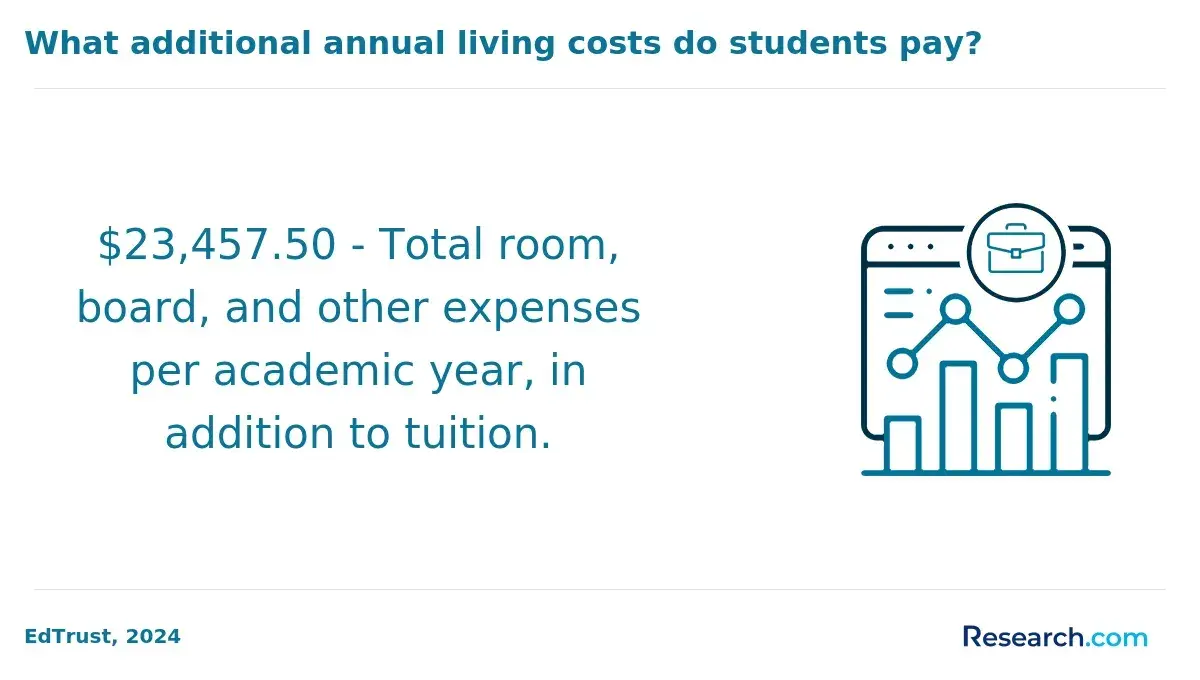
Cost varies significantly, from approximately $10,000 at public universities to over $40,000 at private schools, plus $1,500-$3,000 for materials and certification preparation. Prospective students should verify employer tuition assistance policies, especially concerning online formats and budgeting content, as coverage may vary.
Budgeting expertise correlates strongly with salary levels: project managers in software publishing earn an average of $126,840 versus $118,120 in IT hardware. Effective budgeting skills-such as cost estimation and risk mitigation-are essential when overseeing multimillion-dollar projects to sustain profitability and stakeholder confidence.
Tradeoffs include program length affecting earnings timelines and the practical value of skills taught. Graduates of programs lacking rigorous budgeting training risk underpreparedness, which can hinder advancement despite degree completion.
- Accelerated programs demand high weekly commitment but enable faster workforce re-entry.
- Part-time options suit working adults but extend time before salary increases.
- Alignment with industry certifications enhances job market competitiveness.
Which careers can an online project management degree with strong budgeting training prepare me for?
Graduates of online project management degrees emphasizing budgeting gain roles that merge financial oversight with operational execution. Positions such as project coordinators, cost estimators, and project controllers demand real-time budget adjustments and variance tracking to prevent cost overruns. For instance, construction project controllers must dynamically revise forecasts as materials' prices fluctuate, while IT financial analysts reassess funding throughout iterative agile cycles.
Employers now require project managers skilled in integrating budgeting, scheduling, and risk management-skills that directly affect whether projects meet deadlines within financial limits. Notably, 49% of U.S. employers offer undergraduate or graduate tuition assistance, enabling mid-career professionals to offset costs when returning to school for budgeting-intensive credentials (Society for Human Resource Management, 2024 Employee Benefits survey).
Sector-specific budgets, especially in regulated fields like healthcare and government contracting, increase complexity and elevate demand for candidates with proven cost control expertise. Advancing to roles such as program manager or financial project consultant often hinges on this specialized budgeting acumen combined with strategic leadership.
Prospective students should anticipate a steep learning curve blending quantitative financial analysis with software tools like Microsoft Project or Oracle Primavera. This proficiency matters in fast-paced environments requiring continuous budget monitoring. Evaluating employer tuition benefits and aligning coursework with certifications enhances practical value and mitigates financial risk in transitioning to financially focused project management careers.
What salary ranges and earning potential can graduates with budgeting-focused project management degrees expect?
Budgeting expertise in project management directly influences salary trajectories and employer demand, often outweighing purely technical skills. Graduates specializing in budgeting can start with salaries between $65,000 and $85,000, advancing to $90,000-$120,000 mid-career, and surpassing $140,000 in senior roles that mandate comprehensive financial oversight. The Project Management Institute's 2024 data links over half of project failures to inadequate budget management, reinforcing why employers prioritize candidates skilled in cost control, risk assessment, and budget tracking.
Industries with strict financial controls, such as construction, IT, and healthcare, offer distinct examples of budgeting impacts on operational success and compensation:
- Construction project managers skilled in budget adherence can reduce overruns by 10% or more, unlocking incentives and faster advancement.
- IT project managers lacking budgeting proficiency risk missing financial performance-based bonuses despite meeting technical milestones.
Employers view financial acumen as essential for avoiding project delays and resource reallocations that erode profitability. Graduates without budgeting skills often remain confined to mid-level pay grades due to their inability to resolve critical cost-related challenges. Pursuing education that integrates advanced budgeting tools and real-world financial simulations prepares students for leadership roles where tight control over project finances directly correlates to organizational success and higher earnings.
How do certifications like PMP or CAPM relate to budgeting-focused project management degrees?
Academic degrees focused on budgeting in project management often fall short in delivering the applied skills employers demand, especially under pressure and tight timelines. Certifications like PMP fill this gap by requiring demonstrated expertise in cost control, risk management related to budgets, and strategic resource allocation. For example, professionals with a budgeting degree entering sectors such as construction or IT find PMP certification critical because it validates their ability to handle complex budget challenges beyond theoretical knowledge.
Practical experience managing budget baselines and earned value metrics is typically emphasized during PMP preparation but can be glossed over in broad academic curricula. Without such certification, degree holders frequently hit a ceiling at mid-level roles, unable to prove sustained accountability in high-stakes environments like healthcare infrastructure projects or federal contracts.
PMI data reveal that PMP-certified professionals earn median salaries about 33% higher globally than those without the credential, reflecting employer preferences for verifiable competence. While CAPM provides foundational budgeting knowledge suited for entry-level positions, its salary impact is noticeably less substantial compared to PMP.
- Academic credentials alone may inadequately prepare candidates for real-world budget management complexities.
- PMP certification acts as a practical benchmark employers use when filtering for senior budget oversight roles.
- Combining degree knowledge with PMP significantly improves competitive positioning for sectors demanding rigorous budget control.
How can I evaluate and compare online project management programs to find the best budgeting training?
The rapid automation of project management tasks-projected to reach 80% by 2028 according to the Project Management Institute and Accenture-redefines which budgeting training programs hold practical value. Candidates must critically assess curricula for embedded AI-driven cost estimation and budget optimization modules that replicate real-world financial scenarios. Programs lacking advanced analytics tools and software simulations risk leaving graduates unprepared for employer standards.
Industry-specific budgeting complexities demand adaptable training. For example, construction projects emphasize variable cost forecasting, whereas IT projects focus on agile budget revisions. Programs should offer case studies or partnerships that provide access to current datasets for predictive financial modeling, ensuring content remains employer-driven and relevant.
Graduate outcomes data tied to budgeting proficiency and faculty expertise in financial analytics or AI applied to budgeting must guide program selection. Many programs claim industry relevance, but the difference lies in verified employer feedback and instructors with documented research or field experience acknowledged by established agencies.
Logistical factors such as availability of virtual labs, budgeting software licenses, and the balance between synchronous and asynchronous formats significantly impact skill transferability. Accreditation aligned with financial and project controls standards ensures credits will count toward professional certifications, which is vital for those planning long-term career growth.
Direct communication with program administrators to confirm coverage of emerging budgeting technologies and compliance with evolving financial reporting rules safeguards that training remains competitive across sectors where budget optimization now heavily integrates big data analytics.
Other Things You Should Know About Project Management
Online project management degrees with a strong budgeting component often demand simultaneous mastery of technical financial skills and core project management methodologies. Students face substantial workloads balancing detailed cost control assignments and broader project coordination tasks. Programs that integrate real-world budgeting software increase preparation but add steep learning curves, which can extend completion times if not managed proactively. When choosing a program, prioritize schools that offer flexible pacing or modular courses to accommodate professional responsibilities alongside intensive budgeting coursework.
Employers prioritize budgeting proficiency as part of overall project delivery success, targeting graduates who can link cost management with risk mitigation and resource allocation. Programs that include scenario-based budgeting exercises and financial reporting tools align better with current job market expectations than those offering only theoretical knowledge. Prospective students should assess if the program updates its budgeting content regularly to reflect changes in industry software and financial compliance standards. Choosing a curriculum anchored in practical budget adjustments and forecasting delivers clearer paths to employment and advancement.
In 2027, online project management programs provide students with customization options like elective courses focusing on budgeting tools, advanced financial forecasting, and sector-specific budgeting case studies, allowing students to tailor their education to specific career goals or industry needs.
Accelerated programs offer faster entry to the job market and may reduce total tuition but tend to intensify workload and limit time for complex budgeting skill absorption. Traditional paced programs allow deeper engagement with financial analysis and budgeting software, supporting stronger retention of cost control techniques under varied scenarios. For students targeting positions with high financial accountability, investing in longer programs with practical budgeting practicum yields better preparation. Conversely, those seeking broader certification or earlier credentialing might accept accelerated formats but should supplement with targeted budgeting experience separately.
References
- Recommendations for certification - IPMA Polska https://ipma.pl/en/recommendations-for-certification/
- How to land your first job as an entry-level project manager https://www.ziplines.com/blog/how-to-land-your-first-job-as-an-entry-level-project-manager
- The 9 Best Project Management Qualifications in 2025 | Project Management https://www.icslearn.co.uk/blog/management/the-9-best-project-management-qualifications/
- The Project Manager Salary: What to Expect and How to Earn More https://www.icagile.com/resources/the-project-manager-salary-what-to-expect-and-how-to-earn-more
- Certified Project Manager Academy Institute MPM Accredited Institute Project Management Certifications ACAPM ® Certified Project Manager https://www.americanacademyofprojectmanagement.com/
- Effective Budgeting, Cost Control & Analysis Course https://www.timetraining.ae/course/effective-budgeting-cost-control-and-analysis
- Best Project Management Courses: Your Ultimate Guide 2026 https://www.bmc.net/blog/management-and-leadership-articles/best-project-management-courses
- Certified Healthcare Quality & Project Management Professional https://teamacademysaudi.com/products/certified-professional-in-healthcare-quality-project-management-professionals
- PMP Certification Ireland 2026: The Complete Guide https://projectmanagement.ie/blog/pmp-certification-ireland/
- How to advance in your project management career? https://projectmanagementsa.co.za/blog/how-to-advance-in-your-project-management-career