2026 Online Project Management Degrees With Cross-Functional Leadership Alignment

Co-Founder and Chief Data Scientist
Facing a fragmented leadership environment, project managers frequently struggle to align cross-functional teams toward unified objectives, stalling critical initiatives and inflating delivery risks. This challenge intensifies as 58% of adult learners in higher education prioritize flexible online programs, according to the National Center for Education Statistics, signaling a substantial shift toward balancing work, upskilling, and family demands.
Yet few project management degrees integrate leadership alignment principles applicable across diversified organizational functions, limiting graduates' capacity to orchestrate complex stakeholder networks effectively. This article evaluates online project management degrees with cross-functional leadership alignment, guiding prospective students through options that reconcile program accessibility, practical leadership training, and workforce-readiness to solve these high-stakes coordination gaps.
Key Things You Should Know
- Cross-functional leadership integration in 2026 online project management degrees expands skill portfolios but extends completion times by an average of 15%, raising total program costs by 12%, per recent NCES data.
- Employers increasingly favor candidates with demonstrable cross-departmental collaboration training; 68% of hiring managers report higher project success rates when such graduates lead, according to PMI's 2024 workforce survey.
- The rising demand for hybrid technical and leadership competencies compresses the talent pipeline, compelling professionals to prioritize programs with embedded leadership alignment to maintain career trajectory amid tightening labor market conditions.
What is an online project management degree focused on cross-functional leadership alignment?
Degrees focused on cross-functional leadership alignment in online project management address a critical operational gap: integrating diverse departments to streamline project outcomes. Graduates emerge prepared to balance competing priorities by aligning workflows among marketing, IT, finance, and human resources, a skill vital for avoiding common pitfalls like resource misallocation or fractured accountability.
For example, coordinating software development schedules with client onboarding in technology firms requires this nuanced leadership approach. Programs emphasizing cross-functional leadership alignment in project management programs deliver a curriculum that extends beyond traditional methodologies, embedding leadership development, conflict resolution, and advanced communication.
This broader skillset reflects employer demands for analysts who reduce redundancies and unify stakeholder goals across departments. These competencies are increasingly valuable given the U.S. Bureau of Labor Statistics projects 10% growth through 2032 in management analytics roles including project management.
Effectiveness in such roles hinges on emotional intelligence as much as technical know-how. Graduates must handle ambiguity and conflicting objectives, which demands a balance rarely found in classic project management education. Those exploring online project management degree with cross-functional leadership should weigh these program benefits against personal aptitude for leadership and collaborative problem-solving.
Prospective students seeking flexible, accredited pathways can find options through online business degree programs accredited, offering accessible routes to acquire these cross-disciplinary skills.
How do online project management programs build cross-functional leadership and collaboration skills?
Online project management programs for cross-functional leadership development address a gap between technical expertise and collaborative execution by situating learners in scenario-based exercises that mimic real organizational complexities. A healthcare project manager, for instance, must coordinate clinical staff, IT developers, and compliance officers to integrate electronic health records, demonstrating the necessity of managing diverse teams with conflicting priorities under strict constraints.
These programs prioritize proficiency in digital collaboration tools that replicate remote and hybrid work environments. Building collaboration skills through project management education involves mastering methodologies like agile and waterfall tailored for interdepartmental workflows. Students learn to navigate challenges such as communication gaps, cultural differences, and decentralized authority while maintaining project momentum.
The World Economic Forum's Future of Jobs Report 2025 highlights that project management abilities remain among the fastest growing job-specific skills globally, underscoring employer emphasis on cross-functional coordination and data-driven decision-making under uncertainty. Graduates gain capabilities in metrics-driven performance assessments and inclusive leadership strategies, enabling them to lead matrix teams effectively despite lacking formal authority.
These practical competencies mitigate organizational friction and improve stakeholder engagement outcomes, but candidates should weigh the demands of program rigor against real workforce expectations. For those seeking targeted educational pathways, programs such as a construction management degree illustrate how specialized project management disciplines translate into industry-ready skills aligned with market trends.
What types of online project management degrees are available and who are they best for?
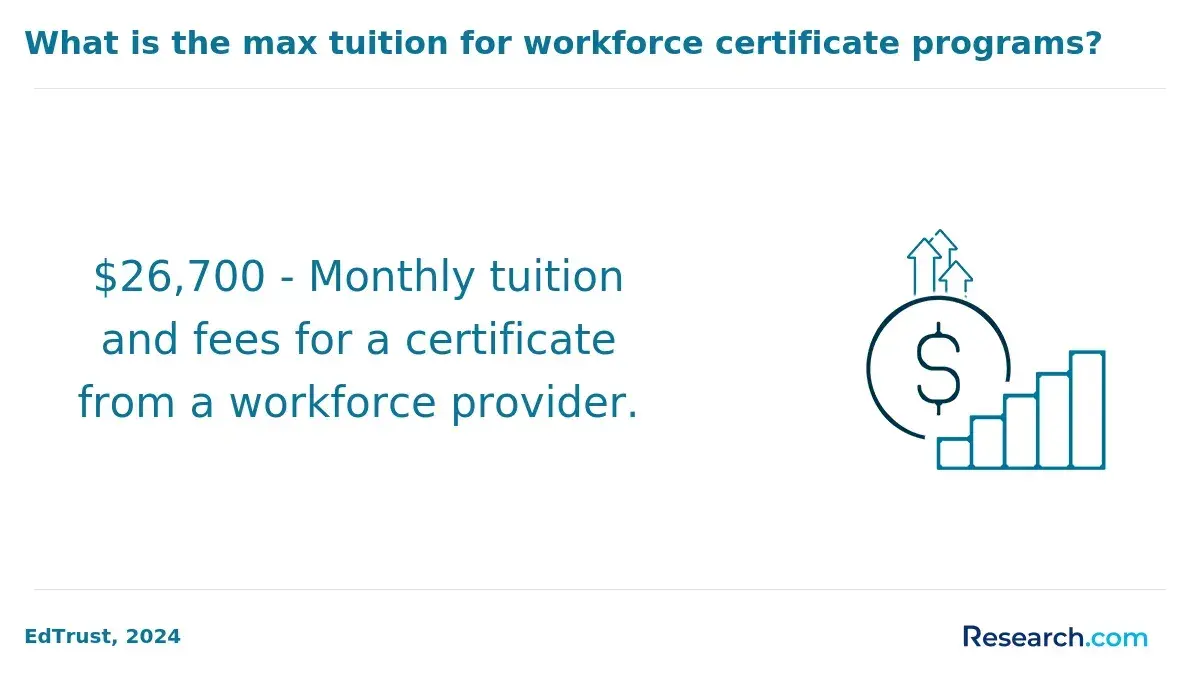
Practical career outcomes and employer expectations shape the real value of online project management degree programs in the US. Associate degrees provide foundational skills essential for entry-level roles like project assistants, while bachelor's programs deliver comprehensive training in leadership and technical cross-functional coordination, particularly relevant to sectors such as construction, IT, and healthcare.
For example, civil engineering firms often require bachelor's credentials that include regulatory compliance and risk management components, while IT employers prioritize Agile certifications integrated with hybrid project delivery knowledge. Master's degrees cater to seasoned professionals targeting senior leadership, emphasizing strategic leadership, risk management, and advanced Agile practices suitable for managing large-scale projects that combine Agile with traditional methodologies.
PMI's Pulse of the Profession 2024 data confirms that over 50% of organizations implement hybrid approaches, making programs that foster this blend highly relevant to evolving leadership demands. Certificates focus on niche areas like Agile Scrum Mastery or Lean Six Sigma, valued for quick skill updates but limited in depth for major career shifts. Balancing program length against urgent workforce re-entry needs remains a critical decision factor.
Mid-career professionals seeking specialized but flexible advancement often rely on certificates, whereas those pursuing strategic leadership positions invest in Master's degrees. For those exploring pathway options, reviewing the online bachelor's in construction management highlights a targeted route aligned with industry expectations and practical skills integration.
Choosing among these programs demands careful consideration of sector-specific trends, practical workforce implications, and the alignment of curriculum with real-world project delivery models, especially as demand grows for leaders adept in hybrid delivery.
How do online project management degrees compare with campus programs for quality and outcomes?
Employers increasingly demand proficiency in digital tools alongside leadership capabilities, positioning online project management degrees as a viable option when programs integrate industry-relevant technology and experiential learning. The quality comparison of online and campus project management degrees hinges less on curriculum content and more on engagement modes and employer perception.
For example, sectors like construction and manufacturing, which require on-site oversight, typically favor campus programs due to their hands-on internships and direct mentorship opportunities. Online degrees provide flexibility for working professionals aiming for a career pivot without compromising key skills such as risk assessment or cross-functional leadership. However, the absence of spontaneous peer learning and face-to-face networking can limit informal mentorship and real-time collaboration.
Students evaluating program fit should consider factors such as:
- faculty credentials and practical project experience;
- integration of current digital tools and AI platforms;
- access to virtual labs or simulators replicating real project dynamics;
- alumni outcomes and employer endorsements;
- and the comparative value of on-campus networking versus online alternatives.
Those seeking mastery in digital project management techniques aligned with emerging workflows will find online options advantageous, particularly for leadership roles driving AI-enabled initiatives. Campus degrees still cater better to those targeting deeply immersive environments requiring physical collaboration and stakeholder negotiation skills in complex settings.
Prospective students can find relevant program options and affordability details by exploring this project management degree resource.
What accreditation and quality standards should online project management programs meet in the United States?
Selecting an online project management program without PMI Global Accreditation Center (GAC) approval significantly limits the relevance of training to industry demands. Programs lacking PMI GAC endorsement often omit essential skills in cross-functional leadership, leaving graduates unprepared to navigate complex roles that require coordinating IT, operations, and finance teams simultaneously.
For instance, healthcare technology project managers must master regulatory compliance and vendor coordination-competencies emphasized in PMI-accredited curricula but frequently missing elsewhere. Employers across sectors including construction, software, and manufacturing explicitly favor candidates from PMI-accredited programs to reduce onboarding friction and training costs.
This preference aligns with salary data indicating PMP-certified managers earn 20-25% more than their non-certified peers, a tangible return on investment tied directly to accredited education and effective certification pathways. Beyond institutional legitimacy from regional accreditors, prospective students should scrutinize specialized accreditation and certification success metrics.
Programs that integrate real-world leadership scenarios tailored to targeted industries improve job-readiness, whereas those without these elements struggle to keep pace with evolving tools and leadership expectations. This distinction impacts employability and career trajectory, especially for professionals aiming to pivot strategically into project management roles demanding validated competencies.
Verifying both types of accreditation and assessing curriculum alignment with sector-specific leadership demands will better position students to meet employer expectations and minimize career risks.
What core courses and specializations support cross-functional leadership in project management programs?
Cross-functional leadership is a critical competency for project managers navigating complex organizational landscapes. Effective program curricula emphasize systems thinking, stakeholder engagement, and interdisciplinary communication to address challenges that arise when coordinating diverse teams. For instance, a supply chain project manager must integrate logistics, finance, and procurement efforts-failure to understand cross-departmental workflows often results in silos, delayed deliveries, and increased costs.
Specializations such as Agile methodologies and change management sharpen a manager's ability to adapt amid shifting priorities, which vary significantly between industries like construction and IT. Negotiation and conflict resolution training are practical tools for aligning competing objectives across units, directly influencing project schedules and budget adherence.
Case studies and simulations that replicate real-world scenarios provide experiential learning balancing technical constraints with interpersonal dynamics. Graduates with these skills are valued for their leadership agility, especially when tasked with bridging divides among marketing, engineering, and finance teams.
Income data confirms this premium: New York University's online project management programs report median graduate earnings of $221,872, demonstrating tangible market value for cross-functional leadership expertise. This earning potential reflects employers' preference for professionals who can simultaneously navigate technical demands and stakeholder expectations, ultimately driving enterprise-wide success.
What are typical admission requirements, program length, and learning formats for online options?
Admission to online project management degrees in 2026 typically requires a bachelor's from an accredited institution or equivalent professional experience, especially for accelerated or executive programs targeting established leaders. Applicants must often provide transcripts, resumes emphasizing leadership or teamwork, and sometimes recommendation letters or personal statements clarifying career objectives.
Programs catering to mid-level managers may also demand certifications or supervisory experience to ensure participants can engage with advanced leadership material effectively. Program durations range from 12 to 24 months, influenced by whether students enroll full-time or part-time. Full-time formats accelerate completion to about a year, whereas part-time options extend to two years, accommodating professionals balancing work and study.
Curriculum delivery blends asynchronous coursework with synchronous sessions to maintain interaction and immediate application of leadership concepts. For example, industries like IT or construction-where project conditions frequently shift-benefit from live case discussions that simulate urgent stakeholder coordination. Such practical components are vital, considering the projected shortfall of 25 million project management roles worldwide by 2030, as reported by PMI.
Employers increasingly require applicants not only to hold formal credentials but to demonstrate cross-functional leadership and collaboration skills. Online programs integrating real-world simulations and current collaboration technologies better position graduates to meet these expectations.
How much do online project management degrees cost and what financial aid is available?
Opting for an online project management master's degree halves direct tuition costs compared to in-person programs, averaging about $11,000 annually versus $22,000, per BestColleges data. For mid-career professionals weighing relocation, this cost differential is significant but interacts with state residency policies that may impose out-of-state rates remotely, effectively doubling expenses on some programs. This complexity forces a critical analysis of enrollment choices versus financial tradeoffs.
Federal aid through FAFSA remains the primary financial safety net, offering loans such as Direct Unsubsidized and Grad PLUS, which cover tuition and sometimes living costs. Employer tuition reimbursement is another revenue channel but often comes with grade requirements or mandatory post-graduation service. In sectors like IT and healthcare, employers actively fund such upskilling to strengthen leadership pipelines.
Budgeting must also include ancillary costs-technology fees, textbook purchases, and certification exam fees-that cumulatively add $1,000 to $3,000. These are non-negligible and impact the net affordability of online project management education.
- Average annual tuition online: $11,000
- Average annual tuition in-person: $22,000
- Federal student loans available through FAFSA
- Employer tuition reimbursement varies by company policy
- State residency impacts tuition rates for many programs
- Additional fees and materials often add $1,000 to $3,000 total
What careers, roles, and industries can graduates pursue with a project management degree?
Graduates with a project management degree face sector-specific demands that shape their roles and skill priorities. For example, in technology, managing agile software development involves coordinating developers, QA teams, and clients with precise communication and adaptability. Healthcare project managers focus on regulatory compliance and process improvements across clinical and administrative teams, while construction professionals juggle supply chain complexities and inspections.
Different industries emphasize distinct competencies: finance and manufacturing prioritize risk mitigation and process optimization, demanding analytical leadership. Market data demonstrates a shift away from formal certifications toward proven leadership and project delivery capabilities as primary hiring criteria. This change reflects employer preferences for practical, demonstrable skills over credentials alone.
Graduates must also confront challenges like remote team management and new tool integrations, which test their adaptive communication and technical fluency beyond foundational coursework. Students considering a career pivot should align their educational focus with the specific operational realities and expectations of their targeted industry rather than relying solely on academic credentials.
- Key roles include project manager, program coordinator, operations manager, business analyst, and product owner.
- Sector-specific demands require tailored skill sets such as agile expertise in tech or regulatory knowledge in healthcare.
- Employers increasingly prioritize practical delivery and leadership skills over certifications.
How do certifications like PMP and Agile align with online project management degrees and leadership paths?
Certifications such as PMP and Agile provide practical validation of specific methodologies that supplement the foundational knowledge gained through online project management degrees. PMP's focus on predictive planning, cost control, and risk management aligns closely with structured project execution taught in many degree programs. Agile certifications emphasize adaptive leadership and iterative development, mirroring curricula that address fast-changing, tech-driven contexts.
In sectors like healthcare or IT, where compliance and agility are critical, employers often regard certifications as indispensable proof of applied skills beyond academic credentials. Business acumen is increasingly pivotal for project leadership, as project success depends on navigating broader organizational functions. Online degrees often embed strategic thinking and business principles, enabling professionals to contextualize PMP or Agile methods within holistic management environments.
For example, manufacturing managers with PMP certifications concentrate on maintaining supply chain efficiencies and cost oversight, whereas Agile-certified leaders in software emphasize rapid delivery cycles and responsive user feedback. Professionals need to weigh the investment of time and money: certifications require ongoing renewals and documented practical hours, which may exceed what online degrees offer.
Combining an online degree with targeted certifications equips leaders to handle cross-industry expectations but demands careful planning and employer backing. Notably, certification recognition varies by industry-PMP carries more authority in established sectors, while Agile is favored by startups and technology firms. Success in complex, multidisciplinary teams typically requires fusing these credentials with strategic insights from degree programs to meet diverse stakeholder needs effectively.
Other Things You Should Know About Project Management
Online project management degrees often limit in-person networking opportunities, which can be critical for building trust and influence in cross-functional team environments. Programs that include live collaboration components, discussion forums, or cohort projects offer better networking potential. Prospective students should prioritize programs with structured peer interaction and mentorship to mitigate the isolation common in purely asynchronous formats.
General project management degrees offer broader frameworks suited for diverse industries, but they often miss out on the nuanced skills needed for leading cross-department initiatives effectively. Specializations in cross-functional leadership provide targeted training in navigating organizational silos and aligning diverse stakeholders, which employers in matrixed organizations prioritize. Candidates seeking leadership roles in complex environments should weigh the value of specialization over breadth.
Employer acceptance of online project management degrees has increased but varies by industry and role. Degrees that emphasize cross-functional leadership and practical applications tend to carry more weight in hiring decisions within corporate environments seeking collaborative leaders. Candidates should seek programs that showcase applied learning experiences and provide opportunities to demonstrate leadership impact beyond theoretical knowledge to improve employment outcomes.
References
- Management & Leadership https://www.cegos.uk/digital-learning/ready-to-use-training-solutions/management-leadership
- Diverse Applications and Careers With a Degree in Project Management https://www.ucumberlands.edu/blog/diverse-careers-with-a-degree-in-project-management
- Best Online International Project Management Courses & Programs | edX https://www.edx.org/learn/international-project-management/
- Project Leadership & Management Diploma | Institute of Project Management (IPM) Ireland https://projectmanagement.ie/courses/project-leadership-management-diploma/
- eCourse - Leadership in Project Management https://www.pm4dev.com/elearn/ecourses/elpm.html
- Online Class Formats https://cod.edu/academics/online/online-class-formats/index.html
- Cross-Cultural Project Management and Global Collaboration Course https://upskilldevelopment.com/cross-cultural-project-management-and-global-collaboration-course
- Key Elements of the Cross-Functional Leadership Model | LIS https://www.lis.ac.uk/stories/functional-leadership-model
- PMP Training Roadmap: From Beginner to Certified Professional https://www.icertglobal.com/blog/pmp-training-roadmap-certification-guide
- PMP vs Agile vs Scrum: The 3 Certification Paths https://projectmanagementacademy.net/resources/blog/pmp-vs-agile-vs-scrum/