2026 Online Project Management Degrees With Portfolio Management Coursework

Co-Founder and Chief Data Scientist
Mid-career professionals face a challenging dilemma: advancing in project management often requires specialized education, yet rigid program schedules and limited local options conflict with full-time work and family commitments. The shift toward online learning attempts to alleviate these constraints, but only 29% of adults pursuing further education in 2023 enrolled in degree programs aligning explicitly with career advancement, according to NCES data.
This gap reveals a persistent struggle to find flexible, relevant coursework-especially in portfolio management, a skill increasingly demanded by employers for complex project oversight. This article examines online project management degrees featuring portfolio management coursework, guiding readers to select programs optimizing flexibility, rigor, and real-world applicability to overcome these barriers.
Key Things You Should Know
- Online project management degrees with portfolio coursework require 30%-40% more total study hours than non-portfolio tracks, increasing time-to-completion and tuition costs, which complicates mid-career transitions for working professionals, per NCES 2024 data.
- Employers report 62% stronger hiring preference for candidates demonstrating real-world portfolio artifacts, yet 48% of programs lack standardized quality benchmarks, creating uneven workforce readiness, according to the PMI Talent Gap Report 2024.
- With 24% projected job growth in project management roles by 2030 from the Bureau of Labor Statistics, candidates face a timing tradeoff: accelerated degree programs sacrifice portfolio depth, while extended tracks improve practical credibility but delay market entry.
What is an online project management degree with portfolio management coursework?
Choosing an online project management degree with portfolio management specialization shifts focus from managing isolated projects to strategically overseeing collections of related initiatives. This skill set is essential in sectors like technology and construction, where aligning multiple projects drives profitability and mitigates risk. For instance, an IT professional managing software development must balance investment across programs to optimize outcomes.
Distance learning project management programs with portfolio coursework emphasize frameworks such as PMI's Standard for Portfolio Management, integrating financial evaluation and benefit realization crucial for senior leadership decisions. Practical application through case studies and simulations strengthens alignment with employer requirements and industry standards.
From a financial perspective, online formats tend to lower costs while maintaining income continuity. The National Center for Education Statistics reports average online master's tuition around $11,000 annually, roughly half the cost of in-person options. This cost differential can be pivotal for professionals advancing credentials without stepping away from full-time roles.
When evaluating programs, consider the depth of applied portfolio management content and verify that curricula address inter-project dependencies and governance frameworks. For those in industries such as construction, exploring specialized pathways like construction management degrees online may offer additional strategic advantages aligned with project portfolio oversight.
How do online and campus project management degrees compare?
The choice between online project management degrees versus campus programs hinges on more than convenience; it affects skill application and career trajectory. Employers value portfolio management proficiency highly-organizations with mature portfolio practices are 57% likelier to meet strategic goals and cut budget waste by 33%, according to the Project Management Institute's 2024 Pulse of the Profession report. Yet, the mode of study shapes how these skills are developed.
Campus programs provide immersive in-person simulations and direct mentorship, essential where real-time collaboration and live feedback are critical, such as in construction or healthcare. Conversely, online project management degrees emphasize digital collaboration and asynchronous learning, better suited for distributed IT or consulting teams. This distinction aligns with evolving workforce patterns and impacts employability depending on industry demands.
Practical challenges include campus students benefiting from structured networking and immediate peer interaction, while online learners must self-initiate virtual engagement, requiring high self-discipline and employer support. The online format often integrates current project management software training, aligning with remote work trends. Choosing between these delivery methods also reflects the need to match learning environments with professional contexts-for instance, a manufacturing project manager may gain more from hands-on campus experiences, whereas managing global IT portfolios often suits online programs.
For professionals assessing education options, examining these tradeoffs is vital. Those interested in healthcare might explore an online CAHIIM accredited health information management degree as a related pathway that combines flexibility with sector-specific rigor.
Differences between online and traditional project management degrees emphasize how curricula adapt to collaboration style and workplace realities. Recognizing these nuances enables more strategic educational choices aligned with long-term operational effectiveness.
Is the program properly accredited and industry recognized?
Accreditation is a pivotal factor for online project management degrees with portfolio management coursework, shaping how employers assess candidate legitimacy and preparedness. Without recognized accreditation-ideally from regional higher education bodies or specialized agencies like the Project Management Institute (PMI) Global Accreditation Center-graduates may face skepticism despite broader market growth projections.
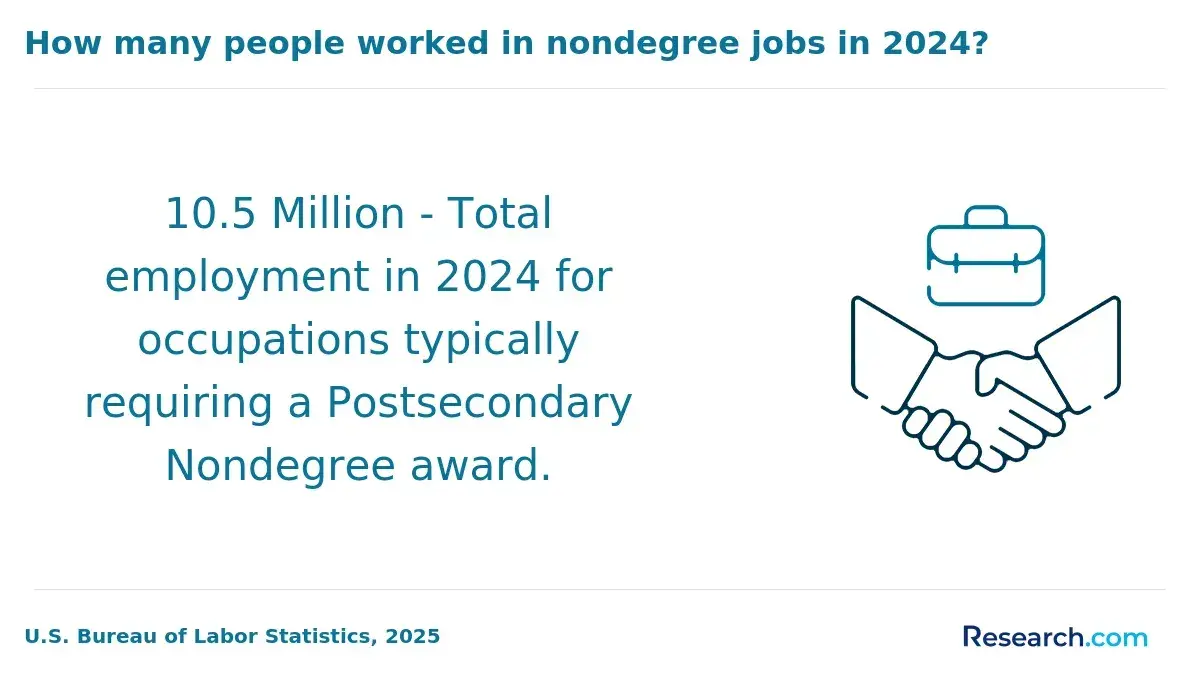
The U.S. Bureau of Labor Statistics anticipates about 7% employment growth in management occupations from 2024 to 2034, adding roughly 1.1 million jobs, yet employer scrutiny favors credentials from industry recognized project management programs over nominal degrees. For example, an IT professional moving into leadership must hold credentials fitting both academic and industry standards to qualify for roles or certifications such as PMI's Project Management Professional (PMP).
In regulated sectors like construction or healthcare, verified education is essential to maintain eligibility for strategic multi-project oversight. Prospective students should confirm accreditation status through institutional disclosures and third-party sources before enrollment. Key considerations include:
- Alignment of portfolio management coursework with standard industry frameworks that affect practical skill application.
- Impact on transfer credits, tuition reimbursement, and federal financial aid eligibility.
- Risks of limited career mobility and diminished return on educational investment without accredited recognition.
Those exploring project management pathways may find valuable insight in rankings of the online business schools, offering specialized examples of accreditation's role in program quality and workforce relevance.
What portfolio management courses are included in the curriculum?
Effective portfolio management coursework within online project management degrees centers on aligning project selection with organizational strategy while managing resource constraints and risk tradeoffs. Core portfolio management classes in project management curriculum equip students to assess competing projects through frames like ROI and strategic fit, responding to the frequent executive need for data-driven prioritization frameworks rather than ad hoc decision-making.
Practical application of portfolio dashboards and real-time analytics software is common in these programs, reflecting employer expectations for managers who can oversee diverse project arrays in dynamic sectors. For example, technology companies depend on these skills to balance rapid iteration cycles with budget discipline, whereas healthcare organizations lean on portfolio risk models to navigate regulatory pressures alongside innovation demands.
Besides technical and financial acumen, communication and change management are embedded in coursework to help portfolio managers translate complex project details into strategic summaries for C-suite stakeholders. Given the Project Management Institute's 2024 Earning Power survey showing PMP certification holders earn 33% more with a median of $147,000 annually, the integration of PMP exam preparation remains a critical credentialing pathway.
Prospective students weighing a strategic career pivot would benefit from evaluating such portfolio management coursework in online project management degrees for its direct applicability in managing competing priorities and delivering measurable business outcomes. Those seeking programs addressing the practical realities of coordinating enterprise portfolios will find alignment with broader career goals at this interface.
What admission requirements do these online programs usually have?
Admission into online project management degree programs with portfolio management components demands more than academic credentials; it prioritizes verifiable professional experience and clear evidence of leadership within project contexts. A common threshold requires applicants to possess a bachelor's degree-often in business, engineering, or IT-and maintain a GPA of at least 3.0, with competitive programs sometimes elevating this to 3.3.
However, the defining factor is typically two to five years of substantive project management involvement. For instance, an IT support professional seeking to pivot must document formal leadership or coordination roles to meet experiential standards. Application materials generally include official transcripts, a statement of purpose geared toward explicit career objectives, and recommendation letters that demonstrate managerial potential.
While GRE or GMAT submissions remain mandatory for some programs, a growing number waive these in favor of documented work history and academic performance, particularly for mid-career entrants. Candidates without a traditional business foundation may face prerequisite coursework or need to prove quantitative aptitude to succeed in portfolio management classes.
Technology fluency is another evaluative layer due to the reliance on digital collaboration platforms and synchronous/asynchronous course delivery modes. This often translates into assessments or evidence of prior digital teamwork experience to ensure candidates can engage fully in the learning environment.
According to BestColleges' 2024 data, graduates of such programs report a median salary increase between 22% and 28% within three years post-graduation, but this gain correlates strongly with prior experience and alignment between educational outcomes and employer expectations. Prospective students must weigh the investment against their current professional groundwork and readiness to leverage skills immediately for measurable labor market gains.
How long does an online project management degree usually take?
Completing an online project management degree within 18 to 36 months depends heavily on prior experience, employment status, and time commitment. Full-time students often finish within two years, while part-time learners-especially those balancing work or family-may take three years or more. Accelerated options that shorten this to 12-15 months require substantial weekly dedication, often unrealistic for full-time employees.
Mid-career professionals in IT or construction sectors benefit from completing degrees within 24 months to align with evolving employer demands for formal qualifications and proven portfolio oversight. In contrast, entry-level candidates usually need the full duration to build foundational skills and hands-on competence, particularly where leadership and risk management are essential. Employers increasingly prioritize demonstrable project leadership abilities gained through internships or capstone projects embedded in coursework.
Practical constraints include the necessity of applying portfolio management theory to real-world scenarios, often requiring simultaneous professional experience to maximize learning. Cost also plays a pivotal role: online master's programs typically range from $20,000 to $75,000, markedly less expensive-by 30-40%-than on-campus equivalents when factoring in fees and living expenses, underscoring the value of efficiency for career-oriented professionals.
How much do online project management degrees cost?
Tuition for online project management degrees with portfolio management coursework typically falls between $33,500 and $37,000, considerably lower than on-campus alternatives. For instance, Boston University's MS in Project Management with a portfolio focus charges between $33,567 and $37,071 for completion, compared to up to $110,403 for its full-time campus program.
This cost disparity often mirrors differences in delivery mode, residency, and access to resources, which candidates must weigh against their personal and professional context. Working professionals must consider that online programs reduce expenses beyond tuition, such as relocation and commuting, which impact opportunity costs. However, they may offer fewer networking opportunities critical for portfolio roles demanding stakeholder negotiation and strategy alignment.
Employers increasingly prioritize skills managing interdependent projects rather than isolated tasks, so prospective students should confirm that coursework includes practical applications relevant to their industry's portfolio governance and resource allocation needs. Financial planning also requires accounting for ancillary expenses like technology fees, certification exam prep, and software for project simulations. The lower tuition of online degrees can be advantageous for career switchers or those seeking focused credentials without excessive debt.
What careers can you pursue with this degree?
An online project management degree with portfolio management coursework equips graduates for roles demanding multi-project oversight combined with strategic alignment and effective resource allocation. Unlike traditional project oversight, portfolio managers must juggle competing initiatives and balance priorities, a skill enhanced through focused coursework. For instance, a product manager handling both software release cycles and IT infrastructure upgrades relies on these portfolio insights to ensure smooth sequencing and investment decisions.
Positions such as program and product managers derive value by integrating portfolio knowledge to navigate shifting market demands and cross-functional coordination. However, employers increasingly prioritize certifications reflecting expertise in PMI frameworks, with PMP credentialing growing to over 1.4 million globally. This trend signals that understanding integrated project and portfolio management approaches is critical for managing complex stakeholder environments and governance.
Professionals should be aware that maintaining relevant certifications involves ongoing renewal and adapting to evolving methodologies. Real-world effectiveness also depends on hands-on experience with portfolio software tools prevalent in industries like healthcare, finance, and construction. This blend of skills and practical exposure distinguishes candidates prepared for both tactical delivery and strategic planning challenges across diverse project landscapes.
Project managers aiming for executive roles face the practical necessity of developing budgeting and performance measurement capabilities beyond task execution, reinforcing the strategic contribution of portfolio education to organizational growth trajectories.
What salary can project management graduates expect?
Project management graduates with portfolio management experience typically see entry salaries from $70,000 to $90,000, influenced heavily by industry and location. Mid-career positions can yield $95,000 to $120,000. Sectors like IT, healthcare, and construction offer higher pay due to project complexity and scale. For example, starting salaries around $85,000 are common for graduates joining healthcare project portfolio teams that manage multidisciplinary initiatives requiring specialized oversight and risk mitigation.
Adding portfolio management certifications can increase earnings by 15-20%, but prospective students must weigh certification costs against expected salary benefits. The University of Liverpool's online MSc in project management raised tuition to £17,947 for 2026/27, illustrating how rising program expenses affect return on investment calculations. Graduates aiming for sectors with complex portfolios are more likely to justify such financial commitments.
Employers demand proven skills in juggling multiple projects, allocating resources efficiently, and aligning portfolios with strategic business goals. Without practical experience, salary growth tends to stagnate. In smaller markets or non-technical industries, entry salaries may dip close to $60,000, requiring targeted networking and demonstrable impact for advancement.
Which certifications help project management graduates most?
Certification in project management directly influences employability and salary potential more than degree pedigree alone, especially given wide tuition cost disparities-$11,529 at Sam Houston State University versus $76,449 at New York University. The Project Management Professional (PMP) credential signals advanced leadership in complex projects, justifying a 20-25% salary premium.
Entry-level graduates without extensive experience benefit from the Certified Associate in Project Management (CAPM), which confirms foundational competence and accelerates access to leadership tracks. Portfolio Management Professional (PfMP) certification targets professionals responsible for aligning multiple projects with strategic goals, a role common in finance, healthcare, and technology sectors where resource allocation and ROI hinge on portfolio oversight.
Employers prioritize these certifications as critical screening tools that separate theoretical knowledge from practical readiness. Graduates should consider this credential sequence for tactical career progression:
- Secure CAPM immediately after graduating to bridge the experience gap.
- Gather 3-5 years of project experience while preparing for PMP certification.
- Pursue PfMP when transitioning into enterprise-level portfolio roles.
This approach reflects the labor market's emphasis on demonstrated application rather than academic credentials alone. Candidates from higher-cost programs may have some reputational advantages, but those from lower-cost schools can leverage certifications to achieve similar competitive footing.
Other Things You Should Know About Project Management
The workload for these degrees varies based on program design but often combines rigorous theory with applied projects, requiring significant time investment outside of lectures. Students must balance coursework, often including case studies and real-world portfolio assignments, which simulate actual project complexities. Programs that integrate portfolio management will require consistent engagement in cross-project analysis and resource allocation exercises, demanding strong time-management skills. Prospective students should prioritize programs that offer clear scheduling flexibility if they plan to work full-time while studying.
Part-time programs offer greater flexibility for working professionals but extend the time to degree completion, potentially delaying career advancement linked to the credential. Full-time options accelerate learning but can create challenges in balancing job responsibilities, especially with portfolio management components that require deep, sustained focus. Professionals must weigh immediate workload capacity against long-term career timing, selecting part-time only if they can maintain steady progress without compromising work quality or personal obligations.
This degree enhances theoretical knowledge and strategic capabilities but does not substitute for practical experience required by many employers. Portfolio management coursework sharpens high-level planning skills but typically assumes some baseline project or management exposure. Students without prior experience should supplement studies with internships or real-world projects to meet employer expectations, as a degree alone rarely qualifies candidates for senior roles without demonstrable applied skills.
References
- Accreditation vs. Certification: What’s the Difference? - ACGI https://acgisoftware.com/accreditation-vs-certification-whats-the-difference/
- What are the Admission Requirements for Online MSW Programs? https://www.onlinemswprograms.com/faqs/admission-requirements/
- Accreditation vs Certification: Understanding the Key Differences https://theawardgroup.com/blog/accreditation-vs-certification/
- Graduate Project Manager Salary | SEEK Grad (formerly GradConnection) https://au.gradconnection.com/career-advice/role/graduate-project-manager/salary/
- Advanced Portfolio Management Course | Barcelona School of Economics https://bse.eu/summer-school/finance/advanced-portfolio-management
- Portfolio Management Training Course https://zoetalentsolutions.com/course/portfolio-management-certification-course/
- Product & Portfolio Management Course https://www.oliverwight-americas.com/public-courses/product-portfolio-management-course/
- How Long Does It Take to Get Into Project Management in the UK? https://www.course2career.com/blog/how-long-to-get-into-project-management-uk
- Accredited vs. Non-Accredited Training: What’s Best for Your Organisation? https://www.trainingcreatively.com/blog/accredited-vs-non-accredited-training-whats-best-for-your-organisation/
- Accredited vs Non-Accredited Training: Understanding Your Options https://www.qahe.org/article/accredited-vs-non-accredited-training-understanding-your-options/