2026 Online Project Management Degrees With Construction Project Career Alignment

Co-Founder and Chief Data Scientist
Mid-career professionals aiming to transition into construction project roles often face a narrow window to balance full-time jobs, family commitments, and rigorous degree requirements. This challenge intensifies as employers increasingly demand formal credentials alongside hands-on experience. The National Center for Education Statistics reports that adult learners now constitute over 40% of all college enrollees, reflecting a critical shift toward flexible online degree programs designed for nontraditional students. Such trends signal a growing need for project management education that accommodates irregular schedules without sacrificing industry alignment or credential rigor. This article evaluates online project management degrees with construction project career alignment to clarify effective pathways that optimize professional outcomes and timing for diverse learners.
Key Things You Should Know
- State licensure and certification gaps in many online construction project management degrees create tradeoffs between reduced time-to-completion and lower credential portability, delaying workforce entry in 22% of U.S. states per the National Council of Examiners for Engineering and Surveying 2024 data.
- Employers in major urban markets now prioritize graduates with hands-on BIM and cost-control software experience, with 68% of surveyed CMS employers (2024 AGC report) rejecting candidates lacking integrated tech skills despite degree completion.
- Median tuition growth of 5.6% annually for accredited online programs since 2022 sharply elevates total cost and stresses ROI timing for mid-career professionals seeking career pivots against stagnant industry salary increases (~3.4% annually).
What is an online project management degree with a construction project focus, and who is it best for?
Online project management degree construction specialization targets the critical intersection of leadership acumen and construction-specific operational expertise, filling a growing skills gap demanding precise knowledge of construction regulations, scheduling software, and risk mitigation. For professionals shifting from architecture, engineering, or trades, this pathway accelerates readiness for roles such as construction project managers or cost estimators by emphasizing compliance with building codes, safety standards, and contract administration over generic project frameworks.
The Project Management Institute forecasts demand growth between 50% and 66% for construction-focused project leaders by 2035, reflecting heightened infrastructure investment and complexity. This trend incentivizes working professionals to pursue the best online project management programs for construction careers that integrate virtual internships or capstone projects with real construction firms, bridging theoretical learning and industry expectations.
Practical tradeoffs include juggling technical mastery against leadership development while managing the discipline online study requires. Essential program features often involve preparing students for recognized certifications like the Certified Construction Manager (CCM), which employers increasingly expect. Compared to broader project management degrees, construction-centric curricula reduce onboarding friction by focusing on environmental regulations and labor law compliance vital for progressing quickly into leadership within firms or public sector infrastructure projects.
Careful program selection is critical: applicants should review if curricula meet industry standards and confirm options through resources such as online accelerated project management degree programs that offer tailored construction specialization and recognized credentials.
How do online construction-focused project management degrees compare to on-campus programs for quality and credibility?
Online construction project management degree credibility hinges primarily on institutional accreditation and curriculum alignment with industry standards rather than on delivery format. Employers value demonstrable skills and applicable experience, meaning programs that incorporate industry-recognized certifications, capstone projects, or internships provide graduates with a clear advantage. For instance, managing multi-site commercial developments demands mastery of construction cost control software and up-to-date regulatory compliance-competencies readily taught online and directly relevant to workforce requirements.
Choosing between online and on-campus formats entails weighing tangible tradeoffs. On-campus programs often facilitate direct networking with faculty and local construction industry connections, an advantage for early-career professionals seeking immediate referral pipelines. Conversely, online degrees offer crucial flexibility for those balancing full-time roles, accommodating unpredictable project timelines without geographic constraints. The quality comparison of on-campus and online project management programs should also consider ongoing career support services, which impact job placement success.
The market outlook reinforces the need for verified competency, with the U.S. Bureau of Labor Statistics projecting 9% growth in construction manager employment through 2034. Graduates from either education mode must demonstrate proficiency in evolving project delivery methods, safety regulations, and technology use to capitalize on these openings. Prospective students should validate program alignment with certifications like CMAA and ensure pathways meet state licensing prerequisites, as employer preference increasingly prioritizes standardized assessments and practical experience over traditional campus attendance.
Those evaluating related fields might also explore an online sports management degree for comparative insights on program modality and workforce integration.
What accreditation and institutional approvals should construction project management students look for in an online program?
Accepting an online construction project management program without regional accreditation can result in non-transferable credits and reduced employer recognition, both critical to workforce entry and mobility. Programs lacking U.S. Department of Education-recognized institutional approvals for construction project management degrees expose graduates to licensing complications and limited eligibility for reputed professional certifications. For instance, a candidate seeking licensure in California must verify the program's state authorization to avoid disqualification, as local regulations directly affect credentialing and internship access.
Employers prioritize candidates whose degrees demonstrate rigorous academic standards paired with practical skills aligned with industry expectations. According to the U.S. Bureau of Labor Statistics, construction managers' median annual wage reached $106,980, highlighting the field's competitive demands. Graduates from unaccredited programs frequently face hurdles requiring costly supplementary certifications or experience to validate competency.
Additional programmatic accreditation by entities like the American Council for Construction Education (ACCE) or the Construction Management Association of America (CMAA) adds essential validation that curriculum meets sector-specific benchmarks. Students should also cross-check accreditations with national databases before enrollment to avoid pitfalls such as employer skepticism or blocked licensure pathways.
Prospective students evaluating online construction project management program accreditation should integrate practical considerations including state authorization and specialized approvals rather than rely solely on institutional reputations. Comparing these elements with options like a hospitality degree online demonstrates how domain-specific accreditation impacts not just academic outcomes but career trajectories.
Which degree levels and pathways best prepare you for construction project management careers?
Employers in construction project management prioritize candidates with bachelor's or master's degrees tailored to the sector, reflecting the specialized skill sets these programs provide. A bachelor's degree typically equips students with practical knowledge of construction methods, scheduling, cost estimation, and risk management, essential for entry-level roles on commercial or infrastructure projects. In contrast, master's degrees, such as an MBA for entrepreneurs, deepen expertise in areas like financial analysis, contract law, and strategic leadership, preparing graduates to oversee complex, multimillion-dollar developments or government contracts.
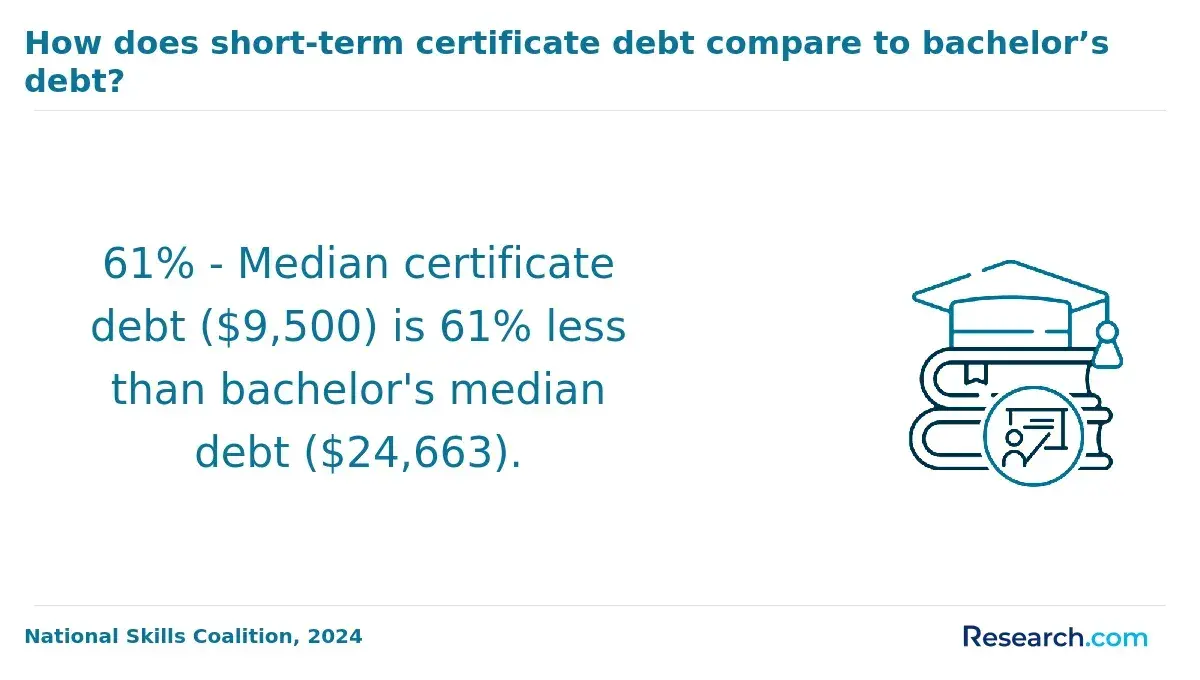
Certificate programs and associate degrees often lack the comprehensive scope needed for demanding roles involving regulatory compliance and stakeholder coordination, limiting long-term career growth. In the context of online project management degree options for construction careers, candidates should scrutinize curricula for up-to-date construction technology integration, relevant practicum experience, and alignment with regional licensing requirements.
Additionally, combining educational credentials with recognized project management certifications such as PMP or CAPM enhances employability by confirming proficiency in standardized industry processes. OnlineU's 2026 rankings highlight the City University of Seattle's online project management program graduates achieving median salaries in the 94th percentile nationally, emphasizing the impact of program rigor and employer recognition.
Choosing the right path involves weighing immediate workforce entry against longer-term advancement potential. Bachelor's-to-career routes suit those focused on site supervision and coordination, whereas pursuing a master's after gaining field experience can accelerate leadership opportunities. Those seeking accelerated degree completion might explore the fastest online master's in healthcare management programs for comparative timeframe insights relevant to intensive study planning.
What core courses and specializations are typically included in online project management programs for construction?
Choosing to pursue online construction project management programs requires weighing specialized skill acquisition against financial and professional returns. Core coursework typically covers construction methods, cost estimating, contract administration, and safety management. Students aiming for commercial construction roles must prioritize contract negotiation and regulatory compliance to reduce costly project delays, while those targeting infrastructure focus more on environmental assessments and public regulation.
The programs combine theory with applied learning through simulations and case studies, aligning with employer demands for candidates skilled in both technical details and leadership within multidisciplinary teams. Essential skills gained include construction project scheduling, cost control, and quality assurance, with additional emphasis on risk management and construction law to navigate disputes and inspections effectively.
Financial tradeoffs are significant. According to UniversityHQ's 2026 analysis, public in-state online bachelor's programs average $9,970 per year (about $39,500 total), contrasted with private institutions at $34,740 annually (approximately $140,000 total). This gap substantially affects the return on investment, particularly for midcareer professionals seeking to pivot without accruing excessive debt.
Prospective students should assess how program focus and costs align with their targeted roles and employer expectations, considering that mastery of software tools like Primavera or Microsoft Project is often expected in this sector.
What are the common admission requirements and application materials for online construction project management degrees?
Admission for online construction project management degrees prioritizes candidates who demonstrate both academic competence and direct industry experience, reflecting employer demand for professionals who can immediately contribute onsite. Most programs require a bachelor's degree in construction management, engineering, business, or related fields with a minimum GPA ranging from 2.5 to 3.0 based on program standards. Practical construction experience-often two years of full-time employment or internships-is essential, ensuring applicants can navigate the complex regulatory and operational challenges typical of project coordination roles.
Standardized tests like the GRE are commonly optional or waived, yet may impact competitiveness for advanced tracks. Admissions committees emphasize clear, focused essays outlining career objectives tied to managing schedules, budgets, and safety compliance under real-world constraints. Letters of recommendation should come from supervisors or mentors familiar with the applicant's applied project management skills rather than purely academic performance.
Applicants must also balance program demands against ongoing employment-reflecting the sector's persistent need for hands-on site oversight, vendor negotiations, and compliance monitoring. International students typically provide TOEFL or IELTS scores and credential evaluations to confirm equivalency. Virtual interviews assess communication skills necessary for stakeholder collaboration and conflict resolution, while certifications such as OSHA or PMP reinforce practical readiness to handle construction-specific project challenges.
How long do online construction-aligned project management degrees take, and what do they typically cost?
Choosing an online construction-aligned project management degree requires weighing time commitment against career objectives. Associate degrees typically complete within 2 years, suitable for entry-level roles, while bachelor's programs stretch 3 to 4 years full-time, with flexibility for working professionals. Master's degrees, ranging from 18 months to 3 years, often demand residency or specialized course requirements, affecting scheduling and costs.
Cost considerations reveal significant variation: public universities charge roughly $150-$400 per credit for in-state students, totaling approximately $9,000 to $30,000 for a bachelor's degree. Private institutions generally exceed $500 per credit, potentially surpassing $35,000 in total. Graduate fees escalate further, reaching $20,000 to $50,000. Additional expenses include software licenses, textbooks, proctoring fees, and occasional travel for required residencies in master's tracks.
Employers prioritize applicants with hands-on exposure to construction-specific workflows tied to PMI-aligned curricula rather than degree cost alone. Pursuing programs offering pathways to PMP or CAPM certification enhances employability and salary prospects.
- Project management specialists report median salaries around $100,750 annually, while construction managers average $106,980, according to the 2024 Bureau of Labor Statistics.
- The upfront investment compares favorably against these earnings, especially when factoring career acceleration enabled by targeted credentials.
Balancing program length, cost, credential alignment, and real-world exposure is essential when planning an efficient educational trajectory tailored to individual career pivots or advancement in construction project management.
What construction-related job roles, industries, and career paths can these project management degrees lead to?
Online project management degrees tailored to construction careers position graduates for complex leadership roles such as construction project manager and scheduler, where managing multidisciplinary teams and multimillion-dollar budgets is routine. These roles demand more than generic management skills; success hinges on the ability to enforce safety standards, coordinate tight timelines, and strategically allocate resources across diverse construction sectors, from infrastructure to heavy industrial projects.
Practical real-world scenarios illustrate divergent skill applications: overseeing a hospital build involves navigating strict healthcare regulatory compliance, while managing residential developments prioritizes rapid subcontractor coordination and accelerated schedules. Such variation underscores why adaptability is a critical competency acquired through these degrees.
Beyond direct construction roles, project management degrees offer footholds in consulting, risk management, and integration of technologies like Building Information Modeling (BIM) and sustainability compliance frameworks. These interdisciplinary skills support transitions into emerging green construction and technology-driven sectors.
Employment data reflects this value, showing a 9% salary premium for project managers with graduate degrees over bachelor's holders. This premium emerges from advanced competencies in budget forecasting, risk mitigation, and stakeholder communication-critical for minimizing delays and budget overruns. Moreover, graduate credentials correlate with expedited access to leadership positions, increasing influence on organizational decisions in construction firms.
What salaries and job outlook can graduates expect in construction project management and related roles?
Starting salaries for construction project management graduates in 2026 typically approach $72,953, escalating to around $121,588 as professionals advance. This hike stems from a shift in responsibilities, spanning from managing discrete schedule segments to leading multimillion-dollar infrastructure projects. Graduates considering this path must weigh the significant variation in salary growth against geographic and market factors.
Early roles demand technical proficiency in scheduling software, cost estimation, and regulatory compliance. Mid-career professionals who broaden skills toward contract negotiation, risk mitigation, and interdisciplinary coordination tend to realize the sharpest salary improvements. For example, a project manager handling complex urban developments or diverse teams in high-demand regions often commands premium compensation.
Job prospects remain robust due to sustained infrastructure investment and labor shortages; however, competition favors individuals who integrate construction knowledge with digital competencies such as BIM and sustainability standards. Success increasingly hinges on balancing practical construction expertise with continuous skill development.
Tradeoffs arise between metropolitan areas' higher salaries and their increased cost of living and accelerated project timelines. Likewise, niche focus-residential versus industrial-affects stability and earning potential.
Licensure or certifications like PMP or CCM are critical differentiators, often correlating with faster promotions and enhanced compensation. Employers look for candidates merging formal project management education with construction-specific experience, which significantly influences career trajectory.
Which professional certifications support construction project management careers, and how do degree programs align with them?
Choosing an online degree in construction project management without clear alignment to industry certifications often leads to extended preparation time and added costs for certification readiness, creating a gap between education and hiring expectations. Certifications such as the Project Management Professional (PMP), Certified Construction Manager (CCM), and Associate Constructor (AC) require specific proficiencies in contract administration, risk management, and construction law-areas that well-designed degree programs must address to remain relevant.
For instance, PMP certification demands documented project hours and familiarity with the PMI's PMBOK Guide processes. Degree curricula that incorporate applied project simulations and standard frameworks enhance graduates' preparedness, allowing them to meet these expectations directly. The same applies to CCM, whose exam centers on construction delivery methods and cost control, integral to robust construction project management education.
Professionals moving from technical roles or adjacent fields benefit most when programs combine core project management competencies with industry-specific standards, including internship placements and mentoring, to fulfill experience requirements. Without this integration, certification success and employability slows down, delaying entry or progression in the workforce.
Graduates aiming to balance affordability and marketability should consider programs averaging around $9,900 annually, correlating with median starting salaries near $70,857-a competitive compensation level aligned with many campus equivalents. This pragmatic approach accounts for both educational investment and realistic labor market outcomes.
Other Things You Should Know About Project Management
The workload for online project management degrees aligned with construction projects is substantial and often underestimated. Students must manage a high volume of technical readings, case studies, and time-sensitive assignments while mastering industry-specific software like scheduling and cost estimation tools. Part-time learners or those working full-time face real challenges balancing these demands, so prioritizing programs with flexible pacing and asynchronous access is essential to avoid burnout and ensure steady progress.
Employers increasingly accept reputable online project management degrees for construction roles, but they prioritize candidates who demonstrate practical experience and certifications alongside the degree. Graduates from online programs should focus on internships, applied projects, or relevant work history because employers often view online credentials as theoretical unless supplemented by real-world skills. Choosing an online degree with strong industry connections or experiential learning opportunities raises employability more than the delivery mode itself.
Certifications are often given more weight for mid- to senior-level construction project management roles, especially when paired with a degree. A degree provides foundational knowledge and is essential for entry-level positions, but certifications like PMP or CCM validate specialized skills and adherence to standards employers require for advancement. Prioritizing a degree program aligned with certification exam content is the most strategic path to accelerate career growth.
References
- Project Management https://www.agc.org/education/project-management
- Certified Project Manager Academy Institute MPM Accredited Institute Project Management Certifications ACAPM ® Certified Project Manager - Academy of Project Management Institute http://americanacademyofprojectmanagement.com/MCPM.html
- Top 5 online courses for Project Managers https://zoetalentsolutions.com/top-5-online-courses-for-project-managers/
- How to become a construction project manager + salary guide | Acknowledge Education https://www.acknowledgeeducation.edu.au/knowledge-hub/how-to-become-a-construction-project-manager-salary
- CourseCareers https://coursecareers.com/blog-posts/best-construction-project-management-courses
- BSc (Hons) Construction Management https://www.ube.ac.uk/undergraduate/construction-management/
- How To Become a Project Manager in 2025: Steps and Education https://productive.io/blog/how-to-become-a-project-manager/
- PMI Accreditation – What It Means and Why It Matters - Online Masters Project & Programme Management https://projectmanagement-ul.ie/pmi-accreditation-means-matters/
- How to Become a Construction Project Manager https://www.wrike.com/project-management-guide/faq/how-to-become-a-construction-project-manager/
- Best Online Construction Management Degrees https://www.affordablecollegesonline.org/degrees/construction-management-programs/