2027 Best Online Operations Management Programs for Professionals Seeking Manufacturing Careers

Co-Founder and Chief Data Scientist
Manufacturing professionals face a critical bottleneck when advancing into leadership roles without formal education tailored to complex operational systems and supply chain dynamics. With 62% of adult learners enrolling in online programs through 2024, according to the National Center for Education Statistics, the shift signals a strong preference for flexible, career-compatible schedules-a necessity for those balancing shift work or management duties.
This trend underscores the need for programs that deliver specialized knowledge without demanding full-time campus presence. This article evaluates top online operations management programs, focusing on accessibility, curriculum applicability, and outcomes that align with manufacturing career trajectories to guide informed decisions.
Key Things You Should Know
- Recent BLS projections show manufacturing operations managers face a 5% employment growth through 2031, but programs emphasizing advanced analytics over traditional supply chain risk graduate underutilization, forcing costly reskilling post-hire.
- Employer demand surveys from 2024 reveal 62% of manufacturing firms prioritize candidates with integrated ERP system experience; programs lacking this focus often yield lower starting salaries despite comparable degree costs.
- Programs offering accelerated 12-18 month tracks reduce time-to-employment by 30%, yet often sacrifice depth in lean manufacturing methodologies, posing a tradeoff between speed and long-term adaptability in complex manufacturing environments.
What is an online operations management degree and how does it prepare you for manufacturing careers?
Optimizing manufacturing operations demands more than theoretical knowledge; it requires measurable skills in workflow analysis, supplier negotiation, and quality control metrics-core competencies developed through an online operations management degree. For instance, managing just-in-time inventory in automotive manufacturing hinges on mastering data-driven decision-making to minimize downtime and reduce defects. Such programs emphasize practical applications in analytics, logistics, and risk management aligned with the regulatory and technological contexts of manufacturing industries.
Programs that balance these technical skills with applied projects tend to produce candidates who meet employer expectations for reducing waste and cycle times. Graduates typically gain proficiency in enterprise resource planning (ERP) software, predictive analytics, and process simulation-tools essential for supervisors managing production lines and supply chains. Labor market data, including reports cited by the University of Kansas, shows operations management roles have a median annual salary of $102,950 in the U.S., with a 6% growth rate and 2.8 million annual openings, confirming solid demand.
Considering an online operations management degree benefits for manufacturing professionals requires scrutinizing course offerings that balance theory with industry engagement. This pathway allows a strategic career pivot for those building operational leadership amid manufacturing disruptions and capital investment planning. For those evaluating educational options, comparing this route with alternatives such as an accelerated online project management degree can clarify alignment with career goals and timelines.
How do the best online operations management programs compare with on-campus options for manufacturing roles?
Online operations management programs versus on-campus programs for manufacturing careers present distinct tradeoffs tied to curriculum rigor, practical exposure, and networking potential. While online programs effectively deliver targeted coursework in supply chain analytics, lean manufacturing, and quality control, on-campus programs typically offer richer access to hands-on labs and direct industry collaboration, critical in highly technical fields like semiconductor fabrication.
Employers hiring industrial production managers-facing a 5% job growth rate with 15,000 annual openings-prioritize demonstrable problem-solving and process optimization skills grounded in real-world experience, which on-campus settings facilitate through spontaneous engagement and specialized equipment.
Flexibility and curriculum comparison of operations management education for manufacturing roles must weigh these factors against students' situations. Working professionals often prefer online formats to maintain employment without relocation, but should verify if programs include synchronous sessions, virtual simulations, and practicum opportunities.
Those aiming for leadership roles within sub-sectors demanding technical depth should consider on-campus cohort immersion essential for mastering workplace culture and equipment nuances. Decision-making should hinge on employer expectations, self-directed learning capacity, and need for hands-on experience, as this alignment affects employability and readiness.
Prospective students exploring pathways might also evaluate related fields such as construction management; a resource for this is available through the masters in construction management online, which shares similarities in balancing practical demands with flexible delivery.
Which types of operations management degrees are best for manufacturing professionals (certificate, bachelor's, master's, MBA)?
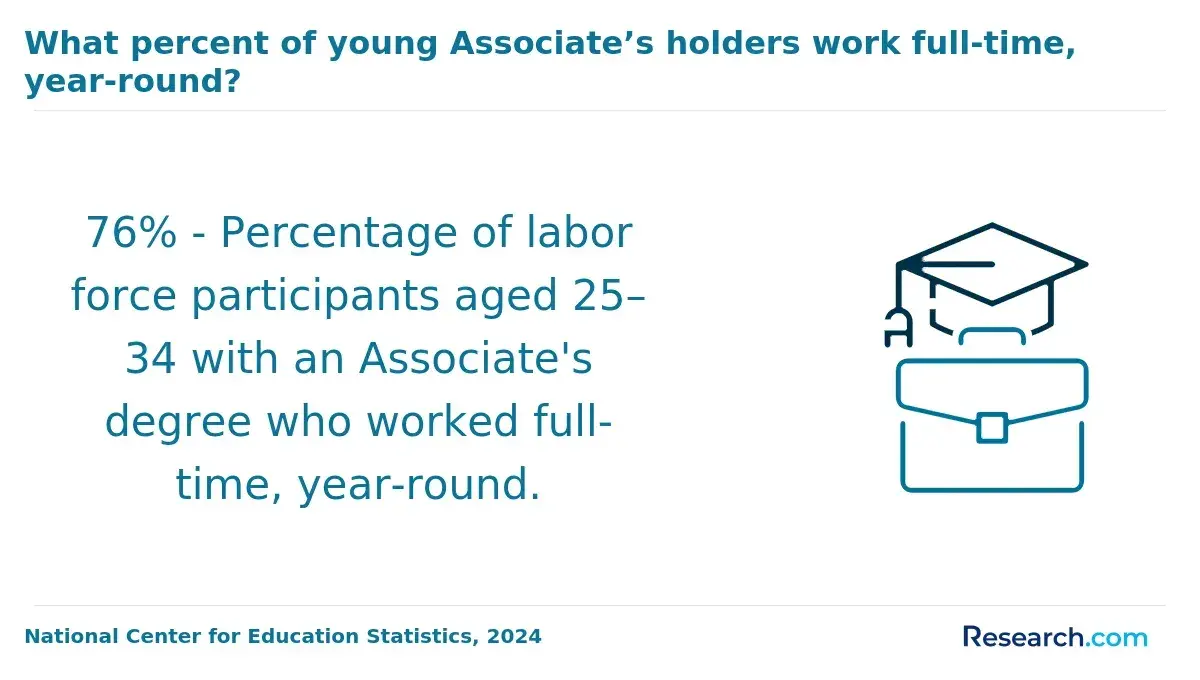
Manufacturing professionals aiming for measurable salary gains and upward mobility generally find that bachelor's degrees in operations management outperform alternative credentials. According to PayScale's 2024 College Salary Report, median annual earnings approach $80,000 for these degree holders, with the top 10% exceeding $130,000. This degree's focus on supply chain logistics, production planning, quality control, and project management directly aligns with core manufacturing functions, making it essential for entry-level to mid-tier roles.
This highlights a practical workforce reality: employers value operational experience combined with academic credentials more than standalone certificates or advanced degrees without relevant background. Certificates in operations management, while offering skill refreshers such as lean manufacturing or Six Sigma, rarely shift salary or promotion prospects independently.
They function best as complementary credentials for those already holding bachelor's degrees or mid-career professionals seeking niche expertise. In the context of top operations management certificate and degree programs for manufacturing professionals, this tradeoff between broad foundational knowledge and specialized skills is a key consideration.
Master's degrees and MBAs with an operations focus address strategic and leadership competencies but typically require significant investment and relevant industry experience. Manufacturing employers often weigh hands-on operational knowledge and demonstrated industry familiarity more heavily, so candidates without this may find entry challenging despite advanced degrees.
Practical decision-making must factor in career stage, employer expectations, and the immediate applicability of skills. Prospective students should also consider related fields or adjacent industry programs - for example, those exploring healthcare manufacturing might investigate a health information technology degree for specialized cross-sector opportunities.
What accreditation should online operations management programs have to be respected by U.S. manufacturers?
Accreditation standards for online operations management programs in the U.S. weigh heavily in employer evaluations, especially in manufacturing sectors where applied skills and industry relevance are non-negotiable.
Regional accreditation from bodies recognized by the U.S. Department of Education or CHEA guarantees foundational rigor, while programmatic accreditation-such as from the Accreditation Council for Business Schools and Programs (ACBSP) or the Association to Advance Collegiate Schools of Business (AACSB)-aligns curricula with operational realities in supply chain and lean manufacturing environments.
For example, automotive or electronics manufacturers often prioritize candidates holding degrees from programs with both regional and specialized accreditations, ensuring tested competencies in quality control and continuous improvement.
Practical workforce implications include enhanced hiring prospects and downstream salary potential.
Data from Southern New Hampshire University shows annual tuition of $15,000 to $18,000 for an online BS in operations management, which, compared with the U.S. Bureau of Labor Statistics' median pay of $101,340 for general and operations managers, indicates a reasonable return on investment.
Graduates from non-accredited programs risk diminished recognition, potentially limiting entry or advancement in manufacturing roles.
Prospective students must scrutinize whether accredited programs incorporate practical, up-to-date coursework tied to industry demands and networks.
Without recognized accreditation, providers fall short in demonstrating relevant applied knowledge, a gap especially critical when acquiring recognized certifications for operations management degrees respected by U.S. manufacturers.
For those considering program length and financial accessibility, options like the 1 year online MBA no GMAT present alternatives that balance duration and credential value, applicable in some operations management career pathways.
What courses and concentrations in online operations management programs focus specifically on manufacturing operations?
Operations management programs focused on manufacturing must equip students to handle both technological complexity and workforce dynamics in increasingly automated environments. For instance, a manufacturing supervisor moving into operations management will need to interpret real-time IoT data and adjust production workflows swiftly to avoid costly downtime, demonstrating the interplay between digital tools and practical shop-floor decisions.
Core curricula typically cover supply chain analytics, lean manufacturing, quality control, and ERP systems, stressing the practical integration of automation with human labor. Mastery of manufacturing execution systems (MES) is essential for bridging digital processes with physical production lines, a skillset critical given the rise of AI-driven manufacturing.
Programs that omit industry-specific case studies or fail to offer specialized manufacturing concentrations risk leaving graduates ill-prepared for operational bottlenecks unique to sectors like automotive or electronics. Students must weigh how well programs address continuous improvement methodologies such as Six Sigma and Kaizen, sustainable manufacturing practices, and compliance with regulatory standards.
Workforce implications include managing reshoring trends that localize production while coordinating global supply chains, which demands adaptive leadership and analytics capabilities. According to the World Economic Forum's 2024 Future of Jobs report, roles in operations and supply chain management will expand markedly, underscoring the need for educational pathways that reflect real-time market demands rather than generic operation management concepts.
What are typical admissions requirements for online operations management programs aimed at working professionals?
Admissions criteria for online operations management programs serving working professionals reflect a pragmatic blend of academic baseline and proven industry experience, filtering candidates likely to succeed in applied operational roles.
Employers hiring graduates expect foundational knowledge often evidenced by a bachelor's degree in business, engineering, or a closely related field, paired with at least two to three years of relevant professional experience in manufacturing, supply chain, or logistics.
Programs typically enforce a minimum GPA threshold near 2.75-3.0 to ensure academic readiness for rigorous coursework. Applicants must provide transcripts, letters of recommendation, and targeted personal statements articulating clear career objectives and operational experience.
While some programs still require GRE or GMAT scores, this is shifting as market demand grows-especially considering the reported 30% year-over-year enrollment increase for supply chain and logistics courses on Coursera-which benefits mid-career candidates balancing job responsibilities and education.
Candidates without a relevant undergraduate degree often face prerequisite courses, complicating timelines and expense. Specialization matters: professionals in automotive or electronics manufacturing may find programs valuing domain-specific experience more immediately applicable and credible.
Additionally, readiness to engage with ERP systems and data analytics platforms is increasingly scrutinized in admissions, reflecting employer demand for digital fluency in operational roles. Successful admission hinges on substantiated academic records, verifiable professional experience, and strategic clarity in career goals, which programs interpret as predictors of both commitment and the ability to leverage education for measurable advancement within manufacturing and supply chain sectors.
How long do online operations management programs take to complete and what do they cost?
Completing an online operations management program involves a balance between time investment and career utility, with durations spanning from short certificates to multi-year degrees. Bachelor's completion programs catering to working professionals generally require 12 to 24 months, depending on weekly time commitment, while master's degrees stretch from 12 months in accelerated formats to 24 months part-time.
Certificate programs, typically lasting 3 to 6 months, focus on targeted skills like Lean Six Sigma or supply chain coordination and serve as practical enhancements rather than stand-alone qualifications. Cost considerations range significantly: public university bachelor's degrees typically fall between $10,000 and $25,000, master's degrees between $20,000 and $50,000, and certificates from $1,000 to $5,000.
While these investments are substantial, combining degree credentials with professional certifications such as APICS/ASCM's CPIM or CSCP can increase median salaries by approximately 21%, an important factor for supply chain professionals looking to justify both expense and effort.
For example, a manufacturing planner who augments a bachelor's degree with a six-month Lean Six Sigma certificate will likely secure leadership roles more swiftly than peers holding only degrees. Employers increasingly demand dual credentials plus practical experience, placing a premium on candidates completing programs within two years to maintain relevancy amid rapid shifts in automation and sustainability in operations.
What manufacturing careers can you pursue with an online operations management degree?
Entry into manufacturing leadership through an online operations management degree requires adapting to an expanding U.S. industrial landscape where domestic production growth intensifies complexity. The Reshoring Initiative's 2024 data reports over 320,000 manufacturing jobs-reshored or foreign direct investment-based-highlighting employers' urgent need for professionals who master balancing operational scale with cost control and supply chain stability.
Typical roles demand granular skills such as:
- Applying lean manufacturing methods to boost efficiency in automotive or electronics environments.
- Managing procurement in response to volatile cost structures and evolving trade regulations, particularly in aerospace or textiles.
- Leading teams integrating automation in sectors like food processing or pharmaceuticals to drive continuous improvement.
For candidates pivoting from unrelated fields, proficiency with plant-level metrics and ERP platforms is essential, as remote work options are limited due to hands-on leadership needs at reshored facilities.
This dynamic creates a tradeoff between flexible learning formats and the necessity for programs delivering practical, scenario-based training grounded in lean and Six Sigma methods. Navigating this balance affects readiness to handle real-world operational pressures.
What salary ranges and job outlook can operations management graduates expect in manufacturing fields?
Starting salaries for graduates from operations management programs focused on manufacturing broadly range between $65,000 and $90,000, escalating to mid-career medians of $110,000 to $130,000 depending on industry subsector and geography.
Specializations in plant operations, supply chain integration, or digital manufacturing notably command higher salaries, as employers increasingly privilege skills linked to advanced analytics and automation. The shift toward analytics-driven manufacturing is materializing distinctly: employers prefer candidates capable of deploying AI and data-driven optimization tools.
For example, an analytics-focused graduate entering as a process coordinator in automotive manufacturing might see progression to operations manager roles exceeding $120,000 within five years, contingent on demonstrating quantifiable productivity gains.
In contrast, graduates aimed at conventional or manual manufacturing roles often experience limited wage growth and less robust demand. This divergence underscores the necessity for curriculum alignment with digital competencies like IoT applications and predictive maintenance.
Projected employment growth at approximately 9% through 2032 favors candidates who integrate AI and analytics into workflows, enabling firms to capture efficiency improvements. Conversely, those without digital fluency risk stagnation amid Industry 4.0 adoption and automation.
Employers also seek professionals who can spearhead digital transformation initiatives in manufacturing environments. Continuous upskilling post-graduation in data analytics tools remains essential for sustaining employability and career progression in this evolving landscape.
How can you evaluate and choose the best online operations management program for your manufacturing goals?
Choosing an online operations management program demands a precise alignment between curriculum content and the specific manufacturing sector needs you face, such as lean manufacturing, quality control, or supply chain logistics.
A program's value hinges on its capacity to translate theoretical frameworks into immediately applicable skills, especially in areas like production planning software, data analytics tailored to manufacturing, and regulatory compliance. Accreditation from recognized bodies such as AACSB or ABET signals that the program meets stringent academic and industry standards, which matters when employers evaluate credentials.
Programs that integrate practical experiences-through internships or established industry partnerships-provide an essential bridge from classroom learning to supervisory roles, where hands-on application matters most. Faculty expertise should reflect direct manufacturing industry experience rather than solely academic backgrounds, ensuring instruction addresses authentic operational challenges and practical problem-solving.
Flexibility in scheduling is another critical factor, especially for working professionals; accelerated formats may quicken qualification timelines but constrain deeper mastery, while extended programs offer more comprehensive understanding at the cost of delayed workforce engagement.
Labor market data shows over 3.5 million positions for general and operations managers, ranking them within the 15 largest occupations per the U.S. Bureau of Labor Statistics. Selecting programs with quantifiable job placement outcomes and robust alumni networks within manufacturing enhances chances for strategic career pivots or advancement.
Other Things You Should Know About Operations Management
Workload varies but most reputable online operations management programs designed for professionals balance flexibility with rigor, requiring 10 to 15 hours per week. Programs with synchronous sessions or cohort models tend to demand more consistent weekly commitment, which can be challenging for full-time workers. Prioritize programs that offer asynchronous learning with practical assignments if managing work-life balance is critical.
Prioritizing manufacturing-focused courses is essential for professionals targeting career advancement in that sector. General operations management programs lacking depth in manufacturing risk producing graduates with broad but shallow skills less valued by industrial employers. Select programs with targeted supply chain, lean manufacturing, and quality control coursework to match employer expectations and improve practical job performance.
Certifications like Lean Six Sigma or APICS are often expected complements rather than substitutes for a degree in operations management. Holding relevant certifications improves candidates' marketability and signals familiarity with industry-standard methodologies. Candidates should evaluate programs that either embed certification preparation or facilitate access to recognized credentials alongside the degree for a competitive advantage.
References
- PG Diploma in Operation Management Course 2026 - MTS Open University https://www.mtsou.edu.in/programmes/pg-diploma/operation-management-admission/
- Operations Management Degree and Careers https://www.discoverbusiness.us/education/operations-management-degree/
- Advanced Professional Certificate Courses | Metropolitan School of Business & Management UK https://msbm.org.uk/advanced-professional-certificate-courses/project-and-operations-management
- Best Online Operations Management Degrees of 2025 https://www.supplychainguide.org/degrees/online-operations-management-degrees/
- Operations Management https://ps.sckans.edu/degrees-and-certificates/bachelors/operations-management/
- Online MBA in Operations Management: Review Top Schools https://www.onlinemastersdegrees.org/best-programs/mba-programs/operations-management/
- How to Become an Operations Manager | StudyNext Australia https://studynext.com/au/resources/how-to-become-an-operations-manager
- 7 Things Indians Don't Know About U.S. Accredited Online Degrees - MSMGrad https://www.msmgrad.com/7-things-indians-dont-know-about-u-s-accredited-online-degrees/
- Types of Manufacturing Operations Software I First Resonance https://www.firstresonance.io/blog/manufacturing-operations-software