2027 Operations Roles That Often Lead to Executive Positions

Co-Founder and Chief Data Scientist
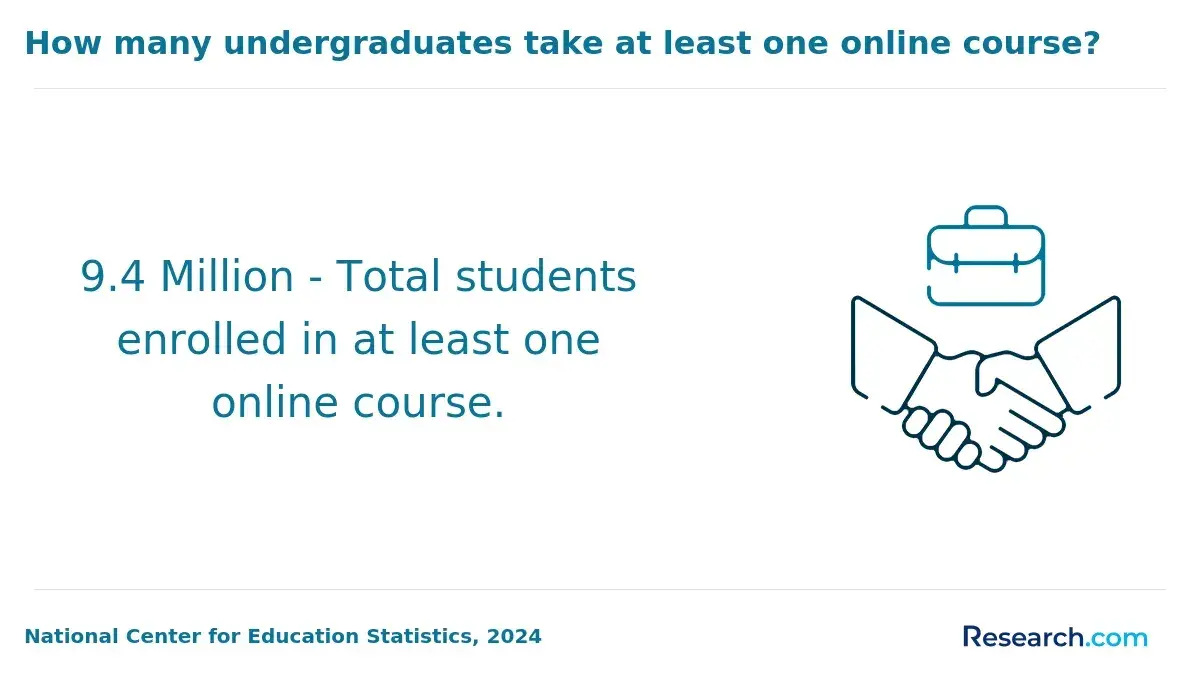
Struggling to identify which operations roles provide the most direct path to executive leadership poses a significant challenge for professionals charting a long-term career trajectory. With 68% of working adults pursuing part-time or online studies according to the National Center for Education Statistics, flexibility in education aligns closely with workforce demands but can complicate decisions about which positions maximize leadership development.
The rapid growth of digital learning options reveals shifting enrollment behaviors that reflect professionals' need to balance practical skills acquisition with career timing. This article analyzes key operations roles that reliably serve as springboards to executive positions, offering data-driven insights to guide strategic career planning in operations management.
Key Things You Should Know
- Operations roles with cross-functional responsibility accelerate promotion to executive ranks 43% faster, yet require early exposure to financial acumen, often delaying specialization but increasing strategic influence, according to the 2024 Deloitte Human Capital Report.
- Employers prioritize candidates demonstrating data-driven decision capabilities in supply chain and process optimization, with 68% indicating enhanced leadership potential per Gartner's 2025 workforce survey, shifting hiring toward analytics-intensive profiles.
- The median cost of obtaining relevant certifications in operations management rose 15% since 2023, creating access barriers that disproportionately affect entry-level professionals, thereby extending time-to-executive by 6-12 months on average, per SHRM's 2024 workforce study.
What operations roles lead to executive positions?
Advancing into executive positions within operations requires more than technical competence; it demands strategic acumen and the ability to optimize resources under pressure. Key operations roles leading to executive positions include operations manager, supply chain director, plant manager, and executive director of operations, each involving complex cross-functional coordination and performance metrics.
For example, an operations manager who implements lean methodologies to reduce manufacturing costs by 15% demonstrates the kind of tangible impact that captures executive attention and career mobility. The executive director of operations is often the gateway to senior leadership, commanding a U.S. average salary of $131,945 in 2025, a 2.8% rise from 2024, with more than 194,000 active job openings reported by the Bureau of Labor Statistics.
Sustained demand reflects the premium employers place on skills like data-driven decision-making and enterprise software proficiency. Candidates securing these roles typically balance immediate operational challenges with long-term scalability and strategic planning.
Navigating the shift from mid-level roles to executive leadership presents challenges such as adapting communication for boardroom stakeholders and mastering diverse industry regulations, illustrated by professionals moving from retail operations into healthcare systems.
Employers value proven reductions in cost and efficiency gains and often require advanced degrees or certifications. For many aiming for leadership in Operations management, pursuing a project manager bachelor degree offers practical foundation aligned with these expectations, bridging educational needs and workforce realities.
Which degrees help operations professionals move into leadership?
Leadership roles in operations increasingly hinge on a bachelor's degree tailored to operational contexts, such as in business administration with a concentration in operations management or supply chain management. These bachelor's degrees for operations leadership roles anchor candidates with essential workflow optimization and financial oversight skills. Industry data reveal salaries for global supply chain directors and managers range from $78,000 to $136,000, reflecting employers' demand for professionals who combine hands-on operations knowledge with strategic thinking.
Working professionals seeking executive responsibilities typically enhance qualifications via an MBA emphasizing operations or supply chain disciplines. For example, a mid-career manufacturing manager who completes this graduate program can move beyond plant-level metrics to lead global supply chain strategies, leveraging leadership, financial forecasting, and organizational behavior insight gained during the MBA. These advanced skills mark a key pivot from tactical efficiency to strategic direction.
Operations professionals lacking formal credentials face barriers in career progression, particularly as digital analytics and technology fluency become baseline expectations. Degrees that combine industrial engineering with analytics minors provide measurable advantages by merging quantitative rigor with operational acumen.
Students weighing their options must consider the tradeoff between broad business education and specialized programs that equip them specifically for leadership roles in industries like automotive, retail, and pharmaceuticals, where technical expertise directly impacts process efficiency and margins.
For practical pathways, prospective students might explore construction management courses as one alternative technical degree aligning with operations leadership skills and market demand in managing complex projects across sectors. This option can complement the best degrees to advance in operations management careers when paired with relevant industry experience and digital competencies.
How important are accreditation and employer recognition?
Accreditation impact on executive career advancement in operations roles hinges on employer recognition, which directly influences credibility and hiring decisions. In sectors like manufacturing, accreditation from industry bodies such as APICS confirms proficiency in supply chain and resource planning-skills essential for capacity management and cost control.
Conversely, technology operations prioritize certifications aligned with agile project delivery and continuous improvement, often recognized by leading employers in that field.
This variation reflects the importance of employer recognition in operations roles, where credentials must match sector-specific demands. Without recognized accreditation, professionals frequently encounter extended timelines to leadership positions due to skepticism regarding credential rigor and applicability.
Employers place measurable emphasis on verifiable skills and awards when determining salary offers, with U.S. resource and capacity planning managers earning between $77,000 and $132,000, demonstrating the premium placed on validated management capabilities.
Decision-makers must balance accreditation with practical experience; neither alone assures advancement. Programs lacking employer recognition often compel candidates to seek additional certifications or networking opportunities to validate competence. Targeting credentials acknowledged by dominant employers in one's industry or considering complementary pathways such as tailored on-the-job training becomes a strategic necessity.
Prospective students evaluating pathways that blend academic credentials with recognized skill validation might also explore options relevant to hospitality management, accessible through resources such as hospitality degree online.
Which operations roles have the strongest promotion pathways?
Roles in partner and channel marketing within revenue and go-to-market (GTM) operations provide some of the fastest promotion opportunities among operations roles. Between 2024 and 2025, this segment saw a 46% specialization increase, outpacing most GTM and marketing functions.
This trend reveals employer preference for professionals adept at managing complex partner ecosystems and coordinating cross-company incentives, skills linked to top operations positions leading to executive leadership.
Operations professionals moving into these marketing roles gain strategic exposure to contract negotiations, business development, and performance analytics, which directly affect company revenue.
For instance, in tech industries, channel marketing managers often collaborate closely with product and sales leaders to design partner programs that extend market reach-developing critical skills in stakeholder management and revenue forecasting for executive readiness.
Conversely, supply chain or process improvement roles typically experience slower promotion due to narrower scopes, often necessitating extra project leadership or advanced credentials. GTM operations roles blending data analytics with market execution offer a unique vantage point to shape corporate strategy and speed leadership advancement.
Employers seek candidates showing clear impact on revenue and partner growth. Prospective students should consider educational pathways combining business analytics, negotiation, and strategic management to align with these demands.
Those seeking such shifts must pursue measurable KPIs and cross-departmental experience to accelerate advancement, potentially through easiest MBA programs that integrate these competencies efficiently.
What skills do executives develop in operations careers?
Experience in operations careers equips professionals with critical skills in resource allocation, process optimization, and cross-functional leadership-skills indispensable for senior decision-making roles. For example, an operations manager who reduces a manufacturing cycle time by 20% gains practical insight into balancing cost, quality, and delivery schedules. This direct exposure fosters strategic acumen applicable to executive-level responsibilities.
Budget management and financial forecasting form part of daily operational duties, creating a natural foundation for overseeing organizational profitability at higher levels. Strategic prioritization emerges through continuous problem-solving under pressure, developing an ability to target initiatives that drive growth or reduce risk effectively.
Interpersonal skills sharpen through negotiating diverse stakeholder interests and leading cross-functional teams, which prepares operations professionals for boardroom communication and stakeholder management. Adapting to evolving technologies and market forces further cultivates foresight valuable to executives navigating competitive industries.
Market data confirms that operations and strategy managers command salaries ranging approximately from $67,000-$164,000 and $77,000-$133,000 respectively, reflecting their extensive responsibilities and skill breadth. This compensation spectrum highlights operations experience as a legitimate stepping stone toward upper management.
Prospective students should target roles that broaden financial authority and cross-department collaboration, as narrow technical standings without budget oversight risk limiting long-term career mobility.
What coursework prepares students for operations leadership?
Operational leadership education must equip students to navigate the complexity of contemporary supply chains through combined analytical precision and adaptive management skills. Coursework in supply chain analytics is fundamental, training learners to deploy data-driven tools for inventory optimization, demand forecasting, and resource allocation decisions.
Managers burdened by budgeting constraints rely on financial literacy gained from managerial accounting to drive cost efficiencies effectively. Meanwhile, project management classes build capabilities in cross-functional coordination and risk management, essential when leading diverse teams across manufacturing or retail sectors.
This blend of skills has tangible labor market implications. For example, logistics and distribution roles reported by the U.S. Bureau of Labor Statistics earning between $78,000 and $136,000 annually align compensation with their operational complexity and leadership scope.
However, students who omit mastering process improvement methods such as Lean or Six Sigma risk entering work environments where inefficiencies can cascade, particularly in settings like healthcare or e-commerce fulfillment where margins for error are slim.
Scenario-based operations strategy coursework simulates real-world disruptions, sharpening decision-making agility-an increasingly valued asset as supply chains face volatility.
Balanced emphasis across analytics, financial acumen, leadership skills, and operational expertise remains crucial; neglecting any dimension may hinder graduates' readiness for multifaceted executive roles in 2026.
Should you choose an online or campus operations program?
The choice between online and campus programs in operations management hinges on balancing professional demands with educational delivery modes. Working professionals in fluctuating schedules, such as logistics or manufacturing, often gain from online programs' flexibility, allowing skill advancement without sacrificing employment.
In contrast, campus programs excel in delivering immersive, hands-on experiences-critical in sectors like healthcare operations or supply chain analytics-where access to labs and real-time collaboration fosters leadership development valued by employers for executive tracks.
Recruiters emphasize demonstrated practical experience, continuous improvement abilities, and teamwork. Online learners must actively engage in virtual projects to replicate campus outcomes, which traditionally show higher completion and employer recognition rates. Yet, advances in digital platforms have narrowed these gaps, making online degrees with accredited curricula viable alternatives, especially for those distant from industry hubs or facing family commitments.
Employers increasingly prize leadership in continuous improvement roles, reflected in salary ranges from $77,000 to $133,000 (U.S. Department of Labor data), underscoring skill acquisition over modality. Prospective students should scrutinize accreditation and graduate employment stats to align choices with strategic operational roles rather than default to program convenience or reputation.
How long do operations degree programs usually take?
Program length in operations degrees directly affects career trajectory and earning potential, requiring students to weigh the tradeoffs between time investment and market readiness. Associate degrees typically take around two years, offering quick entry but limited strategic scope, while bachelor's degrees usually require four years, forming the foundational expertise expected for most mid-level roles. Accelerated programs can reduce this to three years but often demand full-time commitment incompatible with working professionals balancing multiple responsibilities.
Graduate education, particularly master's degrees in operations management, streamlines progression into leadership positions within one to two years full-time. Executive and professional master's formats add flexibility, allowing completion in 18 to 24 months part-time, which aligns with the schedules of many industry practitioners.
These advanced credentials provide targeted strategic and technical skills important for senior roles, such as operations engineering managers commanding salaries between $135,000 and $207,000 annually according to recent BLS data.
Practical implications include:
- Working professionals at established manufacturers or technology firms may benefit from part-time master's degrees, blending on-the-job experience with credential advancement.
- Those in startups or fast-scaling environments often prioritize shorter associate or certificate programs to accelerate entry and adapt rapidly to evolving operational demands.
- Certificate and technical diploma programs, frequently under 12 months, offer niche skills but seldom suffice for executive-level progression.
Ultimately, program selection must consider employer expectations about experience versus credential speed and the candidate's capacity to absorb complex operational strategy under differing timelines.
What salaries do operations leaders typically earn?
Salary outcomes for operations leaders reflect a balance between industry specifics, company scale, and location, with median ranges typically between $95,000 and $160,000 annually. Entry-level positions often start near $75,000, whereas senior roles such as vice presidents or directors in sectors like manufacturing or healthcare may surpass $200,000 total compensation.
For instance, a director of operations at a midsize healthcare firm, responsible for compliance and process optimization, can expect salaries from $140,000 to $160,000, whereas retail supply chain managers handling vast inventory systems earn closer to $95,000-$120,000.
Key variables influencing pay include the complexity of the operational environment, regulatory constraints, and the degree of digital transformation. Geographic differences also play a role; metropolitan areas like New York or San Francisco tend to offer higher salaries that correspond with elevated living costs.
Certifications such as PMP and Lean Six Sigma add measurable value by enhancing credibility and process efficiency, often translating into better remuneration. Bonuses linked to operational KPIs such as cost reduction and productivity improvements frequently supplement base salaries.
Leadership roles demanding strategic planning and diversity management-particularly given the persistent leadership gender gap where women represent approximately 29-30.6% of executives globally-can command salary premiums due to their impact on corporate culture and talent acquisition. Evaluating salary trends within operations management provides critical context for assessing professional development investments and choosing career pathways with realistic ROI and market alignment.
What certifications strengthen operations career advancement?
Certifications like Certified Supply Chain Professional (CSCP) and Project Management Professional (PMP) shape distinct yet complementary skill sets crucial for advancing within operations management. CSCP focuses sharply on integrating supply chains and enhancing efficiency-key for managing complex production or distribution networks. PMP spotlights project leadership and resource coordination, essential for roles overseeing organization-wide initiatives.
Consider a scenario where a tech company's Green Belt lead drives cross-functional efforts to trim product delivery times. This hands-on process improvement aligns directly with profitability objectives and executive priorities, illustrating how Lean Six Sigma certifications translate abstract skills into measurable business impact.
Choosing between certifications requires weighing demands beyond cost: for example, PMP mandates extensive project documentation and ongoing education, potentially slowing professionals needing rapid transitions into leadership.
Meanwhile, CSCP suits those targeting supply chain specialization, often pivotal in manufacturing or healthcare sectors where operational scale escalates complexity. Operations managers eyeing executive positions must balance technical depth with leadership frameworks. U.S. median wages near $103,000 for such roles reflect this market value. Moreover, a 4% projected growth in top executive roles signals steady demand for candidates who combine operational expertise with strategic decision-making capabilities.
Other Things You Should Know About Operations Management
The best operations management programs integrate both technical skills like process optimization and data analysis with leadership training such as change management and team coordination. Prioritize programs that offer project-based learning or internships to apply technical know-how within leadership contexts. Employers expect candidates who can not only understand operational systems but also influence teams and drive strategic decisions, so a well-rounded curriculum is essential for transition into executive roles.
Experience alone does not guarantee a move to executive leadership. Advancement depends on exposure to cross-functional projects, increasing accountability, and direct involvement in strategic initiatives. Professionals should seek roles that broaden their operational scope rather than staying in narrowly defined tasks, as executives need a holistic understanding of business impacts beyond routine operations. Assess roles on their potential to build influence over decision-making rather than just technical proficiency.
Specializing in a high-demand sector can accelerate advancement within that industry due to deep domain knowledge and tailored expertise. However, versatility across industries enhances adaptability and leadership appeal in roles that require managing diverse teams or scaling operations in dynamic markets. For executive pathways, prioritize versatility if aiming for companies that value broad operational strategy, but choose specialization if targeting niche sectors with complex, regulated processes.
References
- Online vs. On-Campus Degrees: Which Is Best for You? https://kingsedu.ac/online-vs-on-campus-degrees-which-is-best-for-you/
- Leadership in Operations Management - IntES https://int-es.com/engineering-consultancy/training-courses/leadership-in-operations-management/
- How Long Does it Take to Get a Masters Degree - MastersDegree.net https://mastersdegree.net/how-long-does-it-take-to-get-a-masters-degree/
- SETU | Bachelor of Arts (Hons) in Leadership and Operational… https://www.setu.ie/courses/bachelor-of-arts-hons-in-leadership-operational-management
- Accreditation vs Recognition vs Affiliation: Key Differences Explained https://www.ieac.org.uk/79-Accreditation-vs-Recognition-vs-Affiliation-Key-Differences-Explained-blog.php
- Achieving Success in Your Operations Career: How to Build a Rewarding Professional Path - Mangrum Solutions https://mangrumcareersolutions.com/blog/achieving-success-in-your-operations-career-how-to-build-a-rewarding-professional-path/
- 12 Operations Manager Skills & Key Strategies For Growth | TSW Training https://www.tsw.co.uk/insights/operations-manager-skills/
- What Professional Certificates Boost Your Career Fast? https://www.csinow.edu/blog/what-professional-certificates-boost-your-career-fast/
- How Professional Certifications Improve Career Growth for Students and Young Professionals https://www.sprintzeal.com/blog/how-certifications-improve-career-growth
- Building Success: The Career Path of an Operations Manager - Fortix https://fortix.com/2025/07/16/building-success-the-career-path-of-an-operations-manager/