2027 Online Operations Management Degrees With E-commerce Operations Career Alignment

Co-Founder and Chief Data Scientist
Facing a critical bottleneck in supply chain coordination, a mid-career professional struggles to acquire the precise skills needed to drive e-commerce operations amid rapidly evolving digital marketplaces. With 45% of adult learners prioritizing online degree programs that offer flexible scheduling and specialization in workforce-relevant fields, the landscape of online education is shifting to accommodate such urgent career pivots. This trend signals a deeper demand for programs that balance rigorous operational strategy training with the nimbleness required in e-commerce environments.
This article examines online operations management degrees tailored for e-commerce careers, assessing their alignment with market demands and accessibility to help professionals navigate this high-stakes transition effectively.
Key Things You Should Know
- In 2024, U.S. Bureau of Labor Statistics projects 10% growth in operations management roles within e-commerce, yet 45% of online degree holders face extended job search times due to limited hands-on logistics exposure.
- Employers increasingly prioritize candidates with integrated supply chain analytics skills, raising the barrier for purely theoretical online programs and altering hiring patterns across digital retail sectors, according to 2024 workforce survey.
- Average total cost for online operations management degrees aligned with e-commerce now exceeds $35,000, reflecting premium-priced specialized curricula and certifications; delayed program completion correlates with 22% lower mid-career salary gains per National Center for Education Statistics data.
What is an online operations management degree with an e-commerce focus, and who is it best for?
An online operations management degree with an e-commerce specialization addresses the distinctive challenges posed by fast order cycles, omnichannel fulfillment, and demand volatility in digital retail environments. Unlike broader programs, it equips students to manage warehouse automation, integrate logistics software, and optimize shipping partnerships within scalable online marketplaces. For instance, during peak sales, a supply chain manager must coordinate real-time analytics and fluctuating customer demand, tasks demanding expertise often absent from conventional degrees.
Positions tied to e-commerce operations management command a median salary of $102,950, supported by a steady influx of roughly 2.8 million openings annually and growth near 6%, reflecting robust labor market demand. Professionals pivoting from traditional operations roles or refining digital commerce strategies benefit most from targeted programs, recognizing they require a blend of theoretical understanding and measurable performance skills, such as reducing fulfillment times or cutting logistics costs.
Prospective students should evaluate their readiness for tech-heavy, self-directed learning environments that leverage virtual tools and data simulations. Practical applicability and employer expectations focus on concrete results amid complex supply chains rather than abstract principles. Comparing programs, those emphasizing real-world operational outcomes tend to yield stronger career transitions.
Alongside this specialization, students often explore broader credentials, such as a bachelor's in project management, to complement strategic capabilities within operations. The best online operations management programs for e-commerce careers balance accessible technology platforms with curriculum rigor to align with evolving marketplace demands.
How do online operations management programs compare with campus options for e-commerce careers?
Choosing between online operations management degrees versus campus programs for e-commerce careers involves weighing practical experience against flexibility and networking access. Employers in logistics and supply chain sectors expect candidates to demonstrate applied problem-solving and data analysis skills amid a labor market with 17% projected job growth for logisticians from 2023 to 2033. Campus programs typically offer more direct industry engagement through internships, hands-on labs, and local partnerships-critical for students targeting regional e-commerce distribution centers where on-site experience proves invaluable.
Conversely, online programs excel in delivering a technology-driven curriculum that accommodates working professionals balancing job demands, especially as e-commerce fulfillment and logistics technologies evolve rapidly. However, online learners must actively pursue virtual internships and use digital career services to counter limited face-to-face networking. Success in these programs requires disciplined time management, unlike the structured environment found in traditional settings.
When evaluating the differences between online and traditional operations management education in e-commerce, factors such as current employment, geographic constraints, and employer access play decisive roles. For professionals seeking to scale skills with contemporary e-commerce trends but lacking location flexibility, online pathways can offer relevant alternatives. In addition, applicants should present verifiable project experience or certifications to meet employer preferences.
Prospective students interested in supply chain or construction sectors might also consider an online bachelor's in construction management as a complementary credential for expanding operational expertise.
What types of online operations management degrees prepare you for e-commerce operations roles?
Online operations management degrees for e-commerce careers require more than general business knowledge; they demand specialized expertise in digital commerce platforms, inventory handling, and fulfillment systems tailored to multi-channel retail environments. For instance, managing just-in-time inventory for an electronics e-commerce business involves distinct supply chain controls compared to a fast-moving consumer goods platform, illustrating the practical need for adaptable operational strategies embedded in these programs.
Broad bachelor's degrees in business administration with an operations emphasis provide foundational skills but lack critical depth in e-commerce-specific technologies like vendor-managed inventory and omni-channel fulfillment workflows. Candidates emerging from programs explicitly designed for online retail operations are better positioned to handle these complexities and demonstrate readiness for employer expectations.
The wage disparity documented by the U.S. Bureau of Labor Statistics shows median annual pay of $122,090 for management roles versus $49,500 across all jobs, reflecting the premium on operational and digital commerce fluency combined. To overcome the steep practical learning curve prevalent in this field, professionals should seek degrees incorporating applied projects and industry partnerships, enhancing operational competence with hands-on experience in technologies like warehouse management systems and customer relationship management tools.
Prospective students evaluating the best online programs in operations management with e-commerce focus must consider how program curricula integrate scalable logistics solutions against more traditional operational content. Those balancing broad management goals with specific digital commerce requirements may also explore related pathways such as online health information management degree programs CAHIIM accredited for complementary skills in data-driven operations.
How can you verify accreditation and program quality for online operations management degrees?
Successful verification of accreditation for online operations management degrees in the US hinges on recognizing regional accreditation acknowledged by the U.S. Department of Education, such as the Higher Learning Commission or Middle States Commission. This baseline ensures programs meet essential academic standards aligned with employer and graduate school expectations. Specialized accreditation from bodies like the Accreditation Council for Business Schools and Programs (ACBSP) or the Association to Advance Collegiate Schools of Business (AACSB) signals a more rigorous scrutiny of business and management curricula, which correlates with stronger workforce readiness.
Checking program quality for ecommerce operations management online programs requires inspecting whether institutions publish transparent outcome data-graduation rates, job placement percentages, and employer satisfaction metrics. For instance, Gladeo notes median earnings for e-commerce operations managers stand at $120,000 annually, escalating to $177,000 for senior roles. Programs emphasizing supply chain analytics and strategic decision-making better position graduates for these income levels.
Curriculum relevance reflects distinct workforce niches: logistics-intensive degrees fit warehouse management, while digitally focused programs prepare students for online marketplace leadership. Accreditation lapses or reliance on non-recognized entities often signal instability and should factor into decision-making. Prospective students must weigh career services and networking as critical complements to accreditation to navigate the competitive operations management labor market effectively.
Those considering a shift toward operations leadership might also explore an online MBA with no GMAT, which can offer flexible advancement routes beyond specialized degrees.
What core courses and specializations are included in e-commerce-oriented operations management programs?
E-commerce-focused operations management programs emphasize skills unique to the digital retail environment, where traditional logistics collide with rapid, data-driven decision making. With e-commerce accounting for over 20% of U.S. retail sales, graduates must navigate tradeoffs between cost control and customer expectations, especially during fluctuating demand like peak sales seasons.
Core coursework includes actionable analytics, supply chain integration, and cloud-based ERP proficiency to manage real-time inventory across distributed warehouses. Students gain fluency in algorithmic forecasting tools designed to mitigate risks such as stockouts and overstock-common pitfalls that directly affect profitability in omnichannel fulfillment.
Practical application extends to cybersecurity vigilance within operational workflows, addressing vulnerabilities specific to online platforms. Employers increasingly seek candidates who combine technical fluency with rigorous operational discipline to sustain efficiency without compromising service levels.
Key differentiators from traditional programs involve monitoring performance indicators linked to digital commerce, such as cart abandonment rates and delivery punctuality. Professionals must also interpret how adjustments in logistics and technology investment impact customer retention and bottom-line results in a sector where delays rapidly erode competitive advantage.
As such, this specialization prepares students to integrate technology and operations pragmatically, balancing the demands of growth, cost pressures, and digital transformation.
What are the typical admission requirements and application materials for these online programs?
Admission criteria for online operations management degrees closely tied to e-commerce reflect the practical demands of the field and the need for candidates to demonstrate applicable skills and experience. Prospective students must typically submit an application, official transcripts confirming an associate or bachelor's degree, and proof of English proficiency if applicable. Programs often expect a minimum GPA around 2.5 to 3.0, though highly competitive tracks may require higher academic standards.
Applicants without traditional business backgrounds should anticipate prerequisite coursework to address gaps in foundational knowledge. Admissions committees weigh professional experience heavily, especially in roles involving supply chain, logistics, or digital commerce, where direct operational insight translates into smoother integration of academic concepts with workforce needs.
Supporting materials usually include a résumé emphasizing relevant projects or certifications, personal statements that clarify career objectives within operations and e-commerce contexts, and sometimes recommendation letters evaluating leadership readiness. While standardized tests like the GRE or GMAT are less frequently required, they remain relevant for programs that prioritize quantitative skills.
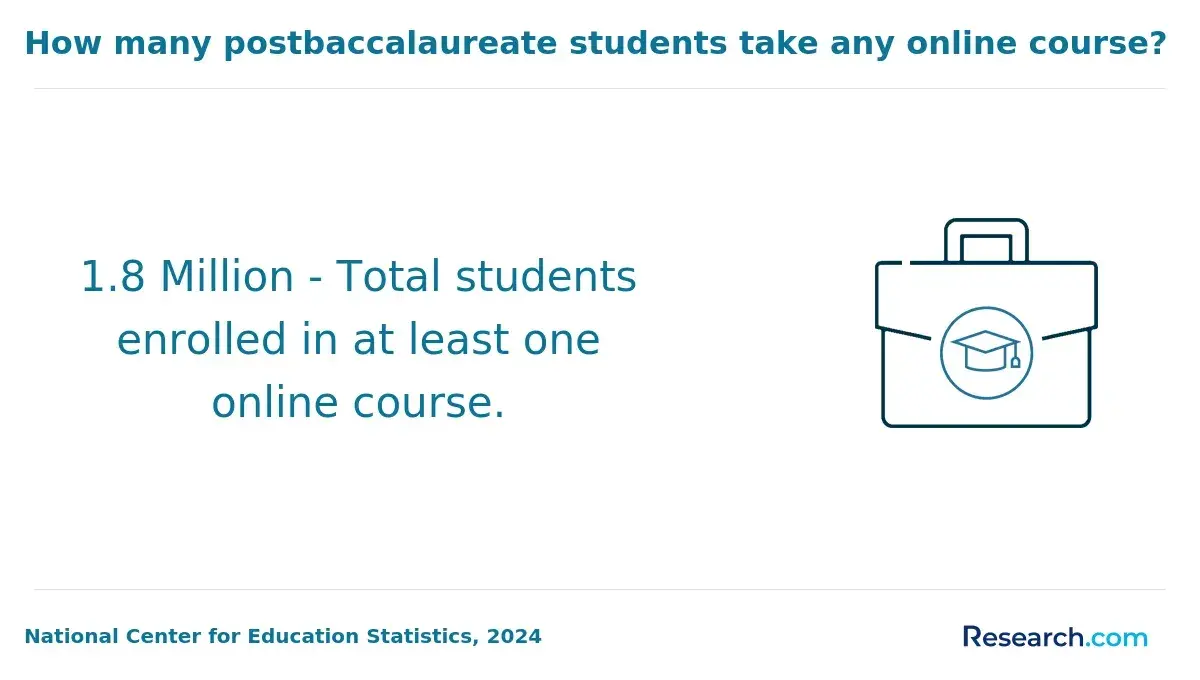
This admissions structure reflects labor market realities, balancing flexible learning with employer expectations. For example, individuals transitioning from retail logistics to online marketplace management must document demonstrable competencies aligned with evolving operational challenges. The growing prevalence of distance education-where over 60% of U.S. college students engage in at least one online course-underscores the importance of admissions pathways designed for working professionals managing concurrent job responsibilities.
How long do online operations management degrees take and what do they typically cost?
Time and cost remain the most significant decision factors for professionals pursuing an online operations management degree, each influencing the value of the credential in distinct ways. Bachelor's programs typically take 3 to 4 years, but accelerated or associate-to-bachelor's routes can reduce that to 2 to 3 years, whereas part-time study often extends completion closer to 6 years.
Graduate degrees usually span 1 to 2 years full-time, but part-time formats introduce additional semesters, lengthening time-to-degree and delaying potential career pivots. For mid-career supply chain professionals balancing employment, accelerated tracks minimize income disruption yet demand intense weekly study and self-discipline. The choice here becomes a practical tradeoff between short-term bandwidth and long-term opportunity cost.
Tuition ranges widely: public universities usually charge $15,000 to $40,000 for bachelor's degrees, while private institutions often exceed $50,000-and increasingly costly graduate programs can reach $60,000. Online students at public institutions often pay about 24% less than on-campus peers, which can improve return on investment, though employer perceptions may weigh institutional reputation alongside flexibility.
- Longer study durations with part-time programs can delay workforce re-entry and reduce financial leverage in hiring negotiations.
- Accelerated paths require significant time investment but can preserve or enhance earning potential by shortening education interruption.
- Employers assessing candidates may balance degree completion speed against recognized school prestige and curriculum focus.
What e-commerce operations jobs can you pursue with this degree, and what do they involve?
Positions arising from an online operations management degree focused on e-commerce extend beyond traditional roles, demanding a sophisticated grasp of automation, data analytics, and scalable process redesign. For example, warehouse operations managers must navigate integrating automated sorting systems to enhance workflow efficiency while managing human-machine collaboration. This practical challenge requires not only technical fluency but also adaptive leadership in hybrid environments.
Industry data reveals a significant imbalance: although over half of supply chain tasks are automatable, only about a quarter have been automated at scale, maintaining demand for professionals skilled in AI-driven transformations and real-time inventory management. This gap influences hiring decisions, underscoring the value of candidates who combine technology acumen with operational insight.
Key competencies extend to predictive analytics for demand planning-crucial in preventing costly inventory mismatches-and hands-on experience with ERP and cloud logistics platforms, which employers expect to troubleshoot bottlenecks and comply with complex global shipping regulations.
- Supply chain analyst roles emphasize data-driven decision-making and automation oversight.
- Warehouse operations management centers on workflow integration and throughput optimization.
- Fulfillment center coordinators manage end-to-end digital order processing under fluctuating demand.
- Specialists in automation integration bridge technical and operational divides.
The trajectory demands deliberate consideration of both the persistent partial automation landscape and the escalating complexity of digital supply chains, informing realistic expectations for career development and skill acquisition.
What salary ranges and job outlook can graduates expect in e-commerce operations management?
Graduates entering e-commerce operations management in 2026 face a salary range shaped significantly by sector depth and geographic factors, with entry-level roles typically offering $60,000 to $85,000 annually. Employers in tech-driven or high-volume retail segments frequently pay above $140,000 for senior managers, especially those skilled in supply chain coordination and digital operations optimization. Those positioned mid-career with 3-5 years experience often negotiate between $90,000 and $120,000, where demonstrated expertise in automation and warehouse management systems elevates value.
Real-world employer expectations reveal a common tradeoff: early-stage operational roles require physical presence within distribution centers or headquarters, whereas advanced positions offer hybrid or remote work options tied to planning and data analytics, accompanied by increased responsibility and accountability. This shift is reflected in Gallup's 2024 report showing around 28% of employees in mature economies work remotely in e-commerce roles, impacting candidates' geographical flexibility.
The U.S. Department of Labor projects a 10-15% job growth in logistics and operations through 2030, outpacing average business fields, driven by ongoing digitization and consumer shifts to online purchasing. Employers prioritize candidates with practical skills in analytics and fulfillment optimization to meet this accelerating demand.
Which certifications and professional skills best enhance an e-commerce operations management career?
Certifications and skills centered on supply chain mastery and data fluency significantly determine trajectory within e-commerce operations management. Credentials such as Certified Supply Chain Professional (CSCP) and Six Sigma enhance critical process optimization abilities necessary for managing complex order fulfillment and inventory dynamics. Platform-specific certifications, including those for Amazon Marketplace or Shopify Partner programs, reflect employer demand for expertise that directly influences the scalability of digital storefront operations.
Technical competencies in Excel and SQL are foundational for interpreting sales trends, forecasting consumer demand, and coordinating with logistics partners. Practical knowledge of ERP systems like SAP or Oracle is frequently a baseline requirement in larger retail settings to ensure synchronization across warehousing, shipping, and customer service functions. Additionally, familiarity with business intelligence tools such as Tableau or Power BI can differentiate candidates in competitive hiring environments.
Soft skills also carry weight, especially agile project management and cross-functional leadership, which help navigate rapid technological evolution and shifting consumer behaviors. For example, managers skilled in automation software reduce errors and operational delays, positively impacting profit margins and customer satisfaction metrics.
Data analyzed by Youngstown State University based on Salary.com figures shows a substantial earnings gap between entry-level coordinators averaging $65,870 and senior operations managers at $144,591 annually. This compensation variance highlights how targeted upskilling in certifications and digital commerce platforms can materially influence role seniority and income.
Other Things You Should Know About Operations Management
Having work experience can enhance learning and provide practical insights in a 2027 online operations management degree with an e-commerce focus, but it is not mandatory. Many programs are designed to accommodate all learners, regardless of their prior professional experience.
Programs that integrate synchronous sessions with collaborative projects better replicate workplace dynamics and encourage skills like team communication and problem-solving, which are essential for e-commerce operations. Purely asynchronous formats may offer flexibility but risk isolating students from interactive learning experiences, potentially reducing exposure to peer insight and immediate feedback. Prospective students should weigh their learning style and employer expectations for soft skills when choosing between these models.
Specialized degrees provide tailored skills in digital inventory management, online customer fulfillment, and e-commerce technologies, making graduates more immediately applicable to e-commerce employers. However, these programs can narrow broader operational perspectives, limiting flexibility for roles outside e-commerce or in companies that value cross-sector versatility. Professionals uncertain about long-term niche commitment should prioritize broader operations management programs with elective e-commerce courses to maintain adaptability.
Employers prioritize proven skills and relevant experience over institutional prestige in operations management roles, especially when paired with certifications or demonstrated e-commerce competencies. Graduates from less recognized programs may face additional scrutiny during hiring but can offset this by showcasing project-based work, internships, or quantifiable results in operational settings. Selecting programs with industry partnerships or strong career services increases practical exposure and employer engagement, which directly impacts job market outcomes.
References
- The Ultimate Guide to E-Commerce Certifications - CertLibrary Blog https://www.certlibrary.com/blog/the-ultimate-guide-to-e-commerce-certifications/
- Ecommerce Operations 101: What Ecommerce Operations Managers Need to Know https://www.shipbob.com/blog/ecommerce-operations/
- Being and Becoming an Operations Manager: A How-To Guide | https://www.mmdc.mcl.edu.ph/news-and-events/lifestyle-career-tips/being-and-becoming-an-operations-manager-a-how-to-guide/
- 10 Best Ecommerce Certifications for Professionals in 2026 https://theretailexec.com/growth-strategy/best-ecommerce-certifications/
- Are Online Degrees Accredited? How to Identify Quality Distance Learning Programs https://www.umassglobal.edu/blog-news/online-degrees-accredited-identify-quality-distance-learning-programs
- Bachelor of Commerce in Operations Management - Lyceum https://lyceum.edu.za/programme/bachelor-of-commerce-in-operations-management/
- The Need of Accreditation in Online Degree Programs https://www.onlinecu.in/blog/cu/the-importance-of-accreditation-in-online-degree-programs.php
- Quality Standards and Accreditation of Distance Education Programs in a Pandemic - OJDLA https://ojdla.com/articles/quality-standards-and-accreditation-of-distance-education-programs-in-a-pandemic
- 5 Key Skills You’ll Learn in a BCom Supply Chain and Operations Management. MANCOSA https://www.mancosa.co.za/blog/key-skills-for-bcom-supply-chain-and-operations-management/
- Operations Management https://ps.sckans.edu/degrees-and-certificates/bachelors/operations-management/