2027 Best Online Operations Management Programs for Process-Driven Professionals

Co-Founder and Chief Data Scientist
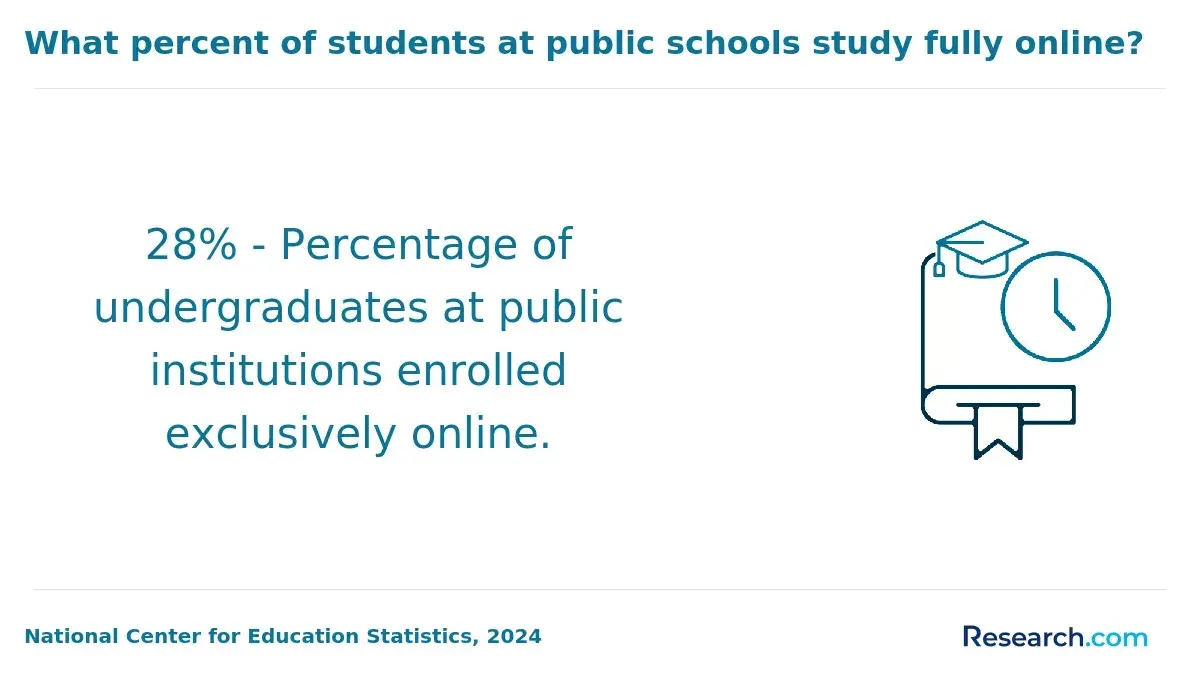
Facing pressure to optimize complex supply chains while balancing remote team coordination, many professionals find traditional degree programs too rigid for their schedules and operational demands. The U. S. Department of Education reports a 28% increase in adult learners enrolling in fully online programs since 2023, signifying a decisive shift toward flexible education models. This surge reflects how professionals prioritize programs that allow for simultaneous work experience and academic progress, essential for advancing in roles requiring both strategic insight and hands-on process management. This article identifies the best online operations management programs tailored for process-driven professionals seeking flexibility without compromising career relevance or rigor.
Key Things You Should Know
- Data from the U.S. Bureau of Labor Statistics shows 12% growth in operations management roles by 2032, urging candidates to prioritize programs with strong supply chain integration training for immediate employability.
- Employers in manufacturing and tech increasingly demand proficiency in AI-driven process optimization, pressuring programs that lack practical exposure to embed advanced analytics and automation tools.
- Median program costs rose 8% since 2023, forcing professionals to weigh accelerated certificate options against traditional degrees for faster credentialing but smaller salary premiums.
What is an online operations management degree and who is it best suited for?
An online operations management degree provides a targeted skill set to optimize workflows, reduce inefficiencies, and control costs within complex business systems. This focus on analytical and process-driven methodologies distinguishes it from broader business degrees and aligns with employers' demand for systematic problem solvers who drive operational resilience.
This degree is particularly advantageous for working professionals needing flexible coursework that accommodates job responsibilities and for mid-level managers aiming to shift into strategic roles where operations expertise impacts agility and profitability. For instance, a warehouse supervisor who applies inventory optimization models learned during the program can directly improve delivery timelines and lower costs. Similarly, a healthcare administrator may utilize quality management techniques to refine patient care processes while navigating regulatory challenges. This practical relevance illustrates the tangible benefits an online operations management degree offers for professionals balancing ongoing work commitments and specialized learning.
Programs typically emphasize lean management, project oversight, data-centric decision-making, and process analysis. Graduates command median salaries near $101,280, reflecting market valuation of these competencies. However, the significant quantitative rigor, including statistics and supply chain software proficiency, requires clear commitment and time management.
Choosing to pursue an online operations management program calls for weighing practical tradeoffs-especially for those working full-time-since the curriculum demands intensive application of technical skills and cross-functional collaboration tools. Those prepared for these challenges can expect accelerated career progression linked to operational leadership roles.
More information on related pathways can be found in the context of an accelerated project management degree, highlighting adjacent options in the operations domain.
How do the best online operations management programs compare with on-campus options?
Optimal pathways in operations management balance curricular rigor with real-world applicability, reflecting the varied hiring realities across North America. Online programs primarily accommodate professionals constrained by time or geography, offering flexible schedules and accelerated completion that align with evolving industry demands. This structure suits sectors like tech-driven supply chain management, where up-to-date software proficiency and live case studies outweigh traditional hands-on experience. Meanwhile, on-campus coursework retains a competitive advantage in fields prioritizing face-to-face networking, local market insight, and access to hands-on labs or industry partnerships.
Employment growth for operations leadership is steady, with the U.S. Bureau of Labor Statistics projecting a 3% increase in top executive roles by 2034 and about 220,000 annual openings. However, employers in manufacturing or campus-linked industries often favor candidates who demonstrate applied leadership through in-person projects or internships, which remain challenging for online learners to replicate.
Prospective students should assess how distance learning versus traditional classroom operations management programs benefit or hinder their specific career goals. Logistics professionals, for instance, reduce opportunity costs with remote study but must proactively seek experiential learning opportunities. Supply chain managers in tech contexts benefit more from online formats targeting current tools and analytics.
For guidance on selecting a program that fits your professional objectives, consider resources like the best online master degree in human resource management as a model for robust online graduate education options.
What accreditation should online operations management programs have to be considered reputable?
Choosing an online operations management program without verifying accreditation can jeopardize both educational value and career prospects. Regional accreditation recognized by the U.S. Department of Education ensures programs meet baseline academic standards and maintain eligibility for federal financial aid, which many employers expect as a minimum credential. More selective employers value specialized accreditation from recognized bodies like the Accreditation Council for Business Schools and Programs (ACBSP) or the Association to Advance Collegiate Schools of Business (AACSB). AACSB accreditation often indicates a rigorous curriculum with committed faculty and continuous improvement, important for candidates targeting upper-tier roles.
For professionals shifting from technical roles to leadership focused on process optimization, program alignment with industry standards makes a tangible difference. Employers in manufacturing, logistics, or supply chain management prefer graduates from programs connected to professional bodies such as APICS (now part of the Association for Supply Chain Management), as these credentials demonstrate practical skills and readiness for operational challenges. The curriculum's incorporation of current industry software and methodologies like Lean Six Sigma or ERP platforms also correlates with employment outcomes. Programs lacking this alignment, even if regionally accredited, risk limiting job market competitiveness.
A data-driven perspective shows University of Kansas online operations management graduates earning a median annual salary of $102,950, reflecting employer recognition of its accredited, skills-focused approach. Students should also consider credentials that complement degree programs, as combining degrees with targeted certifications boosts upward mobility. Prospective students exploring options can compare specialized programs such as a HIM degree for context on affordability and accreditation standards.
Which types of operations management degrees can you earn online?
Choosing among online operations management degree programs available online requires weighing immediate job needs against long-term career goals and time constraints. Bachelor's programs primarily develop foundational skills in supply chain, logistics, and process improvement, targeting mid-level positions. Master's degrees, however, grind deeper into strategic operations, data analytics, and leadership-credentials often necessary for senior management or specialized roles such as supply chain directors or process engineers. Certificate programs fill a niche for targeted skill upgrades in methodologies like Lean Six Sigma or Agile without the commitment of a full degree.
For professionals balancing employment and study, fully online master's programs offer critical flexibility. The University of Alabama's part-time, fully online MS in operations management can be completed in 18-24 months, allowing learners to maintain 24/7 shift work common in manufacturing or logistics. This flexibility addresses scheduling conflicts that otherwise hinder professional advancement. Employers across healthcare and industrial sectors notably favor candidates trained in quantitative decision-making, technology integration, and continuous improvement, competencies emphasized more in advanced degrees and certificates than many bachelor's programs.
Deciding whether to pursue bachelor's, master's, or certificates depends on practical tradeoffs: the depth of expertise required, time commitment feasible, and alignment with evolving job market demands. For those exploring options that include comprehensive business credentials, exploring affordable MBA programs online can complement or elevate operations management expertise.
What courses and concentrations are typically offered in online operations management programs?
Operations management education must reconcile broad foundational knowledge with specialized skills that vary significantly across industries. For instance, logistics roles in e-commerce demand mastery of inventory optimization and transportation, while manufacturing managers focus on lean operations and Six Sigma methods to reduce defects. Programs emphasizing systems thinking equip managers to foresee bottlenecks and orchestrate resources effectively within complex workflows.
Course selection matters profoundly and should be guided by the specific sector targeted. Healthcare, retail, and automotive manufacturing each require distinct technological and data-driven competencies, influencing which concentrations-such as sustainability management or procurement-will yield the greatest workforce applicability. Practical elements like simulations or case studies enhance readiness by bridging theory with operational realities.
Employers prioritize candidates who balance analytical rigor with leadership aptitude to drive continuous improvements and adapt to trends like automation or digital supply chains. This dual focus often separates successful operations managers from purely technical specialists. Tuition, meanwhile, must be weighed against tangible return on investment, as illustrated by Mid-tier in-state rates such as the University of Massachusetts Amherst's $475 per credit hour online undergraduate track. Such costs are nontrivial for mid-career professionals pursuing strategic pivots and should influence program choice accordingly.
What are the usual admission requirements for online operations management degrees?
The admission process for online operations management degrees reflects a pragmatic blend of academic baseline and professional experience, tailored to align with immediate workforce demands. Applicants typically need a bachelor's degree from an accredited institution, with preference given to backgrounds in business, engineering, or logistics that provide quantitative and process optimization skills. A minimum GPA of 3.0 is common, but relevant industry experience-often 2 to 5 years in sectors like manufacturing or healthcare logistics-can offset lower academic credentials, especially in programs targeting mid-career professionals.
Standardized tests such as the GRE have grown less critical, increasingly waived to expedite enrollment for working students. Official transcripts verifying solid academic achievement remain fundamental, alongside letters of recommendation and personal statements that demonstrate leadership and analytical problem-solving in operational environments. Some curricula require prerequisites in statistics or supply chain fundamentals; however, many programs offer bridging courses to avoid delaying entry.
Completion timelines frequently range from 12 to 24 months. For instance, The University of Alabama's MS in Operations Management demands 30 credit hours without a thesis, emphasizing applied skills over research. Candidates must also evaluate technical requirements for remote learning platforms and confirm employer tuition assistance policies to minimize access disruptions and financial obstacles.
- Admission criteria balance academic preparation with relevant job experience, affecting accessibility depending on prior qualifications.
- Programs vary in prerequisite flexibility and time-to-completion, impacting career timing and workload.
- Technical readiness and employer support influence the feasibility of pursuing an online degree while working.
How long do online operations management programs take and how much do they cost?
Choosing an online operations management program involves balancing duration, cost, and workforce relevance against individual circumstances. Programs typically span 12 to 24 months, with accelerated options condensing coursework to 12-18 months for experienced professionals, while part-time tracks may extend beyond two years. This flexibility caters to working professionals but risks losing momentum or delayed skill currency.
Tuition usually ranges from $20,000 to $60,000 depending on public or private institution status and residency. For example, a mid-level manufacturing manager might invest $30,000 over 15 months part-time, offset by subsequent salary gains or promotions-demonstrating that opportunity cost and ROI must be critically assessed. Hidden fees such as technology charges or textbooks add to total expenses and should factor into budgeting decisions.
Programs without residency requirements eliminate commuting and relocation challenges, allowing continuous employment, which employers value for maintaining workforce productivity. However, longer durations can complicate work-life balance, and employers often prefer completion within two years to ensure gathered skills are up to date and applicable.
Flexible pacing and modular courses enable customization based on career goals and financial constraints, but students must weigh employer reimbursement policies and program reputation. Ultimately, success depends on strategically aligning scheduling, costs, and workforce demands rather than simply selecting the shortest or cheapest option.
What careers can you pursue with an online operations management degree?
Degree programs in operations management often demand navigating a 150-credit curriculum that merges theoretical frameworks with applied skills-challenging students balancing professional duties with academic rigor. The value lies in mastering process optimization, workflow analysis, and resource allocation, which underpin roles such as operations manager, supply chain analyst, and logistics coordinator.
For example, an operations manager in manufacturing must optimize equipment uptime while adjusting workforce schedules, a challenge distinct from supply chain analysts in retail who focus on inventory velocity and vendor dependability. Such distinctions highlight why prospective students should weigh whether a program offers case studies or simulations aligned with their target industry, not just abstract theory.
Employers prioritize candidates proficient in lean methodologies and data-driven metrics capable of driving measurable cost efficiencies across healthcare, retail, or service sectors. Upskilling with an accredited online degree signals readiness to lead projects in process streamlining and strategic resource deployment.
This practical orientation often expands career pathways into consultancy or project management, where graduates advise on sustained operational improvements. Selecting a program that integrates these experiential elements while aligning with personal career goals mitigates risks associated with high credit requirements and competing professional obligations.
What salary ranges and job outlook can operations management graduates expect?
Salary trajectories for operations management graduates vary significantly by industry, geography, and experience, ranging approximately from $60,000 to $110,000 annually. Entry-level analysts often start near $55,000, while mid-career professionals in sectors like manufacturing, logistics, or technology reach between $85,000 and $100,000. Senior managers responsible for enterprise-wide optimizations typically earn above $115,000. Workforce data from the University of Kansas indicates a sustained demand, with an average of 2.8 million annual openings and a 6% projected growth rate through 2031.
Real-world scenarios reveal that operations managers engaged in high-volume manufacturing or global logistics benefit notably from integrating data analytics and automation skills. Conversely, those focused on traditional retail or distribution chains face slower salary escalations but greater job stability. Employers prioritize candidates who can demonstrate tangible improvements in efficiency and cost control, making credentials in lean methodologies, Six Sigma, and applied project experience critical for enhanced earning potential and career mobility.
Regional disparities also influence compensation; urban areas with concentrated manufacturing or tech industries often offer 10% to 20% higher salaries than rural zones. Professionals seeking accelerated advancement should consider sectors undergoing digital transformation mandates and pursue certifications that supplement their academic foundation. These insights align with the University of Kansas data, underscoring practical considerations essential for successful career pivoting or growth within operations management roles nationwide.
How can prospective students evaluate and choose the best online operations management program?
Selecting an online operations management program hinges on how well it equips candidates with industry-relevant skills versus its cost and employer recognition. Programs emphasizing practical competencies such as Lean Six Sigma methodologies or supply chain analytics typically translate directly to roles in manufacturing, logistics, or services, which improves employability. Accreditation by recognized regional or industry bodies remains a critical filter for program quality and meaningful hiring impact.
Cost considerations often mask tradeoffs beyond sticker price. For example, a course priced at $79 monthly after an initial free month offers accessibility but demands scrutiny of credential acceptance and completion rates within industry circles. Conversely, premium programs may justify higher fees by including intensive capstone projects, career support, and networking opportunities vital for professionals pursuing career pivots.
Students balancing shift work in manufacturing benefit from programs offering asynchronous learning and flexible schedules, enabling integration of real business data into coursework. By contrast, consultants needing fast upskilling might favor shorter, immersive formats that minimize disruption to billable hours. Outcomes data-employment rates in operational roles and salary growth-further differentiate programs with tangible market credibility.
Key operational skills like ERP and MRP software training alongside strategic simulation exercises reflect real-world decision-making complexity. Ultimately, weighing curriculum focus, scheduling flexibility, accreditation status, and verified graduate success mitigates risks in investing time and resources in an operations management credential.
Other Things You Should Know About Operations Management
The workload in online operations management programs can be as intense as traditional on-campus formats, often requiring strong time management and self-discipline. Because many programs balance theoretical frameworks with applied project work and case studies, students must allocate substantial time to both asynchronous and synchronous sessions. Prospective students should prioritize programs that offer clear scheduling and support structures to manage these demands while accommodating professional responsibilities.
Programs emphasizing technology and analytics are increasingly preferred by employers seeking candidates who can leverage data for operational improvements. Prioritizing a curriculum with practical exposure to systems like ERP software, data visualization, and process simulation strengthens employability in roles requiring digital integration. Candidates targeting long-term growth in process optimization and supply chain analytics should select programs that balance traditional operations theory with advanced technical training.
In 2027, online operations management programs offer flexible schedules and specialized curricula tailored for process-driven professionals. These programs often incorporate cutting-edge analytics and technology courses, equipping students with relevant skills in an increasingly digitalized industry, enhancing career progression while accommodating professional responsibilities.
Working full-time while enrolled typically extends program duration and requires flexible course formats but preserves income and professional networking opportunities. Leaving work shortens study time but risks financial strain and disconnect from evolving industry practices. The best decision balances immediate financial stability with long-term career acceleration, usually favoring part-time enrollment at institutions offering robust employer engagement and asynchronous learning.
References
- Operations and Quality Management Courses https://globalmanagementacademy.com/operations-and-quality-management-courses/
- Best Online Operations Management Degrees of 2025 https://www.supplychainguide.org/degrees/online-operations-management-degrees/
- Best Operation Management Courses for Professionals 2025 https://www.bmc.net/blog/management-and-leadership-articles/best-operation-management-courses
- Online MBA in Operations Management: Review Top Schools https://www.onlinemastersdegrees.org/best-programs/mba-programs/operations-management/
- Online vs. On-Campus: Choosing the Right Format for Your Supply Chain Degree https://www.ucumberlands.edu/blog/online-vs-on-campus-choose-your-supply-chain-degree-format
- Online MBA in Operations Management, Course Fees, Eligibility Criteria https://www.pwmedharthi.com/blogs/mba/online-mba-in-operations-management
- Operations Management https://ps.sckans.edu/degrees-and-certificates/bachelors/operations-management/
- Bachelor of Commerce in Operations Management - Lyceum https://lyceum.edu.za/programme/bachelor-of-commerce-in-operations-management/
- 15 Most Affordable Online Bachelor's in Operations Management Degrees https://www.greatvaluecolleges.net/affordable/online-operations-management/
- Master Operations Online: Your Guide to an MBA in Operations Management https://matchtocollege.com/blog/online-mba-operations-management-master-your-future