2027 Best Online Operations Management Programs for Advancement Without Leaving Work

Co-Founder and Chief Data Scientist
Balancing a demanding full-time role with the pursuit of further education poses a critical barrier for many professionals seeking advancement in operations management. The challenge intensifies as maintaining workplace performance while acquiring specialized skills becomes essential for upward mobility.
Recent data from the National Center for Education Statistics indicates a 17% increase in adult enrollment in online graduate programs since 2022, reflecting a pronounced shift toward flexible, asynchronous learning models that accommodate complex work schedules. This trend signals a tightening nexus between education accessibility and workforce readiness, compelling candidates to carefully assess program structures and time commitments.
This article identifies the best online operations management programs designed to enable career advancement without interrupting professional obligations, providing detailed analysis to optimize decision-making for working individuals.
Key Things You Should Know
- Employers increasingly favor candidates with data analytics integrated into operations management credentials; a 2024 McKinsey report found 72% of firms prioritize digital process skills for mid-career advancement, raising hiring thresholds.
- Part-time online operations management programs often extend time-to-completion by 40%, increasing opportunity costs for working professionals balancing immediate income needs against long-term promotion gains.
- Labor Department 2024 data reveals regional salary disparities up to 25% post-certification, forcing candidates to weigh program selection against geographic workforce demand and local employer recognition.
What is an online operations management degree and who is it best suited for?
An online operations management degree benefits mid-career professionals by enabling the integration of advanced workflow techniques and supply chain coordination with ongoing employment. Unlike traditional programs, this pathway requires strong self-discipline since assignments replicate real-world deadlines but lack direct, in-person support. For instance, a logistics coordinator can immediately apply inventory control strategies learned online to reduce costs, demonstrating the degree's emphasis on practical application.
Employers' shifting perceptions have improved the credential's market value; 74% of employers now say they are "very" or "extremely" likely to hire candidates with an online business degree, compared to 61% in 2019. This trend signals that an online operations management degree benefits professionals aiming for supervisory or strategic roles without interrupting their career trajectory. However, prospective students should weigh the rigor of these programs and evaluate support systems carefully to avoid pitfalls common in remote learning environments.
Who should pursue an online operations management degree? Individuals targeting roles in manufacturing, logistics, retail, healthcare, or service industries will find value, especially if their sector demands technical proficiencies like Lean Six Sigma or ERP systems. Those in capital-heavy industries may need certifications beyond the degree, while service sector professionals might emphasize customer-centric process improvements.
In evaluating options, candidates can also consider alternatives such as an MBA healthcare, which may offer complementary leadership training relevant to healthcare operations.
How do online operations management programs work for full-time professionals who can't leave work?
Asynchronous coursework with flexible deadlines remains essential for working professionals navigating online operations management programs for working professionals. This format, often built on modular designs, enables learners to study during off-hours or weekends, aligning education with full-time employment demands. Programs that embed applied projects tied directly to job roles effectively enhance immediate skill transfer, helping professionals leverage new methods without delay.
Consider a logistics manager in manufacturing who applies supply chain optimization techniques from coursework to reduce inventory costs in real time. Such practical integration underscores the importance of targeting flexible operations management courses for full-time employees, which accommodate about 8 to 12 study hours weekly to digest complex topics like forecasting and capacity planning. Employer tuition support can ease the time-pressure but is not guaranteed, forcing students to negotiate work-study boundaries actively.
Networking remains a challenge compared to on-campus alternatives, but virtual cohorts and discussion platforms partially address peer learning and mentorship needs. Employment growth for operations research analysts is projected at 23% from 2022 to 2032, with median annual wages near $89,300, spotlighting the value of programs focused on operational analytics and decision frameworks.
Those evaluating educational options should also consider financial commitments realistically, balancing cost with flexibility. For detailed information on related pathways, look up the typical construction management degree cost.
What types of online operations management degrees and certificates are available?
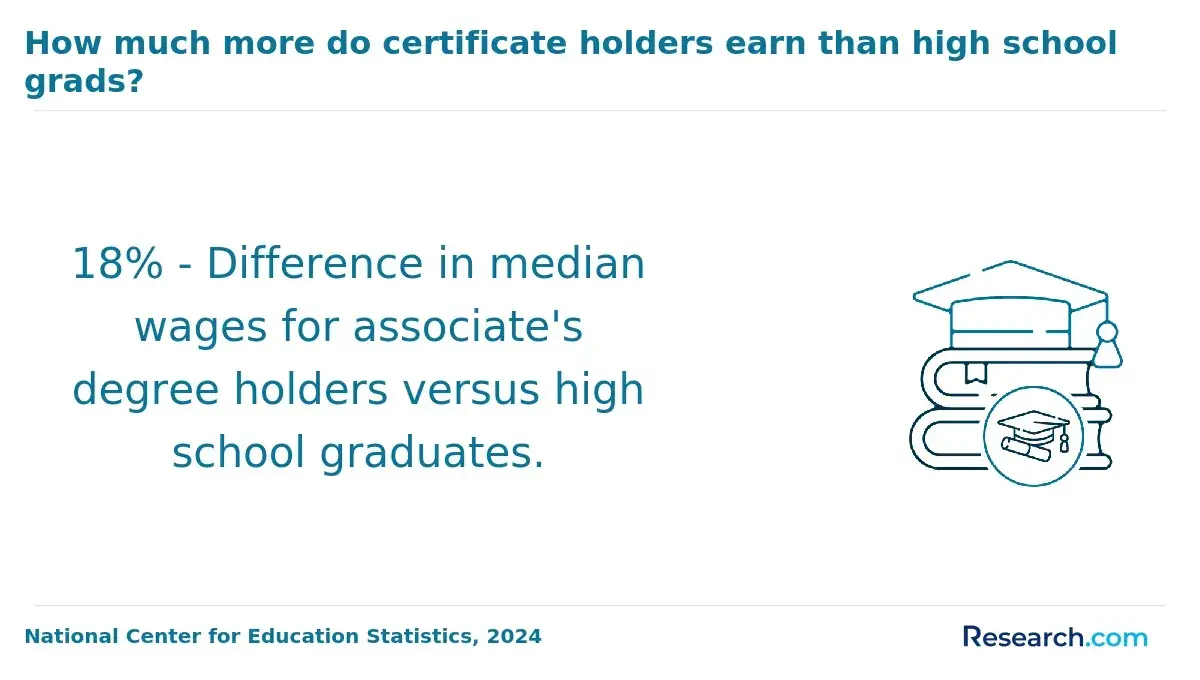
Choosing the right online operations management degree programs for working professionals requires balancing immediate applicability with long-term career trajectory. Certificate programs, typically 3 to 6 months, deliver targeted skills in areas like process improvement or supply chain logistics, ideal for manufacturing coordinators needing quick skill boosts without full degree commitment.
Associate degrees broaden foundational business knowledge but rarely suffice for leadership roles without further study. Bachelor's degrees, the most common entry for mid-level management, emphasize data analytics, project management, and operational strategy. Employers expect practical results during studies, which part-time, asynchronous options accommodate by allowing students to maintain full-time employment while progressing.
A recent Wiley University Services survey found 77% of online students employed full time, and 67% credited online study with enabling career advancement without job interruption. This flexibility is critical for professionals seeking strategic roles without sacrificing income.
At the graduate level, master's degrees—including MBA concentrations—focus on leadership in global supply chains and automation technologies, often employing consulting projects that align education with industry-ready problem-solving. Specialized certifications such as Six Sigma or Lean Manufacturing serve mid-career professionals in the pharmaceuticals or automotive sectors by validating niche expertise without the time demands of degrees.
For those evaluating accelerated graduate options, 1 year MHA programs online demonstrate how condensed formats can meet sector-specific leadership demands.
Flexible online certificates in operations management for career advancement support rapid skill acquisition with minimal disruption, crucial for professionals balancing immediate workforce expectations and future strategic roles.
How does an online operations management program compare to an on-campus program?
Choosing between online operations management programs vs on-campus programs involves weighing significant tradeoffs in flexibility and networking opportunities. Online programs accommodate working professionals by allowing them to continue full-time employment while advancing skills, offering the flexible learning benefits of online operations management degrees. This arrangement supports immediate on-the-job application of new knowledge, which enhances both retention and employer recognition.
Conversely, on-campus programs facilitate direct networking through in-person mentorship, collaboration, and group projects—critical advantages for careers demanding strong relationship-building, such as supply chain consulting or manufacturing leadership. This face-to-face engagement can accelerate career mobility in sectors where professional connections matter.
Cost efficiency is another key factor. Online formats typically reduce expenses related to housing, commuting, and campus fees while maintaining academic equivalence with traditional programs. Yet students must consider tuition relative to long-term return on investment.
Georgetown University's 2024 ROI report confirms that the lifetime earnings premium for business operations and logistics graduates exceeds $1.2 million compared to high school diploma holders, regardless of study mode.
Prospective candidates should acknowledge the structural demands of online courses, which often rely on asynchronous material requiring stronger self-discipline and proactive pursuit of internships or hands-on projects. For those seeking accelerated credentials, options like the fast track MBA 6 months online offer condensed paths to advancement without interrupting ongoing employment.
What accreditation should online operations management programs have and how do you verify it?
Regional accreditation remains the foundational credential for online operations management programs seeking legitimacy and employer acceptance. Degrees from bodies recognized by the U.S. Department of Education or the Council for Higher Education Accreditation (CHEA)—such as the Higher Learning Commission (HLC), Middle States Commission on Higher Education (MSCHE), or WASC Senior College and University Commission (WSCUC)—are essential for access to federal financial aid and broader labor market credibility.
Specialized accreditation from agencies like the Accreditation Council for Business Schools and Programs (ACBSP) or the Association to Advance Collegiate Schools of Business (AACSB) further validates curriculum relevance for operational roles but does not replace core regional recognition.
Verifying accreditation directly through accrediting agencies or the U.S. Department of Education's Database of Accredited Postsecondary Institutions and Programs is a necessary safeguard against diploma mills or non-recognized credentials.
For example, manufacturing firms in regulated sectors often require degrees strictly from regionally accredited colleges to satisfy compliance and procurement rules, while roles in service or tech startups might tolerate nationally accredited credentials supplemented by substantive work experience.
Due to the prevalence of working students (83% in operations management bachelor's programs), programs must balance accreditation standards with scheduling flexibility—a key consideration for prospective students managing employment alongside education.
What courses and specializations are typically included in an online operations management curriculum?
Programs in operations management emphasize quantitative and strategic skills essential for managing complex supply chains and operational processes. Core subjects such as supply chain logistics, process optimization, project management, and quality control build foundational capabilities, while specializations in lean manufacturing or risk management target industry-specific challenges.
For instance, manufacturing programs integrate lean principles to minimize waste, whereas service sector courses focus on customer experience design.
These curricula demand proficiency in advanced tools—forecasting models, inventory systems, and ERP software—that enable data-driven decisions balancing cost, agility, and scalability. Students learn vendor management and strategic sourcing strategies that are vital in volatile markets impacted by recent supply chain disruptions.
Employers value graduates with these competencies, as evidenced by a 22% median salary premium for MBA holders with operations or supply chain concentrations compared to bachelor's-level hires, according to the Graduate Management Admission Council's 2024 Corporate Recruiters Survey. However, integrating technical expertise with soft skills like cross-functional collaboration and change management remains a key challenge requiring curricular focus through case studies and team-based projects.
For working professionals, logistical aspects such as scheduling flexibility and course delivery format are critical. Effective online programs commonly employ asynchronous lectures paired with live simulations to ensure learning relevance and applicability directly to workplace scenarios.
What are the admission requirements and application materials for online operations management programs?
Admission into online operations management programs frequently demands a balance between academic credentials and tangible professional experience. Typically, a bachelor's degree with a minimum GPA of 2.5 to 3.0 is required, but more selective programs may set a higher bar.
Applicants must provide official transcripts emphasizing quantitative and business coursework, which signals adequate foundational knowledge. Employers and programs alike expect 1 to 3 years of relevant work experience in operations, supply chain, or project management to ensure that students can immediately apply learning and minimize disruption to their employment.
Applicants should prepare materials that concretely demonstrate their operational impact, such as resumes spotlighting process improvements, leadership roles, or logistics execution. Personal statements need to clarify career objectives and justify the preference for an online format, often emphasizing schedule flexibility to maintain full-time employment.
Data from the 2024 National Survey of Online College Students shows that 64% pursue online programs to sustain work engagement, and 58% prioritize flexible scheduling. Meeting these criteria reflects a student's ability to juggle professional duties alongside rigorous study.
Letters of recommendation tend to reinforce an applicant's professional achievements and readiness for graduate-level demands. While GRE or GMAT scores remain a requirement for some, many programs waive testing if applicants demonstrate strong academic records or substantial work experience, signaling a shift toward practical qualifications over standardized exams.
Consider an operations analyst in manufacturing aiming for promotion; program admission hinges not just on academic eligibility but on demonstrating how their current role complements program expectations. Failure to align could delay degree completion or strain work-study balance, underscoring the importance of meeting precise admission standards.
How long do online operations management programs take and what do they cost?
Completing an online operations management program within 12 to 24 months requires balancing time commitment with career demands, especially for working professionals. Part-time tracks commonly span two years as they accommodate job responsibilities, while accelerated formats demand over 15 weekly hours, which many full-time employees find untenable.
Tuition costs differ significantly, with public universities charging between $10,000 and $25,000 for bachelor's or master's degrees, and private institutions exceeding $40,000, not including added expenses such as technology fees and proctored exam costs.
In practical terms, earning relevant certifications like the CPIM or CSCP alongside a degree can significantly impact earning potential. According to APICS/ASCM's 2024 salary survey, certified professionals earn median salaries approximately 27% higher than non-certified peers. For example, a logistics manager who completes an 18-month operations management program while acquiring CPIM certification can quickly recoup educational investment through enhanced salary.
When evaluating program duration and cost, individuals must consider their employer's tuition reimbursement policies and potential lost income during study. Employers that support tuition assistance tend to prefer candidates with integrated degrees and reputable certifications.
However, flexible pacing options, while reducing dropout risk, may delay advancement in industries where rapid skill acquisition is crucial, such as technology or healthcare supply chain. A focused combination of accredited education and supply chain certifications optimizes career outcomes within a realistic timeframe.
What careers, industries, and advancement paths can an online operations management degree support?
An online operations management degree often serves as a practical credential that complements, rather than replaces, hands-on experience in roles like operations analyst or logistics manager. Hiring managers look for candidates who not only grasp process improvement and strategic planning but can also apply these skills using real-time data and relevant software tools.
For example, graduates working in manufacturing might use quantitative methods learned online to optimize production schedules and minimize costly downtime, whereas those in healthcare focus on resource allocation to improve patient flow.
The midpoint in such educational pursuits often involves balancing demanding work schedules with coursework, especially since most distance learners in this field tend to be professionals over 25 years old. This demographic requires flexible programs accommodating on-the-job learning integration, as employers increasingly value candidates who can hybridize formal education with practical projects.
Career progression usually moves from supervisory roles toward mid-level management and eventually senior positions, but companies still prioritize proven operational outcomes and leadership capabilities. While the degree lays foundational knowledge in analytics and operational strategy, seasoned experience remains a decisive factor in advancing to executive roles.
Key considerations for prospective students include:
- The program's focus on applicable software and supply chain analytics that align with employer demand.
- The ability to juggle professional obligations while engaging in meaningful experiential learning.
- Understanding that the degree facilitates internal promotion pathways rather than immediate executive placement.
What salary ranges and job outlook can operations management graduates expect in the U.S.?
Starting salaries for operations management graduates in the U.S. range from $60,000 to $85,000 in entry-level roles such as operations analysts or logistics coordinators. Those with 5 to 10 years of experience commonly move into positions like operations managers or supply chain directors earning $90,000 to $130,000. Senior-level roles—including operations directors and plant managers—command $140,000 to $200,000, reflecting responsibility for broader operational functions and staff leadership.
While manufacturing careers often offer stability with predictable but modest wage growth, sectors such as technology and healthcare present opportunities for faster salary increases due to operational complexity and regulatory challenges. Graduates aiming to pivot careers should weigh higher entry barriers and network demands in specialized industries against steadier trajectories found in retail or logistics.
Job growth for operations management is projected near 10% through 2032, reflecting the growing strategic importance of supply chains and process digitization. According to U.S. Department of Labor data, logistics and supply chain roles will experience the most pronounced expansion. However, advancement depends heavily on combining formal education with proven problem-solving and cross-functional communication skills—key factors in securing leadership roles without leaving active employment.
- Operations leaders advance to C-suite roles (e.g., COO) at a rate 30% higher than average.
- Increased operational complexity drives demand across manufacturing, technology, and healthcare.
- Careful industry selection can reduce career pivot friction or amplify growth potential.
Other Things You Should Know About Operations Management
Features like flexible scheduling, asynchronous classes, and academic support services enhance balance in a 2027 online operations management program. They allow professionals to manage job responsibilities, personal commitments, and educational advancement without compromising any aspect.
Employers prioritize candidates who can immediately apply learned concepts to real-world challenges. Programs that emphasize simulation tools, live projects, or internships provide tangible experience that enhances job readiness. When choosing a program, prioritize those with integrated practical components rather than purely theoretical coursework to improve your leverage in performance-based roles.
Certificates often serve as skill boosters or refreshers but carry less weight in competitive promotions and leadership roles compared to full degree qualifications. Employers look for comprehensive training that a bachelor's or master's degree provides, especially for strategic or managerial positions. If career advancement or pivoting into higher responsibility roles is the goal, investing in a degree program is generally more impactful than accumulating certificates alone.
Choosing between specialization and a broad curriculum depends on your current role and career goals. Specializations, such as supply chain or quality management, can deepen expertise and make you more competitive in niche sectors, but may narrow future opportunities. Broad programs develop versatile skills applicable across multiple industries, which benefits those seeking management roles with cross-functional oversight. Assess your industry demands and long-term ambitions before selecting the program scope.
References
- Online MBA in Operations Management: Review Top Schools https://www.onlinemastersdegrees.org/best-programs/mba-programs/operations-management/
- Are Online Degrees Accredited? How to Identify Quality Distance Learning Programs https://www.umassglobal.edu/blog-news/online-degrees-accredited-identify-quality-distance-learning-programs
- Can You Do a Master’s and Work Full Time? | StudyNext Australia https://studynext.com/au/resources/can-you-do-a-masters-and-work-full-time
- Best Operation Management Courses for Professionals 2025 https://www.bmc.net/blog/management-and-leadership-articles/best-operation-management-courses
- Master Operations Online: Your Guide to an MBA in Operations Management https://matchtocollege.com/blog/online-mba-operations-management-master-your-future
- Operation Management Certification| ICPD https://theicpd.com/certificate/opertations-manager-certification
- Online Operations Management Courses https://www.elearningcollege.com/free-online-courses/online-operations-management-courses
- Can You Get an MBA While Working Full Time? https://onlinemba.howard.edu/blog/online-mba-while-working-full-time/
- Best Online Operations Management Courses & Programs | edX https://www.edx.org/learn/operations-management/
- Achieving Success in Your Operations Career: How to Build a Rewarding Professional Path - Mangrum Solutions https://mangrumcareersolutions.com/blog/achieving-success-in-your-operations-career-how-to-build-a-rewarding-professional-path/