2027 First Operations Roles for Process-Driven Professionals Seeking Leadership

Co-Founder and Chief Data Scientist
An early-career professional aiming for a leadership role in operations faces a stark dilemma: balancing in-depth process expertise with timely advancement in a competitive job market. The Bureau of Labor Statistics forecasts a 7% growth in management occupations over the next decade, reflecting steady demand but increasing employer expectations for candidates who combine technical know-how with strategic decision-making. This dynamic pressures candidates to select educational programs that can adapt to their work schedules and offer relevant, applied skills quickly. Enrollment trends from the National Center for Education Statistics show a 15% rise in adult learners choosing flexible online formats, signifying a shift toward learning models that optimize career mobility.
This article analyzes the most effective first operations roles and educational pathways tailored for process-driven professionals seeking leadership, focusing on how to align program structure, skill acquisition, and workforce demand to overcome advancement obstacles.
Key Things You Should Know
- Operations management roles demand advanced analytics skills-72% of job postings in 2025 required data fluency, increasing entry thresholds and raising the opportunity cost for candidates lacking STEM backgrounds.
- Employers prioritize cross-functional leadership experience over narrow technical credentials, with 64% preferring candidates who demonstrate real-world project ownership, limiting entry points for fresh graduates without practical roles.
- Certification and degree costs have risen 15% since 2023 per National Center for Education Statistics, pressuring candidates to balance accelerated timing against financial returns amid uncertain post-pandemic labor market shifts.
What are the first operations roles best suited for process-driven professionals seeking leadership?
Entry-level roles such as operations analyst, coordinator, and business operations associate provide essential groundwork for process-driven professionals seeking leadership within operations. These positions demand rigorous analytical skills and cross-functional collaboration, directly aligning with employer expectations for managing complexity and optimizing workflows. For example, an operations analyst in manufacturing hones strategic process improvement by leveraging data to reduce supply chain inefficiencies, while a coordinator in healthcare manages resource allocation and patient flow, cultivating real-time problem-solving abilities critical to leadership.
In evaluating entry-level operations roles with leadership potential, candidates face a clear tradeoff: initial salaries range from $42,000 to $60,000, which is comparatively modest but offset by robust growth projections of 6% through 2033. This reflects sustained demand but slower salary ramps relative to specialized technical roles. The path to advancement requires continuous process improvement mastery and demonstrated operational impact, with success dependent on measurable efficiency gains and cross-departmental influence.
Prospective professionals should also consider further education that directly enhances leadership readiness in operations. Programs like an online MBA operations management can provide targeted strategic frameworks and applied skills to accelerate this transition.
What skills and traits do employers look for in entry-level operations leadership positions?
Entry-level operations leadership skills and traits emphasize a combination of technical proficiency, adaptability, and nuanced interpersonal dynamics. Employers weigh candidates' capacity to leverage analytical tools-Excel, SQL, or basic Python-to optimize workflows while maintaining clear communication that converts data into actionable operational adjustments. This skill set is vital in sectors like manufacturing or logistics, where schedule shifts or cost controls hinge on timely, precise intervention.
Essential qualities for operations leadership roles include real-time decision-making under pressure and robust organizational skills. For instance, a distribution center leader must rapidly reconfigure supply chain responses amid disruptions, collaborating effectively across vendor and cross-functional teams. Such roles demand managing compliance and quality standards simultaneously, highlighting the complexity beyond mere task execution.
Situational awareness and emotional intelligence play a significant role in distinguishing candidates who can motivate teams and resolve conflicts in high-stakes environments. Experience leading small projects or process improvements-often cultivated through internships-enhances employment prospects. According to ZipRecruiter, pay rates for process-driven roles vary widely, reflecting the direct correlation between analytical responsibility, leadership readiness, and compensation.
Industry context further shapes these expectations: healthcare requires regulatory knowledge and patient-centered approaches, whereas tech firms prioritize agile methodologies and iterative improvements. Students seeking to pivot into these roles should critically assess how educational credentials, such as programs featured in the best online construction management degree rankings, align with these diverse operational demands.
Which degrees or certificates prepare you for early-career operations management roles?
Bachelor's degrees in operations management, industrial engineering, supply chain management, and business administration with an operations focus remain the strongest foundation for early-career management roles. Employers value candidates with core competence in process optimization, resource allocation, and cross-functional coordination because these skills accelerate leadership pathways. The realities of hiring show that early management often follows evidence of impact across diverse organizational functions, a nuance emphasized in the PropelGrad report on undergraduate degrees for early-career operations management roles.
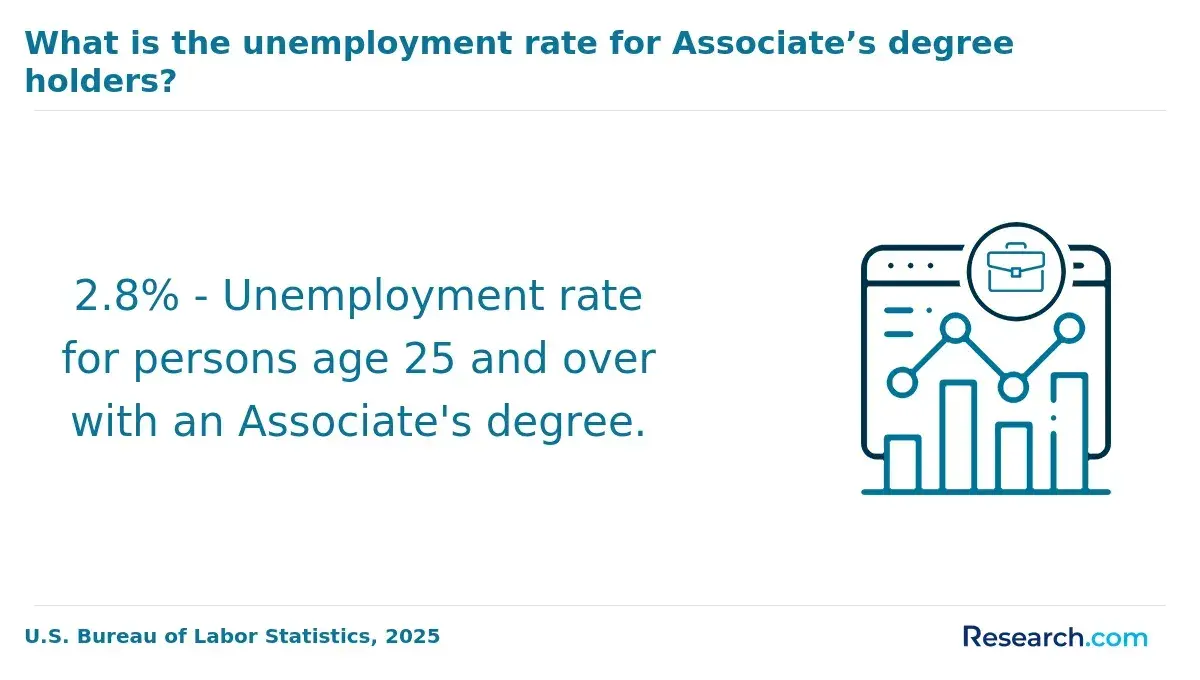
Supplementary certifications-such as lean six sigma, PMP, CAPM, or Certified Supply Chain Professional (CSCP)-enhance leadership prospects in process-driven operations, especially when paired with a degree. Without a degree, certifications typically restrict candidates to entry-level analyst or coordinator positions, limiting initial upward mobility.
In the manufacturing sector, combining industrial engineering degrees with lean six sigma certifications enables graduates to quickly drive throughput improvements while collaborating with plant management. By contrast, healthcare operations demand degrees in healthcare administration combined with process improvement credentials, addressing compliance and patient logistics intricacies. These variations underscore the practical tradeoffs in selecting credentials aligned with specific industry realities.
Employers prioritize candidates demonstrating both technical operations acumen and leadership potential, which are often cultivated through interdisciplinary degrees supplemented by certifications and experiential learning. Practical, real-world exposure through internships or co-ops deepens understanding of cross-departmental challenges, improving employability.
Investments in credentials linked to measurable process impact improve the likelihood of management roles within two to three years. For working professionals weighing educational options, exploring an online hospitality degree may offer additional pathways in operations-oriented fields.
How do online operations management programs compare to campus-based options for new professionals?
Distinctions between online operations management programs and campus-based courses significantly influence skill acquisition and career readiness. Campus programs embed immersive simulations and live collaborations that replicate the supervisory scope essential in nonprofit or corporate operations roles, where oversight of finances, contracts, and projects directly impacts strategic outcomes. This hands-on exposure to complex workflows contributes to higher immediate employability in competitive markets.
Conversely, online operations management programs often lack this direct, practical involvement but compensate with updated theoretical frameworks and real-time case studies aligned with evolving industry standards. Students reliant on virtual learning must proactively secure external internships or employer partnerships to gain experience employers expect. This gap affects the comparative benefits of on-campus and online operations management education, especially regarding networking opportunities critical for leadership development in multifunctional stakeholder environments.
Decision-makers balancing geographic or employment constraints should note that campus courses generally provide superior access to localized mentoring and industry connections, an advantage for rapid professional integration. Online learners must offset this limitation through deliberate virtual engagement. Graduates who bypass authentic operational leadership exposure risk underperformance in roles requiring immediate project oversight, underscoring the need for practical immersion alongside academic credentials.
New professionals prioritizing long-term impact should view online offerings as foundational, supplementing them with real-world experience, whereas campus-based pathways remain preferable for comprehensive competence development.
For those comparing options, reviewing MBA online programs can provide additional insight into flexible educational pathways.
What should you look for in accreditation and program quality for operations management degrees?
Operations management degree programs lacking accreditation from recognized bodies such as AACSB, ACBSP, or those endorsed by the Council for Higher Education Accreditation (CHEA) tend to fall short of employer expectations, especially in skills like process optimization, data analytics, and strategic leadership. These accreditations serve as practical quality signals to hiring managers, affecting long-term workforce outcomes and salary trajectories.
Graduates entering operations roles typically start with salaries around $69,709 as analysts, advancing to approximately $96,334 for directors and $136,532 for chief operating officers according to Indeed's 2024 data, illustrating how foundational program rigor translates into compensation growth. Degree programs anchored in strong industry partnerships-such as logistics firms or manufacturers-offer internships and cooperative education that provide hands-on experience crucial for early-career progression.
Curricula incorporating technology tools like ERP systems, Lean Six Sigma, and project management are more successful in preparing students for complex, process-driven environments. Conversely, programs focused mainly on theory without practical components risk leaving graduates ill-equipped, which slows advancement into leadership roles.
Delivery format is another critical tradeoff: flexible online or hybrid programs with synchronous sessions can accommodate working professionals without sacrificing engagement, whereas purely theoretical or asynchronous structures may impair networking and skill mastery.
What core courses and projects build readiness for first operations leadership roles?
Programs focused on preparing students for initial leadership roles in operations management must go beyond theory to emphasize applied, data-driven methodologies linked to strategic decision-making. Training in frameworks like DMAIC, value stream mapping, and Hoshin Kanri matches employer demand for rigorous analytical skills combined with effective leadership. Coursework centered on process improvement, quality control, statistical methods, and strategy develops necessary expertise while cultivating managerial capacity.
In practice, project work emulating industry conditions-such as identifying bottlenecks in production or designing continuous improvement initiatives-bridges classroom learning and operational realities. For example, applying value stream mapping in healthcare to reduce patient wait times requires both detailed process analysis and the ability to engage stakeholders for change, illustrating how technical and interpersonal capacities intersect.
Decision-makers must weigh tradeoffs between quicker, intensive certificate options often lacking leadership depth and lengthier degree programs offering strategic context but demanding greater time and financial investment. Employers distinctly prioritize candidates who can demonstrate tangible impact from practical projects, like measurable efficiency improvements.
Proficiency in core operational methods paired with applied experience can increase hiring odds for first leadership roles by around 25%, according to labor market data. This suggests that selecting pathways integrating measurable project outcomes with methodical training affords a competitive advantage for professionals targeting operations management positions.
- Core frameworks: DMAIC, value stream mapping, Hoshin Kanri
- Skill sets: Statistical analysis, process optimization, strategic management
- Project focus: Realistic, cross-functional challenges driving measurable results
- Tradeoffs: Depth and strategic insight versus speed and cost of credentialing
- Workforce implication: Enhanced first-leadership hiring prospects with applied rigor
What are typical admission requirements and timelines for operations management programs?
A bachelor's degree in business, engineering, or related fields remains the baseline for entry into master's-level operations management programs, though some schools increasingly accept extensive professional experience as a substitute or complement. GPA benchmarks typically hover near 3.0, with more competitive programs pushing 3.5 or above. Standardized tests like the GMAT or GRE are now often optional or waived, a practical shift aligning admissions with the realities of mid-career applicants balancing work and study.
Operations management admissions prioritize demonstrable, transferable skills from roles involved in process improvement, team oversight, or supply chain tasks. For example, a candidate transitioning from retail management can leverage operational knowledge substantiated by detailed evidence or portfolios rather than formal background alone. Such programs frequently require three to five years in positions with measurable operational impact to ensure students can immediately apply theoretical knowledge.
Application deadlines for fall semesters generally occur between December and April, demanding early preparation of transcripts and prerequisites. However, part-time and online formats often mitigate this timing pressure by offering rolling admissions, better suiting working professionals who need flexibility.
- Admissions committees look for quantifiable operational achievements beyond academic transcripts.
- Applicants without formal operations experience must submit endorsements or portfolios validating relevant skills.
- Programs weigh applicants' readiness to invest time in any prerequisite courses or exams against their career timing needs.
How much do early-career operations roles pay, and how does salary grow with experience?
Entry-level roles in operations management clearly illustrate that salary potential is far from uniform, influenced heavily by industry and geographic factors. Positions such as operations analyst or coordinator in manufacturing and logistics typically start between $55,000 and $75,000 annually, whereas tech and finance sectors command premium entry salaries exceeding $70,000 due to greater complexity and demand. This variance underscores the tradeoff early-career professionals face between industry stability and rapid financial progression.
Experience and specialization accelerate salary growth, with mid-career product or business operations managers earning $90,000 to $120,000. These roles require proficiency in cross-functional collaboration, data analysis, and project leadership to justify higher compensation. Transitioning into focused niches like product data analytics or operations director roles can push salaries beyond $130,000, particularly in tech-driven companies.
For instance, a product operations specialist advancing at a midsize SaaS firm often needs certifications in analytics platforms and workflow optimization to command these salaries, whereas counterparts in manufacturing must pursue additional technical credentials to keep pace. Employer expectations prioritize demonstrable leadership and strategic problem-solving over tenure, highlighting the necessity of targeted skill-building rather than passive experience accumulation.
What is the job outlook for operations managers and related leadership roles in key industries?
Operations managers must produce measurable results quickly, reflecting a growing demand shaped by supply chain complexity and cost pressures across sectors like manufacturing, healthcare, logistics, and technology. The U.S. Bureau of Labor Statistics forecasts a 6% job growth rate for operations management roles through 2034, indicating steady opportunity paired with escalating expectations around efficiency gains.
Early-career professionals face specific pressure to deliver tangible operational improvements within their first year, such as a 10% reduction in cycle times or streamlined patient intake processes. For instance, a new operations manager in manufacturing might focus on removing bottlenecks to increase output, while in technology roles, success often hinges on agile project management and advanced data analytics capabilities. Logistics specialists, by contrast, must quickly master inventory systems and vendor coordination.
These divergent industry demands require candidates to selectively develop skills aligned with their sector's operational complexities rather than pursue generic training. Key workforce implications include:
- Prioritizing projects with measurable impact to demonstrate leadership potential
- Acquiring industry-specific technical proficiencies to navigate regulatory and operational nuances
- Understanding how employer expectations translate into performance metrics tracked within 12 to 24 months
Successful advancement depends on targeted, practical training integrated with real-world problems, enabling candidates to build credibility rapidly. Understanding these trade-offs helps prospective students and professionals evaluate which educational pathway best positions them for sustainable operational leadership.
Which professional certifications can strengthen your candidacy for first operations leadership positions?
Certifications such as the Certified Operations Manager (COM), Lean Six Sigma Green Belt, and Project Management Professional (PMP) materially affect hiring outcomes for entry-level operations leadership roles by offering verifiable skills that employers prioritize over general experience. For example, manufacturing firms typically require Lean Six Sigma credentials to confirm candidates' capability in waste reduction and workflow optimization, while technology companies prioritize PMP certification to safeguard on-time project delivery under budget constraints.
These credentials act as proxies for hands-on experience by embedding standardized knowledge and demonstrated competencies directly relevant to day-to-day operational challenges. Unlike broader qualifications like an MBA, they provide focused expertise that can accelerate transitions into coordinator or analyst positions with management potential, especially in industries where operational efficiency directly influences profit margins.
Investing 3 to 6 months and $400 to $1,200 in preparation for these certifications aligns with the potential return demonstrated by the average U.S. COO salary of $146,937 annually, indicating a steep compensation trajectory accessible through incremental role advancement. Candidates should factor in industry-specific hiring patterns and the value added by combining these certifications with complementary skills such as data analytics to maintain competitiveness amid evolving technological demands.
Practical tradeoffs include balancing upfront costs and time commitments with sector-specific recognition and promotion timelines, maximizing the credentials' strategic impact on employability rather than relying solely on credential accumulation.
Other Things You Should Know About Operations Management
Entry-level operations management positions typically involve intense workload periods with fluctuating demands, especially during project rollouts or process overhauls. Candidates must be prepared to balance multitasking across supply chains, inventory management, and team coordination under tight deadlines. Prioritizing tasks that impact cost efficiency and customer satisfaction directly is essential to avoid burnout and demonstrate leadership potential early in the role.
Specializing in an industry like manufacturing or healthcare can provide a competitive advantage by deepening process knowledge and network connections, which employers value for leadership roles. However, maintaining a broad skillset offers greater flexibility across sectors and can accelerate career mobility. For those targeting rapid leadership advancement, industry specialization is recommended if it aligns with long-term goals and available opportunities in the target job market.
In 2027, employers increasingly value leadership skills over technical expertise for first-time operations managers. They expect new managers to effectively lead teams and drive process improvements while possessing foundational technical skills to support decision-making and strategic development.
Employers expect first-time operations managers to demonstrate emerging leadership skills such as communication, conflict resolution, and strategic decision-making more than deep technical mastery. While a technical foundation is necessary to understand processes, the ability to drive teams, influence change, and manage resources effectively differentiates candidates ready for leadership roles. Prioritize developing interpersonal and project management competencies alongside technical skills to meet these expectations.
References
- Amazon Career Choice: Operations Leadership Training https://www.correlation-one.com/amazon-operations-leadership
- Online MBA in Operations Management: Review Top Schools https://www.onlinemastersdegrees.org/best-programs/mba-programs/operations-management/
- Career Certifications to Boost Your Success https://studyhub.org.uk/career-certifications-to-boost-your-success/
- The Importance of Quality Management: 5 Main Types of Benefits https://bakkah.com/knowledge-center/importance-of-quality-management-for-organizations
- Jobs for English Speakers https://jobsinwarsaw.com/jobs/Management-and-Operations
- 10 Must-Have Leadership Certifications to Boost Your Business Skills https://www.skillsoft.com/blog/leadership-certifications
- Finance Business Process Lead – Record-to-Report at Revvity https://jobs.revvity.com/job/krakow-city/finance-business-process-lead-record-to-report/20539/92455117184
- Business Quality Management https://ps.sckans.edu/degrees-and-certificates/bachelors/business-quality-management/
- pageTitle https://www.experis.pl/el/job/10908/manager-hr-process-excellence
- What Does an Operations Manager Do? https://www.warnerpacific.edu/blog/what-does-an-operations-manager-do/