2027 Best Online Operations Management Degrees for Logistics Careers

Co-Founder and Chief Data Scientist
Facing a sudden shift in supply chain demands, a logistics coordinator realizes their lack of advanced skills in operations management hinders effective decision-making during disruptions. With 64% of adult learners enrolled in online degree programs according to the National Center for Education Statistics, flexibility has become nonnegotiable for professionals balancing career and education. Yet, selecting the right online operations management degree requires navigating varied program rigor, employer recognition, and specialization options that directly affect mobility within logistics sectors. This article evaluates top online operations management degrees designed to equip logistics professionals with timely, practical expertise for immediate career impact and strategic advancement.
Key Things You Should Know
- Programs requiring internships produce 22% higher job placement rates within logistics firms, but extend time-to-degree by an average 6 months, increasing opportunity costs for mid-career professionals.
- Employers prioritize candidates with demonstrated supply chain analytics skills; degrees integrating data visualization and ERP software report 35% greater graduate hiring success, reshaping curriculum value propositions.
- Online degrees priced below $30,000 on average attract 40% more working adults, yet programs with advanced simulation labs command 50% higher salaries post-graduation, spotlighting a cost-access versus outcome tradeoff.
What is an online operations management degree and how does it prepare you for logistics careers?
Choosing an online operations management degree for logistics careers involves weighing specific industry demands against the practical realities of supply chain work. Hiring managers prioritize graduates who demonstrate quantitative skills in operations research and statistical analysis, key for optimizing shipments and inventory under variable conditions. For instance, logistics managers at e-commerce companies leverage proficiency in warehouse management software and demand forecasting to reduce delivery times and operational costs.
Programs emphasizing data-driven decision-making also incorporate project management, procurement, and risk evaluation to prepare students for handling unpredictable disruptions in transportation or fluctuating supplier reliability. These elements are critical whether managing perishables in food distribution or parts supply in automotive manufacturing.
Graduates of an online operations management degree for logistics jobs gain experience with ERP systems and logistics analytics tools, essential for assessing real-time metrics and adapting processes dynamically. This technical proficiency aligns with employer expectations for balancing cost containment and timely delivery in complex operations.
Market data from Lightcast and University of Kansas reports a median annual salary of $102,950 for operations management roles in the U.S., alongside approximately 2.8 million yearly openings and a projected job growth near 6%. Such figures indicate sustained demand but also intensifying competition requiring a well-rounded skill set.
Those exploring related fields may consider a bachelor of project management as an alternative pathway with partial overlap in competencies and career flexibility.
Which accredited online operations management programs are best for logistics-focused students?
Top online operations management programs focused on logistics must do more than convey theoretical supply chain knowledge; they must prepare students to handle complexities in transportation optimization, inventory control, and warehouse management effectively. For example, logisticians in healthcare must understand cold chain logistics, which is distinct from e-commerce fulfillment, reflecting how specialization shapes job readiness. The 6% projected employment growth for logisticians over the next decade, with 21,800 annual openings, emphasizes demand for graduates who combine analytics, strategic planning, and practical coordination skills.
Employers typically prefer candidates from AACSB-, ACBSP-, or ABET-accredited programs that integrate logistics forecasting and ERP software training. Flexibility to engage in remote internships or capstone projects enhances networking opportunities and workforce applicability despite geographic limitations. However, students should critically assess whether programs offer a logistics concentration rather than a broad operations management curriculum without targeted electives in distribution strategy and transportation systems.
Decision-makers must weigh delivery formats, accreditation, and the balance between analytics and hands-on experience to avoid underpreparedness in volatile supply chain environments. Those exploring the best accredited online operations management degrees for logistics careers will find that practical application often distinguishes programs that produce immediate operational value from those that merely cover general theory.
For professionals considering a strategic pivot, comparing these factors against personal constraints and goals ensures investment aligns with employability outcomes. Those interested in broadening their managerial expertise might also explore the online masters in construction management, which similarly combines project oversight with technical integration.
How do online operations management degrees compare to on-campus options for logistics careers?
Choosing between online and campus-based operations management programs requires careful assessment of tradeoffs in practical exposure and networking opportunities. Online operations management degree advantages include significant flexibility for professionals balancing work with education, particularly those outside major urban centers. This mode supports continuous employment without relocation and integrates tools like advanced simulation software, mimicking the hands-on labs typical of campus settings in technology-driven logistics sectors.
Comparing online and campus operations management programs reveals distinct scenarios: on-campus programs excel when direct interaction with faculty, immersive access to physical production sites, and local industry connections are essential-especially in manufacturing logistics or roles demanding immediate teamwork in person. Employers generally prioritize demonstrated competencies and certifications alongside the educational format, meaning supplemental practical training is necessary regardless of delivery mode.
For students targeting strategic career advancement in logistics, this balance matters. An understanding of where online programs provide equivalent value-and where they may fall short-can dictate real-world job readiness. According to GetEducated's analysis, top earners in this field can exceed $122,000 annually, highlighting the ties between role seniority, verified skills, and education.
Those considering a hybrid approach-or specifically focused credentials like an MBA in entrepreneurship online-should evaluate how each pathway complements their professional context and long-term objectives.
What courses and concentrations in an operations management program support logistics and supply chain roles?
Choosing operations management courses for logistics and supply chain careers requires weighing curriculum relevance against specific workforce demands. Core subjects like supply chain strategy, inventory management, and transportation logistics provide quantitative tools essential for roles in manufacturing, retail, and healthcare sectors-yet the depth of concentrations in operations management supporting logistics roles, such as global logistics, can distinguish candidates by their expertise in cross-border compliance and international freight complexities.
Practical skillsets extend beyond fundamentals. For example, automotive logistics managers rely on risk management and sustainability training to anticipate supplier disruptions and align with emissions regulations. Data analytics and operations research empower professionals to deploy predictive models that optimize routing and warehousing dynamically, meeting real-time operational challenges.
Technological proficiency remains pivotal: with 70% of logistics managers citing it as critical for advancement, programs integrating ERP systems and supply chain software management are more aligned with employer needs. Leadership and project management coursework are vital to navigating vendor negotiations and fast-paced distribution scenarios, often underestimated in evaluations of program rigor.
Cost differentials further complicate decisions. Rankings show at least 19 online master's in logistics under $29,900 contrasted with some exceeding $62,900, with these disparities influencing access to specialized tracks and post-graduate employment networks. Candidates balancing quality and affordability might explore pathways such as an easiest online MBA as a strategic alternative for integrating operations management skills with broader leadership training.
What are the typical admission requirements for online operations management bachelor's and master's programs?
Selecting an educational path in operations management requires weighing foundational knowledge against professional readiness. Bachelor's programs typically demand a high school diploma or GED, official transcripts, and GPA thresholds near 2.5 to 3.0. Many online formats may waive SAT or ACT requirements for candidates with relevant experience, but a statement of purpose articulating career alignment remains critical. Letters of recommendation are inconsistently required, often reflecting institutional preference rather than industry necessity.
Master's degree programs impose stricter entry conditions: an accredited bachelor's degree (often in business, engineering, or related fields) with a minimum GPA of around 3.0, together with GRE or GMAT scores that can sometimes be waived for applicants boasting five or more years in supply chain, logistics, or operations roles. Strong endorsements via letters of recommendation and detailed résumés function as key evidence of leadership potential and applied expertise. Most institutions require statements of purpose that tie professional goals explicitly to program specializations.
Employers especially value programs that blend quantitative skills, software competence, and case-based learning-elements often more emphasized at the master's level. Professionals pivoting into operations management without business foundations may benefit from more flexible bachelor's admissions featuring math and statistics prerequisites. Meanwhile, master's paths suit those with a clear analytical focus and relevant experience.
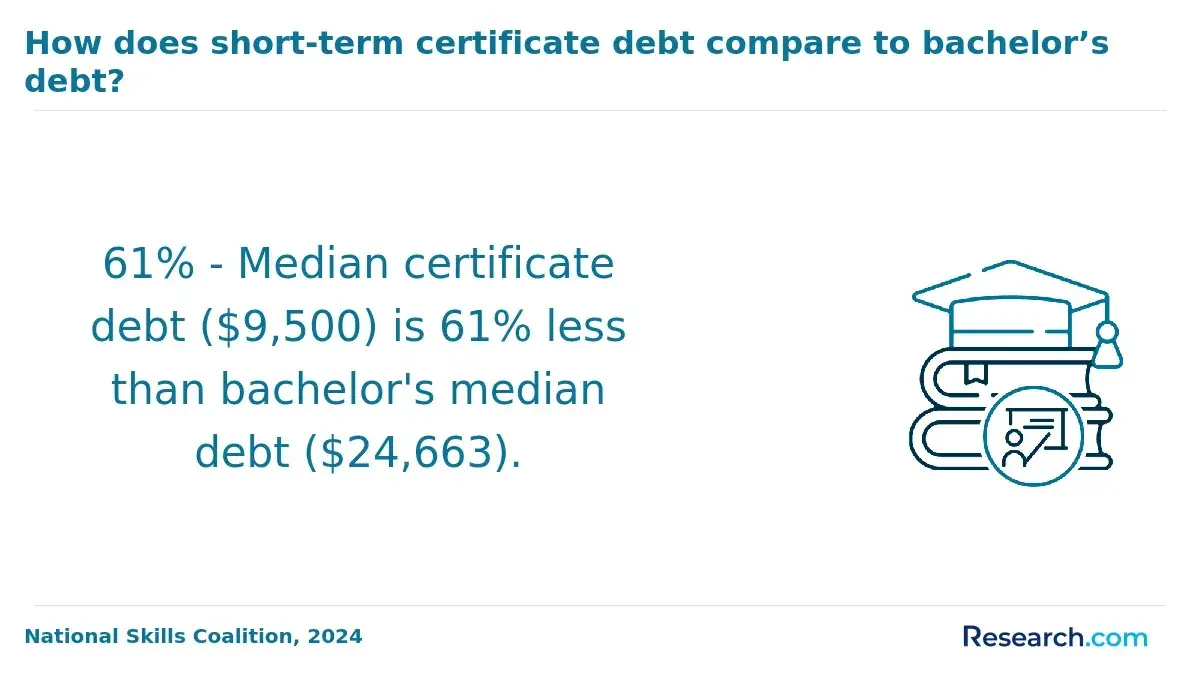
Online bachelor's programs offer cost efficiencies; for instance, average annual tuition hovered near $10,473 in 2019-2020, significantly below on-campus fees. This differential factors heavily for working professionals balancing ongoing employment with educational investment.
- Admission standards differ notably between undergraduate and graduate programs, impacting candidate preparedness and educational outcomes.
- Relevant work experience can reduce testing requirements but rarely substitutes for precise alignment of career goals in application materials.
- Choosing between bachelor's and master's programs hinges on career stage, existing skills, and preferred depth of quantitative and strategic learning.
How long do online operations management degrees take and what do they cost?
Degree timelines and costs in operations management programs create distinct tradeoffs that shape student pathways and professional readiness. Full-time master's degrees generally run 18 to 24 months with 30 to 36 credit hours, while part-time options extend to around three years due to limited course loads. This distinction matters: logistics managers aiming for prompt placement often prioritize accelerated completion, whereas supply chain analysts balancing jobs may accept longer durations for skill development without workflow disruption.
Cost structures vary widely, with public universities typically charging $10,000 to $25,000 in tuition for fully online master's degrees, and private or specialized logistics programs surpassing $30,000. Additional fees typically add 10-15% to total expenses. Prospective students must weigh these financial commitments against potential salary uplifts and employer demand for accredited programs featuring real-world case studies and technology integration.
The 2025 industry review by Educations.com found 97 fully online master's programs in procurement, logistics, and supply chain fields across the U.S., signaling expansive options but also the necessity for strategic selection. Employers favor graduates with hands-on project experience and relevant certifications over mere credential acquisition, making program content and practical alignment as critical as cost or duration.
- Part-time study suits professionals maintaining current roles but slows degree completion.
- Faster programs appeal to candidates targeting immediate hiring cycles.
- Price sensitivity is crucial since total program costs vary by institution type and specialization.
What logistics and supply chain jobs can you get with an online operations management degree?
An online operations management degree positions graduates for roles demanding oversight of goods flow, vendor relations, and warehouse logistics. For instance, a logistics coordinator in manufacturing balances cost control with delivery timelines, leveraging skills like strategic sourcing and carrier coordination taught in these programs. Beyond entry-level, positions such as operations or supply chain manager require data-driven decision-making impacting entire distribution networks, such as using real-time analytics in retail to minimize stockouts and optimize returns.
The degree's practical adaptability across industries is notable-healthcare chains focus on timing precision and regulatory adherence, while e-commerce emphasizes speed and customer satisfaction. This cross-sector applicability buffers workers against sector-specific economic fluctuations.
Employers seek candidates proficient in ERP software, inventory forecasting, and Lean Six Sigma, valuing those who demonstrably reduce inefficiencies or improve supplier terms. However, the tradeoff between program cost and outcomes is critical; BestColleges' 2025 data reports average annual tuition near $10,473 for logistics-focused online business degrees, offering a cost-efficient option compared to many traditional programs.
Prospective students must weigh these financials against expected competencies and the specific operational challenges of their targeted industry to gauge true return on investment.
What salary ranges and advancement opportunities exist for operations and logistics professionals?
Operations and logistics roles in the U.S. show a broad salary spectrum tied closely to experience, specialization, and sector. Entry-level positions start near $55,000 annually, while seasoned leaders, such as directors, often surpass $130,000. Logistics managers earned an average of $99,000 according to U.S. Bureau of Labor Statistics 2024 data, alongside a strong projected job growth of 17% through 2032, signaling substantive opportunities for those with targeted expertise.
Advancement hinges on acquiring specific competencies in supply chain analytics, process optimization, and technology integration. Transitioning from operational roles in retail or manufacturing into leadership in sectors like e-commerce logistics or global supply chains can yield salary boosts between 30% and 50%. For instance, a logistics analyst shifting to a supply chain director position within pharmaceutical distribution benefits not only from the higher pay but also from navigating complex regulatory environments demanding specialized knowledge.
Pursuing an advanced degree, such as an MBA or master's in operations management, entails a steep financial investment-total tuition around $94,944 for a 24-36 month hybrid program as per OnlineMBAPrograms data-but these credentials can unlock strategic roles in management consulting, technology-driven logistics, or manufacturing leadership. However, value realization depends on aligning educational outcomes with sectors that demand such specialization.
Industry-specific certifications combined with advanced degrees accelerate progression, especially where digital transformation affects operational efficiency. Candidates without graduate-level qualifications risk hitting ceilings in upward mobility, emphasizing the necessity of targeted education for executive-track access.
Which industry certifications complement an online operations management degree for logistics careers?
The value of certifications like Certified Supply Chain Professional (CSCP) and Certified in Production and Inventory Management (CPIM) alongside an online operations management degree lies in their explicit alignment with employer expectations for logistics roles requiring hands-on expertise in supply chain integration and inventory control. Candidates holding CSCP gain an operational edge in managing complex, end-to-end supply chain networks, a necessity when coordinating multi-modal transportation in manufacturing or retail environments.
Similarly, Six Sigma Green Belt and Black Belt certifications provide quantifiable skills in process optimization, enabling professionals to reduce costs and improve quality in logistics operations-key capabilities for warehouse or distribution center improvements. Project Management Professional (PMP) certification fills a distinct gap common in many online operations management curricula by offering validated project leadership skills essential for managing cross-functional initiatives, such as deploying new IT platforms or expanding inventory systems in logistics firms.
Financially, investing in these certifications requires weighing their incremental costs and time against the baseline expense of the degree. For instance, Southern New Hampshire University's online BS in operations management costs approximately $42,480, with a military discount lowering this to about $30,000. Prospective students must assess how combining academic credentials with targeted certifications impacts employability and salary potential in mid- to senior-level logistics roles.
- CSCP demonstrates end-to-end supply chain mastery
- Six Sigma belts focus on process and quality improvements
- PMP addresses project coordination gaps in operations management degrees
- Tuition discounts can alter the total investment calculus
How can you evaluate and choose a reputable online operations management program for logistics?
Selecting an online operations management program for logistics demands scrutiny beyond surface-level reputation; accreditation and curriculum alignment with sector demands directly affect employability and career trajectory. Regional accreditation or specialized endorsements, such as from the Association to Advance Collegiate Schools of Business (AACSB), ensure a program meets rigorous academic and industry standards valued by employers.
Curricula must pragmatically integrate evolving logistics components-like supply chain analytics, inventory control, transportation management, and emergent technologies including AI-driven decision-making-to equip students for current and future challenges. For instance, Western Governors University's flat-rate tuition model of $3,830 per six-month term allows accelerated degree completion in about three years and potential tuition savings between $3,830 and $7,660. However, accelerated pacing suits only students who can sustain intensive study without compromising retention or practical competence.
Tradeoffs materialize when considering logistics sectors: manufacturing roles often require deeper analytical skills compared to distribution tasks in retail, so verifying elective customization options is essential. Hands-on learning through virtual simulations or internships provides critical real-world experience, while faculty with active industry expertise and strong employer networks enhance job placement prospects. Failure to assess transfer policies and employer relationships can delay graduation and diminish market relevance in competitive logistics markets.
Other Things You Should Know About Operations Management
Employers increasingly accept online operations management degrees if they come from accredited institutions and include relevant logistics coursework or certifications. However, hands-on experience and demonstrated problem-solving skills in supply chain scenarios carry greater weight. Candidates should supplement their degree with internships, industry projects, or certification courses to fully meet employer expectations in competitive logistics roles.
Logistics careers demand operational efficiency and decision-making based on data, so programs emphasizing applied skills like supply chain analytics, process optimization, and software tools training offer a stronger return. While foundational theories are necessary, prioritize programs with case studies, simulation labs, or partnerships with logistics companies that foster real-world problem-solving abilities. This focus improves job readiness and accelerates career advancement.
For career changers or early professionals, a bachelor's degree with logistics specialization often provides adequate entry and mid-level advancement opportunities. Master's degrees deliver deeper strategic insight and leadership training relevant for senior logistics roles but require greater time and financial investment. Prioritize a master's if targeting upper management positions or if you already have significant operations or logistics experience to build on.
References
- Your Guide to Logistics Careers in Europe: Salaries, Skills, and Opportunities - WELL PACK https://wellpack.org/your-guide-to-logistics-careers-in-europe-salaries-skills-and-opportunities/
- IOSCM - International Organisation for Supply Chain Management https://www.ioscm.com/courses/supply-chain-courses/ioscm-level-5-supply-chain-operations-management/
- Navigating the Supply Chain Management Career Path: Balancing Degrees and Professional Certifications https://www.sapics.org.za/news/navigating-supply-chain-management-career-path-balancing-degrees-and-professional
- Tà i khoản bỠkhoá https://www.bsne.ch/graduate_master_operations_management.html
- Master Operations Online: Your Guide to an MBA in Operations Management https://matchtocollege.com/blog/online-mba-operations-management-master-your-future
- 21 Best Online Logistics Bachelor's Degrees of 2025 https://www.supplychainguide.org/degrees/online-bachelors-in-logistics/
- Logistics and Supply Chain Management – Online Degree Pathway (240 Credits) - LCPS - London College of Professional Studies https://lcps.org.uk/product/logistics-and-supply-chain-management-online-degree-pathway/
- Operations and Supply Chain Management https://www.ucalgary.ca/future-students/undergraduate/explore-programs/operations-supply-chain-management
- Best Logistics and Supply Chain Management Courses 2025 https://www.bmc.net/blog/management-and-leadership-articles/logistics-and-supply-chain-management-courses
- How to Choose the Right Logistics Software for Your Business? https://techbuilder.ai/how-to-choose-the-right-logistics-management-software-for-your-business/