2027 Best Online Bachelor's in Operations Management With Practical Business Process Training

Co-Founder and Chief Data Scientist
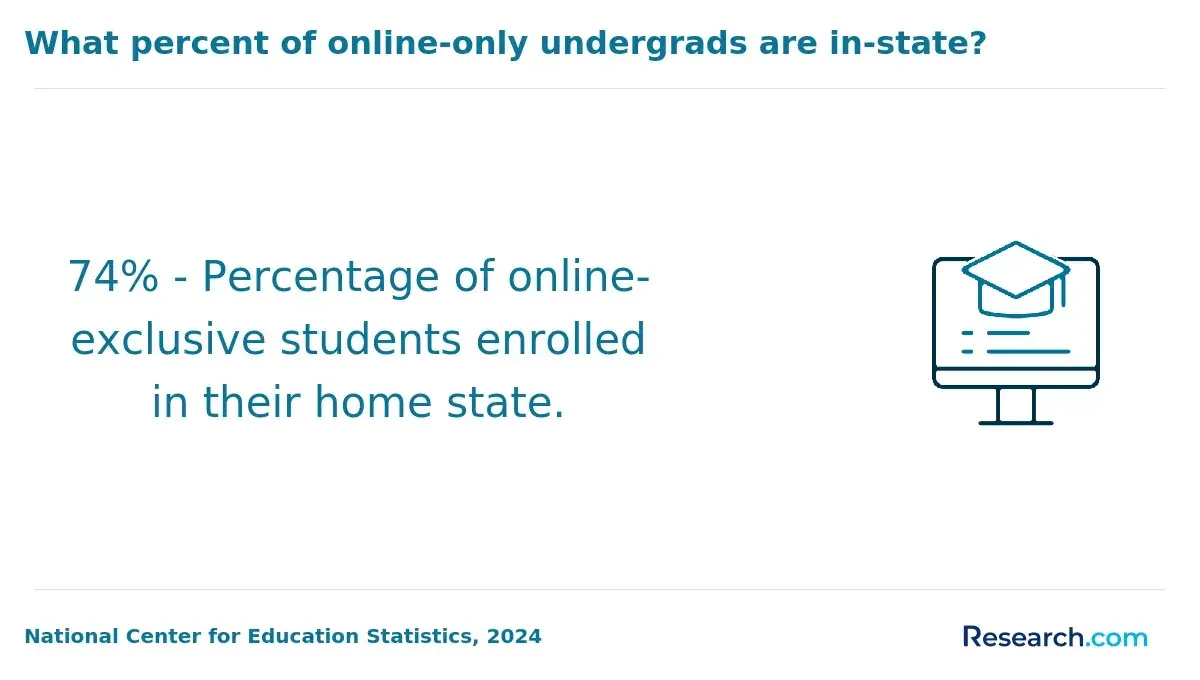
Facing escalating efficiency demands, many aspiring operations managers grapple with translating theoretical knowledge into streamlined, real-world business processes. Employers increasingly prioritize candidates who demonstrate hands-on skills rather than solely academic credentials. According to the National Center for Education Statistics, more than 70% of adult learners favor online programs offering flexible pacing and practical training, highlighting a shift toward education that balances workforce demands with study accessibility.
This trend challenges prospective students to identify programs that align curriculum rigor with actionable business process expertise. This article evaluates top online bachelor's degrees in operations management emphasizing practical business process training to guide informed decisions that enhance career readiness and mobility.
Key Things You Should Know
- Industry demand for operations management graduates with hands-on business process skills rises 18% by 2028 according to the U.S. Bureau of Labor Statistics, prioritizing graduates versed in ERP and Lean methodologies over purely theoretical knowledge.
- Employers increasingly expect proficiency in data analytics tools within operations management roles, as 67% of firms cited such expertise as critical in a 2024 Deloitte survey, shifting hiring toward candidates integrating technical with managerial competencies.
- Programs emphasizing practical process training often require 20-30% higher tuition and longer time-to-degree, creating a cost-access tradeoff that impacts working professionals seeking rapid career pivots amid rising student debt concerns reported by the National Center for Education Statistics.
What is an online bachelor's in operations management, and who is it best suited for?
Choosing an online bachelor's degree in operations management programs requires understanding its value beyond convenience. For working professionals, especially in manufacturing, healthcare, or logistics, this degree confers practical skills in process improvement, supply chain coordination, and data-driven decision-making that directly impact organizational efficiency. A logistics manager in e-commerce, for instance, can apply coursework on supply network design to reduce delivery times and transportation costs, an insight not often gained through general business studies.
This program's asynchronous format suits those who cannot pause careers or relocate but demands strong self-discipline and tech proficiency. Its curriculum centers on frameworks like Lean and Six Sigma, inventory management, and analytics-tools essential for operational leadership. Employers increasingly prefer candidates with such degrees for roles requiring measurable improvements and cross-functional impact.
Graduates typically see average salaries near $78,000, illustrating tangible market demand and a clear return on educational investment. However, prospective students should weigh these benefits against the rigor of self-directed study and technology needs.
Those comparing pathways should also consider related fields; for example, a project management degree might overlap in leadership skills but diverge in technical focus.
Overall, the best online operations management bachelor's for working professionals blends practical application with flexibility, preparing graduates for operational roles where efficiency and innovation drive value.
How do online operations management bachelor's programs work compared with on-campus options?
Online operations management bachelor's degree benefits hinge on flexible pacing and asynchronous delivery, enabling working professionals to integrate study without disrupting employment. Unlike on-campus programs, online students often forgo hands-on labs and immediate, in-person mentorship, which limits opportunities to develop soft skills such as negotiation and conflict resolution through direct peer interaction. This creates a distinct tradeoff between flexibility and experiential learning.
Most accredited online curricula compensate by incorporating virtual simulations, interactive case studies, and real-world project modules aligned with industry standards. This approach suits individuals in distributed supply chain or manufacturing roles, allowing, for example, a remote procurement specialist to apply analytical concepts from coursework immediately to supplier performance assessments without leaving their job.
However, online pathways demand proactive efforts to build networks and secure virtual internships, as they lack the embedded employer outreach and internship pipelines common in campus programs. With operations management job openings averaging 2.8 million annually and a 6% growth projection, competition for leadership roles requires evidence of applied skills beyond theory, often demonstrated through capstone projects or business process redesign initiatives.
Prospective students should also explore specialized options like a construction management online degree to diversify expertise within operations contexts. The comparison of online and on-campus operations management programs underscores the need for disciplined self-management and strategic external networking to offset limited physical immersion while accessing expanding digital learning tools.
Are online bachelor's in operations management respected by employers and properly accredited?
Employer recognition of an online bachelor's in operations management hinges heavily on program accreditation-regional plus business-focused bodies like AACSB, ACBSP, or IACBE drive credibility. Such accreditation integrates academic rigor with practical business process competencies critical for sectors including logistics, healthcare, manufacturing, and retail. Notably, hybrid and remote work trends increase the value employers place on accredited online degrees.
A degree's value also depends on coursework offering practical skill development in supply chain analytics, quality management, and process optimization. Graduates familiar with ERP software and Lean Six Sigma concepts-common in accredited programs-are more competitive for operational roles such as supply chain analyst positions at distribution firms. However, the absence of internships or real-world project partnerships in some purely theoretical online programs limits graduates' appeal when onsite hands-on experience is prized.
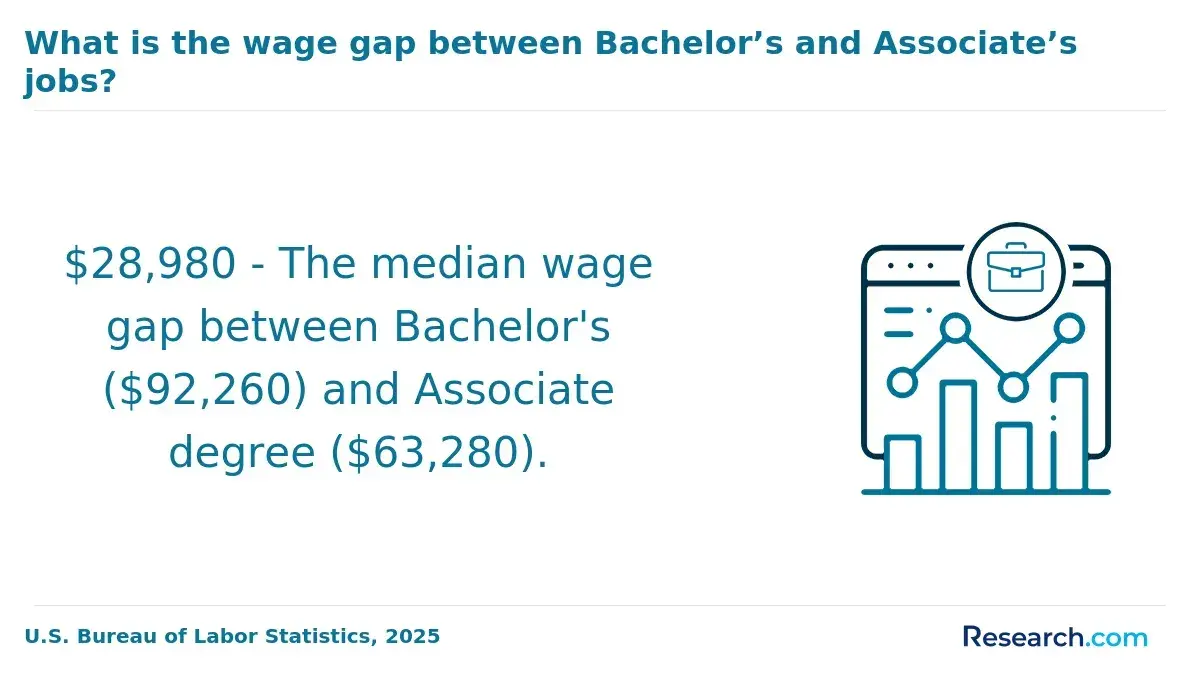
Arizona State University data reports a median salary around $141,900 for management roles linked to operations management, affirming the financial upside of relevant degrees paired with industry-ready skills. Prospective students evaluating online colleges for hospitality management similarly must balance program flexibility, credential recognition, and experiential learning to optimize career outcomes.
Prioritizing accredited online operations management degree programs with embedded applied learning is essential for sustained employability and market relevance in operational roles. This tradeoff between academic validity and tangible experience shapes how hiring managers assess candidates' preparedness.
What courses and practical business process training are included in these online programs?
Employers in operations management increasingly expect graduates to translate abstract theories into practical efficiencies within complex systems. Online bachelor's in operations management courses respond to this by integrating case studies, simulation software, and capstone projects that simulate real-world decision-making. A common scenario might be analyzing procurement and distribution workflows for a manufacturing operation to identify cost reductions and delivery improvements-skills directly tied to typical job functions.
Practical business process training in operations management programs consistently emphasizes quantitative analysis, including statistical process control and lean methods, equipping students to pinpoint process waste and drive continuous improvement. Risk management modules prepare learners to assess supply chain vulnerabilities and develop mitigation strategies-capabilities critical in sectors like healthcare and logistics where disruptions bear significant operational risk.
Programs often require remote internships or partnerships with businesses, bolstering practical application in settings ranging from retail to service industries. This hands-on experience reinforces competencies recruiters prioritize: data-driven decision-making and cross-functional collaboration. Cost considerations are vital; the BestColleges report notes that online bachelor's business degrees averaged $10,473 annually in 2019-2020, a notable cost advantage impacting ROI and student debt levels. For those exploring flexible paths balancing work and study, reviewing easy online MBA programs might also broaden options for advancement.
What are the typical admission requirements and application steps for an online operations management degree?
Admission requirements for an online operations management degree reflect employer-driven expectations for candidates equipped to navigate complex, data-intensive roles. Most programs require a high school diploma or equivalent, official transcripts, and a minimum GPA typically between 2.5 and 3.0. Standardized tests like the SAT or ACT are often waived, particularly for recent applicants, in favor of holistic application reviews. A statement of purpose and completed application form are universally expected, while letters of recommendation strengthen candidacy without being mandatory.
Realistically, applicants without formal business backgrounds face longer degree timelines due to foundation coursework, but practical experience aligned with supply chain or quality control may reduce these hurdles. Schools such as UMass Dartmouth emphasize a 120-credit curriculum integrating business analytics, reflecting market demands for operations managers proficient in data analytics. This focus means proficiency in quantitative reasoning and statistics often factors into admission evaluations.
Typical admissions steps involve submitting academic records online, completing prerequisite assessments, and sometimes participating in interviews or advisory sessions to ensure readiness for online learning. Candidates with workplace project experience targeting process improvements can sometimes substitute formal prerequisites, easing entry barriers.
Choosing programs that balance analytical rigor with practical application is essential-graduates need to meet evolving employer standards shaped by labor market shifts documented in research.com data and professional workforce analyses.
How long does an online operations management bachelor's take, and can you finish faster?
Accelerating the timeline to complete an online operations management bachelor's degree can reduce time-to-degree by up to 18 months, but this often compromises the depth of practical experience that employers prioritize. Most programs follow a 120- to 130-credit structure designed for four years, yet some offer quarter-based calendars, continuous enrollment, or competency-based credit to enable a three-year or shorter completion. These paths demand strict time management and can strain students working full-time or managing family responsibilities.
Employers, particularly in roles such as production or logistics management, value graduates with extended exposure to real-world operations challenges, often acquired through internships or cooperative education lasting several semesters. Accelerated completion sometimes limits access to these experiences, which may impact preparedness for complex supply chain roles.
Choosing an accelerated program requires evaluating tradeoffs including:
- Flexibility for transferring credits and prior learning assessments
- The structure of course delivery, as synchronous classes may hinder speed
- Sequential prerequisites for advanced topics like business analytics
Therefore, students must balance shorter degree durations against the need for comprehensive skill development that aligns with hiring expectations, especially for positions demanding analytical and operational decision-making capabilities. Programs emphasizing asynchronous instruction and credit transfer often provide the best framework for compression without sacrificing essential competencies.
How much does an online bachelor's in operations management cost, and what financial aid is available?
Tuition for an online bachelor's degree in operations management varies broadly, typically between $15,000 and $40,000, shaped by factors like residency status and institutional type. Public universities offer reduced costs for in-state students, whereas private institutions and out-of-state tuition often push expenses higher. Beyond tuition, additional fees for technology and course materials-ranging from $500 to $1,500 per year-must be factored into the total investment.
Financial aid pathways such as federal Pell Grants and fixed-rate student loans are available, but effectively reducing cost often hinges on employing employer tuition reimbursement programs or institutional scholarships. For working professionals, competency-based programs, such as those offered by Western Governors University, allow accelerated completion by bundling multiple competency units within six-month periods, bringing a clear tradeoff between time and upfront effort versus total financial outlay.
Decision-making should incorporate anticipated employment outcomes and sector-specific certification needs-manufacturing and healthcare operations management roles may demand credentials that add cost and training time. Average starting salaries between $60,000 and $80,000 suggest a need for realistic loan repayment planning relative to income. Strategic selection of flexible, competency-based programs paired with employer support can enhance the ROI of pursuing an operations management degree.
What jobs can you get with an online operations management bachelor's, and what do they pay?
Graduates holding an online operations management bachelor's degree frequently step into roles like operations analyst, production manager, supply chain coordinator, and logistics supervisor, where salaries span roughly $60,000 to $90,000 annually based on U.S. Bureau of Labor Statistics 2024 data. For example, an operations analyst typically begins around $60,000 but can surpass $80,000 with sector-specific experience, especially in industries like healthcare or manufacturing where efficiency improvements directly reduce costs.
Production managers in complex fields such as aerospace or automotive manufacturing earn near $90,000, a reflection of the regulatory and technical challenges they navigate. Meanwhile, supply chain coordinators handle $65,000 to $75,000 salaries, demanding strong skills in inventory management software and vendor negotiation - competencies emphasized in robust operations management programs. Logistics supervisors managing larger or multinational networks average about $70,000, with compensation scaling by scope and geography.
Tuition for affordable online bachelor's degrees in this area typically stays below $10,000 annually, minimizing debt while supporting skill acquisition. Especially for career pivots, programs integrating lean management, Six Sigma, and ERP systems certifications enhance employability and salary potential. Practical experience remains a key differentiator, as employers prioritize demonstrated ability over credentials alone.
- Operations management roles differ widely in operational focus and salary, from entry-level analysis to senior production oversight.
- Selecting programs that balance hands-on process training with sector-relevant tools addresses the varied demands across retail, logistics, and manufacturing.
- Cost containment through online study and financial aid can improve long-term return on investment, particularly given moderate starting salaries coupled with steady growth opportunities.
What is the job outlook for operations management graduates in the U.S. labor market?
Operations management graduates face a workforce where practical skills outweigh theoretical knowledge, especially as employers demand proficiency in process optimization software, real-time analytics, and Lean or Six Sigma methods. Employment in this sector is projected to grow about 9% from 2024 to 2034, outpacing average occupational growth due to increased corporate emphasis on supply chain resilience and efficiency.
Real-world application varies significantly by industry: an operations manager in e-commerce adjusts inventory algorithms dynamically to meet shifting demand, while a healthcare operations specialist navigates complex regulatory and patient flow requirements. These domain-specific challenges require graduates to translate classroom concepts into impactful operational solutions swiftly.
Salary trajectories reflect these skill gaps, with median starting pay near $62,000 but rising above $90,000 within five years for those demonstrating advanced expertise and hands-on experience. Without practical training-often gained through integrated projects or industry partnerships-candidates risk slower career progression and limited job placement outcomes.
When assessing online operations management programs, prioritize those with measurable workforce results and transparent metrics such as acceptance rates, net price, graduation rates, and alumni earnings reported by Niche's 2026 rankings. Programs that lack connection to evolving workplace tools and real-time challenges may leave graduates underprepared for the operational realities of manufacturing, logistics, healthcare, and technology firms.
How can you choose the best online operations management program for your goals?
Choosing an online operations management program demands weighing real-world applicability against personal career goals and daily constraints. Programs focused on practical business process training-such as supply chain optimization, lean management, or quality control-offer distinct advantages when paired with simulation software or project-based learning. For instance, professionals aiming at manufacturing should prioritize curricula emphasizing production scheduling and cost reduction methods, while those targeting healthcare operations need exposure to patient flow dynamics and regulatory compliance frameworks.
Faculty expertise matters. Instructors currently engaged in consulting or operational leadership provide insights aligned with evolving industry demands, rather than outdated theory. Look for programs offering remote, hands-on learning options like virtual internships or collaborative projects, as employers increasingly value applied problem-solving skills over purely academic knowledge.
Consider outcome metrics critically: graduate employment rates and starting salary data reveal true return on investment. According to research from SmartyPal, many bachelor's graduates leverage their degree to enter master's programs in operations management or adjacent fields, emphasizing the value of clear educational pathways for long-term growth.
Balancing tradeoffs is crucial. Working professionals should seek programs with flexible schedules, efficient credit transfers, and accessible career services, including alumni networking opportunities, to support meaningful transitions or upward mobility in competitive sectors.
Other Things You Should Know About Operations Management
Practical business process training is essential because operations management roles require immediate application of process improvement, supply chain coordination, and quality control methods. Programs with simulation labs, case studies, and project-based assignments better prepare students for employer expectations. Purely theoretical programs often leave graduates unprepared for day-one job challenges, limiting their competitiveness and slowing workplace adjustment.
Online programs can fit working professionals but vary widely in flexibility and workload intensity. Self-paced or asynchronous courses offer the best balance for those with irregular schedules but may lack real-time interaction critical for mastering complex operational systems. Students should prioritize programs with recorded lectures, modular assignments, and clear timelines to avoid overload and ensure steady progress without sacrificing work performance.
Regional accreditation typically signals stronger academic rigor and better employer recognition, especially among traditional industries. National or for-profit providers might offer more flexible pacing and lower costs but sometimes at the expense of networking quality and perceived credibility. Those targeting careers in established corporations should prioritize regional accreditation, while those valuing speed or budget may accept less-recognized credentials if paired with robust practical experience.
Programs featuring industry partnerships and internships provide students with real-world experience, bridging the gap between theory and practice. They offer networking opportunities and enhance employability by equipping students with practical skills and insights relevant to current industry practices.
References
- Best Operation Management Courses for Professionals 2025 https://www.bmc.net/blog/management-and-leadership-articles/best-operation-management-courses
- Operations Management https://ps.sckans.edu/degrees-and-certificates/bachelors/operations-management/
- 5 Business Process Analysis Training Courses for Your Employees https://decisions.com/blog/5-business-process-analysis-training-courses-for-your-employees
- Bachelor of Commerce in Operations Management - Lyceum https://lyceum.edu.za/programme/bachelor-of-commerce-in-operations-management/
- How to Choose the Right Online Business Program for Your Career Goals https://www.abms.ch/post/how-to-choose-the-right-online-business-program-for-your-career-goals
- How Do Employers Feel About Online Degrees | CSU Global Blog https://csuglobal.edu/blog/how-do-employers-feel-about-online-degrees
- Operations Management Degree Online https://www.aiuniv.edu/degrees/business/bachelors-business-administration-operations-management-bba
- BPM Training in Poland https://www.nobleprog.pl/en/bpm-training