2027 Online Operations Management Degrees With Manufacturing Career Alignment

Co-Founder and Chief Data Scientist
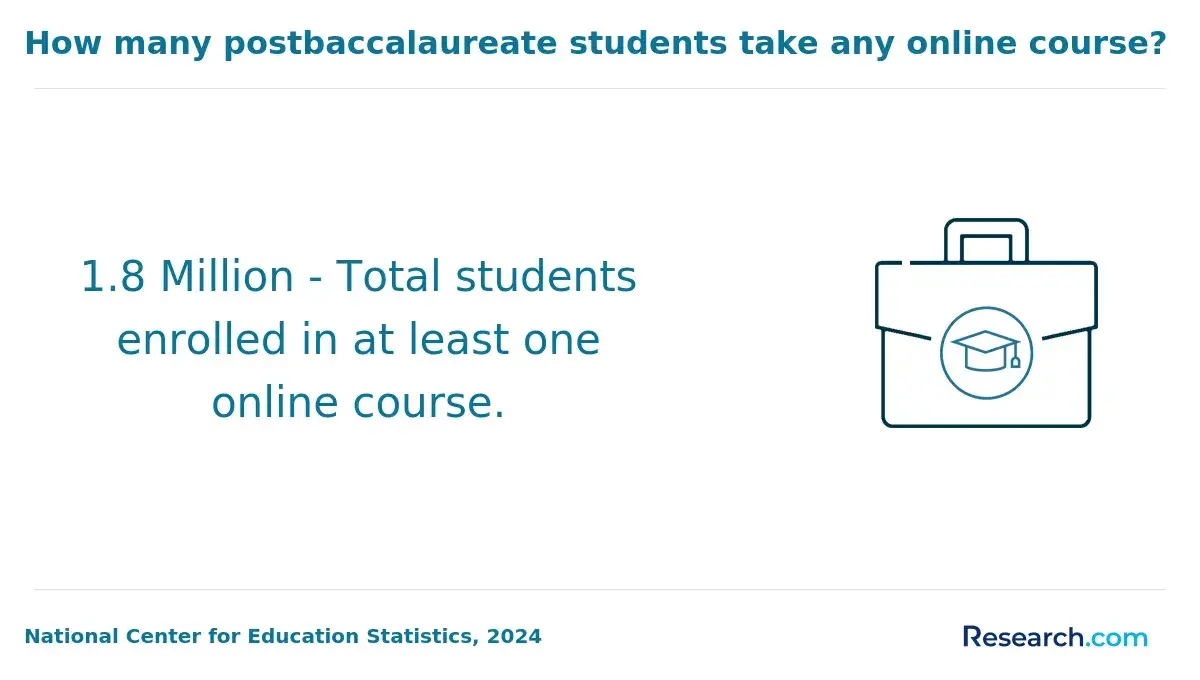
Facing pressure to lead efficient production cycles while adapting to digital transformation, many professionals struggle to find flexible education that aligns tightly with manufacturing career demands. National Center for Education Statistics data shows that nearly 40% of adult learners select online programs for their schedule adaptability, highlighting a shift toward balancing work, family, and education. This trend magnifies decision complexity for prospective operations management students aiming to switch fields or accelerate promotions without sacrificing income.
Understanding which online degrees prioritize manufacturing-specific skills, industry connections, and practical training is essential. This article evaluates key online operations management programs designed to align with manufacturing career trajectories and workforce expectations.
Key Things You Should Know
- Manufacturing-focused online operations management degrees face a credential-value tradeoff: Bureau of Labor Statistics data shows 15% above-average wage premiums in in-person technical programs versus 8% for online, impacting mid-career pivot efficacy.
- Employer surveys from Deloitte 2024 reveal 72% prioritize candidates with integrated supply chain and digital manufacturing skills, pressuring curriculum updates beyond legacy operations topics in online degrees.
- Enrollment cost analysis by NCES indicates average online operations management programs in 2026 reduce tuition by 20%, yet extended completion times often delay return on investment, a critical factor for working professionals pivoting careers.
What is an online operations management degree and how does it align with manufacturing careers?
Effective online operations management degree programs prepare students to solve the complex logistical and efficiency challenges unique to manufacturing career pathways in operations management. Graduates applying methodologies such as lean inventory in automotive assembly lines demonstrate how tailored skills reduce downtime and waste, directly impacting profitability and operational flexibility.
This pathway requires balancing theoretical knowledge with hands-on application. Curricula must integrate critical manufacturing-specific content—like just-in-time production, Six Sigma, and compliance standards—to meet employer expectations.
Programs that include simulation projects reflecting factory-floor realities improve decision-making abilities essential for supervisory roles. However, students should be cautious: generic operations courses often overlook specialized sectors such as aerospace or pharmaceuticals, where regulatory and technical nuances demand targeted expertise.
Labor market insights from Lightcast cited by the University of Kansas emphasize operations management as a sector with a median U.S. salary of $102,950 and approximately 2.8 million job openings annually, projecting healthy 6% growth. This underscores why a specialized online degree is a strategic investment for professionals aiming to enter or advance in manufacturing hubs where multi-site coordination and automation adaptation are critical tactical challenges.
Those exploring a project manager degree online will find alignment with broader operational leadership demands across industries, confirming the cross-sector versatility of strong operations management competencies.
How do online operations management programs compare with on-campus options for manufacturing-focused students?
Choosing online operations management programs for manufacturing careers requires careful consideration of tangible skill acquisition and employer expectations. Manufacturing employers value candidates with direct experience in real-world production environments, quality assurance, and lean management—areas where on-campus degrees often have an advantage through lab access, equipment interaction, and face-to-face internships.
For instance, a student learning on-campus might operate shop floor simulators or specialized machinery, while online students generally rely on virtual cases or projects, which may not fully replicate hands-on operational competence.
Given these differences between online and on-campus operations management degrees in manufacturing, online students should proactively secure internships or co-op roles in manufacturing settings to mitigate gaps in practical experience.
Lightcast data reported by the University of Kansas shows roughly 2.8 million annual U.S. operations-related job openings, highlighting a significant need for candidates who combine theoretical knowledge with proven operational problem-solving skills.
Online programs often provide the flexibility working professionals need to balance employment with education, allowing immediate application of concepts to current roles. However, this comes at the expense of reduced direct networking and mentorship opportunities, which play a critical role in accessing supply chain coordination and production supervision roles.
Students pursuing online degrees should consider complementing their education with targeted manufacturing internships and certifications to mirror the richer skill development found on-campus.
Those evaluating pathways might also explore construction management degree online accredited alternatives for related operational leadership careers.
Which accredited schools offer reputable online operations management degrees geared toward manufacturing?
Employers in manufacturing increasingly prioritize candidates with operational expertise tied directly to production realities such as supply chain logistics, quality control, and lean manufacturing. Accredited online operations management degrees focused on manufacturing careers, including those from Arizona State University, Purdue University Global, and Southern New Hampshire University, offer curricula designed to equip students with hands-on skills in these areas.
For example, Arizona State blends manufacturing systems design with data analytics, creating graduates capable of improving throughput to enhance profit margins.
Hiring managers also value project-based experiences mirroring actual manufacturing challenges like scheduling downtime and resource allocation, which Purdue Global emphasizes. The projected 30% growth in employment for operations managers and analysts by 2024 reflects this demand for practical, cost-cutting operational leadership in industrial settings.
Students seeking top accredited online operations management programs for manufacturing careers should verify accreditation from recognized bodies such as the Accreditation Council for Business Schools and Programs (ACBSP) or the Association to Advance Collegiate Schools of Business (AACSB), as these signal rigor and employer credibility.
Prospective learners must weigh the benefit of asynchronous coursework and accelerated options against the limited hands-on experience provided by online study; internships or employer partnerships may be necessary to fill this gap.
Those exploring options should consider the broader educational ecosystem, including related credentials like healthcare PhD programs online, which share analogous demands for operational proficiency and data-driven decision-making.
Program selection hinges on aligning practical manufacturing skills with the actual expectations hiring managers hold for efficiency and technology fluency, ensuring degrees translate into workforce impact and not just academic credentials.
What courses and specializations in these programs best support manufacturing operations roles?
Manufacturing operations management courses that focus on core competencies like supply chain management, production planning, and quality control provide essential skills to optimize factory output and reduce defects.
In high-volume sectors such as automotive or electronics manufacturing, specialized training in lean manufacturing and Six Sigma methods equips candidates with quantitative tools for waste elimination and process consistency. Expertise in enterprise resource planning (ERP) software connects procurement, inventory, and distribution with real-time data, enabling smoother operational workflows.
Electives covering industrial engineering and automation technologies are vital for those preparing to lead digital transformation on the factory floor, including integration of robotics and IoT systems. Additionally, understanding maintenance management and safety protocols addresses critical operational challenges like minimizing equipment downtime and ensuring regulatory compliance, which directly affect cost and risk.
For individuals pursuing careers in contract manufacturing or custom fabrication, courses emphasizing project management and supplier relationship management develop capabilities to coordinate diverse vendor inputs and navigate fluctuating production schedules. These skills are indispensable beyond traditional factory roles and underscore the adaptability necessary in modern manufacturing environments.
Given that operations professionals in U.S. manufacturing earn a median salary of $89,400—outpacing fields like finance and insurance—investing in specialized training pays off. Prospective students evaluating online operations management degrees aligned with manufacturing careers should also consider program flexibility and hands-on experience, as employers prioritize proven ability to manage live production cycles over theoretical knowledge.
Those seeking streamlined pathways might explore options such as a 1 year online MBA no GMAT that accommodate working professionals.
What are the typical admission requirements for an online operations management degree in the U.S.?
Employers hiring for operations management roles prioritize candidates with degrees from regionally accredited institutions, making accreditation a non-negotiable factor in admissions. Candidates who lack certain prerequisites may still gain conditional admission but must complete foundational courses early, which can delay entry into the workforce. Transfer students and working professionals benefit from submitting prior college transcripts to accelerate program completion and reduce overall costs. This approach is critical when managing career pivots under tight timelines.
Admission standards generally require a high school diploma or equivalent and completion of prerequisite coursework in math and English, with some institutions mandating standardized test scores. GPA requirements typically fall between 2.5 and 3.0. For those balancing full-time employment, part-time enrollment and flexible start dates are common accommodations, though these often extend time to degree completion.
Financial structuring in operations management programs can significantly impact affordability. For example, Western Governors University offers a flat tuition per six-month term, allowing students to manage costs more predictably compared to per-credit billing models.
Applicants should also prepare documentation proving reliable computer and internet access, since online program delivery requires stable connectivity. Additional application elements may include letters of recommendation or personal statements, particularly in programs emphasizing cohort collaboration and tailored advising.
Prospective students targeting operational leadership positions with immediate hiring needs should seek programs with streamlined prerequisite waivers and robust credit transfer policies. Ignoring these details can postpone readiness for high-demand roles requiring immediate expertise, highlighting the tradeoff between academic flexibility and workforce timing.
How long do online operations management programs take and what do they typically cost?
Choosing an operations management degree online involves carefully weighing time, cost, and relevance to targeted roles in advanced manufacturing or supply chain leadership. Programs vary widely, typically requiring 18 to 36 months full-time, with accelerated tracks near 12 to 24 months for those bringing prior credits. While shorter programs help working professionals pivot quickly, extended part-time options may stretch to 48 months, risking delayed labor market entry and slower salary growth.
Tuition ranges roughly from $15,000 to $60,000, with lower-cost programs often restricting access to specialized electives and industry projects essential for mastering technology-driven manufacturing processes. These practical components—such as simulation software and ERP platforms—add both expense and employability value and must factor into total cost calculations.
For example, a manufacturing supervisor aiming for supply chain leadership should favor curricula emphasizing applied analytics and operations technology over generic management theory. This often means higher upfront tuition but improves alignment with employer skill demands and job openings, which Lightcast labor data estimates will grow 6% annually in operations-related fields.
Prospective students must account for their existing academic credits, work experience, and employer support to select a program that balances financial investment, program length, and direct applicability to skill gaps that influence hiring and promotion timelines.
What manufacturing-related jobs can you get with an online operations management degree?
Choosing an online operations management degree focused on manufacturing demands understanding the nuanced employer expectations that separate theoretical knowledge from practical proficiency. Graduates often move into roles such as production supervisor, quality assurance manager, and supply chain analyst, where they must balance operational efficiency with compliance and cost control under real-time pressures.
Employers consistently value candidates demonstrating hands-on experience with ERP systems, data analytics, and risk management—skills that traditional curricula may overlook but are essential for managing supply chains and preventing downtime. For example, plant managers juggling workforce scheduling alongside machine maintenance must apply lean manufacturing principles to prevent bottlenecks that could halt production.
Operations management roles in automotive or pharmaceutical sectors add another layer of complexity, requiring specific regulatory know-how that directly affects employability depending on a program's depth in these areas.
Financially, operations management professionals command significant wage premiums. BusinessStudent.com reports business operations managers earn a median salary of $123,460, notably exceeding related roles like accountants ($77,920) and management analysts ($93,440), a difference tied to their strategic impact on organizational performance.
Prospective students should prioritize programs featuring industry-relevant case studies and simulations to develop applicable skills and prepare for challenges such as cross-functional teamwork and rapid technological adaptation inherent in manufacturing environments.
What salary ranges and advancement opportunities exist in manufacturing operations management careers?
Manufacturing operations management roles reveal a distinct salary stratification emphasizing technical and leadership competencies aligned with sector demands. Entry-level supervisors and coordinators start between $65,000 and $85,000, while mid-tier managers command $90,000 to $120,000 annually. Senior positions, such as plant managers or operations directors, frequently earn six-figure incomes, often ranging from $130,000 to $160,000, influenced heavily by company scale and geographic location.
Faster progression often hinges on hands-on expertise in lean manufacturing, automation implementation, and supply chain synchronization. For example, a production supervisor in automotive manufacturing who adopts automation technology can outpace peers in ascending to plant operations manager roles. Industry sectors impose unique skill demands: electronics manufacturing prioritizes software and data analysis, whereas heavy machinery emphasizes logistics coordination.
Employers seek measurable impact—improvements in efficiency, cost control, and quality assurance. Bridging mid-level management to executive leadership requires mastering vendor relationships, regulatory standards, and cross-functional teams. Supplementary certifications like Six Sigma or PMP validate skills in process optimization that influence salary growth and promotion chances.
Practical considerations include geographic mobility and extended shift patterns typical in manufacturing. Evaluating educational investments against regional salary data is critical; for example, Georgia Military College's online AAS in operations management at $8,415 annual tuition presents a favorable ratio relative to median salaries exceeding $90,000. Choosing programs balancing theory with applied projects enhances employability and practical readiness.
Are certifications like Six Sigma or APICS useful alongside an online operations management degree?
Combining an online operations management degree with Six Sigma and APICS certifications strategically addresses employer demands in manufacturing and logistics sectors. Six Sigma's targeted focus on defect reduction directly supports manufacturing quality control, while APICS credentials enhance supply chain management and inventory oversight essential to production efficiency.
For instance, a manufacturing operations manager armed with APICS certification can proficiently oversee supplier relationships and inventory optimization, while a Six Sigma Green or Black Belt holder applies advanced analytics to minimize waste and variability.
This dual approach enhances candidates' prospects for roles involving elevated responsibility and compensation, aligning with workforce trends identified by the U.S. Bureau of Labor Statistics, which projects 17% growth for logisticians and supply chain managers with a median salary near $81,000. Yet, the decision to pursue these certifications involves significant investment in time and expense outside typical degree requirements, presenting clear tradeoffs.
Smaller manufacturers might prioritize hands-on experience over formal credentials, whereas sectors like automotive or aerospace often treat such certifications as baseline expectations. Integrating certification coursework into degree programs can reduce preparation burdens and support knowledge retention.
Prospective students should gauge employer priorities in their target industries and evaluate whether the enhanced employability afforded by these certifications justifies the added commitment.
How can you evaluate and choose a trustworthy, accredited online operations management program?
Selecting an online operations management program without institutional accreditation carries substantial risk, especially for professionals seeking measurable ROI through employer recognition and federal aid. Regional accreditation from agencies recognized by the U.S. Department of Education or the Council for Higher Education Accreditation remains the baseline for academic rigor and practical validity.
Programs ignoring critical industry trends—like AI-driven automation and supply chain analytics—raise red flags; graduates may find themselves underprepared for the evolving demands in manufacturing and logistics.
Graduate outcomes offer tangible insight: job placement rates within manufacturing or supply chain roles, employer-backed internships, and average starting salaries reveal program relevance. Operations management degrees paired with certifications such as Lean Six Sigma or ERP software proficiency notably improve marketability.
Students balancing shift work or full-time jobs should evaluate program delivery models—flexibility through asynchronous formats is no longer optional but necessary. Cost-benefit analysis is vital; low-tuition degrees lacking accreditation or industry alignment can stall rather than accelerate career pivots. According to the Department of Labor, accredited programs integrating automation technologies report 20% greater hiring success in advanced manufacturing.
Faculty expertise in manufacturing operations combined with access to applied capstone projects connected to real-world supply chain challenges enhances skill acquisition beyond theory. Strong mentorship drives practical competence critical for navigating sectors increasingly governed by AI and process optimization technologies.
Other Things You Should Know About Operations Management
Balancing full-time work and an online operations management program requires disciplined time management, especially since many courses demand applied projects and case studies relevant to manufacturing settings. Part-time enrollment or programs offering asynchronous content lessen conflict with work schedules but extend completion time. Employer support varies; candidates should prioritize programs with flexible pacing and practical assignments that reinforce daily work tasks to maximize learning without reducing job effectiveness.
Employers in manufacturing increasingly accept online degrees when paired with relevant experience and certifications, but inconsistencies remain based on program reputation and curriculum rigor. Degrees from programs emphasizing practical manufacturing tools, systems analysis, and lean methodologies carry more weight. Candidates should verify that the degree program integrates applied learning aligned with industry software and standards to avoid gaps that employers perceive as theoretical rather than operationally ready.
Advanced supply chain management coursework is critical for manufacturing professionals aiming for roles beyond frontline supervision, as manufacturing is tightly integrated with supply chain efficiency. Without supply chain expertise, students risk missing strategic operational insights valued in management. Therefore, prioritizing these courses is advisable for anyone planning upward mobility in manufacturing operations, enabling them to lead cross-functional initiatives and adapt to complex supplier and distribution networks.
References
- Operations Management https://ps.sckans.edu/degrees-and-certificates/bachelors/operations-management/
- Online MBA in Operations Management: Review Top Schools https://www.onlinemastersdegrees.org/best-programs/mba-programs/operations-management/
- Manufacturing Management: Degree Options and Career Outcomes https://go.tiffin.edu/blog/manufacturing-management-degree-options-and-career-outcomes/
- Best Certifications for Operations Management https://blog.msbm.org.uk/best-certifications-for-operations-management
- Manufacturing Career Path — Love Columbia https://lovecolumbia.org/manufacturing-career-path
- Operations Manager Career Guide : missions, training, and salary https://www.iscparis.com/en/program/career-guides-operations-manager/
- Achieving Success in Your Operations Career: How to Build a Rewarding Professional Path - Mangrum Solutions https://mangrumcareersolutions.com/blog/achieving-success-in-your-operations-career-how-to-build-a-rewarding-professional-path/
- Best Online Operations Management Degrees of 2025 https://www.supplychainguide.org/degrees/online-operations-management-degrees/
- Operations and Quality Management Courses https://globalmanagementacademy.com/operations-and-quality-management-courses/
- Quantic School of Business and Technology https://quantic.edu/blog/2021/09/28/operations-management-career-path-best-mba-to-advance/