2027 Online Operations Management Degrees With Service Operations Coursework

Co-Founder and Chief Data Scientist
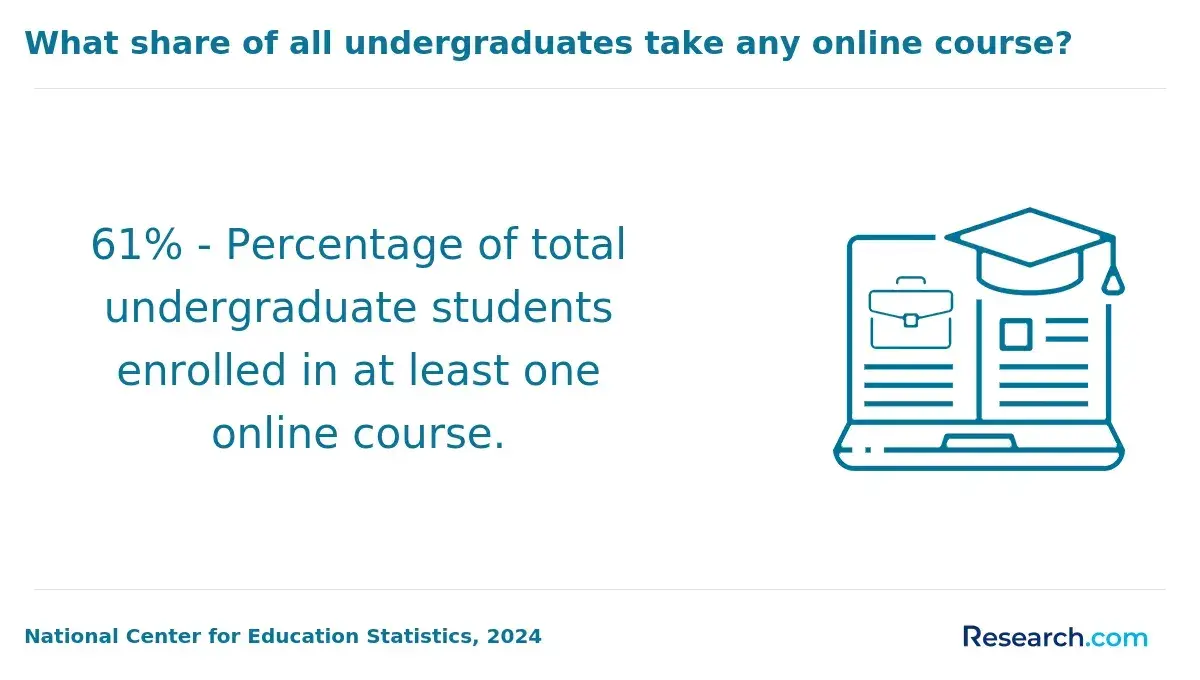
Facing rapid shifts in supply chain complexities and service delivery models, many operations managers struggle to upskill without disrupting full-time employment. Nearly 40% of adult learners enrolled in online programs in 2024, according to the National Center for Education Statistics, highlighting a major trend toward flexible learning tailored for working professionals. This accessibility reshapes how students time their education, balancing immediate job demands and long-term career goals. The emerging challenge involves identifying programs that offer comprehensive service operations coursework within an online format-ensuring relevant skills align with employer expectations in sectors emphasizing customer experience and efficiency.
This article evaluates online operations management degrees featuring service operations courses, guiding learners through options that best meet the practical needs of career advancement, schedule flexibility, and workforce demand.
Key Things You Should Know
- In 2024, only 38% of online operations management degrees with service operations coursework fully integrate supply chain analytics, forcing learners to weigh foundational breadth against specialized competitiveness, limiting immediate senior role readiness.
- Employers now prioritize graduates demonstrating proficiency in digital service experience metrics, meaning programs lacking hands-on service operations tools see 22% lower hiring rates per U.S. Department of Labor trends.
- Median program completion time varies from 18 to 30 months, with cost disparities up to 45%, impacting working professionals' capacity to balance tuition debt acceleration versus opportunity costs amid a tightening labor market.
What are online operations management degrees with service operations coursework?
Online operations management degrees with service operations focus equip students to navigate the complexities of managing intangible, simultaneous production-consumption processes. For example, a healthcare operations manager leveraging service operations coursework can reduce patient wait times through refined capacity planning, while a hospitality manager improves guest experience by optimizing staff deployment strategies. These programs balance core management principles with specialized skills tailored specifically to service industries such as healthcare, hospitality, and financial services.
Essential competencies include process analysis, quality control, customer relationship management, and supply chain integration adapted to service environments rather than traditional manufacturing. Employers prioritize graduates who can apply quantitative tools alongside interpersonal skills to maintain service reliability while managing unpredictable demand and cost pressures.
Labor market data from Lightcast, cited by the University of Kansas, shows operations management roles in the U.S. offer a median annual salary of $102,950, with about 2.8 million job openings annually and projected growth near 6%. This confirms the practical value of degrees combining operations management and specialized service coursework for those targeting these high-demand roles.
However, completing these programs online demands self-discipline and proactive engagement with simulations and case studies to translate theoretical knowledge into effective decision-making. Prospective students should also consider how service operations training fits with their career objectives and real-world constraints when evaluating online accelerated project management degree programs and the best online programs for operations management and service coursework.
Which schools offer accredited online operations management programs?
Employer preference increasingly favors candidates from accredited online operations management degree programs that emphasize applied skills in service industries, which dominate roughly 80% of U.S. private-sector GDP and employment. Choosing programs vetted by regional accreditation and business education bodies such as ACBSP or AACSB is crucial for ensuring curriculum relevance and recognition. For instance, institutions like the University of Arizona and Auburn University integrate practical service operations components, enhancing graduates' real-world readiness.
When assessing top schools offering online operations management courses, prospective students should prioritize those with applied projects or simulations focused on service quality and process improvement. These practical elements meet employer demand for expertise in customer experience and service delivery efficiency. The working professional's ability to balance coursework with job responsibilities hinges on program flexibility, but this should not come at the cost of faculty industry experience, employer connections, or career support services.
Notably, online programs without rigorous accreditation or lacking specific service operations content can restrict employment opportunities post-graduation. Students must consider delivery formats, access to internships, and data-driven decision-making emphasis as differentiators. For individuals exploring related fields, an online masters degree in human resource management may present alternative pathways aligned with operational roles involving workforce and organizational development.
How do online and campus operations management programs compare?
Operations management degree formats diverge most notably in how they align with learner circumstances and employer expectations. Online programs offer flexibility critical for working professionals balancing full-time jobs, excelling at delivering service operations coursework in operations management programs that emphasize virtual simulations and remote project-based learning. Conversely, campus programs provide tangible advantages for industries reliant on physical systems, such as manufacturing, by facilitating hands-on labs, in-person case competitions, and immediate peer collaboration.
The workforce implications are stark: employers in manufacturing and logistics value the on-campus tactile experience, while service sector roles increasingly recognize analytic skills proven through online curricula. Western Governors University data indicates an average salary increase of $12,214 among online business undergraduates including supply chain and operations majors, evidencing real economic gains from remote study paths. However, strong alumni networks and internship pipelines on campus may tip hiring odds in healthcare or retail sectors where employer presence remains anchored in physical locations.
Students weighing online vs campus operations management degrees must consider practical tradeoffs such as commuting costs, schedule rigidity, and the challenge of securing practical engagements remotely. Campus learners face structured class times but benefit from direct mentorship, while online students require self-motivation and proactive networking. For professionals pursuing strategic pivots or advancement, balancing immediate income prospects against immersive experiential learning is key.
Those interested in entrepreneurial tracks within operations management may also explore an MBA for entrepreneurs, which can complement foundational skills with strategic business insights.
What service operations courses are included in these degrees?
Service operations management coursework online centers on applying process design and queueing theory to balance service capacity with real-time demand fluctuations. Core service operations classes included in degrees emphasize measurable impact areas such as reducing customer wait times-a factor that directly affects customer satisfaction and retention in industries like healthcare and retail banking.
A practical example from Cornell University's eCornell program quantifies that trimming just one minute off average wait times can improve satisfaction scores by up to 10 percentage points. This illustrates the operational tradeoff between resource allocation and customer experience, where analytics-driven scheduling and flexible staffing mitigate bottlenecks without proportional cost increases.
Students routinely engage with tools simulating customer flow and develop service blueprints to optimize throughput during peak hours and variable demand periods. In healthcare, this skillset supports appointment redesigns that avoid added personnel expenses, while in retail banking it guides teller deployment and self-service balances.
The coursework also addresses scalable queue management systems and continuous improvement strategies that align with employer expectations for operational efficiency combined with elevated customer experience. Prospective learners looking for actionable, strategic education pathways will find value in programs that integrate these practical competencies with rigorous analytics frameworks, especially through affordable MBA programs.
What admission requirements do online operations management programs require?
Admission criteria for online operations management programs reflect the varying demands of service and manufacturing sectors, emphasizing both academic foundation and practical experience. While many bachelor's degree programs require official transcripts evidencing prior coursework in business or mathematics, some also impose minimum GPA thresholds around 2.5 to 3.0 to ensure candidates possess adequate quantitative skills. Standardized testing, though common, is increasingly waived for applicants with relevant work experience in supply chain, logistics, or manufacturing, acknowledging the diverse backgrounds of working professionals seeking mid-career advancement.
Programs oriented toward service operations frequently expect demonstrated proficiency in analytical tasks like statistical process control or resource allocation modeling, often verified through prerequisite classes or placement tests. These skills are essential for managing complexities in healthcare or retail sectors. International candidates must navigate credential evaluations and language proficiency measures like the TOEFL or IELTS, adding layers to an already rigorous admissions framework.
Beyond academic benchmarks, admissions often request statements of purpose to clarify alignment with operations management objectives, and while letters of recommendation are sporadic, they strengthen applications by confirming leadership and operational oversight capabilities. Interview components assess communication skills vital for collaborative environments common in service operations management.
The practical value of these selective admissions is reflected in workforce data, such as median salaries near $141,900 for roles like compliance managers. Given a projected 4.5% job growth rate, candidates must balance academic readiness with strategic experience to meet employer expectations and benefit from emerging industry demands.
How long do online operations management degrees usually take?
Program duration in operations management degrees directly shapes students' market readiness and earning trajectories. Accelerated options, often 18 to 24 months, serve mid-career professionals seeking rapid skill adaptation, enabling them to pivot into supervisory or specialized roles without prolonged income disruption. In contrast, traditional full-time tracks typically span around two years, suitable for recent graduates aiming for a comprehensive foundation and quicker entry into mid-level positions. Part-time studies, extending up to three years or more, balance employment but delay credential attainment, which can defer salary progression.
For logisticians in manufacturing, a 24-month part-time path may optimize continuing income while embedding industry-specific service operations expertise, particularly in supply chain management. However, shorter accelerated programs risk omitting broader strategic coursework, potentially limiting long-term advancement. Employers in sectors like retail and healthcare increasingly expect candidates to combine core operations skills with targeted service operations knowledge, raising the stakes for program relevance and length.
Southwestern College's reference to PayScale data notes an average operations management salary of $78,000, emphasizing timely degree completion's impact on capturing salary gains in competitive labor markets. Selecting a program that aligns with personal circumstances and sector expectations minimizes opportunity costs and maximizes return on investment.
How much do online operations management degrees cost?
Cost variation in online operations management degrees directly influences both access and return on educational investment. Tuition typically ranges from around $300 to over $1,000 per credit hour, shaped by program format, institutional type, and geography. For instance, the University of Arkansas charges $313 per credit plus $80 in online fees per credit hour for its Graduate Certificate in Operations Management, demonstrating a distinct cost advantage over many traditional on-campus programs.
Degree requirements differ widely, from 12-credit certificates to 36-credit master's programs, affecting total cost and time commitment. A practical comparison shows a 15-credit certificate at Arkansas totaling about $5,895, while a 30-credit master's at a private university charging $900 per credit can surpass $27,000 before fees. These disparities affect decisions related to employer tuition reimbursement and long-term financial strategy.
Additional costs such as technology needs, proctoring fees, and opportunity cost of time must be included in budgeting. Employers often assess a program's reputation and alumni network alongside cost; less expensive offerings may lack robust industry connections, impacting employment outcomes. Choosing programs emphasizing service operations as part of broader operations management curricula can enhance specialization and operational efficiency skills, strengthening justifications for tuition expense in a competitive hiring environment.
What jobs can you get with an operations management degree?
Operations management roles vary widely depending on industry demands, requiring tailored expertise in process optimization, supply chain logistics, and compliance. For instance, a healthcare operations manager prioritizes patient flow and regulatory adherence, whereas in manufacturing, emphasis lies on equipment reliability and throughput. This sector-specific focus shapes both daily tasks and measurable success criteria.
Practical outcomes align strongly with educational level: associate degrees often funnel graduates into support or coordinator positions, while bachelor's degrees typically qualify candidates for managerial responsibilities. Salaries reflect such distinctions, ranging from $60,000 to over $100,000 annually, influenced further by geography and sector specialization.
Employers increasingly seek candidates adept in enterprise resource planning (ERP) systems and data analytics, signaling a shift toward technology-driven decision-making. Additionally, strong communication and vendor management skills remain indispensable as roles frequently involve cross-functional collaboration and negotiation.
Cost considerations influence program selection, with some online associate programs, such as at Georgia Military College, costing around $8,415 annually including materials-significantly lower than four-year alternatives. This affordability can reduce debt burdens and expedite workforce entry but may limit immediate access to higher-tier roles.
Operations management professionals face ongoing challenges like adapting supply chains amid global disruptions and integrating sustainability. Continuing skill development beyond initial degrees is essential to maintain relevance in evolving markets.
What salary can operations management graduates expect?
Entry-level salaries for operations management graduates in 2026 generally range from $55,000 to $70,000, but trajectory depends heavily on industry and regional factors. For instance, manufacturing and logistics often anchor salaries near the lower bound, while specialized roles in high-tech supply chains or healthcare service operations command more competitive starting pay. Realistically, median earnings approach $85,000 to $95,000 after about five years, provided individuals demonstrate competencies highly valued by employers.
Core skills such as process optimization, data analytics, and leadership on cross-functional projects significantly influence salary growth. Proficiency with digital tools like ERP systems and lean manufacturing methods differentiates candidates, making coursework tied to service operations particularly relevant for faster advancement.
Choosing an online program involves balancing tuition costs-typically between $270 and $688 per credit hour-with long-term financial outcomes. Lower-cost degrees may minimize student debt, enhancing net lifetime earnings, but pricier programs sometimes offer specialized instruction and industry connections that justify higher initial salaries.
Graduates should actively seek roles offering diverse project experience across industries, as this exposure accelerates advancement. Without such targeted experience, growth stalls, particularly in positions demanding advanced continuous improvement expertise within service operations management.
What certifications strengthen an operations management career?
Certifications such as Certified Supply Chain Professional (CSCP), Certified in Production and Inventory Management (CPIM), and Six Sigma are tangible markers of expertise that differentiate candidates in operations management roles by validating skills beyond academic degrees. For example, a healthcare project manager using Six Sigma tools can notably reduce patient wait times, enhancing service efficiency. Conversely, CSCP offers critical value for logistics coordinators handling complex supplier networks in retail, reflecting how certification relevance varies by sector.
These certifications embed practical methodologies like Lean and Agile, which are increasingly foundational amid evolving operational demands. However, balancing certification with academic rigor matters: programs like Kettering University's online M.S. in operations management impose undergraduate GPA thresholds (minimum 3.0, conditionally 2.5-2.99), indicating the level of selectivity expected by some employers.
Without credentials, professionals risk plateauing since mid-to-senior roles frequently require ongoing specialized learning. The varied costs, time, and sector-specific utility of these certifications necessitate careful alignment with career goals and industry norms. Manufacturing-driven paths differ from service-oriented tracks in credential preference and outcome expectations.
Ultimately, combining recognized certifications with advanced degrees clearly improves employability, promotion prospects, and salary trajectories in a competitive environment marked by rising employer standards.
Other Things You Should Know About Operations Management
The rigor of online operations management programs often matches on-campus equivalents, requiring significant time investment for assignments, group projects, and case studies. Students working full-time should expect to dedicate 15-20 hours weekly to coursework, particularly in service operations classes with complex simulations or capstone projects. Selecting programs designed specifically for working professionals with flexible pacing can reduce stress and improve learning outcomes, whereas accelerated formats may overwhelm students balancing job demands.
Employers increasingly accept accredited online degrees when candidates demonstrate relevant skills and practical experience. However, online programs with strong industry connections, experiential learning components, or cohort models often create deeper networking opportunities valued in operations management roles. If your goal is to work in large corporations or competitive industries, prioritize programs with proven employer recognition and embedded internships or service operations practicums.
Service operations coursework focuses on managing intangible processes, customer experience, and capacity planning, which vary notably across sectors. For healthcare, prioritize programs emphasizing quality assurance, compliance, and patient flow management. Hospitality benefits more from customer service optimization and workforce scheduling modules. Tailoring your coursework to sector-specific operations challenges improves job fit and marketability more than a generic operations management focus.
References
- Sophia Online Courses for College Credit | Operations Management https://www.sophia.org/online-courses/business/operations-management/
- Master Operations Online: Your Guide to an MBA in Operations Management https://matchtocollege.com/blog/online-mba-operations-management-master-your-future
- Accessibility Features https://mituniversity.ac.in/blog/mba-operations-management-salary-scope-fees-benefits-career-jobs-syllabus-eligibility-more
- How to become a business operations manager | edX https://www.edx.org/become/how-to-become-a-business-operations-manager
- Online MBA in Operations Management: Review Top Schools https://www.onlinemastersdegrees.org/best-programs/mba-programs/operations-management/
- MBA In Operations Management Salary In India 2025, Check Now https://cracku.in/mba-in-operations-management-salary-in-india-2025/
- What Is the Typical Operations Manager Salary? https://claremontlincoln.edu/news-blog/operations-manager-salary/
- How Long Does It Take to Get a Business Management Degree? | University of Phoenix https://www.phoenix.edu/blog/how-long-does-it-take-to-get-a-business-management-degree.html
- Best Certifications for Operations Management https://blog.msbm.org.uk/best-certifications-for-operations-management
- Operations Management https://ps.sckans.edu/degrees-and-certificates/bachelors/operations-management/