2027 Operations Salary by State Report

Co-Founder and Chief Data Scientist
Determining competitive compensation for operations managers across states poses a complex challenge as professionals weigh cost-of-living differences against tangible salary gains. The U.S. Bureau of Labor Statistics reports a 7% employment growth in operations management roles through 2030, reflecting rising demand but also intensifying regional wage disparities. This uneven landscape complicates career decisions for those balancing relocation costs and long-term earning potential.
Additionally, adult learners pursuing advanced credentials face varied regional tuition costs and job markets, influencing when and where to upskill. This article analyzes state-level salary data for operations roles, offering precise guidance to optimize location-based earning strategies and career trajectory choices.
Key Things You Should Know
- The 2026 state-level median salary variance for operations management spans over 40%, with California at $102K and West Virginia near $62K according to the U.S. Bureau of Labor Statistics, forcing role location tradeoffs between earning potential and living expenses.
- Employers in states with above-median pay increasingly demand advanced certifications and experience, reflecting a labor market that values operational efficiency skills tightly coupled with regional industry clusters driving wage premiums.
- The cost and time investments to gain accredited credentials in high-pay states extend average candidacy preparation by 25% versus lower-wage regions, affecting candidate entry timing and necessitating strategic decisions on educational access versus accelerated employment.
What is an operations management salary by state?
Salary variations for operations management roles across states directly impact career decisions, especially when factoring in cost of living and regional industry strength. For example, a manager in California or New York may earn significantly more than counterparts in states like Ohio or Alabama; however, higher wages do not always equate to better purchasing power given elevated housing and tax expenses.
Data from the U.S. Bureau of Labor Statistics in May 2025 reveals that general and operations managers earn an annual mean wage of $134,940 nationally. Texas's energy and manufacturing industries often provide salaries at or above this average, contrasting with agricultural or less industrialized states where pay typically lags behind. Evaluating these disparities alongside local economic and job market conditions is crucial for candidates planning strategic career pivots or negotiating offers.
Sector-specific demand further influences compensation and role complexity. For instance, operations managers in Washington's technology sector likely require different skill sets and receive distinct pay compared to those in Illinois's retail distribution fields. These operational realities underscore the importance of accessing detailed wage data, which informs relocation or remote work decisions while aligning expectations with employer standards and state regulations.
Prospective students should also consider an operations management degree as a pathway, weighing practical program outcomes against local market demands. Understanding average operations management earnings across states enables more informed choices that balance education investment with realistic long-term career tradeoffs.
Which states pay the highest operations management salaries?
States like California, Texas, and New York offer the highest paying states for operations management salaries, but these figures must be evaluated against significant cost-of-living differences and regional hiring dynamics. California's median salary surpasses the national average by over 40%, driven largely by its concentration of high-tech manufacturing, logistics, and multinational firms. Yet, candidates face stiff competition and must possess advanced skills such as Lean Six Sigma certification and data-driven decision-making to command these premiums.
Midwestern states such as Illinois and Ohio present a contrasting scenario where salary levels are lower but compensated by affordable living costs and expanding industrial sectors. Professionals in these states often accept a salary tradeoff for improved work-life balance and manageable housing expenses, making these locations attractive for a strategic career pivot where financial pressures are a consideration.
Decision-making about relocation or sector focus hinges on specific industry concentrations and economic stability. Texas remains favorable for those targeting energy and manufacturing industries, while New York aligns better with operations roles in retail and financial services. Candidates seeking to accelerate their prospects might also explore supplementary credentials or degrees; for example, pursuing a sports management degree online can offer insights into operational efficiencies applicable in diverse sectors.
Ultimately, top states with best operations management salary rates require a balance between upskilling and geographic/sectoral fit, with candidates weighing tangible financial advantages against the rigor of competitive hiring markets.
How do operations manager salaries compare by state and city?
Nominal salary variations for operations managers across states and cities often misrepresent true earnings once cost of living is considered, shrinking differences by approximately 15 percentage points. For instance, a $20,000 nominal pay increase in a high-cost city like San Francisco compared to Indianapolis may offer less actual purchasing power after housing, transportation, and taxes are factored in. This distorted perception complicates relocation or job acceptance decisions based solely on raw salary figures.
City-by-city operations management compensation comparison reveals that tech, manufacturing, and logistics centers typically pay more but coincide with higher expenses. Candidates targeting affordable metros with expanding industry demand should leverage cost-of-living-adjusted salary data to negotiate offers or choose locations optimizing real income potential. Without this, even high nominal salaries risk causing financial strain.
Educational choices and geographic flexibility profoundly impact outcomes for operations management aspirants. Graduates benefit most from programs intertwined with local industry or strong remote work pathways. Certifications and networking aligned with specific city labor markets tend to yield better income and job security over generic credentials.
States with relatively modest salaries but lower living costs may outperform high-wage areas in net financial results, underscoring the need for reliable, adjusted salary data. Students considering practical alternatives might explore accelerated options such as a one year online MBA entrepreneurship to balance skill acquisition and time-to-market in operations management.
What degree do you need for operations management jobs?
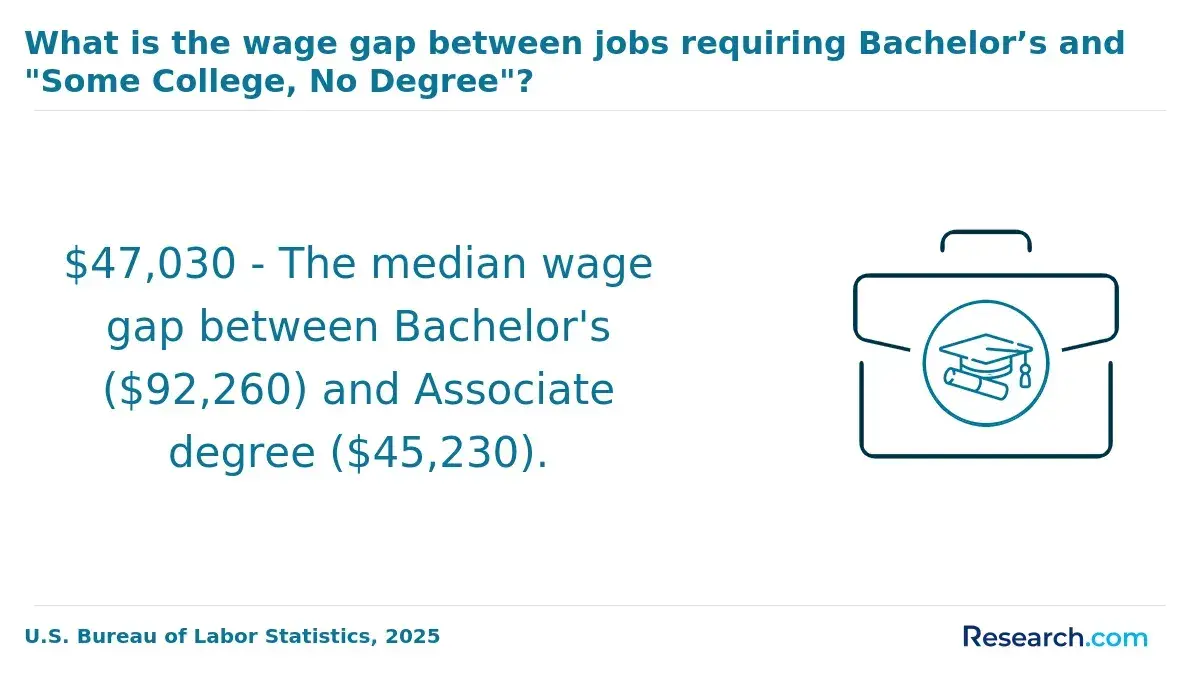
Most operations management roles in the US demand at least a bachelor's degree, preferably in business administration, supply chain management, or industrial engineering. This aligns with the baseline expectations in various states where operations management degree requirements in US states emphasize foundational skills like process optimization, project management, and financial analysis essential for manufacturing, retail, and service sectors.
Many candidates without a relevant bachelor's degree find advancement restricted, often confined to entry-level jobs. Specialized degrees gain importance especially in sectors like logistics and healthcare, where data-driven decision-making and digital process integration are rising priorities. For instance, a logistics coordinator in a distribution company needs expertise in inventory management software, which targeted coursework in supply chain management better supports than general business programs.
While an MBA can sharpen strategic leadership skills beneficial for mid- to senior-level positions, it is not mandatory initially and can delay workforce entry by years. Professionals should weigh graduate education costs versus on-the-job learning speed. For those considering graduate pathways, evaluating the easiest and fastest online MBA programs might help balance this tradeoff.
Complementing degrees with certifications such as Certified Supply Chain Professional (CSCP) or Lean Six Sigma validates operational proficiency and continuous improvement commitment. Notably, average wages in South Carolina rose 7.1% between 2022 and 2023 to $54,250, outpacing inflation and signaling growing employer appreciation for formal education combined with certifications in operations roles.
Prospective students should also review the best degrees for operations management jobs by state to identify local market demands and tailor their educational investments accordingly.
Is an online operations management degree respected by employers?
An online operations management degree's value hinges on more than credential possession; employers focus sharply on accreditation, curriculum relevance, and evidence of applied skills. For instance, a production supervisor seeking promotion to general operations manager must demonstrate proficiency in industry-specific technologies and process improvement software, capabilities that vary widely across programs.
In sectors such as logistics and manufacturing, hiring managers often verify degree accreditation and look for tangible proof of competency through internships or project work. Smaller firms or startups weigh demonstrated operational leadership and efficiency gains more heavily, sometimes placing less emphasis on the degree's delivery format and more on practical outcomes and certifications.
Prospective students should prioritize programs that offer:
- Accreditation from recognized bodies like AACSB, ACBSP, or regional agencies
- Experiential learning elements such as capstone projects or cooperative education
- Curricula aligned with current industry standards and software tools
- Strong alumni employment outcomes and employer ties
According to U.S. Bureau of Labor Statistics Occupational Employment and Wage Statistics, operations managers earned an average of $134,940 annually in May 2025, substantially outpacing the general workforce wage, which underscores employers' demand for advanced practical skills beyond academic theory. Online degrees should be integrated into a broader career strategy that includes skills certifications and verifiable workplace achievements.
What courses are in an operations management degree?
Operations management degree programs equip students with a mix of analytical and practical competencies crucial to diverse industries, yet the real challenge lies in tailoring these skills to distinct sector demands. For instance, supply chain management concepts taught in manufacturing-focusing on supplier coordination and inventory control-require significant adjustment when applied to healthcare or retail, where demand variability and compliance pressures differ drastically.
Core quantitative courses like operations research and statistics provide essential tools for diagnosing and resolving complex workflow issues. Project management training develops capabilities to lead multi-disciplinary teams within budget and schedule constraints, skills highly transferable across public and private organizations. Meanwhile, information systems coursework responds to employer demand for proficiency in automation and enterprise software, an increasingly non-negotiable aspect of modern operational roles.
Electives such as lean management and sustainability broaden competence in minimizing waste and achieving regulatory compliance, especially relevant in government contexts where operational managers often exceed $100,000 in annual base pay, according to the Illinois Office of Comptroller's data. Navigating workforce dynamics and shifting regulations through negotiation and organizational behavior classes equips graduates to manage the real-world friction outside textbook scenarios.
Deciding between public sector stability or private sector innovation demands scrutiny of how each course element translates to tangible career outcomes, factoring local labor market nuances and institutional expectations. This analytic approach is essential for professionals aiming to leverage their operations management education into roles that align with evolving industry realities.
How long does an operations management degree take?
Securing a bachelor's degree in operations management typically requires four years of dedicated full-time study, balancing foundational theory with targeted electives in supply chain, project management, and process optimization. This timeframe aligns with employer expectations for entry-level roles, especially in competitive markets like the Charlotte-Concord-Gastonia NC-SC metro area, where the average hourly wage hits $32.55-close to the national average.
For those aiming to enter the workforce more quickly, associate degrees or certificates in related areas such as logistics or business administration can be completed in 1 to 2 years; however, these credentials generally restrict initial salary potential and career growth. Conversely, post-baccalaureate certificates or master's degrees extend learning by 1 to 2 years beyond a bachelor's and tend to be valuable for leadership roles, though with a greater time and financial investment.
Employers now emphasize problem-solving abilities and practical experience just as heavily as formal education. Candidates showing demonstrated skills through internships or cooperative programs often stand out in hiring processes.
Tradeoffs to consider include:
- Choosing accelerated or part-time pathways may shorten completion but can impact depth of learning and networking opportunities.
- Longer study durations generally support access to senior-level roles and stronger wage trajectories.
- Focusing on certificates offers speed and lower cost but limits long-term progression and market competitiveness.
In sum, a bachelor's degree remains the most direct route to balancing credential relevance with market wage realities and employer benchmarks across high-growth U.S. metros.
How much does an operations management degree cost?
The cost of an operations management degree varies widely, typically ranging from $10,000 to $50,000 based on institution type, program length, and delivery method. Public universities offer more affordable tuition for in-state students, often between $10,000 and $20,000, while private or out-of-state options can top $40,000. Although online programs may reduce expenses like commuting, total tuition rarely decreases substantially. Additional costs such as materials, fees, and exams can add thousands more.
Employers expect operational leaders to possess both theoretical foundation and applied skills. This dynamic favors programs with internships, industry projects, or hybrid formats blending classroom and corporate partnerships. For example, a mid-career professional shifting toward supply chain roles in manufacturing may justify investing in a hybrid degree that fast-tracks relevant experience and job market readiness.
Indiana's 2024 Employment and Wage Report shows management roles earning an average of $110,000 annually, nearly double the state average. Such wage premiums suggest that initial educational investment may be recouped relatively quickly-if the degree aligns with local labor demands and individual career goals.
Financial aid, tuition reimbursement from employers, and part-time study options are essential for balancing costs with work and family obligations. Absent such supports, students should prioritize public or community colleges offering transferable credits to lower the total financial burden.
What certifications help operations management career growth?
Certifications such as Certified Supply Chain Professional (CSCP) and Certified Manager (CM) meaningfully differentiate candidates by validating specialized expertise critical to operations management roles. Employers in manufacturing and logistics often assign a 10-15% salary premium to CSCP holders, emphasizing the value of end-to-end supply chain integration skills. Meanwhile, CM credentials indicate essential supervisory capabilities that directly influence advancement in service-sector management, where managing people correlates with operational efficiency.
Lean Six Sigma (LSS) credentials-specifically Green and Black Belts-carry distinct weight in industries like healthcare and manufacturing, where defect reduction tangibly improves profitability. Professionals with these certifications typically experience a 20% higher likelihood of promotion due to demonstrated process improvements. However, their ROI is context-dependent; startups or firms with less formalized processes may see limited impact compared to established companies focused on operational rigor.
Project Management Professional (PMP) status holds particular relevance in technology and construction sectors, where projects are large-scale and cross-functional coordination is essential. PMP certification correlates with up to an 18% wage advantage and greater job security, reflecting employer emphasis on delivering projects within scope, schedule, and budget constraints.
The U.S. Bureau of Labor Statistics notes that general and operations managers remain among the highest-paying and most common occupations nationally, aligning with these certification trends. Practical decision-making about credential investments must consider industry structure, organizational maturity, and the candidate's targeted role to optimize return on both time and financial investment.
What jobs can you get with an operations management degree?
Graduates with a degree in operations management enter roles demanding a nuanced blend of process optimization, resource allocation, and data-driven decision-making. For example, a production manager in manufacturing reduces workflow bottlenecks by analyzing operational data, while a logistics manager in retail focuses on inventory turnover and delivery efficiency. Practical hiring decisions hinge on interpreting wage distributions and percentiles from sources such as Georgia's Occupational Wages database and the BLS OEWS tables to benchmark salaries and anticipate regional demand.
Critical considerations include industry-specific challenges and geographic wage disparities. Healthcare operations managers contend with compliance and patient flow, whereas technology sector roles prioritize agile project management. Logistic coordinators in California may earn over 20% more than counterparts in lower-cost states, a variation that directly impacts career viability and job market competitiveness.
Operational roles require proficiency with workforce scheduling tools, ERP software, and performance metrics analysis. Entry-level positions often involve support activities before advancing to decision-making roles, highlighting the importance of realistic salary expectations based on median incomes and percentiles found in authoritative labor datasets. These insights clarify timelines for income growth and help graduates assess tradeoffs between immediate earnings and long-term advancement potential within operations management fields.
- Operations analyst
- Supply chain coordinator
- Production manager
- Logistics manager
- Quality assurance supervisor
Other Things You Should Know About Operations Management
According to the 2026 Operations Salary by State Report, California, New York, and Texas are the states with the highest salaries for operations managers, largely due to the cost of living and industry demands within these regions.
Specialized training in areas like logistics, procurement, or quality control offers deep expertise attractive to niche employers but can limit flexibility across industries. General operations management programs provide broader skills that support mobility and adaptability, making them ideal for those uncertain about their long-term sector. For career pivots or uncertain futures, a generalist approach is often safer, while targeted specialization suits candidates with clear industry goals.
Salary figures alone do not reflect true earning power due to wide variations in regional living costs. High salaries in metropolitan areas often correspond with substantially higher housing, transportation, and tax expenses. When evaluating opportunities, candidates must adjust salary expectations to local costs to assess actual disposable income and career satisfaction realistically.
Most employers value relevant work experience more than an immediate advanced degree; practical skills in managing operations carry more weight in hiring and promotion decisions. Obtaining an advanced degree after gaining 3-5 years of experience allows professionals to contextualize academic learning with real challenges, making the degree more effective in advancing careers. Prioritize gaining meaningful experience first, then pursue graduate education based on specific career goals.
References
- Step Into Operations Management with Certificate - III in Business Operations https://www.skiltrak.com.au/blogs/step-into-operations-management-with-certificate-iii-in-business-ope
- Salary and Jobs Report 2025-26: Privacy, AI Governance and Digital Responsibility | IAPP https://iapp.org/resources/article/salary-survey-summary
- Online MBA in Operations Management: Review Top Schools https://www.onlinemastersdegrees.org/best-programs/mba-programs/operations-management/
- Best Certifications for Operations Management https://blog.msbm.org.uk/best-certifications-for-operations-management
- Revenue Operations Salary Report 2024 https://www.revenueoperationsalliance.com/revenue-operations-salary-report/
- Operations Manager Salary in AU (June, 2026) – SEEK https://au.seek.com/career-advice/role/operations-manager/salary
- Operations Management Credentials - Global Management Academy https://globalmanagementacademy.com/operations-management-credentials/
- Bachelor of Commerce in Operations Management - Lyceum https://lyceum.edu.za/programme/bachelor-of-commerce-in-operations-management/
- What Is the Typical Operations Manager Salary? https://claremontlincoln.edu/news-blog/operations-manager-salary/