2027 Process Improvement Roles You Can Target With an Operations Management Degree

Co-Founder and Chief Data Scientist
Facing increased pressure to optimize supply chains amidst volatile market conditions, many professionals seek roles that actively transform operational workflows. Yet navigating the rising demand for agile expertise is complicated by evolving educational access-over 40% of graduate students now pursue part-time or online study, according to the National Center for Education Statistics. This shift signals growing opportunities for working adults but also demands careful assessment of program flexibility and employer recognition. Understanding which process improvement roles align with an operations management degree provides a decisive advantage for positioning oneself amid these workforce dynamics. This article identifies key roles that leverage such degrees to target career advancement and strategic hiring needs.
Key Things You Should Know
- The 12% projected growth in process improvement roles through 2032, per the U.S. Bureau of Labor Statistics, pressures candidates to differentiate via certifications beyond an operations management degree, shifting hiring priorities toward specialized lean and Six Sigma expertise.
- Employers increasingly demand cross-functional skills; a 2024 Deloitte survey shows 68% of hiring managers prefer candidates blending operations management with data analytics, making graduates without such competencies less competitive in strategic roles.
- The median total cost of completing an operations management degree plus required adjunct certifications averages $45,000 according to NCES data, imposing critical timing and financial barriers that delay workforce entry and reduce ROI for career changers targeting process improvement.
What is an operations management degree and how does it prepare you for process improvement roles?
A degree in operations management aligns closely with the realities of process improvement careers by equipping students with both quantitative analysis and system-thinking capabilities necessary for measurable impact. Employers filling process improvement roles often require at least a bachelor's credential, with 78.32% of U.S. Process Manager listings demanding this level of formal education. This threshold reflects the complex problem-solving and interdisciplinary coordination needed in roles that span supply chain analytics, quality control, and Lean Six Sigma methodologies.
For example, a graduate embedded in a regional hospital setting can reduce patient wait times by concurrently analyzing patient flow and resource allocation, a stark contrast to isolated, ad hoc fixes. This practical application of skills illustrates how an operations management degree supports process improvement roles by preparing professionals to integrate data-driven decision-making with cross-departmental leadership-often engaging with engineering, finance, and operations to optimize outcomes.
The market also values proficiency in ERP systems and iterative problem-solving cycles, where data collection and hypothesis testing inform agile adjustments. The average advertised salary around $105,611 evidences demand but also highlights the tradeoff between theoretical knowledge and hands-on software fluency that differentiates successful practitioners.
Those weighing educational options may consider pathways such as a bachelor degree in project management given its relevance and overlap with strategic and operational improvement fields.
Which specific process improvement jobs can you pursue with an operations management degree?
Process improvement careers with an operations management degree demand analytical rigor paired with practical adaptability. Roles such as process improvement manager, operations research analyst, quality control specialist, and supply chain analyst require not only technical skills but also the ability to navigate organizational tradeoffs between operational efficiency and implementation costs. For instance, process improvement managers often lead Lean Six Sigma projects in complex environments like manufacturing or healthcare, where eliminating waste directly impacts cost-saving and service quality enhancement.
Operations research analysts stand out among top jobs in process improvement for operations management graduates due to their data-driven approach to solving multifaceted business challenges. The Bureau of Labor Statistics forecasts a 23% growth for analysts between 2023 and 2033, reflecting sustained demand in logistics, finance, and government sectors for strategic decision-making expertise.
Quality control specialists use statistical process control and root cause analysis to maintain product standards, a critical function in minimizing defects in production. Meanwhile, supply chain analysts apply operational principles to optimize inventory turnover and reduce lead times, balancing cost efficiencies against risks like stockouts.
Success in these roles hinges on proficiency in data analysis software, project management, and cross-functional communication to align process improvements with broader strategic goals. Candidates should consider programs emphasizing practical components such as internships and applied analytics projects-real-world exposure essential to employability and career progression in process improvement positions.
You can explore relevant educational pathways through offerings like construction management courses, which often share foundational operational principles applicable in these roles.
What industries hire operations management graduates for process improvement and continuous improvement roles?
Graduates with expertise in process improvement occupy critical roles where measurable outcomes govern operational credibility. Manufacturing employs lean and Six Sigma tactics, requiring specialists to reduce defect rates by standardizing assembly line practices while managing costs. Healthcare emphasizes continuous improvement career opportunities in operations management by prioritizing patient flow optimization and supply chain efficiency, such as deploying data-driven scheduling to increase throughput without additional resources.
Industries hiring operations management graduates for process improvement roles extend to logistics, where refining transportation and inventory management mitigates delays and cuts holding costs amid volatile global conditions. E-commerce blends automation with oversight to enhance order fulfillment and returns, while financial services seek talent to tighten transactional workflows, accelerate compliance, and reduce operational risks.
Energy, utilities, government agencies, and defense contractors demand professionals able to harmonize regulatory compliance with operational efficiency and cost control in complex bureaucracies. Job site data reveals a rapid global hiring trend; for instance, Shine reported 7,985 operations process improvement vacancies in India alone in November 2025.
Prospective students evaluating advanced credentials should consider practical returns against program length and resource investment. For those aiming to deepen strategic influence in healthcare systems, pursuing an online PhD in healthcare management may represent a specialized pathway balancing leadership potential with sector-specific analytical rigor.
How do salaries and advancement opportunities compare across common process improvement roles?
Process improvement roles present varied earning potentials tightly linked to industry and function, demanding nuanced evaluation beyond base salaries. Supply chain analysts begin near $60,000, with management opportunities surpassing $100,000, especially in manufacturing and logistics sectors where optimizing operations can reduce logistics costs by up to 50% relative to product value, according to the World Bank's 2024 Logistics Performance Index. This marks a significant financial impact for candidates who can deliver measurable supply chain efficiencies.
Quality management demands credentials such as Six Sigma or Lean for upward mobility, starting around $70,000 and advancing past $120,000 in director roles. This pathway suits professionals focused on aligning process improvements with compliance and operational excellence, a common requirement reflected in employer expectations. Conversely, continuous improvement specialists, often found in healthcare or technology, start near $65,000 but can accelerate earnings by leading strategic, cross-functional initiatives that improve service delivery and cost control.
Evaluating these roles requires understanding tradeoffs: supply chain positions offer higher salaries but involve broader stakeholder complexities, whereas specialized roles like quality management tend to provide a narrower yet more stable trajectory. Prospective students considering a pivot or advancement in this field should align their educational investments and career strategies with these practical realities and demand shifts. A relevant pathway might include pursuing an online MBA to navigate these complexities effectively.
This landscape shapes the average salaries for process improvement roles and frames career advancement opportunities in process improvement as contingent on strategic skill deployment rather than linear credentials alone.
What operations management courses best align with process improvement careers like Six Sigma and Lean?
Operations management programs aligned with process improvement careers such as Six Sigma and Lean emphasize quantitative rigor and practical tools over theory alone. Statistical process control teaches professionals to identify variation in workflows, an essential skill for reducing defects in manufacturing or services. Lean concepts focus on pinpointing and eliminating waste systematically, which directly impacts process efficiency and cost control.
Applied data analytics enhances the use of real-time metrics, critical in environments like healthcare or logistics where continuous improvement depends on timely insights. Risk and project management coursework prepares students to coordinate multi-departmental initiatives amid resource constraints-a frequent reality in complex operations roles.
Employers prioritize candidates who combine statistical acumen, hands-on Lean methodology, and leadership in change management. For example, companies with mature Lean/Six Sigma initiatives have reported 10-30% cycle time reductions after project deployment, illustrating measurable business outcomes tied to these skills.
Working professionals should weigh program structure carefully. Modular or hybrid options offering simulation tools and capstone projects with actual workplace issues tend to deliver immediate applicability but require discipline to balance with job demands. This tradeoff matters for sustaining momentum and converting education into effective on-the-job performance.
How do online operations management programs compare with campus-based options for process improvement careers?
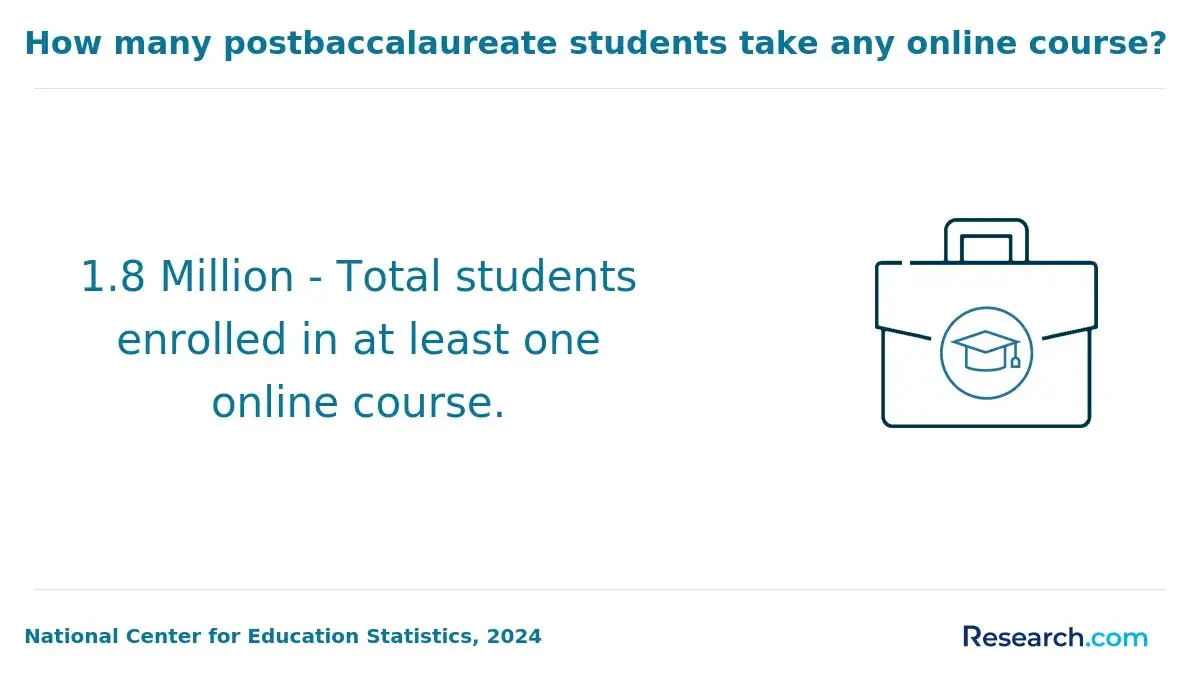
Choosing between online and campus-based operations management programs hinges on the practical demands of one's target role and industry environment. Employers prioritize tangible skills like Lean Six Sigma mastery and applied project experience rather than program delivery mode. However, campus programs grant hands-on access to labs, industrial site visits, and face-to-face networking-assets essential for consulting roles tied to manufacturing or logistics floors. For instance, a professional improving supply chain efficiency at a factory gains direct advantage from on-site projects and peer collaboration, while those in software or service industries benefit equally from online case studies and virtual teamwork that mimic their work settings.
Cost and schedule flexibility further differentiate options: online programs often reduce financial burden and accommodate working professionals balancing current roles. Given that management analysts-including process consultants-earn a median salary near $99,000 in 2024 with a faster-than-average growth forecast of 10-11% through 2033, uninterrupted employment during study can critically impact economic stability and career trajectory.
When assessing programs, scrutinize these factors:
- Accreditation status and faculty industry credentials to confirm curriculum relevance.
- Availability of capstone projects or collaborations with local businesses for real-world application.
- Career services support that extends beyond graduation to enhance job placement outcomes.
Ultimately, effectiveness in process improvement roles depends on aligning program features with industry context, experiential learning access, and individual employment circumstances.
What admission requirements and prerequisites do operations management bachelor's and master's programs typically have?
Admissions for bachelor's programs in operations management commonly hinge on strong quantitative foundations-applicants lacking coursework in algebra, statistics, or economics often encounter extended degree timelines or conditional acceptance. High school graduates must expect competitive SAT or ACT requirements, sometimes coupled with mandatory introductory business or quantitative courses aimed at building foundational skills before advancing.
Master's programs heighten these barriers, prioritizing a related bachelor's degree and a minimum undergraduate GPA around 3.0. Work experience between two and five years in roles such as process analysis or supply chain management is increasingly vital, as employers seek candidates with applied insight rather than purely academic credentials. GRE or GMAT scores, especially quantitative subscores, remain a decisive factor.
International candidates face additional demands, needing TOEFL scores above 90 or IELTS scores exceeding 6.5 to demonstrate English proficiency. Specialized master's tracks may require prerequisites in statistics, operations research, or information systems; lacking these often leads to remedial coursework and delayed graduation.
- Bachelor's admission risks lengthening degree time without strong math/background preparation.
- Master's-level success is tightly linked to relevant work experience and test performance.
- International applicants must navigate both language proficiency and prerequisite knowledge hurdles.
For operational leaders aiming for roles like VP of Operational Excellence, selecting programs with integrated internships or co-ops significantly improves employability by fostering cost reduction, quality control, and throughput optimization skills aligned to market demands.
How long does it take to earn an operations management degree, and what does it cost?
Pursuing an operations management degree involves balancing time investment, cost, and workforce realities. Typically, a bachelor's degree demands around four years of full-time study-120 to 130 credit hours-while master's programs add one to two years, often at significantly higher tuition rates. For working professionals, part-time or online formats extend completion timelines to five years or beyond, increasing both direct costs and opportunity costs.
Public universities charge roughly $10,000 to $30,000 annually for in-state undergraduates, with private institutions exceeding $40,000. Graduate tuition ranges from $20,000 to $50,000 per year. Additional expenses include textbooks, technology fees, and commuting or relocation, which can markedly affect total investment.
Industrial engineers-a closely related occupation-are projected to grow by 12% over the next decade, with median salaries around $99,000, reflecting high labor market demand. Employers highly value internship or cooperative education experience, which, while extending time to degree, enhances employability and long-term career outcomes.
Students choose between accelerating their coursework-risking academic strain and potential GPA decline-or spreading courses longer to reduce term costs but delay earning potential. Career changers often face prerequisite courses that add semesters and expenses. In industries like manufacturing or supply chain, specialized certifications may be necessary, further extending timelines and budgets.
- Balancing accelerated versus extended degree paths affects early career income and job readiness.
- Internships improve hiring prospects but can delay graduation.
- Certification demands vary by sector, influencing financial and time commitments.
Which professional certifications (Lean, Six Sigma, PMP) complement an operations management degree for process improvement work?
Certifications such as Lean, Six Sigma, and PMP provide distinct operative advantages that extend the practical value of an operations management degree into measurable business outcomes. Lean certification targets workflow inefficiencies, enabling process digitalization efforts that can lift Net Promoter Scores (NPS) by 10-20 points, as documented by AxialSearch in 2024. Six Sigma's data-driven quality control sharply reduces variation and defects, which is indispensable for manufacturing or service operations aiming to sustain customer satisfaction. PMP certification equips professionals with comprehensive project oversight skills necessary to manage complex, technology-integrated process redesigns within scope, time, and budget constraints.
For example, a service-sector candidate with Lean expertise might optimize customer-facing workflows to smooth bottlenecks, while Six Sigma adds quantitative validation of service improvements. PMP credentials ensure these initiatives are delivered on schedule, aligning with employer priorities for process improvement leadership. Notably, Lean and Six Sigma demand ongoing statistical rigor and analytical training, whereas PMP involves broader project management but less technical depth.
Employers now expect operations management graduates to complement their degrees with targeted certifications critical for digital transformation roles. These credentials signal operational mastery beyond theoretical knowledge, directly supporting the consistent 10-20 point customer satisfaction improvements reported by authoritative sources. Selecting certifications aligned with sector-specific demands and strategic career goals is essential for producing tangible, sustained impact.
How can you evaluate and choose an accredited operations management program focused on process improvement?
Effective selection of an accredited operations management program hinges on its alignment with evolving industry demands and concrete employment outcomes rather than its reputation alone. Employer preferences increasingly favor candidates equipped with skills in AI-driven process automation and advanced data analytics, a shift noted in AxialSearch's 2024 labor market research. Programs must demonstrate measurable success, such as strong graduate placement in relevant roles and partnerships granting access to real-world projects.
For instance, manufacturing sectors emphasize proficiency in Lean Six Sigma combined with AI predictive analytics, while healthcare prioritizes process knowledge in regulatory compliance and patient flow optimization. These divergent requirements underscore the importance of choosing programs offering sector-specific capabilities integrated into practical coursework.
Delivery format impacts accessibility and application: working professionals may prefer part-time or online study, but should verify the presence of mentored projects or industry-linked capstones to avoid purely theoretical instruction, which often limits immediate job-market value. Inclusion of emerging technologies like robotic process automation and advanced data visualization within syllabi is another critical factor influencing employability in data-centric operations fields.
Active alumni networks and career services supporting transitions into AI-enhanced efficiency roles further differentiate programs that provide sustained professional growth beyond graduation. This thorough evaluation framework supports informed decision-making for those targeting operational roles in a competitive, technology-driven landscape.
Other Things You Should Know About Operations Management
Employers expect operations management degrees to establish foundational business and management knowledge, but certifications like Lean Six Sigma or PMP signal practical, applicable skills in process improvement. A degree alone rarely distinguishes candidates in competitive markets; certifications provide targeted proof of competence. Candidates should pursue relevant certifications alongside their degree to align with employer demands for both theoretical understanding and demonstrated process expertise.
Balancing coursework and professional responsibilities requires evaluating program flexibility, workload, and real-world applicability of assignments. Programs with asynchronous classes and project-based work tied to your current job optimize learning efficiency and immediate skill use. Rigid schedules or theory-heavy curricula increase completion risk and reduce return on investment. Prioritize programs designed for working adults offering manageable pacing and integration with your workplace challenges.
An operations management degree provides foundational knowledge but does not guarantee leadership advancement without complementary experience and proven outcomes. Employers weigh demonstrated impact, cross-team collaboration ability, and decision-making under pressure more heavily than credentials alone. To maximize advancement chances, focus on earning leadership responsibilities early, tracking quantifiable improvements, and cultivating strong communication skills alongside your degree.
References
- Master Operations Online: Your Guide to an MBA in Operations Management https://matchtocollege.com/blog/online-mba-operations-management-master-your-future
- Related Posts https://agileseekers.com/blog/six-sigma-black-belt-vspmp-certification
- Online MBA in Operations Management: Review Top Schools https://www.onlinemastersdegrees.org/best-programs/mba-programs/operations-management/
- 15 Best Certifications for Operations Managers in Nigeria (2026 Guide) | Profolio https://www.profolio.ng/operations-manager/best-certifications
- Continuous Improvement vs Process Improvement - SixSigma.us https://www.6sigma.us/process-improvement/continuous-improvement-vs-process-improvement/
- Benefits of Lean Six Sigma Certification - Project Management Academy Resources https://projectmanagementacademy.net/resources/blog/benefits-of-lean-six-sigma-certification/
- Operations Management System: A Guide to Choosing the Best https://www.2n.pl/articles/operations-management-system-a-guide-to-choosing-the-best
- What Is Lean Six Sigma? Definition, Benefits & Real-World Examples https://www.6sigmacertificationonline.com/what-is-lean-six-sigma/
- What Is Operations Management? Definition, Types, and Importance | NetSuite https://www.netsuite.com/portal/resource/articles/erp/operations-management.shtml
- Operations Management Degree and Careers https://www.discoverbusiness.us/education/operations-management-degree/