2027 Online Nutrition Degrees With Broad Nutrition Career Mobility

Co-Founder and Chief Data Scientist
Working professionals aiming to pivot into nutrition frequently confront a bottleneck: limited access to flexible programs that balance rigorous curriculum with career demands. The National Center for Education Statistics reports a 12% rise in online degree enrollment in health-related fields since 2023, signaling growing recognition of remote study as a viable route. Yet, not all programs equally accommodate adult learners juggling work and family, nor do they consistently align with evolving employer expectations for interdisciplinary skills.
Navigating program structures with broad career mobility requires nuanced understanding of accreditation, clinical practicums, and specializations. This article evaluates online nutrition degrees to guide strategic choices that optimize employability and advancement.
Key Things You Should Know
- Online nutrition degrees often lack supervised practice integration required for RDN licensure, delaying employability despite curriculum completion, as reported by the Accreditation Council for Education in Nutrition and Dietetics in 2024.
- Employers increasingly prioritize candidates with combined credentials-such as public health or exercise science-over standalone nutrition degrees, pressuring students to invest in interdisciplinary tracks to improve job-market resilience.
- Average total costs for accredited online nutrition programs range from $30,000 to $50,000 per NCCDPHP data, with program length variances imposing opportunity costs that can hinder midcareer pivots amid rising living expenses.
What is an online nutrition degree and how does it support flexible nutrition career paths?
Choosing an online nutrition degree program demands attention to how flexibility and practical requirements align with career ambitions. While digital coursework-covering core topics like biochemistry and dietetics-enables students to manage professional commitments and geographic constraints, there is a significant challenge in securing supervised practice or internships essential for credentials such as registered dietitian licensing. A typical scenario is a dietitian working on masters in dietetics credentials balancing clinical hours alongside asynchronous classes, yet needing to proactively arrange local practicum sites to satisfy licensure prerequisites.
Programs offering online nutrition degree programs with flexible career options combine foundational science with electives tailored toward roles in sports nutrition, epidemiology, or public health. This modularity allows graduates to shift among job categories-clinical dietitian, community nutritionist, or research analyst-without pursuing complete retraining. However, this breadth requires careful selection of courses to maintain relevant expertise aligned with targeted employer expectations.
Employment outcomes reflect the degree's market value: data from the Federal Reserve Bank of New York, reported by Oregon State University College of Health, shows that recent graduates in nutrition sciences faced a 0.4% unemployment rate in 2025, significantly below the overall graduate average of 5.8%. Despite this advantage, students must weigh the self-discipline demands of online study and verify that their institution's accreditation and licensure recognition support long-term career mobility.
The benefits of earning a nutrition degree for diverse career paths come with operational tradeoffs. Candidates should evaluate how program design, practicum accessibility, and institutional reputation impact realistic opportunities post-graduation, ensuring alignment with their professional goals.
How do online nutrition degrees compare with campus-based programs for quality and outcomes?
When evaluating online nutrition degree quality comparisons, the critical factor is accreditation combined with guaranteed supervised practice hours, which employers consistently require regardless of program delivery. For instance, a working professional enrolled in an online program can complete supervised fieldwork locally, fulfilling the same practical standards as campus-based students. This flexibility allows career pivots without compromising credential validity or employability.
Key tradeoffs emerge in networking and direct mentorship. Campus programs provide in-person engagement with faculty and peers, as well as access to physical labs and resources. Yet, online options increasingly mitigate these challenges through synchronous classes, digital simulations, and virtual communities, albeit with differing depth and immediacy of interaction.
Regarding career outcomes of campus versus online nutrition programs, job market positioning aligns closely when candidates meet Registered Dietitian Nutritionist (RDN) eligibility and other credential benchmarks. The U.S. Bureau of Labor Statistics projects 6% growth for dietitians and nutritionists from 2024 to 2034, yielding roughly 6,200 annual job openings, indicating consistent demand independent of education format.
Prospective students should weigh logistical factors such as schedule flexibility, geographic constraints, and access to specialized facilities. Employers prioritize demonstrable competency earned through accredited education and supervised experience over format. For a comprehensive evaluation of health-focused degrees providing practical, accelerated delivery options, consider exploring the healthcare administration bachelor's degree online offerings.
What types of online nutrition degrees are available and which level fits my goals?
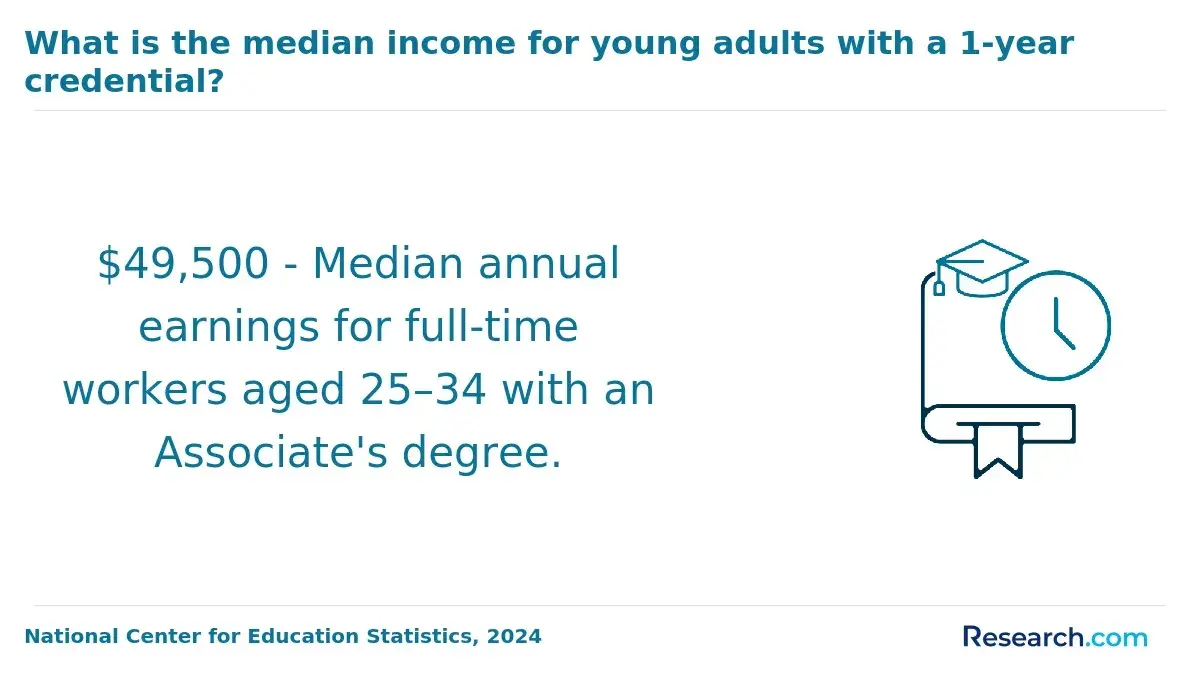
Choosing the right nutrition degree level directly affects employability and earning potential in distinct ways. Entry-level opportunities with an associate degree, such as nutrition technician roles, typically cap at median wages near $45,860, reflecting limited upward mobility in the field. For those aiming at credentialing and registered dietitian positions, a bachelor's degree becomes indispensable, unlocking access to supervised practice programs and median salaries around $68,200.
Master's degrees provide an advantage for professionals targeting specialized clinical, public health, or research leadership roles. These programs generally prepare students for hospital or corporate wellness environments, with salary potential often exceeding $95,440 after experience accrues. For example, clinical nutritionists in medical settings require the focused expertise a master's curriculum delivers-which surpasses the scope of a generalist bachelor's degree. Doctoral pathways cater primarily to research, academia, and policy development roles, where employers expect advanced qualifications for senior or scientific positions.
Deciding between these levels hinges on prior education, professional goals, and the necessity of supervised practice components to meet licensing requirements. Career changers without nutrition backgrounds must typically pursue a bachelor's degree to qualify for registered dietitian exams. Experienced practitioners seeking executive or research roles benefit most from graduate credentials aligned with long-term median salary data. Aspiring students should also weigh program flexibility and accreditation, such as those found in healthcare administration courses, which may share practical frameworks with accredited nutrition degrees for diverse professional goals.
How can I verify that an online nutrition program is properly accredited in the U.S.?
Programs lacking accreditation from the Accreditation Council for Education in Nutrition and Dietetics (ACEND) effectively block eligibility for registration as a dietitian, a critical credential for clinical and hospital-based roles. From 2024 onward, the Commission on Dietetic Registration requires candidates to hold a graduate degree from an ACEND-accredited program to sit for the registration exam, raising the educational baseline beyond the previous bachelor's-only standard.
This shift means prospective students evaluating online nutrition program accreditation in the U.S. must recognize that enrollment in unaccredited or undergraduate-only programs risks disqualification from credentialing and limits access to traditional clinical dietetics employment. Corporate wellness roles may accept non-ACEND credentials, but these positions entail tradeoffs in terms of long-term professional mobility and recognition.
Verifying accreditation demands consulting direct sources such as ACEND's publicly available listings or federal databases like the U.S. Department of Education's Database of Accredited Postsecondary Institutions and Programs (DAPIP). This approach minimizes the risk of enrolling in programs that appear credible online but fail to meet credentialing standards essential for legitimate career advancement.
For working professionals, especially those pursuing a shift toward clinical dietetics, this accreditation verification is a necessary operational checkpoint. To assess affordable, legitimate graduate pathways that align with these requirements, reviewing resources like BSN to MSN online programs can provide a practical framework for understanding program costs and degree progression options.
In sum, navigating how to verify accredited nutrition degrees in the United States requires strategic diligence: prioritizing accredited graduate programs ensures alignment with evolving workforce demands and maximizes eligibility for recognized dietetic registration and employment.
What coursework and specializations do online nutrition degrees typically include?
Choosing between online associate and bachelor's degrees in nutrition requires weighing upfront costs against longer-term career flexibility and credentialing. Associate degrees, generally priced between $5,000 and $15,000, provide essential groundwork for entry-level health technician roles but restrict access to advanced clinical positions or dietitian credentialing, which demand a bachelor's degree and supervised practice.
Bachelor's programs, costing $30,000 to over $70,000, integrate rigorous science coursework-such as human anatomy, biochemistry, and microbiology-with applied areas like dietetics principles, community nutrition, and counseling. Employers typically favor graduates from accredited four-year programs given their eligibility for Registered Dietitian Nutritionist (RDN) exams and deeper clinical exposure.
Specializations shape career trajectories significantly:
- Clinical nutrition focuses on preparing for licensure and clinical interventions but requires local internships beyond online work.
- Foodservice management aligns with institutional roles emphasizing operational skills and compliance.
- Sports and holistic nutrition offer niche expertise with differing workforce demands.
Students must also weigh the coordination efforts and time added by the need for hands-on experience not covered by online curricula. The National Center for Education Statistics notes a 3-6 times tuition differential between associate and bachelor programs, reflecting this investment tradeoff for access to broader credentials and career mobility.
What are the admission requirements and application materials for online nutrition programs?
Admission criteria for online nutrition programs prioritize demonstrated academic preparedness and relevant background, reflecting workforce demands that vary across nutrition sectors. Applicants generally must submit a completed application, official transcripts evidencing prerequisite coursework in biology, chemistry, and foundational nutrition, and maintain a GPA around 2.5 to 3.0. Standardized test scores are increasingly waived for candidates with undergraduate degrees or professional experience, a practical adjustment aligning with diverse applicant profiles.
Application packages typically include a personal statement articulating specific career goals and motivation for online study, alongside letters of recommendation evaluating professional commitment. Resumes or CVs are often required to contextualize prior work experience, essential for fields like clinical, research, and nonprofit nutrition, which currently employ approximately 17%, 16%, and 9% of graduates, respectively.
Candidates targeting roles in food industry or educational sectors-accounting for roughly 9% and 11% of employment-should emphasize specialized skills or certifications relevant to those environments. A notable tradeoff for online students is the need to independently secure local internships or clinical placements, a step crucial to satisfying practical training requirements and often overlooked during application planning.
Meeting these criteria ensures alignment with employer expectations that prioritize applied science knowledge, field experience, and professional readiness. Early strategic planning-balancing academic prerequisites with hands-on opportunities-influences both admission outcomes and long-term career mobility across nutrition's varied employment landscape.
- Application with official transcripts covering relevant science prerequisites
- GPA minimum between 2.5 and 3.0
- Personal statement and letters of recommendation
- Resume or CV detailing professional experience
- Independent arrangement of internships or clinical placements
How long do online nutrition degrees take and what do they typically cost?
Choosing a nutrition degree requires balancing credential length, cost, and intended career path within a labor market that values practical skills and specialized knowledge. Certificate or associate programs, typically 12 to 18 months, offer faster entry into community nutrition roles or skill enhancement but limit access to clinical or managerial positions. Bachelor's degrees, taking about 3 to 4 years, align with eligibility for the Registered Dietitian (RD) exam and open pathways to clinical roles in acute care, a sector employing 42% of nutrition professionals yet demanding supervised internships and extensive clinical training.
Master's degrees extend 1.5 to 2 years beyond the bachelor's and are often required for management roles or advanced clinical and research responsibilities, though they come with significantly higher tuition, commonly between $20,000 and $50,000. Bachelor's programs vary from roughly $15,000 to $40,000, while certificates offer a more affordable $3,000 to $10,000 range but may restrict job mobility. Additional costs include textbooks, practicum placements, and exam prep.
The employment breakdown from Wayne State University shows that extended-care and community-based roles, which accept associate or bachelor's credentials, compose over half the job market but generally lack the clinical rigor or advancement potential of acute care settings. Only 5% hold management roles necessitating graduate education, emphasizing that degree decisions must reflect realistic expectations for job function and market segment.
- Shorter programs suit quicker entry and lower cost but narrow advanced clinical options.
- Bachelor's degrees enable RD eligibility and broader job access, especially in acute care.
- Graduate degrees target specialized and leadership roles with higher upfront investment.
What nutrition careers and job roles can I pursue with an online nutrition degree?
Choosing an online nutrition degree requires clear insight into how education aligns with distinct career paths and credential demands. Clinical roles, such as registered dietitian nutritionist or clinical nutrition specialist, mandate supervised practice, licensure, and adherence to medical nutrition therapy protocols. Conversely, corporate wellness or community health positions emphasize program implementation, employee engagement metrics, or grant writing-skills less tied to strict certification but critical to employer expectations.
International practice further complicates the pathway: licensure reciprocity varies widely, making direct employment abroad uncertain despite universal nutrition principles. A survey of internationally mobile dietetic professionals found that salary was the primary factor influencing job satisfaction post-return, signaling the importance of evaluating compensation frameworks alongside geographic flexibility.
Practical differentiation exists between specializations; for example, food safety analysts often require technical certifications and regulatory knowledge, while sports or pediatric nutrition niches typically demand additional credentialing plus field experience. Prospective students must carefully assess if clinical practicum opportunities and licensure prep embedded in programs meet their target career's entry requirements.
Key tradeoffs include variable income potential, sector-specific mobility, and credentialing hurdles that influence one's marketability. These factors underscore the necessity of deliberate program selection and realistic career planning rather than assuming a nutrition degree alone guarantees advancement in a competitive job market.
What salary ranges and job outlook can nutrition graduates expect in the current market?
Entry-level salaries for nutrition graduates range widely, influenced by role, setting, and certifications. Typical starting pay lies between $45,000 and $75,000 annually, with healthcare roles such as registered dietitians and clinical nutritionists averaging around $63,000. Specializations in sports or public health nutrition and additional certifications can push salaries toward the upper end of this spectrum. Employers consistently emphasize validated hands-on experience, especially internships, as a decisive factor during hiring. For instance, a graduate completing a dietetic internship alongside an online degree secured employment within three months, while peers without such direct experience faced prolonged job searches.
The practical reality is that without relevant internships or clinical placements, candidates encounter significantly reduced opportunities in competitive labor markets like hospitals or private practice. Licensing or certification requirements in clinical nutrition often extend the timeframe before employment but correspond with higher starting salaries. Graduates targeting roles beyond clinical settings, such as community health or corporate nutrition consulting, must carefully evaluate employer expectations around certifications and consider continued education or work experience to secure stability and career advancement.
Nutrition employment is projected to grow 11% through 2032, outpacing many other fields. However, the balance between credentialing, practical experience, and niche expertise determines the speed and sustainability of labor market entry. Graduates should strategically invest in internships and specialized credentials to align with employer priorities and real-world hiring patterns.
How do licensing and certification work for nutritionists and dietitians educated online?
Online education for nutritionists and dietitians parallels the rigor of traditional programs but introduces distinct complexities around accreditation and supervised practice. In the U.S., becoming a Registered Dietitian Nutritionist (RDN) mandates graduating from a Commission on Dietetic Registration (CDR)-accredited program, completing roughly 1,200 hours of supervised internship, and passing the CDR national exam. For remote learners, confirming that their program offers accredited coursework and facilitates local or affiliate-based supervised practice is essential to avoid stalled career entry.
Licensing requirements diverge significantly by state. While uncertified nutritionists may find roles in wellness or community sectors, clinical positions typically require RDN certification. For instance, sectors like eldercare and preventive health-projected by Wayne State University to grow at nearly double the overall job growth rate-almost always require formal credentials due to payer and employer mandates. Online graduates without verified supervised practice risk diminished employability in these expanding areas.
Practical obstacles for online students include securing appropriate supervised practice placements and navigating state licensure reciprocity, which impacts mobility and telehealth employment. Employers favor candidates with documented, quality clinical experience. Prospective students should prioritize programs that integrate accredited curriculum with structured internship pathways aligning with both CDR and state licensure criteria to preserve long-term career flexibility.
Other Things You Should Know About Nutrition
Employer acceptance of online nutrition degrees varies by setting and role. Clinical employers, such as hospitals, often prioritize degrees from programs accredited by ACEND and may scrutinize whether online coursework included sufficient supervised practice. Community programs and wellness companies are more flexible but still expect credible program design and science-based curriculum. When choosing an online degree, prioritize those with clear accreditation and integrated internships, as these elements directly impact job eligibility in regulated environments.
Programs lacking hands-on labs and supervised fieldwork risk producing graduates with weaker practical skills, an issue employers notice in nutrition roles requiring clinical assessments or counseling. Completing a program without adequate real-world training can limit eligibility for dietitian licensure and reduce initial job competitiveness. Prioritize programs that embed in-person or virtual lab components and secure approved internships to ensure you meet certification standards and employer expectations simultaneously.
Balancing workload and diverse career objectives requires careful program selection. Many online nutrition degrees have rigid core requirements focused on clinical nutrition, which may not align with interests in food policy or corporate wellness. Working professionals should evaluate whether the curriculum offers elective flexibility and asynchronous learning options to accommodate schedules and support specific career pivots. Overlooking these factors often results in extended time to degree or misaligned skill sets that restrict career mobility.
References
- 2-Year vs 4-Year Nutrition Degree Online: What Is the Right Path for You? https://becomeanutritionist.org/blog/2-year-vs-4-year-nutrition-degree-online-what-is-the-right-path-for-you/
- How to Apply -- M.S. Nutrition and Dietetics Program https://suny.oneonta.edu/academics/majors-programs/nutrition-and-dietetics-ms-supervised-learning/how-apply
- News https://educationinnutrition.com.au/news/the-shifting-employment-skills-dietitians-need
- 6 High-Paying Jobs with a MS in Nutrition| University of Bridgeport https://www.bridgeport.edu/news/high-paying-jobs-with-a-masters-in-nutrition/
- Nutrition Careers Guide 2025 | Jobs & Salary https://www.nutritioned.org/careers/
- What is the Best Online Nutrition Certification Program? | ISSA https://www.issaonline.com/blogs/nutrition/what-is-the-best-online-nutrition-certification-program
- How to Choose the Best Online Nutrition Course for You https://www.nutritionalmedicineschool.com/blog/how-to-choose-the-best-online-nutrition-course-for-you
- The Nutrition Institute https://www.thenutritioninstitute.com/us/en/blog-experience
- Nutrition Degree Programs Guide 2026 https://www.publichealthonline.org/nutrition/degree-programs/
- Dietitians of Canada https://www.dietitians.ca/Become-a-Dietitian/Education-and-Training