2027 MSN Advanced Health Assessment Courses You'll Likely Take

Co-Founder and Chief Data Scientist
Clinical nurse specialists anticipating a transition into advanced practice face the critical hurdle of mastering health assessment courses that directly influence patient diagnostic accuracy and treatment decisions. As workforce demands intensify, the National Center for Education Statistics reports a 30% surge in enrollment for online graduate nursing programs since 2023, reflecting a shift toward flexible learning to accommodate working professionals. This evolution affects course structure and pacing, challenging students to balance rigorous content with career and personal obligations. Understanding which advanced health assessment courses align with current clinical expectations and program logistics shapes strategic educational choices.
This article identifies key advanced health assessment courses MSN students will likely encounter and guides them in navigating these requirements effectively.
Key Things You Should Know
- Advanced health assessment courses increasingly favor simulation-based clinicals, raising program costs by up to 15% according to the National Council of State Boards of Nursing, challenging candidates balancing tuition affordability and hands-on competency.
- Employers report 68% preference for MSN graduates with integrated diagnostic skills from advanced assessment courses, intensifying pressure to select curricula emphasizing differential diagnosis over basic physical exam repetition.
- Median program durations extend 20% longer due to enhanced assessment specialization requirements-data from the American Association of Colleges of Nursing reveals this delays workforce entry, impacting salary trajectory and employer staffing forecasts.
What is an MSN advanced health assessment course and where does it fit in the MSN curriculum?
Mastering an MSN advanced health assessment course early in the curriculum shapes clinical competence critical for nurse practitioners navigating varied care settings. This course mandates proficiency in comprehensive history taking, physical exams, and diagnostic reasoning before managing patients independently. Employers often assess candidates' ability to execute these skills during hiring and criterion-based reviews, especially in primary care where accuracy directly affects outcomes.
The role of advanced health assessment in MSN programs extends beyond foundational theory. Students must plan for clinical hours and simulated patient interactions, balancing this with professional obligations. Its positioning within the first year allows immediate application in specialized coursework and clinical rotations, though those targeting acute care roles should anticipate supplementary targeted assessments later.
Practical considerations include how these skills influence employability and earnings: nurse practitioners with robust assessment capabilities earn a median wage of $129,480. Employment projections show 29% growth through 2033, indicating sustained demand for advanced clinical skills.
Evaluating pathways also means examining alternative routes like accelerated PMHNP programs online, which may offer different pacing or specialization affecting when and how assessment skills are integrated.
These realistic tradeoffs highlight why the MSN advanced health assessment course overview is pivotal for aligning educational investments with career objectives and labor market expectations.
What core skills and clinical competencies are taught in advanced health assessment courses?
Advanced health assessment clinical skills for MSN students are not merely technical proficiencies but represent a critical decision-making axis within nursing practice. Courses in this field prioritize comprehensive history taking and nuanced physical examinations designed to address a well-documented 56% of diagnostic errors linked to incomplete data collection, according to the Agency for Healthcare Research and Quality. Such precision is vital when differentiating conditions with overlapping manifestations, like heart failure versus COPD, especially in primary care.
Core clinical competencies in advanced health assessment courses extend to systematic documentation using evidence-based frameworks such as SOAP notes. This practice reduces communication failures and supports autonomous nursing roles requiring collaboration with multidisciplinary teams, a necessity in emergency or high-stakes clinical environments.
Students also develop interpretive skills that align physical findings with diagnostic data to guide appropriate clinical actions, including test ordering and referrals. This ability is particularly relevant in complex specialties such as oncology or endocrinology, where timing and accuracy directly influence treatment outcomes and resource allocation. Employers emphasize readiness to perform these assessments independently with minimal supervision, reflecting workforce demands for clinical judgment alongside technical skill.
For professionals weighing further education, integrating advanced assessment courses into a strategic career path involves evaluating how these core clinical competencies in advanced health assessment courses align with long-term goals. Some explore combined pathways such as pursuing a PhD in nursing education for broader impact beyond bedside care.
What topics and learning modules are typically covered in MSN advanced health assessment coursework?
Advanced health assessment skills within an MSN curriculum critically influence employability in acute and specialty care, where clinical judgment depends on nuanced physical examinations and diagnostic reasoning. Practical mastery extends beyond theory, requiring hands-on exposure to diverse patient populations to meet employer expectations for accurate and comprehensive assessments under pressure. Programs lacking sufficient clinical placements risk producing graduates less prepared for real-world diagnostic challenges.
Core components of the MSN advanced health assessment course curriculum include systematic physical exams, focused patient history taking, and integration of multisystem evaluations-neurological, cardiopulmonary, gastrointestinal, musculoskeletal, and psychosocial-into coherent clinical judgments. Evidence-based techniques such as standardized checklists are essential, reducing diagnostic errors by roughly 20-25%, as demonstrated by a 2024 BMJ Open meta-analysis. This reflects a broader workforce priority to minimize costly missed diagnoses and optimize treatment outcomes.
Students develop clinical reasoning through simulations that replicate complex primary and specialty care cases, reinforcing decision-making essential for treatment planning and reimbursement negotiation. Effective communication across multidisciplinary teams is also emphasized, aligning with interprofessional collaboration demands.
Those weighing the intensity of MSN advanced health assessment clinical skills training must consider career alignment: these competencies are indispensable for clinicians in direct care roles but less critical in administrative or research-focused paths. For individuals exploring degree options and career pivots, evaluating programs in context can inform strategic decisions, especially when comparing them with alternatives like easiest online RN to BSN programs.
What prior education, RN experience, and prerequisites are required before taking advanced health assessment?
Requirement profiles for MSN nursing prerequisites in advanced health assessment reflect a practical tension between entry barriers and workforce readiness. Candidates must hold an active, unencumbered RN license and typically a BSN or comparable health science degree, verified by institutions, to ensure clinical comprehension aligns with advanced content. Experience expectations usually stipulate 1-2 years in direct patient care settings, reinforcing the need for real-world familiarity before specialized coursework.
Programs often require completion of foundational sciences like anatomy, physiology, pathophysiology, and microbiology with solid grades as a baseline for clinical reasoning. Supplementary prerequisites may include prior coursework or competency in basic physical assessment techniques, sometimes validated through employer- or program-specific certifications in focused areas such as cardiac assessment. These criteria align with employer preferences emphasizing clinical rotations and certifications, which serve to bridge academic knowledge with applied nursing skills.
Working RNs lacking a BSN face additional hurdles such as RN-to-BSN pathways or bridge courses before enrolling, impacting time and financial investment against long-term role advancement. Clinical experience in specialties like critical care or geriatrics accelerates preparedness but also segments the candidate pool, potentially increasing barriers for others. The demographic reality that, by 2034, adults aged 65 and older will outnumber children intensifies the demand for MSN graduates equipped with extensive lifespan assessment skills to manage complex multisystem conditions.
Understanding these prerequisites is critical for managing transition costs and outcomes for nurses. For those evaluating this pathway, it is useful to consider workforce trends including comparative earnings data such as the DNP salary by specialty, which may inform cost-benefit analyses of advanced nursing education.
How do online MSN advanced health assessment courses compare with campus-based options?
Online MSN advanced health assessment courses provide greater scheduling flexibility than campus-based programs but demand more deliberate planning to fulfill clinical skill requirements. Employers in clinical settings generally expect practitioners to demonstrate hands-on proficiency, which campus programs integrate through on-site labs and simulation centers. Conversely, online students must secure local clinical placements that vary in quality, often creating logistical hurdles, especially in rural or underserved areas.
Working nurses in urban areas may find online options beneficial by balancing job demands with coursework while arranging appropriate clinical hours nearby. However, those needing direct mentorship or residing where clinical sites are scarce often progress more efficiently through campus programs. The delayed access to supervised physical exam practice in online routes can hinder competency development crucial in primary or acute care, where accurate assessment and understanding social determinants, like housing instability or food insecurity, significantly influence patient outcomes. The Centers for Disease Control and Prevention reported that these social factors increase preventable hospitalizations by 2-3 times, a practical dimension often better addressed in campus clinical rotations.
Decision-makers should carefully assess their local clinical opportunities, personal learning styles, and employer expectations. Employers tend to prefer campus-trained graduates for immediate bedside readiness, though robust online programs with strong clinical partnerships are narrowing this gap.
How are labs, simulations, and hands-on physical exam practice handled in these courses?
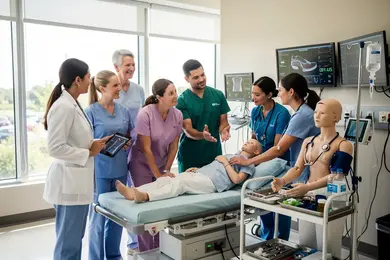
Diagnostics-focused hands-on labs and simulations in MSN advanced health assessment courses directly address the persistent issue of diagnostic errors in clinical settings, a problem tied to nearly 800,000 adverse patient outcomes annually in the U.S. These courses emphasize procedural mastery-such as phlebotomy and ECG interpretation-under conditions that replicate the complexity of actual patient encounters while isolating learners from real-world risk. This targeted practice supports development of critical reasoning and pattern recognition skills, areas commonly linked to diagnostic inaccuracies.
Physical exam components involve repeated supervised interactions with diverse patient models to sharpen tactile skills crucial for accurate assessments like cardiopulmonary auscultation. Such exposure prepares students for the diagnostic challenges across primary and specialty care, mitigating knowledge application gaps that purely theoretical training leaves unaddressed.
Employers increasingly demand nurses who can reduce unnecessary testing and costly errors, placing value on validated competence demonstrated through objective feedback mechanisms such as standardized checklists and video reviews. However, the reliance on intensive in-person labs creates inequities for remote learners, necessitating hybrid or regionally based practicum solutions.
Choosing programs that integrate these experiential elements reflects a pragmatic approach to workforce readiness, balancing the burden of additional in-person requirements against the benefit of enhanced diagnostic precision. Ultimately, this balance shapes clinical decision-making skills that have long-term implications for patient safety and healthcare costs.
How does advanced health assessment prepare MSN students for nurse practitioner and clinical roles?
Advanced health assessment courses within MSN programs function less as academic exercises and more as gateways to precise clinical decision-making essential for nurse practitioners. Their value lies in transforming theoretical knowledge into actionable patient evaluations, a demand reflected in employer expectations for comprehensive history-taking, nuanced physical exams, and fluency with emerging diagnostic technologies. For example, in fast-paced environments such as emergency departments, the ability to detect early disease markers and adjust treatment plans rapidly influences patient trajectories significantly.
Simulation-based learning offers a pragmatic solution to the persistent bottleneck of clinical placements, especially in underserved regions. The National Council of State Boards of Nursing's 2024 data shows simulation can replace up to half of clinical hours without degrading licensure exam results or clinical competence. This substitution balances logistical constraints with the need for exposure to complex case scenarios, though it necessitates students maintaining real patient interactions to satisfy licensing boards and to refine hands-on skills.
Beyond skill acquisition, mastery of advanced assessment techniques positions MSN graduates competitively by meeting employer demands for documented competency through both simulation and clinical evaluation. However, students must navigate tradeoffs between simulation efficiency and the irreplaceable value of diverse, in-person clinical experiences. This balance directly affects employability and readiness for autonomous practice in specialized or technology-driven healthcare settings.
- Simulation can substitute up to 50% of clinical hours without loss of competency
- Mastery in advanced assessment skills correlates with improved workflow and patient outcomes
- Employers expect demonstrable competence through both simulated and real patient assessments
- Students must meet regional licensing requirements balancing simulated and hands-on practice
How many credits, how long is the course, and when is it typically scheduled in MSN programs?
Advanced health assessment courses in MSN programs critically shape clinical readiness, with credit load and timing directly affecting employability and skill competency. Typically spanning 3 to 5 credits over 8 to 16 weeks, these courses are front-loaded in the first year to ensure early acquisition of essential assessment skills. This scheduling reduces delays in applying these skills within clinical practicums and specialty rotations, a factor employers prioritize when evaluating new hires.
Course designs frequently accommodate working professionals by blending online or hybrid delivery with concentrated in-person labs scheduled on weekends or evenings. This approach balances time constraints while preserving hands-on proficiency vital for diverse practice environments, including primary and specialty care.
The credit range signals significant differences in workload and preparedness:
- Higher credits (4 to 5) demand upward of 15-20 weekly study hours with clinical simulations and team-based collaboration, fostering readiness for complex case management.
- Lower credits (3) reduce weekly time investment but may limit depth, potentially hindering performance in nuanced clinical roles.
Interprofessional education embedded within these courses, proven to improve diagnostic accuracy and reduce adverse events by 15%, aligns with employer expectations for collaborative care. For example, a nurse practitioner transitioning from acute to ambulatory care benefits markedly from a robust 4- to 5-credit course early in their MSN trajectory, minimizing patient safety risks during role shifts and enhancing adaptive clinical decision-making.
How does advanced health assessment coursework support certification, licensure, and accreditation standards in nursing?
Advanced health assessment coursework directly influences a nurse practitioner's functional autonomy, especially as full practice authority expands to 27 states plus Washington, D.C. By early 2025, these jurisdictions allow nurse practitioners to conduct independent evaluations and treatment management-a shift demanding proven clinical judgment and diagnostic skills beyond basic training. Nurse practitioners in these states face employer expectations to minimize reliance on collaborative agreements, translating to faster onboarding and greater employment flexibility.
Students should expect this coursework to rigorously address comprehensive physical exams, differential diagnosis, and nuanced interpretation of lab results integrated with patient histories. These competencies are essential not only for certification exams such as those from the American Nurses Credentialing Center or the American Association of Nurse Practitioners, but also for practical application in full practice authority states. In contrast, those studying in restricted states must balance mastering these skills with the reality that their legal scope limits autonomous practice, impacting job function and potential income.
Programs must therefore calibrate training to both federal accreditation standards and the patchwork of state laws, which leads to practical tradeoffs in preparation. This divergence complicates credentialing for MSN graduates as employers weigh assessment proficiency differently depending on regional regulatory environments.
Key considerations include:
- Impact of state-specific scope of practice on clinical autonomy and employment terms
- Employers' preference for advanced assessment skills to reduce oversight and accelerate productivity
- The dual necessity to prepare for both certification benchmarks and variable legal constraints
What criteria should students use to choose a reputable MSN program offering strong advanced health assessment training?
The scarcity of reliable advanced health assessment practicum placements presents a significant bottleneck in MSN program completion, with over 30% of clinical slots insufficient to meet demand. Such shortages constrain graduates' preparedness for independent patient evaluation roles, particularly in specialty areas like family or acute care where hands-on assessment skills are non-negotiable.
Prospective students face critical tradeoffs when selecting programs; prioritizing those with established healthcare system partnerships ensures diverse patient exposure aligned to certification goals. Key criteria include:
- Accreditation bodies recognized for advanced nursing education that reflect licensure and employer expectations
- Competency-based health assessment integrated with measurable skill validation, rather than theoretical focus alone
- Simulation labs supplementing clinical hours to mitigate overbooked practicum limitations
- Transparency in clinical placement rates showing alignment with specialty tracks and timelines
- Faculty actively engaged in clinical practice with robust practitioner networks supporting internships and job placement
For nurses transitioning to practitioner roles in underserved urban settings, verifying clinical sites serve relevant populations is essential for skill relevance. Further, programs embedding telehealth assessment practices reflect workforce shifts and employer demands. Students balancing employment must weigh flexible practicum scheduling options to avoid delays in meeting tightly regulated clinical hour requirements that impact licensure.
Other Things You Should Know About MSN
Programs usually assess head-to-toe inspection, focused cardiovascular, respiratory, abdominal, and neurological exams, plus accurate documentation and differential diagnosis clues. Many courses use simulation lab checkoffs or Objective Structured Clinical Examinations, or OSCEs, before students begin advanced practice clinical hours.
In 2027, MSN advanced health assessment courses typically include physical examination techniques, patient interviewing skills, and diagnostic reasoning. Courses often integrate case studies and simulations to build practical skills, preparing students to perform comprehensive health assessments in clinical settings.
Choosing between standalone and integrated courses depends on career goals and learning style. Standalone courses often provide focused, intensive training that may enhance skill depth but require additional scheduling and expenses. Integrated curricula allow for smoother progression with consistent reinforcement across subjects, which may better support knowledge retention and reduce fragmentation. For clinical roles demanding strong assessment skills, standalone courses might offer better preparation despite their higher time commitment.
Completing advanced health assessment courses early allows students to apply clinical reasoning and patient evaluation skills throughout subsequent coursework and practicums, reinforcing learning and improving clinical confidence. Delaying these courses can hinder integration of practical skills in advanced clinical decision-making and may extend the overall time to readiness for certification. Early completion supports faster transition into roles requiring autonomous patient assessments and often correlates with improved employer perception of candidate preparedness.
References
- Advanced Health Assessment Nurse Practitio https://stores.biobor.com/Resources/Ki04wY/4FE087/advanced-health-assessment_nurse__practitioner.pdf
- MSN in Nursing Practice Innovation https://www.unthealth.edu/college-of-nursing/MSN-in-nursing-practice-innovation.html
- Some of the Best Online Nurse Practitioner (NP) Programs for 2025–2026 - Nurse Practitioner Degrees https://npdegrees.org/degrees/best-online-np-programs/
- How To Become An Advanced Practice Registered Nurse (APRN) In The USA | Shiftmed Blog https://www.shiftmed.com/professionals/blog/how-to-become-an-advanced-practice-registered-nurse/
- Advanced Assessment Course [for ARPNs] | Lecturio https://www.lecturio.com/courses/np/advanced-assessment/
- Advanced Practice Registered Nurses (APRN) https://nursinglicensemap.com/advanced-practice-nursing/
- Hands-on Simulation Training for Cardiovascular Technologists https://surgicalscience.com/insights/customer-stories/hands-on-simulation-training-for-cardiovascular-technologists/
- Certificate in Comprehensive Advanced Health Assessment | DkIT https://www.dkit.ie/courses/certificate-in-comprehensive-advanced-health-assessment
- ANCC Nursing Professional Development Certification Renewal Bundle https://nursingcecentral.com/lessons/ancc-nursing-professional-development-certification-renewal-bundle/
- How Long Does It Take to Get a Master’s in Nursing (MSN) | USAHS https://www.usa.edu/blog/how-long-does-it-take-to-get-a-masters-in-nursing/