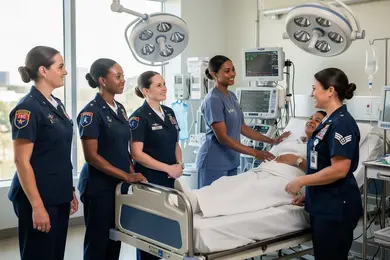
2027 MSN Programs for Med-Surg Nurses

Co-Founder and Chief Data Scientist
Med-surg nurses balancing full-time shifts and family commitments face a tough decision: finding an msn program that adapts to irregular schedules without sacrificing clinical rigor. Nationwide, flexible enrollment options surged by 27% from 2023 to 2024 according to the National Center for Education Statistics, revealing a systemic shift toward accommodating working professionals. This trend reflects employers' growing preference for nurses who can complete accredited programs asynchronously while gaining targeted med-surg expertise.
However, not all programs provide this balance, forcing students to weigh accessibility against comprehensive training. This article reviews program structures, delivery modes, and outcomes to guide med-surg nurses in selecting an msn path that aligns with career goals and real-world constraints.
Key Things You Should Know
- MSN med-surg programs average 24 months to completion with tuition exceeding $45,000 nationally, pressuring nurses balancing full-time work and debt, delaying workforce re-entry or advancement compared to shorter certifications.
- Employers increasingly prioritize MSN graduates with clinical leadership and informatics competencies, driving hiring toward programs integrating these areas beyond traditional med-surg curricula, intensifying credential-value disparities among candidates.
- Recent workforce data show a 15% surge (2024-2026) in med-surg nurse retirements, amplifying demand for MSN-prepared nurses but forcing prospective students to weigh accelerated entry programs versus comprehensive specialty training tradeoffs.
What is an MSN program for med-surg nurses and who is it designed for?
MSN programs for med-surg nurses in the United States offer a focused pathway to roles demanding advanced clinical judgment and leadership in medical-surgical nursing specialization. Graduates are expected to navigate acute and chronic adult care complexities and independently manage patient treatment protocols. For example, a nurse transitioning into a clinical nurse leader role within a hospital med-surg unit must interpret diagnostic tests, coordinate multidisciplinary teams, and lead quality improvement efforts-responsibilities substantiated by coursework in advanced pathophysiology, pharmacology, and health assessment.
Employers favor candidates whose graduate nursing programs for medical-surgical nursing specialization reflect not only theoretical knowledge but also substantial practicum exposure relevant to their work settings. As state licensure requirements vary, candidates must plan for additional certification timelines that influence career progression. Salary potential aligns closely with the national average of $128,490 annually, underpinning this investment's pragmatic value while balancing financial and personal commitments to part-time study or clinical hours.
Prospective students should critically evaluate clinical placement availability matched to their intended environments-whether acute care, outpatient surgery, or rehabilitation-to ensure the development of marketable competencies. Resource-conscious applicants might explore BSN to MSN online programs that integrate flexibility with robust curriculum components.
How can med-surg nurses use an MSN degree to advance their careers?
Med-surg nurses pursuing an msn face a pivotal shift, moving beyond foundational clinical roles into positions demanding system-level thinking and measurable leadership impact. Updated competencies from the AACN Essentials target skills such as informatics and population health, reflecting employer expectations that advanced nursing degrees translate directly to operational improvements. For example, a med-surg nurse skilled in informatics can implement electronic health record enhancements that reduce medication errors-an increasingly critical metric for healthcare quality assurance.
Career opportunities for med-surg nurses with an MSN often include roles like Clinical Nurse Specialists or Nurse Practitioners, both of which require mastering evidence-based assessment techniques that demonstrably improve patient outcomes and lower hospital readmission rates. Healthcare employers now mandate these competencies as baseline for advanced care coordination and outcome tracking, increasing demand for graduates with these qualifications.
The systems leadership emphasis prepares med-surg nurses to lead interdisciplinary teams and quality improvement initiatives, typically yielding salary increases between 20-30% over bachelor's-prepared peers, according to recent labor statistics. However, managing work-study balance and securing clinical placements aligned with AACN rigor remain significant hurdles, especially for nurses in rural areas. Many turn to online or hybrid options, highlighting the importance of selecting programs suitable for working professionals.
Med-surg nurses advancing nursing careers with an MSN position themselves strategically for new roles in value-based care where data analytics and population health intersect. Those evaluating programs should also consider alternative pathways like a nursing school that does not require TEAS test to mitigate entry barriers without sacrificing rigor.

Are MSN programs for med-surg nurses available online, and how do they compare to campus options?
Deciding between online MSN programs for med-surg nurses and traditional campus options involves weighing flexibility against direct faculty engagement and peer interaction. Online MSN options for med-surgical nursing compared to traditional programs provide significant scheduling advantages, especially for nurses working irregular shifts or living in rural locations where commuting to campus is impractical. However, campus-based programs often deliver enhanced opportunities for immediate feedback and networking, which some employers value when assessing clinical readiness.
Employers in acute and specialty med-surgical settings prioritize accredited programs with integrated clinical hours that fulfill licensing requirements, regardless of delivery format. Certification such as the Certified Medical-Surgical Registered Nurse (CMSRN) credential, held by over 38,000 professionals, remains a key indicator of practical competency and is frequently a decisive factor in hiring decisions.
Important practical considerations include:
- Workforce demands: Online programs offer accessibility without relocation, crucial for nurses in underserved regions.
- Schedule control: Those balancing patient care and education benefit from asynchronous coursework paired with scheduled clinical intensives.
- Clinical placements: The quality and accessibility of local clinical sites can vary, impacting online students' experiences.
- Networking potential: Campus programs may facilitate stronger local professional connections, beneficial for job placement.
Prospective students evaluating MSN programs for med-surg nurses online versus campus must focus on accreditation and clinical rigor over modality alone. Those aiming for a strategic educational investment might also consider alternative pathways such as the cheapest RN-BSN online program as a foundational step before MSN specialization.
What accreditation and nursing education standards should MSN med-surg programs meet?
Accreditation for MSN med-surg programs directly impacts employability and credential recognition in the US healthcare workforce. Only programs accredited by bodies like the Commission on Collegiate Nursing Education (CCNE) or the Accreditation Commission for Education in Nursing (ACEN) assure employers of graduates' clinical readiness and adherence to evidence-based standards. This accreditation, a core aspect of msn med-surg programs accreditation standards in the US, also informs nursing education requirements for MSN med-surg degrees, which demand integration of advanced clinical skills, leadership, and interdisciplinary collaboration specific to medical-surgical settings.
Programs must comply with American Association of Colleges of Nursing (AACN) essentials, ensuring competencies in patient-centered care, safety protocols, and healthcare technology. For instance, nurses rotating into surgical or critical care units depend on these competencies to manage complex and evolving patient scenarios confidently. Failure to meet these standards risks licensure complications and reduced access to employer-sponsored tuition support.
The trend toward accelerated or online MSN options compresses credential timelines but raises concerns about clinical depth and experiential learning oversight, such as simulation and hands-on practice. National University's online MSN completion in 12-18 months exemplifies this fast-track approach, but prospective students should weigh speed against the necessity of rigorous clinical training and professional networking.
State board of nursing requirements further intersect with national accreditation, affecting eligibility for advanced practice certifications. Students should verify programs meet these combined national and state mandates to avoid credentialing delays. For those comparing pathways, resources like the best DNP programs online offer complementary options to consider alongside MSN med-surg degrees.
What are the typical admission requirements for MSN programs targeting med-surg nurses?
The practical admission thresholds for MSN programs aimed at med-surg nurses reflect employer expectations that extend beyond academic credentials to include demonstrated clinical competence. Candidates must possess a Bachelor of Science in Nursing (BSN) from an accredited institution, typically with a minimum GPA near 3.0, to establish foundational readiness. Equally critical is a valid RN license in the state of study, a non-negotiable requirement given the clinical practicum elements integral to program completion.
Programs usually expect at least 1-2 years of direct med-surg nursing experience, ensuring that students bring frontline insights into patient care complexity. This requirement aligns with workforce demands, where employers prioritize advanced degrees layered on substantial practical exposure for patient management roles.
Though less prevalent, some programs may request GRE scores, particularly those with a research emphasis. Reliable references from supervisors or nursing faculty serve as validation of clinical and professional aptitude. Personal statements should convey targeted career objectives and critical thinking skills applicable to acute care environments.
Logistical barriers influence program accessibility; the necessity for local clinical placements can restrict options despite online course availability. Tuition variance is a significant factor-Fort Hays State University, for example, estimates total MSN tuition at $12,190 for 2026, representing a lower-cost route that may appeal to working nurses balancing finances alongside continuing education.
Ultimately, prospective candidates must weigh experience prerequisites, licensure requirements, and financial commitments against their career goals and regional workforce needs.

How long do MSN programs for med-surg nurses take, and what schedules are offered?
Extended completion timelines for med-surg MSN programs present tangible workforce challenges: nurses pursuing part-time study may take up to six years to finish, as the University of Maryland School of Nursing's RN-to-MSN policy exemplifies. Employers often perceive extended durations as indicative of competing priorities that may delay readiness for advanced roles, particularly in dynamic clinical settings where skill currency is critical.
Scheduling flexibility is a strategic necessity but comes at the cost of prolonged credentialing periods. Nurses working full-time (36+ hours weekly) who choose part-time enrollment typically accept a 5-6 year completion horizon to maintain income, yet risk slower advancement and potential lapses in clinical skill application. Conversely, full-time pathways reduce time-to-degree but impose heightened work-life strain, potentially impacting academic and professional performance.
Programs offering asynchronous coursework and condensed clinical rotations address unpredictable work schedules but require disciplined time management to meet competency deadlines. Employers balance these variables against staffing demands; accelerated MSN completion enhances candidacy for leadership tracks such as clinical nurse leader or nurse educator, whereas slower completion may limit these windows.
Decision-making factors include:
What core courses and clinical experiences are included in MSN med-surg curricula?
Med-surg MSN programs demand an intensive balance between theoretical rigor and diverse clinical exposure, which directly influences employability and readiness. Students are expected to complete 500 to 700 clinical hours across settings like acute care, outpatient clinics, and specialty units to gain practical competence in areas such as telemetry monitoring and wound care. This hands-on experience aligns tightly with employer expectations for nurses who must transition smoothly to complex patient care on day one.
Beyond clinical skills, these programs integrate evidence-based practice and healthcare informatics, preparing nurses to navigate situations like electronic health record (EHR) implementations. In such scenarios, nurses trained in these areas often lead change efforts, reflecting a growing need for clinical leadership that bridges technology and care delivery.
Prospective students face notable tradeoffs regarding cost and clinical placement quality. For example, state tuition per credit can range fourfold-as seen in North Carolina, pricing spans from $250 to $1,000-requiring careful consideration of affordability versus program depth. The choice of clinical sites matters as well; partnerships with academic medical centers offer exposure to more complex cases than community hospitals, impacting skill development and future roles.
Students seeking leadership or specialties must prioritize programs with robust mentorship and diverse clinical rotations that cover both medical and surgical nursing. This ensures not only technical competence but also positions nurses to meet evolving workforce demands in med-surg environments.
What are the tuition costs, financial aid options, and total MSN program expenses?
The wide variance in tuition for MSN programs-from roughly $30,000 to $80,000+-reflects not only institutional differences but critical career timing and financial tradeoffs. Public universities tend to offer lower rates for in-state students, yet total expenses extend beyond tuition to include fees, books, clinical placement, and living costs during study periods without income. For a working professional shifting careers, lost wages can surpass direct costs, making accelerated programs like the University of North Carolina at Greensboro's 24-month direct-entry MSN an important strategic option to limit both time out of the workforce and overall financial burden.
Financial aid is essential but uneven: about 60% of graduate nursing students rely on federal loans averaging $14,000 annually, which increases debt but enhances access. Scholarships vary significantly by geography and demographics, and transparent cost information remains elusive since many programs list per-credit prices without clarifying total commitment based on enrollment status.
Employers in acute care increasingly prioritize candidates with clinically focused MSN credentials, pressuring prospective students to balance steep upfront costs against faster program completion and more targeted skill acquisition. Potential savings of $20,000 or more in living expenses from selecting shorter direct-entry programs highlight the importance of rigorous financial planning and the impact of program design on both debt load and employability in med-surg environments.
What salaries, roles, and leadership opportunities can MSN-prepared med-surg nurses expect?
Med-surg nurses with an MSN confront a distinct salary range, typically between $85,000 and $115,000 annually, shaped by factors such as geographic location, facility scale, and specialized roles. Positions involving advanced clinical expertise-like nurse practitioners or clinical nurse specialists-trend toward the upper end of this scale, particularly within expansive hospital networks or surgical specialty centers. More senior leadership roles, such as nurse managers or clinical educators, may command salaries exceeding $120,000 to $140,000, but these require demonstrated administrative and managerial competencies beyond clinical skill alone.
The competitive admissions landscape for MSN programs reflects employer demands for strong academic backgrounds; for example, schools such as the UVA School of Nursing prioritize applicants with GPAs above 3.5 and often require documented leadership experience or certifications. This gatekeeping filters candidates to those prepared for the multifaceted challenges of med-surg nursing leadership.
Transitioning from direct patient care to hybrid clinical-administrative roles extends beyond clinical expertise and involves cultivating skills in policy development, team supervision, and time management. Employers expect MSN-prepared nurses to deliver clinical excellence while leading interdisciplinary teams effectively. Insufficient development in these areas can inhibit upward mobility and salary growth.
- Salaries vary with role depth: clinical specialists versus administrative leaders
- Admissions prioritize academic rigor plus leadership credentials
- Advanced roles require deliberate skills development beyond bedside care
How does an MSN affect certification eligibility and ongoing licensing for med-surg nurses?
Possessing an MSN distinctly expands a med-surg nurse's eligibility for advanced certifications that require graduate-level education and clinical experience, such as the Medical-Surgical Nurse Certified-Board Certified (CMSRN-BC). Without an MSN, certification options remain limited to initial RN or specialty credentials, which can restrict career progression in increasingly competitive hospital environments where advanced certification influences both hiring and promotion decisions.
Ongoing licensure renewal processes also favor med-surg nurses with an MSN due to enhanced continuing education opportunities. Several states demand CE credits or competencies aligned with graduate-level coursework; nurses with an MSN can more easily meet these through structured graduate classes, reducing burdensome additional CE requirements. For example, a nurse in a state with stringent renewal protocols can fulfill requirements directly by leveraging graduate-level credits rather than seeking separate CE activities.
Employment outlooks emphasize growing demand for advanced practice roles, with the U.S. Bureau of Labor Statistics projecting 46% growth in nurse practitioner positions between 2023 and 2033. Med-surg nurses holding an MSN are positioned to transition into leadership or nurse practitioner roles, which require graduate credentials not attainable via incremental certification alone.
Practical decision-making involves weighing the upfront investment in time and cost to complete an MSN against the credential's long-term benefits. For instance, nurses aiming for senior clinical roles in metropolitan hospitals should prioritize obtaining an MSN early to avoid licensure delays, whereas those in rural areas may strategically pursue incremental certifications before committing to graduate studies.
Other Things You Should Know About MSN
MSN programs for med-surg nurses in 2027 often include courses in advanced clinical practice, leadership, healthcare policy, and evidence-based practice. These programs aim to bridge the gap between direct patient care and broader healthcare management, preparing nurses for advanced roles in clinical settings.
Many msn programs attempt to bridge med-surg clinical expertise with leadership training, but effectiveness varies widely. Programs that integrate interdisciplinary management courses with hands-on healthcare administration projects provide clearer career value. Nurses should choose programs explicitly designed to develop leadership competencies in clinical operations versus those focusing solely on advanced clinical practice.
A 2027 MSN program for med-surg nurses should hold accreditation from CCNE or ACEN. Many employers and state boards require this for advanced practice eligibility, federal financial aid, and later doctoral or certification pathways. Always confirm both the university and nursing program accreditation before applying.
Employers often require an msn for leadership titles but still prioritize demonstrated clinical outcomes and management experience. An msn without relevant leadership experience may not immediately translate into promotions. To maximize msns practical value, nurses should seek roles that blend advanced education with supervisory duties during or immediately after the program.
References
- Master’s in Nursing Costs: What You’ll Pay and How to Get the Best Return https://www.onlineu.com/resources/financial-planning/masters-in-nursing-roi
- CMSRN Certification Guide for Med Surg Nurses | Betternurse.org https://betternurse.org/cmsrn-certification-guide/
- Vital and versatile: The importance of medical-surgical nursing and knowledge https://www.atitesting.com/educator/blog/knowledge/2024/11/04/-the-importance-of-medical-surgical-nursing-and-knowledge
- FAQ: What can you do with an MSN? https://www.onlinefnpprograms.com/faqs/what-can-you-do-with-an-msn/
- MSN in Nursing Practice Innovation https://www.unthealth.edu/college-of-nursing/msn-in-nursing-practice-innovation.html
- Explore the Best Online RN to MSN Degrees with Financial Aid https://www.edumed.org/online-schools/nursing-rn-programs/rn-to-msn-bridge/financial-aid/
- Where Could a Master of Science in Nursing (MSN) Take You? https://blog.methodistcollege.edu/where-could-a-master-of-science-in-nursing-msn-take-you
- Med-Surg Nursing Career Guide (Duties & Salary 2025) https://www.allnursingschools.com/specialties/medical-surgical-nursing/
- 2022's Guide for Nursing Certifications https://nursinglicensemap.com/resources/nursing-certification/
- Best Online Nursing School Master's Programs for 2025 https://www.princetonreview.com/nursing-school-rankings