2027 Online Data Analytics Degrees With Data Storytelling Coursework

Co-Founder and Chief Data Scientist
Facing the pressure to interpret complex datasets rapidly, many aspiring analysts struggle to communicate insights in a way that drives strategic decisions. Employers increasingly demand professionals who not only analyze data but also craft narratives that influence stakeholders, yet traditional programs often separate technical skills from storytelling. Recent research by the National Center for Education Statistics reports a 35% surge in online degree enrollment among adult learners since 2022, signaling a shift toward flexible education models that accommodate working professionals balancing upskilling with career demands. This article examines online data analytics degrees integrating data storytelling coursework, guiding readers through key program features that align skill development with practical communication needs.
Key Things You Should Know
- In 2024, only 38% of online data analytics degrees with data storytelling specifically require portfolio-driven projects, limiting graduates' ability to demonstrate applied skills, which employers increasingly demand for mid-career hires.
- Employers report a 22% hiring preference for candidates trained in integrated storytelling workflows, emphasizing narrative-driven insights over raw technical skill, shifting workforce qualification benchmarks.
- Programs averaging 24 months with embedded storytelling add 15% more tuition cost, slowing time-to-competency; this tradeoff disproportionately affects working professionals balancing reskilling urgency versus financial constraints.
What is an online data analytics degree with data storytelling coursework?
Employers increasingly expect data professionals to couple quantitative skills with the ability to communicate insights effectively. Online data analytics degree programs with data storytelling coursework address this real-world demand by training students to translate complex datasets into narratives that influence decision-making across sectors like healthcare and retail. For example, healthcare analysts use visualization tools to present patient outcome trends to non-technical stakeholders, directly impacting policy adjustments. Meanwhile, retail analysts integrate consumer behavior insights to optimize inventory strategy.
The best online degrees in data analytics and storytelling invest equally in technical proficiency and communication skills. Programs that skew toward coding without emphasizing applied storytelling risk leaving graduates ill-prepared for leadership roles requiring cross-functional collaboration. Prospective students should prioritize degrees offering practical projects and instructor feedback aligned with current industry standards to avoid such pitfalls. This balance is crucial to unlocking the 31% employment growth rate projected for data analyst roles by the U.S. Bureau of Labor Statistics and the associated median salary of $103,900.
Logistical factors also matter. Flexible, asynchronous formats suit working professionals but demand disciplined self-study to master tools like Tableau or Power BI alongside foundational statistics and predictive modeling. Prospective learners evaluating educational options must consider not only curriculum substance but delivery style and workload to ensure completion and skill acquisition.
Those researching advanced credentials can explore data science master online programs, which sometimes overlap with data analytics and storytelling coursework, expanding potential career trajectories.
How do online data analytics programs compare to campus-based options?
Employers increasingly demand candidates who not only handle complex datasets but also craft compelling narratives from them-a skill often underdeveloped across organizations. This gap underscores a critical consideration when comparing online and campus-based data analytics education: experiential learning and networking. Campus programs excel at immersive collaboration, offering real-time feedback, access to industry guest speakers, and internships through established local networks, which bolster teamwork and spontaneous problem solving in sectors like finance and healthcare analytics.
Conversely, online data analytics degree programs vs traditional campus degrees present distinct tradeoffs. Online formats provide flexible scheduling suited to working professionals seeking to pivot careers without relocation but require greater self-discipline and deliberate efforts to engage peers and secure virtual or local applied projects independently. Soft skills such as communication and visualization receive increasing emphasis in online coursework through synchronous workshops and portfolio evaluations, though these vary widely in depth.
When comparing online and campus-based data analytics education, students should consider how employer priorities-especially hands-on project experience and storytelling-align with their learning environment. Those prioritizing rapid network development and immersive resource access may favor campus programs, while cost-efficiency and flexible pacing make online options attractive, provided strategies compensate for less in-person interaction.
For a broader look at how emerging degree pathways compare in technical fields, consider exploring AI degree programs that similarly balance market demands with practical student needs.
Are online data analytics degrees with data storytelling coursework accredited and recognized?
Accredited online data analytics degrees with data storytelling coursework vary significantly in practical value depending on the depth of their communication training. Employers prioritize candidates who not only interpret complex datasets but can also translate insights into actionable narratives-skills essential in roles like healthcare analysts explaining patient outcomes or marketing analysts aligning data with consumer trends. Programs that lack substantive hands-on storytelling components or practical visualization assignments limit immediate job readiness despite holding recognized credentials.
Recognized online data analytics programs with data storytelling classes generally hold accreditation from bodies acknowledged by the U.S. Department of Education or the Council for Higher Education Accreditation, ensuring graduate credentials meet sector-specific employer expectations. This recognition also supports eligibility for federal aid and smoother professional certification, unlike unaccredited offerings, which often hinder career progress.
The rapid growth of such integrated programs-up over 60% between 2020 and 2024, primarily online and hybrid-reflects institutional acknowledgment of combined analytical and communication skill demands. However, prospective students must critically evaluate programs for rigorous, workplace-aligned storytelling training and robust career supports that reinforce industry recognition.
Evaluating program outcomes with respect to industry expectations and career pathways is critical, especially for those researching what jobs can you get with an environmental science degree or related fields where data storytelling bridges technical analysis and practical decision-making.
What data storytelling courses are typically included in online data analytics curricula?
Programs emphasizing data storytelling techniques in online data analytics programs respond to a market where technical skill alone is insufficient. Employers increasingly expect candidates to translate complex datasets into actionable narratives that connect with business goals. This integration of narrative frameworks with mastery of visualization tools such as Tableau, Power BI, and Python libraries is reflected in the 44% rise in job postings requiring SQL, Python, and data visualization combined, according to the LinkedIn Workforce Report.
Core data storytelling coursework in data analytics degrees typically trains students in selecting appropriate chart types, avoiding misleading graphical elements, and embedding qualitative context into quantitative findings. A healthcare analyst, for example, uses these skills to convert epidemiological data into concise visual reports for administrators, influencing policy decisions. Conversely, e-commerce analysts apply similar methods to inform marketing strategies based on customer behavior trends.
This dual focus has practical tradeoffs: juggling multiple software platforms demands significant self-driven practice beyond scheduled classes. Furthermore, many curricula fall short in developing adaptable communication skills across diverse corporate cultures, potentially hindering message customization. Prospective learners should weigh these operational challenges when seeking courses that balance technical rigor with storytelling competence to boost employability.
Those exploring interdisciplinary advances might also consider related fields, such as exercise science, where data storytelling informs outcomes assessment and program design. Resources like the best online exercise science degree offer alternative pathways emphasizing narrative-supported analytics.
What admission requirements do online data analytics programs usually have?
Bachelor's degrees in quantitative fields remain a baseline for online data analytics programs, but admissions reflect a pragmatic shift towards experience and skill demonstration rather than rigid academic pedigree. Applicants with GPAs below 3.0 can compensate with relevant professional experience or strong references, illustrating the sector's preference for tangible capabilities over traditional metrics. Foundational coursework in calculus, linear algebra, or statistics is typically expected; lacking this, many programs require bridge courses or recognized certifications to prevent steep learning curves.
GRE scores have largely become optional, yet employers and programs still expect clear evidence of analytical proficiency through work history-commonly at least two years in data-centric roles such as programming, business intelligence, or data management. International candidates must satisfy language requirements like TOEFL or IELTS to engage fully with the narrative and visualization aspects that dominate advanced coursework.
Job market demand today favors candidates combining quantitative rigor with storytelling skills. For example, rapid enrollment growth in data visualization courses signals employer priorities that mirror this dual competency. Candidates without formal STEM backgrounds should consider programs with preparatory pathways in data wrangling and visualization to minimize the risk of early attrition and maximize employability.
Practical tradeoffs center on balancing speed of entry against foundational skill gaps; programs integrating prerequisite content offer a more sustainable transition than direct entry routes expecting prior mastery.
- Minimum 3.0 GPA or work experience tradeoff
- At least two years of relevant data-related job experience preferred
- Standardized tests optional, language proficiency mandatory for internationals
- Bridge courses recommended for non-STEM backgrounds to ensure success and market readiness
How long do online data analytics degrees take and what do they cost?
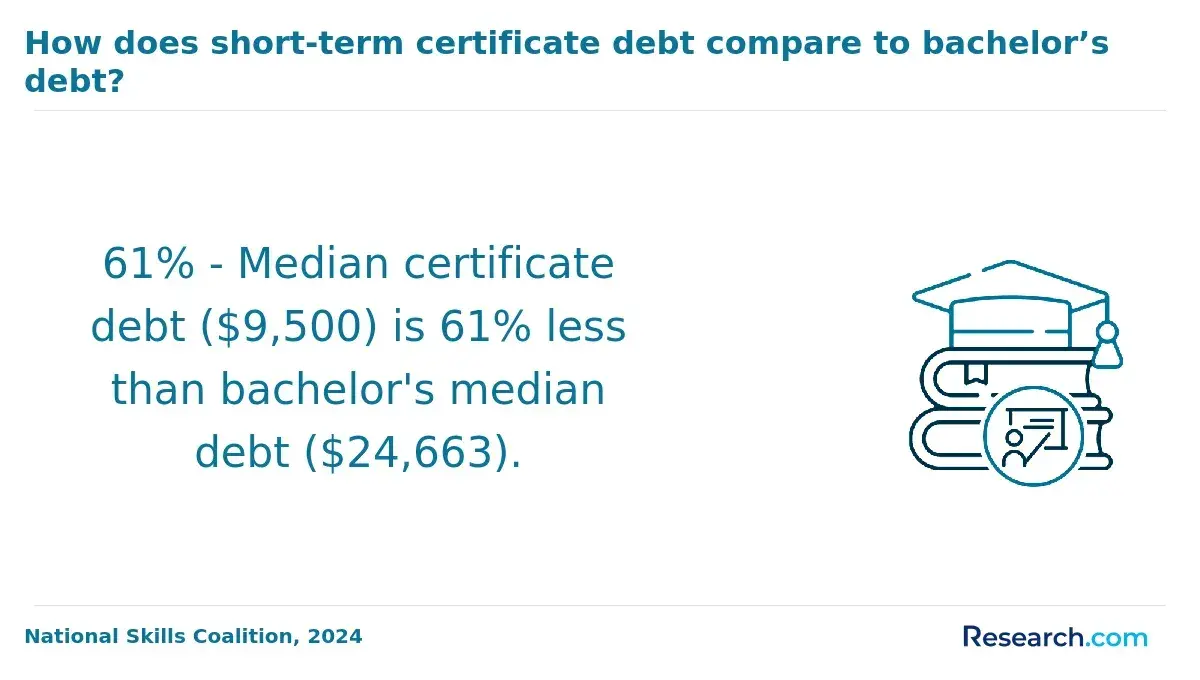
Time-to-completion and credential type significantly influence both cost and career outcomes in data analytics programs focused on data storytelling. Certificates or associate-level credentials typically span 12 to 18 months and provide rapid reskilling opportunities for professionals targeting roles like analytics translator. In contrast, bachelor's degrees, requiring roughly 3 to 4 years, build a broader foundation suitable for leadership or complex analytics positions but demand greater initial investment in time and money.
Master's programs, lasting 1 to 2 years, are often chosen by professionals aiming to pivot into specialized positions such as data visualization specialist, but these programs involve higher tuition, often ranging from $20,000 to $70,000, reflecting their depth and specialization.
Students should weigh these tradeoffs:
- Shorter programs offer lower immediate costs ($2,000-$10,000) and faster workforce entry but limited credential weight.
- Longer degree paths demand more time and $15,000-$60,000+ investment but improve leadership potential and access to complex roles.
- Programs with integrated storytelling projects extend duration but boost employability amid rising demand for communication-focused analytics roles.
For example, a marketing manager seeking a fast transition might select a certificate emphasizing visualization, while an IT professional targeting analytic leadership would benefit more from a bachelor's or master's with comprehensive projects. Given the 33% surge in job listings tagged "data storytelling" or "analytics translator" noted by Indeed Hiring Lab, prioritizing communication skills alongside technical expertise aligns education with market demand and practical employer expectations.
What careers can you pursue with an online data analytics degree focused on storytelling?
Degrees focused on data analytics storytelling demand skills that integrate technical data manipulation with the ability to communicate insights in business terms. Graduates who master this synthesis fit roles such as data analyst, business intelligence analyst, and analytics translator-positions where interpreting complex datasets into clear, actionable narratives directly impacts decision-making across industries like healthcare, marketing, and finance.
A healthcare analyst, for example, might use storytelling to present patient data that reduces hospital readmissions, while marketing analysts shape campaign strategies through nuanced interpretations of customer trends. Such skills distinctly affect candidate differentiation, influencing job responsibilities and upward salary mobility.
Reported median salaries near $103,000 for these roles reflect a significant premium over broader occupational averages, paralleled by high job satisfaction rates within the initial years post-graduation. However, ongoing professional development in visualization and narrative tools like Tableau, Power BI, and Python libraries remains essential to staying relevant.
Prospective students should weigh the initial learning curve and time investment required to acquire these software skills alongside traditional analytics coursework. Success in storytelling combined with technical acumen often opens pathways into strategic roles such as data strategist or analytics consultant, where influencing business strategy hinges on clear, persuasive communication grounded in reliable data.
Employers prioritize candidates who balance advanced analytics with compelling storytelling, recognizing that such integration drives business influence more than technical skills alone. This dynamic shapes both hiring preferences and long-term career trajectories in competitive markets.
What salary ranges and earning potential exist for data analysts and data storytellers?
Starting salaries for data analysts and data storytellers typically range from $80,000 to $110,000, though this varies widely by industry and role complexity. For instance, finance and healthcare sectors reward candidates who blend technical analysis with storytelling skills toward the top of this spectrum, while smaller firms or non-profits offer starting ranges closer to $70,000-$85,000 due to budget and data demands.
Online master's degrees in data analytics incorporating storytelling coursework generally cost $20,000 to $35,000. The expected payback period-often 2 to 4 years-is reasonable but depends heavily on the candidate's prior experience and the ability to quickly leverage new skills in the workforce. Professionals elevating their technical proficiency with compelling narrative abilities can command salary premiums of 10-15% above peers with comparable analytics credentials alone.
Switching into this field requires more than education; portfolio development and continual upskilling remain essential, particularly for those pivoting from non-technical backgrounds. Initial salary plateaus are common, reflecting the gap between storytelling aptitude and deep technical mastery. Employers increasingly seek candidates who can translate complex data into actionable insights, making storytelling skills not just complementary but often necessary for competitive differentiation.
Consider these factors before investment: industry choice, role expectations, and the time horizon for salary progression all shape the ROI of a targeted data analytics degree with storytelling emphasis.
What industry certifications align with online data analytics and data storytelling training?
Employers in finance and healthcare increasingly value candidates demonstrating both technical proficiency and applied storytelling through project portfolios rather than solely relying on institutional prestige. For example, a data analyst seeking a consulting role will find that holding certifications like the Certified Analytics Professional (CAP), which covers the full analytics lifecycle, signals senior-level expertise but requires significant preparation and experience. In contrast, certifications from Tableau or Power BI offer faster, portfolio-ready credentials centered on data visualization-a skill critical for narrating complex findings to non-technical stakeholders.
Hiring practices now emphasize real-world applicability, favoring candidates who can contextualize data with domain knowledge and present insights through interactive dashboards. Certifications that integrate mandatory project submissions, such as the Google Data Analytics Professional Certificate, align better with these expectations and provide practical leverage within competitive hiring pools.
Trade-offs between depth and speed matter: CAP suits those targeting analytical depth over longer timelines, while visualization-focused certificates fit professionals seeking immediate market impact. Retail analytics employers, for instance, expect candidates to demonstrate storytelling grounded in customer context rather than abstract data expertise.
- CAP demands rigorous exam prep and prerequisites, offering senior recognition but slower certification velocity.
- Tableau and Power BI focus on applied visualization skills supporting client communication.
- Portfolio-centric certificates better meet recruiter preferences for demonstrated storytelling.
How can prospective students evaluate and choose a reputable online data analytics program?
Choosing an online data analysis programs demands more than curriculum review; it requires assessing how well graduates navigate the gap between raw data and impactful business decisions. Employers now prioritize candidates skilled in data storytelling combined with analytics tools-a shift driven by projections that 64% of organizations will train non-technical staff in these skills by 2025 (Gartner). This creates a distinct advantage for programs integrating applied projects in sectors like healthcare or finance, where turning complex data into actionable narratives directly influences outcomes.
Prospective students should scrutinize accreditation and employment metrics, focusing on roles that blend analytic rigor with communication. For example, professionals moving from sales or operations benefit more from courses emphasizing data interpretation over coding-intensive curricula designed for technical specialists. Faculty with current industry engagements or innovative research in storytelling signal curricula attuned to evolving market demands.
Program format and support-such as access to leading analytics platforms, mentorship, and targeted career services-must reflect student goals. Short certificates enable rapid skill adoption but may lack the depth needed for strategic roles, whereas degree programs offer broader analytical frameworks essential for leadership positions.
By 2025, global investment in data and analytics solutions is expected to reach $355 billion (Gartner), fueling a competitive market that favors professionals who convert analysis into strategic narratives and decisions.
Other Things You Should Know About Data Analytics
Programs emphasizing project-based data storytelling often provide a practical advantage by forcing students to apply analytical insights in narrative form. Employers expect analysts to translate data into actionable stories, so experience crafting presentations or dashboards within real or simulated settings enhances readiness. Prioritize programs with capstone projects or client-based work, as these better prepare you for workplace communication demands than purely theoretical coursework.
Online data analytics degrees with storytelling coursework can have equal or higher workloads than on-campus counterparts, as students must often balance self-directed study with practical storytelling assignments. The asynchronous format requires strong time management, but storytelling elements add complexity beyond typical data tasks, increasing overall effort. Expect consistent weekly deadlines aligned with hands-on deliverables, which directly impact learning retention and real-world skill application.
A strong portfolio should include at least three items: a dashboard, a written analysis with visual charts, and a short presentation that explains the business decision. Employers often look for projects using tools such as Tableau, Power BI, or Python notebooks, plus clear narratives tied to real datasets.
References
- Best Master’s in Data Analytics Online: 2025 https://www.onlinemastersdegrees.org/best-programs/data-analytics/
- Data Science Course vs. University – Which path is better in 2026? https://www.wbscodingschool.com/blog/data-science-course-vs-university/
- School of IT/Big Data Analytics - INTERNATIONAL EUROPEAN UNIVERSITY, POLAND | EUROPE | STUDY IN POLAND | STUDY IN EUROPE | MBBS | GENERAL MEDICINE | BUSINESS | ENGINEERING | IT | EUROPE https://ieu.com.pl/european-school-of-it-home/school-of-it-big-data-analytics/
- Data Analyst Salary: Skills and Tips for Maximizing It https://www.dice.com/career-advice/data-analyst-salary-skills-and-tips-for-maximizing-it
- Top Bachelor's Degrees in Data Analytics | CyberDegrees.org https://www.cyberdegrees.org/listings/best-data-analytics-degrees/
- Data Analytics and Storytelling for Development https://www.itcilo.org/courses/data-analytics-and-storytelling-development-0
- Online Master's Degree in Data Analytics | CSU Global | Accredited https://csuglobal.edu/academic-programs/graduate-degrees/masters-degree-data-analytics
- 10 Best Data Analytics Programs 2026: Beginner to Advanced https://skillifysolutions.com/blogs/data-analytics/best-data-analytics-programs/
- Best Data Analytics Certifications to Boost Your Career – Dataquest https://www.dataquest.io/blog/best-data-analytics-certifications/
- Online data analysis courses and programs | edX https://www.edx.org/learn/data-analysis