2027 Best Online Bachelor's in Data Analytics for Financial Analytics Career Paths

Co-Founder and Chief Data Scientist
Financial analysts transitioning into data-driven decision roles confront a growing complexity: mastering advanced data analytics methods without derailing their current careers or facing excessive financial burden. Workforce reports from the U.S. Bureau of Labor Statistics show a projected 25% growth in data-focused financial roles by 2030, alongside a surge in working adults seeking online degrees for timely upskilling. This signals wider shifts: traditional on-campus programs often lack the flexibility to accommodate full-time professionals, while fragmented certificates may not sufficiently boost employability or salary. Identifying programs that balance rigorous curriculum, accreditation, and scheduling flexibility remains critical in navigating this evolving landscape.
The following guide evaluates the best fully online bachelor's in data analytics programs tailored for financial analytics career paths, focusing on accessibility, program quality, and real-world outcomes to inform strategic enrollment decisions.
Key Things You Should Know
- Employers in finance prioritize bachelor's graduates with integrated applied data analytics and financial modeling skills, as 67% of hiring managers reported preference for candidates demonstrating project-based quantitative finance experience in 2024 surveys by the CFA Institute.
- The median total cost for online bachelor's in data analytics programs aligned with financial analytics rose 8% from 2022 to 2024, outpacing inflation and requiring candidates weigh early workforce entry versus higher debt accumulation.
- Labor market data from the U.S. Bureau of Labor Statistics reveals financial data analyst roles will grow 18% through 2032, but longer completion times for part-time online students reduce earning potential during the critical first five years post-graduation.
What is an online bachelor's in data analytics and how does it prepare for financial analytics careers?
An online bachelor's degree in data analytics for financial careers demands more than theoretical knowledge; it requires the ability to apply statistical methods and programming tools like Python and SQL to complex financial problems. Employers prioritize candidates who can transform raw data into predictive models and actionable investment insights using tools such as Tableau, Excel, and R. A common example includes analyzing market fluctuations to inform risk management decisions in banking or insurance settings.
Programs that successfully prepare students blend technical training with hands-on projects that simulate real financial environments, like credit scoring algorithms or regulatory compliance scenarios. Without these applied experiences, graduates risk struggling to meet workforce expectations where data ethics and cybersecurity awareness are essential. Additionally, candidates must supplement coursework with internships or relevant experience to be competitive, as practical skills often outweigh credentials alone.
The U.S. Bureau of Labor Statistics projects a 36% increase in data scientist roles, reflecting strong demand. However, choosing an online program requires scrutiny of accreditation and curriculum relevance to evolving financial technologies. Opportunities for mentorship, collaborative projects, and software training substantially improve readiness for specialized roles. Those seeking advanced credentials may also consider exploring a doctorate in data analytics online for deeper research and leadership potential in the field.
Understanding how online data analytics programs prepare students for finance roles clarifies that successful career transitions hinge on integrating quantitative reasoning with real-world application and regulatory context.
Which accredited online data analytics programs are best for pursuing financial analytics roles?
Financial analytics roles demand more than general data skills; programs that integrate targeted financial modeling, risk assessment, and portfolio management coursework better prepare candidates for these positions. For example, interpreting large, unstructured data to advise on asset allocation cannot be effectively learned through generic data analytics degrees lacking financial context. The best accredited online data analytics programs for financial careers emphasize proficiency in SQL, Python, and visualization tools like Tableau alongside deep financial domain knowledge, aligning closely with employer expectations.
Regional accreditation coupled with faculty engaged in finance and analytics research often enhances program credibility. Programs embedding real-world financial datasets and capstone projects strengthen applied skills that translate directly into job readiness. Key workforce implications surface when programs neglect live case studies or updated industry software, potentially delaying hiring or requiring additional certification to bridge skill gaps.
Students should weigh programs offering robust career services, internships, and networking within financial firms as these reduce the time-to-hire and improve job-fit outcomes. Tradeoffs exist between data analytics degrees narrowly focused on technical methods versus those overly theoretical in finance without practical analytics components-neither adequately meets market demands. For a strategic pivot, flexibility in balancing work and study while maintaining coursework depth is another critical factor.
Those exploring alternatives may benefit from comparing offerings in AI degree programs, which can complement financial analytics skill sets in evolving roles.
Top online data analytics degrees for financial analytics roles remain a critical consideration given the $99,010 median annual wage reported by the U.S. Bureau of Labor Statistics, underscoring the financial incentive tied to these specialized programs.
How does an online data analytics bachelor's compare to a campus-based program for finance careers?
An online data analytics bachelor versus campus program for finance careers presents distinct practical tradeoffs that significantly influence employability and career trajectory. Online degrees often provide crucial flexibility for working professionals and those outside financial hubs, yet this convenience can come at the cost of limited access to embedded networking and in-person internship opportunities. Campus programs typically offer structured connections to financial firms through onsite internships and collaborative projects, which many employers prioritize for hands-on teamwork and real-world exposure.
Employers seek candidates with experience using financial datasets and tools like SQL and Python, alongside effective communication of insights. Campus students generally have an easier path to such applied experience via established industry partnerships. Online programs may offer virtual internships and cohort projects, but these require considerable self-direction and proactive engagement to match quality and impact. Consider a mid-career pivot: an online bachelor allows continuing employment while developing quant skills, but practical experience must often be secured independently through part-time internships or freelance work to remain competitive.
The U.S. Bureau of Labor Statistics projects 23% growth for operations research analyst roles from 2023 to 2033, underscoring demand for finance-adjacent analytics abilities. Fresh graduates relying solely on online programs may find limited exposure to finance-sector recruitment events often hosted on campuses, affecting early career momentum.
Decision factors include weighing immediate workforce entry against the long-term networking benefits embedded in campus experiences. Online data analytics degrees in financial analytics serve those needing flexibility but demand disciplined effort to supplement networking and practical experience critical for employer readiness.
For those seeking flexible healthcare funding education, a medical assistant course online can be an accessible option.
What admission requirements and prerequisites do online data analytics bachelor's programs typically have?
Admission standards for online bachelor's in data analytics programs reflect the profession's blend of quantitative rigor and domain-specific expertise. Candidates must typically hold a high school diploma or equivalent and show proficiency across algebra and statistics, with some programs adding precalculus to ensure readiness for financial modeling and risk analytics. The prerequisite structure aligns closely with employer expectations, where advanced mathematical understanding informs critical problem-solving and data manipulation in volatile financial markets.
Programs often call for foundational computer science skills, emphasizing programming languages like Python or R, which are indispensable for database querying and statistical software. Additionally, coursework in economics or finance is either required or recommended to anchor technical analytics in practical financial contexts, especially for students targeting financial analytics roles. This intersection of skills mitigates the gap between raw technical ability and applied financial decision making.
Working professionals exploring a pivot into financial analytics should note that many online bachelor's in data analytics program admission criteria include minimum prior college credits or portfolio reviews demonstrating quantitative aptitude. This institutional gatekeeping is a pragmatic response to the complexity of predictive modeling and data interpretation tasks demanded by employers.
Reflected in median salaries near $112,590 for data scientists, these stringent requirements underpin labor market realities where competency in handling large datasets influences both employability and compensation. For those assessing their fit, comparing how different programs weigh prerequisites can clarify the balance of academic preparation versus career acceleration tradeoffs.
- online bachelor's in data analytics program admission criteria
- prerequisites for data analytics bachelor's degree programs
Prospective students seeking comprehensive options for related fields may also consider exploring the best exercise science degree online available through targeted research resources.
What core courses and specializations focus on financial analytics in these bachelor's programs?
Effective bachelor's programs in financial analytics must balance technical rigor with specialized financial knowledge to meet employer expectations. Candidates proficient in predictive analytics and credit risk algorithms can tangibly reduce loan defaults by identifying high-risk borrowers earlier, demonstrating the direct workforce impact of targeted training.
Core curricula center on statistics, probability, data mining, and machine learning, integrated with domain-specific topics like financial modeling, risk analysis, and portfolio management. Time series forecasting and econometrics applied to financial markets are critical technical competencies supporting roles in investment and risk mitigation sectors.
Practical mastery hinges on using analytics tools-Python, R, SQL-for processing large, complex financial datasets. Employers increasingly expect familiarity with big data platforms such as Hadoop or Spark, reflecting the volume and velocity of transaction data in modern financial institutions. The Western Governors University's online offering, with its 42-course structure, exemplifies how comprehensive training can fit a flexible delivery model suited for working professionals pivoting to financial analytics.
Balancing technical depth with regulatory knowledge is a persistent challenge. Programs incorporate electives on compliance analytics and anti-money laundering (AML) strategies, acknowledging that success depends on understanding not only analytics but also financial regulations and ethics.
- Strong analytics skills alone are insufficient without domain context and regulatory fluency.
- Course sequencing should prioritize financial datasets and business applications over generic data analytics.
- Choosing a specialization aligned with an intended sector-banking, insurance, fintech-maximizes relevance and employability.
How long does an online bachelor's in data analytics take and what does it cost?
Completing an online bachelor's in data analytics demands a careful balance between time, cost, and workforce integration. The typical four-year full-time track aligns with undergraduate norms, but accelerated three-year options impose substantial workload intensity, often limiting employment opportunities during study. Conversely, part-time paths accommodating full-time work can stretch beyond five years, diluting immediate return on investment and delaying access to advanced salary brackets.
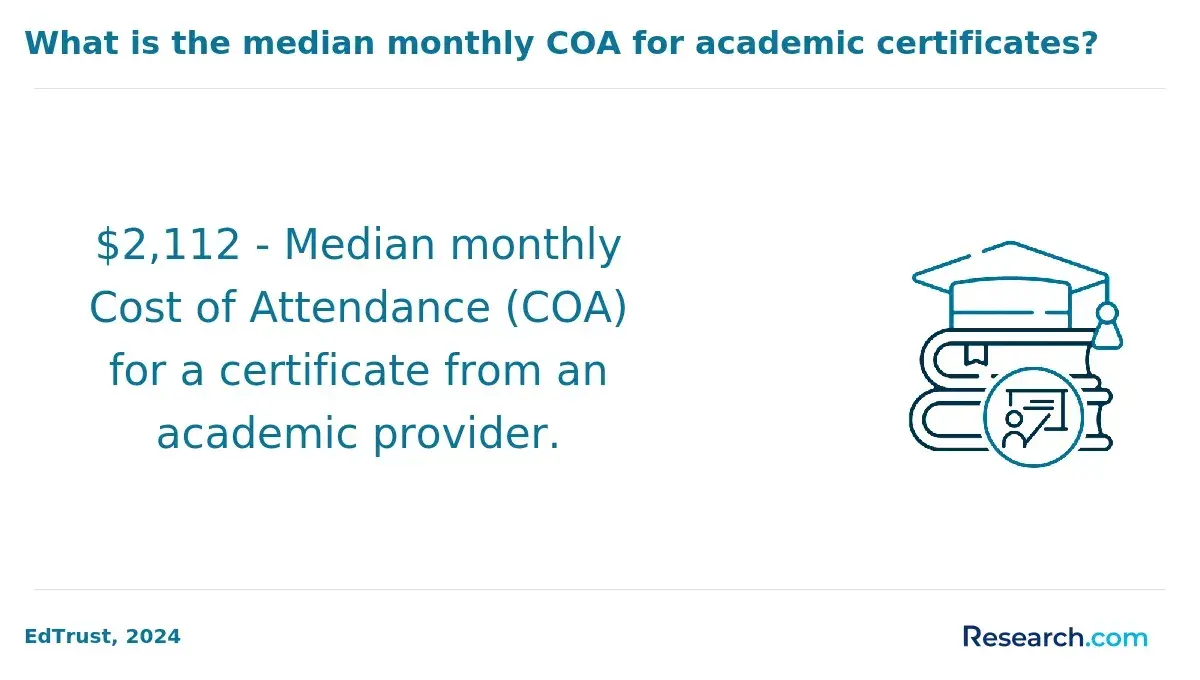
The financial commitment is notable: average annual expenses near $16,647, with aggregate four-year costs exceeding $66,000, excluding ancillary fees. Extended timelines or transfer credit complexities may increase out-of-pocket spending and prolong credential acquisition, factors critical for working professionals managing cash flow and career transitions.
Employers hiring financial analysts prioritize candidates with demonstrated technical proficiency, applied analytics experience, and exposure to practical projects or internships. Programs that integrate real-world case studies and facilitate internships improve post-graduation employability by shortening the time-to-employment window and enhancing candidate readiness.
Consider the scenario of a full-time financial analyst pivoting from a non-technical role: a part-time program preserves income but delays upskilling, while a full-time, accelerated course demands short-term income sacrifice but expedites credentialing for salary growth. This tradeoff, coupled with potential employer tuition support, shapes whether learners optimize costs and timeline for maximal career benefit.
What financial analytics jobs can graduates pursue with an online data analytics bachelor's?
Online bachelor's degrees in data analytics prepare graduates for nuanced financial analytics roles that require both technical proficiency and industry-specific understanding. Positions such as financial data analyst, risk analyst, and investment analyst revolve around converting complex datasets into actionable insights that influence decision-making and compliance. For instance, a financial data analyst working in banking frequently uses SQL to pull transaction data, Excel to model cash flow, and Tableau for risk visualization, directly affecting loan approvals and regulatory accuracy.
Employer demand centers on mastery of SQL, Excel, and Tableau because these tools enable efficient tracking of financial metrics and creation of interactive dashboards tailored to business intelligence needs. Risk analysts must combine statistical evaluation with the ability to clearly communicate risk exposure to non-technical stakeholders, whereas investment analysts often require predictive modeling skills molded by finance fundamentals. Those eyeing fintech or regulatory roles face the additional complexity of evolving compliance standards.
Practical hiring dynamics reveal that capital markets favor rapid, real-time data processing, while corporate finance roles demand extensive longitudinal trend analysis. Early-career candidates can expect to engage heavily with data cleaning and report generation tasks before moving into strategic analysis. This progression aligns with federal labor market projections and reflects the importance of adaptable skillsets across financial sectors.
What salary ranges and earning potential exist for financial analytics careers with this degree?
Starting salaries for financial analytics careers with a bachelor's degree in data analytics generally range from $60,000 to $75,000, but real earning trajectories depend heavily on sector, location, and skill specialization. For instance, senior analysts in major financial centers like New York or Chicago can surpass $130,000, especially when combining expertise in predictive modeling or risk assessment with mastery of platforms such as SQL, Python, and Tableau. However, individuals transitioning from non-technical backgrounds may initially accept junior roles near $55,000, where upward mobility requires ongoing certification or practical experience beyond the degree itself.
Sector-specific patterns reveal distinct tradeoffs between compensation and stability. Insurance and corporate finance tend to offer predictable salary curves starting around $58,000 but often lack the premium pay seen in fintech or consulting, which come with heightened performance demands and shorter job tenure. Aligning educational pathways with employer expectations-through targeted internships, relevant coursework, and skill sets-is critical to maximizing long-term salary growth over a 5- to 10-year window.
- Financial analytics demand is projected to grow 35% by 2031, reflecting robust job market expansion.
- Hands-on experience with financial datasets is often a key hiring criterion.
- Salary negotiation leverage correlates directly with proficiency in data analytics tools favored by banks and investors.
Prospective students and career pivoters must weigh the immediate benefits of workforce entry against the value of advanced certifications or degrees. Specialization increasingly drives salary tiers, and misalignment of skills with market demands can limit both earning potential and job security in the evolving data analytics landscape.
How do accreditation and industry certifications impact credibility in financial analytics roles?
Employer trust in financial analytics candidates hinges on clear validation of academic rigor and practical expertise. Without recognized regional or national accreditation for bachelor's programs, hiring managers in financial institutions often consider candidates high-risk, particularly when regulatory compliance and data integrity are critical. For example, an investment firm governed by SEC regulations will favor candidates from accredited programs to ensure their foundational knowledge conforms to industry risk standards.
Specialized industry certifications like Certified Analytics Professional (CAP) or Financial Risk Manager (FRM) act as practical evidence of skills that extend beyond theoretical training. Candidates applying for roles such as business analyst or data scientist in banking or insurance often pair these credentials with their degrees to signal readiness for complex tasks like financial modeling and regulatory reporting.
Several workforce studies show graduates in analytics occupy varied positions-data analyst, business analyst, data scientist, analytics manager-indicating the versatility of their degree. However, financial analytics recruiters frequently use certifications as initial filters to limit large applicant pools, favoring those who demonstrate a commitment to staying current with evolving industry demands.
Prospective students balancing cost and time considerations must understand that, while certifications enhance employability, they do not replace extensive on-the-job experience critical for senior roles. The strategic choice rests on recognizing accreditation as a hiring gatekeeper and selecting certifications that align tightly with targeted employer requirements and niche finance roles.
What criteria should students use to choose a reputable online data analytics program for finance?
Accreditation from recognized bodies like the Higher Learning Commission ensures academic rigor and employer acceptance in programs focused on financial analytics within broader data analytics degrees. Since financial analytics rarely exists as a dedicated bachelor's degree-with limited online undergraduate offerings per the National Center for Education Statistics-students must confirm that finance-specific coursework is substantive and integrated. Employers demand expertise in financial modeling, risk assessment, and complex quantitative methods. Programs that incorporate hands-on projects using real financial datasets and tools such as Python, R, SQL, or Tableau offer a tangible advantage.
Working professionals should weigh program delivery methods, prioritizing options with asynchronous content or flexible scheduling to accommodate full-time jobs. Those offering industry partnerships or internships can significantly ease transitions into finance-centered roles. For instance, a data analyst moving from retail to banking must quickly acquire knowledge of sector-specific KPIs and regulatory frameworks, which generic analytics curricula often omit.
Important decision factors include graduate employment rates and median salaries from authoritative sources like Degrees When Due or EMSI labor market data, as these reveal the program's true labor market impact. Students must also consider credit transfer policies and program length to avoid unnecessary coursework that delays workforce entry. While cost matters, sacrificing academic quality or domain relevance undermines career outcomes in this specialized analytics niche.
Other Things You Should Know About Data Analytics
Prioritizing programming skills over pure statistical theory aligns better with employer expectations in financial analytics today. Most financial firms require proficiency in languages like Python or R to handle large datasets and automate analysis. While statistical understanding remains necessary, programs that integrate applied coding with financial applications provide graduates a practical advantage in solving real-world problems efficiently.
Online bachelor's programs in data analytics often carry a rigorous workload that can challenge full-time employees. Coursework combining technical projects, data manipulation, and finance case studies demands significant weekly commitment, which may impede work-life balance. Prospective students should evaluate programs offering asynchronous learning with flexible deadlines if maintaining current employment is a priority.
A strong program includes calculus, linear algebra, probability, statistics, SQL, Python, and spreadsheet modeling. For finance roles, coursework in financial modeling, econometrics, and business analytics is especially useful. Many employers also expect a capstone project using real financial datasets.
Employer perception depends largely on the program's reputation and graduates' demonstrated skills rather than delivery mode alone. Online degrees from accredited institutions with robust curricula and project-based assessments are increasingly accepted. However, candidates must proactively build a portfolio of practical work and internships to counter any residual bias against online formats in competitive financial analytics roles.
References
- What Could You Do with a Data Analytics Degree? https://www.coloradotech.edu/degrees/studies/business-and-management/articles/what-could-you-do-data-analytics-degree
- Career in Finance vs Career in Data Analytics? https://www.edology.com/blog/data-analyst/career-in-finance-vs-career-in-data-analytics-comparing-the-key-differences
- What does a Financial Data Analyst do? https://www.cfainstitute.org/programs/cfa-program/careers/financial-data-analyst
- The Importance and Benefits of Company Accreditation https://iacus.org/blogs/accreditation/the-importance-and-benefits-of-company-accreditation
- 4 Types of Finance Degrees: A Complete Guide for Aspiring Professionals https://www.applash.ai/four-types-of-financial-degrees
- What do you learn in a bachelor's in finance? | edX https://www.edx.org/resources/what-do-you-learn-in-a-bachelors-in-finance
- Online MBA Business Analytics vs Finance https://www.onlinecu.in/blog/cu/online-mba-business-analytics-vs-online-mba-finance
- How Do Financial Analyst Certifications Impact Salary Growth? https://zabeelinstitute.ae/blog/financial-analyst-certifications-salary-growth/
- The Impact of Finance Certification on Your Investment Banking Journey https://www.investmentbankingcouncil.org/blog/the-impact-of-finance-certification-on-your-investment-banking-journey
- Bachelor’s in Data Analytics Degree Requirements | University of Bridgeport https://www.bridgeport.edu/news/bachelors-data-analytics-degree-requirements/