2027 Online Data Analytics Degrees With Operations Analytics Career Alignment

Co-Founder and Chief Data Scientist
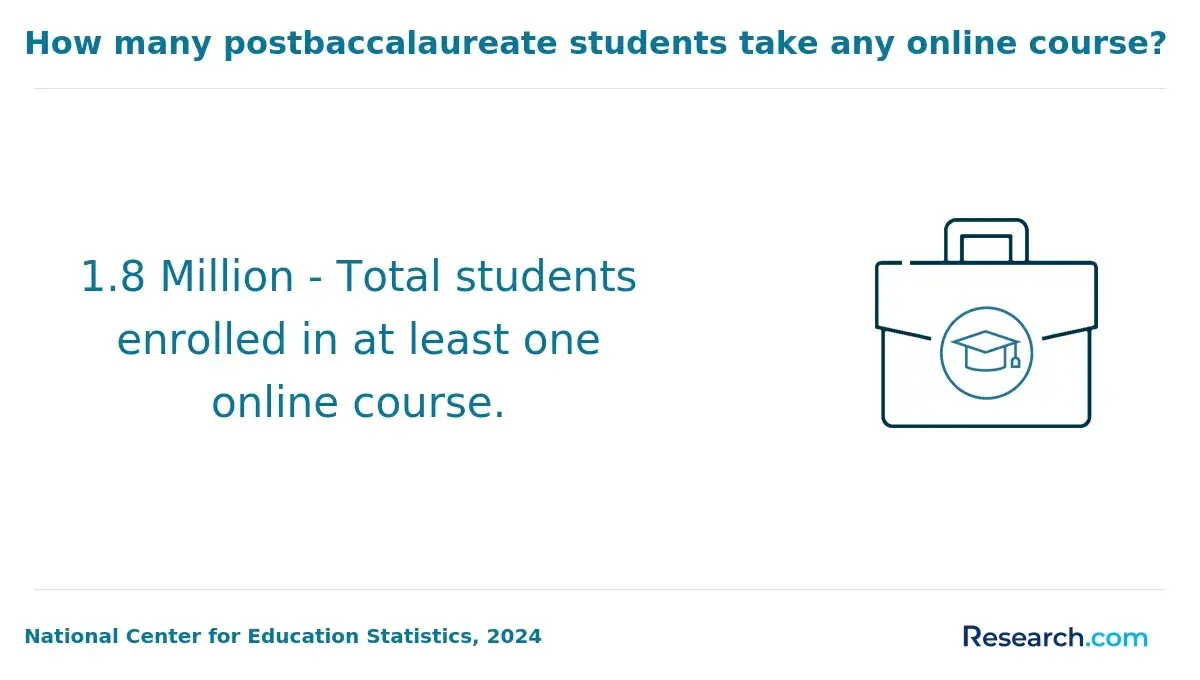
Mid-career professionals seeking to pivot into operations analytics encounter a precise barrier: balancing the urgency for relevant skills with inflexible work schedules and family commitments. The National Center for Education Statistics reports a 25% increase in online graduate enrollment among working adults since 2022, signaling demand for adaptable programs that integrate real-world operations challenges with data analytics expertise. This trend reveals a structural shift toward asynchronous and hybrid learning environments that accommodate professional workloads, yet many candidates struggle to identify degrees that genuinely align curriculum with operational decision-making roles. This article evaluates online data analytics degrees geared specifically to operations analytics, emphasizing career alignment and scheduling flexibility to guide informed enrollment decisions.
Key Things You Should Know
- Online data analytics degrees with operations analytics specialization face a 15% higher completion cost on average due to required software licenses and advanced tools, impacting affordability and duration for mid-career pivots, according to the National Center for Education Statistics.
- Employers increasingly demand demonstrated proficiency in real-time operations optimization algorithms; graduates lacking hands-on project experience in platforms like Apache Kafka or Azure Stream Analytics see 20% fewer interviews, per a 2024 LinkedIn workforce report.
- Tradeoffs between comprehensive curricula and accelerated certificate programs persist, with comprehensive degrees improving long-term earning potential by 18% but delaying entry into operations analytics roles by up to two years, per Georgetown University labor data.
What is an online data analytics degree with operations analytics focus?
Graduates of an online data analytics degree with operations analytics specialization must navigate a steep learning curve focused on quantitative methods tailored to operational efficiency rather than broad analytics applications. This specialization demands mastery in operations research techniques such as linear programming and simulation combined with data visualization and management tools to directly improve workflows, supply chains, and resource allocations.
The best online data analytics programs focused on operations analytics prioritize practical problem-solving skills frequently applied in logistics and manufacturing settings. For instance, a logistics manager could utilize the curriculum's techniques to reduce delivery times and transportation costs by optimizing route planning and warehouse use. In manufacturing, predictive maintenance based on real-time data analytics can significantly cut downtime and improve product quality.
Students should expect a challenging curriculum emphasizing applied mathematics, programming languages like Python, R, and SQL, and software proficiency including Tableau, SAS, or Excel advanced modeling. Online formats require strong self-discipline and time management, as interaction is often asynchronous. Programs include capstone projects and case studies reflecting real-world operational challenges.
Employment outlook for operations research analysts shows a 21% projected growth rate from 2024 to 2034, well above average. However, employers generally seek candidates with hands-on experience and industry knowledge beyond credentials alone. Anyone evaluating this path is advised to review program rigor and technical depth versus their existing skills and career objectives carefully. For comparison of costs and extended options explore online masters in data science.
Are online data analytics degrees accredited and respected by employers?
Employer recognition hinges on rigorous standards, rendering online data analytics degrees from regionally accredited institutions far more viable for operational careers. Unaccredited or diploma-mill programs almost guarantee disqualification due to their lack of substantive technical depth and weak industry alignment. Accredited online data analytics programs for operations careers are designed to impart skills directly applicable to supply chain management, statistical analysis, and optimization-areas explicitly sought in hiring processes.
Graduates from accredited programs often command median wages around $91,290, consistent with U.S. Bureau of Labor Statistics data for operations research analysts. This figure reflects employer trust in demonstrated practical experience, which these programs embed via internships and project-based learning. Professionals pivoting careers should critically evaluate accreditation status and graduate outcomes rather than opting solely for cost or program length. Delivery format, such as fully asynchronous versus hybrid, also affects the relevance of skill acquisition relative to real-world demands.
Sector-specific skill sets matter significantly. For example, candidates targeting healthcare operations analytics must prioritize programs incorporating domain-centric datasets and compliance training found only in reputable, accredited offerings. This distinction can materially affect employability and wage potential.
Students seeking affordable pathways should consider options aligned with quality standards, such as the cheapest online computer science degree programs vetted for credibility and outcomes.
How do online and campus data analytics programs compare?
The choice between online data analytics programs vs campus programs hinges on tradeoffs between collaborative experience and flexibility that directly influence workforce readiness. Campus formats replicate operational analytics environments through immediate, in-person problem-solving and team projects essential for sectors like manufacturing and logistics. This hands-on approach aligns with employer expectations where synchronous interactions mirror workplace demands.
Conversely, online data analytics programs offer crucial scheduling adaptability for professionals pursuing a strategic career pivot or balancing work, but rely heavily on asynchronous communication. This limits spontaneous mentorship and peer exchange, potentially affecting depth of engagement in high-stakes operations roles. Online learners must adopt rigorous self-discipline and effective time management to meet tight project deadlines inherent in analytics workflows.
Cost considerations also factor in: although online programs tend to reduce ancillary expenses, tuition levels may be comparable to campus offerings. Deciding between formats requires weighing these financial implications against potential networking benefits and experiential learning opportunities.
Regionally, program delivery modes influence accessibility more than credential value. The U.S. Bureau of Labor Statistics data shows graduate degree holders earn significantly more than bachelor's degree holders, regardless of format, emphasizing that advanced expertise drives earnings in operations analytics sectors.
Prospective students seeking specialized options might explore the best medical coding online programs as a comparative example of balancing accreditation, flexibility, and affordability within healthcare analytics-related disciplines.
What courses are in operations analytics degree programs?
Operations analytics degree courses and curriculum emphasize quantitative skills and decision frameworks directly applicable to operational efficiency challenges-a critical factor given the diversity of metrics across industries. Core subjects in operations analytics programs typically include operations research, simulation, and business process modeling, which equip students with practical tools for managing workflows and optimizing resources.
Students also gain vital experience with programming languages like Python or R and database management systems, preparing them to handle large datasets and generate actionable insights. Incorporating these technical competencies addresses employer demand for professionals who can navigate complex datasets without relying on overly technical jargon or opaque algorithms. Programs often integrate predictive modeling and machine learning elements, reflecting the 36% projected employment growth for data scientists from 2024 to 2034, a growth fueled by a rising need for AI-driven forecasting in operational contexts.
Electives in supply chain analytics or service operations allow specialization aligned with sector-specific demands, such as manufacturing versus customer-facing operations, where data sources and tools differ substantially. Practical application through case studies or capstone projects reinforces these competencies with real-world operational problems, illustrating the tangible tradeoff between theoretical knowledge and applied problem-solving. Prospective students seeking flexibility might also explore options like a nutrition degree online program to compare delivery models and interdisciplinary approaches within analytics-focused education.
What admissions requirements do online data analytics programs require?
Admission to online data analytics programs frequently hinges on holding a bachelor's degree, typically in quantitative or technical fields like computer science, mathematics, or engineering. Applicants from unrelated disciplines are often required to demonstrate quantitative skills through prerequisite courses or standardized testing. In some cases, substantial professional experience in data analysis or operations analytics may allow candidates to bypass formal academic prerequisites, although this varies considerably by institution.
Most programs expect official transcripts, a resume highlighting technical competencies, and recommendation letters verifying analytical acumen or professional reliability. While GRE scores are optional in many cases, competitive or research-intensive programs may still require them to assess quantitative reasoning rigorously.
Employers in operations analytics prioritize practical skills over academic pedigree, prompting programs to increasingly evaluate proficiency in programming languages such as Python or R, database familiarity, and foundational statistics through tests or project work at enrollment. For example, a mid-career professional shifting from supply chain management must demonstrate the capacity for analytical modeling, not just conceptual understanding.
Applicants should prepare to document educational history thoroughly and address any technical skill gaps promptly after admission. Given that median annual wages for data scientists reach $112,590 (FGCU's 2025 career guide), meeting these admissions standards directly correlates with workplace readiness and long-term employability in analytics roles.
How long does an online data analytics degree usually take?
Completing an online data analytics degree within 18 to 24 months aligns best with employer expectations for timely skill acquisition and market readiness, particularly for roles requiring operational expertise. Accelerated programs leveraging transfer credits or denser course loads can shorten the timeline to as little as 12 months, but this often demands significant upfront commitment and prior knowledge. Conversely, part-time students balancing work or family obligations typically require up to three years, diluting the competitive advantage of speed in the hiring process.
The choice between a bachelor's and a master's degree materially alters duration and workload. Bachelor's programs usually require 120-130 credits, often spanning 3-4 semesters full time but extending if paced slower. Master's degrees typically involve 30-36 credits completed in one to two years of full-time study. For professionals aiming at operations analytics roles, degrees that integrate practical project work, internships, or capstone experiences lengthen program time but enhance applied skills essential for workplace impact.
Key practical considerations include prerequisite courses, software proficiency assessments, and enrollment timing, all of which may extend completion beyond nominal durations. Candidates who strategically apply transferable credits and certifications can reduce both cost and time to degree.
Financial analysts exemplify the rising market value of operational data analytics competence, with a median wage of $101,910 reported by FGCU's 2025 career guide. Completing a degree under two years positions candidates competitively for such specialized roles where rapid, applied skill development is crucial.
How much do online data analytics degrees cost?
Tuition for online data analytics degrees in 2026 varies widely, from about $10,000 to over $60,000, driven primarily by institution type, program length, and degree level. Public universities offering bachelor's and master's degrees generally range between $15,000 and $35,000, while private institutions and specialized programs often surpass $50,000. For professionals targeting operations analytics roles, managing education costs is critical given the median annual salary of $79,590 for business operations specialists, according to the FGCU 2025 career guide.
Choosing a public university with in-state tuition can halve costs but requires residency and may limit program options. Accelerated degree formats reduce time and total expense but demand substantial weekly hours, an important tradeoff for working students. Additional expenses such as software licenses, exam fees, and hardware add $1,000-$3,000 annually and are frequently underestimated.
Cost per credit hour, typically between $300 and $1,500, further impacts total tuition and varies by program. Importantly, hiring managers increasingly prioritize applied skills over mere credentials, so programs incorporating hands-on projects or internships-even at a somewhat higher tuition-tend to offer better employment and salary outcomes.
- Public in-state tuition reduces costs but narrows program availability
- Accelerated programs save time but increase weekly workload
- Additional fees and materials add to annual expenses
- Applied experience components influence job placement prospects and ROI
Prospective students should assess tuition alongside flexibility, program relevance, and employability to optimize the investment in an online data analytics degree.
What jobs align with operations analytics degrees?
Operations analytics degrees prepare candidates for roles demanding both technical proficiency and strategic insight, such as operations analyst or supply chain analyst. These positions require managing complex data flows to optimize workflows and reduce costs in settings like manufacturing, logistics, and healthcare. For instance, an operations analyst at a logistics firm leverages real-time data to improve inventory routing, balancing cost-efficiency with service quality-a critical tradeoff impacting the bottom line and customer experience.
Employers prioritize candidates skilled in SQL, Python, and Excel who can translate data insights into actionable recommendations for diverse teams, including non-technical stakeholders. Graduates often move into hybrid roles combining analytics with quality assurance, workforce planning, or production scheduling, reflecting how technical skills must integrate with organizational context.
Compared to marketing analytics roles, which report a median wage near $76,950 as noted in FGCU's 2025 career guide, operations analytics can demand broader domain knowledge and advanced coursework in machine learning to address supply chain variability and labor productivity challenges. Key hurdles include synthesizing disparate data sources and developing predictive models under operational uncertainty.
Students pivoting into operations analytics should weigh these complexities against the practical payoff, as real-world applications often extend beyond foundational statistics to specialized tools and problem-solving approaches tailored to dynamic, process-driven environments.
What salaries do operations analytics graduates earn?
Salary outcomes for operations analytics graduates vary sharply by industry and geography, with reported annual base pay ranging between $75,000 and $120,000. Manufacturing and logistics sectors tend to offer starting salaries near $85,000 due to sustained demand for efficiency and cost reduction skills, while technology-driven fields like e-commerce or fintech typically push entry-level pay beyond $110,000 because of their reliance on real-time data and automation.
Positions that integrate operations analytics with decision science, such as operations research analyst or business operations manager, often exceed $120,000 within five years. These roles demand expertise in machine learning, process optimization, and leadership across functions, justifying a premium on compensation.
Practical experience strongly influences salary placement-internships, certifications, or applied projects can shift offers to the upper end of the range. For example, a graduate optimizing supply routes in a cost-sensitive logistics environment may start closer to $75,000, whereas a peer developing predictive scheduling models in a metropolitan advanced manufacturing firm might command $115,000.
When evaluating the return on investment for this educational path, tuition costs such as the University of Arkansas' $570 per credit hour rate for fall 2025 should be weighed alongside time to employment and regional salary disparities.
Do operations analytics careers require certifications or licenses?
Employers in operations analytics do not mandate certifications but consistently prefer candidates who demonstrate verifiable technical skills and process knowledge through credentials. Certifications such as Six Sigma Green Belt, Certified Analytics Professional (CAP), and APICS CPIM serve distinct purposes: Six Sigma and Lean credentials are more valued in manufacturing or logistics for operational efficiency roles, while CAP is targeted at strategic analytics positions in technology or consulting sectors.
Without certifications, professionals typically must rely on extensive hands-on experience or significant achievements to remain competitive. For example, a supply chain analyst position cited in FGCU's 2025 career guide reports an average salary of $80,545, reflecting the tangible value employers place on operational competence combined with quantitative ability. Lacking credentials often means longer job searches and slower salary progression when matched against certified peers.
The decision to pursue formal certifications also involves evaluating the practical costs-time, money, and effort-against the potential career leverage gained. Certifications frequently require ongoing education, which helps maintain relevance amid rapidly evolving tools and methodologies. IT professionals shifting into supply chain analytics, for instance, may find that structured credentialing effectively bridges skill gaps and aligns their technical expertise with operational KPIs.
In effect, certifications function as targeted instruments to cross hiring thresholds, justify premium compensation, and enable mobility across subfields, rather than as broad guarantees of success.
Other Things You Should Know About Data Analytics
Online data analytics degrees typically require significant weekly hours for coursework, assignments, and software practice. Working professionals must realistically assess their time availability because these programs often demand 15-20 hours per week, including complex coding and data modeling. Choosing programs with asynchronous content and flexible pacing minimizes conflicts, while rigid formats risk burnout and incomplete learning, undermining the investment in career pivot or advancement.
Employers value operations analytics skills when aligned with their specific business needs, especially in supply chain, logistics, or process improvements. However, the narrower the specialization, the more essential it is that the program demonstrates robust technical training and practical application. For broader employability, candidates should combine operations analytics knowledge with core data analytics competencies and communicate how their skills solve operational challenges concretely.
It should cover process analysis, supply chain analytics, forecasting, optimization, statistics, SQL, Python, data visualization, and operations research. Many programs also include capstone projects tied to inventory, scheduling, or logistics, plus 30 to 36 semester credits of core analytics coursework.
References
- Learn job-ready skills with Google Career Certificates https://grow.google/certificates/data-analytics/
- 7 Data Analytics Careers That Are in High Demand, and How to Stand Out https://www.bentley.edu/news/7-data-analytics-careers-are-high-demand-and-how-stand-out
- Data analytics: online vs in-person courses compared https://www.techdataproduct.com/comparing-data-analytics-courses-online-vs-in-person-learning/
- Data Science Course vs. University – Which path is better in 2026? https://www.wbscodingschool.com/blog/data-science-course-vs-university/
- How Long Does it Take to Become a Data Analyst? | University of Bridgeport https://www.bridgeport.edu/news/how-long-does-it-take-to-become-a-data-analyst/
- Online vs Campus Data Science Degree Programs: Complete Comparison https://hakia.com/compare/data-science-online-vs-campus/
- How Long is a Master's in Data Analytics / Data Science Program? https://www.onlineeducation.com/analytics/faqs/how-long-is-a-masters-in-analytics-program
- How Long - Vont https://www.stonehill.edu/programs/data-analytics-masters/how-long-vont/
- Operations Analyst Certifications: Best Credentials to Advance Your Career | Teal https://www.tealhq.com/career-paths/operations-analyst-certifications
- Do Employers Recognize Online Masters Degrees? - MIA Digital University https://miauniversity.com/do-employers-recognize-online-masters-degrees/