2027 Best Online Master's in Data Analytics With Applied Analytics Tracks

Co-Founder and Chief Data Scientist
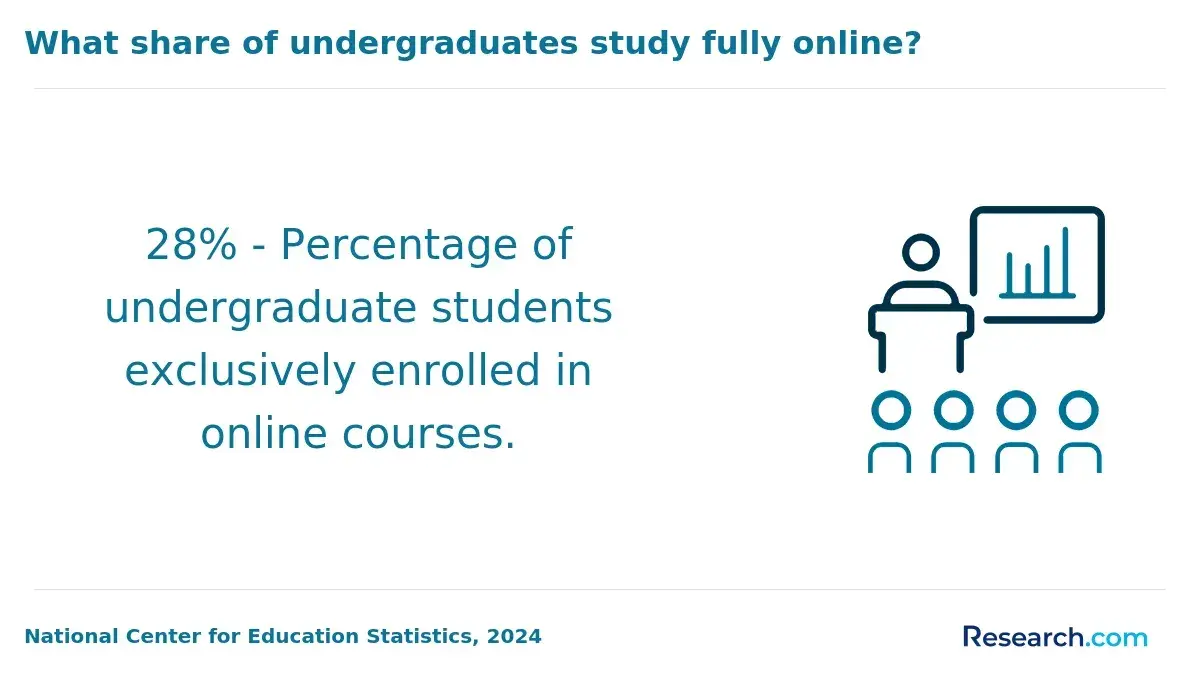
When a mid-career professional faces the choice to upskill in data analytics without pausing full-time employment, the stakes extend beyond tuition costs to encompass timing, career momentum, and employer preferences. According to the National Center for Education Statistics, over 40% of master's enrollments are now in fully online programs, signaling a shift toward flexibility that must be weighed against program rigor and applied specialization relevance. This surge reflects growing demand for execution-ready skills applicable to real-world analytics challenges, especially in roles requiring applied analytics tracks. This article evaluates top online master's programs emphasizing applied analytics to help professionals select pathways that align with practical career advancement and immediate workforce integration.
Key Things You Should Know
- Median salaries for online master's in data analytics graduates specializing in applied analytics exceeded $95,000 in 2025 per the U.S. Bureau of Labor Statistics, but ROI diminishes sharply when programs exceed 30 months, affecting mid-career professionals' opportunity costs.
- Employers prioritize graduates with integrated experiential portfolios over purely theoretical credentials; 72% of surveyed hiring managers in 2024 preferred candidates demonstrating cross-functional analytics projects directly tied to business KPIs.
- Program selection timing impacts access to high-impact cohort networks, as 2024 enrollment data from the National Center for Education Statistics shows early application unlocks placement in 40% more specialized internship pathways than rolling admissions.
What is an online master's in data analytics with an applied analytics track?
An online master's degree in data analytics with applied analytics specialization equips graduates to tackle industry-specific challenges by combining advanced data science methods with practical business problem-solving frameworks. Unlike generalist programs, this track demands fluency in tools like Python, R, SQL, and Tableau, ensuring graduates can translate complex data into actionable insights that influence operational decisions. For example, a healthcare analyst may employ predictive modeling to enhance patient outcomes, while supply chain professionals use regression analysis to streamline logistics.
Employers increasingly seek candidates who not only understand statistical theory but can embed analytics within real-world workflows, making immediate contributions. In response, programs offering the best applied analytics track in online data analytics programs emphasize project-based coursework and internships that simulate workplace scenarios, an essential factor for students pivoting careers to validate their hands-on capabilities.
The number of master's degrees in data analytics grew by nearly 18% from 2023 to 2025, reflecting the rising importance of practical analytics skills across sectors. Yet, prospective students must carefully weigh asynchronous program flexibility against reduced peer collaboration and consider the technical demands and time investments relative to their career stage to maximize ROI.
Working professionals exploring an accelerated computer science degree online may find applied analytics tracks offer a targeted alternative, but success hinges on choosing programs with strong industry engagement and real-world application opportunities.
How do online applied data analytics master's programs compare to campus-based options?
Online applied data analytics master's degrees offer curricular parity with traditional campus programs but demand heightened self-direction and networking initiative from students. While campus-based programs provide immediate access to in-person labs, mentoring, and employer events, online formats extend flexibility that benefits those balancing work or living outside metropolitan hubs. A professional shifting from finance to healthcare analytics may find on-campus career fairs facilitate direct employer introductions, yet equivalent connections can be cultivated through targeted virtual events and dedicated career services.
Key differences between online and campus-based applied data analytics master's education lie in resource access and time-cost tradeoffs. Online learners typically reduce expenses linked to commuting and housing by 20-40%, enhancing affordability and minimizing career disruption. However, they must compensate for fewer hands-on mentoring opportunities and rely on capstone projects and remote labs to meet industry expectations.
Applied analytics roles heavily weight practical experience; campus labs excel in high-touch training that online programs attempt to approximate through synchronous collaboration and industry partnerships. Decision-makers should weigh their personal learning preferences alongside program structure to choose appropriately. Professionals adding graduate-level analytics skills see on average 22-30% higher salaries than peers without advanced education.
Prospective students should also consider variation in computer science degree cost as part of their financial planning when evaluating online options.
What accreditation should online master's in data analytics programs have in the United States?
Programs offering an online master's in data analytics must possess regional accreditation from one of the six U.S. Department of Education-recognized agencies to be considered credible by employers and to ensure transferable credits. Without this, graduates often encounter skepticism that can limit earning power and career flexibility, particularly in specialized areas like healthcare analytics or financial sectors. This best regional accreditation for data analytics master's degrees US focus provides a baseline, but does not alone guarantee alignment with employment requirements.
Specialized accreditations-such as ABET or recognition by the Institute for Analytics Professionals of Australia (IAPA)-signal program relevance to industry standards and are especially important when the curriculum targets applied analytics fields. For example, healthcare analytics tracks demand knowledge of HIPAA-compliant systems, while finance-focused programs should cover regulatory compliance and risk modeling. Verifying curriculum alignment with these niche employer expectations is critical for a successful career pivot.
Another pragmatic concern is assessing the quality of online delivery and faculty expertise, as regional accreditation does not ensure interactive or practical learning experiences. Scrutinizing cohort sizes, opportunities for hands-on projects or internships, and faculty backgrounds helps determine whether the program genuinely prepares students for real-world challenges.
Prospective students must also consider that not all institutions offering regionally accredited programs deliver fully online formats or maintain substantial employer partnerships. For those evaluating pathways to enter the healthcare analytics workforce, reviewing recognized program options-and differentiating true online engagement-is vital. Those seeking guidance on related programs can consult the best school for medical billing and coding.
What are the typical admission requirements for online applied data analytics master's programs?
Admission criteria for online applied data analytics master's programs reflect a balance between academic preparedness and relevant professional background, acknowledging the practical demands of this evolving field. While a bachelor's degree from an accredited institution remains foundational, competitive programs typically expect prior exposure to programming languages like Python or R, statistics, and database management. This ensures candidates can effectively engage with advanced analytics techniques from the outset.
Graduate prerequisites for applied data analytics master's degrees also emphasize work experience, especially for mid-career professionals pivoting into data-centric roles. Demonstrating two to three years in data handling or related IT positions strengthens applications and aligns with employer priorities that favor applied skills over standardized test results. As such, many programs have made GRE scores optional or waived, reflecting an industry shift toward valuing technical aptitude and practical problem-solving.
Letters of recommendation and personal statements remain critical components, providing insight into an applicant's communication skills, technical competency, and alignment with career objectives. For international applicants, English language proficiency via TOEFL or IELTS scores is standard to support effective collaboration in diverse analytic teams.
The online applied data analytics master's program entry criteria notably require a strategic evaluation of one's academic and professional profile to meet these benchmarks without unnecessary hurdles. Prospective students scanning options should prioritize programs where prior experience and skill alignment reduce friction for admission, rather than relying solely on traditional GPA and test score metrics.
- Bachelor's degree in computer science, IT, statistics, engineering, or business
- Demonstrated programming and statistical coursework
- Two to three years relevant work experience favored
- Letters of recommendation focused on technical and communication abilities
- English proficiency tests for non-native speakers
For those comparing pathways, examining programs alongside other fields like best exercise science degree online can provide perspective on differing admissions rigor and workforce outcomes.
What core courses and specializations are included in applied data analytics tracks?
Applied data analytics programs prioritize skills that directly influence job performance, blending foundational methods with industry-specific applications. Students must critically assess if a program's emphasis leans more toward theoretical algorithm development or actionable business intelligence, as this distinction significantly shapes employability and functional impact in diverse roles.
For example, healthcare analytics courses that focus on electronic health records and regulatory compliance equip graduates for roles demanding stringent data privacy and outcome-driven insights. Conversely, financial analytics tracks center on time-series forecasting and credit risk analysis, skills essential for real estate valuation or portfolio management sectors.
Practical experience remains a decisive factor. Applied tracks typically mandate capstone projects with real-world datasets, requiring mastery of tools like SQL, Tableau, or SAS-technologies frequently expected by employers in fast-evolving analytics environments. The discrepancy in tuition costs, ranging broadly from about $9,900 to $87,408, calls for a strategic evaluation of return on investment, especially when employer ROI closely correlates with curriculum rigor and sector relevancy.
- Core coursework integrates data mining, machine learning, and programming languages such as Python or R.
- Sector electives develop expertise in areas like healthcare, marketing, supply chain, or financial modeling.
- Programs emphasize data wrangling and exploratory analysis before advancing to specialized domains.
Ultimately, selecting a program demands weighing industry demand, cost, and whether training aligns with practical job functions or abstract research skills. Candidates targeting fast-paced fields such as logistics benefit more from programs focused on agile, real-time analytics rather than purely academic approaches.
How long do online master's in data analytics programs take and what do they cost?
Completing an online master's in data analytics demands balancing time, cost, and professional context, with typical programs spanning 12 to 24 months. Accelerated formats suit full-time professionals able to commit 15-20 hours weekly, while part-time tracks extend to two years, accommodating those juggling employment or family responsibilities.
Tuition fees vary significantly, generally ranging from $20,000 to over $60,000. Programs emphasizing applied analytics tend to cost more due to specialized content and tools aligned with industry needs. Students must weigh this against potential salary gains, as top-tier graduates report median early-career salaries surpassing $100,000, compared to about $75,000 for most U.S. master's holders (CollegeConsensus data analytics masters ranking, 2025).
Employers consistently seek candidates who combine technical data proficiency with domain-specific insight and leadership capabilities. For example, a healthcare professional transitioning to analytics would benefit more from an applied analytics approach tailored to medical data challenges than a generalist curriculum.
- Accelerated programs require intense weekly commitment but shorten completion time.
- Higher-cost programs often offer stronger career returns if aligned with industry demands.
- Generalist degrees might limit advancement in specialized sectors.
Prospective students should critically assess program structure, cost, and curriculum relevance against realistic salary uplift and industry expectations to avoid overinvestment without commensurate career impact.
What careers can graduates of applied data analytics master's programs pursue?
Applied data analytics master's graduates face a marketplace where the ability to convert complex datasets into actionable business intelligence is non-negotiable. Employers value technical proficiency equally with communication skills that translate analytics into strategic decisions. For instance, healthcare analytics roles demand expertise in evaluating treatment effectiveness and resource use, while retail analytics emphasize customer segmentation and inventory management.
Students must weigh the tradeoff between deeply technical curricula and programs offering substantial case studies or industry projects that build practical, client-facing skills. This is especially true for those targeting consulting roles, where project management and interpersonal abilities are as important as mastering analytic tools.
- Sector-specific software skills, such as SAS in pharmaceuticals or Hadoop in tech, often dictate graduate employability.
- Networking and continuous certification can offset competitive hiring environments.
The supply of over 220 master's programs across North America allows for diverse options but requires careful selection to align with career objectives. Candidates who neglect the applied components and soft skills risk limited job placement, as employers increasingly seek well-rounded professionals.
These nuanced decisions highlight that pursuing applied data analytics is less about academic prestige and more about portfolio relevance, practical experience, and the ability to bridge technical analysis with business context.
Source: Mastersportal.com
What salary ranges and earning potential can data analytics graduates expect?
Starting salaries for graduates with applied analytics tracks typically range from $70,000 to $90,000 in the U.S., but these figures vary significantly by sector and role specialization. Finance, healthcare, and technology employers often offer salaries above $120,000 within five years, particularly for positions requiring expertise in risk modeling and algorithmic trading in fintech. In contrast, analytics roles in retail or manufacturing may start near $65,000, growing with proven impact on supply chain or customer insights. Such disparities reflect how employer demand for applied analytics skills-especially proficiency with Python, SQL, and visualization tools-directly influences earning potential and career momentum.
Cost considerations also shape educational choices. Online master's programs charging about $9,900 present a markedly lower upfront investment than on-campus counterparts costing $30,000 to $35,000. This gap allows for a break-even point under one year when increased earnings post-graduation are factored in, a critical factor for working professionals balancing full-time jobs while pivoting careers.
However, not all programs deliver the same value. Those lacking applied training risk producing graduates whose salaries stagnate despite advanced degrees. Prospective students should prioritize curricula aligned with analytics platforms and real-world business applications rather than reputational prestige alone. This practical approach is essential to meet employer expectations and maintain upward salary trajectories.
What is the job outlook and industry demand for applied data analytics professionals?
Applied data analytics roles will expand by 36% from 2024 to 2034, driven by integrated AI, machine learning, and cloud adoption in sectors such as healthcare, finance, manufacturing, and cybersecurity. This growth demands candidates who merge statistical expertise with practical proficiency in AI tools and cloud services like AWS. However, professionals face tradeoffs: specialized knowledge in machine learning deployment or cloud security can command higher salaries but entails ongoing certifications and steep learning curves.
For example, healthcare analytics specialists must manage compliance with complex regulations while leveraging AI, making domain knowledge essential beyond technical skills. In finance, the emphasis on real-time analytics layered with security requirements requires familiarity with both data infrastructure and risk controls. Employers also demand immediate workplace impact, often finding candidates unprepared to translate theoretical skills into actionable insights or to communicate effectively with non-technical teams.
Candidates should therefore prioritize curricula that integrate hands-on AI and cloud projects supported by industry partnerships or capstones simulating operational environments. Such practical exposure mitigates the risk of obsolescence amid rapidly evolving technologies and prepares graduates for hybrid roles blending technical execution with leadership.
Key workforce implications include:
- Balancing specialization with foundational data literacy to navigate sector-specific expectations.
- Managing the tension between certification demands and applicable skill development.
- The necessity of soft skills for translating analytics outcomes to diverse stakeholders.
How can students choose a reputable online master's in applied data analytics program?
Choosing an online master's in applied data analytics requires more than assessing tuition alone; the program's alignment with specific career goals and industry standards fundamentally shapes employability. Tuition cost varies widely, from under $10,000 to over $70,000, demanding financial planning that weighs return on investment against individual budget constraints. For instance, a professional shifting into healthcare analytics should prioritize programs offering practical coursework in biostatistics or health informatics, while someone aiming for roles in finance needs a curriculum emphasizing financial data modeling.
Accreditation status remains a decisive factor, with regional accreditation combined with specialized endorsements like CAHME or AACSB signaling program credibility to employers. Graduates' job placement rates and institutional partnerships provide tangible indicators of employment prospects and should be reviewed through official transparency reports or government databases.
Program specialization depth influences role suitability. Programs focusing on technical tools such as Python, R, SQL, and machine learning frameworks typically serve IT or tech sectors, whereas offerings centered on business analytics or decision sciences better support operational leadership in industries like manufacturing or retail.
Flexibility in course delivery is critical for working adults balancing professional obligations; asynchronous formats and accessible alumni networks enhance long-term advancement. Ultimately, successful navigation of an applied data analytics master's requires side-by-side comparison of outcomes, specialization fit, delivery method, and net program cost, ensuring the qualification translates into practical workforce value rather than symbolic prestige.
Other Things You Should Know About Data Analytics
Part-time online programs offer flexibility but typically extend time-to-degree and can increase overall costs due to prolonged enrollment. Employers expect candidates to demonstrate both technical skills and project experience, which can be harder to acquire if program pacing limits deep immersion in complex coursework. Prioritize programs with strong applied components and access to real-world data sets to ensure practical outcomes despite reduced study hours.
Employers prioritize candidates who show the ability to apply analytics tools to solve actual business problems. Programs heavy on theory without sufficient hands-on projects may leave graduates underprepared for workplace demands. Select programs emphasizing capstone projects or internships, as these experiences bridge academic learning with employer expectations and enhance job readiness significantly.
Yes. Many applied analytics tracks require a capstone, while some thesis options need 6 to 9 additional credits and faculty approval. A capstone usually comes near the end of the program and asks students to complete a real dataset project, often in 1 to 2 semesters.
In 2027, specialized applied analytics tracks offer targeted skills tailored to industry needs, focusing on practical applications like machine learning and business intelligence. In contrast, broader data science degrees provide comprehensive coverage of concepts but may lack depth in specific areas, potentially limiting immediate industry applicability.
References
- Best Online Data Science Masters Programs (2026 Guide) https://skillifysolutions.com/blogs/data-science/best-online-data-science-masters/
- All One-Year Online Master's in Data Analytics Programs - AnalyticsDegrees.org https://www.analyticsdegrees.org/data-analytics/one-year/
- Exploring Data Analytics Jobs: How Companies Use Data, Data-Driven Decision Making in Engineering, and the Rising Demand for Data Analysts https://www.sdsmt.edu/academics/academic-departments/electrical-engineering-and-computer-science/data-analytics-jobs-guide.html
- Online Master’s in Data Analytics Programs (MS in Business Analytics) https://www.onlineeducation.com/analytics/masters-in-data-analytics-programs
- Applied Analytics Degree | Earn a Master of Science Online https://loras.edu/academics/applied-analytics/
- Specializations https://www.mastersindatascience.org/data-science/masters/specializations/
- Is a master's in data analytics worth it? | edX https://www.edx.org/resources/is-a-masters-in-data-analytics-worth-it
- MS in Applied Data Analytics | Data Analytics Degree Program https://www.css.edu/academics/programs/graduate/master-of-science-applied-data-analytics/
- Online Master's Degree in Data Analytics | CSU Global | Accredited https://csuglobal.edu/academic-programs/graduate-degrees/masters-degree-data-analytics
- Program Details https://www.eastern.edu/academics/graduate-programs/ms-data-science